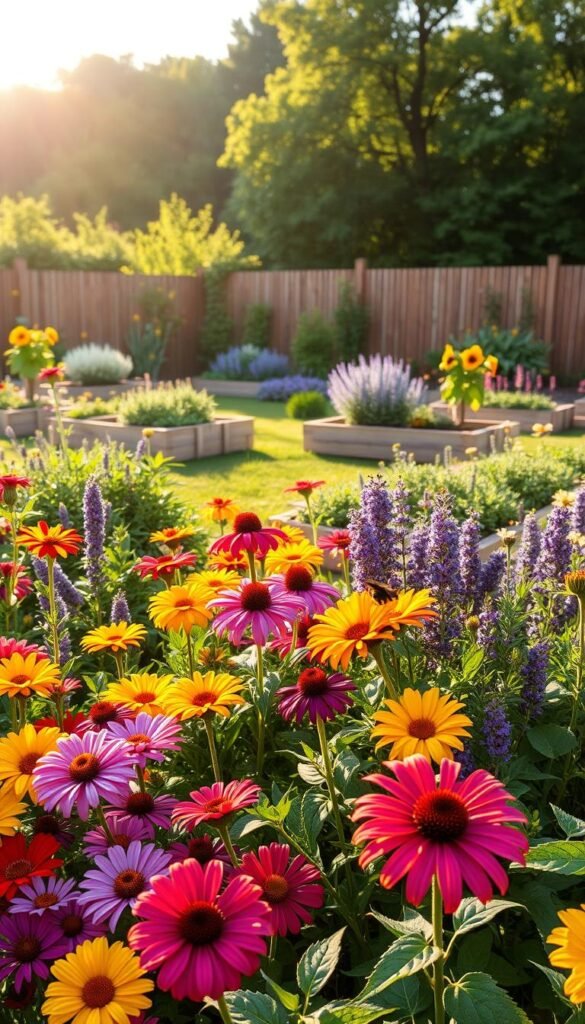
Imagine stepping outside to a vibrant space buzzing with life. Butterflies dance between blossoms, bees hum with purpose, and your garden becomes a sanctuary for nature’s hardest workers. This isn’t just a dream—it’s achievable through smart planning that blends beauty with environmental impact.
Pollinators like bees and butterflies keep ecosystems thriving. Yet their habitats shrink yearly. By rethinking how you use your space, you can support these creatures while growing stunning plants. Compact gardening methods let you maximize every square foot without sacrificing visual appeal.
Success starts with understanding three essentials: sun patterns, native species choices, and water access. Grouping flowers by bloom time ensures year-round food sources. Even balcony-sized areas can host milkweed for monarchs or lavender for honeybees.
In the next sections, you’ll discover how to map your micro-climate, select low-maintenance plants, and create shelter spots. These steps take little time upfront but yield lasting rewards. Your efforts this year could help reverse pollinator decline—one flowering patch at a time.
Foundations of a Thriving Pollinator Ecosystem
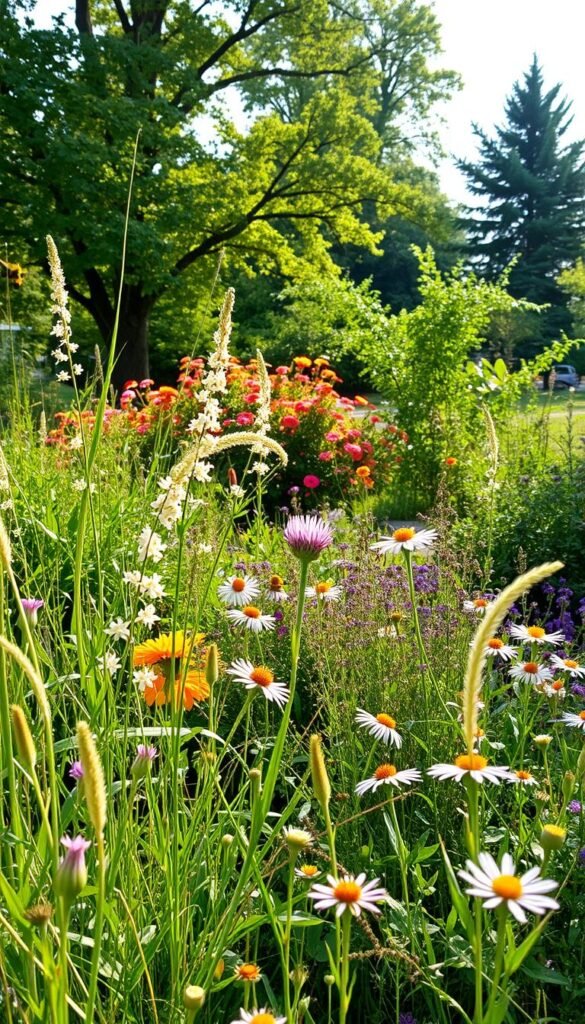
Creating a haven for pollinators starts with meeting their basic needs. These tiny workers require three essentials: food, shelter, and nesting spots. Nectar-rich flowers fuel their daily activities, while host plants like milkweed become nurseries for butterfly larvae.
Understanding Pollinators’ Needs and Benefits
Bees and butterflies thrive when you offer diverse blooms across seasons. Early spring blossoms like phlox provide critical energy after winter. Fall-blooming goldenrod keeps food available as temperatures drop. According to the U.S. Fish and Wildlife Service, native milkweed can boost monarch butterfly survival rates by up to 60% compared to non-native varieties.
The Role of Native Plants in Your Garden
Local wildflowers adapt perfectly to your region’s soil and weather conditions. They need less water and fend off pests naturally, making gardening simpler. For example, purple coneflower attracts 12+ pollinator species, while black-eyed Susans resist drought.
| Plant Type | Water Needs | Pollinators Attracted | Bloom Period |
|---|---|---|---|
| Milkweed (Native) | Low | Monarch Butterflies | Summer-Fall |
| Bee Balm | Moderate | Bees, Hummingbirds | Late Spring-Summer |
| Coneflower | Low | Butterflies, Beetles | Summer-Fall |
By mixing plants with staggered bloom times, you create a buffet pollinators love. This approach supports ecosystems year-round and turns your space into a wildlife sanctuary.
Planning Your Garden Layout and Site Selection
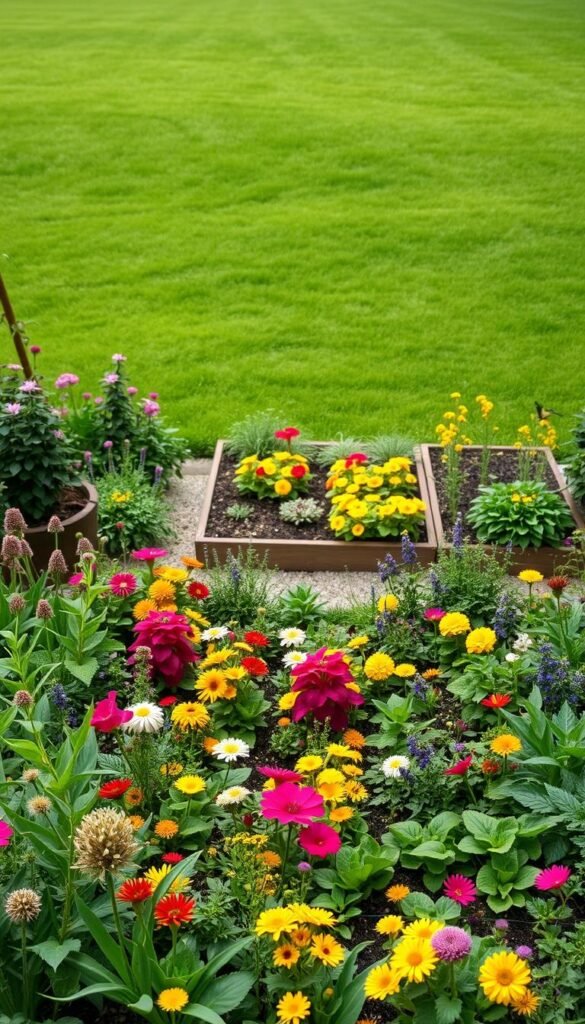
Your garden’s success begins long before the first seed hits the soil. Start by assessing your available space—whether it’s a balcony, rooftop, or yard. Urban gardening experts recommend sketching a rough map to visualize sun patterns and wind flow. This step helps you work with your microclimate instead of against it.
Choosing the Perfect Location
Most pollinator plants need 6+ hours of daily sun. Use a free app like Sun Seeker to track light exposure across your space. For areas with full partial sun, consider shade-tolerant species like coral bells. The U.S. Fish and Wildlife Service advises placing taller plants on the west side to shield others from harsh afternoon rays.
Soil, Sunlight, and Environmental Considerations
Test your soil’s pH and drainage using a $10 kit from garden centers. Sandy soils dry fast—ideal for lavender—while clay retains moisture for bee balm. If wind is an issue, position sturdy containers or trellises as barriers. For small-space gardening hacks, measure your area in 1-foot grids to maximize square foot techniques.
| Soil Type | Best Plants | Sun Needs |
|---|---|---|
| Sandy | Lavender, Yarrow | Full Sun |
| Clay | Milkweed, Coneflower | Partial Sun |
| Loamy | Bee Balm, Phlox | Mixed |
Leave 18-inch walkways between beds for easy access. Group pots by water needs to simplify care. Even a 4×4-foot plot can host 16 pollinator-friendly plants when planned thoughtfully!
Designing a Pollinator-Friendly Square Foot Garden
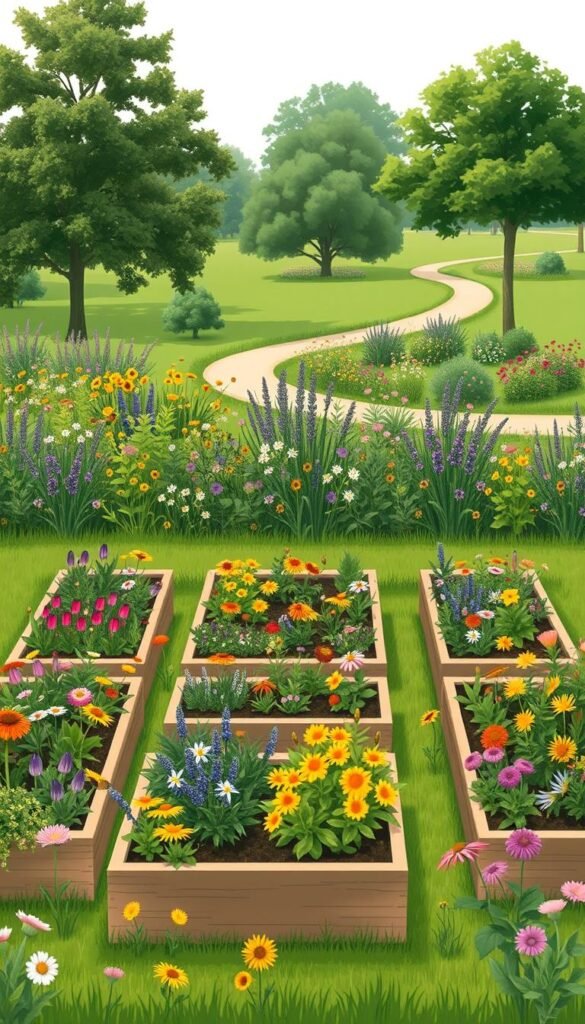
Transform limited areas into buzzing hubs by mastering smart layout strategies. Square foot gardening lets you pack diverse blooms into tight spots while keeping nectar sources within easy reach. Start by dividing your plot into 12-inch grids using string or wooden dividers—this creates clear zones for different species.
Arranging Plants for Optimal Nectar and Shelter
Group plants growing at similar heights to create “nectar corridors.” Place milkweed beside coneflower so butterflies move efficiently between food and host plants. Tall sunflowers work well behind shorter zinnias, offering wind protection without blocking sunlight. Leave gaps between clusters for insects to rest—flat stones or woody stems make perfect pit stops.
Implementing Square Foot Techniques in Compact Spaces
Assign one key species per square, mixing best full partial sun varieties with shade-tolerant options. Try this arrangement in a 4×4 grid:
| Square | Plant | Height |
|---|---|---|
| A1 | Bee Balm | Tall |
| B2 | Sedum | Medium |
| C3 | Thyme | Groundcover |
Reassess your layout each season—some perennials take couple seasons to reach full size. Rotate annuals like cosmos to maintain visual interest and continuous blooms. Even balcony railings can host stacked planters with trailing lantana for pollinators like hummingbirds.
Selecting Pollinator-Attracting Plants
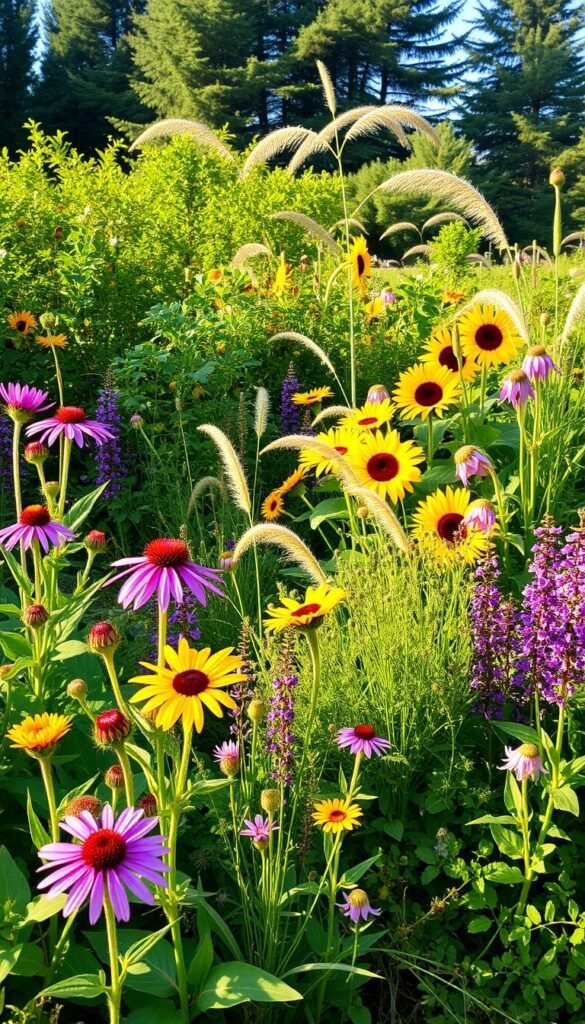
Your plant choices determine whether pollinators visit or pass by. Focus on species that deliver both beauty and ecological value. Mixing colors, shapes, and bloom times creates irresistible pit stops for winged visitors.
Native versus Non-Native Species
Local wildlife evolved with regional plants, making them ideal partners. The U.S. Fish and Wildlife Service notes native species need 30% less water than imports. They also resist pests naturally, saving you time and money.
Non-native options like lavender can attract bees, but might not host butterfly larvae. Balance exotic blooms with workhorse natives like goldenrod. This approach supports more species while keeping your garden low-maintenance.
Creating a Continuous Bloom Calendar
Stagger flowering periods to avoid nectar droughts. Start with early risers like wild lupine in spring. Follow with summer stars like coneflower, then asters for fall. Track bloom windows using a simple spreadsheet or garden app.
| Season | Plant Example | Pollinator Visitors |
|---|---|---|
| Spring | Virginia Bluebells | Bumblebees, Mason Bees |
| Summer | Black-Eyed Susan | Monarchs, Swallowtails |
| Fall | New England Aster | Honeybees, Skippers |
Visit native plant nurseries or seed swaps for affordable options. Look for pesticide-free specimens—even small chemical traces can harm butterflies. Test different groupings each season to discover what thrives in your unique space.
Preparing, Planting, and Integrating Water Features
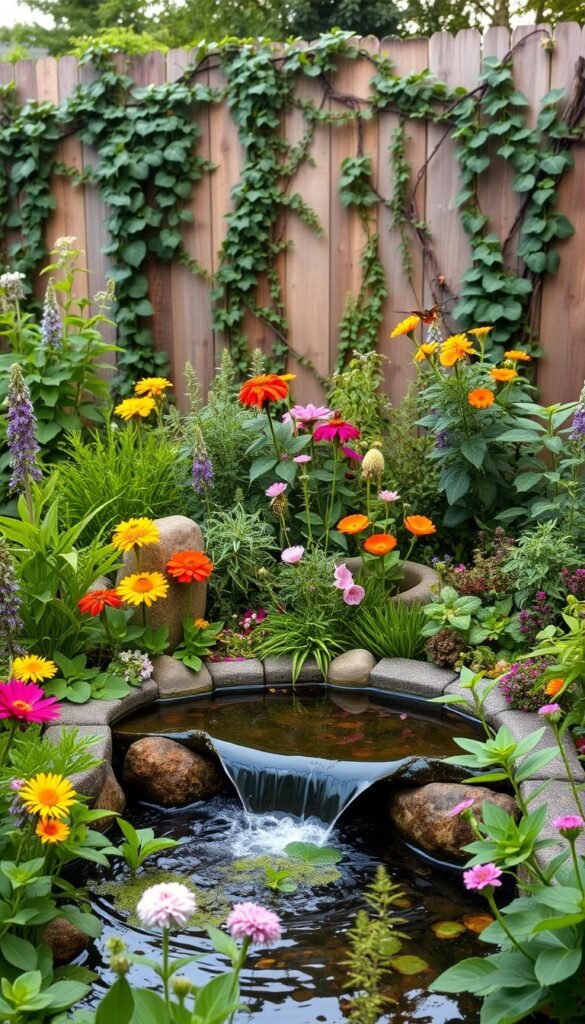
Your garden’s transformation begins with smart groundwork. Proper preparation ensures plants thrive while supporting pollinators’ needs. Start by clearing weeds and grass—use cardboard sheets to smother unwanted growth naturally. Enrich your soil with compost or worm castings for better drainage and nutrients.
Garden Preparation and Planting Tips
Choose between seeds and nursery plants based on your timeline. Seeds cost less but take couple weeks longer—ideal for early starters like milkweed. Potted plants offer instant color but need careful root handling. Dig holes twice as wide as root balls, then water deeply after planting.
Group species with similar water needs to simplify care. The U.S. Fish and Wildlife Service recommends drip irrigation for efficiency—it delivers moisture directly to roots while conserving resources. For small spaces, place shallow dishes with pebbles and fresh water near blooms.
Incorporating Water Sources and Mulch
Pollinators drink daily, so add a birdbath or rain barrel with floating sticks for safe landing. Apply 2-3 inches of mulch around plants to lock in moisture and suppress weeds. Straw or shredded bark works best—avoid dyed options that might harm insects.
Check soil dampness weekly—containers dry faster than ground beds. Water early mornings to reduce evaporation. Refresh mulch each season to maintain insulation and organic matter. These steps create a low-maintenance habitat that grows healthier every year.
Caring for Your Garden Throughout the Seasons
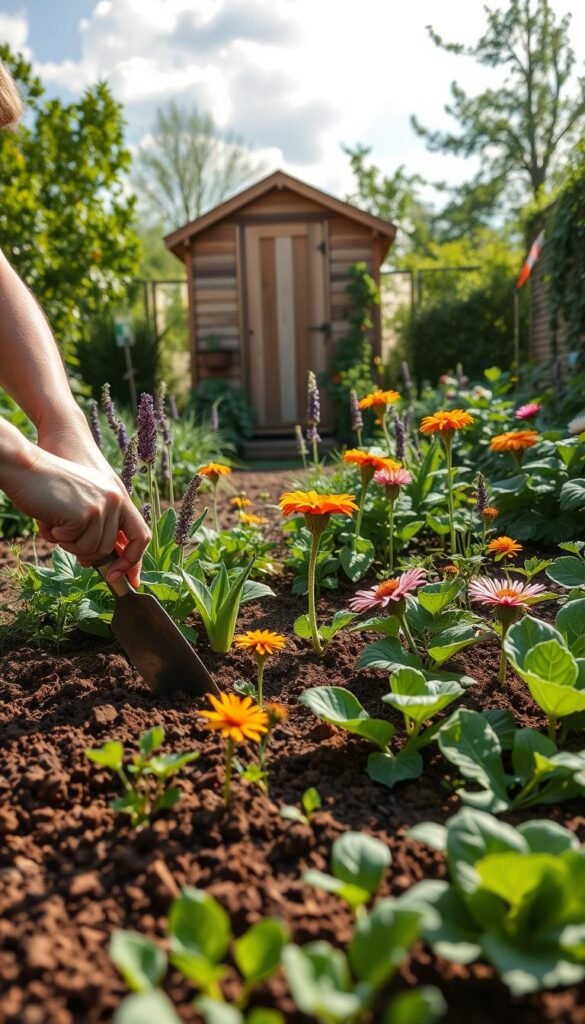
What does your garden need to stay buzzing all year? Consistent care tailored to nature’s rhythms keeps blooms vibrant and pollinators returning. Smart gardening practices adapt to temperature shifts while protecting your habitat investment.
Seasonal Maintenance Strategies
Spring kicks off with soil aeration and compost top-ups. Remove winter debris carefully—some bees nest in hollow stems. Plant early bloomers like lupine using the U.S. Fish and Wildlife Service’s pollinator habitat for spacing tips.
Summer demands weekly checkups. Water deeply before sunrise to avoid evaporation. Handpick pests like aphids instead of using sprays. Let clover grow between stones—it cools soil and feeds bees.
Prepare for fall by sowing asters and goldenrod. Apply 3 inches of leaf mulch to insulate roots. Leave seed heads intact—they’re winter food for finches that control garden pests.
Winter is planning time. Prune only dead branches—many butterflies overwinter in plant debris. Sketch next year’s layout while sipping cocoa, noting which plants thrived.
| Season | Key Tasks | Plant Focus |
|---|---|---|
| Spring | Soil prep, early planting | Phlox, Virginia Bluebells |
| Summer | Watering, pest checks | Bee Balm, Milkweed |
| Fall | Mulching, late blooms | Asters, Goldenrod |
| Winter | Planning, minimal pruning | Native grasses |
Track tasks using a seasonal calendar app. Quick weekly checks prevent big issues. Your efforts create a legacy—healthy habitats that support pollinators for years!
Celebrating Your Pollinator Garden Journey
Watching your first monarch butterfly sip nectar from blooms you planted marks a special moment. Through thoughtful design and seasonal care, you’ve built more than a flower bed—you’ve created life-supporting habitat. Urban ecologists report that even small gardens can increase local bee populations by 40% within two years.
Your efforts ripple beyond your yard. Neighborhoods with pollinator-friendly spaces see richer bird diversity and healthier plants. One community project in Oregon transformed vacant lots into butterfly corridors, proving collective action starts with individual steps.
Reflect on what’s working each season. Maybe swap out slow-growing perennials for quick-blooming annuals. For those refining their layouts, explore efficient square foot gardening techniques that maximize blooms in tight spaces. Urban gardener Mia Fernandez shares, “Noticing which insects visit taught me to adjust plant groupings yearly.”
Every watering session and weeding hour matters. As your garden matures, you’ll spot new species—maybe a metallic green sweat bee or zebra swallowtail. These victories remind us that nurturing nature rewards patience. Keep experimenting, observing, and enjoying the buzz!