
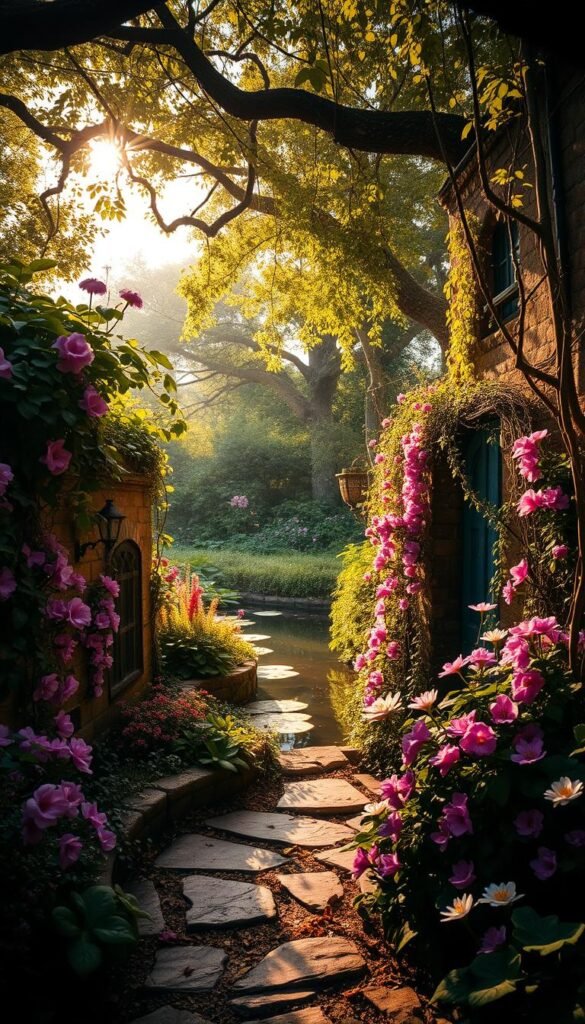
Imagine stepping into a space where time slows, and every corner feels like a whispered invitation to explore. For centuries, secluded green spaces have captivated hearts, blending artistry with the raw beauty of nature. Originally crafted in grand estates, these intimate retreats offered refuge from bustling worlds—a tradition that still inspires modern landscapes.
Today, these enclosures transform ordinary yards into living stories. Winding paths, weathered benches, and clusters of wildflowers turn forgotten areas into sanctuaries. It’s not just about plants—it’s about crafting moments where rustling leaves and dappled sunlight spark curiosity. Think of it as curating mystery, one bloom at a time.
What makes these spaces timeless? They awaken childhood wonder, offering fresh discoveries with each season. A cottagecore aesthetic complements this vision, blending vintage charm with sustainable touches. Here, weathered stones or repurposed arbors become portals to tranquility.
Your journey begins by reimagining corners as canvases. Whether under a willow tree or behind ivy-covered walls, these nooks remind us that magic thrives where imagination meets earth. Ready to create your own haven? Let’s uncover how.
Discovering the Magic of Hidden Garden Spaces
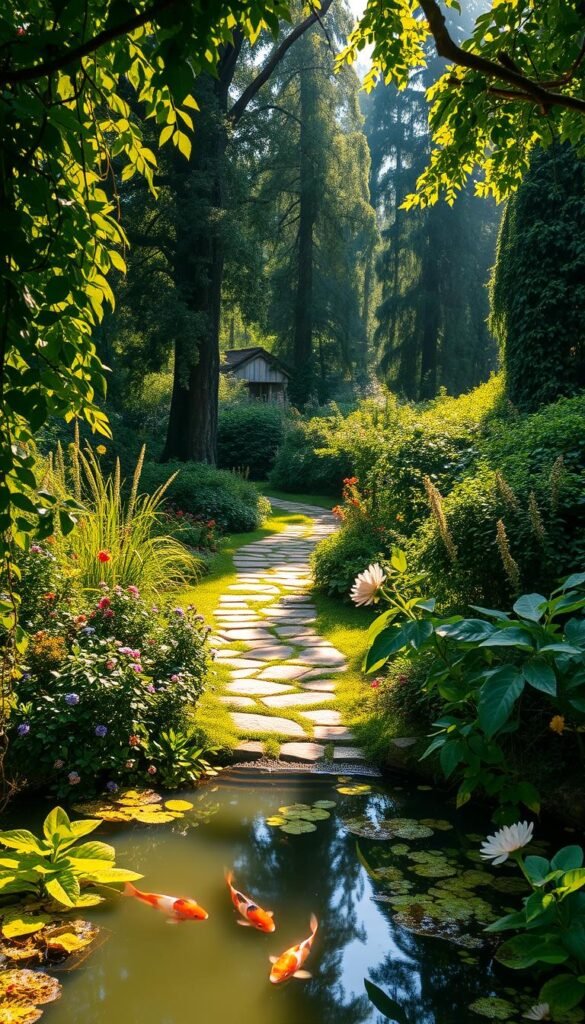
Your backyard holds untapped potential—quiet corners where wonder and calm bloom unexpectedly. These spaces become gateways to serenity when you learn to see their possibilities. It’s about listening to the soft hum of nature and letting it guide your vision.
Embracing Nature’s Seclusion
Look for areas where sunlight filters through leaves or vines climb forgotten fences. These spots naturally create intimacy. A curved bench beneath a tree canopy or a cluster of ferns near a stone wall transforms into a secret garden retreat. The goal? Craft pockets where time slows, and rustling branches become your soundtrack.
Unlocking Your Garden’s Story
Every yard whispers its own tale through seasonal shifts and weathered textures. Notice where shadows dance at dusk or wildflowers peek through cracks. By elevating your space with intentional design, you amplify these details. A winding gravel path or mossy stepping stones invites curiosity, turning routine walks into adventures.
What makes these spaces magical? They thrive on subtlety. A birdbath becomes a centerpiece, while twilight fireflies add fleeting beauty. It’s not about grand gestures—it’s about nurturing moments that feel like stepping into another world.
Planning Your Enchanting Garden Layout
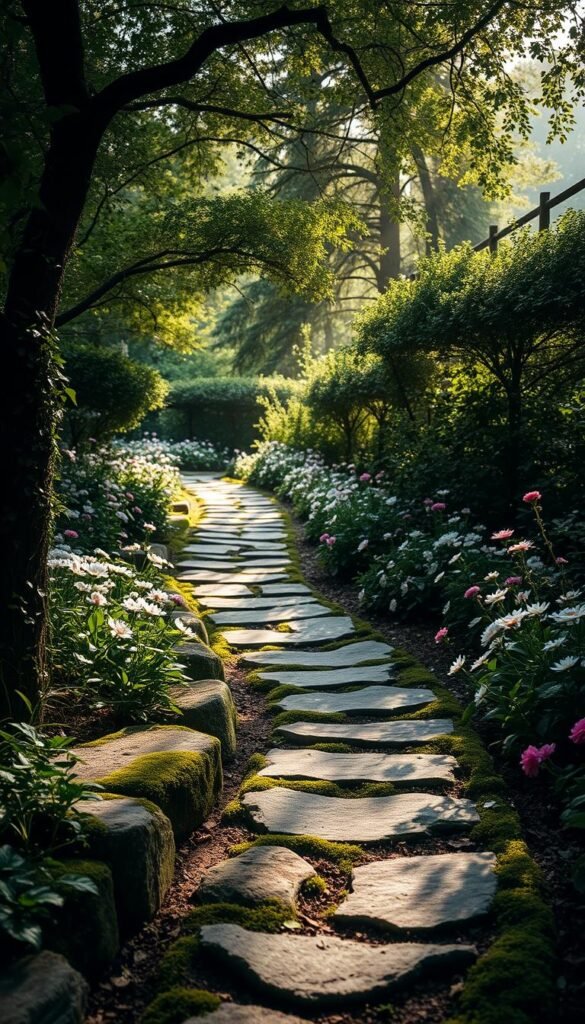
Curving paths and clever divisions turn ordinary yards into adventures. Start by sketching your space from above—this bird’s-eye view helps identify where mystery can unfold. Look for existing features like mature trees or slopes that naturally guide movement.
Mapping Pathways That Whisper Invitations
Your first impression matters. Frame entry points with arched vines or trimmed boxwoods that narrow then widen. Mix materials to build anticipation: begin with brick pavers that shift to gravel near hidden areas. This gradual change signals discovery ahead.
Crafting Zones That Shift Moods
Divide your garden into chapters. Use low stone walls to separate a reading nook from play spaces. A trellis draped in jasmine creates visual breaks while letting scents mingle. Consider this simple guide:
| Zone Purpose | Key Elements | Atmosphere |
|---|---|---|
| Quiet Reflection | Bench, water feature | Serene |
| Social Gathering | Fire pit, level ground | Inviting |
| Exploration | Winding paths, hidden art | Playful |
Transitions matter most. Let stepping stones become farther apart near wildflower patches, slowing visitors down. Every step feels intentional when paths curve just enough to hide what’s next. Your outdoor space becomes a living storybook this way.
The Secret Garden Aesthetic: Designing Hidden Nooks for a Magical Retreat
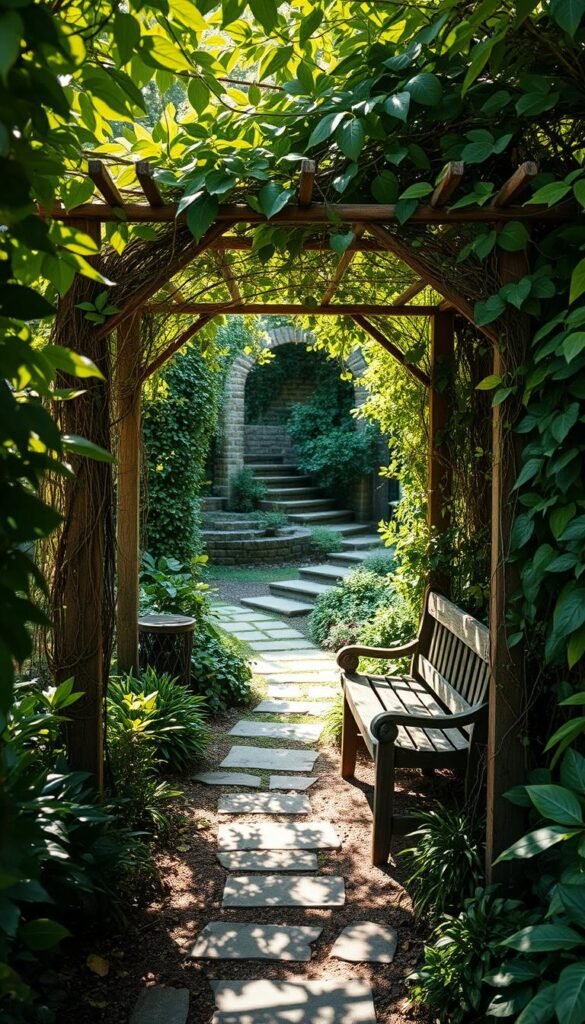
Your outdoor area becomes extraordinary when tailored to the rhythms of daily life. Start by observing how sunlight moves across your yard—those dappled corners under trees or sheltered spots near walls often beg for purpose. These become natural candidates for retreats that reflect your family’s unique story.
Curating Spaces That Speak to You
Transform forgotten areas into functional escapes. A curved bench beneath blooming jasmine makes an ideal nook for morning reading. Nearby, repurpose an old potting table into a mud kitchen where kids craft earthy masterpieces. These zones thrive when aligned with what brings your household joy.
Consider layering purposes within one space. A circular stone patio can host twilight dinners yet double as a stage for fairy gardens by day. For sustainable garden design, use existing slopes or tree roots as natural seating foundations.
Balance activity and calm through strategic placement. Tuck lively play zones behind evergreen screens, while meditation sanctuaries flourish near trickling water features. Even compact patios can hold secret corners—hang trailing ivy above a bistro set to create intimacy.
Every nook should whisper invitation. Add weathered shelves for book swaps in reading areas, or plant chocolate cosmos near dining spots to scent evening meals. When personal touches meet nature’s flow, your retreat becomes a living scrapbook of cherished moments.
Enhancing Ambience with Lighting and Water Features
As dusk settles, your garden transforms into a realm where light and water weave spells of serenity. Strategic illumination paired with flowing elements elevates ordinary evenings into sensory experiences. Let’s explore how these tools craft magic after sunset while maintaining daytime charm.
Incorporating Fairy Lights and Natural Illumination
Twinkling fairy lights draped over arbors create starlit tunnels along pathways. Solar-powered lanterns nestled in flower beds offer eco-friendly glow without wiring hassles. Mix warm white strands with amber Edison bulbs to layer atmosphere—brighter near seating areas, softer where mystery thrives.
Position lights to highlight textures: uplight birch bark or silhouette ferns against walls. This approach ensures your space remains inviting at night while preserving daytime subtlety. For moonlit effects, use low-voltage path markers that mimic natural radiance.
Creating Tranquil Focal Points with Water Elements
A burbling fountain becomes your garden’s heartbeat, masking street noise with rhythmic whispers. Consider this guide for pairing water features with illumination:
| Feature | Lighting Pairing | Effect |
|---|---|---|
| Reflecting Pool | Floating LED candles | Doubles starry skies |
| Rock Waterfall | Recessed spotlights | Highlights cascades |
| Tiered Fountain | Submersible color LEDs | Creates liquid rainbows |
Even small tabletop fountains add tranquility when placed near seating. Combine with wind chimes for layered sensory magic that shifts with breezes. Your evenings will hum with life as fireflies join the dance of light and liquid motion.
Integrating Unique Structures and DIY Garden Projects
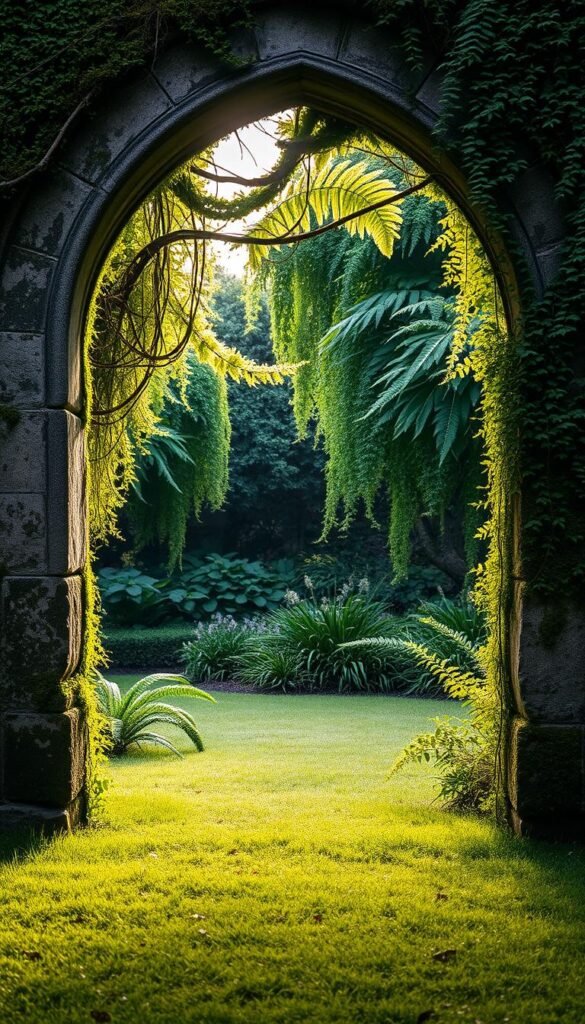
Personal touches turn ordinary gardens into storybook escapes. By blending handmade elements with nature’s flow, you’ll craft spaces that feel both discovered and intentional. Let’s explore three projects that add character while honoring your landscape’s beauty.
Building Rustic Benches and Moss-Covered Doorways
Transform a basic arch into an enchanted entry using preserved moss and waterproof glue. Apply clusters unevenly to mimic natural growth, leaving gaps for stones or lichen to peek through. “A doorway should hint at secrets waiting beyond,” says landscape artist Mara Lin. This technique works wonders on old gates or trellises too.
For seating, repurpose fallen branches into curved benches. Sand edges smooth but leave bark intact for texture. Position them facing flowers or water features—these spots become favorite retreats for visitors seeking quiet moments.
Adding Vintage Charm with Birdcage Planters
Scour flea markets for wrought-iron cages missing their stands. Line them with coconut coir, then nestle pots of trailing lobelia or fuchsia inside. Hang clusters at varying heights near seating areas to create secret overhead gardens. Their intricate patterns cast delicate shadows as sunlight shifts.
Choose plants that age gracefully—heirloom roses or lavender add charm while attracting pollinators. Over time, rust patina blends with your garden’s living palette, making these features feel unearthed rather than placed.
“The best structures whisper stories through their imperfections.”
Balance is key. Let one standout piece anchor each area while simpler elements support it. A mossy arch paired with a weathered bench feels cohesive, letting design enhance rather than overwhelm nature’s artistry.
Cultivating Greenery and Layering Floral Beauties
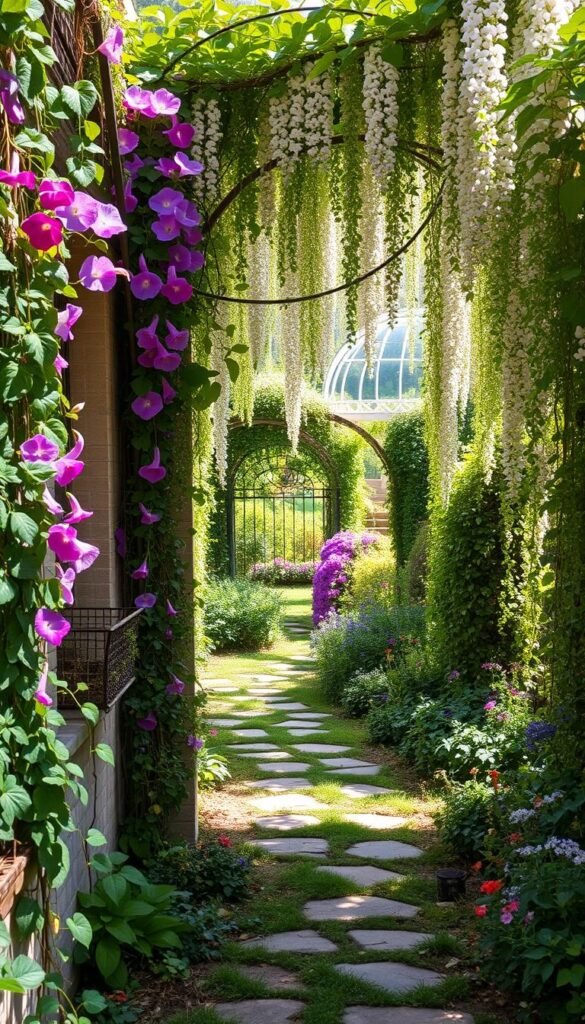
A garden’s true magic blooms when greenery climbs and layers unfold. Let vines like ivy or roses drape over walls, crafting natural screens that evolve with time. These living structures not only add depth but create pockets of mystery where sunlight filters through tangled leaves.
Choosing Flora That Thrives Through Seasons
Native plants anchor your space with resilience. Species like trumpet vine or passion flower adapt effortlessly to local climates, needing less water while supporting pollinators. Pair them with perennials from the cottagecore garden aesthetic—think foxgloves or delphiniums—for texture that shifts beautifully month to month.
Don’t forget containers! Even small spaces shine with colorful container gardens featuring pansies or trailing lobelia. Herbs like thyme double as fragrant ground cover, blending practicality with beauty.
By layering heights and bloom times, your garden becomes a tapestry of nature’s finest work. Let each plant play its part—some for structure, others for fleeting flowers—and watch as your sanctuary grows richer with every passing season.