
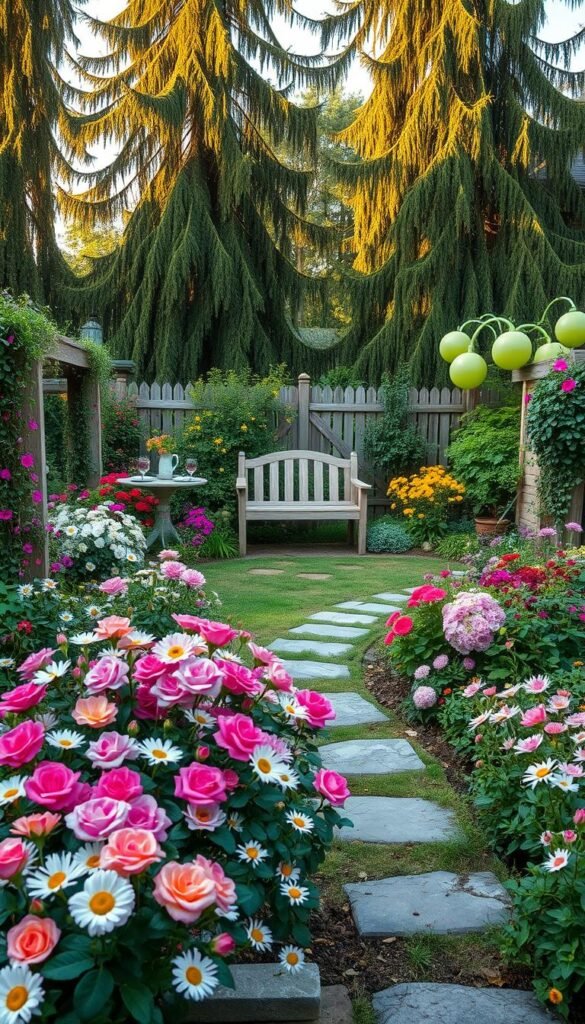
Imagine stepping into a space where vibrant blooms mingle with fragrant herbs, and every corner feels like a delightful surprise. This is the essence of a cottage-inspired landscape—a style that prioritizes joyful imperfection over rigid order. Unlike formal designs, these plant-filled havens celebrate nature’s spontaneity while offering practical beauty for everyday enjoyment.
At their core, these spaces blend edible plants with ornamental favorites, creating layers of texture and color. Think feathery grasses brushing against plump tomatoes, or climbing roses weaving through weathered trellises. The magic lies in balancing structure with wildness—a concept explored in our guide to elevating your outdoor space.
You’ll learn how to arrange plants in playful clusters rather than straight rows, allowing poppies to nod beside basil and lavender. Stone pathways and repurposed containers add character without fuss, while attracting pollinators becomes a natural bonus. This approach adapts beautifully to various spaces, whether you’re working with a sunny patio or a shaded nook.
Rooted in historical practicality yet perfect for modern life, this gardening philosophy turns your yard into a living canvas. It’s about creating places where hummingbirds dart between salvias and you can pluck fresh mint for afternoon tea—all within steps of your door.
Embracing the Cottage Garden Aesthetic
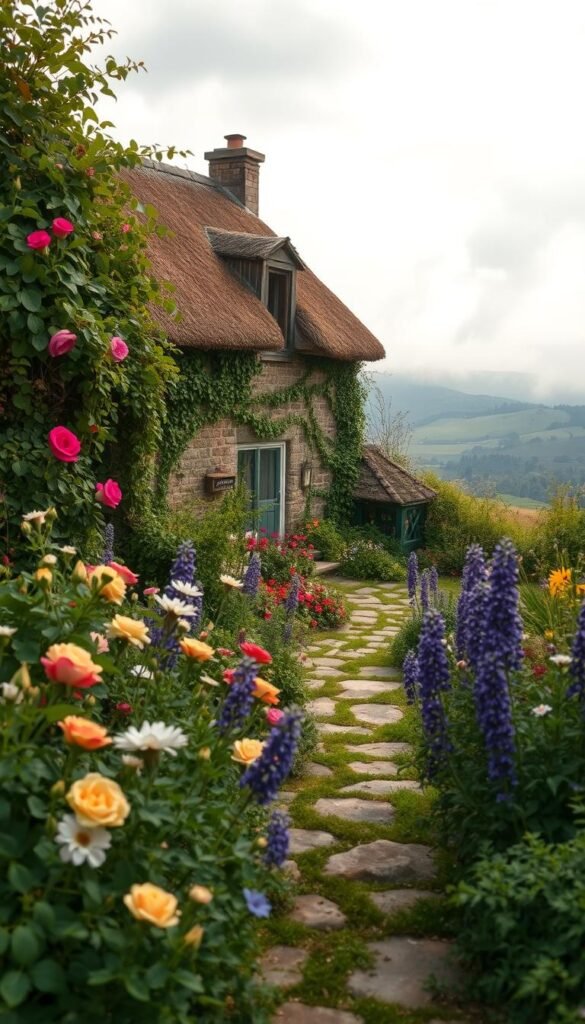
The story of cottage gardens begins with humble roots. English countryside homes once blended roses with cabbages, creating spaces as practical as they were pretty. This natural simplicity remains central to the style today—a living tapestry where beauty serves purpose.
Historical Charm Meets Natural Simplicity
Early versions weren’t designed for Instagram. Families grew medicinal herbs beside peonies, using every inch of soil. That organized chaos became the blueprint for modern designs. Instead of rigid hedges, think foxgloves leaning over thyme patches.
Your space can mirror this approach. Let mint creep near daisies. Allow hollyhocks to tower over lettuce. This mix creates depth while honoring tradition. As you plan, consider how vintage and modern elements can work together to achieve balance.
Defining Rustic and Wild Abundance
Weather-worn tools and chipped pots add character. A rusty watering can becomes art when spilling nasturtiums. Peeling paint on a bench? It’s not neglect—it’s patina telling your garden’s story.
Plants thrive when given freedom. Let poppies reseed where they please. Watch clematis scramble up a crooked fence. This controlled wildness creates dynamic shapes that change weekly. You’re not just growing plants—you’re curating nature’s spontaneity.
Setting the Stage: Planning Your Dream Garden
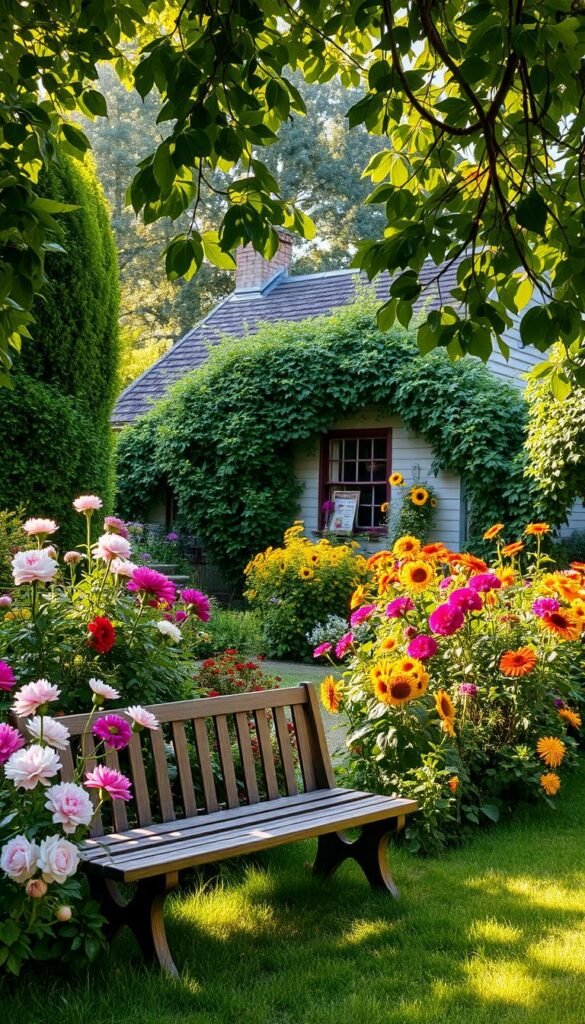
What makes a thriving cottage-style space feel effortlessly magical? It starts with understanding your land’s unique personality. Before planting, take time to observe how sunlight dances across your yard or where puddles linger after rain. These clues shape your design more than any Pinterest board.
Assessing Your Outdoor Space
Map your area’s sunniest spots for roses and lavender—they’ll crave six hours of direct light. Shadier corners become perfect nests for ferns or hydrangeas. Test your soil’s pH using a $10 kit from the garden store. Acidic earth? Blueberries will thrive. Alkaline? Lilacs might become your new stars.
Look for existing features worth keeping. That crumbling stone wall? Ideal for training honeysuckle. A slope? Turn it into a terraced herb haven. Even small spaces shine when you layer plants vertically—let clematis climb a trellis behind dwarf fruit bushes.
Create pathways wide enough for wheelbarrows but winding enough to feel secret. Position work zones near water sources to simplify care. Remember, the best cottagecore aesthetic ideas blend function with whimsy. Your compost bin can hide behind a screen of sunflowers, turning chores into treasure hunts.
Notice microclimates—south-facing walls create warm pockets for figs, while north sides stay cool for mint. By working with these natural patterns, you’ll create a living tapestry that grows lovelier each year.
Backyard Cottage Garden: Merging Rustic Charm with Floral Abundance
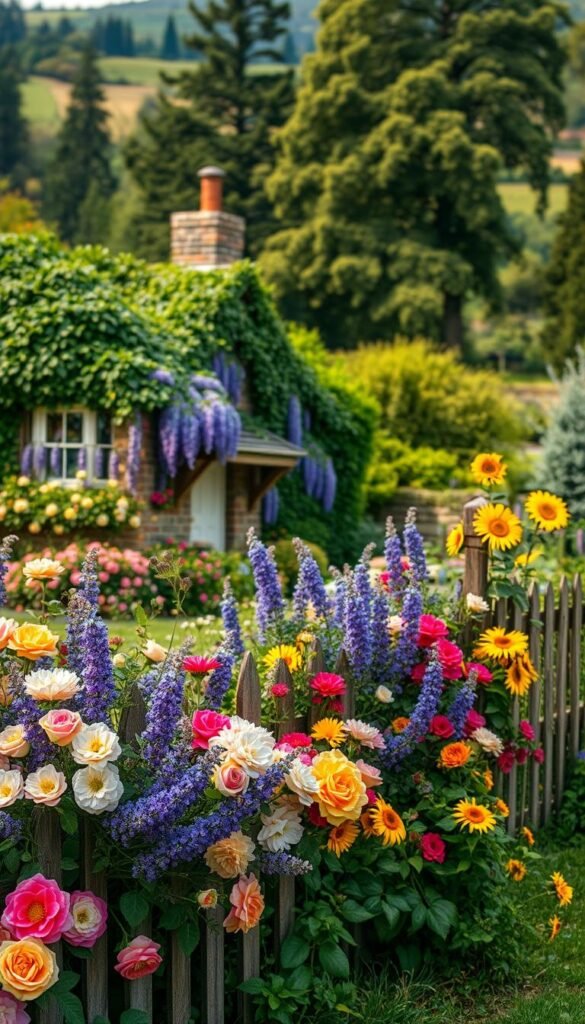
Think of your outdoor space as a living quilt—every stitch of greenery adds depth and warmth. Take inspiration from gardener Libby Webb, whose cottage garden thrives on joyful density. Her secret? Letting tall delphiniums brush against plump strawberries, and letting calendula spill onto stone walkways. This approach turns ordinary plots into lush retreats.
Start by layering vertically. Place feathery cosmos behind bushy sage, then tuck creeping thyme at their feet. This creates year-round drama—early spring bulbs give way to summer peonies, followed by autumn sedum. Pair early bloomers like lupines with late stars like asters for unbroken color.
Embrace controlled chaos. Let snapdragons mingle with rosemary, or allow nasturtiums to cascade over raised beds. These pairings feel spontaneous but require planning. As you design, weave in edible choices—kale’s ruffled leaves complement zinnias, while thyme’s purple flowers attract pollinators.
Add character with weathered touches. A rusted gate draped in sweet peas or a chipped trough overflowing with pansies bridges practicality and charm. For extra pops of color, try colorful container gardening between permanent plantings.
Finally, connect zones seamlessly. Use repeating plants like lavender or catmint to tie distinct areas together. This creates flow while maintaining that beloved cottage garden vibe—wild yet intentional, crowded yet harmonious.
Choosing the Right Mix of Plants and Flowers
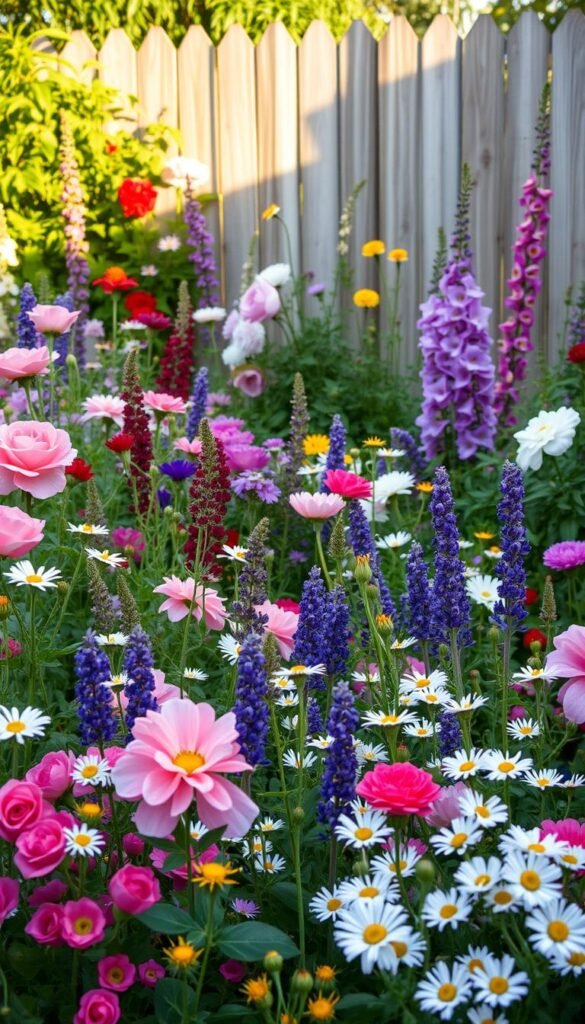
The secret to a thriving cottage-style space lies in pairing plants that work as hard as they charm. By blending showstoppers with practical picks, you create layers of beauty that feed both eyes and appetites. Let’s explore how to curate combinations that deliver color, flavor, and texture through every season.
Ornamental Blooms and Edible Delights
Designer Tim Pilgrim proves even compact spaces can burst with life when veggies mingle with roses. Try tucking ruby-hued Swiss chard behind pink peonies—their contrasting leaves create drama while both remain harvest-ready. Herbs like thyme and sage make fragrant groundcovers beneath taller flowers, releasing scent when brushed.
For vertical interest, train beans up sunflower stalks. Their golden blooms and edible pods share space efficiently. Basil’s glossy leaves pair beautifully with zinnias, while chives’ purple pom-poms echo lavender’s spires. Every plant earns its spot through beauty and utility.
Perennials vs. Annuals for Continuous Color
Anchor your design with perennials like foxgloves and catmint—they’ll return yearly, forming your garden’s backbone. Fill gaps between them with self-sowing annuals like cosmos, which drop seeds for next year’s surprise volunteers. Nasturtiums spill over edges, their peppery blooms lasting until frost.
Stagger planting times for non-stop vibrancy. Early tulips make way for summer phlox, followed by autumn asters. This strategy ensures something’s always peaking, keeping pollinators loyal and your view lively.
Designing Winding Paths and Natural Borders
Curving walkways breathe life into your landscape, transforming flat spaces into adventures waiting to unfold. These pathways do more than connect points—they frame views and create rhythm, guiding visitors through your plant-filled paradise.
Choose materials that whisper casual elegance. Pea gravel crunches softly underfoot, perfect for informal routes where thyme might creep between stones. Flagstone offers stability for high-traffic zones, while reclaimed brick adds warmth where paths widen near seating areas.
Let plants soften edges for that lived-in feel. Lavender spilling onto walkways or ferns brushing ankles turns functional paths into sensory experiences. For natural borders, use low stone walls or let creeping jenny cascade over edges—boundaries that hint rather than shout.
Practical magic matters. Keep main routes 3 feet wide for comfortable strolls, narrowing secondary paths to 18 inches for intimate discovery. Gravel’s drainage prevents puddles, while spaced stepping stones reduce weed growth. Position curves to showcase star plants—a bend revealing roses or alliums in full glory.
Your design should feel discovered, not designed. Allow moss to grow between bricks. Let volunteer poppies dot gravel margins. This balance of intention and spontaneity captures the heart of a cottage garden, where every step tells a story.
Incorporating Vertical Elements: Trellises, Arbors, and Climbing Vines
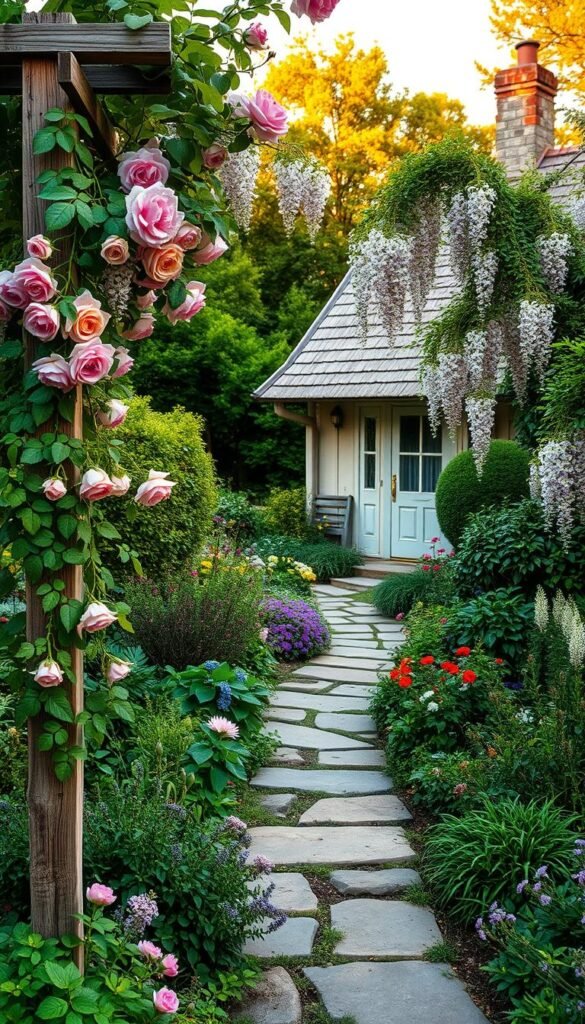
Adding height to your green space creates depth and intrigue, making every inch work harder. Vertical structures like trellises and arbors let plants reach for the sky while saving precious ground space. These elements turn plain surfaces into living art galleries where blooms and foliage dance across multiple levels.
Using Roses and Wisteria for Dramatic Impact
Climbing roses like ‘New Dawn’ transform blank walls into fragrant tapestries. Their repeat blooms ensure color from spring through fall. Pair them with clematis for layered texture—roses provide structure while other vines fill gaps with complementary hues.
Wisteria’s waterfall-like blooms demand sturdy support. Train young plants along pergola beams using soft ties. Annual pruning keeps growth in check while encouraging prolific flowering. Remember: these vigorous growers need space to stretch without overwhelming nearby plants.
Choose materials that age gracefully. Weathered wooden trellises or iron arbors develop character as vines mature. Position structures to frame views or create natural room dividers. A well-placed arch dripping with honeysuckle turns a simple walkway into an enchanted tunnel.
Maintenance matters. Trim rose canes after flowering to promote new growth. For wisteria, summer pruning controls size while winter cuts encourage blooms. With smart care, your vertical features will thrive without losing their effortless charm.
Adding Focal Points with Vintage and Rustic Accents
Your green space becomes truly yours when infused with personality-packed details. Creative reuse turns forgotten items into conversation starters, blending nostalgia with greenery in unexpected ways.
Breathing New Life into Old Treasures
That weathered wheelbarrow collecting dust? Fill it with petunias and pansies for a mobile flower show. Wooden crates become instant plant stands—stack them vertically to display herbs or trailing vines. Even chipped teacups find purpose as succulent holders on a vintage step ladder.
Look for pieces that tell stories. A rusty gate becomes a rose arch. Cracked terracotta pots? Nestle them among ferns for earthy texture. These touches add layers of interest without breaking your budget.
Practical magic shines through clever placements. Use pallet wood to build a cozy bench nestled among blooms. Hang mismatched containers on a salvaged fence panel. Every repurposed item strengthens your cottage garden’s unique character while keeping waste out of landfills.
Let your space evolve organically. Swap seasonal plants in movable containers. Add whimsy with a birdbath-turned-planter. When you embrace imperfections, you create a living scrapbook of memories and growth.