Imagine stepping into your own private sanctuary where every detail works together to calm the mind. Traditional outdoor spaces from Japan teach us that thoughtful design isn’t about filling areas with decorations—it’s about crafting moments of stillness through intentional choices.
This approach focuses on balance rather than quantity. Large rocks become focal points, while open areas mimic the simplicity of nature’s canvas. You’ll learn how to apply these ideas to your own yard, blending practical solutions with emotional resonance that fits modern lifestyles.
We’ll guide you through selecting materials that whisper rather than shout. Discover how natural textures and purposeful placements can turn ordinary corners into meditative zones. Whether you’re working with a sprawling lawn or a cozy patio, these strategies adapt to your unique environment.
By the end, you’ll know how to prioritize quality over clutter. Transform your outdoor area into a place where rustling leaves and trickling sounds replace everyday noise—all while keeping maintenance manageable. Let’s explore how meaningful simplicity can redefine your connection to nature.
Understanding the Philosophy Behind Asian Garden Backyards
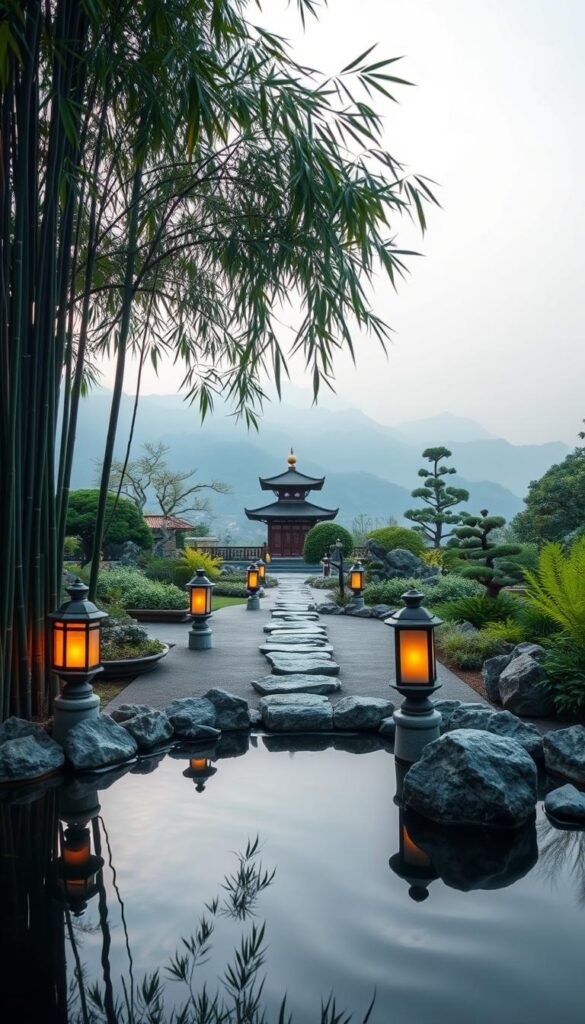
Creating a meaningful outdoor area begins with principles older than modern landscaping. Traditional Japanese aesthetics teach us that true harmony emerges when human creativity collaborates with nature’s patterns. This philosophy revolves around seven core ideas, from austerity to stillness, shaping spaces that feel both deliberate and spontaneous.
Embracing Harmony and Balance in Nature
You’ll find that balanced designs often use uneven arrangements. Instead of mirror-image layouts, try grouping rocks in clusters of three or five. This asymmetry mimics how trees grow naturally—never perfectly aligned but always visually cohesive.
Integrating Simplicity with Meaningful Elements
Less clutter means more room for intention. A single stone basin can serve as a bird bath, rain catcher, and focal point. Every choice should whisper purpose while inviting calm. Consider this table showing how Zen principles translate to practical design:
| Principle | Core Concept | Design Tip |
|---|---|---|
| Kanso (Simplicity) | Eliminate non-essentials | Use gravel instead of multiple plant varieties |
| Fukinsei (Asymmetry) | Balance through irregularity | Offset pathways with curved edges |
| Shinzen (Naturalness) | Authentic materials | Choose weathered wood over painted surfaces |
You’ll notice how these ideas prioritize living interactions over static beauty. A winding path encourages exploration, while strategic plant placement frames views like nature’s own artwork. The result? A space that evolves gracefully with time and use.
Key Elements in Japanese and Zen Garden Designs
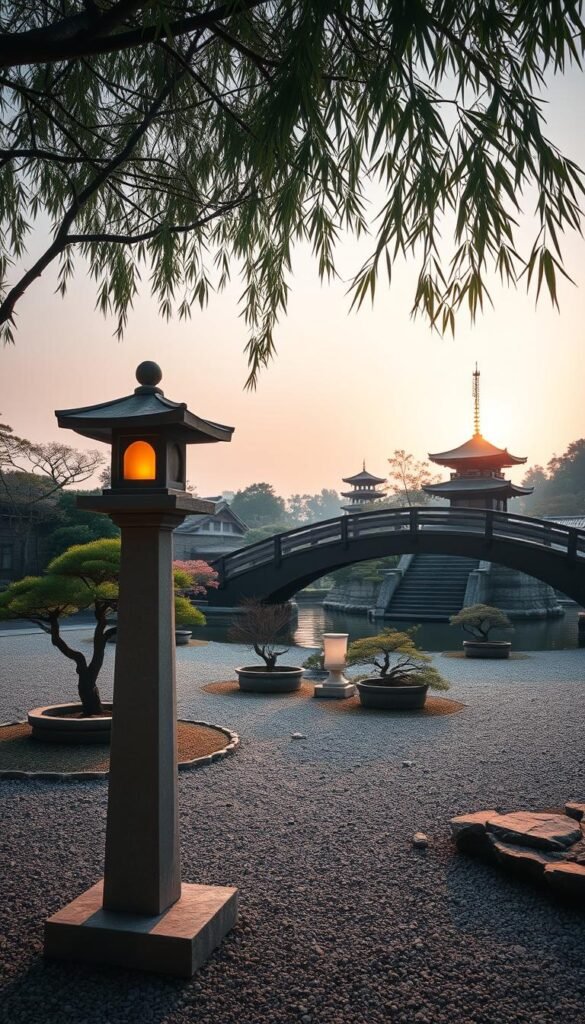
In the heart of Zen design lies a language of symbols, where each component speaks to deeper truths. These spaces use specific natural elements to spark reflection and connection. Let’s decode how stones, flowing patterns, and tall grasses become storytellers in your landscape.
Stones: Anchors of Timeless Meaning
Rocks form the backbone of Japanese gardens, chosen for their shape and texture. Larger ones symbolize mountains or islands, while paired stones create yin-yang balance. You’ll often see them arranged in odd numbers—three or five—to mimic nature’s imperfect harmony.
Water whispers through these spaces in two forms: actual streams and raked gravel. The soft ripple of a basin represents life’s constant flow. When liquid features aren’t practical, combed sand becomes waves frozen in time.
Bamboo: More Than Just Greenery
This fast-growing plant embodies resilience and adaptability. Its hollow stems rustle with wind, adding soundscapes to your retreat. Practical too, bamboo screens create privacy without blocking light—ideal for urban yards.
Together, these core elements transform ordinary spaces into mindful escapes. They ask you to slow down, notice contrasts, and find stories in stillness. Your garden becomes a mirror for nature’s quiet wisdom.
Asian Garden Backyard: Incorporating Bamboo, Stone Lanterns, and Water Elements
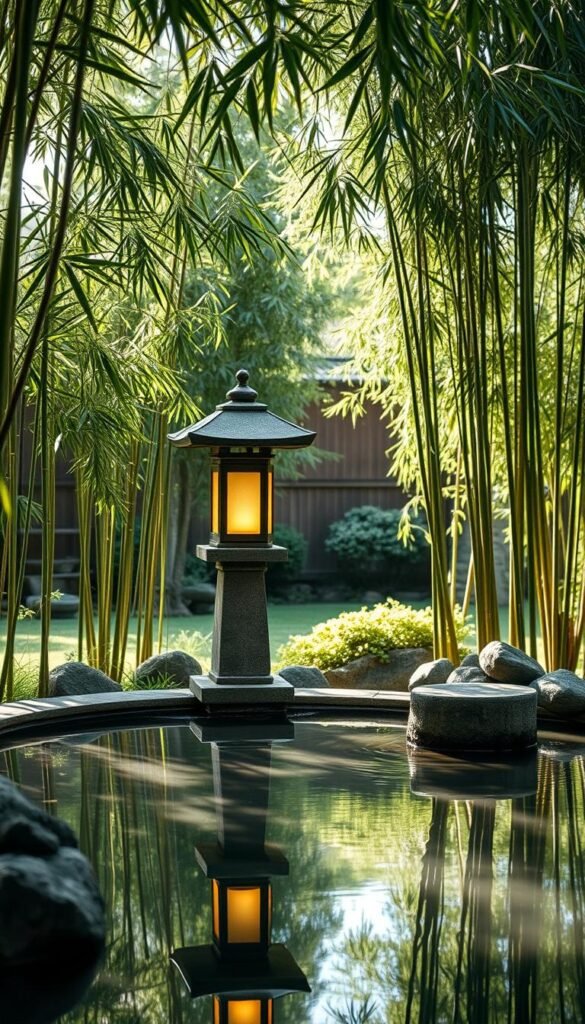
Designing with purpose transforms ordinary spaces into serene escapes. Three elements create this magic: sculptural lighting, flowing water, and versatile natural materials. Let’s explore how these pieces work together.
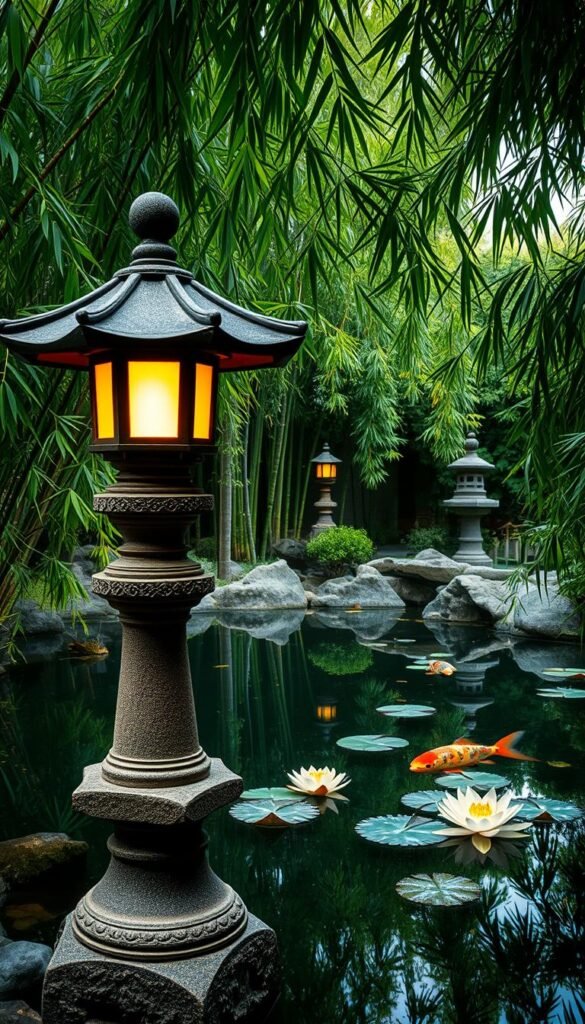
Stone lantern styles offer distinct personalities. Compare their traits:
| Style | Height | Best For |
|---|---|---|
| Taima-ji | Tall (4-6 ft) | Pathway accents |
| Korean Temple | Medium (3 ft) | Pond edges |
| Garden-Style | Variable | Creative focal points |
Water features do double duty. A small basin becomes a drinking spot for birds, while circulating ponds support koi that dart like living brushstrokes. For tight spaces? Try a bamboo spout trickling into pebbles.
Practical tip: Match your lantern’s scale to your space. Tall designs anchor large yards, while compact styles suit cozy corners. Pair them with gravel pathways and rustling grasses to complete the scene.
Inspiration from Iconic Japanese Gardens
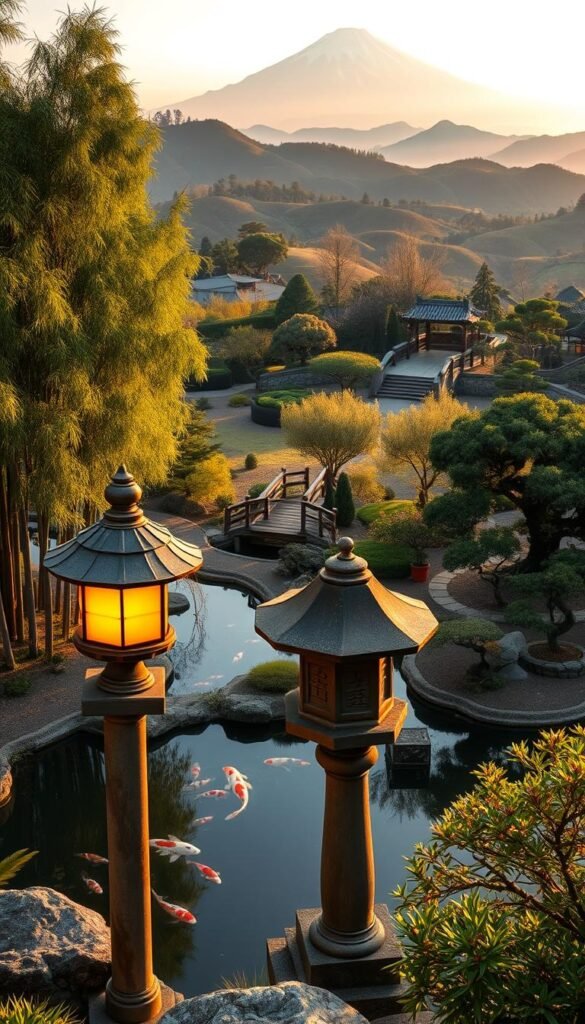
The world’s most celebrated gardens hold secrets that transcend time and geography. By studying legendary spaces like Kyoto’s Ryoan-ji and Kanazawa’s Kenrokuen, you’ll uncover design wisdom that works in any climate or culture.
Timeless Lessons from Master Gardeners
Historic gardens reveal how bridges transform experiences. At Kenrokuen, arched walkways invite visitors to pause mid-stride, framing views of maples and pines. This intentional design creates living postcards that change with the seasons.
Tea ceremony traditions shaped these spaces profoundly. Stone lanterns mark transition points, while winding paths mimic the meditative journey to a teahouse. As one 17th-century gardener noted:
“A garden path should feel like three miles walked in one hundred steps”
Contemporary Solutions with Ancient Roots
Modern interpretations let you borrow scenery creatively. Frame distant trees as part of your composition, or use raised beds to create elevation changes. Even urban spaces gain depth when you treat skylines as mountain silhouettes.
- Use curved wooden bridges to connect garden zones
- Install low-voltage lighting along pathways inspired by traditional layouts
- Create “rooms” using strategic plant groupings
Ryoan-ji’s famous rock garden proves simplicity needs no translation. Its raked gravel and moss patches offer ideas for low-water, high-impact designs. Your version might feature local stones arranged in patterns that catch morning light.
Practical Garden Design Tips and Layout Ideas
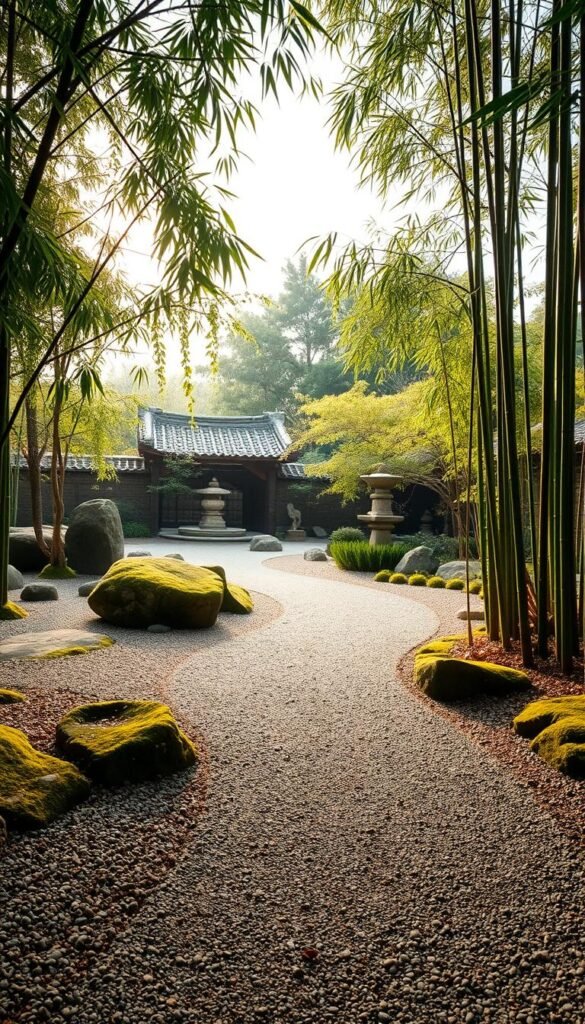
How do you turn unused outdoor areas into peaceful retreats? Start by mapping your space. Measure sun exposure and note drainage patterns—these details determine where features shine brightest.
Planning Your Outdoor Space with Feng Shui Principles
Position seating areas where morning light filters through trees. Feng shui teaches that curved pathways encourage positive energy flow. Avoid sharp corners near meditation zones—soft edges feel more inviting.
Consider these placement tips:
- Use existing trees as natural anchors
- Align water features with sunset views
- Leave open spaces for reflection
Choosing the Right Materials: Stone, Gravel, and Lanterns
Match materials to your landscape size. Small yards need pea gravel (¼” stones) for easy raking. Larger spaces handle crushed granite for dramatic patterns.
| Gravel Type | Best Use | Maintenance |
|---|---|---|
| Pea Gravel | Pathways | Low |
| Crushed Granite | Design Patterns | Medium |
| River Rock | Drainage | None |
Neutral-toned stones create calm backdrops. Light grey gravel makes moss patches pop, while cream colors soften harsh shadows. Always test samples under your home‘s lighting before finalizing.
Integrating Zen Garden Principles for a Tranquil Retreat
Your outdoor space becomes a living meditation when every choice honors balance. Thoughtful plant selection focuses on textures and seasonal shifts rather than fleeting blooms. This approach creates landscapes that feel timeless, inviting quiet reflection through structured simplicity.
Mindful Maintenance and the Art of Raking Gravel
Japanese maples anchor designs with their sculptural branches and fiery autumn color. Pair them with mossy ground covers for contrast that evolves year-round. Flowers like peonies or irises work best as subtle accents—a single cluster adds softness without distraction.
Raking patterns into gravel or sand isn’t just upkeep—it’s active mindfulness. The rhythmic motion clears mental clutter while maintaining your garden’s clean aesthetic. Many find this practice more rejuvenating than traditional meditation.
Bonsai trees and dwarf conifers bring miniature drama to patios or tabletops. Their compact size lets you create living art that fits any space. For DIY touches, try handcrafted plant markers using natural materials.
Remember: maintenance isn’t a chore here. Pruning becomes poetry when you view each snip as shaping energy flow. Your care routine transforms into a dialogue with nature’s rhythms.