
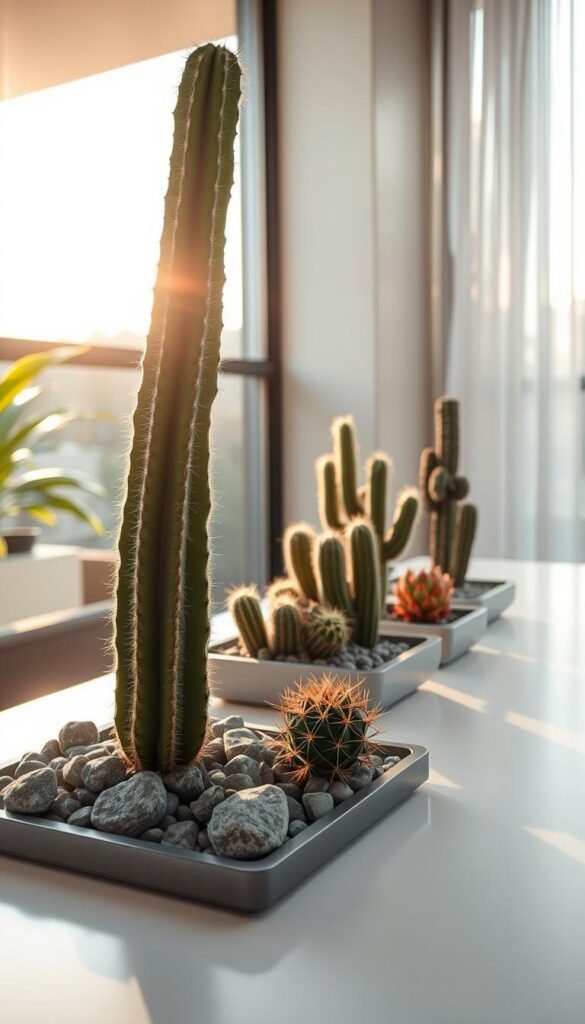
Spiky, sculptural, and surprisingly low-maintenance, cacti have become must-have plants for modern homes. These desert natives offer year-round interest with minimal fuss, thriving in sunny spots where other houseplants might struggle. Whether you’re drawn to fuzzy bunny ears or towering saguaro lookalikes, small varieties fit perfectly on desks, shelves, or windowsills.
Unlike tropical plants, cacti store water in their stems and prefer dry soil between waterings. Their slow growth means your 2-inch mini will stay tabletop-friendly for years. Tucson growers confirm most species adapt well indoors if they get enough light—a south-facing window works best.
Safety matters with these spiny friends. Keep them out of reach if you have curious kids or pets. Pairing multiple cacti in shallow containers creates eye-catching displays since they grow at similar rates. Their varied textures and shapes turn simple arrangements into living art.
Patience pays off with these resilient succulents. While you won’t see daily changes, proper care rewards you with occasional blooms and steady health. Ready to unlock their secrets? Let’s explore how to help your prickly pals thrive.
Fundamentals of Indoor Cactus Care
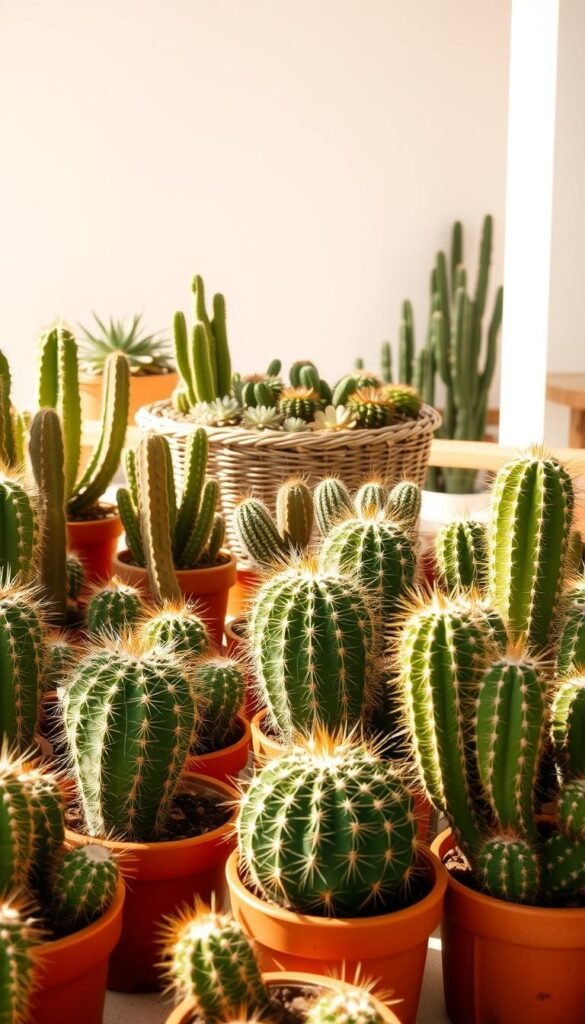
Cacti thrive indoors when you mimic their natural desert habitat. These resilient plants demand specific conditions to flourish, but getting it right means years of low-maintenance beauty. Let’s break down the essentials for keeping your spiky friends healthy.
Understanding Watering and Drainage Needs
Water less than you think – that’s the golden rule. Wait until soil is bone-dry before giving a thorough soak. A 3-inch pot might need water every 3 weeks in summer, while larger 6-inch containers can go 6 weeks between drinks. Always use pots with drainage holes to prevent soggy roots.
| Season | Pot Size | Watering Frequency |
|---|---|---|
| Summer | 3″ | Every 3-4 weeks |
| Winter | 6″ | Every 4-6 weeks |
Optimal Light, Temperature, and Humidity
South-facing windows are prime real estate for these sun-worshippers. They need at least 6 hours of bright light daily. If leaves stretch or pale, your plant’s begging for more sun. Keep temperatures between 65-85°F and avoid drafty spots near vents.
Unlike tropical plants, cacti love dry air. No misting needed! Watch for brown patches – they signal sunburn from hot glass. Rotate pots weekly for even growth and flower potential.
Planning Your Cactus Garden Design
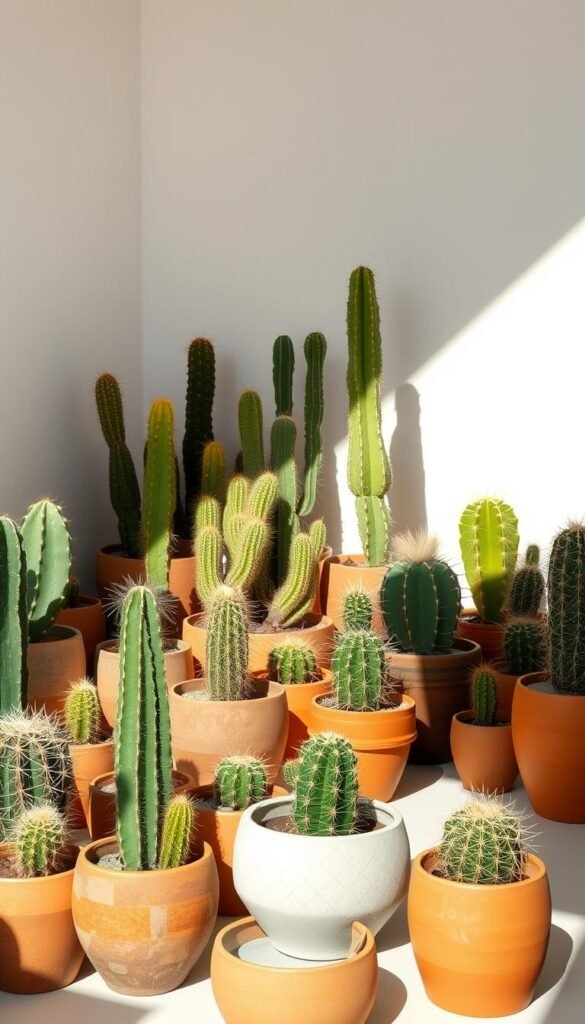
Creating a stunning cactus display starts with smart container choices and proper soil. These elements work together to keep your spiky friends healthy while showcasing their unique shapes. Let’s explore how to set up your plants for success.
Pick Containers That Breathe
Shallow pots between 2.5″ and 6″ deep suit most small cacti. Terra cotta and ceramic containers let roots dry quickly between waterings. Always check for drainage holes – one for narrow pots, three for wider bowls.
| Material | Breathability | Drainage |
|---|---|---|
| Terra Cotta | High | Excellent |
| Ceramic | Medium | Good |
| Plastic | Low | Fair |
Mix Soil Like a Pro
Regular potting soil drowns cactus roots. Use gritty blends with perlite or pumice for fast drainage. Brands like Bonsai Jack or Dr. Earth offer ready-made mixes, or try this DIY recipe:
- 2 parts coarse sand
- 1 part potting soil
- 1 part perlite
Pair your container selection with this mix, and you’ll prevent root rot. Remember: wider pots need more holes, while taller ones dry slower. Match pot size to your plants’ growth habits for a thriving display.
Designing an Indoor Cactus Garden: Care Tips for Hardy Houseplants
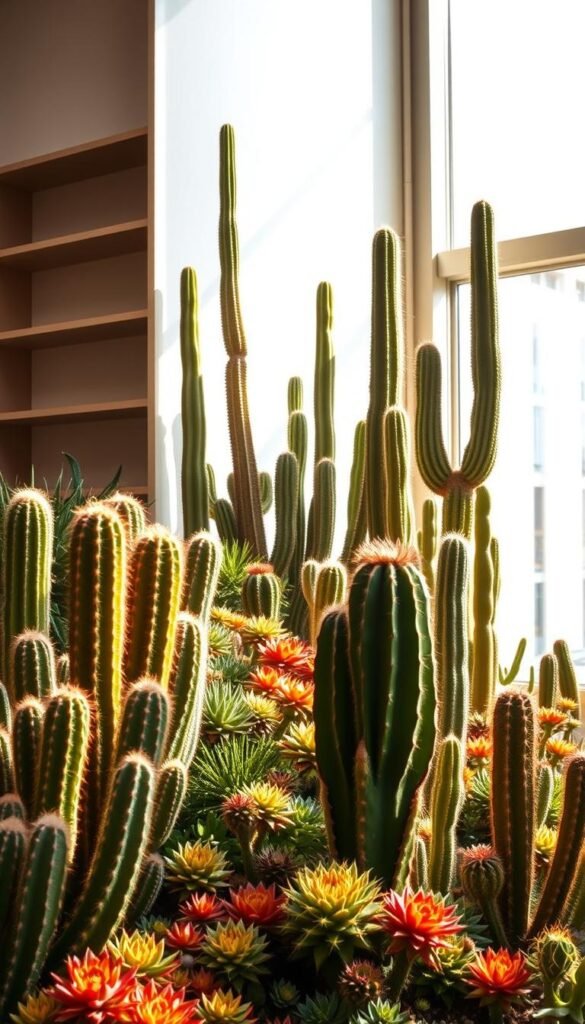
Transform your space with living art by mastering cactus arrangement techniques. Start with 2-4″ potted varieties – their compact size lets you experiment without commitment. Mix round barrel types with star-shaped astrophytums or trailing rat-tail cacti for dynamic contrast.
Arranging Cacti for Visual Impact
Place taller specimens toward the back of containers to create depth. Cluster three odd-numbered groups for natural appeal – try one columnar cactus flanked by two globular ones. Use kitchen tongs wrapped in microfiber cloth to grip spiny plants safely during placement.
Add drama with texture pairings: fuzzy old lady cactus beside smooth blue torch varieties. Leave 1-2 inches between plants to accommodate growth. Decorative touches complete the scene – try rust-colored gravel or miniature terracotta figurines for desert charm.
Rotate your display weekly to ensure even sun exposure. Remember: these slow growers maintain their shape for years, making them ideal for tabletops or shelves. Your arrangement will evolve into a permanent fixture that sparks joy without demanding constant attention.
Planting and Repotting Techniques
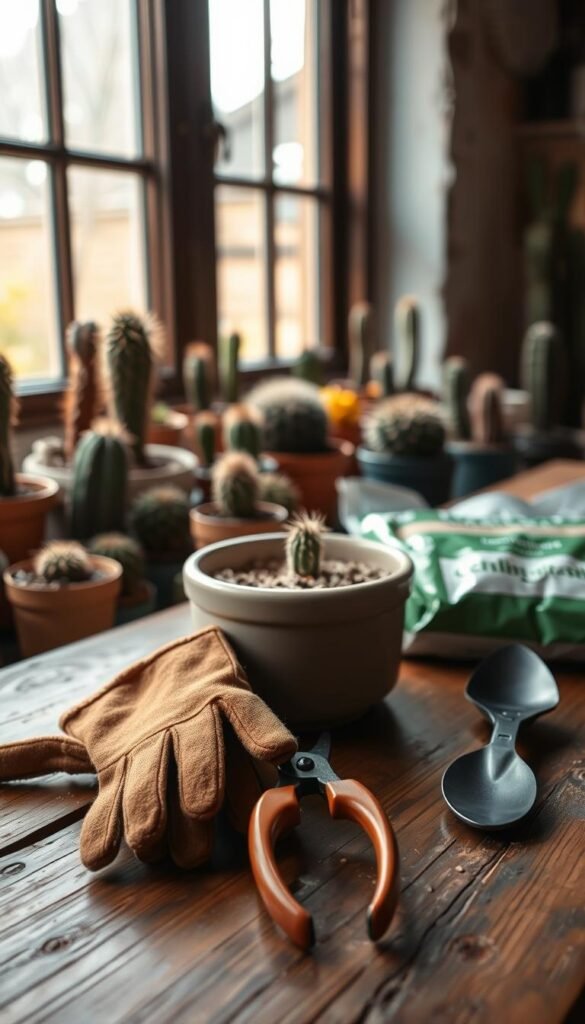
Working with spiky specimens doesn’t have to leave you picking spines from your fingers. With smart tools and timing, you can keep your desert dwellers thriving through every growth phase.
Handling Spines and Selecting Pots with Drainage
Grip plants safely using kitchen tongs lined with bubble wrap – the rubberized texture prevents slips. For tiny varieties, slide chopsticks through drainage holes to lift roots without touching spines. Accidentally get pricked? Spread white school glue over the area, let it dry completely, then peel away the hardened layer to remove embedded needles.
| Pot Material | Drainage Speed | Spine Protection |
|---|---|---|
| Terracotta | Fast | Thick walls |
| Plastic | Slow | Flexible rim |
| Concrete | Medium | Heavy base |
Preventing Root Rot with the Ideal Mix
Only move plants when roots poke through drainage holes or the soil dries too quickly. Choose containers 1-2 inches wider than the current pot – small root systems drown in excess soil. Spring through early fall offers ideal repotting conditions when plants actively grow.
Wait 7-10 days after transplanting before watering. This gives damaged roots time to heal. Use gritty blends containing perlite and coarse sand – they dry faster than standard mixes. Remember: overpotting causes more casualties than underwatering in these drought-loving plants.
Seasonal Adjustments for Thriving Cacti
Your spiky companions need different care as seasons shift. Just like you swap coats for sandals, these desert natives require tailored routines to stay vibrant year-round. Let’s explore how to keep them happy through temperature swings and changing light.
Spring and Summer Care Strategies
Warmer months mean more frequent watering – but only when soil dries completely. Boost hydration every 2-3 weeks as days lengthen. This is prime time for feeding: apply diluted fertilizer twice between April and August. Some gardeners move pots outside, but indoor growth avoids shock from sudden weather changes.
Winter Adjustments and Indoor Adaptations
Cooler temps trigger dormancy. Shift plants to south-facing windows and reduce watering to every 6-8 weeks. If stems stretch or pale, add LED grow lights 6 inches above them. Keep cacti away from drafty doors and heating vents – stable conditions prevent stress.
Maintaining Balance in Changing Conditions
Watch for clues like slowed growth or shriveled stems. Rotate pots weekly for even sun exposure during darker months. Resist repotting in winter – wait until spring when roots actively grow. With simple tweaks, your cacti will flourish through every season’s challenges.