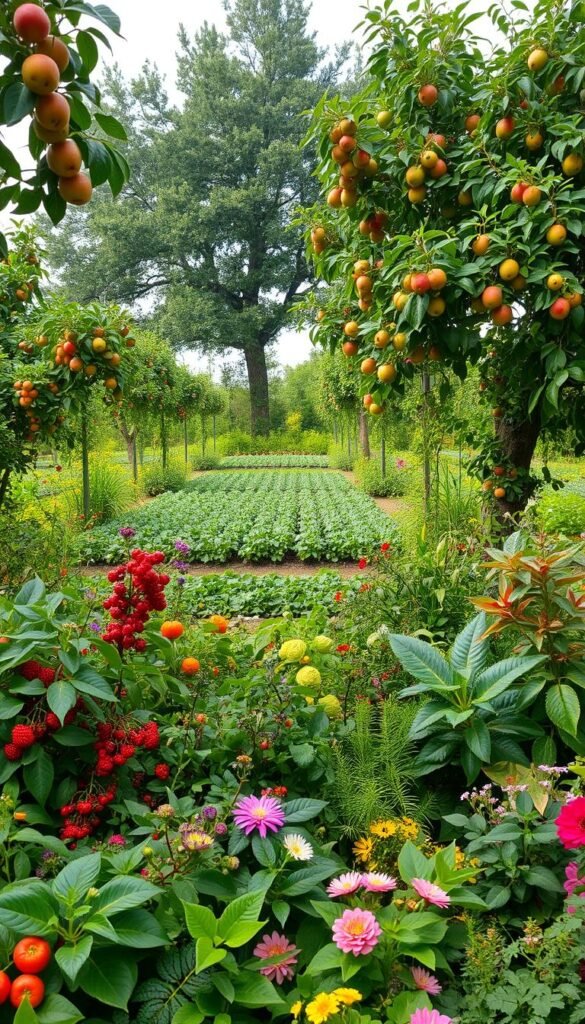
Imagine stepping outside to pluck ripe plums from your living fence while strawberries carpet the ground below. This isn’t a fantasy—it’s edible landscaping in action. Homeowners across the U.S. are rethinking their yards, swapping purely decorative plants for fruit-bearing trees and shrubs that feed both families and local ecosystems.
Take Steven Biggs’ innovative approach: he layered plum trees with currant bushes and strawberry plants to create a thriving “food forest hedge.” The result? A self-sustaining system where each plant supports the others. Tall trees offer shade for berries, while low-growing mint fills gaps where sunlight barely reaches.
Why settle for ordinary hedges when yours could produce snacks all season? This method turns basic greenery into a multipurpose asset—privacy screen, windbreak, and grocery aisle rolled into one. You’ll enjoy fresh-picked flavors while reducing trips to the store and chemical exposure.
Best part? These living pantries need no extra space. Even small yards can host dwarf varieties or vertical growing systems. As pollinators buzz through blossoms and birds nest in branches, your outdoor area becomes a vibrant habitat that works harder than traditional landscaping ever could.
Planning Your Edible Landscape for Maximum Yield
Maximizing your garden’s potential starts with careful planning. Before picking up a shovel, you’ll need to map out your space and understand how sunlight dances across your yard. This groundwork ensures every plant thrives while boosting your harvest.
Assessing Your Garden Space and Sunlight Needs
Start by sketching your yard and noting which areas get full sun (6+ hours daily) versus partial shade. Stone fruits like peaches demand sunny spots, while currants tolerate dappled light. Use a soil test kit to check pH and drainage—most edible plants prefer slightly acidic, well-draining soil.
Don’t forget chill hours! Apples need 500-1,000 hours below 45°F, while figs thrive with just 100. Match varieties to your climate for reliable fruiting. Self-fertile options like apricots save space, but cross-pollinators like apples need companions within 50 feet.
Designing a Multi-Layered Planting Strategy
Copy nature’s playbook by stacking plants vertically. Tall trees (canopy) shield berry bushes (understory), while strawberries (groundcover) suppress weeds. This design uses every inch efficiently, letting light filter through layers.
Group moisture-loving plants in low-lying areas and drought-tolerant herbs on slopes. Add compost to enrich soil before planting, and watch your edible space transform into a lush, productive ecosystem.
Selecting the Perfect Fruit Trees and Berry Plants
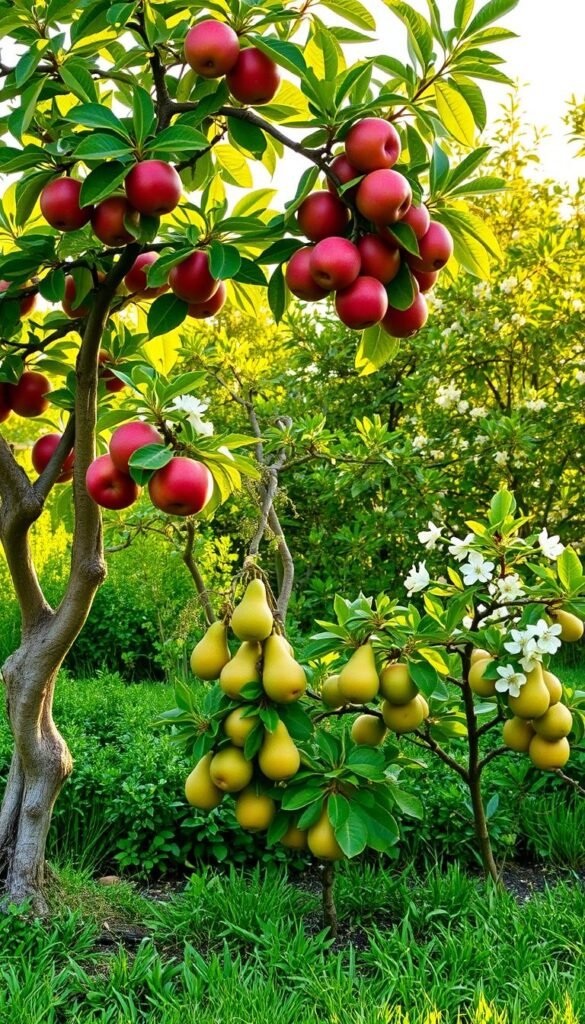
Your edible landscape thrives when each plant matches your space and climate. Smart choices ensure you’ll enjoy juicy peaches, crisp apples, and plump berries without wrestling with oversized trees or poor yields.
Size Matters: From Balcony to Backyard
Fruit trees grow in four sizes to fit any yard. Standard trees tower up to 30 feet, casting deep shade for patios. Semi-dwarf varieties (12-15 feet) work as focal points in garden beds, while dwarf types (6-10 feet) thrive in pots or tight spaces. Super-dwarf trees stay under 5 feet—ideal for balcony gardens.
| Tree Size | Height | Space Needed | Best Use |
|---|---|---|---|
| Standard | 20-30 ft | Large yards | Shade + fruit |
| Semi-Dwarf | 12-15 ft | Garden beds | Specimen plants |
| Dwarf | 6-10 ft | Urban lots | Container growing |
| Super-Dwarf | 3-5 ft | Balconies | Compact spaces |
Climate Compatibility Made Simple
Every fruit variety has unique needs. Apples demand 500+ chill hours (temps below 45°F), while figs flourish with just 100. Check your area’s average chill hours before buying. Self-fertile apricots bear fruit alone, but apples need cross-pollinators—plant two varieties within 50 feet.
Pair sun-loving blueberries with partial-shade currants for extended harvests. As one expert notes: “The right berry mix turns your yard into a seasonal flavor parade.” Discover more tips for selecting compatible pairs to maximize your edible returns.
How to Elevate Your Garden with Fruit Trees: Landscaping That Produces Food
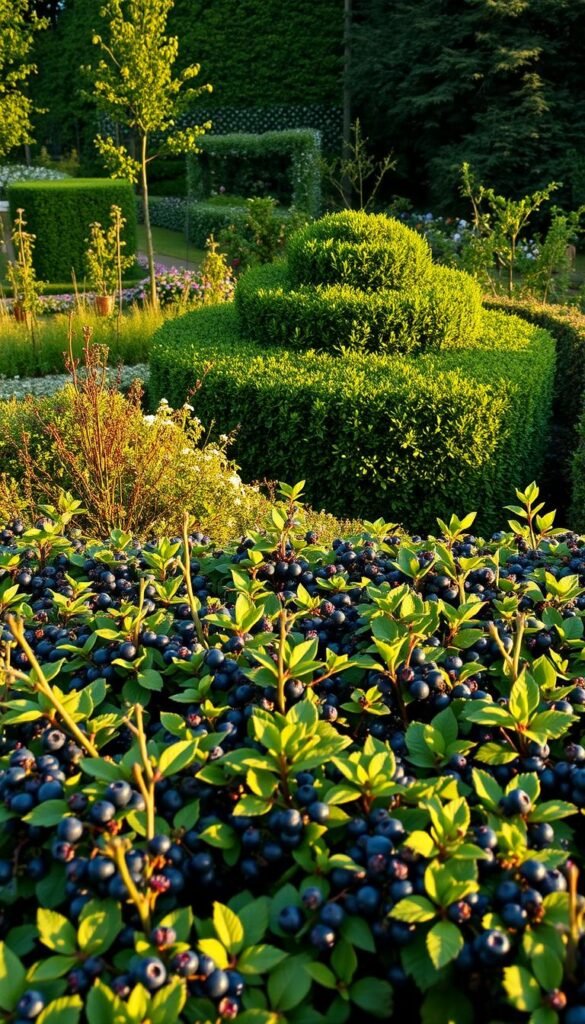
Why settle for plain shrubs when your hedge can burst with berries, nuts, and edible flowers? Edible boundaries redefine outdoor spaces by combining beauty with bounty. These living walls offer privacy while putting fresh ingredients at your fingertips—no need to choose between form and function.
Integrating Fruit Trees into Edible Hedges
Fruit trees anchor edible landscape designs while adding height and structure. Dwarf plum or apple varieties work beautifully in mixed hedges, their branches weaving through berry bushes below. Pair self-fertile cherries with serviceberries for cross-pollination magic—birds get snacks, you get pie fillings.
Consider staggered harvests: early blueberries give way to mid-summer figs, followed by fall-bearing aronia berries. “Layering ripening times turns your border into a seasonal buffet,” notes permaculture designer Mara Rivers. This approach keeps your kitchen stocked and your landscape lively for months.
Creating a Food-Forest Hedge with a Diverse Plant Mix
Food-forest hedges mimic natural ecosystems through strategic stacking. Start with nut trees like hazelnuts as your canopy layer. Underplant with currants for mid-height interest, then let alpine strawberries carpet the ground. Even the vertical spaces get used—grapevines climb trellises while offering edible leaves.
These mixed plants support each other naturally. Comfrey roots mine nutrients for shallow-rooted neighbors, while aromatic herbs deter pests. You’ll create a resilient edible landscape that needs less watering and weeding than traditional gardens—all while screening your patio from nosy neighbors.
Innovative Ways to Incorporate Fruit Trees in Suburban Yards
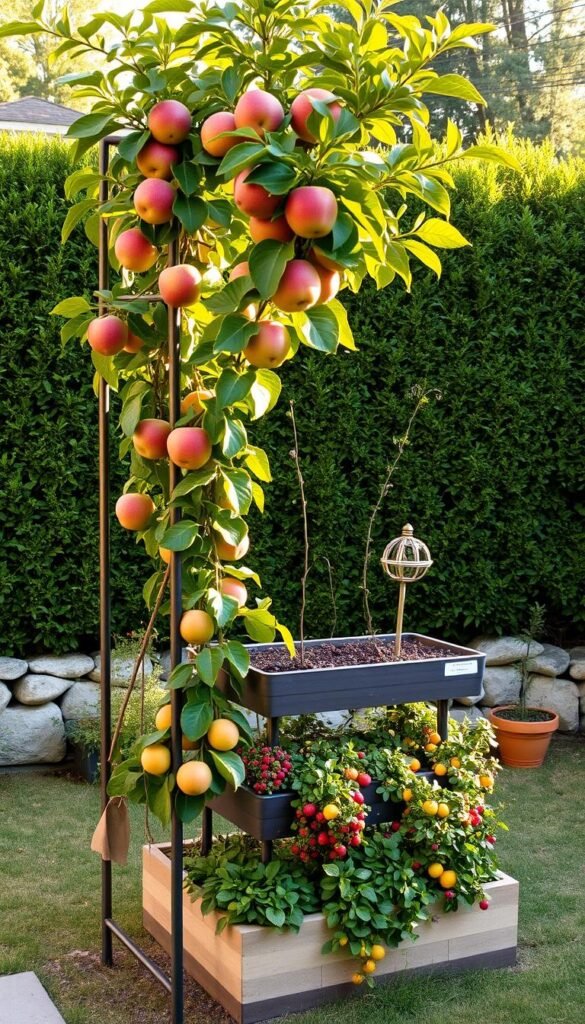
Suburban spaces bloom with possibility when you reimagine vertical surfaces and compact layouts. Clever ideas turn blank walls into fruiting galleries and transform overlooked corners into mini harvest zones. Let’s explore smart methods for growing fruit where space feels scarce.
Utilizing Vertical Spaces and Espalier Techniques
Walls and fences become productive partners with espalier training. This ancient method shapes apple or pear branches into elegant patterns against flat surfaces. You’ll gain:
- Sun-warmed fruit that ripens faster
- Easy access for pruning and picking
- Visual interest that outshines plain fencing
Trellises take vertical growing fruit to new heights. Kiwi vines scramble up metal grids, while grape clusters dangle within reach. Even strawberries thrive in stacked planters, saving precious ground space.
| Vertical Method | Best Plants | Yield Per Sq Ft |
|---|---|---|
| Espalier | Apples, Pears | 5-8 lbs |
| Trellis | Grapes, Kiwi | 3-5 lbs |
| Hanging Baskets | Strawberries | 2-4 lbs |
Designing Mini Orchards and Container-Friendly Setups
Transform underused yard corners into lush food hubs. Three semi-dwarf peach trees can fit in a 10×10 ft area when planted in a triangle. Pair them with blueberry bushes that enjoy dappled shade below.
Containers unlock patio potential. Dwarf citrus trees thrive in 15-gallon pots with proper drainage. Try this mix for success:
- 60% potting soil
- 30% compost
- 10% perlite
Guild planting supercharges small setups. Nestle chives around apple trunks to deter pests, and let creeping thyme suppress weeds. This way of layering plants creates self-sustaining ecosystems in limited space.
Mixing Edibles with Ornamentals for Year-Round Appeal
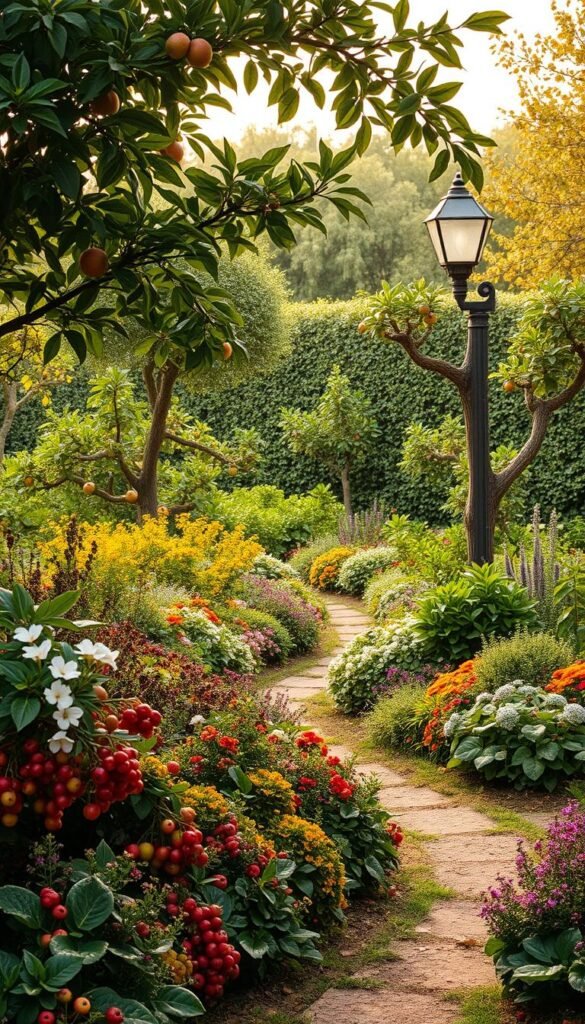
Who says your landscape can’t dazzle the eyes while filling your fruit bowl? By pairing productive trees with show-stopping plants, you create spaces that nourish both body and soul. Picture cherry branches heavy with pink spring blossoms beside purple lilac bursts—a feast for pollinators today, and your pantry tomorrow.
Blending Fruit Trees with Flowering and Foliage Accents
Choose varieties that pull double duty. Flowering crabapples explode with white blooms in April before offering tart fruits for jellies. Persimmons become winter showstoppers when their orange globes cling to bare branches like holiday ornaments. Pair these with ornamental grasses that sway beneath pear trees’ fiery fall foliage.
Companion plants boost beauty and function. Lavender edges beds with fragrant purple spikes while repelling pests. Hydrangeas underplanted with blueberries create a design that transitions from summer blooms to autumn berry harvests. “The goal is four-season beauty that tastes as good as it looks,” advises landscape designer Elena Carter.
Even foundation plantings gain hidden perks. Replace boxwoods with dwarf pomegranates near your home’s entrance—their scarlet flowers mirror rose bushes while yielding jewel-toned fruits. This approach keeps your landscape camera-ready while stocking your kitchen with nature’s finest offerings.
Building and Maintaining Productive Edible Hedges
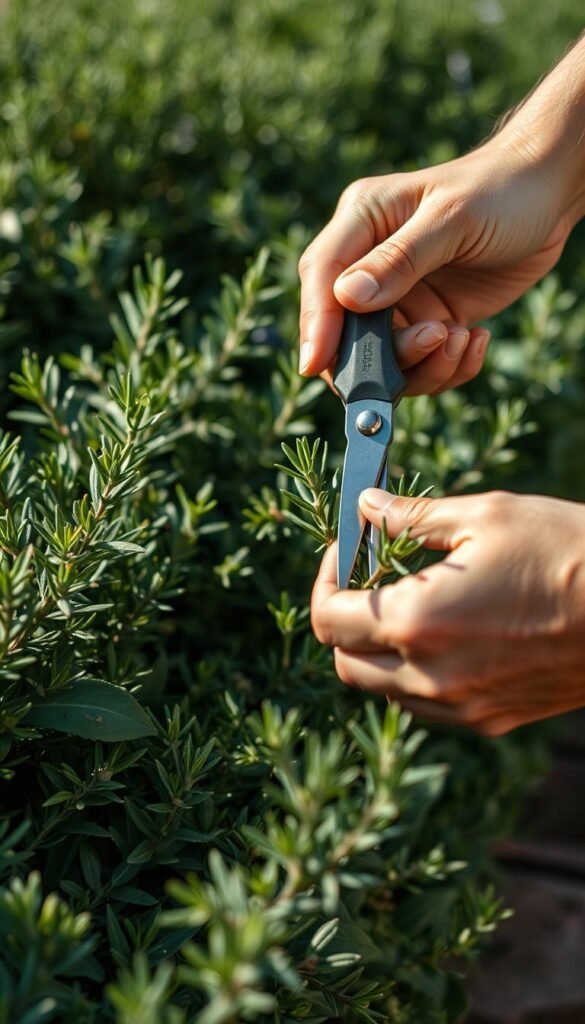
Transform your property line into a snack-filled sanctuary that works smarter, not harder. Unlike traditional hedges, edible boundaries thrive when you embrace their wild side—strategic care boosts yields while keeping plants healthy.
Pruning Strategies for Mixed Plantings
Each plant in your hedge has unique needs. Elderberries produce best on 1-2 year-old branches—remove older wood each spring after harvest. Currants and gooseberries need light thinning to let sunlight reach fruiting spurs.
| Plant Type | Pruning Time | Key Technique | Growth Benefit |
|---|---|---|---|
| Elderberry | Early Spring | Remove 3+ year canes | Encourages new shoots |
| Currant | Late Winter | Thin center branches | Improves air flow |
| Gooseberry | After Harvest | Cut back tips | Controls size |
| Apple (dwarf) | Dormant Season | Remove water sprouts | Directs energy to fruit |
Optimizing Spacing and Companion Planting
Commercial orchards use wide spacing, but hedges thrive when plants grow close. Try 18-24 inches between elderberries and currants—their roots will intertwine, creating natural support. Tuck thyme or oregano between plants to suppress weeds.
Smart pairings boost growth. Nitrogen-fixing clover feeds nearby blueberries, while basil repels aphids from apple trees. Time your care routines: prune stone fruits in late winter, but wait until spring for tender figs.
Leveraging Container Gardening and Urban Landscaping
Growing fruit in containers turns even the smallest spaces into sources of fresh produce. Whether you’re working with a fire escape or rooftop terrace, the right setup lets you cultivate fruit trees where traditional gardens can’t thrive.
Choosing the Right Containers for Fruit Trees
Size and material determine your success. Use these guidelines:
- 10-15 gallon pots: Ideal for dwarf citrus or apples
- Half whiskey barrels: Perfect for figs needing extra root space
- Fabric grow bags: Prevent waterlogging in rainy climates
Drainage holes are non-negotiable—add gravel at the base if needed. Lightweight plastic works for balconies, while ceramic retains moisture in sunny spots.
Best Practices for Soil, Fertilizer, and Water Management
Mix your soil like a pro:
- 60% potting mix (aeration)
- 30% compost (nutrients)
- 10% perlite (drainage)
Feed plants every two weeks with compost tea. Spray leaves with liquid kelp monthly for boosted immunity. Water when the top inch feels dry—use drip systems for consistent moisture during heat waves.
| Container Type | Best For | Water Frequency |
|---|---|---|
| Plastic Pots | Hot climates | Daily in summer |
| Ceramic | Partial shade | Every 3 days |
| Fabric Bags | Wet regions | Twice weekly |
Rotate pots seasonally to maximize sun exposure. In winter, wrap containers with bubble wrap to protect roots from freezing temps. With smart care, your container gardening efforts yield bushels of homegrown goodness.
Seasonal Strategies and Harvest Timing for Your Edible Landscape
Your edible oasis becomes a year-round pantry when you sync plant choices with nature’s calendar. Smart timing turns sporadic harvests into a steady supply of fresh flavors, from summer’s first berries to winter-stored apples.
Aligning Planting Schedules with Seasonal Changes
Pair June-bearing strawberries with autumn olives for summer-to-fall fruit production. Early haskap berries ripen alongside rhubarb, while persimmons wait until frost sweetens their flesh. Time plantings to fill gaps—add late-season figs where peaches finish early.
Tips for a Staggered and Extended Harvest Window
Prune summer-bearing blackberries after fruiting to encourage fall blooms. Store winter apples in cool basements, and freeze extra blueberries for baking. “Three well-timed pear varieties can stretch harvests from August through October,” notes orchardist Gina Martin.
Rotate crops annually—plant quick-growing currants where garlic once grew. This approach keeps fruits flowing while giving soil time to recover. With strategic timing, your landscape becomes a perpetual food source.