
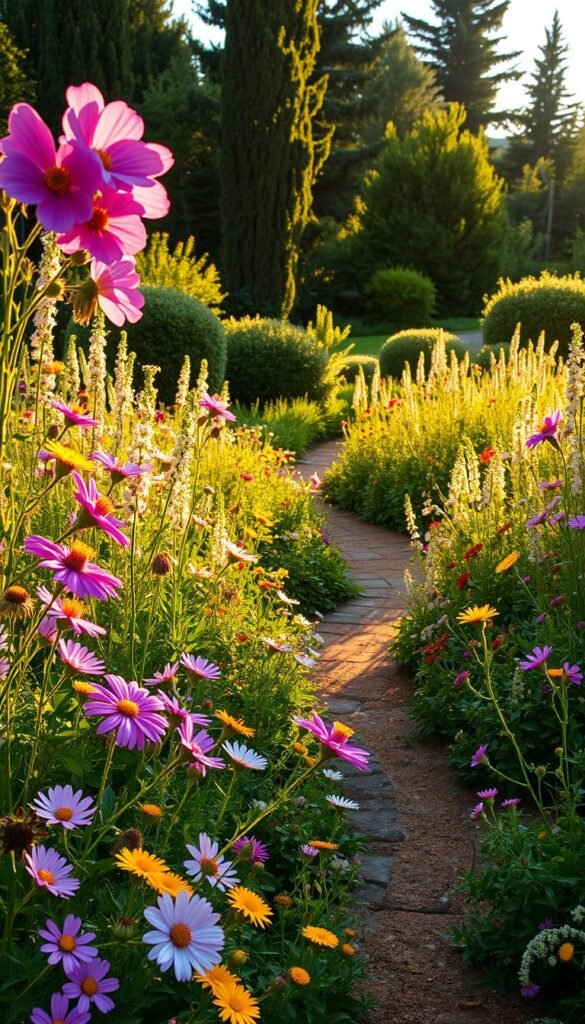
Imagine stepping into a vibrant space where colors dance in the breeze and life hums around every petal. A wildflower garden offers more than visual charm—it strengthens local ecosystems by feeding pollinators like bees and butterflies. These lively spaces blend effortless elegance with environmental purpose, making them ideal for modern gardeners.
Why are these gardens surging in popularity? They thrive with minimal upkeep while delivering maximum impact. By choosing native seeds, you create habitats that feel authentically wild yet intentional. It’s about collaborating with nature, not controlling it.
Even small spaces can bloom into wildlife havens. Whether you have a sprawling backyard or a cozy balcony, the right approach transforms your area into a sanctuary. The secret lies in balancing spontaneity with smart planning—mimicking nature’s patterns while guiding growth.
You’ll soon learn how to craft a space that feels untouched by human hands yet reflects your vision. From boosting biodiversity to creating year-round interest, every choice matters. Ready to unlock the magic of a garden that works with the earth, not against it?
Embracing the Wild Spirit in Your Garden
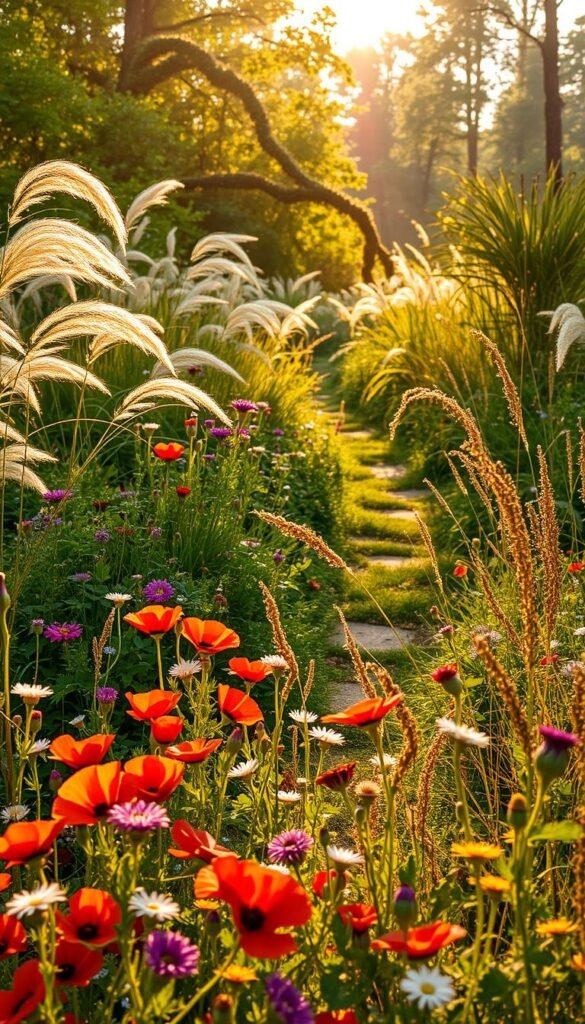
Think of a place where nature’s rhythm guides growth and beauty. This approach turns your space into a living canvas that thrives through partnership rather than control. You’ll create habitats where life flourishes on its own terms while supporting local ecosystems.
Drawing Inspiration from Nature
Observe meadows and woodland edges—nature’s masterclasses in plant harmony. Notice how goldenrod clusters beside purple coneflowers, or how milkweed shelters monarch caterpillars. These patterns teach you to combine species that support each other while creating visual drama.
Balancing Beauty and Biodiversity
Your garden becomes a stage where colorful blooms and busy pollinators share the spotlight. Plant native species like black-eyed Susans and bee balm—they’re drought-resistant and attract butterflies. Add winding pathways to explore your space during golden hour, when light paints petals in warm hues.
These spaces double as outdoor classrooms. Watch hummingbirds dart between salvias or track how sunflowers tilt with the sun. For design ideas that blend function with charm, explore our guide to elevating your space with a gardening.
Key Principles of Naturalistic Garden Design
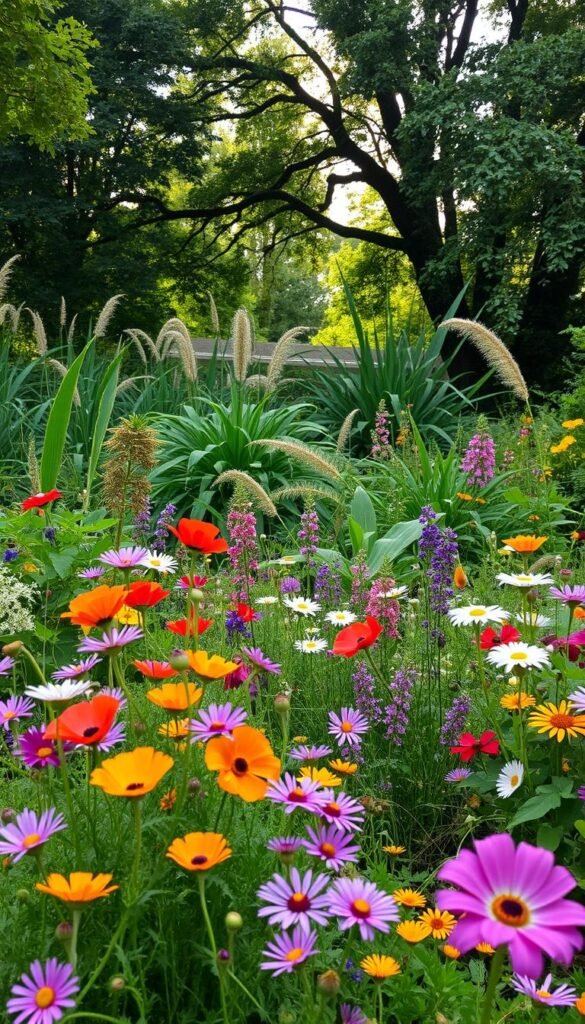
Natural gardens thrive when they mirror Earth’s layered ecosystems. This approach builds habitats where plants support each other through seasonal shifts. By working with nature’s blueprint, you create spaces that feel both intentional and untamed.
Understanding Ecological Layers
Think of your garden as a living puzzle with three main pieces: tall canopy plants, mid-height shrubs, and ground-level species. These layers mimic wild landscapes, offering shelter and food for wildlife. For example, oak trees provide shade for fern colonies, while low-growing sedums prevent soil erosion.
Dutch designer Piet Oudolf revolutionized this concept through the New Perennial movement. His designs prioritize plants that stand strong in winter, like ornamental grasses with frost-kissed seed heads. This philosophy teaches us to value structure as much as blossoms.
Selecting Native and Resilient Plants
Choose species that belong in your region’s ecosystem. Purple coneflowers and switchgrass adapt to local climates, needing less water than exotic imports. Focus on plants with:
- Sturdy stems that withstand wind
- Seed heads that feed birds in autumn
- Root systems that improve soil health
Group plants with similar needs to create self-sustaining micro-habitats. For deeper insights, explore naturalistic planting design principles developed over four decades. Remember: your garden isn’t just a summer show—it’s a year-round story written in bark, stems, and winter silhouettes.
Essential Planning Steps for Your Wild Flower Garden
Planning your garden starts with listening to the land beneath your feet. Every space has its own story—sun-drenched corners, shady nooks, and soil that whispers clues about what will thrive. Let’s decode your plot’s natural language to create a flourishing ecosystem.
Assessing Your Garden’s Site Conditions
Begin by tracking sunlight patterns for a week. Note where morning rays hit versus afternoon shade. Test your soil’s pH using a $10 kit—most wildflowers prefer slightly acidic to neutral ground (6.0-7.0). Observe drainage after rain: puddles indicate clay-heavy earth, while quick drying suggests sandy soil.
| Challenge | Solution | Benefit |
|---|---|---|
| Poor drainage | Plant swamp milkweed | Prevents root rot |
| Full shade | Use woodland phlox | Brightens dark areas |
| Sloped terrain | Install creeping juniper | Controls erosion |
Setting a Mood and Theme for Your Space
Choose between three vibes: sunny prairie (black-eyed Susans), shady retreat (ferns + columbines), or mixed meadow. Position showstoppers like lupines where you’ll see them from kitchen windows—nature’s living artwork for daily joy.
Remember, your garden should reflect your vision while supporting local ecosystems. Start small, observe how plants adapt, and let your space evolve like a meadow finding its balance.
Designing a Wild Flower Garden: Embrace Nature’s Free-Spirited Beauty
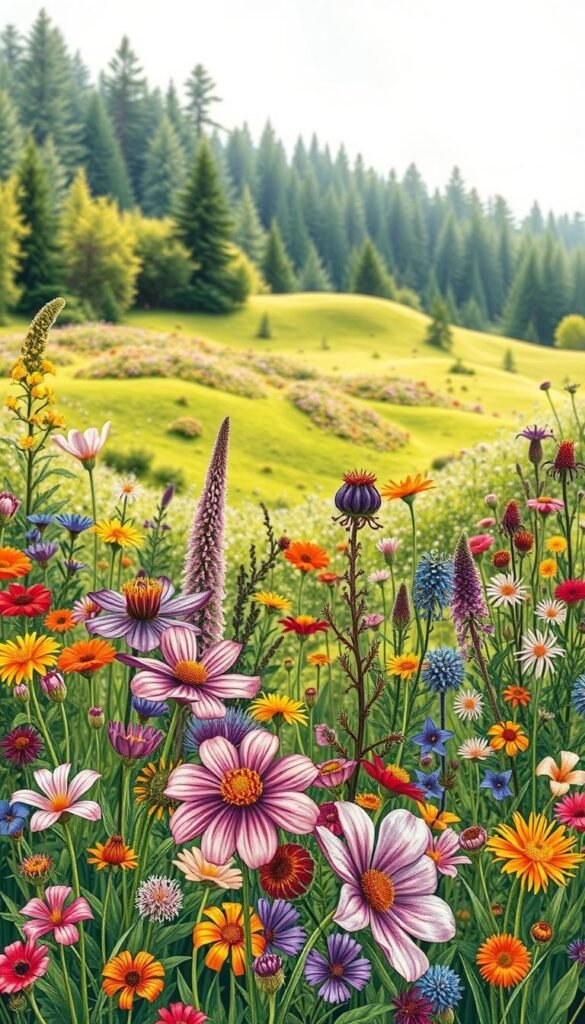
Transform your outdoor space into a living tapestry with these planting strategies. By blending structure with spontaneity, you’ll craft a landscape that feels both intentional and untamed.
A Step-by-Step Planting Guide
Start by mapping your structural layer—trees and shrubs act as nature’s backbone. Space them to allow sunlight for smaller plants while creating sheltered microclimates. This foundation supports biodiversity and gives your garden year-round shape.
Next, intermingle perennials like coneflowers and grasses in clusters of 3-5 plants. This mimics how seeds naturally scatter in the wild. Avoid straight lines—zigzag groupings create movement and prevent a “polite garden” look.
“Density is your ally. Plant close enough to shade out weeds but leave breathing room for natural growth habits.”
| Approach | Benefit | Best For |
|---|---|---|
| Intermingled species | Supports pollinators | Summer meadows |
| Layered planting | Reduces maintenance | Sloped areas |
| Seed scattering | Boosts biodiversity | Large spaces |
Time your planting after the last frost for optimal root development. Mix quick-growing annuals like cosmos with slower perennials—they’ll fill gaps while larger plants establish. For urban spaces, try the chaos gardening approach using containers and vertical surfaces.
Remember to leave some bare ground for self-seeding annuals. This creates ever-changing patterns that keep your garden dynamic across seasons.
Incorporating Modern Trends and Timeless Inspiration
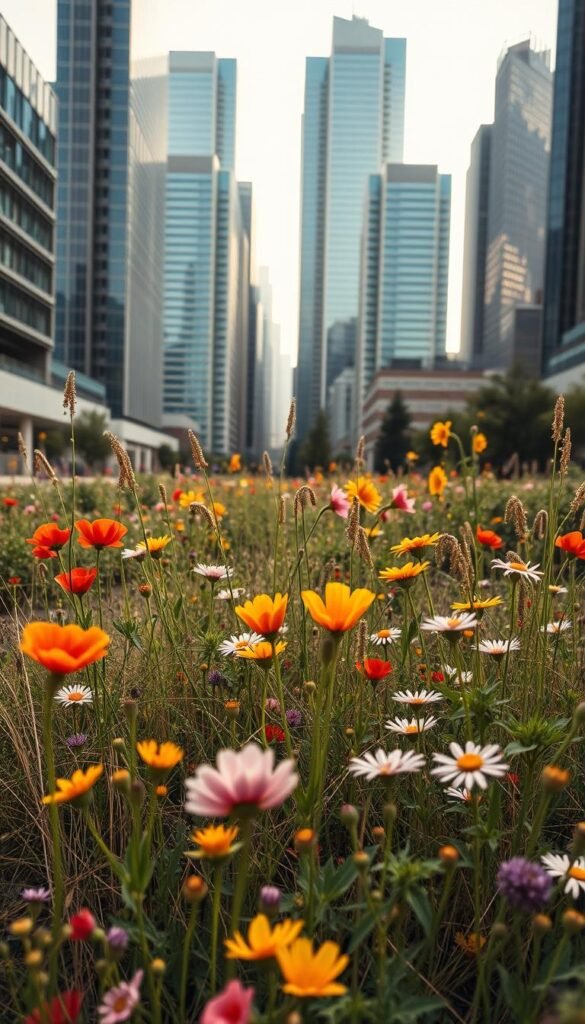
City landscapes are rewriting the rules of garden design, proving concrete and blossoms can coexist beautifully. Projects like New York’s High Line show how abandoned railways can become thriving ecosystems. These spaces blend raw urban energy with nature’s spontaneity—a perfect marriage of grit and grace.
Urban Garden Inspirations from the High Line
Piet Oudolf’s work here redefined what urban green spaces can achieve. His sweeping drifts of switchgrass and coneflowers dance between steel beams, creating texture that shifts with the seasons. You can borrow this approach by:
- Grouping plants in odd-numbered clusters for organic rhythm
- Mixing tall grasses with bold perennials like Joe-Pye weed
- Letting seed heads stand through winter for sculptural interest
Innovative Planting Techniques for a Natural Look
Modern style embraces controlled chaos. Try matrix planting—a method where 70% of plants form a cohesive base (like sedges), while 30% add seasonal pops of color. This creates stability while allowing surprises as different species bloom.
For year-round aesthetic appeal, layer plants with varying bloom times and structural forms. Pair airy gaura with spiky veronicas, or let ruby-colored heucheras contrast with silver Artemisia. These combinations work in small yards too—proof that big impact doesn’t require acres.
“The best gardens feel inevitable, as if they’ve always belonged exactly where they are.”
Contemporary design isn’t about trends—it’s about creating spaces that resonate for years. By blending modern techniques with nature’s wisdom, your garden becomes a living legacy at the heart of your home.
Caring for Your Naturalistic Garden
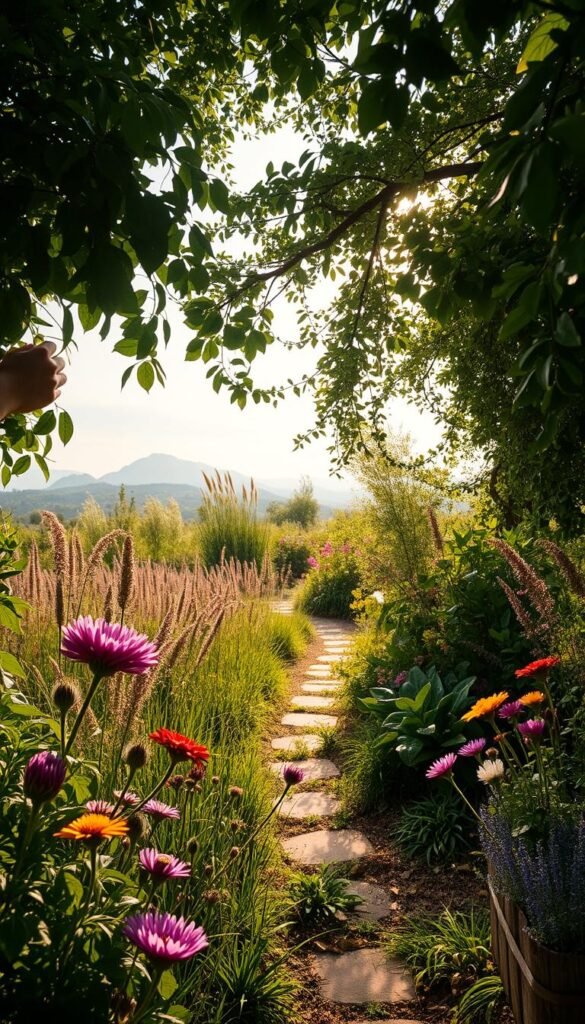
Successful garden care balances human touch with ecological wisdom. Unlike traditional landscapes demanding constant attention, these spaces flourish when you partner with natural cycles. It’s about creating conditions where life thrives through thoughtful observation rather than rigid control.
Working With Seasons, Not Against Them
Fall becomes your garden’s quiet hero. Instead of cutting back spent stems, let them stand through winter. Goldfinches feast on coneflower seeds while hollow stems shelter native bees. Frost transforms seed heads into glittering sculptures—nature’s artwork requires zero effort from you.
Spring cleanup shifts focus. Remove only what interferes with new growth, leaving organic matter to nourish soil. This approach:
- Feeds wildlife during lean months
- Strengthens plants through natural decomposition
- Saves time for enjoying blooms instead of bagging debris
“A garden in winter isn’t dead—it’s resting. Those brown stems hold next summer’s promise.”
| Season | Traditional Approach | Naturalistic Method | Benefit |
|---|---|---|---|
| Fall | Rake leaves, cut perennials | Leave leaf litter, standing stems | Insects overwinter, birds forage |
| Winter | Bare soil, dormant beds | Seed heads remain, grasses sway | Visual interest, wildlife shelter |
| Spring | Early clean-up, mulch | Delay cutting until 50°F | Protects emerging pollinators |
Edit your space like a museum curator—remove overcrowded sections but preserve the wild essence. Every few years, divide aggressive growers like bee balm to maintain balance. Your role evolves from director to collaborator, making small tweaks that let the garden’s character shine.
A Journey to a Vibrant, Untamed Garden
Your outdoor space becomes magical when it whispers of earth’s own rhythm. That moment when seedlings push through soil, and birds claim their perches? You’ve created more than beauty—you’ve built a living habitat where life thrives on nature’s terms. This transformation rewards patience, unfolding like chapters in your favorite book.
Watch how your garden evolves across seasons. Early spring’s tentative sprouts give way to summer’s bold blooms, while autumn leaves nourish next year’s growth. Each change deepens your connection to the land and its intricate ecosystem. Share cuttings with neighbors or host butterfly counts—your efforts ripple through the community.
Let this space be your classroom. Notice how certain plants attract specific insects, or how rain patterns affect soil health. These lessons shape not just your garden, but your understanding of the natural world. Remember: every native species you nurture strengthens local wildlife networks.
Your journey doesn’t end here. Visit botanical gardens for fresh ideas, join plant swaps, or volunteer with conservation groups. As your garden matures, it becomes both sanctuary and inspiration—proof that harmony between humans and nature grows from small, intentional steps.