
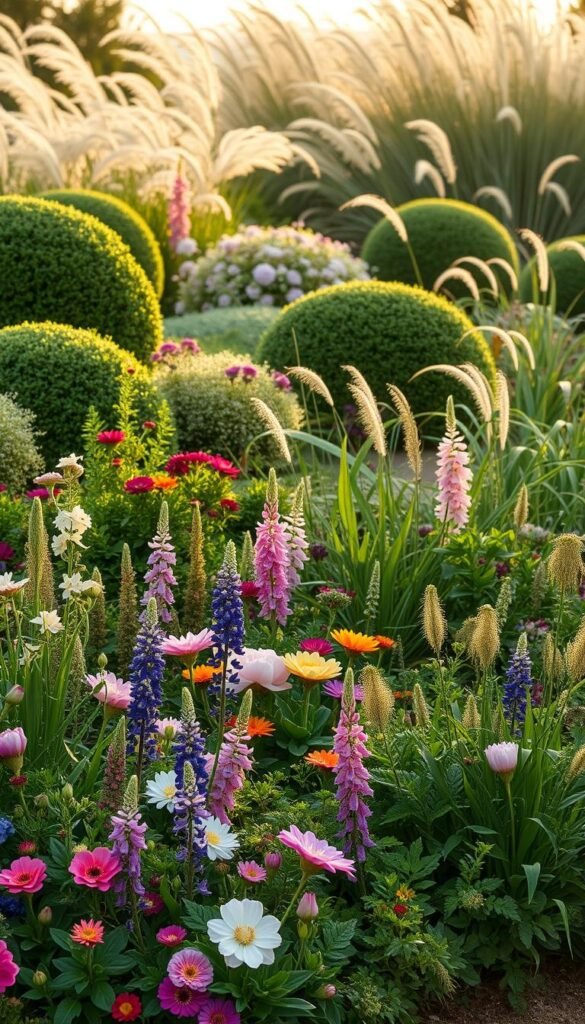
Step into a world where charm meets purpose. Picture winding pathways, bursts of color, and textures that dance in the breeze. A cottage garden isn’t just pretty—it’s a living tapestry blending edible herbs, flowering perennials, and architectural greenery. Here, every plant has a role, creating a space that feels both wild and intentional.
What makes these landscapes special? It’s all about layering. By arranging plants in tiers—from ground-hugging blooms to towering grasses—you craft depth that evolves through seasons. This approach isn’t just eye-catching; it helps plants thrive by matching their sunlight and soil needs. Imagine roses climbing behind lavender, with feathery grasses adding movement at the back.
Smart design choices also simplify upkeep. Grouping plants with similar water requirements saves time, while staggered bloom periods ensure year-round interest. Want to elevate your space further? Explore vertical solutions like trellises or wall-mounted planters to maximize small areas.
Ready to transform your yard? This guide walks you through planning, plant selection, and maintenance tricks. You’ll learn how to balance structure with spontaneity—and create a border that’s as practical as it is magical.
Understanding the Cottage Garden Aesthetic
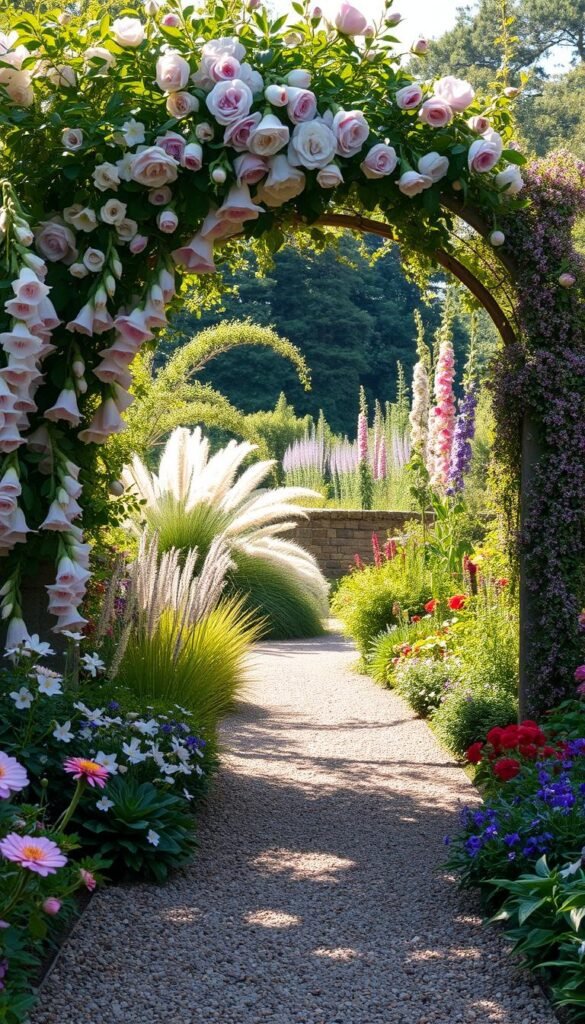
Picture a space where beauty feels effortless yet intentional. Unlike rigid formal plots, these cottage gardens celebrate nature’s whimsy. They mix soft edges with practical charm, creating a sanctuary that invites exploration.
Embracing Organic Curves and Natural Materials
Swap straight lines for winding paths that guide your eye. Use weathered stone or reclaimed wood for borders—materials that age gracefully. These elements add texture while keeping the unstructured vibe authentic.
Curved beds break up monotony, letting plants spill onto walkways. This approach mimics how wildflowers grow near forest edges. You’ll create hidden nooks that surprise visitors at every turn.
Balancing Ornamental and Edible Plant Elements
Why choose between pretty and practical? Tuck rosemary between roses or let nasturtiums cascade over kale. Herbs like thyme double as fragrant ground covers, blending flavor with floral displays.
This mix boosts biodiversity too. Bees flock to blooming chives, while butterflies favor flowering sage. Your garden becomes a feast for eyes and pollinators.
Remember: overcrowding stifles growth. Leave room for plants to breathe while maintaining that lush, layered look. It’s like curating a living collage—every piece matters, but none shouts loudest.
Planning Your Garden Design
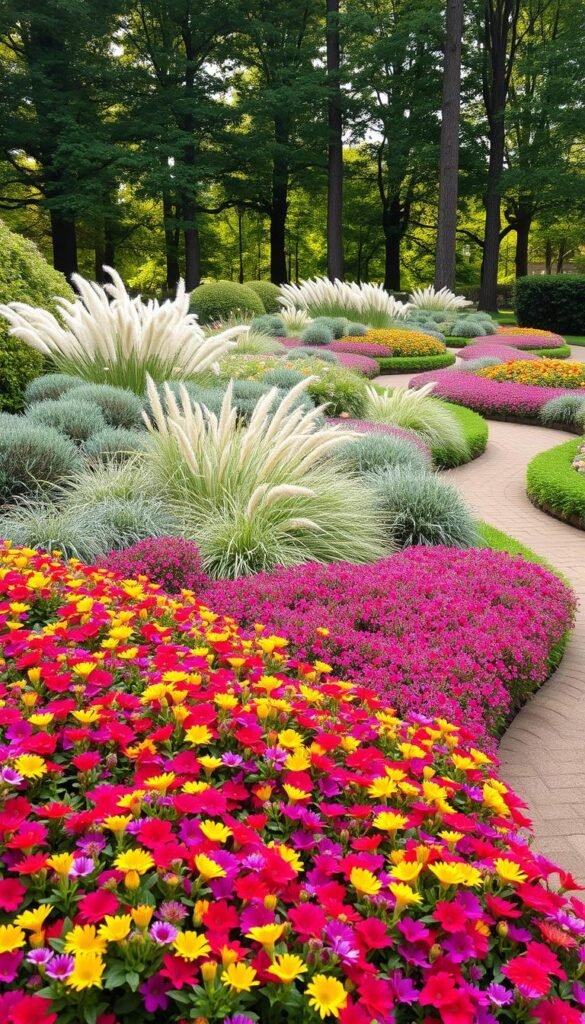
Transform your outdoor area with smart layout choices. Think of your space as a living canvas where curves create flow and plants tell seasonal stories. A thoughtful garden plan balances beauty with practicality, letting nature shine while keeping maintenance manageable.
Sketching Your Curvy Garden Layout
Grab graph paper and trace soft, meandering lines for paths. Start near your home’s foundation, then let beds ripple outward like gentle waves. This approach maximizes planting space while creating natural visual guides. Pro tip: Use a garden hose to outline curves on the ground before digging.
Follow the “smallest to tallest” rule. Place low-growing thyme or creeping phlox along walkways. Mid-height blooms like coneflowers fill middle zones, while delphiniums or ornamental grasses anchor the back. This tiered design ensures every plant gets its moment in the sun.
Considering Scale, Bloom Cycles, and Plant Heights
Research mature sizes to prevent overcrowding. A foxglove might start small but can reach 5 feet tall! Leave breathing room between seedlings—they’ll fill gaps as they grow.
Map bloom times like a festival schedule:
- Spring: Tulips and forget-me-nots
- Summer: Daylilies and lavender
- Fall: Asters and sedum
Mix evergreens with seasonal stars for year-round texture. Remember: planning isn’t about perfection. It’s creating a framework where plants can thrive—and surprises can emerge.
Designing a Cottage Garden Border: Layering Flowers, Shrubs, and Grasses
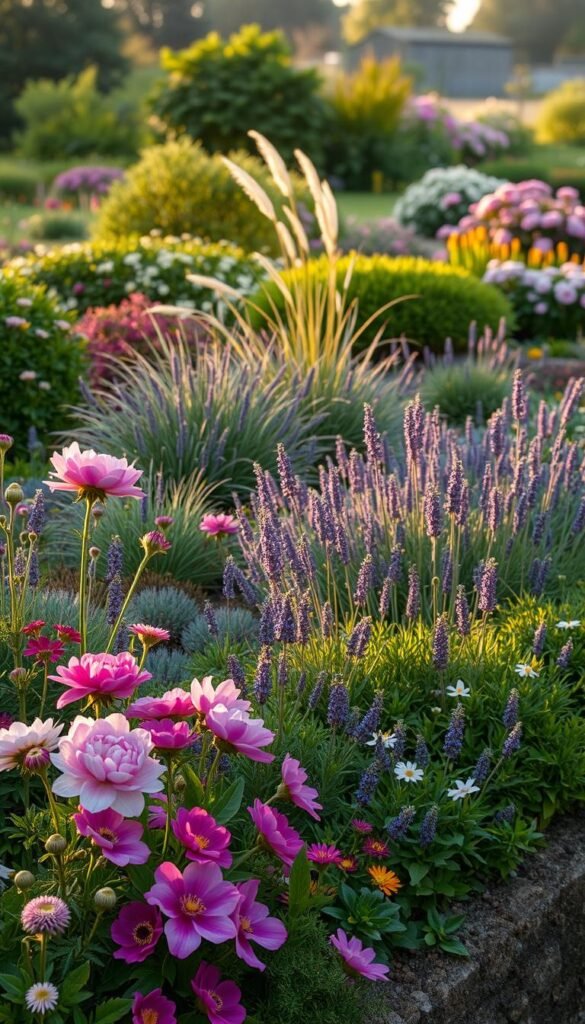
Transform your space into a living mosaic where every leaf and petal plays its part. The secret? Strategic pairings that balance bold shapes with airy textures, creating rhythm without rigidity. Let’s explore how to build borders that feel both spontaneous and thoughtfully composed.
Selecting the Perfect Border Plants
Start with reliable anchors. David Austin Roses offer romance with their cupped blooms, while Russian Sage adds wispy purple plumes. For edges, try Catmint—its silvery foliage spills onto paths, softening hard lines. Pro tip: Mix fragrant herbs like lavender with cottagecore charm favorites like peonies for sensory delight.
Creating Depth with Layered Plantings
Think vertically. Place foxgloves or delphiniums at the back—their spires reach for the sky. Mid-height dahlias add punchy color, while lady’s mantle fills gaps with frothy blooms. Don’t forget grasses! Feathery miscanthus sways between shrubs and flowers, tying the look together.
Remember: Contrast textures for intrigue. Pair velvety hydrangea leaves with spiky yarrow. This approach ensures each layer stands out while contributing to the whole. Your border becomes a stage where plants take turns shining—no overcrowding, just harmonious collaboration.
Incorporating Timeless Cottage Garden Plants
Crafting a cottage garden that thrives year after year starts with smart plant choices. Focus on species that offer beauty and purpose—blooms for bouquets, herbs for recipes, and greenery that supports local wildlife.
Building Foundations with Lasting Favorites
Perennials like lavender and echinacea form the garden’s backbone. These hardy plants return stronger each spring, saving you time and money. Pair them with annuals like cosmos for pops of summer color—their daisy-like flowers attract butterflies while filling vases.
Flavorful and Functional Additions
Thyme spills over stone edges, releasing fragrance when brushed. Lemon balm makes refreshing tea, while nasturtium leaves spice up salads. Herbs like rosemary serve triple duty: evergreen structure, pollinator food, and kitchen seasoning.
Try these multi-taskers:
- Yarrow: drought-tolerant cut flower with medicinal properties
- Holy basil: aromatic leaves for pesto + purple blooms for bees
- Chives: onion-flavored greens with pom-pom flowers
Select plants that fit your family’s needs—whether that’s fresh garnishes or homemade salves. This approach creates spaces where practicality and charm grow side by side.
Managing Maintenance and Seasonal Growth
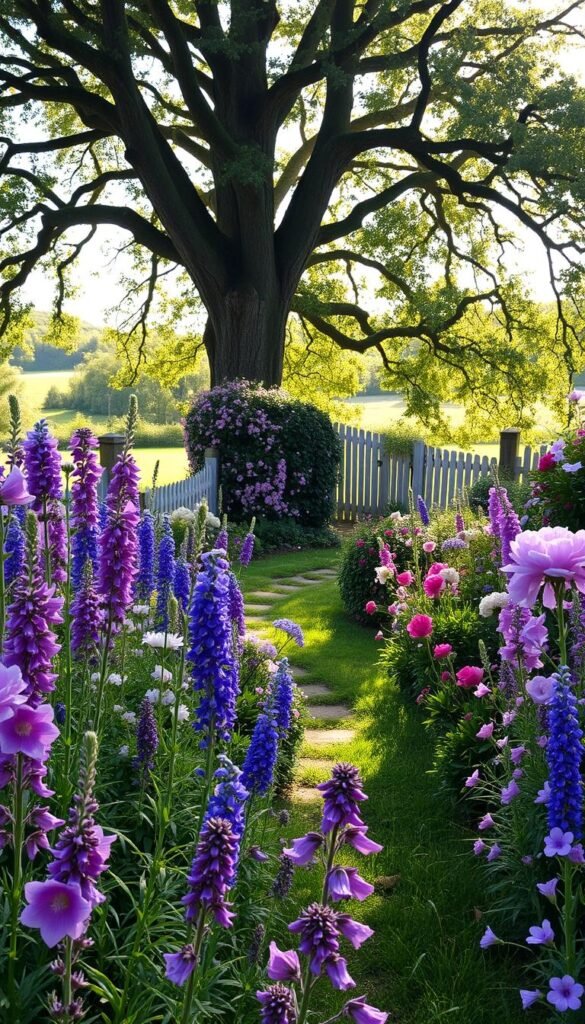
Keeping your garden vibrant requires a gentle touch that honors its free-spirited nature. The magic lies in balancing care with wild beauty—prune just enough to encourage growth, but never strip away that romantic, untamed character.
Trimming, Dividing, and Routine Garden Care
Sharp shears become your best friend. Trim spent blooms weekly to prolong flowering—snip just above new leaf nodes. For shrubs, remove one-third of old growth each spring. This way maintains shape without sacrificing next season’s buds.
Divide perennials every 3-4 years when centers thin out. Spring-bloomers like peonies prefer fall division, while daylilies thrive when split in early spring. Share extras with neighbors or brighten small spaces around your home.
| Season | Task | Pro Tip |
|---|---|---|
| Spring | Cut back winter debris | Leave 6″ stems for beneficial insects |
| Summer | Deadhead flowers | Use cuttings in bouquets |
| Fall | Divide overcrowded plants | Water deeply after transplanting |
| Winter | Mulch tender perennials | Use shredded leaves for insulation |
Time your interventions with nature’s clock. Let ornamental grasses stand until February—their golden plumes add winter interest. Gardening in this style means watching more than working. Observe which plants need support and which thrive on neglect.
Three tips for effortless care:
- Group plants with similar water needs
- Leave seed heads for birds
- Mulch paths to suppress weeds
Remember: A true cottage-style space celebrates imperfections. That leaning trellis? It’s charm. The volunteer poppy? A happy accident. Your garden grows lovelier when you work with nature, not against it.
Enhancing Your Garden with Complementary Design Elements

Imagine your outdoor space as a living painting where hues whisper stories and textures play hide-and-seek. Strategic color choices and tactile contrasts turn ordinary landscapes into sensory journeys. Let’s explore how to weave these elements into your green sanctuary.
Color Harmonies That Guide the Eye
Start with a mood. Soft mauves and silvers evoke moonlit evenings, while sun-kissed yellows shout summer joy. Pair blooms that share undertones—think peach roses with coral poppies—to create seamless flow. Cool-toned plants like salvia make small spaces feel larger when placed at the back.
| Season | Color Palette | Plant Pairings |
|---|---|---|
| Spring | Pastel pinks + Creams | Bleeding heart, candytuft |
| Summer | Purples + Golds | Russian sage, black-eyed Susan |
| Fall | Rusts + Plums | Sedum ‘Autumn Joy’, aster |
Texture as the Unsung Hero
Velvety lamb’s ear leaves beg for touch beside spiky sea holly. Feathery grasses like Mexican feather grass add motion, while broad hosta leaves anchor compositions. This mix creates depth that photographs beautifully from every angle.
Ornamental grasses work overtime—they’re nature’s curtain rods. Plant tufted hairgrass between shrubs to soften edges. In winter, their frosted seed heads become sculptural design elements. Remember: repetition builds rhythm. Echo silver foliage in three spots to tie your landscape together.
Pro tip: Use white-flowered plants as visual connectors. Their brightness bridges color shifts, making your garden feel cohesive. Now step back—watch how light dances across petal satin and leaf velvet. That’s magic you can’t buy at a nursery.
Bringing It All Together with a Dreamy Garden Finale
Your journey through textured plantings and winding paths now blossoms into a living legacy. You’ve crafted more than a landscape—it’s an ever-changing story where morning dew glistens on sage leaves and sunset paints foxglove spires gold. This space becomes your personal retreat, blending nature’s spontaneity with your creative touch.
Snip fragrant blooms for kitchen vases, letting indoor rooms echo your outdoor artistry. Notice how rosemary’s scent follows you inside, blurring boundaries between home and wilderness. Document growth patterns through seasonal photos—these snapshots reveal what thrives and where to tweak plant partnerships next year.
Even compact areas shine when you apply space-maximizing principles. Tuck trailing thyme between stepping stones or train clematis up narrow trellises. Each choice adds depth without clutter, proving that scale matters more than square footage.
As seasons shift, so will your garden’s personality. Spring’s pastel peonies give way to summer’s bold coneflowers, while autumn asters linger until frost. Embrace this rhythm—it’s nature’s way of keeping the show fresh. Share cuttings with neighbors, preserving heirloom varieties and community connections.
Your landscape now stands as proof that patience and vision yield magic. It whispers stories through rustling grasses, feeds pollinators, and becomes where memories take root. This isn’t just gardening—it’s crafting a sanctuary that grows lovelier with every passing year.