
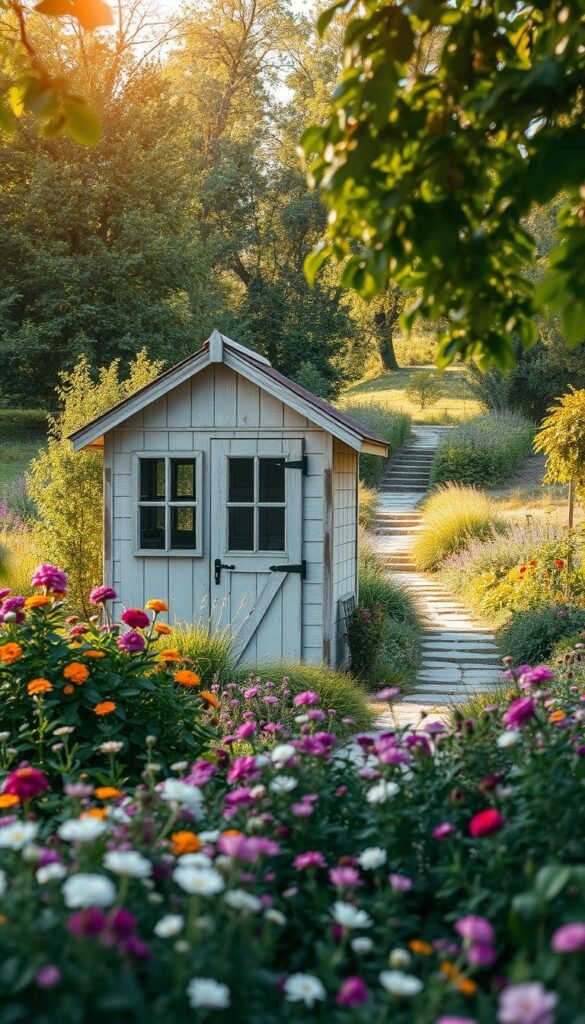
Picture a cozy corner of your yard transformed into a storybook escape. Centuries ago, English villagers turned practical spaces into blooming retreats by packing flowers, herbs, and veggies around their homes. Today, this free-spirited style offers a delightful way to blend function and fantasy in your own backyard.
Traditional cottage gardens began as humble plots for families to grow food and medicine. Over time, they evolved into lush, informal spaces bursting with color and texture. Unlike formal gardens with rigid lines, these designs celebrate organized chaos – climbing roses tumble over fences, while lavender mingles with tomatoes.
Your shed can become the heart of this whimsical aesthetic. Imagine weathered wood covered in clematis vines or a mossy roof dotted with herbs. These structures do more than store tools – they create focal points that feel straight from the countryside. Modern versions work equally well with she-sheds, garages, or small additions.
This guide will show you how to balance beauty and practicality. You’ll learn to choose materials that age gracefully, pair plants for year-round interest, and design pathways that invite exploration. Let’s create a space where functionality meets fairytale charm.
Embracing the Cottage Garden Shed Aesthetic
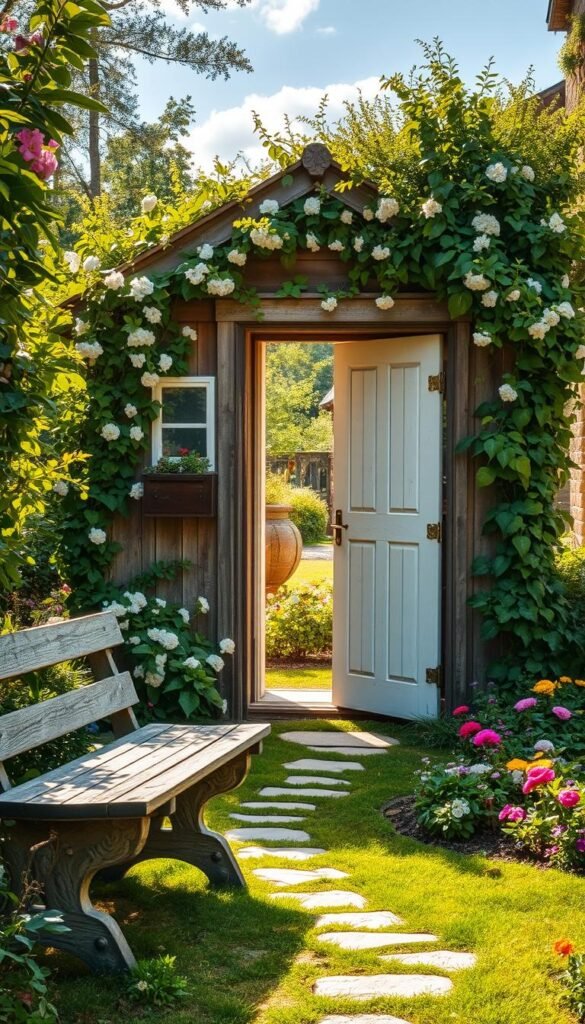
Step into a living painting where every path tells a story. These spaces thrive on organized wildness – think hollyhocks leaning against weathered planks or morning glories spilling from rusty watering cans. It’s where functionality wears a floral crown.
Understanding the Charm of Cottage Gardens
Traditional designs feel like nature’s scrapbook. Winding stone paths guide you past rambling roses and feathery cosmos. Unlike formal layouts, these arrangements celebrate imperfections – a cracked terracotta pot becomes home to trailing nasturtiums.
“A cottage garden isn’t designed – it’s collected over time, like favorite recipes in a cookbook.”
Historical Roots and Modern Interpretations
Originally, these spaces fed families. Peasants grew vegetables alongside medicinal herbs, using every inch of soil. Today’s versions keep that practicality while adding visual poetry. Modern sheds might store solar tools instead of scythes, but they still host climbing hydrangeas.
| Feature | Traditional Cottage | Modern Adaptation |
|---|---|---|
| Path Materials | Crushed shells | Recycled brick chips |
| Vertical Elements | Wooden trellises | Galvanized steel frames |
| Edible Plants | Medicinal herbs | Dwarf fruit trees |
Want to elevate your outdoor space? Blend old-world romance with today’s needs. Use salvaged windows as cold frames. Let mint cascade from hanging baskets. The magic lies in mixing eras as freely as flower varieties.
Discovering the Essence of Cottage Garden Design
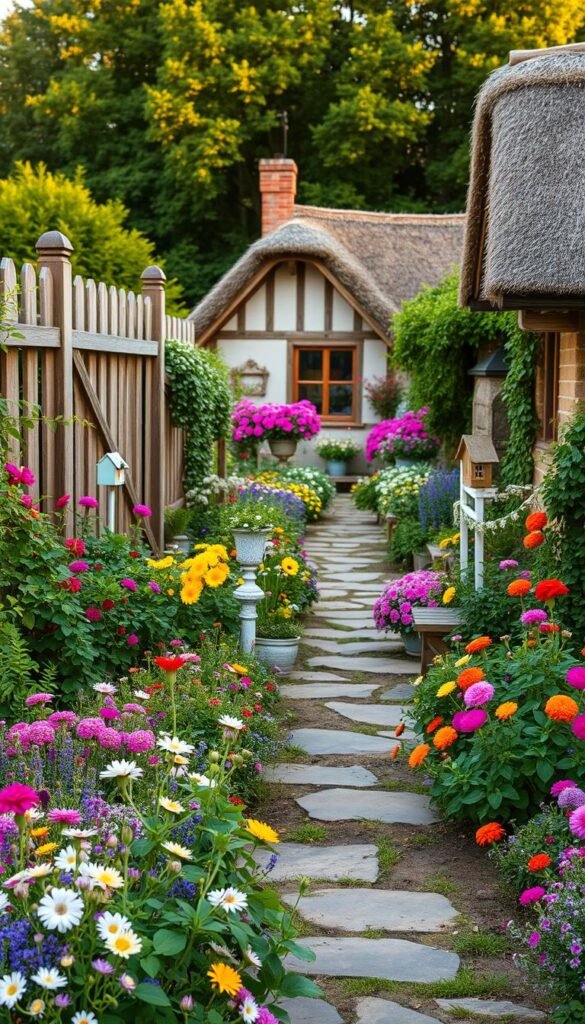
Imagine stepping into a living tapestry where every plant plays multiple roles. True cottage style thrives on controlled abundance – think foxgloves brushing against your shed’s eaves while thyme carpets the ground beneath your feet. This approach turns functional spaces into immersive experiences.
Key Elements of Dense, Whimsical Plantings
Forget spacing charts. Pack plants shoulder-to-shoulder like guests at a summer party. Combine spiky delphiniums with billowy baby’s breath, letting their leaves intermingle. This creates natural mulch and deters weeds while maximizing visual impact.
| Traditional Approach | Modern Twist |
|---|---|
| Sweet peas on wooden lattices | Nasturtiums climbing metal grids |
| Foxglove towers | Sunflower thickets |
| Lavender borders | Rosemary hedges |
Rotate bloomers strategically. Early tulips make space for June roses, which fade as autumn asters take center stage. This layered timing keeps your garden camera-ready from frost melt to first snow.
Blending Ornamentals with Functional Features
Let your shed wear a living crown. Train scarlet runner beans up its walls – you’ll get edible pods and hummingbird visitors. Tuck mint between stepping stones for fragrant footpaths. Even your compost bin can host cheerful morning glories.
The magic happens when beauty serves purpose. A cottagecore aesthetic isn’t just pretty – it’s productive. Use vertical space wisely: hang strawberry planters from eaves, or let hops vines shade your potting bench.
Choosing the Right Colors for Your Garden Shed
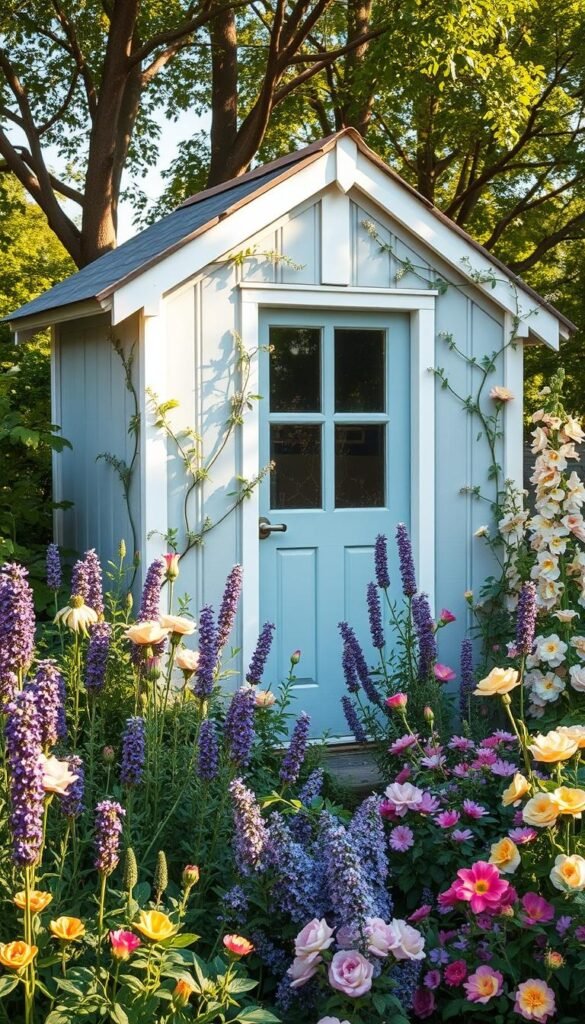
Transform your shed into a vibrant anchor point that ties your entire landscape together. Color choices act as the visual glue between structural elements and living greenery. Whether you prefer soft neutrals or bold statements, your palette sets the mood for this cherished space.
Creating a Harmonious Color Palette
Start by observing your existing garden hues. Do crimson poppies dominate? Are lavender fields your signature feature? Match shed undertones to these natural colors. For example, pair buttery yellow walls with purple salvias, or slate gray siding with silver-dollar eucalyptus.
Introduce depth with inky foliage plants like ninebark or heuchera. These dark beauties make pastel blooms appear brighter while grounding lighter shed materials. Balance them with airy fillers – think baby’s breath or gaura – that soften edges like nature’s watercolor brush.
Using Contrasting Hues to Highlight Focal Points
Draw attention to architectural details with strategic pops of color. Paint shed trim in cobalt blue to echo delphinium spikes. Let orange marigolds frame a moss-green door. This approach guides the eye while maintaining cottage garden charm.
Architectural elements become partners in your color story. A pergola stained to match your shed’s roof beams creates rhythm. For timeless appeal, blend weathered antiques with modern accents – rusted watering cans beside sleek metal planters.
Remember: nature provides free accessories. Ivy creeping up walls adds organic texture. Mossy patinas on stepping stones deliver instant age. These elements weave your shed seamlessly into the landscape’s living tapestry.
Materials That Enhance Your Cottage Garden Shed
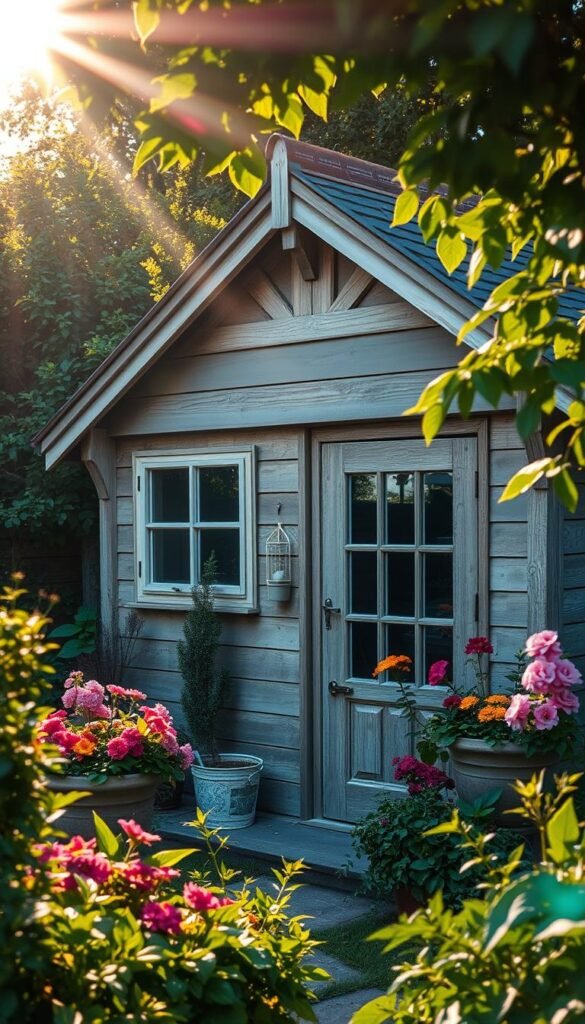
Your fingertips brush against sun-warmed wood as you approach the structure, its natural textures whispering stories of seasons past. The right materials don’t just build your space – they breathe life into it, blending practicality with pastoral charm.
Wood, Stone, and Natural Finishes
Salvaged timber offers instant character, its knots and cracks forming nature’s artwork. Pair it with irregular flagstones for pathways that look centuries old. Bark chippings between beds suppress weeds while releasing earthy scents after rain.
| Material | Traditional Use | Modern Adaptation |
|---|---|---|
| Wood | Hand-split shingles | Composite decking |
| Stone | Fieldstone foundations | Laser-cut pavers |
| Fencing | Handwoven willow | Recycled plastic lattices |
Elevate your design with towering urns spilling petunias. These vertical accents draw eyes upward without sacrificing the lush, packed look cottage lovers adore. Fallen logs double as rustic seating – perfect for resting among your blooms.
Integrating Vintage and Upcycled Accents
That chipped enamel bucket? It’s now a planter for trailing ivy. Repurposed wooden elements add history to your space. Wattle fencing made from backyard trimmings keeps exuberant flowers from overtaking walkways.
Let materials age gracefully. Untreated cedar develops a silvery patina that mirrors birch bark. Stone walls host moss colonies that change hues with the light. Your space becomes a living timeline, each weathering mark adding to its narrative.
Incorporating Cottage Garden Sheds: Selecting Colors, Materials, and Plantings
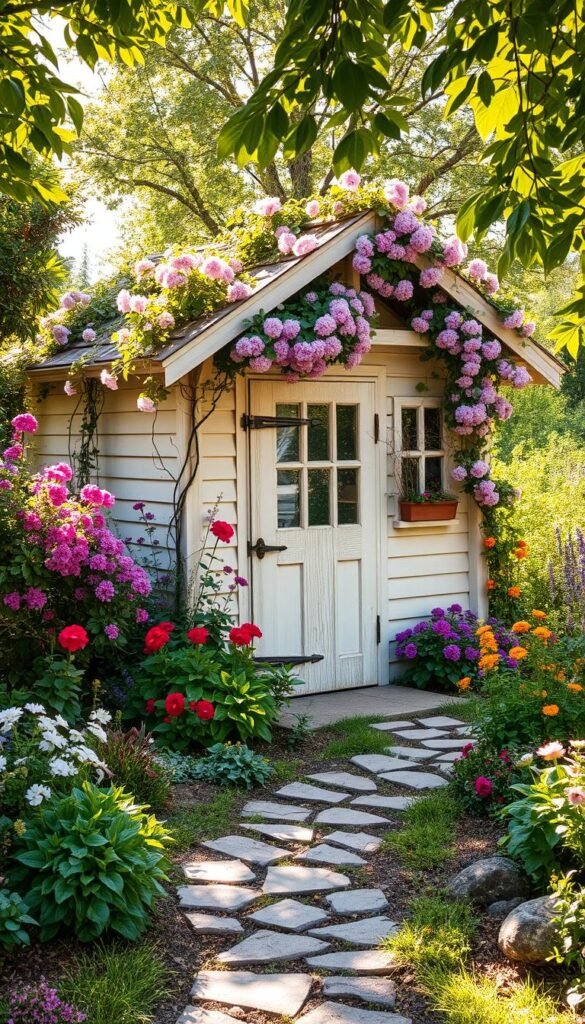
Crafting your dream retreat starts with three pillars working in harmony. Choose materials that whisper natural charm – think cedar shakes or reclaimed brick. Pair them with blooms that echo your structure’s hues, like violet asters against sage-green walls.
Plan for tomorrow’s growth today. That dainty clematis? It’ll engulf your window in three years. Place taller plants where they won’t block afternoon light. Use dwarf fruit trees as living sculptures near entryways.
Balance drama with subtlety. A cobalt-blue door pops against white phlox, while gravel paths keep the look grounded. For garden shed inspiration, study how professionals layer textures without clutter.
Practical magic matters. Stainless steel hardware resists rust better than iron. Permeable pavers prevent puddles near your tool storage. Budget-friendly options like recycled plastic lattices support sweet peas just as well as vintage trellises.
Remember: your space should evolve like a favorite novel. Let climbing roses gradually conceal newer materials. Swap annuals seasonally while perennials establish their roles. With creative gardening solutions, even compact areas become multi-sensory escapes that age beautifully.
Innovative Planting Ideas for Lush Outdoor Spaces
Your garden can become a living mosaic of color and flavor. By blending textures and functions, you’ll create spaces that delight the senses while serving practical needs. Let’s explore creative ways to maximize beauty and productivity.
Mixing Ornamental and Edible Varieties
Pair basil with marigolds – their citrusy scent deters pests while adding golden blooms. Let nasturtiums cascade over raised beds, offering peppery leaves for salads and vibrant flowers for bouquets. Vertical structures like branch obelisks support beans and sweet peas, doubling as living art.
Interplant kale with pansies for striking contrasts of purple and green. Herbs like thyme make fragrant groundcover between stepping stones. This approach turns every inch into a multi-purpose wonderland.
Seasonal Blooms and Year-Round Interest
Start spring with daffodils peeking through creeping phlox. Summer brings roses climbing your shed walls, while sunflowers tower above feathery grasses. Autumn asters mingle with ornamental cabbage, keeping color alive until frost.
Evergreen rosemary adds structure during winter months. Plant early-blooming hyacinths near late-season sedum for continuous surprises. With smart planning, your space remains lively through every season’s changes.