
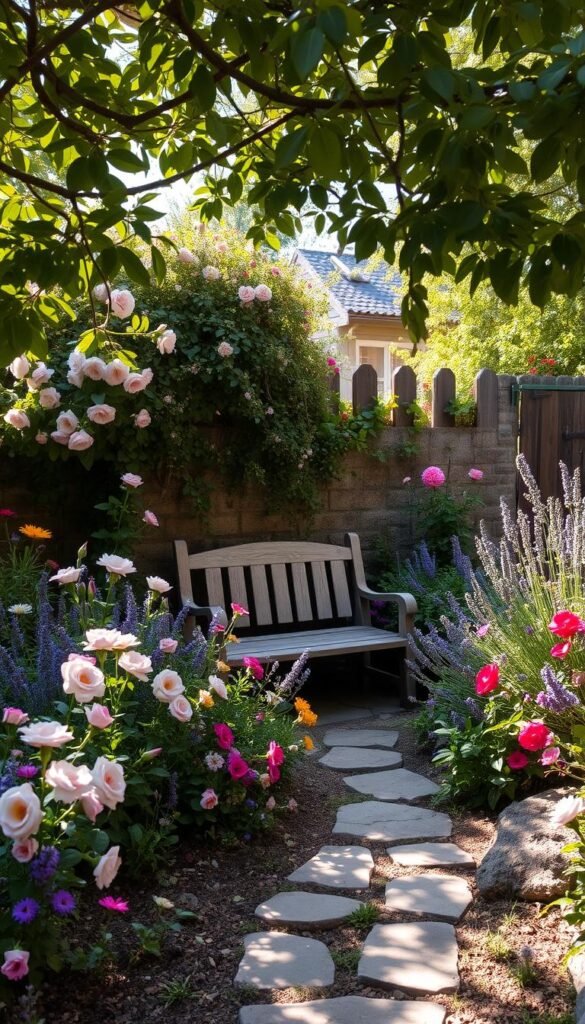
Imagine stepping into a space where vibrant colors and fragrant blooms wrap around your favorite spot to unwind. This is the magic of a cottage-inspired outdoor retreat—a timeless style that blends natural charm with relaxed practicality. Born in rural England centuries ago, these spaces celebrate imperfect beauty, inviting pollinators and people alike to linger among their wild yet intentional layouts.
Unlike rigid formal landscapes, this approach thrives on creative freedom. Think roses climbing weathered fences, lavender bordering stone paths, and daisies mingling with herbs. The secret? A playful mix of textures and heights that frame seating nooks without feeling overly planned. You’ll find birds flitting between blossoms and butterflies dancing over clusters of foxgloves—nature’s guests adding life to your sanctuary.
Ready to craft your own cozy escape? Start by envisioning how paths and plantings can guide the eye toward a bench or bistro set. For more ideas on blending aesthetics with function, explore our guide to elevating outdoor spaces. Remember: the goal isn’t perfection, but a personal haven where every season brings new surprises.
Understanding the Cottage Garden Aesthetic
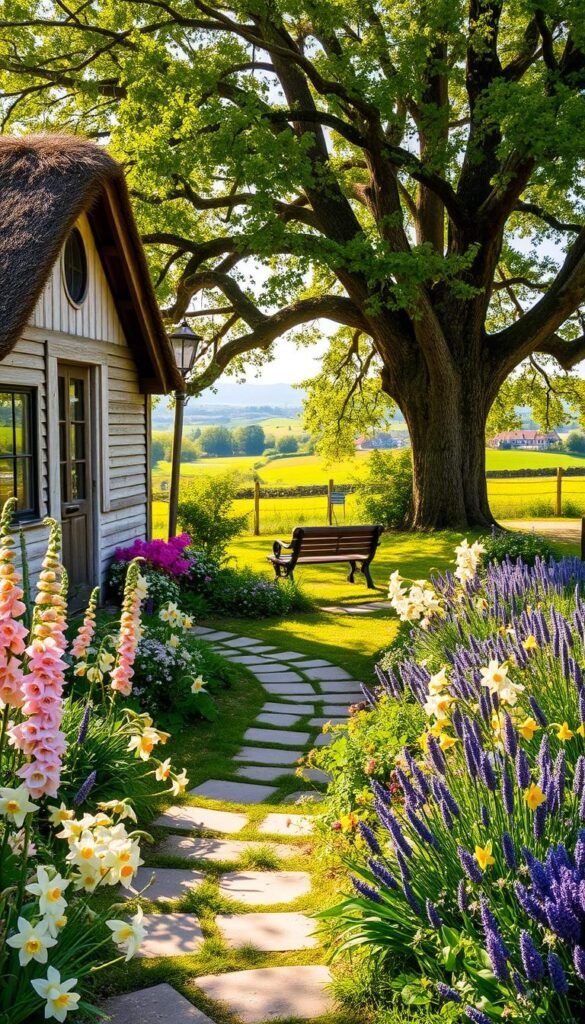
Think of a garden that feels both wild and welcoming—a place where plants mingle freely, and structure takes a backseat to spontaneity. This is the heart of the cottage garden style, rooted in centuries-old traditions where beauty and practicality grew side by side.
What Is a Cottage Garden?
Originally, these spaces served as vital resources for English families. They combined vegetables, herbs, and flowers in tightly packed beds, maximizing every inch of land. Today, this old-fashioned cottage garden spirit lives on through relaxed layouts that encourage plants to sprawl, climb, and self-seed wherever they please.
Key Elements and Natural Charm
Curved pathways, weathered stone edges, and climbing roses define this look. Unlike formal landscapes, a traditional cottage garden celebrates surprises—like poppies popping up between thyme or hollyhocks leaning over a wooden bench. Materials feel rustic, with reclaimed bricks or repurposed troughs adding character.
Mixing edibles like lavender or sage with peonies and daisies creates layers of texture. This approach isn’t just pretty—it supports bees and butterflies too. For a modern twist, explore how the cottagecore aesthetic blends nostalgia with today’s desire for eco-friendly spaces.
Here, “perfect” means letting nature lead. You’ll find charm in uneven borders or volunteer seedlings that add unexpected color. It’s a living canvas that changes with the seasons, always inviting you to pause and enjoy its evolving story.
Designing Intimate Seating Areas
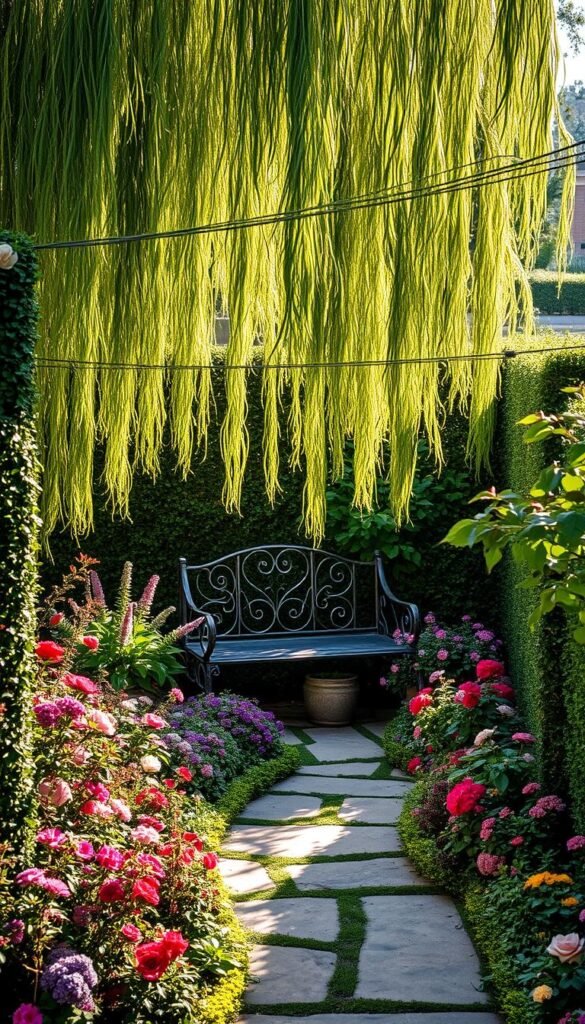
Discover how to weave seating into your landscape so it feels like part of the garden’s natural rhythm. The magic lies in blending outdoor space enhancements with existing elements—think weathered benches nestled under flowering vines or a bistro set peeking through tall grasses.
Curating Hidden Retreats
Transform forgotten corners into inviting spots. Use slopes, mature trees, or stone walls as backdrops for benches. Add an arbor draped with jasmine to frame views while creating shade. These nooks work best when they feel discovered, not staged—like nature carved the spot just for you.
Living Structures as Partners
Let climbing plants shape your seating zones. Wisteria-covered pergolas create ceilings of blooms, while clematis winds through trellises to form living screens. For cottage garden charm, pair wooden chairs with rosemary borders or place a wrought-iron table beside lavender drifts.
Pro tip: Repurpose old gates or ladders as plant supports near seating. This adds vertical interest and helps blend creative structures into your layout seamlessly. Remember—successful design feels effortless, as if wind-scattered seeds arranged the scene themselves.
Small Cottage Garden Design: Arranging Flower Beds Around Seating Areas
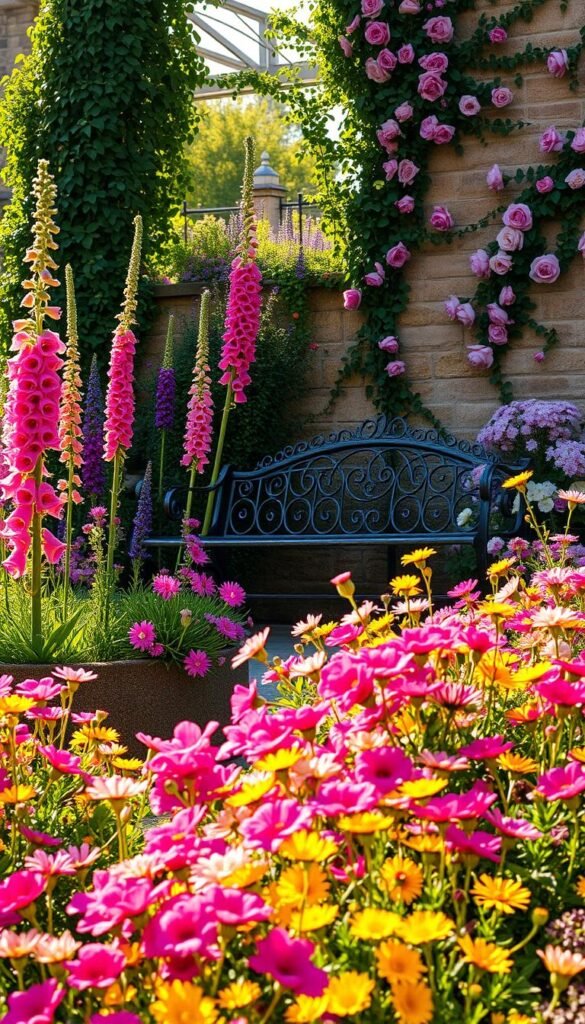
Create living frames that make your relaxation spots feel part of the landscape. Start by shaping garden beds to hug your chairs or benches like embracing arms. Curved edges soften hard lines and guide the eye toward your favorite sitting nook.
| Layer | Height Range | Plant Examples |
|---|---|---|
| Front | 3-12 inches | Sweet alyssum, creeping thyme |
| Middle | 1-3 feet | Lavender, catmint, coreopsis |
| Back | 4-6 feet | Hollyhocks, delphiniums, climbing roses |
This setup lets you admire every bloom from your seat. Low growers won’t block views, while taller plants form a cozy backdrop. Leave 18-inch gaps between clusters for air circulation and easy trimming.
Balance abundance with accessibility. Weave narrow paths through plantings using stepping stones or mulch. These hidden walkways maintain the flower garden’s wild charm while letting you water and weed comfortably. Remember: strategic spacing prevents overcrowding without sacrificing that lush, lived-in look.
Your final result? A space where blossoms frame conversations and birdsong becomes part of the decor. Every angle offers visual interest, turning simple relaxation into an immersive experience with nature.
Choosing the Perfect Flower Bed Palette
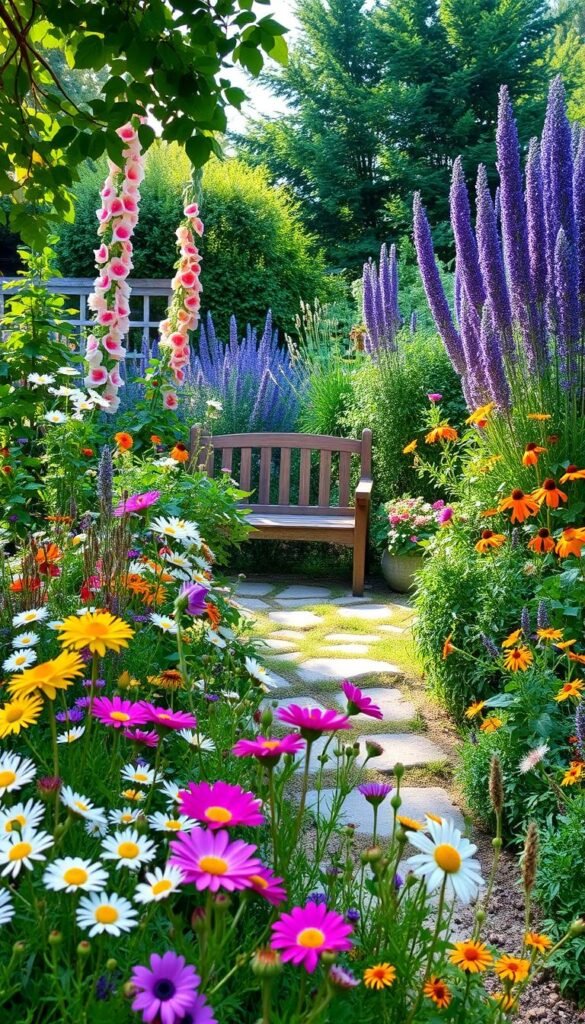
Picture your favorite chair surrounded by waves of color that shift like living artwork through the seasons. Crafting this effect begins with strategic plant selection that balances visual harmony and sensory delight.
Selecting Flowers for Year-Round Drama
Start with a base of reliable perennials like coneflowers and irises. These anchor your beds while annuals like cosmos add seasonal flair. Blend soft pinks with bold purples, using white phlox as natural buffers between intense hues.
Time your blooms like a symphony conductor. Early crocuses give way to peonies in late spring, while autumn asters take center stage as summer fades. This approach ensures your seating nook always has starring performers.
| Bloom Period | Plant Examples | Color Palette |
|---|---|---|
| Spring | Columbine, Sweet Peas | Pastel pinks + Cream |
| Summer | Dahlias, Roses | Ruby reds + Lavender |
| Fall | Zinnias, Chrysanthemums | Golden yellows + Bronze |
Layer fragrances to enhance relaxation. Position scented star players like lavender near armrests and climbing jasmine above benches. Repeat key varieties in multiple beds to create rhythm—clusters of black-eyed Susans mirrored across paths feel intentional yet effortless.
Leave room for personal touches. Swap out annuals each year to reflect your evolving style while keeping the perennial backbone intact. This living canvas becomes more captivating with time, just like your connection to the space.
Layering for Visual Impact and Texture
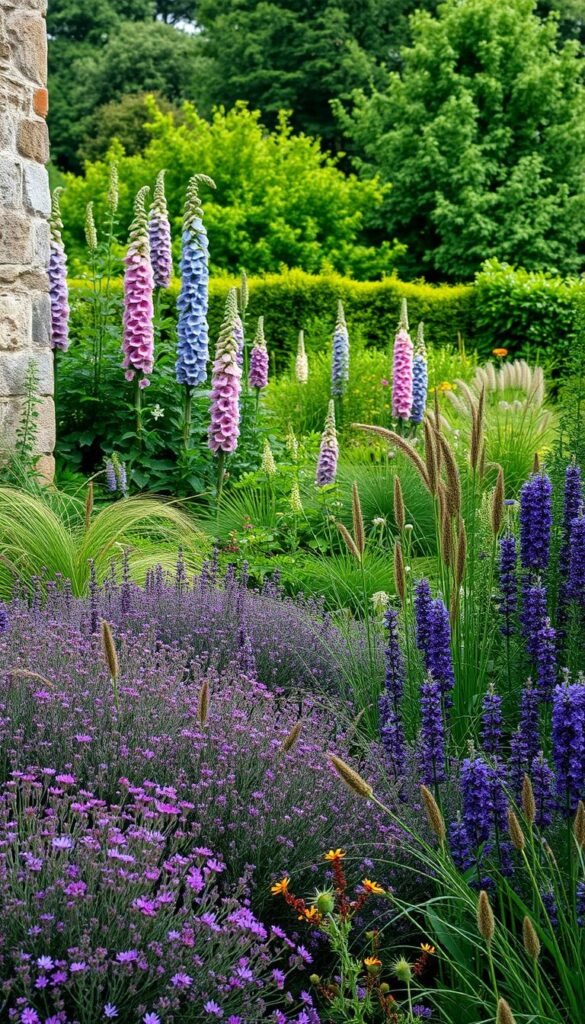
Ever wondered how some outdoor spaces feel like a living tapestry? The answer lies in strategic stacking of greenery. By arranging plants in distinct tiers, you craft depth that draws the eye upward and outward, transforming flat plots into dimensional masterpieces.
Arranging Plants by Height and Color
Start with low-growing ground covers like creeping phlox near walkways. These living carpets blur edges between paths and beds, creating seamless transitions. Mid-level performers like salvia add pops of color at hip level, perfect for framing views from your favorite chair.
Taller specimens form natural backdrops. Delphiniums or hollyhocks behind benches create privacy while adding vertical drama. Let some stems spill forward—foxgloves peeking through shorter flowers mimic nature’s spontaneity.
Mix textures for year-round appeal. Pair feathery ornamental grasses with velvety lamb’s ear leaves. This contrast keeps beds intriguing even when blooms fade. For inspiration on combining elements, explore these flower bed ideas that balance structure with wild charm.
Remember: perfect layering feels accidental. Allow self-seeding annuals to wander between tiers, and watch your garden become a constantly evolving work of art.
Planning Curved Paths and Natural Walkways
Picture a path that invites curiosity, winding through blooms like a story unfolding with each step. These organic routes do more than connect points—they transform your landscape into an experience. Let’s explore how to craft journeys that feel discovered, not designed.
Designing Meandering Garden Paths
Curves slow movement and spark wonder. Instead of straight lines, mimic how water flows or animals trail through meadows. Leave room for surprises—a cluster of daisies brushing ankles or rosemary releasing scent as you pass.
Width matters. Keep paths 24-36 inches wide for comfort while maintaining intimacy. Use irregular edges where plants spill over stones, softening boundaries. This approach works beautifully with container arrangements, blending structured planters with wilder beds.
Using Natural Materials for Edging
Choose elements that age gracefully. Weathered bricks develop mossy charm, while gravel whispers underfoot. Match materials to your region—crushed shells near coastal spaces, or slate chips in mountain settings.
| Material | Characteristics | Best Use |
|---|---|---|
| Flagstone | Irregular shapes, durable | Primary walkways |
| Brick | Warm tones, ages well | Edging or herringbone patterns |
| Gravel | Crunchy texture, drains quickly | Secondary paths |
| Wood Chips | Soft, earthy aroma | Playful garden loops |
| Grass | Seamless, needs trimming | Open meadow-like areas |
Let plants become partners. Allow creeping thyme to fill gaps between stones or let violets colonize path margins. This living touch makes every way through your cottage garden feel like nature’s own design.
Seamless Transitions Between Flower Beds and Lawn Areas
Ever notice how some yards flow like nature intended? The trick lies in blurring lines between garden beds and open grass areas. Instead of harsh borders, create gentle curves that mirror how plants spread organically over time.
Use a sharp spade to carve soft, wavy edges between your flower garden and turf. Let trailing plants like creeping phlox or sweet woodruff spill over these boundaries. This living fringe softens hard lines while attracting pollinators to your space.
| Material | Benefits | Maintenance |
|---|---|---|
| Fieldstone | Natural look, durable | Low |
| Reclaimed brick | Warm tones, historic charm | Moderate |
| Rusted steel | Modern contrast, clean lines | Minimal |
| Wood logs | Rustic appeal, biodegradable | Annual replacement |
For hidden structure, bury edging materials halfway. This keeps turf grass roots from invading while letting soil breathe. Add stepping stones where paths meet lawns—their irregular shapes enhance the cottage garden vibe.
Low-growing herbs like thyme make excellent living borders. Plant them along bed edges where they’ll release fragrance when brushed against. Your garden gains depth while maintaining that effortless, wind-swept charm.
Selecting Pollinator-Friendly and Seasonal Plants
What if your favorite reading spot came alive with fluttering wings? By choosing the right plants, you transform benches and chairs into front-row seats for nature’s most captivating shows. The secret lies in pairing seasonal blooms with species that sustain local wildlife year-round.
Nature’s Winged Partners
Bees gravitate toward flat-faced blooms like sunflowers, while butterflies prefer landing pads—think zinnias or coneflowers. Hummingbirds? They’ll dart between tubular salvia blossoms like living jewels. Mix heights and shapes to accommodate different feeding styles.
Prioritize native species—they’ve evolved alongside local pollinators. Purple coneflower supports over 20 bee species, while milkweed feeds monarch caterpillars. For continuous support:
- Spring: Crocuses and lupines kickstart the season
- Summer: Bee balm and lavender hit peak fragrance
- Fall: Asters and goldenrod fuel migration
Want to involve kids? Include interactive options like snapdragons or butterfly-friendly plants they can monitor. Observe how bumblebees barrel-roll into foxgloves or swallowtails sip from phlox—it’s live entertainment that deepens your connection to the land.
Remember: diversity equals resilience. A mix of annuals and perennials ensures something’s always blooming, even during droughts. Your garden becomes a sanctuary where life thrives in every corner—from soil-nesting bees to nectar-hungry skippers.
Incorporating Traditional and Modern Cottage Elements
The true magic happens when history shakes hands with today’s comforts. Weathered benches gain new life beside sleek metal stools, while repurposed troughs spill blooms onto clean-lined pathways. This balance honors traditional cottage charm while reflecting your unique style.
Anchor your space with heritage pieces—a stone birdbath becomes a centerpiece, flanked by native grasses in galvanized planters. Vintage tools hung on fences tell stories, while overflowing window boxes add bursts of color. Even simple choices matter: paint old-fashioned picket fences crisp white or let ivy soften modern arbors.
Mix materials thoughtfully. Pair rusted iron gates with smooth gravel paths, or nestle concrete stools under flowering arches. For inspiration, see how modern cottagecore blends nostalgia with fresh perspectives.
Your outdoor haven should whisper of the past while embracing how you live now. Let a vintage bike lean against shasta daisies, or fill grandma’s watering can with trailing petunias. These layered touches keep the cottage garden legacy alive—one that grows richer with every personal addition.