
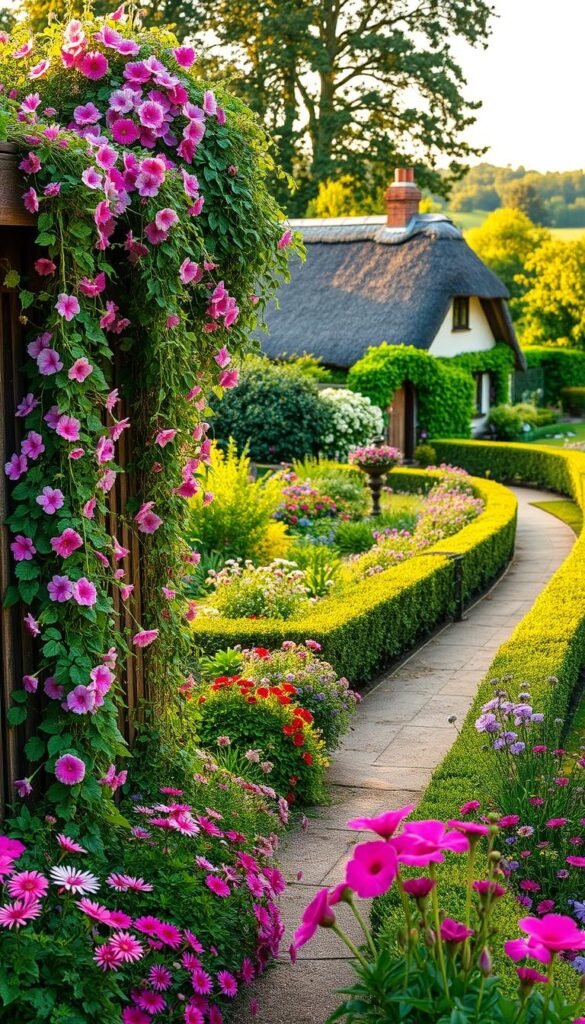
Step into a world where vibrant blooms mingle with fragrant herbs, and weathered stone paths lead to hidden nooks. This timeless garden style, rooted in centuries-old practices, offers a refreshing escape from rigid landscaping rules. Originally cultivated by resourceful homeowners, these spaces blended beauty with practicality—a philosophy that still resonates today.
Modern interpretations honor that heritage while adapting to contemporary lifestyles. You’ll find room for raised beds alongside climbing roses, or compact fruit trees nestled between perennials. The magic lies in embracing imperfection—letting plants spill over edges and grow at their own pace. Discover how this approachable gardening aesthetic can transform even small yards into lush retreats.
What makes these spaces so enduring? It’s the artful mix of elements that serve multiple purposes. Imagine plucking fresh mint for your tea while admiring butterflies dancing among zinnias. Every corner tells a story, from heirloom vegetables to vintage garden tools repurposed as decor. You’re invited to create your own narrative here, guided by nature’s rhythms rather than strict formulas.
This guide will walk you through crafting a sanctuary that reflects your personality. We’ll explore plant pairings that thrive together, smart layouts for different spaces, and maintenance tips that keep the charm alive year after year. Whether you’re starting with a blank slate or refreshing an existing plot, you’ll find inspiration to grow a space that feels uniquely yours.
Understanding the Cottage Garden Aesthetic
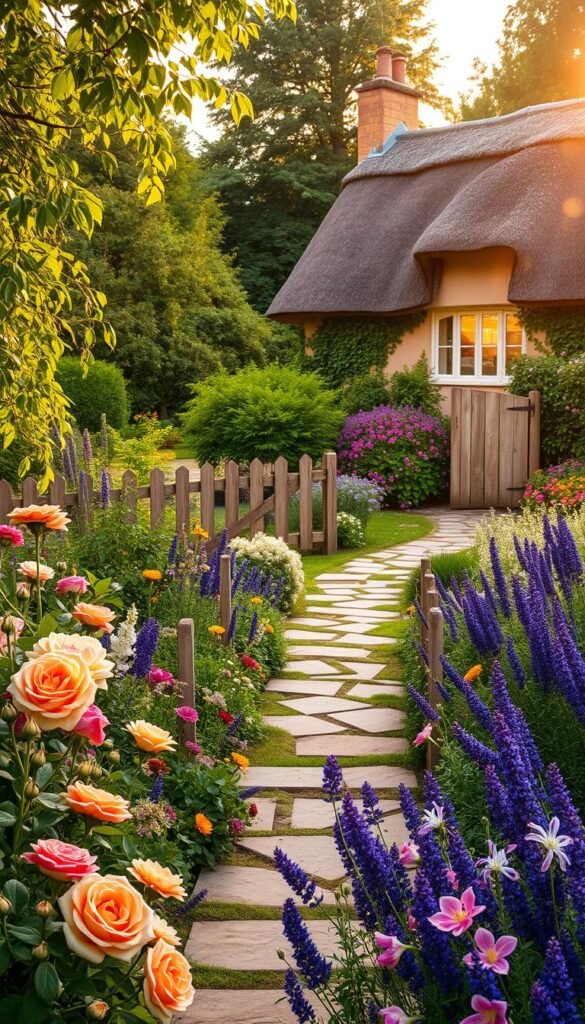
Centuries ago, rural families crafted spaces that fed both body and soul. These living tapestries mixed flowers with food crops, creating beauty through necessity rather than design manuals. Today’s versions keep that spontaneous spirit alive while offering modern flexibility.
What Makes These Spaces Special?
Unlike formal landscapes with symmetrical hedges, cottage gardens celebrate joyful disarray. You’ll see poppies leaning into lavender paths and tomatoes sharing soil with marigolds. No two layouts match—your neighbor’s riot of roses might inspire your own daisy-dotted haven.
“A good garden feeds both the stomach and the spirit,” as an old saying goes. This philosophy shines through in the blend of edible plants and eye-catching blooms. Bees buzz between sage flowers while you snip fresh basil nearby—a living example of form meeting function.
Roots in Resourcefulness
The style began in medieval times when families grew medicine, food, and dye plants together. Over time, practical plots gained floral accents like hollyhocks and roses. By the 1800s, these humble spaces became romantic symbols of country life.
Modern versions honor that heritage while adapting to smaller yards. You might train beans up a trellis beside sweet peas or tuck thyme between stepping stones. The magic lies in letting plants mingle freely, creating scenes that feel discovered rather than designed.
Gathering Inspiration and Essential Materials
Your journey to a charming outdoor retreat begins with gathering ideas. Start by exploring gardens that spark joy—visit local nurseries or scroll through design-focused social media accounts. Notice how sunlight filters through climbing vines or dances across ornamental grasses.
Where to Find Creative Sparks
Historical estates offer lessons in timeless layouts, while modern books showcase fresh takes on classic concepts. For example, the cottagecore aesthetic blends nostalgic charm with sustainable practices. Pay attention to:
- Morning vs. afternoon light patterns in your yard
- Soil texture and drainage capabilities
- Existing walls, fences, or structures that shape your space
Path materials set the tone—crushed gravel suggests casual elegance, while reclaimed bricks add heritage character. Professional designers often mix functional elements like trellises with decorative touches like weathered urns.
Let your home’s architecture guide plant choices. A farmhouse-style porch pairs beautifully with rambling roses, while urban spaces might feature compact fruit trees in raised beds. The magic happens when practical growing areas flow seamlessly into whimsical nooks.
Planning Your Garden Space for a Timeless Look
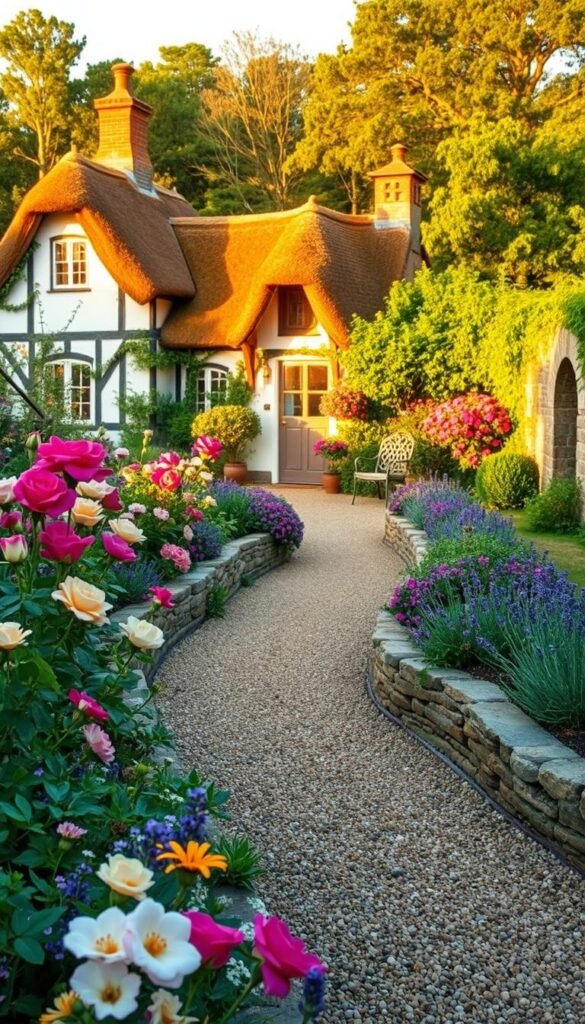
Creating a timeless garden style begins with thoughtful layout choices that blend structure and spontaneity. Picture pathways that curve like question marks, inviting visitors to discover what lies around each bend. This approach balances breathing room with lush clusters where flowers jostle playfully for sunlight.
Balancing Open Areas and Clumped Plantings
Start by mapping out walkways that create natural movement. Crushed stone or aged bricks work beautifully for paths, framing your planting zones without rigid borders. Leave generous pockets of open space between flower masses—these negative spaces let the eye rest and highlight your favorite blooms.
| Element | Traditional Approach | Modern Twist |
|---|---|---|
| Paths | Winding gravel trails | Geometric stepping stones |
| Plant Groups | 3-5 species clusters | Monochrome thematic blocks |
| Structures | Wooden arches | Powder-coated metal obelisks |
Group plants in odd-numbered clusters for visual harmony. Tall spires of delphiniums behind mounded lavender create depth, while ground-hugging thyme softens edges. This layered approach mimics nature’s patterns, making beds appear established years ago.
Screen modern fences with fast-growing climbers like clematis or honeysuckle. Place mature shrubs near seating areas to instantly add character. Remember, a successful cottage garden feels discovered, not designed—let your layout tell its own story through gentle guidance rather than strict rules.
Setting Up the Ideal Soil and Organic Amendments
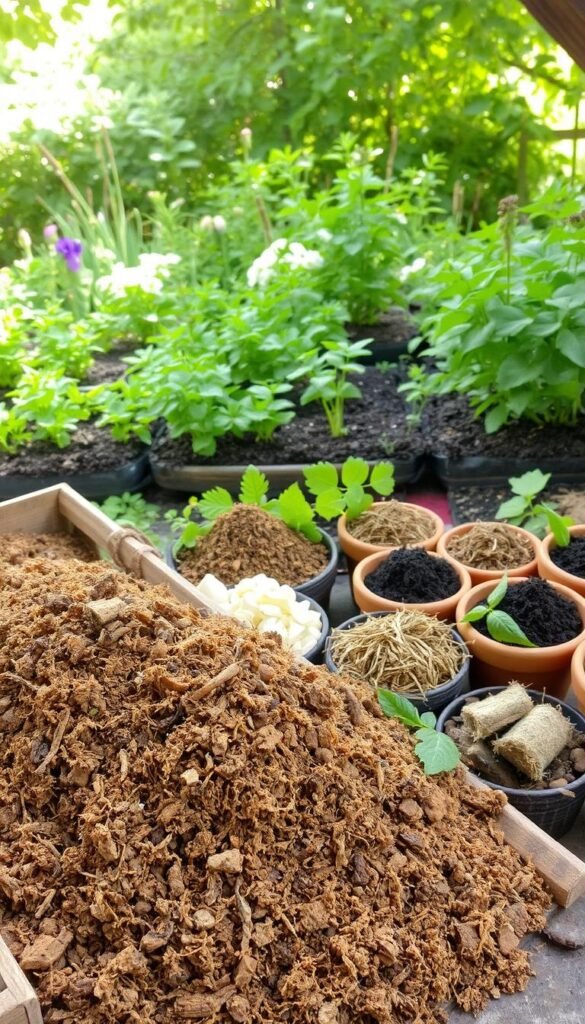
What’s the secret behind those lush cottage gardens bursting with blooms? It starts beneath your feet. Healthy earth acts like a nutrient-packed buffet for your plants, helping them grow strong and vibrant.
Soil Testing and Enriching with Natural Mulch
Begin with a simple soil test kit from your local nursery. These $15 tools reveal pH levels and missing nutrients. Most flowering plants thrive in slightly acidic soil (6.0-6.5 pH). Adjust with lime if it’s too sour or sulfur if too sweet.
Boost your earth naturally with these amendments:
| Amendment | Benefits | When to Use |
|---|---|---|
| Compost | Improves texture, adds microbes | Spring & fall |
| Aged manure | High nitrogen content | Pre-planting |
| Leaf mold | Retains moisture | Mulching beds |
| Fish mulch | Slow-release nutrients | Early growing season |
Spread 2-3 inches of organic mulch annually. This blanket keeps roots cool, stops weeds, and breaks down into plant food. New gardeners often skip this step, but it’s key for low-maintenance beauty.
Refresh your mulch each year before summer heat arrives. For budget-friendly options, try grass clippings or shredded leaves. Over time, these layers transform thin dirt into crumbly, fertile soil that smells like a forest floor after rain.
Step-by-Step Guide to Planting Your Cottage Garden
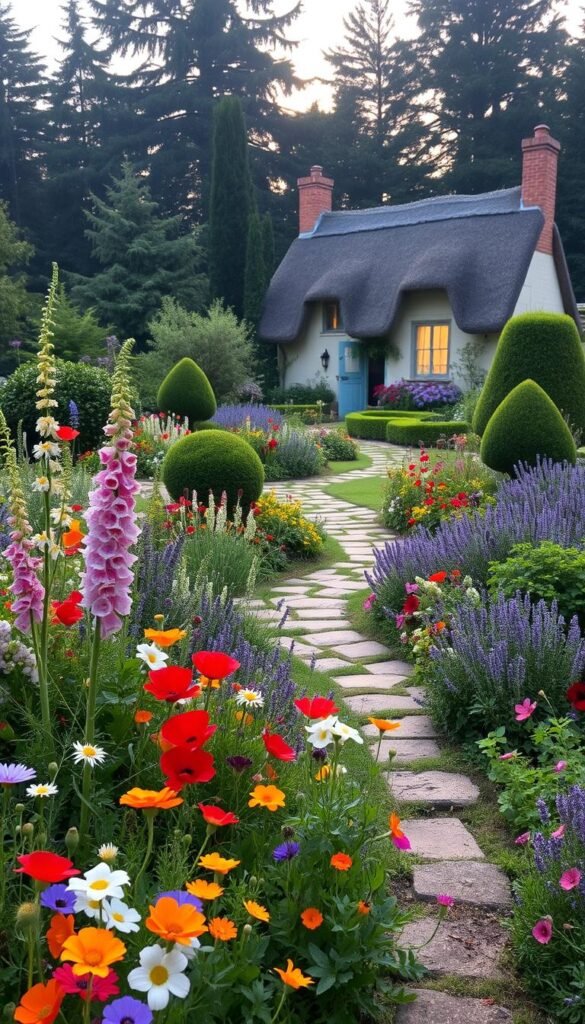
Transform your outdoor space into a living tapestry by following these planting fundamentals. Start with a blueprint that balances structure and wild beauty—think of it as nature’s recipe book where every ingredient plays multiple roles.
Crafting Your Plant Palette
Begin with perennials that anchor your design year after year. Foxgloves and coneflowers make excellent backdrops, while phlox adds mid-height color bursts. Intersperse herbs like rosemary and thyme—their silvery leaves contrast beautifully with vibrant blooms.
For edible charm, mix kale with marigolds or let cucumbers climb beside sweet peas. This pairing deters pests while creating visual interest. Always plant in odd-numbered groups—three or five of the same variety—to create natural-looking clusters.
Building Vertical Interest
Layered planting turns flat beds into dynamic landscapes. Follow this simple framework:
| Layer | Plants | Purpose |
|---|---|---|
| Canopy | Clematis, climbing roses | Vertical structure |
| Mid-Level | Dahlias, zinnias | Color focus |
| Ground | Creeping thyme, sedum | Edge softening |
Stagger bloom times for continuous color. Early irises give way to summer daylilies, followed by autumn hydrangeas. Leave some seed heads standing—they’ll feed birds and add winter texture.
Remember: successful cottage gardens evolve over time. Let plants self-seed in unexpected corners, and don’t fret over perfect spacing. Nature’s imperfections often create the most captivating scenes.
English Cottage Garden Ideas: Balancing Tradition, Texture, and Color
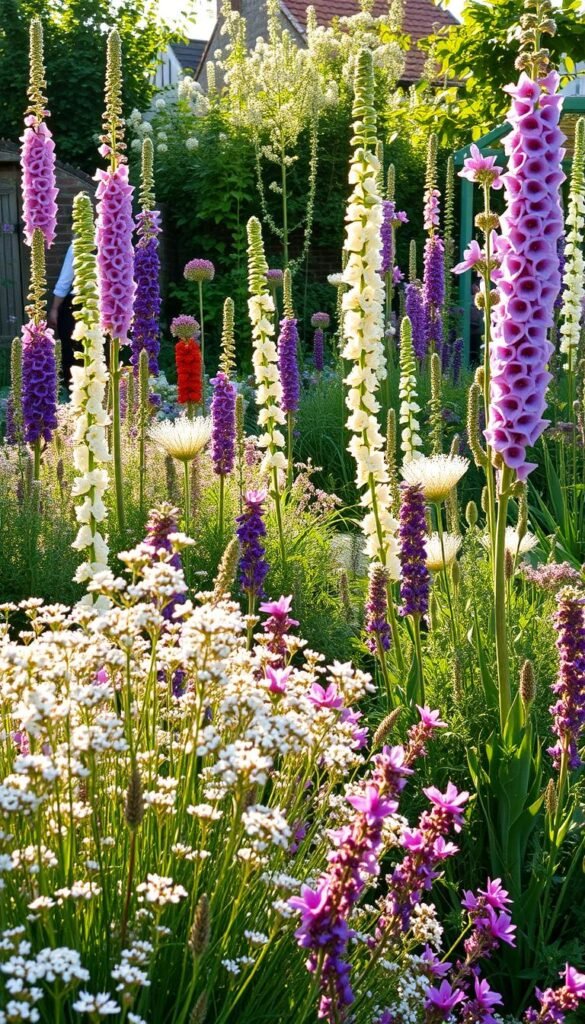
Your outdoor space becomes a living canvas when you curate plants like an artist mixing pigments. The secret lies in combining classic varieties with strategic color play—think lupines reaching for the sky while lavender spills over walkways.
Crafting a Vibrant Plant Palette
Start with four foundational plants that define the cottage garden spirit:
- Peonies – their lush blooms anchor spring displays
- Delphiniums – vertical accents in blues and purples
- Foxgloves – woodland charm with speckled throats
- Roses – climbers like ‘New Dawn’ perfume the air
Pair warm tones (yellows, oranges) with cool hues (blues, purples) for dynamic contrast. A professional designer’s trick? Place silver-leafed plants like artemisia between bold colors to prevent visual clashes.
| Season | Star Plants | Color Strategy |
|---|---|---|
| Spring | Iris, bleeding heart | Pastel transitions |
| Summer | Shrub roses, phlox | Vibrant focal points |
| Fall | Sedum, asters | Rich sunset tones |
For texture, mix feathery cosmos with bold hollyhocks. Let ornamental grasses like stipa sway among bursts of color from annuals. Remember: repetition creates rhythm—plant the same rose variety in three different beds to tie your design together.
“A garden should make you feel you’ve entered privileged space,” says renowned designer Piet Oudolf. Achieve this by allowing self-seeding flowers to find their perfect spots, creating that coveted ‘organized chaos’ look.
Incorporating Garden Structures and Visual Elements
Imagine strolling through a space where weathered wood meets fragrant blooms. Vertical elements like arbors draped in climbing roses transform flat layouts into layered wonderlands. These features guide the eye upward while creating shady retreats for quiet moments.
Using Pergolas, Trellises, and Arbors for Charm
Rustic pergolas frame entryways with personality. Train clematis or honeysuckle along their beams—the blossoms will dance in summer breezes. For smaller spaces, iron trellises add height without overwhelming your garden design.
Adding Vintage and Rustic Touches
Repurpose forgotten items as focal points. An old wheelbarrow overflowing with petunias tells a story. Stone birdbaths or moss-covered urns blend seamlessly into this relaxed setting. Even simple window boxes bursting with pansies elevate everyday views.
Crushed gravel paths edged with lavender invite exploration. Let plants spill onto walkways—it’s that touch of wildness that makes a cottage garden feel alive. Under mature trees, place a bench where you can soak in the magic you’ve cultivated.