
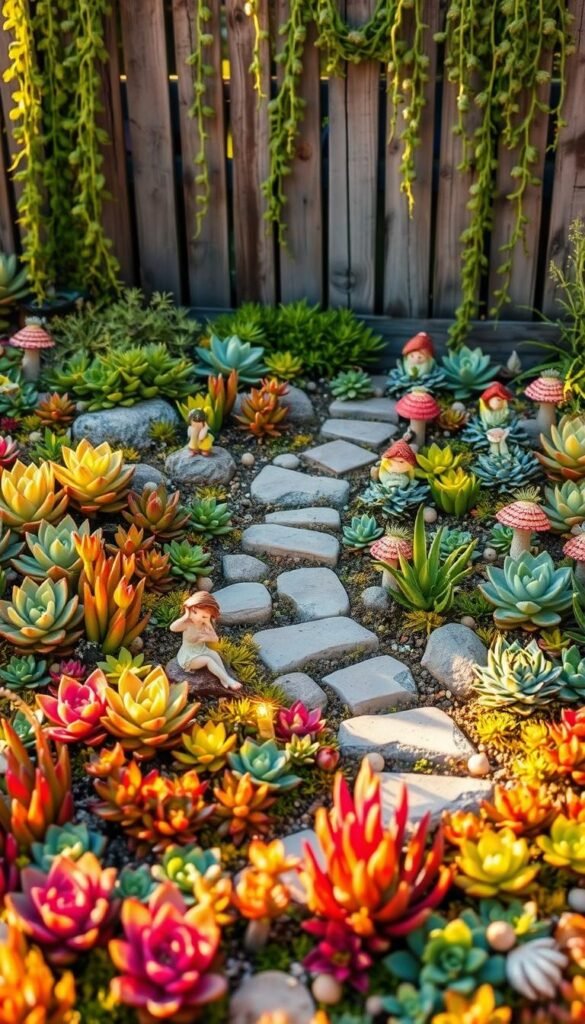
Imagine crafting a living storybook scene that thrives with minimal effort. These pint-sized ecosystems blend playful imagination with nature’s hardiest plants, offering endless opportunities for creative expression. Whether you’re short on space or time, these arrangements bring enchantment to windowsills, patios, or tabletops.
Water-wise plants like jade and echeveria shine in compact displays. Their fleshy leaves store moisture, letting them flourish even when life gets busy. With colors ranging from icy blues to fiery reds, they form eye-catching backdrops for tiny cottages or woodland creatures.
Many enthusiasts find these projects therapeutic, combining artistic freedom with gardening’s grounding benefits. Children adore arranging pebble paths between chubby-leaved “trees,” while adults appreciate the low-upkeep beauty. Explore succulent fairy garden ideas to discover how stonecrop varieties create textured hillsides or sprawling groundcover.
You’ll soon learn why these living dioramas captivate hobbyists nationwide. They transform ordinary containers into extraordinary worlds where practicality meets fantasy – no green thumb required!
Starting Your Fairy Garden Journey
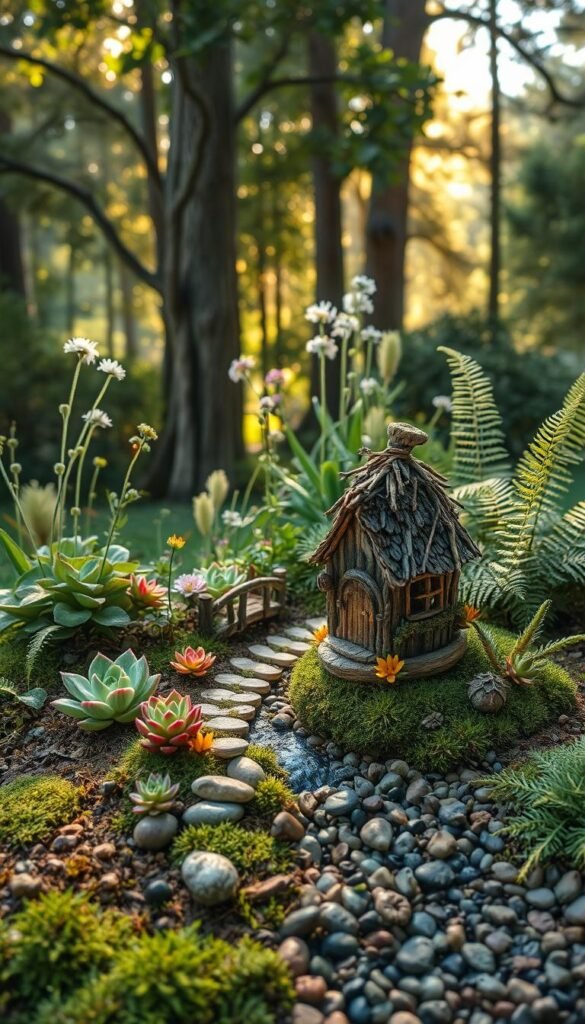
Embark on creating your miniature paradise by first understanding your environment. Whether you’re working with a kitchen counter or balcony, your available space shapes every decision. Measure sunlight exposure and surface area before picking plants or decor.
Understanding Your Space and Vision
Sketch rough ideas while considering practical needs. South-facing windows need sun-loving varieties, while shaded areas require low-light species. Your creative vision should balance fantasy elements with your plants’ real-world needs.
Gathering Materials and Tools
Assemble these essentials before building:
| Material | Purpose | Tips |
|---|---|---|
| Shallow container | Foundation | Choose width over depth |
| Cactus soil mix | Drainage | Avoid regular potting soil |
| Miniature accessories | Theme development | Start with 2-3 key pieces |
Include tweezers for precise planting and a small brush for cleaning leaves. Local nurseries often carry specialty gravel perfect for winding paths. Remember: good preparation makes the building process joyful rather than frustrating.
Your materials list grows with your skills. Beginners might stick to three plant varieties, while experienced crafters experiment with textured stones and layered landscapes. Let your space guide your imagination without overcrowding the scene.
Choosing the Right Containers, Soil, and Materials
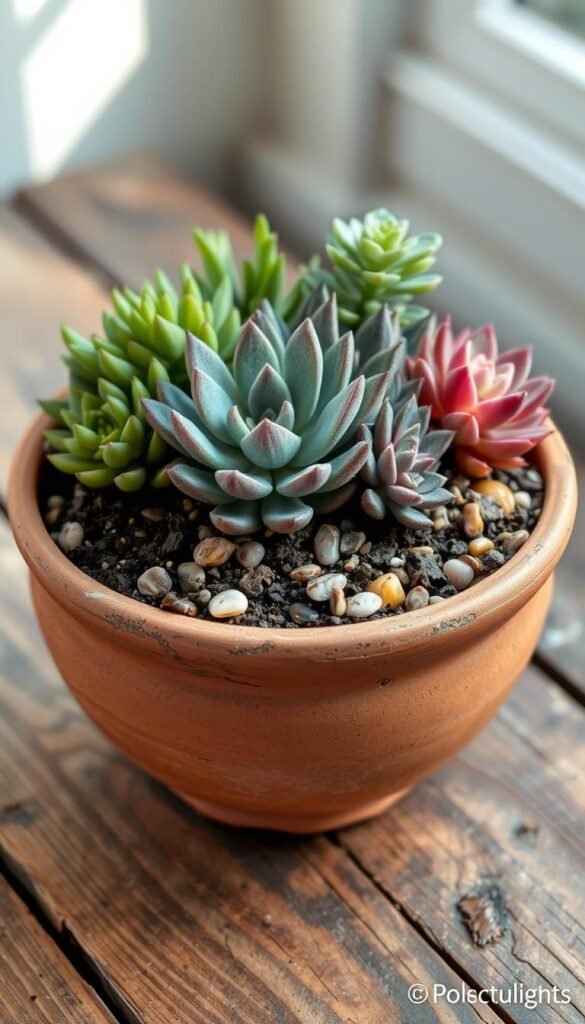
Your miniature wonderland begins with smart foundation choices. The vessel and growing medium determine whether your creation thrives or struggles. Let’s break down what works best for these tiny ecosystems.
Exploring Container Options and Sizes
Shallow vessels rule here. Look for containers 2-4 inches deep with drainage holes – terracotta pots breathe well, while plastic options stay lightweight. Upcycled items like baking trays or thrifted bowls add personality without breaking the bank.
Consider where you’ll display your garden. Heavy ceramic works for permanent patio container gardening, while wooden boxes suit rustic themes. Width matters more than depth – aim for at least 12 inches across to create visual impact.
Selecting Well-Draining, Succulent-Friendly Soil
Your plants’ roots demand fast-draining soil. Pre-mixed cactus blends work perfectly, but making your own saves money. Combine equal parts:
- Potting mix
- Coarse sand
- Perlite
This blend prevents water from pooling around roots. Always test drainage before planting – pour water through dry soil. It should exit within 10 seconds. If not, add more gritty materials like pumice or crushed granite.
Remember: proper soil preparation stops root rot before it starts. Your succulents will reward you with vibrant growth when their underground environment matches their natural habitat.
Selecting the Perfect Succulents and Complementary Plants
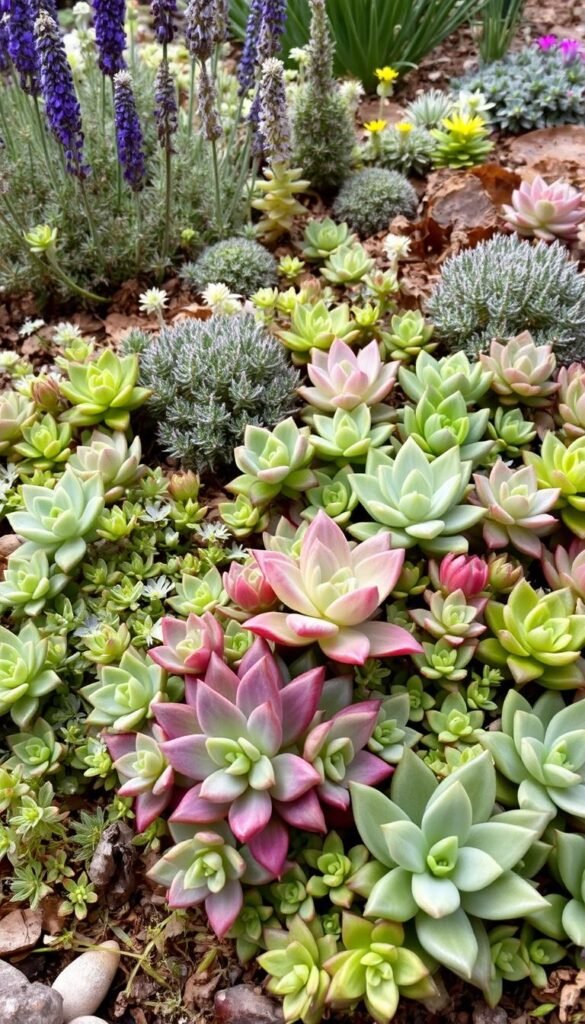
Build your miniature ecosystem with nature’s most resilient performers. The right mix of textures and growth patterns turns simple arrangements into living sculptures. Focus on varieties that stay petite while offering year-round visual drama.
Star Players: Echeveria and Sedum
Echeveria’s symmetrical rosettes bring instant structure to tiny landscapes. Their color-changing leaves shift from mint green to lavender under bright light. Pair them with Sedum’s trailing varieties – their bead-like foliage spills over container edges like living lace.
Haworthia adds striking vertical lines with zebra-striped leaves. These architectural statement pieces thrive in the same conditions as their round-leaved cousins. For seasonal pops of color, try Graptopetalum hybrids that blush pink when slightly stressed.
Supporting Cast: Texture-Boosting Companions
Irish moss creates velvety green carpets between succulent “trees.” Miniature ferns add feathery contrast in shaded corners. Choose companions with matching water needs – most succulents prefer drying out completely between drinks.
When combining species, consider growth speed. Slow growers like Crassula prevent overcrowding. Use taller varieties sparingly as focal points. Your final selection should create balance through contrasting shapes and complementary hues while simplifying care routines.
Designing a Succulent Fairy Garden for Low-Maintenance Charm
Transform ordinary spaces into magical realms through thoughtful arrangement. Your layout decisions determine whether your miniature landscape feels cohesive or chaotic. Begin by visualizing how visitors’ eyes will travel through your tiny world.
Planning Your Layout and Focal Points
Start with your showstopper piece – maybe a tiny cottage or stone well. Position these elements first, leaving room for plant growth. Taller succulents work best behind structures, while ground-hugging varieties frame pathways naturally.
| Element | Role | Placement Tip |
|---|---|---|
| Fairy house | Central focus | Offset from center |
| Pathways | Visual guide | Curved lines |
| Key plants | Texture anchors | Group in threes |
| Decor pieces | Theme enhancers | Near edges |
Scaling Elements to Create a Whimsical Scene
Match accessory sizes to your plants’ mature dimensions. A 2-inch chair looks right beside 4-inch succulents. Use pebbles as “boulders” and moss as “meadows” to maintain whimsy.
Leave breathing room between features. Empty spaces let the eye rest and make planted areas pop. Rotate your container while working – what looks good face-on might need adjustment from other angles.
Remember: great design balances fantasy with function. Your living diorama should tell a story through carefully chosen elements, not overwhelm with clutter. Now step back – does your creation invite closer inspection?
Incorporating Whimsical Accessories and Natural Decor
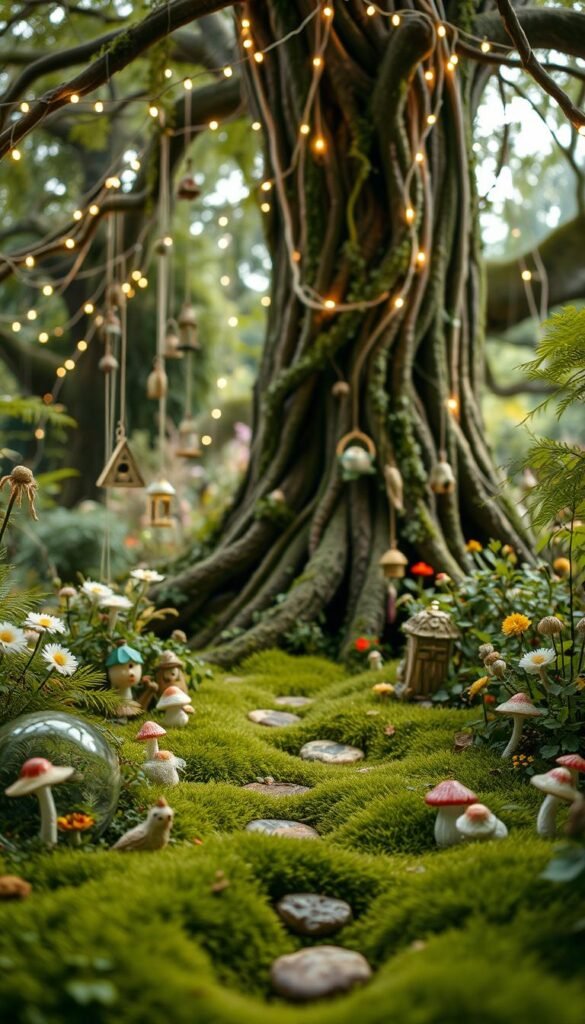
Your miniature landscape becomes truly enchanting when personalized with character and texture. Thoughtful placement of tiny treasures transforms plant arrangements into storytelling scenes that captivate both creators and viewers.
Positioning Miniature Characters and Structures
Start with your largest figurines as focal points. Angle houses slightly sideways to create depth, and group smaller items near pathways for discovery moments. Use these placement tips:
- Elevate seating areas on flat stones
- Face figures toward key features
- Leave space for plant growth
Pebble paths should curve naturally between destinations. Alternate stone sizes for visual rhythm – larger “stepping stones” beside fine gravel “walkways.”
Blending Found Elements With Crafted Pieces
Balance store-bought accessories with organic finds. Twisted branches become mystical trees, while seashells transform into tiny ponds. Preserved moss makes perfect meadows when tucked between succulents.
For cohesive designs, match material colors to your plants. Silver-dollar jade pairs beautifully with gray pebbles, while red aeoniums pop against white quartz chips. Discover more ways to combine DIY garden art with natural elements.
Secure lightweight pieces with clear aquarium glue. Outdoor displays benefit from weather-resistant resin figures, while indoor creations can showcase delicate ceramic details. Remember – the best arrangements invite viewers to lean closer and imagine the stories unfolding.
Essential Watering Practices and Garden Maintenance Tips
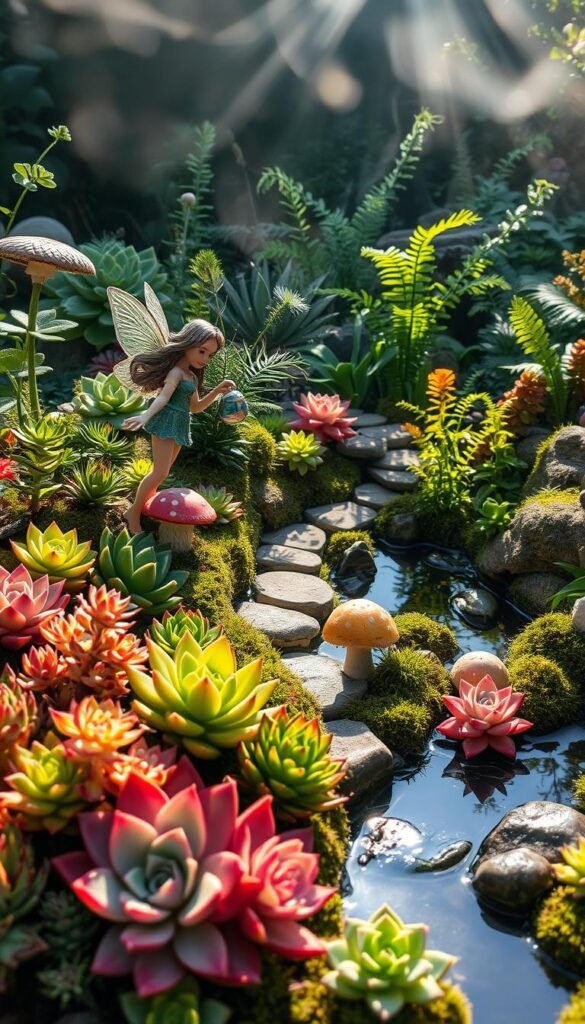
Keep your miniature wonderland thriving with smart hydration habits. These resilient plants prefer neglect over fussing, but timing matters. Learn to read your garden’s needs through simple observations and seasonal shifts.
Mastering the Soak-and-Dry Method
Test soil dryness by sticking your finger an inch deep. If it feels parched, give a thorough drink until water flows from drainage holes. Wait until the next dry cycle – typically every 7-14 days. This mimics desert downpours followed by drought periods.
| Issue | Signs | Solution |
|---|---|---|
| Overwatering | Yellow leaves, mushy stems | Let soil dry completely |
| Underwatering | Wrinkled foliage, slow growth | Water slightly more often |
| Root rot | Black base, foul odor | Remove affected plants |
Seasonal Care and Plant Upkeep
Adjust routines with temperature changes. Water weekly during active summer growth, then cut back to monthly in winter dormancy. Use clean scissors to trim leggy stems or remove dead leaves hiding pests.
Rotate your container monthly for even sun exposure. Check accessories after storms – heavy rain might displace tiny furniture. With these simple steps, your living artwork stays vibrant through seasons while keeping care time minimal.
Creative Themes and Layout Ideas to Spark Your Imagination
Unleash your inner storyteller through themed miniature worlds that reflect your personality. Three popular concepts offer endless possibilities for bringing magic to your space while keeping care simple. Let’s explore how different settings can transform your creation.
Enchanted Forest Retreat
Build a woodland wonderland using twigs as tiny fences and acorn caps as fairy bowls. Moss-covered logs become mystical meeting spots, while pinecone “trees” tower over pebble paths. Add rustic cottages with bark shingles for that lived-in charm perfect for cottagecore magic.
Sun-Kissed Coastal Escape
Bring beach vibes home with sand-filled containers and driftwood arches. Miniature lounge chairs beside shell ponds create vacation energy. Use blue glass fragments as water features and air plants as tropical palms.
Whimsical Tea Party Setup
Arrange dollhouse-sized cups among flowering succulents for playful charm. Create tabletops from sliced tree cookies and use lichen as decorative doilies. This theme shines when hosting seasonal gatherings – swap pumpkin centerpieces for snow-dusted evergreens.
Rotate elements quarterly to keep your display fresh. Summer might feature butterfly decorations, while autumn calls for mini hay bales. Your tiny world grows with your creativity, proving that great ideas needn’t be complicated – just heartfelt.