Your outdoor area’s charm starts with vibrant tones that catch the eye instantly. Even the tiniest garden edges can become showstoppers when you harness the power of intentional design. Think of your planting strips as living frames—they set the stage for your entire landscape’s personality.
Strategic combinations of complementary or contrasting shades do more than beautify. They create illusions: lighter tints can stretch narrow spaces, while rich jewel tones add depth. A well-planned scheme ties different plants together, turning scattered blooms into a cohesive story.
Why does this matter? The right hues influence how you feel in your yard. Warm reds energize, cool blues soothe, and balanced pairings keep interest through seasons. Your choices shape whether a space feels playful, serene, or polished—no acreage required.
This guide unlocks simple techniques to amplify your green haven’s character. You’ll learn to balance repetition and variety, ensuring every inch contributes to your yard’s rhythm. Let’s turn those overlooked edges into moments that spark joy from spring frost to autumn’s first crunch.
Bold color palettes for small garden borders to make them pop
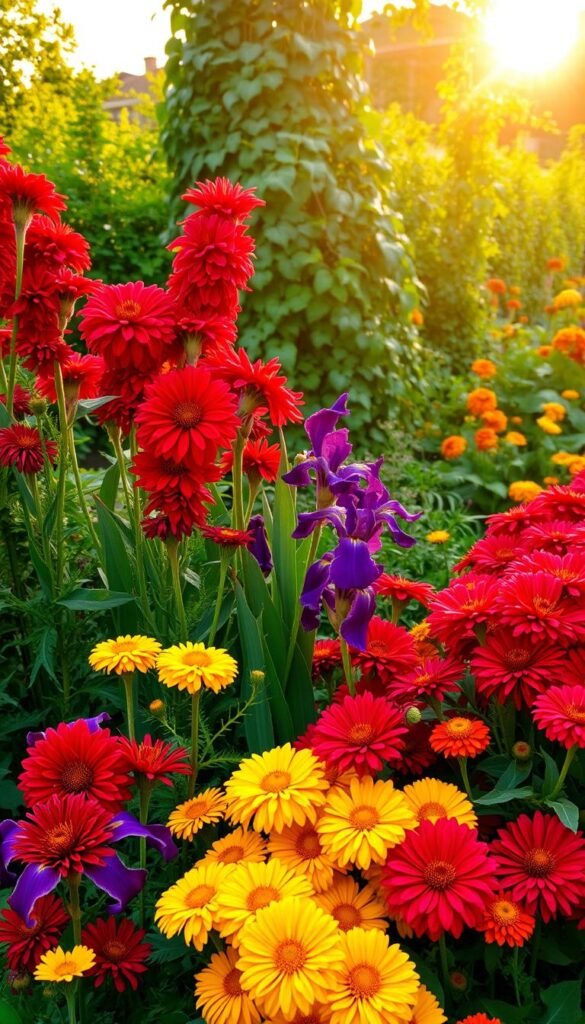
Your garden’s character shines through when hues reflect your unique taste. Start by asking: How do I want to feel when stepping into this space? Fiery red geraniums might spark joy during morning coffee, while lavender whispers calmness at dusk.
Warm tones like tangerine daylilies or golden marigolds inject energy into compact areas. Pair them with deep purple salvias for contrast that doesn’t overwhelm. Cooler shades—think baby’s breath white or hydrangea blue—expand tight spaces visually, making them appear larger.
Three essentials for harmony:
- Repeat key shades across plants
- Use foliage textures as neutral buffers
- Match intensity to your home’s exterior
Remember, your choices tell a story. A cottage-style mix of pinks and blues feels nostalgic, while monochromatic greens offer modern elegance. Pro tip: Test paint swatches near your planting area at different daylight hours—colors shift dramatically!
Understanding the Impact of Color in Your Garden
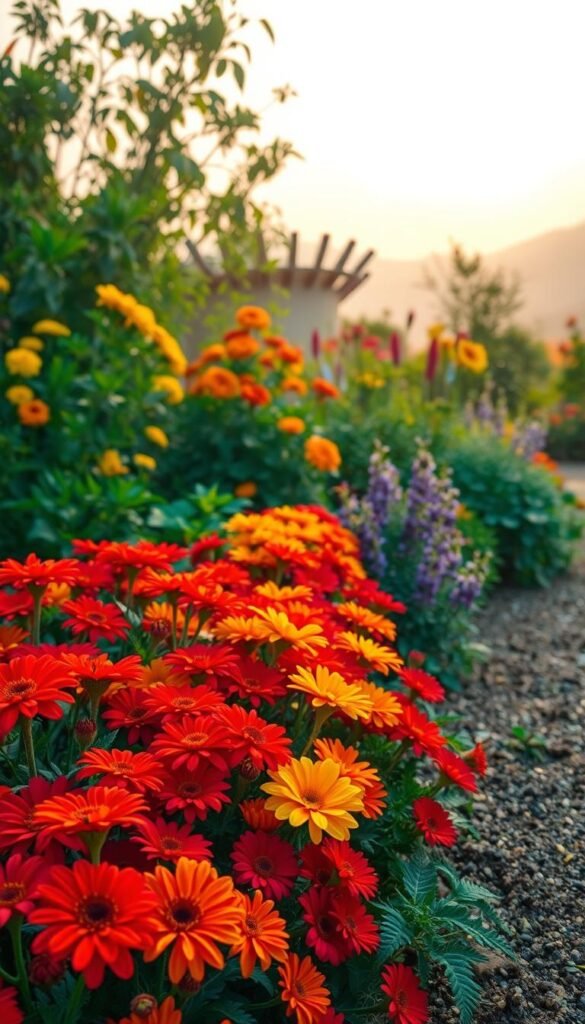
The hues you choose do more than beautify—they shape experiences. Artists like Leonardo da Vinci studied how nature arranges tones, while Isaac Newton’s color wheel gave us tools to predict harmony. These principles become powerful when applied to your outdoor spaces.
How Color Sets the Mood
Warm reds and yellows buzz with energy, perfect for morning viewing areas. Cool blues and lavenders calm evening seating zones. Your selections create invisible boundaries that guide emotions, much like a painter’s brush directs the eye.
The Basics of Color Theory
Newton’s wheel reveals three relationship types: neighbors (analogous), opposites (complementary), and single-hue variations (monochromatic). Pair marigolds with purple sage for electric contrast, or blend coral bells in peach-to-ruby gradients for subtle drama.
In garden design, these strategies help balance excitement with cohesion. Foliage textures act as visual rest stops between vibrant blooms. Remember—repeating key shades creates rhythm, while strategic surprises keep the journey interesting.
Choosing a Color Scheme: Complementary, Contrasting, or Monochromatic
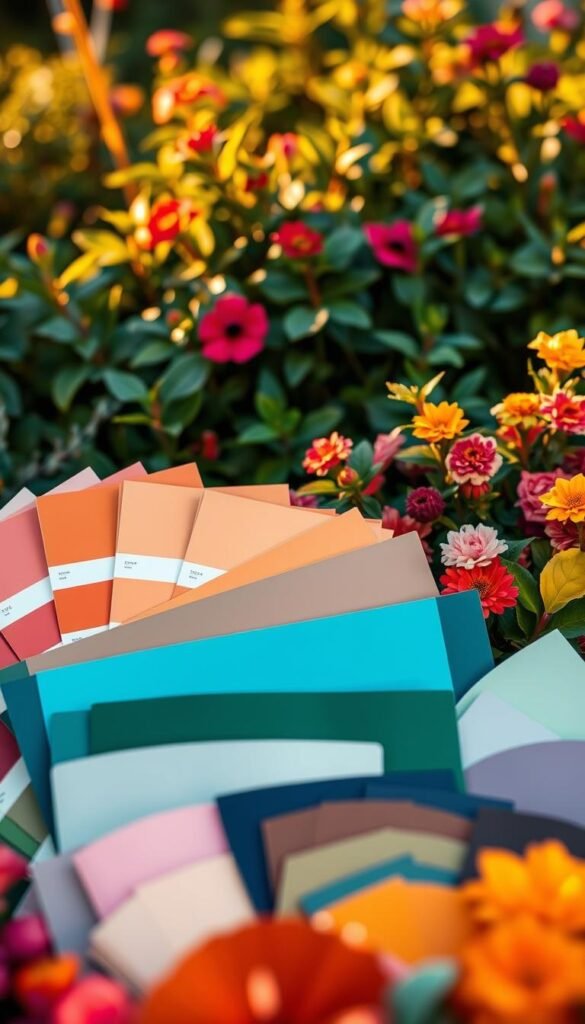
Your garden’s personality blooms through deliberate color decisions. Like arranging a gallery wall, each choice builds a visual narrative that guides the eye. Three approaches dominate professional designs—each offering distinct advantages for tight spaces.
Exploring the Color Wheel
Newton’s circular tool reveals secrets to harmony. Monochromatic schemes use one hue’s spectrum—think crimson snapdragons paired with blush roses. This approach simplifies design while adding depth through light and dark shades.
Complementary combinations spark excitement. Violet pansies beside golden coreopsis create fireworks for the eyes. “Opposites attract,” says landscape designer Marie Stella. “They amplify each other’s intensity without competing.”
Designing with Repetition and Variety
Repeat key colors like drumbeats in a song. Scarlet begonias might echo your front door, while varied textures (feathery astilbes, glossy heucheras) prevent monotony. Introduce surprise accents—a cluster of blue lobelia in a sea of peach geraniums—to maintain rhythm.
For those elevating your space, balance boldness with restraint. Mix tall purple salvias with low-growing yellow sedums. Limit your palette to three main varieties, letting foliage textures handle neutral transitions.
Seasonal Planting for Continuous Garden Appeal
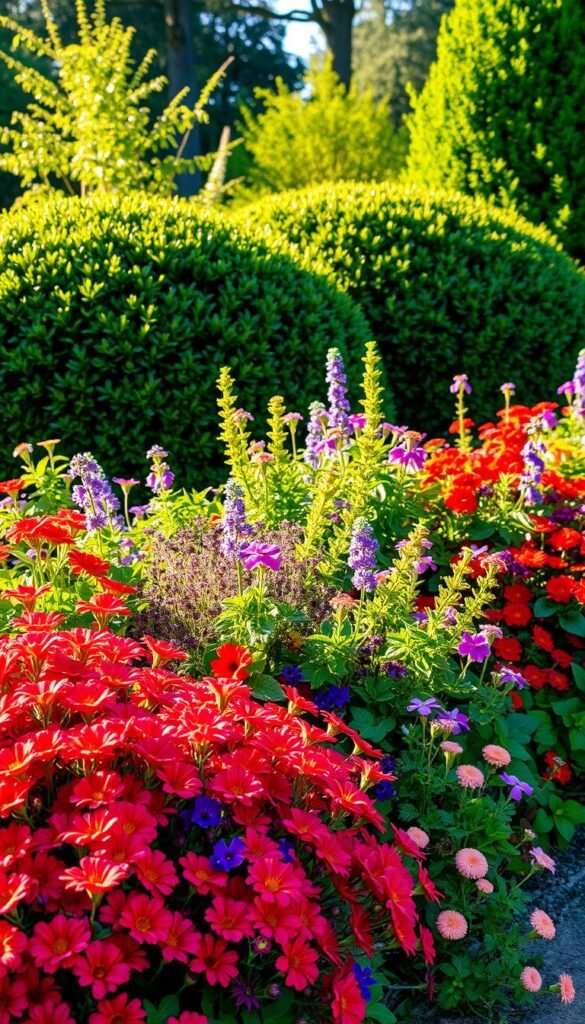
Transform your planting strip into a year-round spectacle with strategic timing. Clever plant selection ensures every season brings fresh drama, from spring’s first buds to winter’s frost-kissed berries.
Spring and Summer Blooms
Early spring bursts open with crocuses and daffodils in fiery yellows. As temperatures rise, peonies and iris take center stage. Pair these with summer stars like coneflowers and daylilies for nonstop blooming.
Pro tip: Plant zinnias in staggered batches. They’ll flower from June through October, bridging summer and fall effortlessly.
Fall and Winter Foliage Interest
When fall arrives, maple-leaf viburnum dazzles with crimson leaves. Ornamental kale adds purple texture, while beautyberry shrubs dangle magenta clusters. Winter shines through red-twig dogwood stems and holly’s glossy berries.
| Season | Star Plants | Key Features |
|---|---|---|
| Spring | Tulips, Bleeding Heart | Early color, bulb variety |
| Summer | Black-Eyed Susan, Lavender | Drought-resistant blooms |
| Fall | Sedum, Russian Sage | Seed heads, foliage shifts |
| Winter | Winterberry, Snowdrops | Berries, early blooming |
For compact spaces, try colorful container gardening with dwarf evergreens. Their scale-perfect forms deliver seasonal charm without overcrowding.
Expert Tips for Designing Small Garden Borders
Great garden designs don’t happen by accident – they follow professional techniques anyone can master. Focus on strategic plant groupings and smart spatial planning to turn cramped edges into polished displays.
Creating a Balanced Layout
Odd-numbered plant clusters work like magic in tight spaces. Groups of 5-11 identical specimens create bold statements while helping plants thrive. “Massing reduces competition,” explains Denver landscaper Lila Torres. “Your core plants support each other like teammates.”
| Cluster Size | Best For | Visual Effect |
|---|---|---|
| 5 plants | Narrow borders | Defined color blocks |
| 7-9 plants | Curved edges | Fluid movement |
| 11 plants | Focal points | Dramatic impact |
Follow these spacing rules for harmony:
- Place tallest plants at ⅔ border depth
- Allow 12-18″ between clumps
- Use trailing varieties as living mulch
Layer heights gradually – front plants should reach ⅔ the height of mid-border specimens. This creates depth without overwhelming your space. Repeat key varieties every 4-6 feet to establish rhythm that makes borders feel intentional.
Integrating Bold Hues with Traditional Garden Styles
Merging vibrant tones with classic designs creates magic where nostalgia meets fresh energy. Your home’s exterior holds clues for blending eras seamlessly—whether through matching trim colors or echoing architectural details in plant selections.
Combining Modern and Cottage Garden Elements
Cottage gardens thrive on casual abundance, while modern styles favor clean lines. Bridge these worlds by planting drifts of electric blue delphiniums behind neatly clipped boxwood hedges. The contrast highlights both approaches without clashing.
Three strategies for harmonious fusion:
- Use vintage roses in hot pink near geometric stone paths
- Frame bold red dahlias with soft lamb’s ear foliage
- Repeat your front door’s hue in flowering annuals
| Traditional Feature | Modern Twist | Color Impact |
|---|---|---|
| Climbing roses | Steel trellis | Soft pink against gray |
| Herb garden | Raised zinc planters | Green herbs pop on metallic |
| Bird bath | Concrete sphere | Mossy patina meets smooth finish |
Notice how brickwork or siding undertones influence plant choices? Peach shutters pair beautifully with coral peonies, while navy trim demands white hydrangeas. This dialogue between house and garden style builds visual continuity that feels intentional yet effortless.
Start small if unsure—add two magenta asters beside your white picket fence. Gradually increase bold accents as confidence grows, letting established plants provide familiar grounding. Soon, your space will hum with personality that honors tradition while whispering “look closer.”
Revamping Your Garden Border: Preparation and Planning
Successful garden transformations begin long before the first plant goes into the ground. Timing and technique determine whether your refreshed planting strip thrives or struggles. Let’s explore the groundwork that sets the stage for vibrant growth.
Clearing, Weeding, and Soil Preparation
Early spring and fall offer ideal conditions for border renovations. Cooler temperatures reduce plant stress while nurseries stock seasonal favorites. Start by removing existing specimens—keep healthy shrubs in pots temporarily.
Attack invasive roots like ground elder with a garden fork. “Weeds steal nutrients and space,” warns landscape pro Marta Chen. “Remove every centimeter of their roots to prevent regrowth.”
Enrich your soil with 3-4 inches of compost. This layer feeds new plants and improves drainage. For clay-heavy earth, mix in coarse sand to prevent waterlogging.
Measuring and Mapping Your Space
Grab a tape measure and sketchpad before shopping. Note your border’s length, depth, and sunlight patterns. This prevents overcrowding and ensures each plant has room to shine.
Use this simple formula:
- Total plants = (Border length × Depth) ÷ Plant spread
Pair tall specimens with groundcovers for layered interest. Leave 12-18 inches between clusters for air circulation. A quick sketch helps visualize spacing before digging begins.
| Plant Type | Ideal Spacing | Growth Time |
|---|---|---|
| Perennials | 18-24″ | 2-3 years |
| Annuals | 8-12″ | 1 season |
| Shrubs | 36-48″ | 5+ years |
Designer Insights on Color and Plant Combinations
Mastering plant partnerships transforms ordinary spaces into curated displays. Professional garden designers lean on proven formulas that balance drama with harmony. You’ll find their secrets often involve strategic contrasts in both color and form.
Successful Plant Pairings
That vibrant purple/chartreuse duo you see everywhere? It works because opposites attract. Dark-leaved heucheras pop against golden creeping jenny, while lavender spikes energize lime-green hostas. “Contrast creates depth,” notes designer Elena Martinez. “But scale matters—pair bold leaves with delicate blooms.”
Three rules for winning combinations:
- Match bloom times for synchronized shows
- Vary heights to guide the eye upward
- Use evergreens as year-round anchors
| Plant 1 | Plant 2 | Key Features |
|---|---|---|
| Heuchera ‘Plum Pudding’ | Golden Creeping Jenny | Foliage contrast, shade-tolerant |
| Russian Sage | Lemon Coral Sedum | Textural pairing, drought-resistant |
| Black-Eyed Susan | Blue Fescue Grass | Color pop, low maintenance |
Notice how foliage textures soften bright blooms? Silver artemisia tames fiery red celosia, while spiky yucca grounds pastel roses. These relationships ensure combinations feel intentional, not chaotic.
Timing extends your display’s impact. Plant early tulips behind late-blooming asters—when spring flowers fade, fall stars take over. This layered approach keeps your space lively through seasonal shifts.
Maximizing Space with Compact, Impactful Planting
Smart plant selection turns limited areas into lush showcases. Match fast-growing varieties with partners of similar vigor—slow growers get lost in the shuffle. Think of it as pairing sprinters with sprinters, not marathon runners.
- Choose dwarf cultivars with big personalities
- Prioritize multi-season performers
- Use vertical layers to fake depth
Dwarf coneflowers pack the same punch as their taller cousins but stay under 18 inches. Pair them with creeping thyme that spills over edges, creating movement without bulk. This combo thrives in tight quarters while delivering months of color.
| Plant Type | Growth Rate | Ideal Partner |
|---|---|---|
| Speed Demon | Fast | Russian sage |
| Moderate Mover | Medium | Sedum ‘Autumn Joy’ |
| Slow Grower | Low | Dwarf boxwood |
Vertical layering tricks the eye. Place spiky red-hot pokers behind mounding coral bells, then add trailing ivy at ground level. This creates three distinct tiers that make narrow strips feel expansive.
Remember: every inch counts. Swap sprawling perennials for columnar evergreens. Their upward growth pattern saves precious ground space while adding year-round structure. Your planting scheme stays dynamic without overcrowding.
Practical Guide to Planting and Border Care
Proper care transforms your vibrant display from temporary showstopper to lasting masterpiece. Timing and technique work together to help plants establish strong roots while maintaining their striking appearance.
Planting Timeline and Maintenance
Measure each plant’s mature spread—the space it needs at full size—then subtract 10%. This tighter spacing creates lush coverage faster. A 20-inch spread becomes 18 inches between centers. Stagger plants in zigzag patterns to maximize ground coverage.
| Plant Type | Ideal Spacing | Growth Speed |
|---|---|---|
| Perennial Flowers | 12-16″ | Medium |
| Dwarf Shrubs | 24-30″ | Slow |
| Annual Fillers | 8-10″ | Fast |
Follow this seasonal checklist:
- Spring: Feed with slow-release fertilizer
- Summer: Deadhead spent blooms weekly
- Fall: Divide overcrowded clumps
Watering and Soil Health Tips
Healthy soil means less work later. Mix 3 inches of compost into planting zones annually. Test pH every 2 years—most flowering plants thrive between 6.0-7.0. For container gardening enthusiasts, refresh potting mix each season.
Water deeply but infrequently to encourage drought tolerance. Morning irrigation reduces disease risk. Mulch with shredded bark to retain moisture and suppress weeds without smothering plant stems.
Real Garden Examples of Bold Color Combinations
Seeing is believing when it comes to transforming theory into lush reality. Let’s explore how gardeners across the U.S. marry vibrant plants for knockout effects—even in modest spaces.
Vibrant Hydrangea and Succulent Pairings
Hydrangeas become living sculptures when paired with sculptural succulents. Picture ‘Nikko Blue’ mopheads bursting with cobalt clusters above silvery-blue sedum. The contrast between soft blooms and fleshy leaves creates tactile intrigue.
In dry climates, try pairing lacecap varieties with drought-tolerant echeveria. Their rosette shapes mirror hydrangea flower heads while requiring minimal water. This combo thrives in morning sun with afternoon shade.
Dynamic Annual and Perennial Mixes
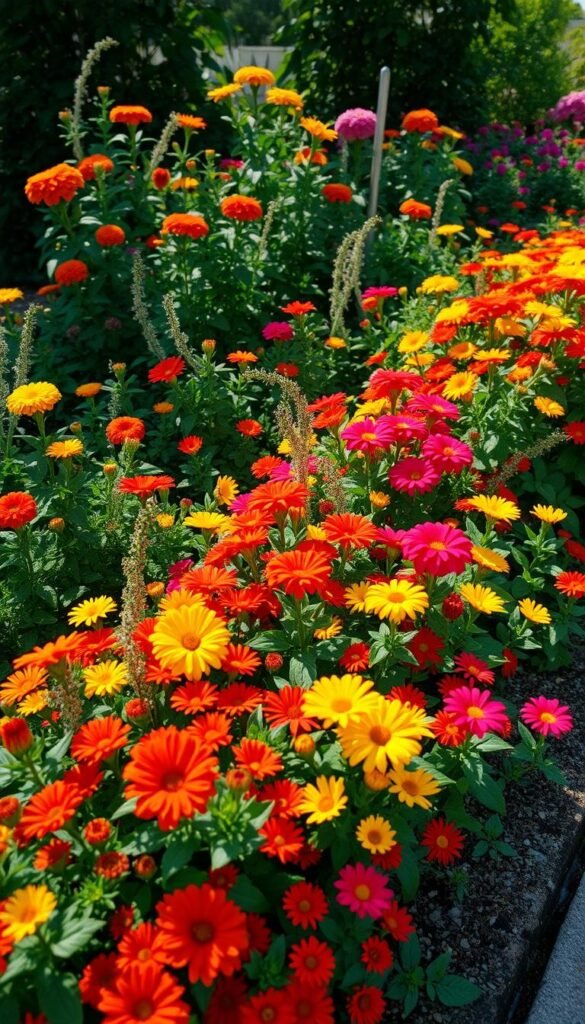
Mix zinnias’ fiery oranges with purple salvia spikes for summer-long fireworks. Layer in perennials like coreopsis for golden accents that return yearly. The secret? Match bloom cycles so colors overlap perfectly.
For shaded corners, combine white impatiens with burgundy heuchera. Their foliage-and-flower duet brightens dark areas without overwhelming. Add trailing vinca vines to soften edges and connect plant groups.
These examples prove smart pairings elevate any space. Whether using hydrangeas as anchors or blending flowers across seasons, your planting strip can become a curated gallery. Now go paint with petals—your masterpiece awaits!