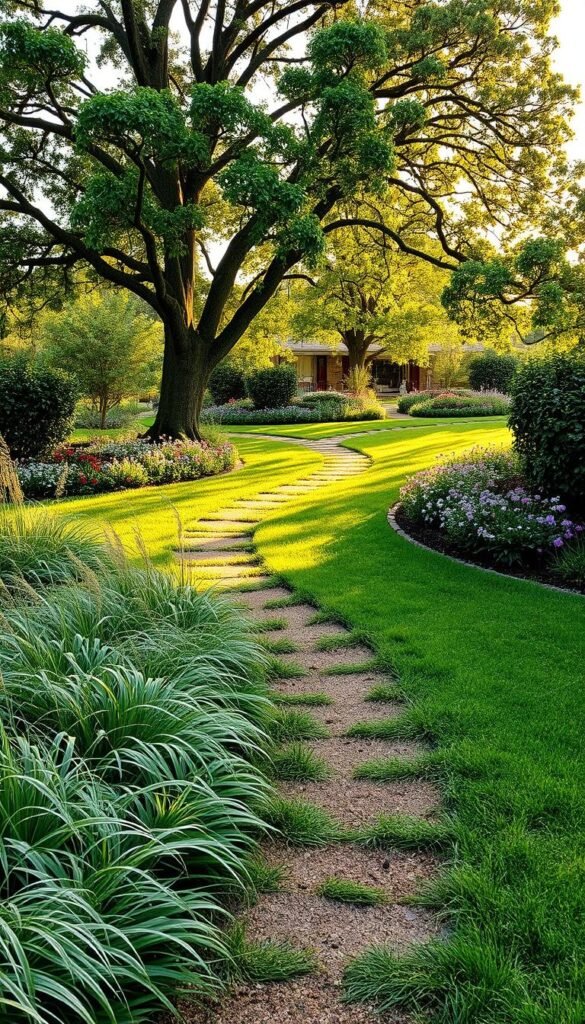
Imagine stepping into your backyard where grassy areas flow effortlessly into walking paths, creating a unified outdoor experience. This approach eliminates jarring divides, letting your garden feel like a single, inviting canvas rather than separate zones.
Why does this matter? Harsh edges between your landscape elements can make spaces feel disconnected. By softening these boundaries, you create visual continuity that pleases the eye and boosts property value. It’s about working with nature’s curves rather than fighting them.
You’ll find simple solutions that don’t require fancy materials. Many homeowners achieve stunning results with native plants, mulch beds, or strategic stone placement. These methods help your path appear as if it’s always belonged there, growing organically from the surroundings.
Ready to rethink your outdoor design? The following techniques will show you how to craft walkways that complement your greenery while reducing maintenance headaches. Let’s explore how strategic planning can turn functional areas into artistic features.
Understanding Your Outdoor Space
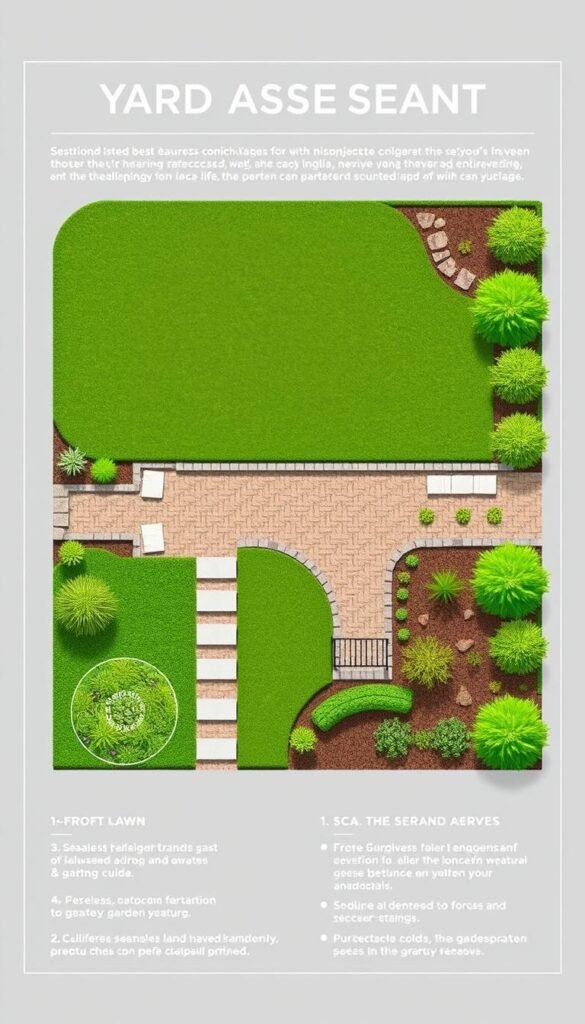
Your yard’s potential shines when you match its natural features with smart planning. Before grabbing tools, grab a notebook—your outdoor space deserves thoughtful analysis tailored to its unique personality.
Assessing Yard Attributes and Layout
Where do you start? Measure your space and note sunlight patterns. Sloped areas might need terracing, while heavy clay soil could require drainage solutions. Pay special attention to how your front yard connects to other zones—these junctions often need the most attention.
Create a rough sketch marking:
- Existing trees or structures
- Sun exposure throughout the day
- Natural water flow during rains
Traffic Flow and Use Patterns
Watch where people actually walk—you might discover shortcuts begging for official pathways. High-traffic areas near your home’s entrance need durable materials, while secondary routes can use softer options like bark chips.
Ask yourself:
- Which spaces host gatherings?
- Where do kids/pets play?
- What areas remain unused?
This detective work ensures your landscape design works with your lifestyle, not against it. You’ll create functional beauty that grows more intuitive with time.
Defining Purpose and Placement for Your Pathway
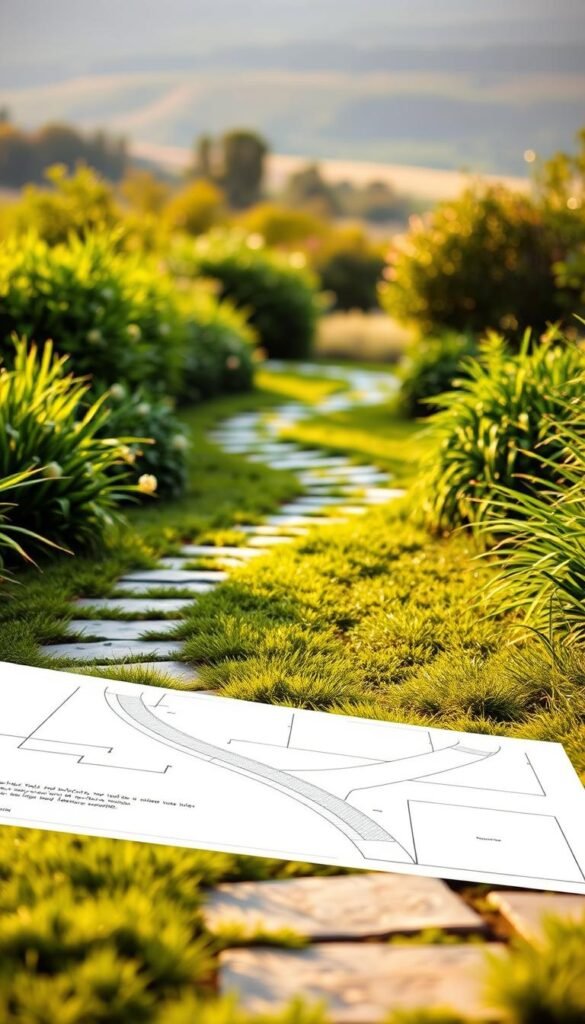
Your pathway’s success starts with understanding its role in your daily life. Will it guide guests straight to your front door, or invite them to wander through flower beds? Clear intentions shape better design choices and material selections.
Identifying the Path’s Function
Start by asking: “Does this walkway need to save time or create an experience?” Direct routes work best for high-traffic areas like driveway connections. Meandering paths suit spaces where you want to slow down and enjoy surroundings.
| Path Type | Best Use | Ideal Width |
|---|---|---|
| Straight | Front door access | 3-4 feet |
| Curved | Garden exploration | 2-3 feet |
| Stepping Stone | Casual backyard routes | 18-24 inches |
Strategic Location Planning
Watch where feet naturally travel. That worn strip of grass near the garage? That’s your blueprint. Connect key points like sheds or outdoor living spaces using existing desire lines.
Consider these placement tips:
- Align primary paths with daily routines
- Use secondary routes for visual interest
- Leave space for plantings between hardscape and turf
Smart positioning reduces maintenance while making your design feel intentional yet effortless. Your pathways become partners in how you move through and enjoy your space.
Seamless transitions between lawn and pathways using natural garden edges
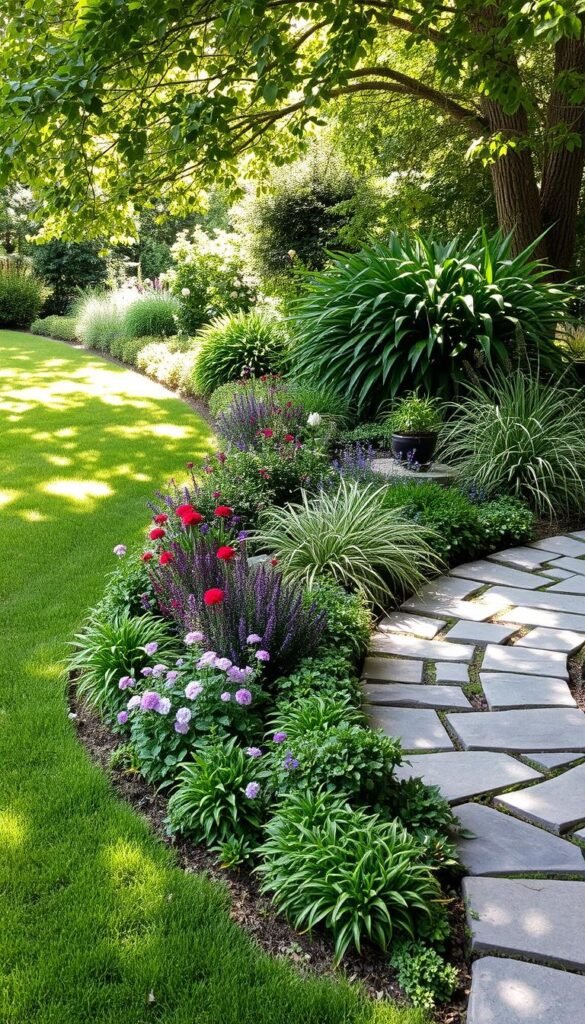
Blurring the lines between different areas of your yard creates harmony that feels effortless. Instead of sharp dividers, think of your garden and path as partners sharing the same stage. This approach works wonders for making spaces feel larger while reducing maintenance.
Start by choosing materials that mimic nature’s patterns. Irregular stones placed in clusters along your walkway’s border create gentle visual bridges. Pair them with creeping thyme or moss to soften edges organically. For a dynamic effect, try:
- Low-growing groundcovers that spill onto path surfaces
- Native grasses planted in staggered rows
- Mulch beds that fade into surrounding grass
Slope your terrain slightly where the landscape meets hard surfaces. Gentle curves prevent water pooling while guiding the eye smoothly across spaces. This technique works particularly well for those finding your personal style between wild and manicured looks.
Remember: the best designs feel discovered, not constructed. Let plantings vary in density and height near walkways to achieve that natural look. Over time, these elements blend together like they’ve always coexisted—creating flow that’s both practical and poetic.
Selecting the Perfect Materials for Your Walkway
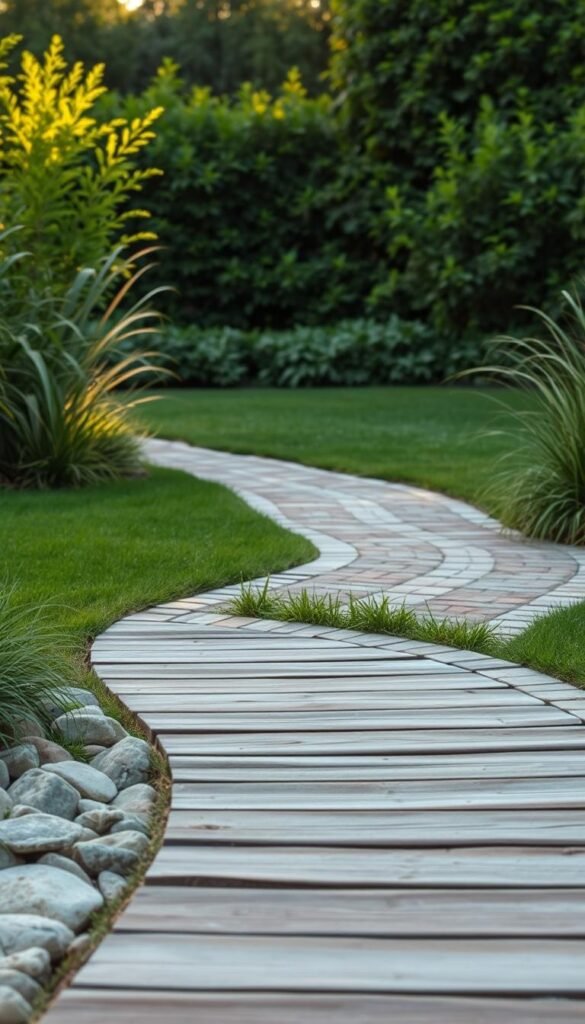
The foundation of a great walkway lies beneath your feet—literally. Your choice of materials determines both aesthetics and longevity. Stone pavers and irregular flagstones create rustic charm, while concrete offers modern versatility at lower costs.
Natural stone steals the show for organic appeal. Its varied shapes and earthy tones blend effortlessly with surrounding greenery. For budget-friendly options, gravel or decomposed granite adapts to curves while improving drainage. Remember: rougher textures prevent slips but may need occasional raking.
Bricks bring timeless elegance but demand precise installation. “Loose materials like wood chips work best in low-traffic zones,” notes a landscape designer. Pair them with sturdy edging to maintain clean lines where soft meets hard surfaces.
Consider these factors when choosing:
- Local climate (freeze-thaw cycles affect durability)
- Foot traffic volume (dense stones handle heavy use)
- Maintenance tolerance (gravel needs refreshing yearly)
Concrete’s secret weapon? Stamping and staining techniques mimic pricier materials. You’ll get the look of slate or cobblestones without the premium price tag. Just ensure colors complement your home’s exterior for cohesive curb appeal.
Exploring Different Pathway Designs and Patterns
Your pathway’s shape acts as a visual storyteller, shaping how visitors experience your outdoor space. Straight lines whisper formality, while playful curves spark curiosity. The design you choose becomes the backbone of your garden’s personality.
Formal versus Informal Layouts
Straight paths create crisp, clean lines perfect for modern landscape design. They guide eyes toward focal points like fountains or entryways. Geometric patterns work well with symmetrical plantings, offering a polished look that suits urban gardens.
| Layout Type | Best For | Space Effect |
|---|---|---|
| Straight | Formal gardens | Elongates narrow areas |
| Curved | Cottage-style yards | Softens boundaries |
| Zigzag | Small spaces | Adds perceived depth |
Creative Curves and Zigzag Routes
Meandering paths invite exploration, revealing surprises around each bend. Try a serpentine style with alternating materials—stone slabs surrounded by creeping thyme add visual interest. Zigzags break up monotony, making compact yards feel spacious.
For landscape design principles, consider how curves slow movement. They create natural pauses where grass can blend with stepping stones. Pair winding routes with billowing plants like lavender for soft edges.
Want whimsy? Try a checkerboard pattern using grass and pavers. This playful design maintains flow while nodding to cottagecore inspiration. Remember: your path should feel like an extension of your home’s character.
Incorporating Natural Stone, Gravel, and Concrete Elements
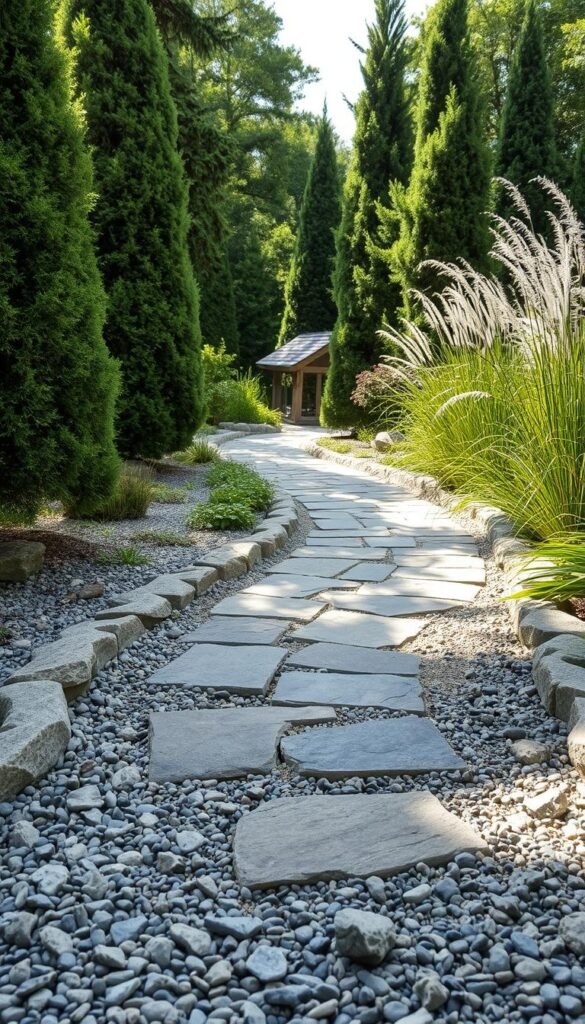
Choosing the right materials bridges beauty and practicality in your outdoor space. Each option brings unique strengths that shape your path’s character and longevity. Let’s explore how to balance aesthetics with year-round performance.
Material Durability and Style
Natural stone ages like fine wine, developing a weathered charm that blends with surroundings. Its irregular shapes create organic patterns, while granite or slate withstands heavy foot traffic. Gravel offers a crunch underfoot and adapts to curves, perfect for informal style.
Concrete surprises with versatility. Stamped designs mimic pricier stones, while tinted options replicate earthy tones. A landscaper notes: “Textured finishes prevent slips and add visual depth to modern spaces.”
Seasonal and Maintenance Considerations
Freeze-thaw cycles test unmortared materials. In cold climates, opt for tightly fitted stone to resist shifting. Hot regions benefit from light-colored concrete that reflects heat instead of absorbing it like dark pavers.
Consider these factors:
- Gravel needs annual raking but drains faster than solid surfaces
- Local quarry materials match regional geology for cohesive looks
- Combining textures (like stone borders with gravel centers) adds aesthetic dimension
Maintenance varies widely—concrete requires occasional sealing, while flagstone stays pristine with simple sweeping. Match your effort level to materials that thrive in your climate for lasting appeal.
Using Landscape Edging for Clean Border Definitions
Crisp lines meet soft greenery in your outdoor masterpiece. Landscape edging acts like invisible hands guiding your lawn and paths to coexist beautifully. The right materials keep gravel in place while letting your grass shine as the star of your yard.
Metal or plastic strips create hidden barriers that blend into your landscape. These flexible options bend around curves, keeping mulch in beds and stones on paths. For a rustic touch, try bricks set at angles—their warm tones complement green spaces while defining edges.
| Material | Visibility | Maintenance | Best For |
|---|---|---|---|
| Metal/Plastic | Low | Yearly check | Modern designs |
| Brick/Stone | High | Seasonal reset | Cottage styles |
| Composite | Medium | None | High-traffic areas |
Power up your maintenance game with an edging tool. A quick monthly trim along border lines keeps your grass from invading walkways. “Proper installation depth matters most,” advises a landscaping pro. Bury edging 2 inches deep for stability without visible hardware.
Balance function and beauty by mixing materials. Use stone edges near flower beds and metal strips along curved paths. This approach maintains clean divisions while letting your landscape elements flow naturally. Your yard stays tidy, yet feels effortlessly put together.
Embracing the Victorian Trench Technique for Natural Edging
Discover a hidden gem from gardening history that solves modern yard dilemmas. The Victorian trench method creates crisp divisions between your grass and planting areas without plastic or metal strips. It’s like giving your lawn an invisible fence that only nature sees.
Step-by-Step Implementation
Grab a flat-edged shovel and mark where your border should run. Dig straight down 3 inches along the turf’s edge—this vertical cut stops roots from creeping outward. Then angle your tool 45 degrees toward the garden bed, slicing upward to create a hidden slope.
This clever geometry does double duty:
- Prevents grass invasion into flower beds
- Allows mower wheels to glide along the edge
- Creates space for mulch to spill over gently
Long-Term Benefits and Upkeep
Your lawn stays neatly contained while maintaining that natural look everyone craves. Unlike visible edging materials, this trench won’t shift or degrade. Annual maintenance takes 20 minutes—just recut the line and remove stray blades.
Landscape pros love this approach because:
- Zero material costs after initial setup
- Works with any soil type or climate
- Blends perfectly with cottage or modern styles
For those tired of weeding along edges, this technique reduces maintenance while keeping your yard’s flow organic. The hidden barrier does its job quietly, letting your plants take center stage.
Drawing Inspiration from Beth Chatto’s Dry Garden Style
Discover how a pioneering UK garden transformed landscape design by removing edges. Beth Chatto’s dry garden style ditched traditional borders, letting paths melt into plantings like desert washes meeting wildflowers. Her secret? Matching cream-colored grit walkways with pebble-sized mulch around plants—creating illusions of uninterrupted terrain.
This approach makes your garden feel like nature designed it. By using materials that share color and texture, boundaries vanish. The grit compacts firmly for walking, while larger mulch pieces prevent soil erosion—smart solutions hiding in plain sight.
You can adapt this method with local materials. Choose path gravel that mirrors your planting mulch in hue. Let low-growing plants spill onto walkways slightly, softening edges organically. This creates the effortless look that fueled the New Naturalism movement.
Chatto proved beauty thrives without rigid divisions. Her work invites you to rethink how design elements interact. When paths and beds share visual language, your space gains depth while feeling authentically wild.