
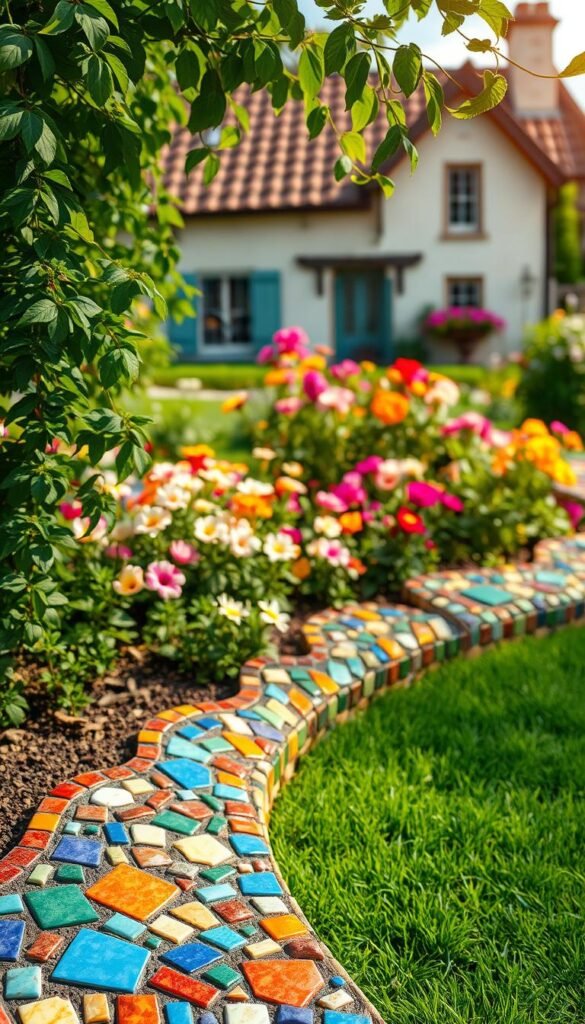
Transform ordinary green areas into eye-catching retreats through creative upcycling. Broken ceramics, colorful glass fragments, and river rocks become building blocks for unique pathways and flowerbed accents. These durable installations blend artistry with practicality, offering fresh ways to define spaces while expressing personal style.
Patterned edges do more than separate grass from soil. They guide visitors through your property, highlight favorite plants, and create focal points that shine in every season. Unlike annual blooms that fade, these handcrafted elements maintain their charm through snow, rain, and summer heat.
You don’t need expensive materials or advanced skills to begin. Local craft stores and online marketplaces offer affordable supplies, while simple designs let you start small. Imagine outlining herb gardens with geometric shapes or framing trees with nature-inspired motifs.
Thoughtful planning ensures your creations enhance existing features rather than compete with them. Consider your home’s architecture and favorite color schemes when choosing materials. A cottage-style house might pair well with irregular tile shapes, while modern layouts could use sleek glass arrangements.
The process itself becomes part of the joy. Each piece placement lets you experiment with textures and hues, turning weekend projects into ongoing artistic adventures. Whether creating subtle accents or bold statements, your landscape becomes a canvas for self-expression.
Discover the Charm of Mosaic Garden Border Edging
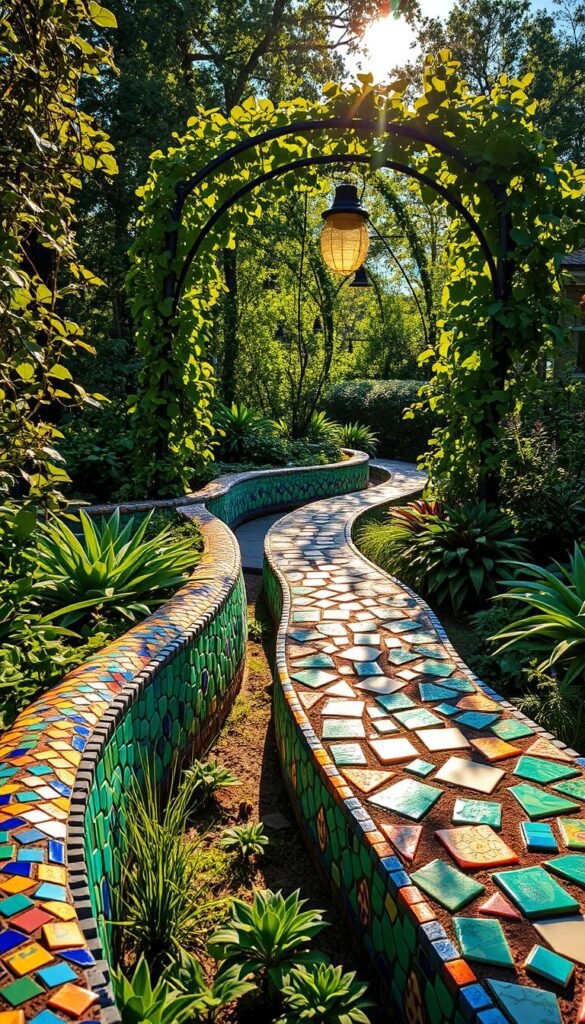
Well-defined edges bring magic to landscapes by merging practical solutions with artistic expression. These installations do more than separate grass from soil—they shape how you experience your outdoor areas. Let’s explore how structured designs elevate both organization and beauty.
More Than Just Pretty Lines
Borders act as silent organizers for your property. They keep mulch in place, block invasive weeds, and protect delicate roots from foot traffic. By creating crisp divisions between flower beds and pathways, they help maintain tidy lines that reduce weekly upkeep.
Think of them as gentle guides. Strategically placed edges direct visitors through your space while highlighting prized roses or aromatic herbs. This dual functionality means every inch works harder—beauty and purpose hand in hand.
Where Art Meets Earth
Mosaic elements transform basic boundaries into conversation starters. Colorful tile arrangements or glittering glass shards add bursts of personality that change with the sunlight. Unlike seasonal blooms, these artistic touches remain vibrant through frost and summer heat.
Your design choices can even influence plant health. Deeper borders create microclimates for sensitive species, while raised edges improve drainage. For inspiration on blending aesthetics with practicality, explore how to elevate your garden’s aesthetic through thoughtful arrangements.
Selecting the Perfect Materials for Your Mosaic Design
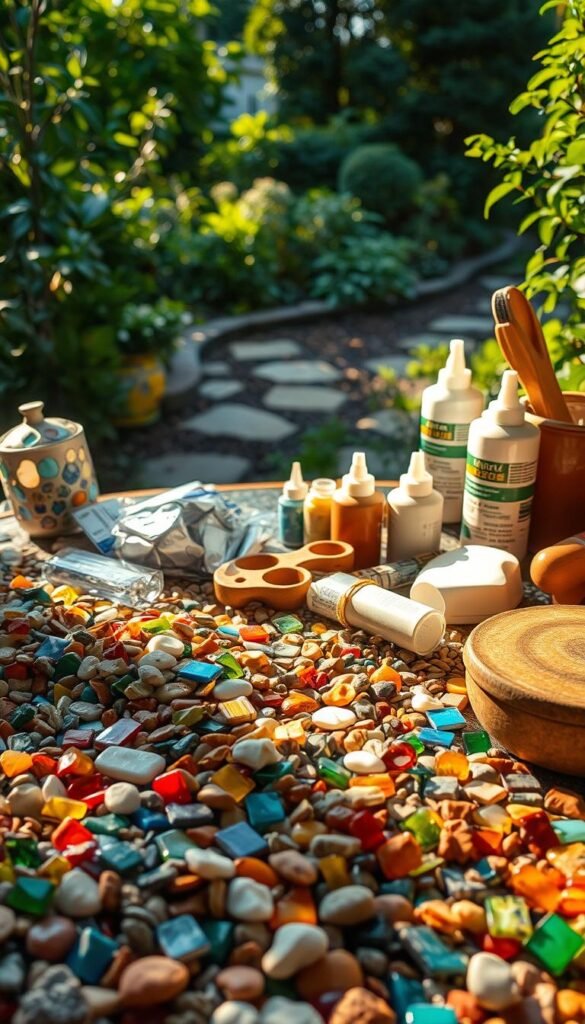
The foundation of any lasting mosaic lies in its components. Outdoor installations demand weather-resistant materials that survive temperature swings and moisture. Let’s explore how to balance durability with creative expression.
Choosing Durable Tiles, Stones, and Glass
Ceramic tiles and tempered glass shine for high-traffic areas. These options resist fading and cracking better than standard craft supplies. Natural stones like slate or granite add earthy textures while handling foot traffic effortlessly.
Check material thickness before purchasing. Thicker pieces withstand freeze-thaw cycles better in colder climates. For curved borders, flexible rubber edging provides support without limiting design options.
| Material | Best For | Durability |
|---|---|---|
| Ceramic Tiles | Straight pathways | 8-10 years |
| Tempered Glass | Sunlit accents | 5-7 years |
| River Rocks | Natural curves | 15+ years |
Blending Natural Elements with Creative Patterns
Combine sea glass with reclaimed bricks for rustic charm. Mix matte and glossy surfaces to catch sunlight differently throughout the day. Broken pottery shards create free-form patterns that feel spontaneous yet intentional.
Outdoor-grade adhesives keep arrangements intact during storms. Apply sealant annually to protect against UV damage and mold growth. Remember: contrasting textures often make stronger visual statements than perfect color matches.
Adding a splash of color to your yard with mosaic garden borders edging
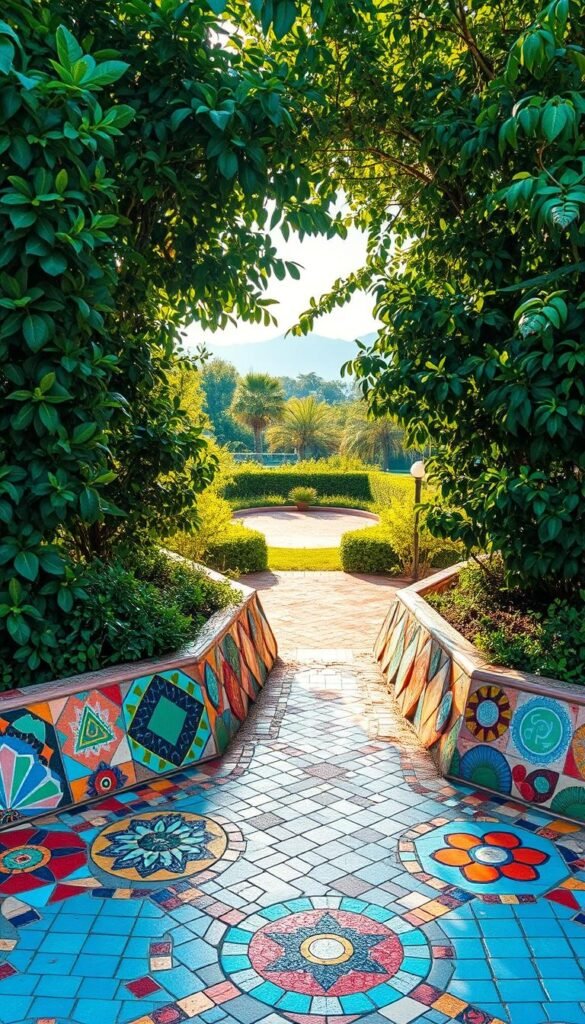
Dynamic patterns and thoughtful color choices turn functional edges into artistic statements. These elements work together to shape how visitors perceive your outdoor areas, creating rhythm and focus where needed most.
Bold Patterns for Instant Appeal
Geometric designs create visual energy that commands attention. Chevron stripes guide eyes along pathways, while spiral motifs add movement to circular flower beds. Consider these popular options:
| Pattern Type | Visual Impact | Best Locations |
|---|---|---|
| Sunbursts | Draws focus to center points | Around trees or focal plants |
| Zigzags | Adds playful energy | Vegetable garden borders |
| Wave Forms | Softens angular spaces | Pool surrounds or curved paths |
Coordinating Hues with Your Outdoor Space
Mirror your home’s trim colors for a unified look, or pick up tones from blooming azaleas. Cool silvers and blues make small areas feel larger, while warm terracotta shades ground expansive spaces. For transitional designs, explore vintage-modern blends that work with multiple palettes.
Reflective materials multiply your color strategy’s effectiveness. Glass fragments cast rainbow prisms at midday, while metallic tiles glow during golden hour. Remember: contrasting tones like plum and mustard create excitement, while analogous greens promote calm.
Vibrant Mosaic Stepping Stones to Guide Your Path
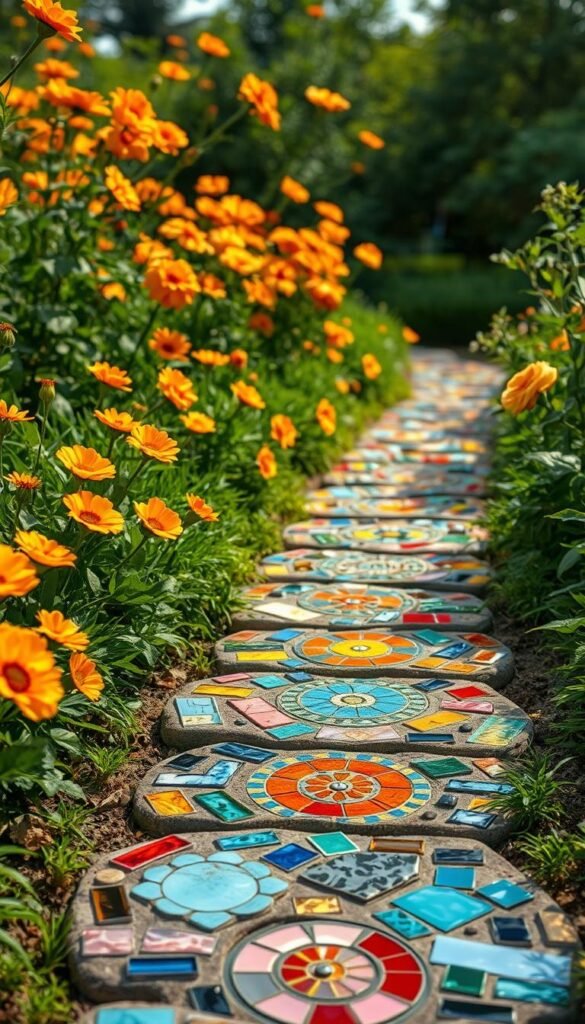
Pathways become storytellers when you craft them with intention. Broken china, sea glass, and smooth pebbles transform simple walkways into journeys of discovery. These custom creations invite exploration while protecting delicate plants from trampling feet.
DIY Installation Tips and Tricks
Start with sturdy bases like concrete pavers or homemade molds. Arrange your tile pieces dry first—this lets you tweak patterns before committing. Outdoor-rated adhesives hold designs in place through rainstorms and frost heaves.
| Pattern Type | Best Use | Recommended Materials |
|---|---|---|
| Celestial | Moonlit gardens | Mirror shards, blue glass |
| Paw prints | Pet-friendly paths | River rocks, slate chips |
| Floral | Rose garden access | Broken pottery, ceramic tiles |
Space stones 6-8 inches apart for comfortable strides. Fill gaps with moss or gravel to prevent weed growth. For curved layouts, try pebble mosaic techniques that flow with your landscape’s natural contours.
Maintaining Durability Through the Seasons
Seal completed stepping stones with UV-resistant spray. Reapply every spring to prevent color fading. Check grout lines annually—replace cracked sections before winter freezes expand the damage.
Themed pathways create visual flow between garden zones. Try matching border colors to your front door, or use DIY garden art principles to craft personalized designs. These functional artworks weather storms while keeping your outdoor narrative alive.
Transforming Pots into Personalized Mosaic Masterpieces
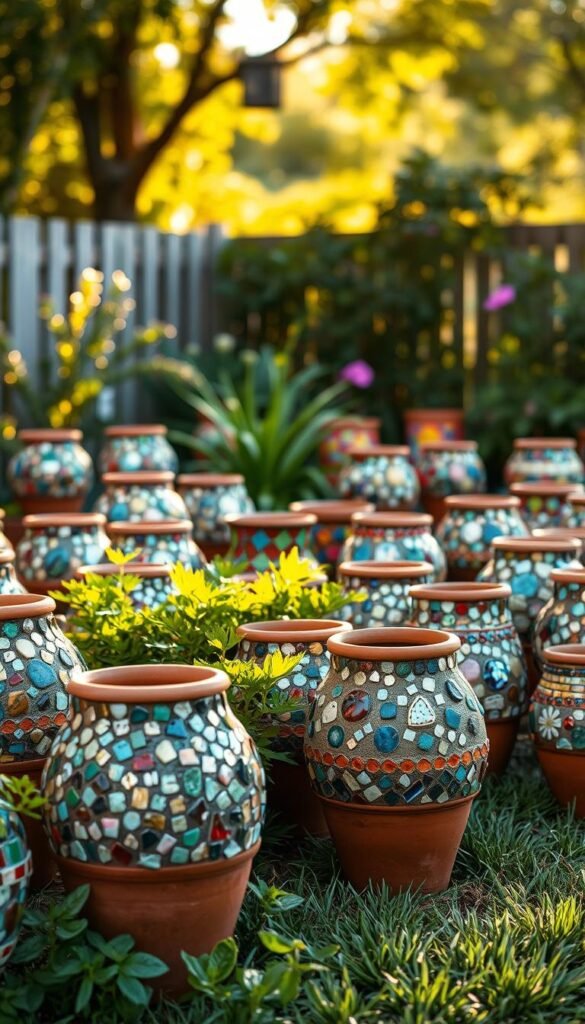
Ordinary planters become extraordinary when infused with creative flair. This approach lets you turn chipped or outdated containers into vibrant focal points that showcase your style. Whether using thrifted finds or cracked pots destined for the trash, every piece gets a second act.
Upcycling Old Containers with Color
Start by scrubbing surfaces with vinegar to remove dirt and mildew. Rough terracotta benefits from a primer coat to help adhesives stick better. Broken china plates and sea glass work beautifully for textured designs that catch sunlight.
Consider these popular material combinations:
| Design Style | Materials | Best Use |
|---|---|---|
| Coastal Charm | Sea pottery, blue glass | Herb planters |
| Desert Vibes | Terracotta shards, copper tiles | Succulent displays |
| Modern Mix | Mirror fragments, black slate | Architectural plants |
Design Ideas That Make a Statement
Sketch patterns with chalk before gluing—this lets you test layouts risk-free. Cluster three or five decorated pots near seating areas for balanced displays. For cohesive groupings, repeat one color across different patterns.
Seal finished pieces with clear acrylic spray to protect against rain. Rotate seasonal arrangements using repurposed containers as versatile bases. Your creations will evolve with your garden’s needs while keeping artistry front and center.
Creating Impactful Vertical Mosaic Wall Art
Elevate your outdoor spaces by turning blank walls into captivating art displays. Vertical installations add dimension and personality to overlooked areas, transforming functional surfaces into conversation starters.
Designing Artistic Focal Points
Identify high-impact locations first. Walls flanking seating areas or entrance gates maximize visibility. Sketch designs on grid paper to scale—this helps visualize pattern flow before committing materials.
Combine textures for depth. Glossy glass chips interact with sunlight differently than matte stones, creating ever-changing displays. Consider these effective combinations:
| Style | Materials | Effect |
|---|---|---|
| Modern Glow | Mirror fragments, stainless steel | Reflects sunset hues |
| Rustic Charm | Broken terracotta, copper wire | Warm, earthy vibe |
| Coastal Cool | Sea glass, white pebbles | Beachy lightness |
Installation Best Practices for Weather Resistance
Start with cement backer board—its rigid surface prevents cracking. Secure pieces using marine-grade adhesive that withstands humidity swings. Leave 1/8″ gaps between materials for proper grout adhesion.
Slope the base slightly outward so rainwater runs off instead of pooling. Apply two coats of UV-resistant sealant, reapplying every spring. For night-time drama, install low-voltage lighting to accentuate textured elements.
Inspiring Mosaic Garden Benches and Seating Solutions
Outdoor seating becomes unforgettable when artistry meets practicality. Benches transformed with stunning mosaic designs offer more than resting spots—they become focal points that blend functionality with personal expression. Whether framing a quiet reading nook or anchoring a vibrant flower display, these pieces redefine how you experience your outdoor space.
Combining Art with Comfort
Start by sanding surfaces to create ideal adhesion for tiles or glass. Prime wooden benches to prevent moisture damage, then arrange materials in patterns that mirror your garden’s personality. Smooth ceramic pieces work best for seating areas, while textured stones add grip to bench legs.
Pair geometric tile arrangements with plush cushions for contrast. Train ivy along bench backs to soften angular designs, or match colors to nearby blooms. For more creative garden ideas, explore designs that balance visual impact with ergonomic support.
Materials and Techniques for Long-Lasting Beauty
Choose weatherproof materials like tempered glass or porcelain tiles. Apply marine-grade adhesive, then seal grout lines annually. Raised designs on bench backs prevent pooling rainwater, while sealed surfaces resist UV fading.
Strategically place benches where they invite pause—near water features or beneath shade trees. Built-in planters at the base add greenery without sacrificing seating space. With proper care, your mosaic creations become enduring landmarks that evolve with your garden’s story.