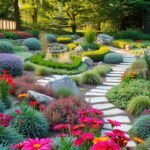
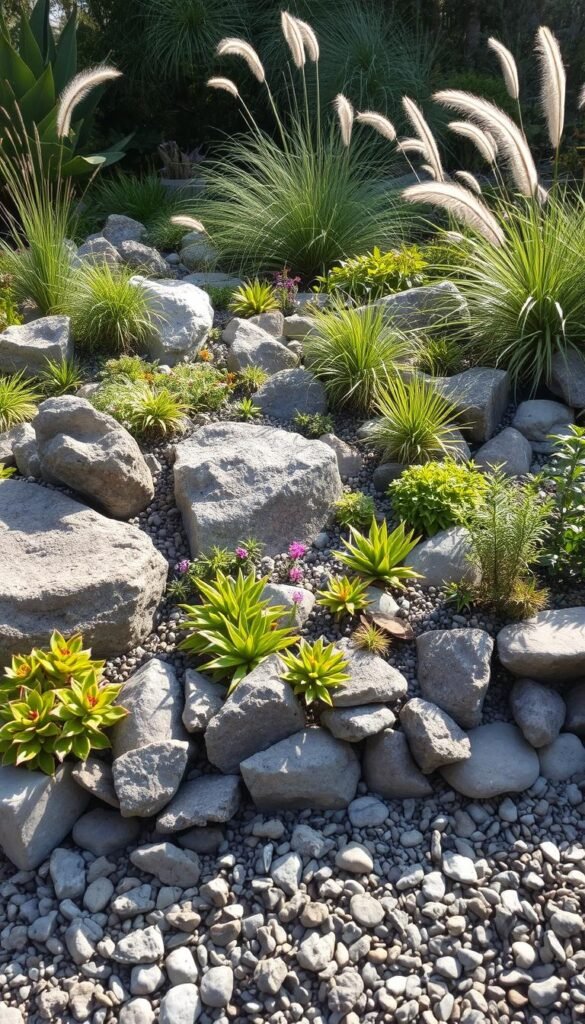
Your yard holds endless potential to become a captivating retreat. By blending rugged stone features with flowing greenery, you can craft eye-catching landscapes that thrive year-round. This approach combines practical benefits like improved drainage with striking visual harmony.
Mixing sturdy boulders with delicate blooms creates dynamic focal points that guide the eye naturally. Larger stones work beautifully as anchors, while smaller pebbles add refined detail along pathways. For inspiration, explore rock garden designs that balance structure with organic charm.
Drought-resistant plants like sedum or ornamental grasses pair perfectly with stone elements, requiring minimal upkeep. These combinations establish clear boundaries without feeling rigid, letting your space flow effortlessly. The right mix elevates curb appeal while reflecting your unique style.
Seasonal interest comes naturally when you combine evergreens with flowering varieties. Rough surfaces catch light differently throughout the day, adding depth to your layout. With smart planning, your creation becomes a low-maintenance showcase that evolves gracefully over time.
Introduction: Transform Your Outdoor Space with Unique Garden Borders
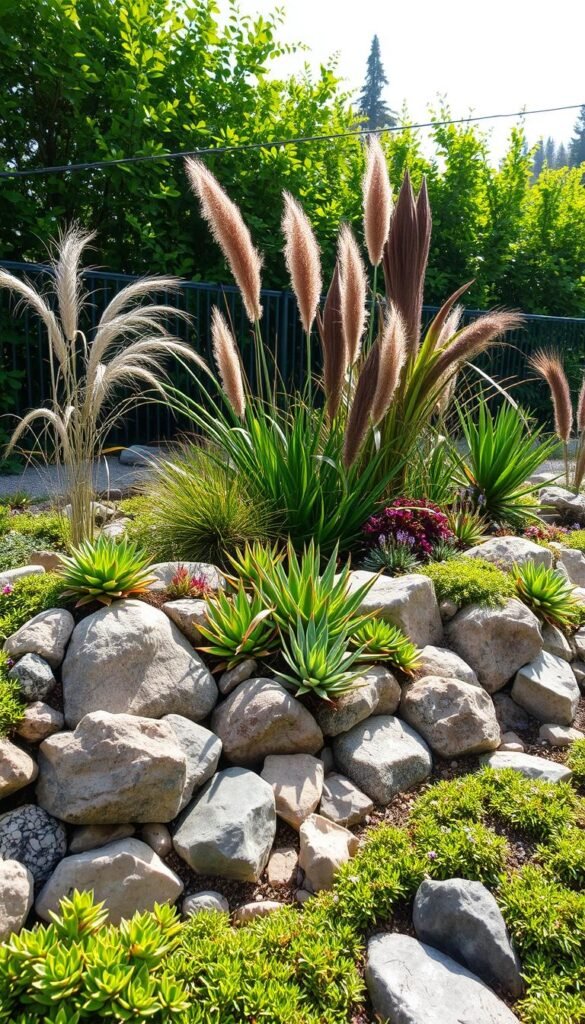
Turn everyday outdoor areas into stunning retreats using smart edging solutions. Garden borders act like jewelry for your landscape design, framing flower beds and walkways with purpose. They give your entire space a finished look while keeping mulch where it belongs.
Well-planned edges do more than prettify your yard. They stop soil from washing away during storms and create clear paths for guests. As HGTV pros note, even simple materials like recycled bricks or natural stones can elevate your home’s curb appeal without breaking the bank.
Smart border choices save time later. Defined growing zones help plants thrive, and contained mulch means less weeding. Over time, these features can boost your property value by making your outdoor space feel intentional and cared-for.
You don’t need fancy tools or skills to start. Try lining beds with found materials like wine bottles or painted logs for instant charm. For tricky spots where grass creeps into flower patches, deeper-set borders create a clean break that’s easy to maintain.
The best part? Your borders can grow with your style. Swap materials seasonally or layer plants over time. With the right foundation, your garden design stays fresh and functional for years.
Essential Elements of Rock Gardens and Lush Plantings
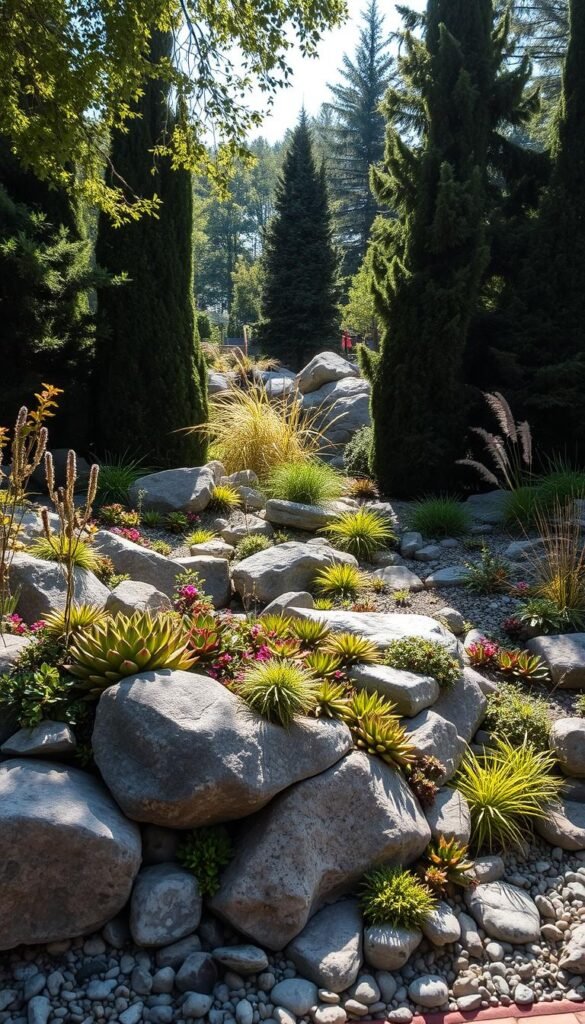
Successful rock gardens depend on mastering a few critical elements. The magic happens when rugged stone features and vibrant greenery work in tandem, creating spaces that feel both structured and alive. Let’s break down what makes these landscapes thrive.
Balancing Hardscape and Softscape
Think of rocks as your garden’s backbone. Larger boulders anchor the design, while smaller pebbles add subtle texture. Pair them with flowing grasses or delicate flowers to soften edges. This balance prevents your space from feeling too rigid or wild.
One landscaper puts it perfectly: “Stones give rhythm to a garden, but plants write the melody.” Aim for a 60/40 ratio—more greenery than rock—to maintain visual harmony. This approach lets each element shine without competing.
Understanding Soil, Drainage, and Rock Types
Your soil determines everything. Sandy soils drain quickly, while clay holds moisture. Test your ground before planting—amend it with compost if needed. Proper prep ensures roots establish well around stone features.
Rock selection matters too:
- Porous lava stones improve airflow
- Smooth river rocks redirect water flow
- Flat flagstones create natural stepping paths
Pair moisture-loving plants with water-retentive stones near low areas. In dry zones, use gravel for better drainage. Want to elevate your gardening aesthetic? Match stone colors to your home’s exterior for a cohesive look.
Creative Uses of Rocks for Stunning Garden Edges
Rocks offer endless possibilities to craft eye-catching edges that last for years. By mixing sizes and playing with natural shapes, you can build borders that look both intentional and organic. Start with a solid foundation—literally—by digging a shallow trench to keep your stone features stable through rain and frost.
Mixing Different Rock Sizes and Textures
Think of your border like a layered cake. Place hefty boulders first as anchor points, then fill gaps with mid-sized stones. Finish with a sprinkle of pebbles for refined detailing. This approach creates depth while letting each element shine.
Pro tip: Use angular rocks near seating areas for crisp lines, and smooth river stones where you want softer vibes. A 4-inch deep trench packed with gravel prevents shifting and weeds.
Rock Trim Techniques and Artistic Arrangements
Turn functional edges into showstoppers by arranging rocks in unexpected patterns. Try alternating dark and light stones in zigzag lines, or create sunburst designs with radiating pebble rows. One landscaper shares: “Color contrasts make borders pop—pair warm rust tones with cool grays for maximum impact.”
For modern flair, line pathways with uniform flat stones standing vertically. In cottage-style spaces, cluster irregular stones like nature dropped them there. Either way, seal your masterpiece with polymeric sand between pavers to lock everything in place.
Incorporating Vibrant Plants to Complement Rock Features
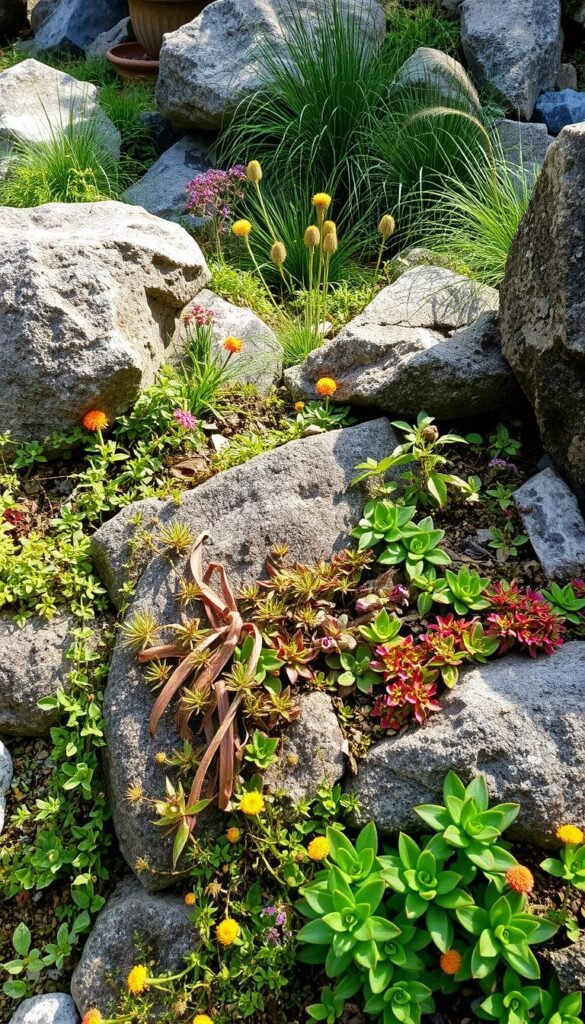
Bring your stone features to life with strategic plant pairings that enhance their natural beauty. The right greenery softens rugged edges while adding pops of color that shift with the seasons. Start by considering your local climate and sunlight patterns to select varieties that thrive with minimal fuss.
Choosing Low-Maintenance Flowers and Grasses
Opt for drought-tolerant stars like sedum or lavender—their silvery foliage pops against gray stones. Ornamental grasses like blue fescue add movement, swaying gracefully in breezes. As one horticulturist notes: “These plants don’t just survive rocky soil—they prefer it.”
For continuous color, mix early bloomers like creeping phlox with late-season showstoppers like asters. This approach keeps your space lively from spring through fall. Check out rock garden design tips for more tailored suggestions.
High Altitude Blooms and Evergreen Accents
Mountain natives like alpine aster thrive in poor soil and full sun. Their compact growth fits snugly between stones, creating a carpet of purple or white. Pair them with dwarf conifers for year-round structure—their deep greens contrast beautifully with rust-colored boulders.
Remember color theory when selecting hues. Warm golden yarrows make cool-toned rocks glow, while crimson dianthus adds drama. These combos create focal points that draw the eye without overwhelming your layout.
Contrasting textures in garden borders ideas using rocks and plants
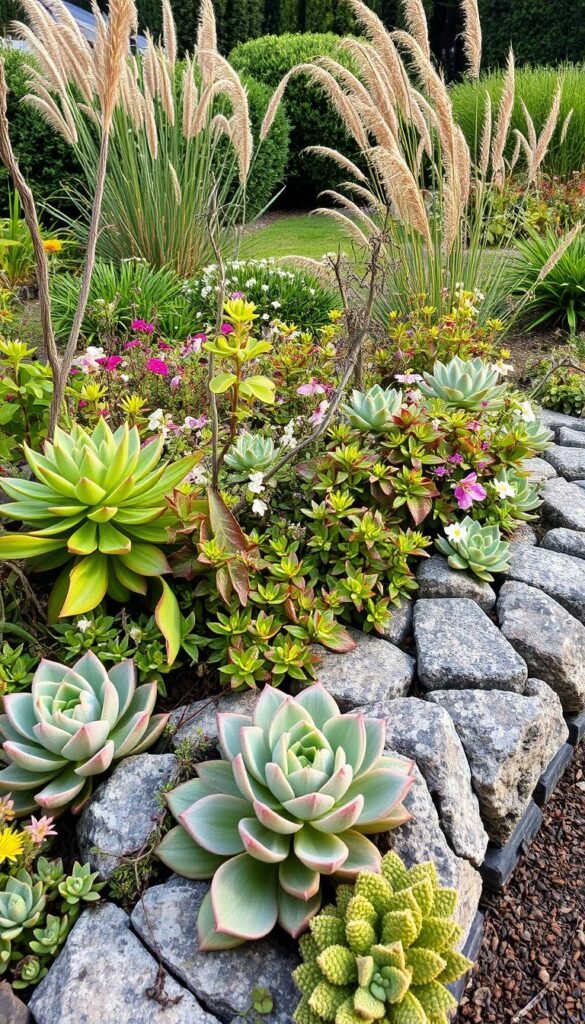
Discover how strategic pairings elevate your landscape from ordinary to extraordinary. The magic happens when you balance rugged stone features with flowing botanical elements. Visual rhythm emerges through thoughtful placement—try alternating angular boulders with feathery grasses that dance in the breeze.
Seasonal changes offer fresh opportunities. Early-blooming creeping phlox softens stone edges in spring, while autumn sedums add rust-colored warmth. As one designer notes: “A great border tells a story that evolves with the calendar.” Evergreen shrubs maintain structure during winter months.
Consider these winning combinations:
| Stone Type | Plant Partner | Visual Effect |
|---|---|---|
| Smooth river rocks | Blue oat grass | Soft vs. spiky contrast |
| Weathered limestone | Snow-in-summer | Rough meets delicate |
| Flat flagstones | Creeping thyme | Geometric meets wild |
Scale matters most. Pair massive boulders with airy ornamental grasses to avoid overwhelming your space. For subtlety, match fine-grained gravel with petite sedums. This approach creates depth while letting each element shine.
Pro tip: Run your fingers through plantings and stone features. If they feel as interesting as they look, you’ve nailed the design. These tactile experiences turn borders into interactive art that guests will remember.
DIY Rock Garden Projects You Can Build in a Weekend
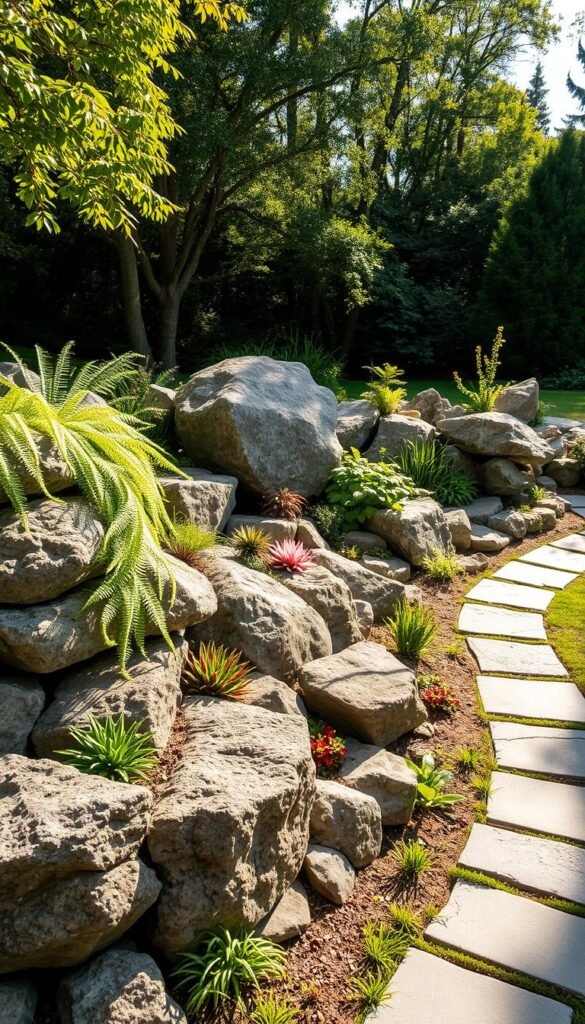
Transform your outdoor space in just two days with simple stone features that deliver big impact. Weekend warriors love these projects because they blend practicality with instant visual rewards. Let’s explore how to create showstopping elements without draining your schedule or wallet.
Creating Raised Rock Beds and Layered Displays
Start by marking your bed shape with spray paint or flour. Dig a 6-inch trench around the perimeter, then line it with landscape fabric to block weeds. Stack flat stones vertically in the trench, securing them with wire caging every 2 feet for stability.
Fill the center with soil mixed with gravel for drainage—perfect for succulents or alpine plants. Top with tumbled glass pebbles between larger rocks for subtle sparkle. One DIYer shares: “This method lets me grow herbs right outside my kitchen door while keeping critters away.”
Designing Natural Walkways and Rock Stream Effects
Turn muddy paths into charming trails using irregular stones. Dig 3 inches deep across your desired way, tamp the ground firm, then lay rocks like puzzle pieces. Leave 1-inch gaps filled with moss seeds for a fairy-tale feel.
For dry stream beds, arrange boulders along an imaginary water flow line. Smaller stones create realistic “ripples” in the center. This optical trick works wonders in sloped yards, directing rainwater while adding movement to flat spaces.
Time-saving tip: Use a wheelbarrow to mix gravel and soil directly where you’ll need it. Keep tools simple—a shovel, gloves, and level are all you need for most weekend projects. Your refreshed garden will look like you hired a pro!
Innovative Garden Edging Ideas for Modern Landscapes
Modern landscapes demand edging that’s equal parts function and art. Today’s top materials blend durability with sleek profiles, creating crisp lines that elevate your entire design. Whether you prefer industrial chic or organic minimalism, there’s a solution that fits your aesthetic vision.
Brick, Stone, and Metal Edging Options
Brick remains a timeless choice, offering warmth that softens contemporary spaces. For longevity, opt for frost-resistant varieties—they’ll maintain sharp edges through freeze-thaw cycles. Pair them with angular succulents for geometric harmony.
Metal landscape strips create razor-sharp boundaries perfect for minimalist designs. Powder-coated aluminum resists rust while providing invisible support for creeping plants. One installer notes: “These disappear into the landscape while keeping mulch exactly where you want it.”
Compare popular materials:
| Material | Lifespan | Best For |
|---|---|---|
| Corten steel | 25+ years | Industrial looks |
| Concrete pavers | 15 years | Curved pathways |
| Recycled brick | 20 years | Vintage charm |
Concrete pavers shine in rainy climates—their weight prevents shifting during storms. Bury them flush with the lawn for seamless lines that guide the eye. For a twist on tradition, try mixing vintage and modern elements like aged bricks with laser-cut metal accents.
Installation tips matter most. Always dig a 4-inch base trench, compact gravel thoroughly, and use a rubber mallet to seat pieces evenly. These steps ensure your garden edging ideas become permanent features rather than seasonal fixes.
Enhancing Outdoor Spaces with Rock Landscaping and Water Features
Transform your backyard into a peaceful oasis by blending natural stone with calming water elements. These combinations add movement and sound to your outdoor space, turning ordinary areas into sensory experiences. Let’s explore how to marry these earth elements for maximum impact.
Integrating Subtle Water Elements
Small water features create big impressions. A meandering stream lined with flat rocks guides the eye while masking neighborhood noise. For tight spaces, try a bubbling fountain surrounded by pebbles—it uses minimal water while adding rhythmic sound.
Koi ponds gain structure when edged with mossy boulders. These natural borders prevent soil erosion and give fish shaded areas. Remember: slope the pond bottom slightly and use rounded stones to mimic nature’s flow.
Zen Garden Inspirations for a Calm Retreat
Minimalist designs focus on form and function. Rake patterns into white sand around angular rocks, creating waves of texture. This approach works beautifully in small urban spaces where plants struggle.
For authenticity, use odd numbers of stones and leave plenty of open area. Add a single dwarf maple as a focal point—its red leaves contrast beautifully with gray stone. These serene landscape features become personal meditation zones.
Whether you choose trickling streams or raked sand gardens, stone-water pairings elevate your outdoor space. They create visual anchors while inviting relaxation. Start small—even a bowl fountain with river rock can transform a patio corner into your new favorite retreat.