
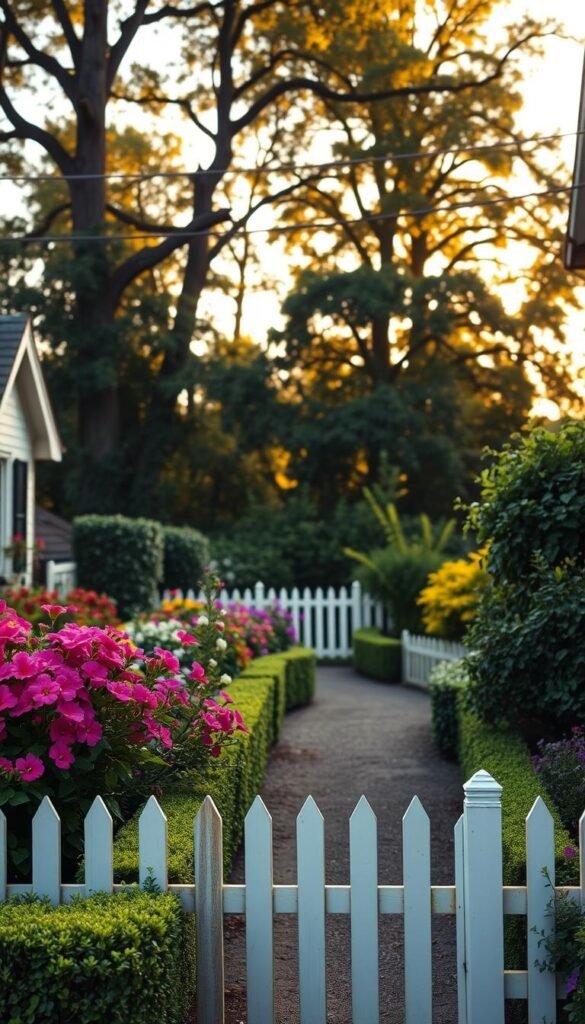
What makes a cottage-style garden feel both wild and welcoming? This informal approach to garden design began in rural England centuries ago, blending practicality with beauty. Imagine roses climbing weathered fences and herbs mingling with colorful blooms – it’s nature’s version of organized chaos.
Traditional elements like short hedges and white barriers do more than mark boundaries. They create gentle guides for wandering eyes and feet, letting plants spill over edges naturally. These features add structure without sacrificing the free-spirited vibe that defines this beloved style.
You’ll find that balancing order and spontaneity transforms ordinary yards into romantic retreats. Even small spaces gain depth when flowering borders frame seating areas or pathways. The secret lies in choosing plants and structures that work together – not against each other.
Whether you’re starting fresh or refreshing existing beds, these techniques adapt to any space. Discover how subtle boundaries can highlight your favorite flowers while keeping that carefree cottage feel. It’s about creating harmony between human touches and nature’s whimsy.
Discovering the Charm of Cottage Garden Borders
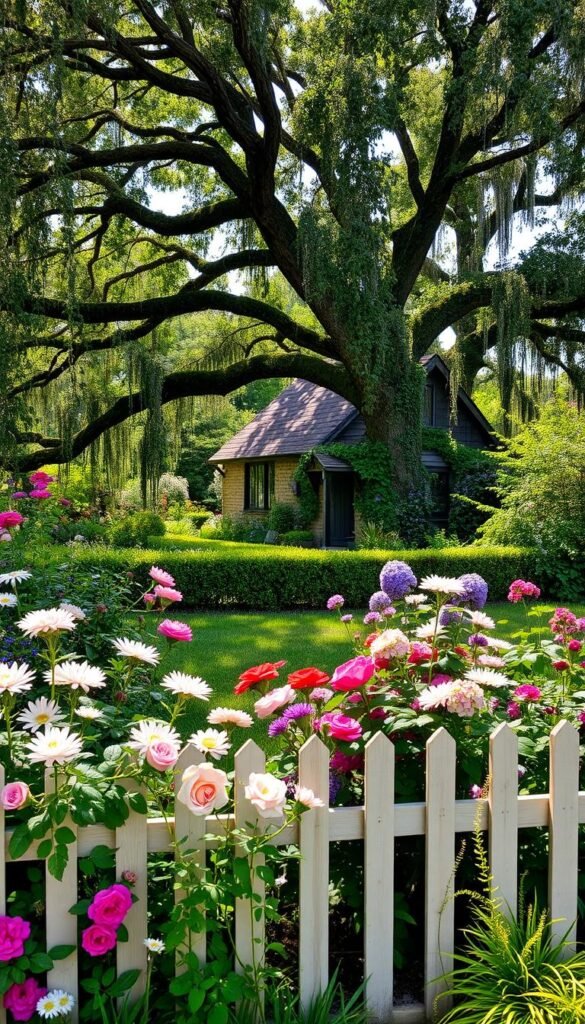
Have you ever wandered through a garden that feels like a storybook come to life? That’s the magic of cottage-style landscapes, where flowers burst through weathered fences and herbs mingle with vibrant blooms. These spaces don’t follow strict rules – they evolve organically, blending history with personal creativity.
Embracing Informal Beauty and History
This relaxed gardening approach began centuries ago when English villagers mixed vegetables, herbs, and flowers in their front yards. Today, it’s about celebrating nature’s quirks. Plants tumble over edges, butterflies dart between blossoms, and no two layouts ever repeat. Your space becomes a living canvas where daisies cozy up to lavender and roses climb wooden trellises.
The Allure of a Quaint, Rustic Look
The secret lies in balancing wildness with subtle structure. Worn picket fences guide wandering paths, while low hedges frame floral explosions without stifling them. You’ll love how these elements create cozy nooks that invite exploration. Over time, self-seeding plants add delightful surprises – like poppies popping up where least expected.
| Feature | Cottage Style | Formal Gardens |
|---|---|---|
| Plant Arrangement | Free-flowing mixes | Symmetrical rows |
| Structures | Weathered wood accents | Precision-cut hedges |
| Wildlife Appeal | High (bees, birds) | Low |
Your garden becomes more than just pretty – it’s a habitat that buzzes with life. By letting plants grow where they thrive, you create a personal sanctuary that feels both timeless and uniquely yours. It’s not about perfection, but the joyful surprises that come with each season.
Creating a Welcoming Landscape with White Picket Fences and Rustic Hedges
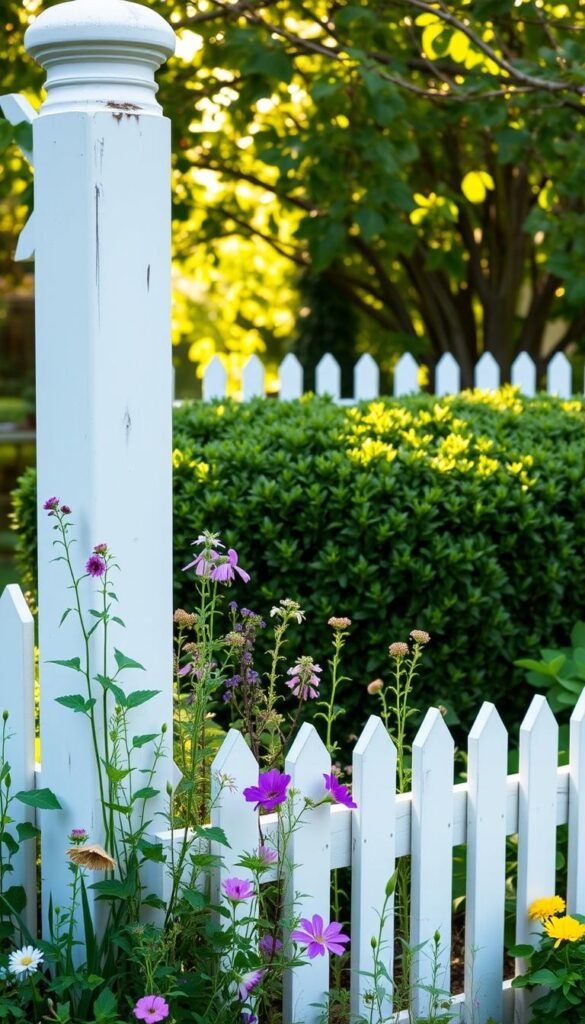
Picture this: a landscape that feels like a warm embrace the moment you step outside. White picket fences act as storybook frames, turning ordinary yards into scenes from cherished memories. These timeless features blend seamlessly with wildflower tangles and neatly trimmed hedges, offering structure that whispers rather than shouts.
Visual Impact of Traditional Fencing
That crisp white paint does more than mark property lines—it makes your flowering plants shine like jewels. Imagine clematis weaving through slats or roses cascading over rails, softening edges while keeping the cottage garden vibe intact. Pair these fences with informal hedges of boxwood or lavender for layered texture that feels organic.
Your yard gains depth when fences guide the eye toward focal points like birdbaths or arched gates. Place them along winding paths to create natural pauses where colors and scents can captivate. This approach works beautifully in small spaces too, adding vertical interest without overwhelming delicate blooms.
For a cohesive cottagecore aesthetic, let climbing plants claim sections of your fencing over time. Morning glories or sweet peas add playful bursts that change with the seasons, ensuring your outdoor design never feels static. The result? A space that balances nostalgia with living, breathing beauty.
Enhancing cottage garden borders with low hedges and picket fences
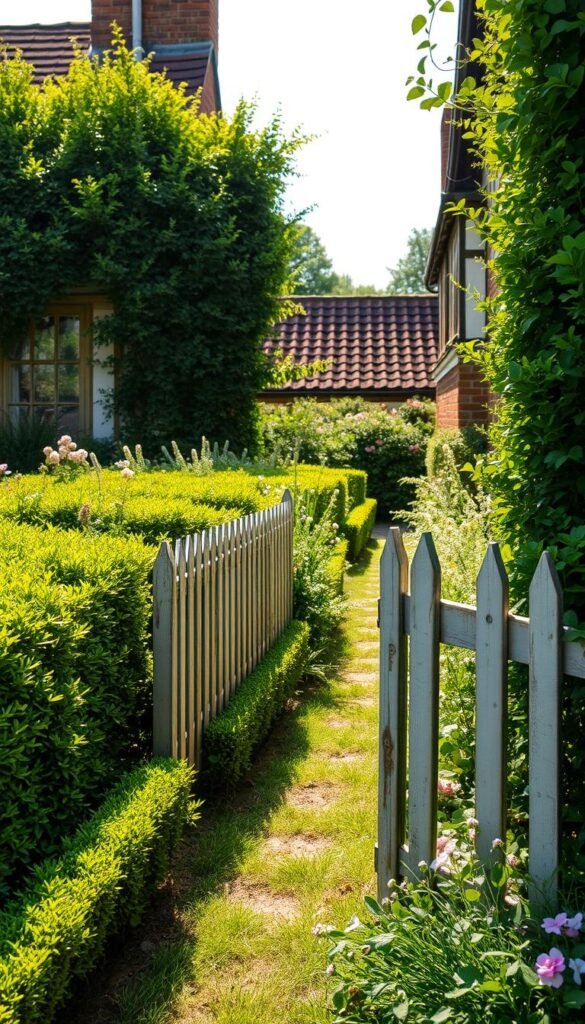
Ever wondered how to add timeless structure to your floral paradise? Centuries ago, rustic barriers served as practical shields for crops. Today, they’ve evolved into design elements that frame blooms while supporting climbing plants like sweet peas or clematis.
Pairing short greenery with white barriers creates soft edges that guide growth. Boxwood or lavender shrubs blur rigid lines, letting flowers spill freely. This layered approach adds depth without stifling that carefree charm everyone loves.
Your cottage garden inspiration gains year-round appeal when evergreen shrubs anchor the space. They’ll keep things tidy in winter while roses nap, ready to frame spring’s first buds. Fences double as vertical canvases – train jasmine along rails for fragrant summer displays.
Smart placement matters most. Position picket sections where they’ll highlight your favorite blooms or create cozy nooks. Let ivy weave through slats, softening wood with leafy textures. The result? A living tapestry where history meets your personal touch.
Designing Your Garden Layout for Maximum Appeal
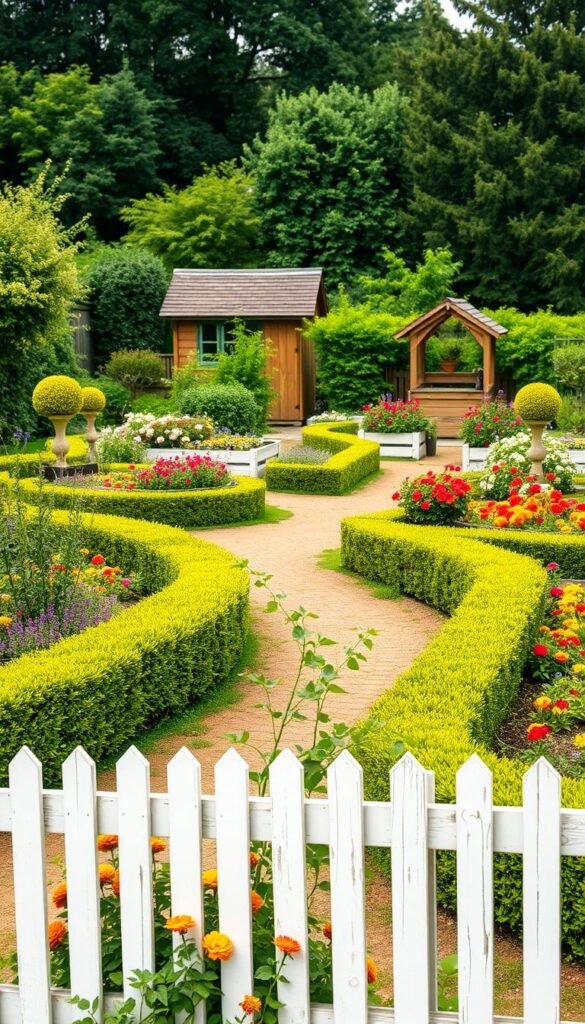
How do you turn a patch of green into a living masterpiece? Smart space planning helps your yard feel both organized and effortlessly wild. Think of your outdoor area as a collection of inviting rooms, each with its own personality and purpose.
Planning Distinct Garden Zones
Start by sketching rough circles on paper – kitchen herbs near the patio, cutting flowers by the walkway, maybe a quiet bench surrounded by fragrant blooms. These zones create natural stopping points that guide visitors through your cottage garden elements. Even a small corner can host a butterfly haven with milkweed and coneflowers.
Seasoned gardeners often suggest beginning with one 10×10 foot section. You’ll learn which plants thrive in your soil while avoiding overwhelm. Add another zone each spring, letting your design evolve like a favorite storybook – one chapter at a time.
Choosing Complementary Plant Combinations
Mix tall spires of foxglove with mounding catmint for eye-catching contrast. Pair purple salvias with yellow coreopsis – nature’s own color wheel. This approach ensures something always catches the eye, even when individual blooms fade.
Remember to layer bloom times. Early spring bulbs give way to summer peonies, followed by autumn sedum. Your garden becomes a rotating art exhibit, with each zone contributing to the yearly show. Use low hedges to softly separate areas, maintaining that cherished informal feel.
Selecting Lush Plants and Vibrant Flowers
What transforms ordinary soil into a tapestry of color and texture? The answer lies in pairing bold blooms with delicate greenery. Mix heights and hues to craft layers that dance in the breeze, creating movement even on still days.
Start with vertical stunners like foxgloves and delphiniums – their spires add drama against shorter companions. Mid-height phlox and irises bridge the gap, while creeping thyme softens edges. This tiered approach ensures every plant gets its moment in the sun.
Don’t shy away from classics. Fragrant roses weave romance through borders, while coneflowers and black-eyed Susans deliver months of cheerful flowers. For continuous color, blend annuals like zinnias with perennials such as daylilies. You’ll enjoy fresh surprises each year as self-seeding cosmos pop up in new spots.
| Plant Type | Examples | Key Features |
|---|---|---|
| Tall Blooms | Foxgloves, Hollyhocks | Vertical interest, shade providers |
| Mid-Height Stars | Roses, Columbine | Fragrance, pollinator magnets |
| Ground Huggers | Sweet Alyssum, Thyme | Spill-over edges, aromatic foliage |
Texture plays a starring role too. Pair feathery cosmos with bold hydrangea globes, or let clematis vines scramble through rigid structures. For elevating your space, repeat key varieties in different zones. This creates rhythm while letting plants mingle freely – just like nature intended.
Time your blooms strategically. Early crocuses hand the baton to peonies, followed by late-season dahlias. With careful planning, your garden becomes a living kaleidoscope that evolves from spring frost to autumn’s first chill.
Integrating Pathways and Natural Borders
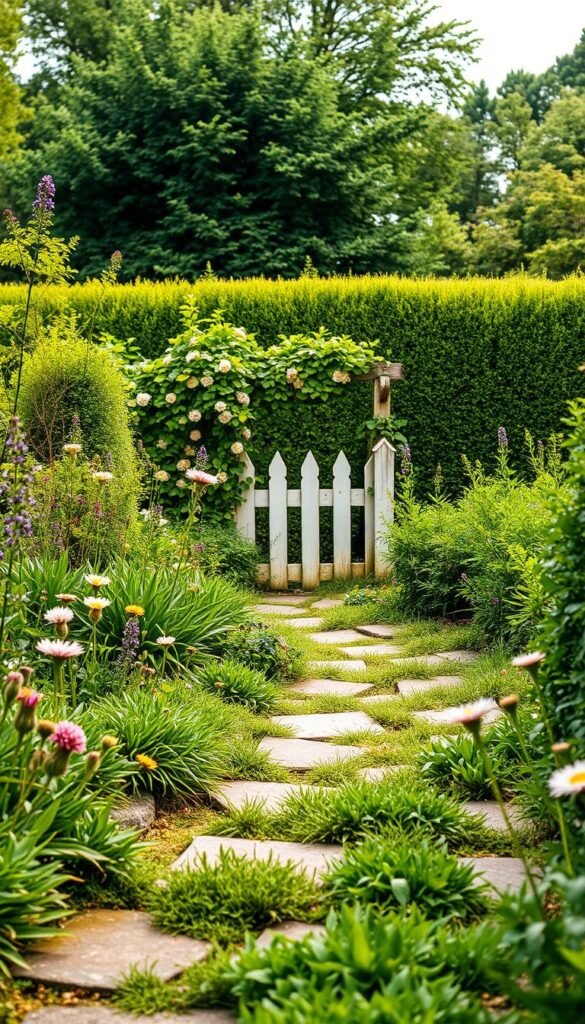
Pathways shape how you experience your outdoor space, guiding feet and eyes through nature’s artwork. In a cottage garden, these routes become part of the story – winding invitations that make every stroll feel like an adventure.
Curved, Meandering Path Ideas
Ditch straight lines for playful curves that mirror nature’s flow. Weathered brick or irregular flagstone creates instant character, while gravel offers that satisfying crunch underfoot. These materials age gracefully, blending with your garden design as plants creep over edges.
| Material | Best For | Maintenance Level |
|---|---|---|
| Brick | Formal curves | Low |
| Flagstone | Natural look | Medium |
| Gravel | Drainage | High |
| Wood Chips | Woodland areas | Medium |
| Stepping Stones | Grassy yards | Low |
Let columbines or creeping thyme spill onto walkways. This softens edges and creates that lived-in charm essential to cottage spaces. In tight yards, winding routes trick the eye – making 10 feet feel like 50.
Use paths as living borders. A gravel trail can separate herb patches from flower beds while allowing easy access. For magic moments, tuck stone markers or vintage lanterns along curves – surprises that reward curious explorers.
Adding Privacy and Structure with Subtle Fencing
Ever thought your outdoor space could feel both cozy and open? Subtle fencing strikes that balance beautifully. These designs offer just enough screening to create intimate nooks while preserving the airy charm your yard deserves.
Where Practical Meets Pretty
Natural wood fences age gracefully, blending with flowering vines instead of competing with them. You’ll love how weathered picket panels double as trellises for climbing roses or sweet peas. This approach hides compost bins discreetly while framing your favorite hydrangea display.
Smart placement works wonders. Position shorter sections to guide eyes toward birdbaths or benches, not away from them. Your privacy needs get met without bulky barriers – imagine airy lattice tops letting light filter through.
Choose materials that echo your home’s architecture for seamless flow. A farmhouse-style fence in cedar or pine connects indoor and outdoor spaces visually. Over time, moss and ivy soften edges, making structures feel like they’ve always belonged.
Zoning becomes effortless with knee-height dividers. Separate play areas from flower beds using low hedges paired with decorative posts. You maintain an open feel while giving each space its own purpose. The result? A yard that feels thoughtfully organized yet wonderfully free.