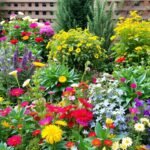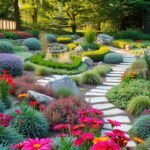
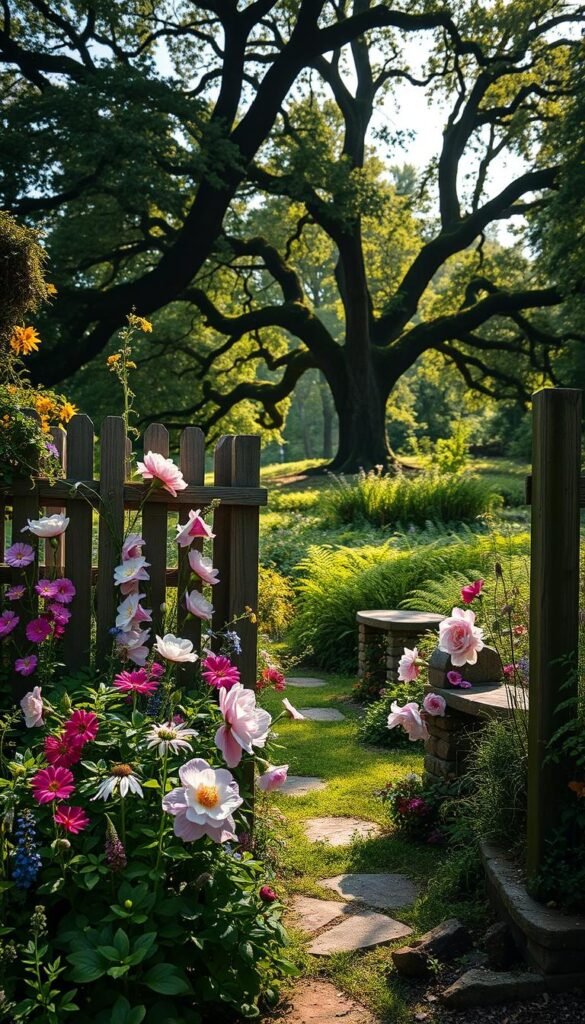
Imagine stepping outside your door to a living tapestry where structured plantings melt into nature’s wild elegance. This magic happens when intentional design meets organic growth, creating spaces that balance human creativity with ecological harmony.
Originally rooted in practicality, these lush plantings evolved from humble vegetable plots to artistic expressions. Today, they serve as bridges between manicured spaces and untamed environments, offering visual intrigue while supporting local ecosystems.
You’ll learn how layered textures and strategic plant choices create depth without rigid formality. Discover why staggered heights and seasonal blooms work better than perfect symmetry, inviting birds and pollinators to thrive. We’ll adapt time-tested principles to modern landscape needs, considering regional climates and soil types across the U.S.
This approach lets your home feel connected to surrounding nature while maintaining personality. Whether you’re working with sprawling yards or cozy corners, the techniques we’ll explore adapt effortlessly to your unique space and gardening inspiration.
Inspiration and Essentials for Cottage Garden Borders

Picture a space where vibrant colors dance with wild greenery, blending curated charm with nature’s rhythm. This whimsical style thrives on joyful imperfection, inviting you to craft a living canvas that feels both personal and alive.
Capturing Casual Elegance
Forget straight lines and perfect symmetry. These spaces celebrate relaxed design, where herbs mingle with roses and lavender spills onto walkways. Your plant choices become brushstrokes in a painting that changes with the seasons.
Layer textures by pairing feathery ferns with velvety sage. Let clematis scramble up a weathered trellis while daisies nod below. This layered approach creates depth while maintaining an air of effortlessness.
Curating Your Plant Palette
Choose flowers that spark joy and serve multiple purposes. Fragrant phlox doubles as ground cover, while sunflowers add vertical interest. Consider this mix of classic favorites:
| Plant Type | Examples | Benefits |
|---|---|---|
| Edible Blooms | Nasturtiums, Calendula | Colorful & edible |
| Fragrant Herbs | Rosemary, Thyme | Aromatic & practical |
| Climbing Plants | Sweet Pea, Honeysuckle | Vertical dimension |
Remember to include plants with varied bloom times. Early crocuses give way to summer cosmos, followed by autumn sedum. This ensures year-round visual interest while supporting pollinators through every season.
Designing Your Border with Cottage Garden Plants

Create a dynamic edge that shifts from orderly blooms to wild charm with smart plant choices. By arranging border plants in intentional layers, you’ll craft depth that feels organic yet deliberate.
Layering Techniques and Plant Heights
Think of your space as a living stage. Front-row performers like lavender and dianthus (4-36″ tall) greet visitors with texture. Mid-height anchors such as phlox and black-eyed Susan add drama without overwhelming. Here’s how to cast your botanical players:
| Position | Examples | Height Range |
|---|---|---|
| Front | Allium, Dianthus | 6″ – 4′ |
| Middle | Coneflower, Dahlia | 1′ – 5′ |
| Back | Sunflower, Hollyhock | 5′ – 9′ |
Tall varieties like cosmos create natural screens, while lower growers prevent empty gaps. Pro tip: Let some plants spill onto paths for that relaxed, overflowing charm.
Mixing Fragrant and Colorful Varieties
Pair scent with spectacle for borders that delight all senses. Aromatic bee balm complements zinnias’ bold hues, while yarrow’s feathery leaves soften lavender’s spikes. Consider this winning combo:
“The best plantings engage multiple senses – they’re visual art with a soundtrack of buzzing bees and a perfume that changes hourly.”
Rotate bloom times using early risers like crocus and late-show stoppers like sedum. This keeps pollinators busy and your view lively from spring through frost.
How to Create Cottage Garden Borders That Transition Seamlessly Into Woodland Areas
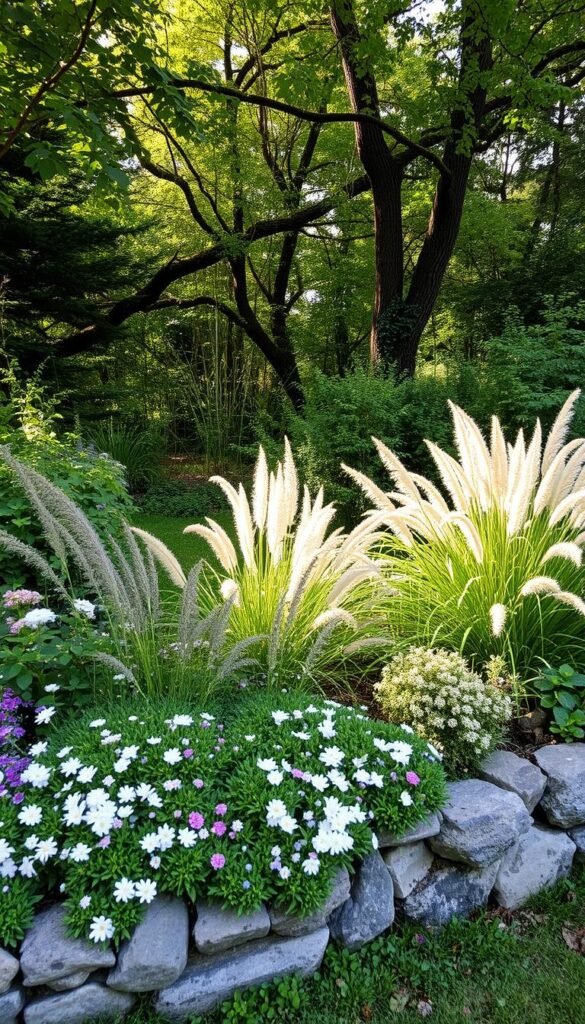
Blend cultivated charm with wild beauty by designing edges that flow like nature intended. Your space can shift gracefully from sunny blooms to dappled shade, using plants that thrive in both environments. This approach builds visual flow while supporting local ecosystems.
Merging Cultivated and Wild Spaces
Ferns become your secret weapon here. Their arching fronds soften edges between manicured plots and forested zones. Maidenhair varieties thrive with morning sun, while Japanese-painted types add striking color contrast under tree canopies.
| Fern Type | Light Needs | Seasonal Features |
|---|---|---|
| Maidenhair | 3-4 hours sun | Delicate green fronds |
| Japanese-Painted | Full shade | Purple-veined leaves |
| Autumn | Partial shade | Copper fall foliage |
Start with dense plantings near your home, then let spacing widen as you approach wooded areas. Layer native groundcovers like wild ginger behind shade-loving blooms. This gradual shift tricks the eye while giving wildlife sheltered pathways.
Create microclimates by positioning taller shrubs on the sunny side. They’ll cast afternoon shadows for ferns and hostas. As one gardener notes: “Let plants do the heavy lifting – their growth patterns will guide the transition better than any rigid plan.”
Choose species adapted to your region’s climate. In drier areas, opt for drought-resistant sedges instead of moisture-loving ferns. This ensures your transitional border stays lush through every season without constant watering.
Incorporating Purple Flowers and Other Colorful Blooms

Royal hues meet ecological function in plantings where violet tones reign supreme. Purple’s ultraviolet glow acts like a neon sign for bees, drawing them to nectar-rich blossoms while creating visual harmony. These chromatic choices bridge structured spaces and wilder zones with effortless grace.
Choosing Varieties for Vibrant Color and Texture
Start with catmint’s spiky violet clusters – they bloom for months and withstand summer heat. Pair them with fragrant lavender in sunny spots, where silvery foliage contrasts neighboring greens. For cooler zones, violas offer velvety petals in plum shades that thrive in spring and fall.
Creeping purple petunias soften edges with their trailing habit, while lobelia adds midnight-blue accents to container arrangements. As one horticulturist notes: “Layering different purple tones creates depth without overwhelming – it’s nature’s perfect gradient.”
| Plant | Height | Best Use |
|---|---|---|
| Lavender | 1-3 ft | Sunny borders |
| Violas | 6-8″ | Cool-season pots |
| Lobelia | 4-10″ | Spilling over edges |
Mix in white blooms like Shasta daisies to make purple shades pop. This contrast enhances your cottagecore aesthetic while supporting biodiversity. Remember to stagger bloom times – early crocuses followed by summer sage ensure continuous color and pollinator banquets.
Enhancing Your Space with Ornamental Grasses and Perennials

Discover how the gentle rustle of ornamental grasses can elevate your landscape’s charm alongside hardy perennials. These natural partners create rhythm in your plantings, offering texture shifts that captivate through every season.
Adding Movement and Visual Interest
Ornamental grasses bring breezy energy to your design. Liriope stands out with spiky leaves and violet blooms that mingle beautifully with neighboring plants. Blue fescue’s steel-blue tufts contrast with softer perennials like coneflowers, creating striking texture combinations.
For compact spaces, dwarf bunny grass shines. Its feathery seed heads catch sunlight through autumn, while dwarf mondo forms lush carpets that let taller specimens steal the spotlight. Pair these with perennials suited to your light conditions:
| Light Needs | Grass Companions | Seasonal Impact |
|---|---|---|
| Full sun | Switchgrass + Black-eyed Susan | Summer-fall color |
| Partial sun | Hakone grass + Astilbe | Spring-frost interest |
In sunny zones, combine drought-tolerant grasses with full sun lovers like coreopsis. Shadier transitions thrive with Japanese forest grass and hostas. As one landscape designer notes: “Grasses act as nature’s curtain call – they keep the show going long after flowers fade.”
These combinations ensure your space stays engaging through the growing season. Come winter, frosted grass plumes and seed heads add sculptural beauty when most plants rest. This layered approach builds habitats while keeping your design fresh year-round.
Layering with Shrubs, Vines, and Natural Woodland Features
Elevate your landscape’s vertical drama by weaving woody textures through your plantings. Shrubs and vines add architectural depth, transforming flat spaces into living sculptures that evolve with the seasons.
Vertical Magic with Blooming Climbers
Clematis steals the show with its flowering versatility. Train these vines on arbors or fences where their star-shaped blooms can cascade freely. Many varieties offer bonus winter interest through fluffy seed heads that catch frost like nature’s confetti.
Pair climbing roses with clematis for romantic flair. Bush roses work beautifully as backdrop plants, while tall types scale structures with minimal fuss. In full sun areas, let these duos mingle with phlox or coneflowers for continuous color.
Even compact yards shine with smart layering. Dwarf shrubs like spirea anchor corners, leaving room for trailing nasturtiums. For those maximizing every inch of your yard, use wall-mounted trellises to grow upward without sacrificing ground space.
Mix textures by combining glossy rose foliage with clematis’ delicate leaves. This contrast adds visual weight where needed while keeping the overall feel light and airy. Remember: woody plants provide year-round structure, letting seasonal blooms take center stage.