Imagine stepping into an outdoor oasis where vibrant colors and textures blend seamlessly with purposeful design. This style of planting isn’t just about aesthetics—it’s a delightful journey that combines history, creativity, and ecological awareness. Whether you’re working with a cozy patio or a sprawling yard, these spaces adapt beautifully to any size while offering endless opportunities for personal flair.
Originally cultivated by resourceful households, these plantings served as practical sources of food and medicine. Over time, they evolved into artistic displays where fruits, herbs, and blooms coexist harmoniously. Today, they strike the perfect balance between intentional layouts and free-spirited growth—a concept explored in our guide to blending structure with free-flowing charm.
What makes this approach so special? You’re not limited by space constraints. Even narrow strips of land can burst with life through clever layering of plants. Tall grasses might sway behind clusters of daisies, while fragrant herbs spill onto pathways. This creates visual depth and invites butterflies to linger among your blooms.
By choosing native species and seasonal varieties, you’ll craft a living tapestry that changes throughout the year. The result? A dynamic landscape that feels intentionally wild yet requires minimal upkeep. Best of all, every plant selection supports local pollinators, turning your yard into a thriving ecosystem.
Ready to transform your outdoor area into a personalized sanctuary? Let’s explore how to design borders that feel both curated and carefree—where every stem tells your unique story.
Getting Started with Your Cottage Garden Border
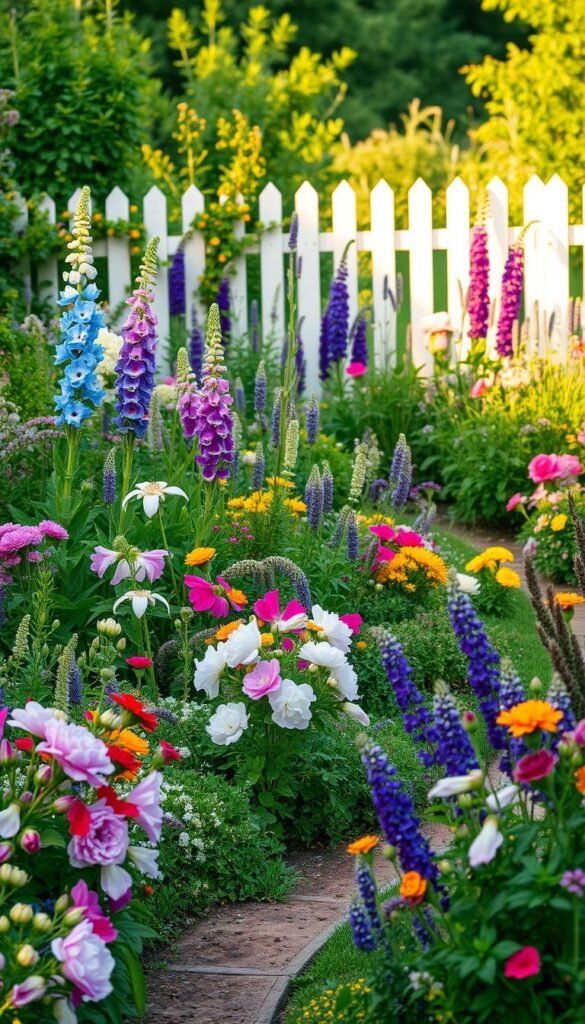
Creating your dream planting area begins with smart preparation. Unlike rigid formal layouts, this approach thrives on flexibility—think soft curves and plants that dance rather than march in straight lines.
Planning Your Space and Layout
Start by measuring your yard’s dimensions. Use stakes and string to mark potential border locations, leaving room for pathways at least 18 inches wide. These access routes prevent overcrowding while letting you admire your blooms up close.
| Feature | Traditional Border | Cottage Style Border |
|---|---|---|
| Plant Height | Uniform layers | Mixed heights |
| Edging | Precise lines | Soft, natural curves |
| Maintenance | Weekly trimming | Seasonal pruning |
Consider sunlight patterns and soil quality. A sunny spot might host lavender and coneflowers, while shady areas could feature ferns and hostas. Always leave space between plants for future growth—they’ll fill in beautifully over time.
Establishing Your Design Goals
Ask yourself: Do you want cut flowers for arrangements? A haven for bees? Prioritize these needs when selecting plants. Start small—even a 4×8 foot area can make a stunning impact. Remember, the best spaces evolve gradually through experimentation.
The History and Allure of Cottage Gardens
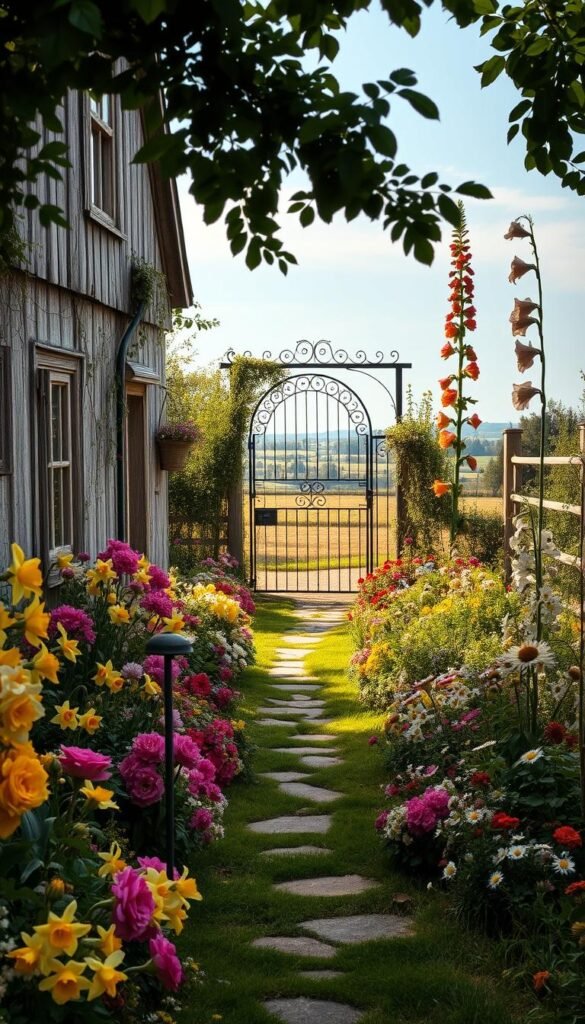
Centuries ago, small plots weren’t about beauty—they were lifelines for families. What we now admire as charming floral displays began as resourceful solutions for households needing food, medicine, and income. Over generations, this practical approach blossomed into a beloved gardening tradition.
From Utilitarian Roots to Artistic Expression
Early versions combined fruit trees, vegetables, and herbs in tight spaces. Flowers like marigolds and calendula weren’t just pretty—they repelled pests and attracted bees. This mix of function and subtle charm laid the groundwork for today’s designs.
By the 19th century, wealthier landowners noticed these humble plots. They adapted the concept, adding roses and flowering vines for visual appeal. The result? A hybrid style that balanced productivity with pleasure.
| Era | Focus | Plant Types | Design Approach |
|---|---|---|---|
| 1700s-1800s | Survival | Edibles + pollinator-friendly blooms | Space-efficient clusters |
| Modern | Self-expression | Heirloom varieties + ornamental grasses | Curated wildness |
Now, these spaces let you bend traditional rules. You might pair heritage tomatoes with snapdragons or tuck lavender between stepping stones. As modern design principles suggest, the magic lies in blending order with joyful chaos.
Why does this style endure? It celebrates imperfection. Your plot can feature grandma’s peonies alongside newly discovered perennials—each choice reflecting your journey. That’s the true allure: creating a living canvas that’s uniquely yours.
Wildflower-inspired cottage garden borders for a natural look
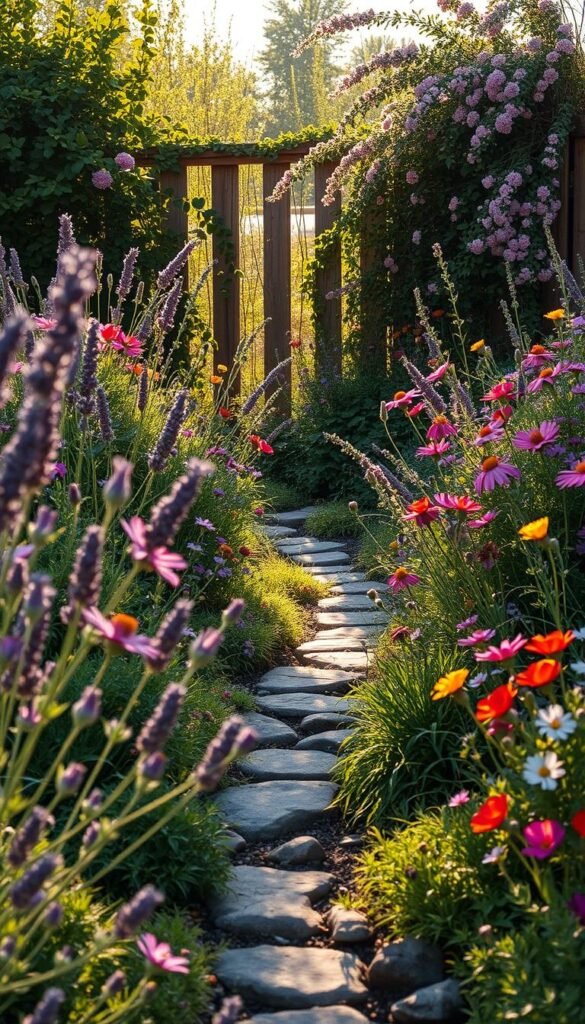
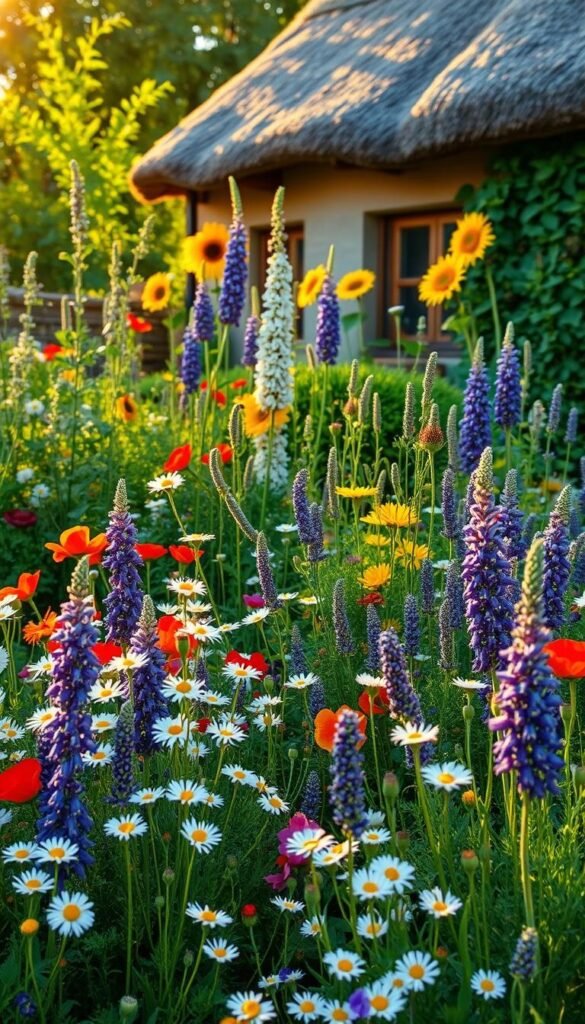
Your outdoor space becomes a living journal where every plant choice whispers your personality. That deliberate glow emerges when curated selections mingle with nature’s spontaneity—like foxgloves leaning into lavender as if they’ve always belonged together.
Embracing a Natural, Deliberate Glow
Start by sketching loose patterns rather than rigid grids. Allow taller species like hollyhocks to anchor the back, while low-growing thyme softens edges. This creates rhythm without strict symmetry—nature’s version of organized chaos.
Mix native blooms with heirloom varieties for textural contrast. Try pairing airy yarrow with bold coneflowers, leaving space for self-seeding poppies to surprise you next season. Remember:
- Cluster 3-5 of the same plant for visual weight
- Let foliage colors harmonize (silver sage with purple salvias)
- Use ornamental grasses as living curtains between flower groups
Manage spreaders by planting them in buried containers. This controls roots while maintaining that carefree aesthetic. You’ll achieve borders that feel discovered rather than forced—a masterpiece that ages gracefully with each passing year.
Your final touch? Step back periodically while planting. If it makes you smile instinctively, you’ve nailed that magical balance between intention and wild wonder.
Mixing Color and Texture: Flowers, Grasses, and Perennials
Think of your planting area as a painter’s palette—each hue and leaf shape contributes to an ever-changing masterpiece. The secret? Combining opposites that heighten each other’s beauty while maintaining natural harmony.
Choosing Complementary Colors for Impact
Opposites on the color wheel create electric energy. Picture fiery orange poppies against cobalt blue salvias, or lemon-yellow coreopsis mingling with violet catmint. These pairings make individual shades pop while forming cohesive displays.
Try this trick: Plant warm-toned nasturtiums (red, orange) beside cool borage blooms. Their contrasting temperatures balance beautifully, like sunset meeting twilight. For softer contrasts, blend lavender with peach-colored roses—a subtle nod to complementary principles.
Layering Plants for Visual Interest
Texture works like punctuation in a sentence. Feathery grasses add movement between bold peony flowers, while spiky yucca leaves contrast with velvety lamb’s ear. Aim for three textural types in each grouping:
- Airy fillers (baby’s breath, cosmos)
- Structural anchors (coneflowers, sedum)
- Ground-hugging spillers (creeping thyme)
Incorporate ornamental grasses like switchgrass for year-round structure. Their rustling stems create rhythm, guiding the eye through your design. Remember to stagger bloom times—early tulips followed by summer phlox and autumn asters keep the show running nonstop.
Incorporating Aromatic Herbs and Bee-Friendly Flowers
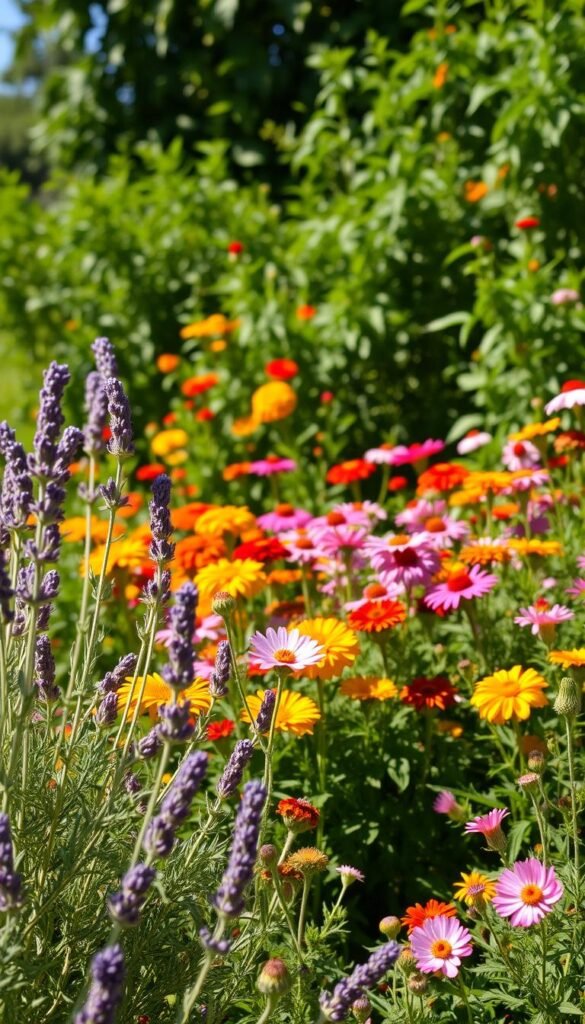
Your garden can become a sensory playground where fragrance and color work hand-in-hand. By blending scented herbs with nectar-rich blooms, you’ll create spaces that delight humans while sustaining vital pollinators.
Herbs That Add Scent and Attract Pollinators
Creeping thyme steals the show as a fragrant ground cover. When brushed by feet or breezes, its tiny leaves release a lemony aroma perfect along pathways. Ornamental varieties of sage and mint offer bold foliage colors while producing the same enticing scents as their culinary cousins.
Position scented plants where you’ll encounter them most—near benches, gates, or kitchen windows. Lavender thrives in sunny spots, its purple spikes drawing bees from dawn till dusk. For shady corners, try sweet woodruff with its vanilla-like perfume.
Floral Options for a Lively Border
Sweet alyssum blankets the ground in honey-scented white blooms from spring through frost. This low-growing powerhouse provides continuous nectar for pollinators, complementing taller flowers like bee balm and coneflowers.
Stagger bloom times using early-blooming lungwort and late-season asters. This approach ensures local wildlife finds nourishment year-round. Together, these plants form living mosaics that buzz with life while wrapping your space in nature’s perfume.
Building a Long-Lasting Perennial Border
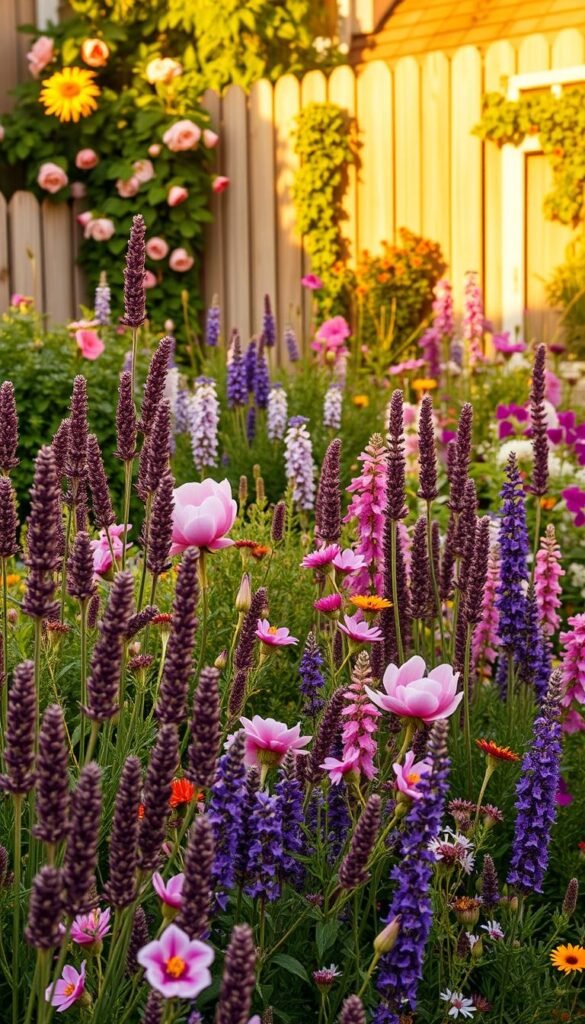
Smart plant choices today mean less work tomorrow. Perennial borders reward patience with evolving beauty that deepens each year. Unlike annuals needing replanting, these hardy plants return stronger, filling your space with texture and color while saving money long-term.
Planting for Year-Round Appeal
Start with structural stars like dwarf blazing star—its spiky purple blooms attract butterflies from July to September. Pair it with low-growing snapdragons that flower early in mild climates, bridging spring and summer displays.
| Plant Type | Bloom Time | Key Feature | Height |
|---|---|---|---|
| Dwarf Blazing Star | Mid-late summer | Pollinator magnet | 18-24″ |
| Snapdragons | Early spring | Cold-tolerant | 8-12″ |
| Dwarf Catmint | Spring-fall | Drought-resistant | 12-15″ |
| Hostas | Foliage focus | Shade-loving | 6-36″ |
| Heuchera | Year-round leaves | Color variations | 8-12″ |
Mix heights and textures for depth. Place feathery salvia beside broad hosta leaves—the contrast keeps eyes moving through your border. Leave 12-18″ between plants to accommodate growth while preventing weed gaps.
For winter interest, add evergreen heuchera varieties with maroon or lime leaves. Their colorful foliage shines against frost, proving your garden works hard even in dormancy. Remember: well-chosen perennials become living investments, maturing into showstoppers over time.
Enhancing Garden Borders with Evergreens and Ornamental Grasses
Winter doesn’t have to mean a lifeless landscape. With smart plant choices, your borders can captivate even when temperatures drop. Let’s explore how evergreens and ornamental grasses add structure, texture, and year-round charm.
Evergreen Anchors for Cold-Weather Beauty
Low-growing juniper shines in winter with its rich green hue and sculptural form. Its relaxed sprawl pairs perfectly with dormant perennials, adding depth without rigid formality. For multi-season value, try creeping rosemary—its fragrant leaves enhance meals while trailing gracefully over edges.
Dynamic Grasses That Dance With the Wind
Ornamental grasses bring energy that shifts with the breeze. Liriope offers a double delight: slender blades and purple flower spikes in late summer. Blue fescue’s steel-blue tufts create striking contrast, while dwarf bunny grass charms with feathery seed heads that persist into frosty mornings.
Mix these elements to craft borders that evolve beautifully across seasons. You’ll create a living tapestry where texture and movement take center stage—proving that even winter landscapes can spark joy.