

Imagine transforming your outdoor space into a romantic retreat where vibrant blooms and lush greenery dance together. While roses often steal the spotlight, they thrive when surrounded by plants that enhance their beauty and health. This approach not only creates visual harmony but also builds a resilient ecosystem in your garden.
Choosing the right neighbors for your climbing varieties ensures they receive proper sunlight and nutrients while offering contrasting textures. For example, delicate perennials like lavender or bee balm add softness against bold rose petals. Annuals such as sweet alyssum fill gaps with color, extending seasonal interest.
Companion planting goes beyond aesthetics. Many plants naturally repel pests or attract pollinators, creating a healthier environment for your roses. As you design your border, focus on species with similar water and soil needs. Our guide to harmonious garden combinations simplifies this process.
By thoughtfully arranging these elements, you’ll craft a living tapestry that evolves through the seasons. The result? A breathtaking display where every plant plays a vital role in your garden’s success.
Welcome to Your Cottage Garden Oasis
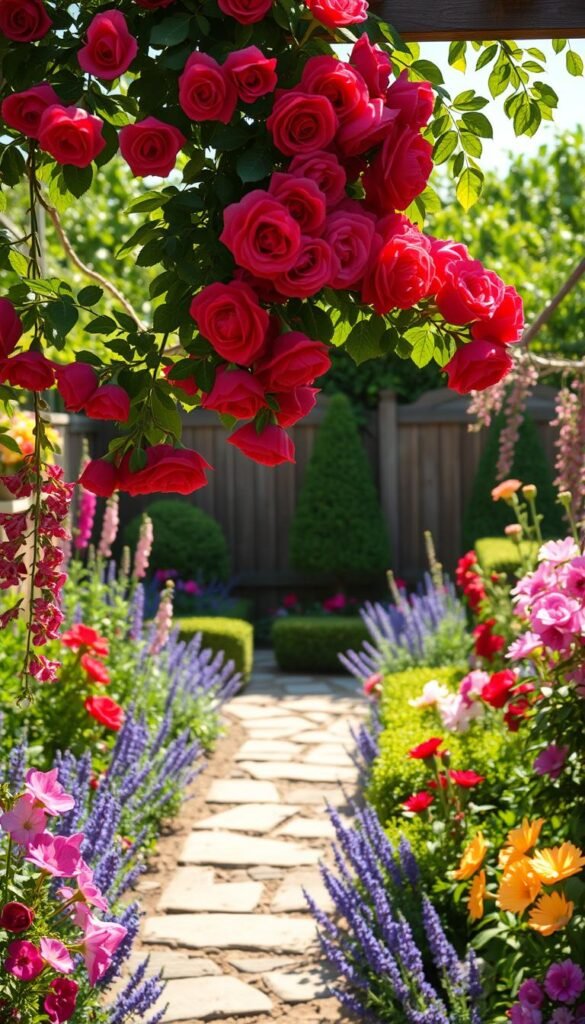
Step into a space where time slows and nature takes center stage. Modern roses bring timeless elegance to any setting, their velvety petals and sweet fragrance inviting you to linger. Whether you’re crafting a cozy corner or designing sweeping beds, these versatile flowers adapt effortlessly to your vision.
No two gardens look alike, and that’s the charm of this style. Tall varieties create natural arches, while compact bushes spill over pathways with bursts of color. Mix soft pink blooms with purple salvias for a painterly effect, or let white roses glow against dark green foliage.
What makes this approach special? It’s designed to thrive. Today’s breeds bloom repeatedly with minimal fuss—perfect for busy lives. You’ll enjoy months of vibrant flowers without constant pruning or pampering.
The magic lies in layering. Imagine clematis vines threading through rose canes, or silvery artemisia leaves highlighting crimson petals. This living tapestry evolves daily, offering fresh surprises from spring’s first buds to autumn’s final flourish.
Key Considerations for Companion Planting with Climbing Roses
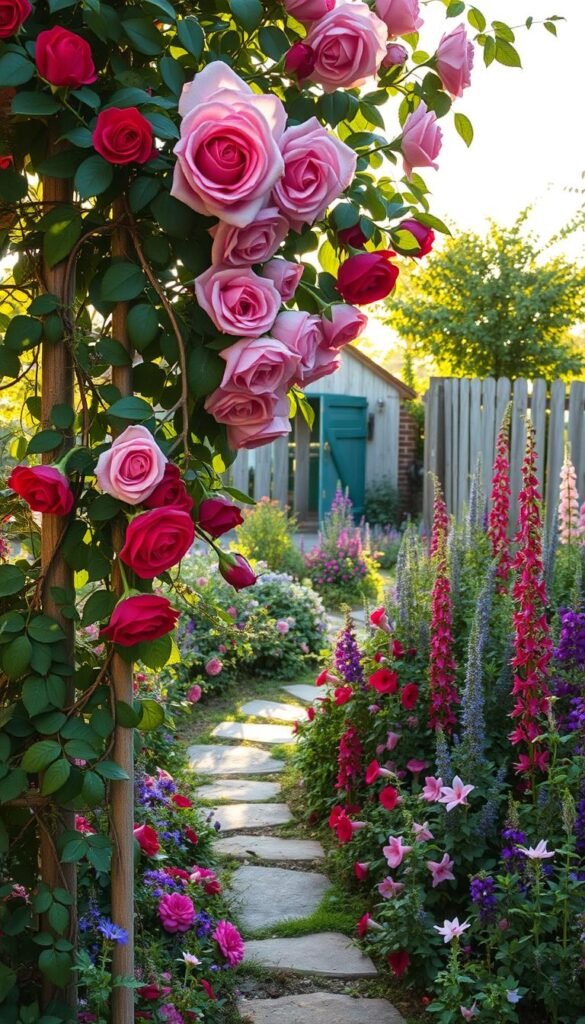
Creating a thriving garden starts with understanding your plants’ basic needs. Matching sunlight exposure, soil quality, and hydration patterns ensures all species grow strong together. This harmony lets your floral partners support each other naturally.
Understanding Sun, Soil, and Water Needs
Roses demand full sun – six hours daily minimum. Choose companions that thrive under the same bright conditions. Anything less creates competition for light.
Well-draining soil prevents root rot in wet weather. Mix in compost for nutrients if your ground feels heavy. Test drainage by watering a small area – puddles lasting hours mean you need amendments.
Water needs should align across species. Drought-tolerant lavender pairs poorly with thirsty impatiens. Group plants by moisture preferences to simplify care.
Creating a Healthy Garden Ecosystem
Biodiversity keeps pests in check. Marigolds repel nematodes while yarrow attracts ladybugs. These helpers reduce aphid populations without chemicals.
Healthy soil grows resilient plants. Rotate nitrogen-fixing species like beans near your roses. They replenish nutrients naturally between bloom cycles.
Remember: Shared needs mean shared success. When every plant gets proper sun and nourishment, your garden becomes a self-sustaining paradise.
Pairing climbing roses with other cottage favorites along your border
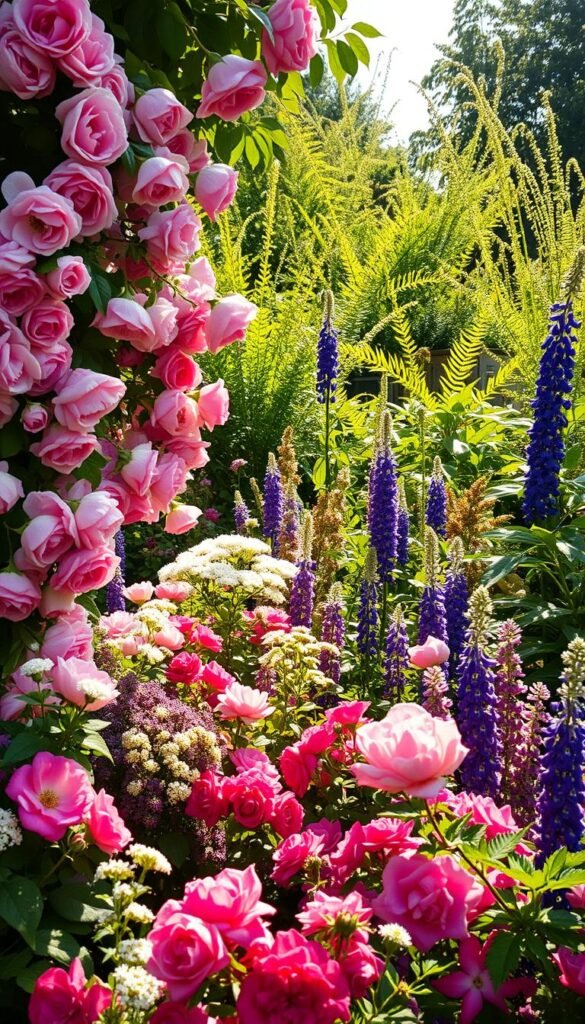
Your garden border can dazzle from spring to fall with smart plant partnerships. The trick? Select companions that perform at different intervals, creating an ever-changing display. This strategy keeps eyes drawn to your space even when roses take a breather between bloom cycles.
Choosing Plants With Complementary Bloom Times
Start with early risers like crocuses or bleeding hearts. These spring stars wave goodbye just as your climbing roses awaken. For summer fireworks, combine peonies or catmint with your rose’s peak blooms. Their contrasting shapes make both plants pop.
As autumn approaches, let late performers shine. Asters and sedum step up when rose flowers fade. Follow the 2:1 ratio rule—plant two seasonal partners for every rose vine. This balance ensures constant color without overcrowding.
Enhancing Texture and Fragrance
Mix feathery cosmos with velvety rose petals for tactile contrast. Silver-leaved plants like dusty miller make pink blooms glow brighter. For scent layering, add thyme or stock—their spicy notes mingle beautifully with floral sweetness.
Don’t forget gap fillers! Low-maintenance flowers like nasturtiums keep borders lively during transition time. This thoughtful mix creates a sensory journey that evolves daily, proving great gardens aren’t made—they’re orchestrated.
Selecting Cottage Garden Companions to Enhance Bloom and Foliage
The secret to a vibrant cottage garden lies in thoughtful plant partnerships. By blending annuals, perennials, and shrubs, you craft a living mosaic where colors, textures, and foliage work in harmony. This approach transforms your space into a dynamic ecosystem that delights through every season.
Annuals, Perennials, and Shrubs That Shine
Start with perennials like lavender or salvia for reliable structure. These plants return yearly, forming your garden’s backbone. Annuals such as zinnias let you experiment with bold colors—try pairing orange blooms with purple artemisia for striking contrast. Compact shrubs like boxwood add winter interest when flowers fade.
Considerations for Color, Height, and Habit
Balance vertical drama with ground-hugging plants. Tall foxgloves frame climbing blooms, while lamb’s ear softens edges with velvety leaves. Aim for three tiers: spires in back, mounding shapes mid-border, and trailing varieties up front. This height variation guides the eye naturally through your design.
Benefits of Biodiversity in Your Garden
Diverse plants attract pollinators and deter pests naturally. Silver-leaved species reflect light onto rose foliage, boosting their glow. For low-effort charm, try colorful container gardening near your borders. You’ll create a self-sustaining habitat where every element thrives together.
Best Companion Plants for Full Sun and Vibrant Blooms
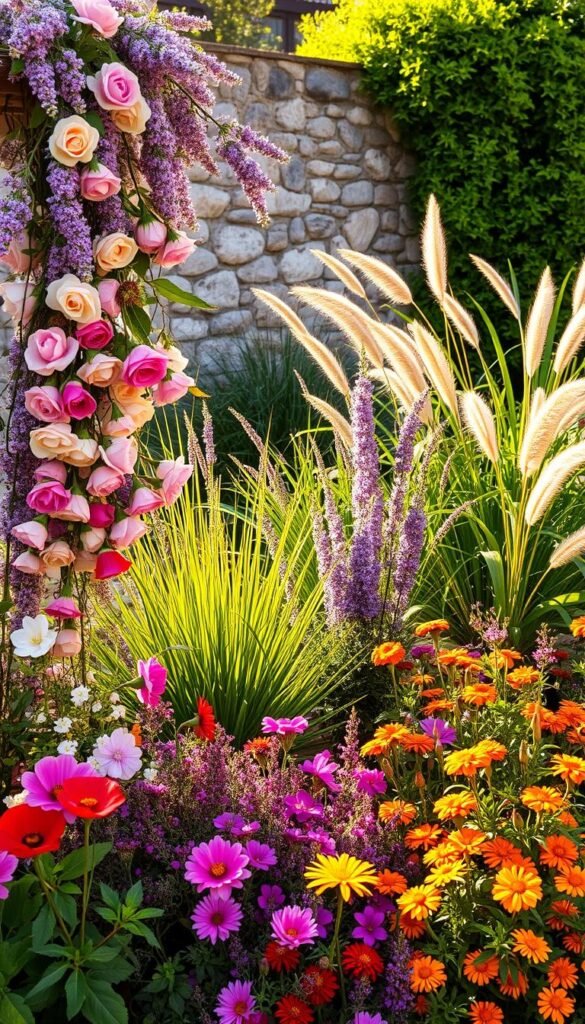
Sun-drenched gardens burst with color when you match bold blooms with foliage that amplifies their beauty. The right partners reduce maintenance while creating eye-catching contrasts that last through summer heat.
Dynamic Duos for Sunny Borders
Lamb’s ear steals the show with silvery leaves that make rose petals glow. Its fuzzy texture adds tactile interest, while drought tolerance keeps it thriving when rains fade. Pair it with coreopsis for a fireworks effect – their golden flowers attract pollinators from June through September.
| Plant | Bloom Time | Key Feature | Care Level |
|---|---|---|---|
| Coreopsis | Early summer-fall | Cheerful yellow flowers | Low |
| Lamb’s Ear | Spring-summer | Velvety silver foliage | Minimal |
| Artemisia | Year-round | Feathery gray leaves | Easy |
These varieties share key strengths: they love full sun, require little water, and resist pests naturally. Coreopsis even improves soil health by attracting beneficial insects. For continuous color, try layering plants with staggered bloom periods.
Silver-leaved plants like artemisia reflect sunlight onto neighboring flowers, making pinks and reds pop. This trick works especially well in summer when light intensity peaks. You’ll create a luminous border that stays vibrant with minimal effort.
How to Protect Your Climbing Roses from Pests and Diseases
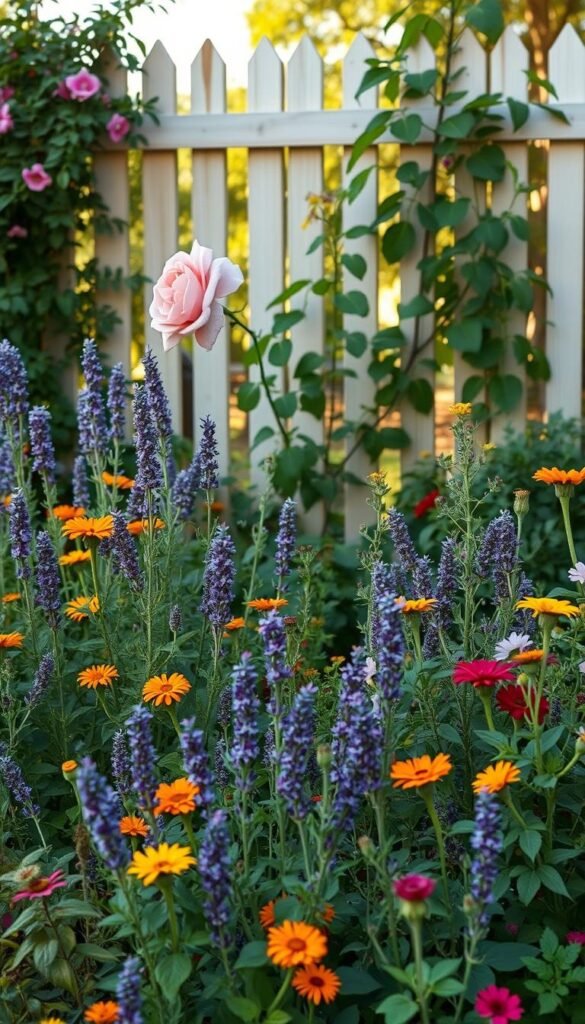
Your garden’s defense system starts with smart plant partnerships. Strategic companions act as natural bodyguards, shielding roses from hungry insects and fungal threats. This approach reduces chemical use while creating a balanced ecosystem where plants thrive together.
Using Companion Plants to Ward Off Aphids and Black Spot
Strong-smelling allies confuse pests seeking your roses. Marigolds emit a scent that hides your blooms from aphids while attracting ladybugs. Alliums fight two battles – their oniony aroma repels beetles above ground and deters grubs in soil.
| Plant | Pest Controlled | Disease Prevention |
|---|---|---|
| Agastache | Deer, Japanese beetles | Masks rose scent |
| Marigolds | Aphids, whiteflies | Reduces black spot spread |
| Lavender | Moths, slugs | Improves air circulation |
These partners also combat disease. Proper spacing allows airflow that prevents black spot and mildew. Artemisia’s silvery leaves reflect light onto stems, drying morning dew faster.
Tips on Creating a Pest-Control Friendly Environment
Water at the base – wet leaves invite disease. Morning watering gives foliage time to dry. Rotate companion plants yearly to disrupt pest life cycles.
Encourage predator insects with diverse blooms. Yarrow brings lacewings that devour 60 aphids hourly. A garden buzzing with helpers needs fewer interventions, letting nature handle the heavy lifting.
Creative Planting Arrangements for a Dynamic Border
What separates good borders from great ones? Layers that guide the eye and textures that beg to be touched. Start by positioning taller roses as living pillars along fences or walls. These vertical anchors create instant height, while lower-growing varieties weave through mid-level perennials.
Designing Layered and Textured Plantings
Space shrub roses 2-3 feet apart for dense cover that defines spaces. Their arching canes form natural trellises for clematis or morning glories. Contrast glossy rose leaves with feathery grasses or fuzzy lamb’s ear—these combos add tactile intrigue.
Repetition ties your design together. Plant silver-leaved artemisia in clusters along the border. This creates rhythm without monotony. Let spontaneous volunteers like cosmos or poppies fill gaps—their cheerful randomness enhances cottage charm.
Balance planned structure with organic growth. A well-designed border feels intentional yet wild. Use evergreen shrubs as bookends, then let flowering vines soften edges. You’ll craft spaces that feel both curated and delightfully unexpected.
Balancing Color, Texture, and Fragrance in Your Garden
Great gardens sing when colors, textures, and scents perform in harmony. This delicate balance turns ordinary spaces into multisensory experiences where every element enhances its neighbors. Start by observing how light plays with foliage and petals at different times of day.
Mixing Soft Foliage With Bold Blooms
Silver-leafed plants like artemisia make crimson flowers pop while softening harsh edges. Try lamb’s ear near pink blooms – its velvety texture invites touch and cools vibrant hues. These contrasts work year-round, even when flowers aren’t blooming.
For dynamic layers:
- Place spiky lavender behind mounding roses
- Let sweet alyssum spill between shrubs
- Use feathery ferns as living mulch
Enhancing Fragrance With Natural Partners
Lavender does triple duty – its purple spikes complement rose colors, repel aphids, and release calming scent. Plant it upwind from seating areas so breezes carry the perfume. Sweet alyssum adds honeyed notes at ground level, creating fragrant carpets that thrive in container gardening combinations.
Time your scents:
- Morning: Roses release strongest fragrance
- Evening: Lavender and stock take center stage
Remember – contrast creates magic. Pair bold peony leaves with airy cosmos, or let glossy camellia foliage highlight matte rose petals. Your border becomes a living gallery where every detail matters.
Incorporating Foliage and Perennials for Year-Round Interest
Keep your garden alive with texture even when flowers fade. Silver-leaved varieties like artemisia and lamb’s ear add depth through every season. Their muted tones let colorful blooms shine while creating elegant contrast.
Low-Effort Drama With Resilient Plants
Artemisia thrives where others struggle. This tough perennial handles poor soil and summer heat without fuss. Its feathery leaves catch sunlight, brightening shady corners near spring bulbs or fall asters.
Lamb’s ear offers tactile charm. Soft, velvety foliage pairs beautifully with spiky lavender or delicate roses. Both plants need minimal watering once established – perfect for busy gardeners.
Rotate companion varieties seasonally. Pair artemisia with bright tulips in spring, then switch to golden rudbeckia in fall. This strategy maintains visual interest while letting each plant’s strengths shine.