

Imagine stepping into a living painting where fragrance, color, and texture dance together. Cottage gardens blend untamed charm with intentional design, offering both visual poetry and practical rewards. These spaces burst with roses that perfume the air, herbs for cooking, and veggies you can snack on while wandering winding paths.
Unlike rigid formal layouts, these gardens celebrate nature’s spontaneity. Curved edges and weathered stone markers guide you through clusters of flowers mingling with edible plants. Dense plantings create a sense of abundance, while seating nooks invite you to savor morning coffee surrounded by blooms.
What makes these gardens timeless? They balance wild beauty with purpose. You’ll find medicinal calendula growing beside show-stopping peonies, and aromatic lavender bordering strawberry patches. Every element serves multiple roles – delighting the senses, nourishing your kitchen, and supporting pollinators.
Over the next sections, you’ll discover how to transform blank lawns into thriving ecosystems. We’ll explore plant pairings that look artfully accidental, natural hardscaping materials, and strategies for achieving that “lived-in” magic. Get ready to craft a space that feels both nostalgic and freshly yours.
Understanding the Cottage Garden Aesthetic
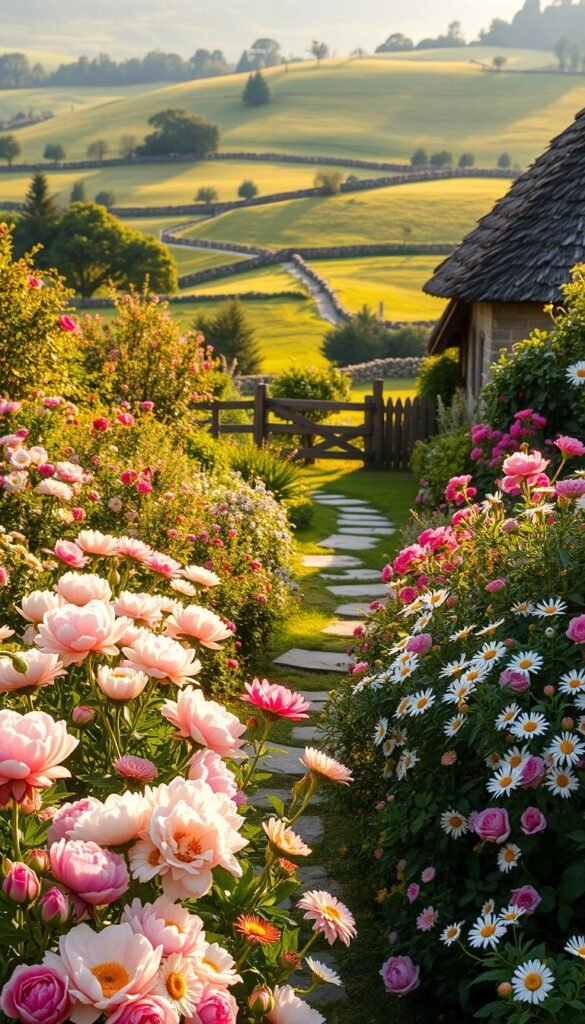
Envision a landscape where wildness and intention hold hands. This style thrives on contrasts—structured pathways framed by billowing flowers, weathered benches nestled among herbs, and color palettes that shift like sunset hues. At its core, the aesthetic whispers stories of simpler times while offering modern sensory delights.
The Romantic Charm of Cottage Gardens
These spaces celebrate imperfection. Delphiniums stretch toward sunlight beside ruffled peonies, while lavender spills onto gravel like purple waterfalls. Meandering paths encourage slow exploration, revealing hidden corners where scent-heavy roses frame a wrought-iron chair.
“A cottage garden isn’t designed—it’s felt,” says Maine gardener Eliza Thorn. This philosophy shines through layered textures and staggered bloom times. Early spring tulips give way to summer’s foxgloves, ensuring constant visual poetry from frost’s end to first snowfall.
Key Elements of Traditional Design
Three principles define this style:
- Vertical drama: Arbors dripping with clematis or climbing roses
- Edible elegance: Chives flowering beside snapdragons, strawberries underplanting roses
- Natural materials: Flagstone paths, reclaimed wood trellises, and vintage containers
By blending ornamentals with practical plants, you create living art that feeds both body and soul. For more ideas on elevating your space with a gardening, explore how textures and scents work together.
Remember—the magic lies in balancing planned placements with nature’s whims. Allow self-seeding poppies to wander, let mint creep between stones, and watch as your plot becomes a tapestry of life.
Planning and Sketching Your Garden Layout
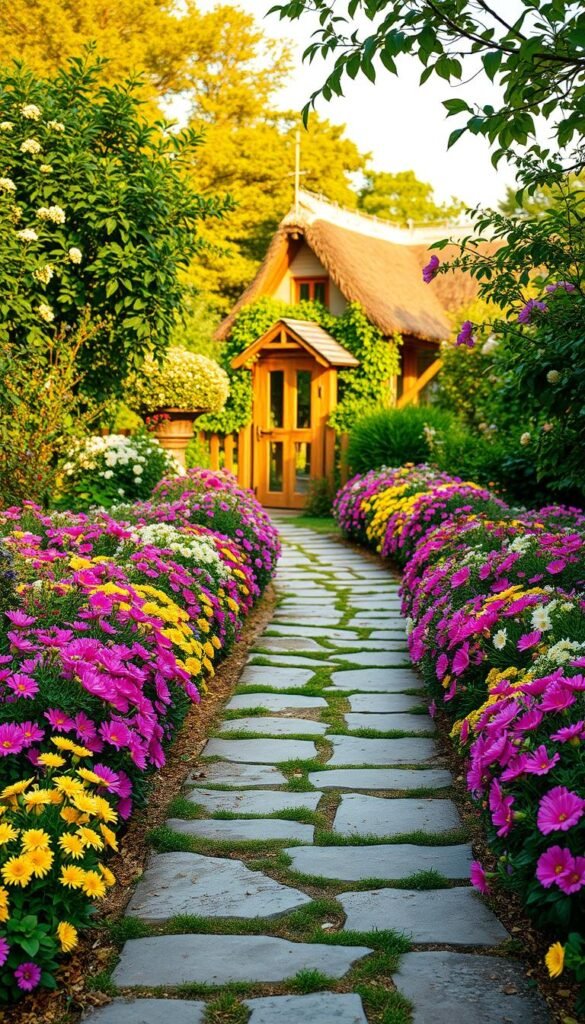
Start with a blank slate, where every curve and contour tells a story of growth. Successful layouts begin by understanding your land’s unique personality—its sun patterns, soil quirks, and natural shapes. This foundation ensures your design works with nature rather than against it.
Assessing Your Space and Soil
Track sunlight across your plot for a full day. Note where shadows fall from buildings or trees—these spots might host shade-loving plants like hostas. Next, grab a soil test kit from your local cooperative extension office. For under $20, you’ll learn pH levels and nutrient gaps, guiding smart plant choices.
Slopes and existing trees aren’t obstacles—they’re design opportunities. A gentle incline could become a terraced herb garden, while mature maples frame cozy seating areas. Document these features in rough sketches before refining.
Drawing Curvy Pathways for Organic Flow
Use a garden hose to map winding paths that mimic natural foot traffic. Wider curves near seating areas invite pause, while narrower twists create discovery moments. Once satisfied, mark these lines with flour or spray paint.
Apply the “smallest to tallest” rule along bed edges. Place low-growing thyme or alyssum near walkways, mid-height coneflowers behind them, and towering hollyhocks at the back. This layering ensures every plant shines while maintaining accessibility for care and harvest.
For more guidance on designing your plot, explore how to balance aesthetics with functionality. Leave room between plants for mature growth—crowding stifles blooms and makes harvesting tricky.
Selecting the Perfect Cottage Garden Plants
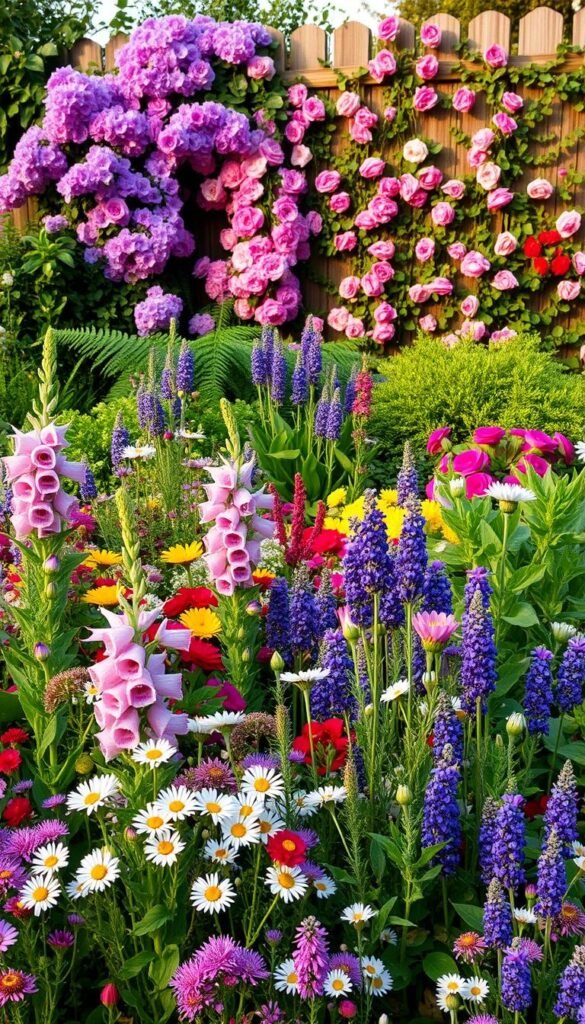
The heart of a vibrant cottage garden lies in its plant diversity. By blending heights, textures, and purposes, you’ll craft layers that buzz with life while serving your needs. Start by considering three growth habits: towering accents, mid-height fillers, and spreading groundcovers.
Mixing Perennials, Annuals, and Edibles
Anchor your design with reliable perennials like peonies and hydrangeas. These long-lived beauties form the garden’s backbone. Between them, tuck annuals like zinnias or cosmos for seasonal pops of color. Don’t forget edible stars—cherry tomatoes climbing obelisks or basil peeking through daisies.
Foxgloves and hollyhocks add vertical drama, while lamb’s ear softens path edges. For continuous blooms, pair early risers like pansies with late-season dahlias. This staggered approach ensures flowers appear from spring frost to autumn’s first chill.
Enhancing Beauty with Herbs, Flowers, and Veggies
Every plant should earn its spot. Lavender serves triple duty—its purple spikes attract pollinators, scent the air, and dry beautifully for sachets. Rosemary doubles as fragrant hedging, while thyme carpets walkways with tiny blossoms.
Incorporate veggies as ornamental accents. Rainbow chard’s jewel-toned stems complement roses, and scarlet runner beans climb trellises with fiery blooms. For cut flowers, grow yarrow and delphiniums—their sturdy stems last weeks in vases.
Choose varieties that match your goals. Need medicinal herbs? Add lemon balm and holy basil. Want wildlife support? Plant hyssop and sunflowers. With thoughtful selection, your plot becomes equal parts pantry, pharmacy, and pollinator paradise.
Tips for Creating your dream cottage garden borders from concept to finished look
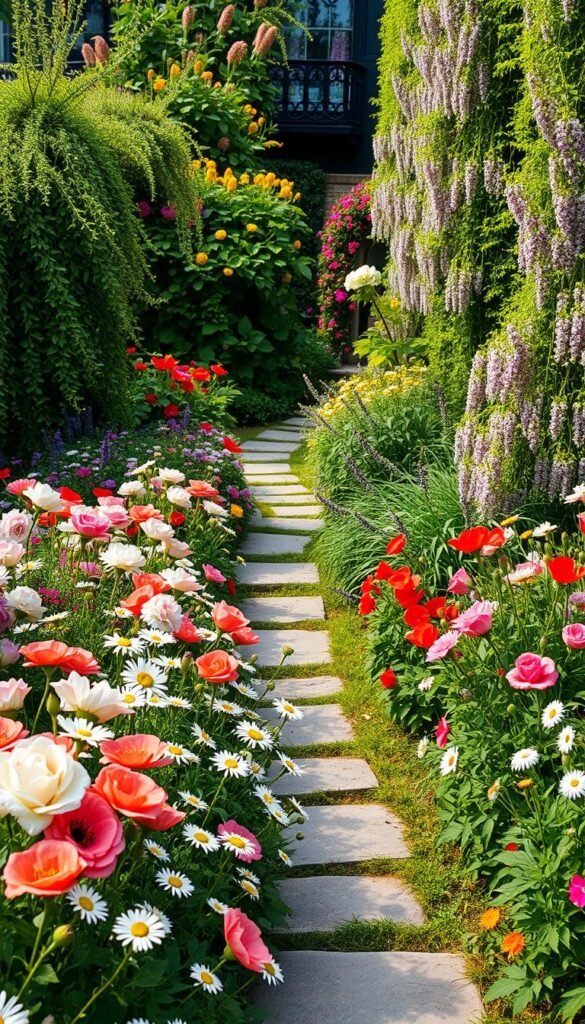
Transforming ideas into tangible beauty begins with strategic groundwork. Start by marking your garden edges using natural materials like river rocks or reclaimed bricks. These elements blend seamlessly with the cottage garden aesthetic while defining spaces for planting.
From Initial Concept to Defined Borders
Begin with 60% perennials as your foundation—plants like daylilies and echinacea return stronger each year. Add annual veggies or zinnias for seasonal pops. When starting small-scale container gardening, use pots as temporary border markers while plants establish.
Divide overgrown perennials every 3-4 years. Share divisions with neighbors—this generosity fuels community connections and keeps your growth manageable. Layer heights intentionally: low herbs near paths, mid-size blooms behind them, and climbers like clematis on trellises.
Practical Steps to Achieve Your Vision
Year one focuses on soil health and structure. Test pH levels, then amend with compost. By year three, your perfect cottage garden begins maturing—expect fuller blooms and natural self-seeding. Maintain borders by trimming wayward stems, but allow some plants to spill over edges for that signature relaxed charm.
Use curved pathways to guide the eye and create hidden nooks. Incorporate evergreen shrubs like boxwood for winter structure. Remember: these spaces improve with time. As plants fill in, you’ll discover new opportunities to expand or refine your living masterpiece.
Curating Color Palettes and Textural Layers
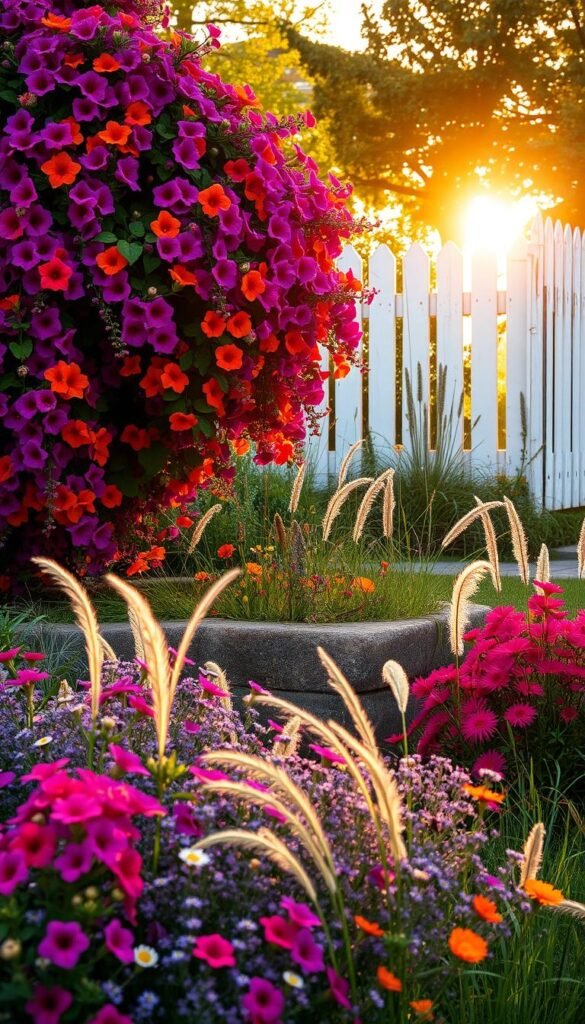
Color weaves magic through every plant collection, transforming green spaces into living tapestries. The right combinations make blooms pop while guiding the eye through layered textures. Let’s explore how hues and growth habits work together to craft visual harmony.
Color Schemes That Sing
Three approaches create distinct moods:
| Scheme | Colors Used | Effect | Plant Pairing |
|---|---|---|---|
| Analogous | Neighbors on wheel | Calming flow | Purple salvia + pink cosmos |
| Complementary | Opposites attract | Vibrant contrast | Orange marigolds + blue lobelia |
| Monochromatic | Single hue variations | Sophisticated unity | White phlox, snowdrops, ivory roses |
Consider light patterns when placing colors. Pale yellows glow in morning light, while deep purples shine at dusk. “Always test paint chips in your actual garden light,” advises Colorado designer Mara Lipton.
Building Depth Through Layers
Start with fuzzy lamb’s ear along path edges, then add mid-height daisies. Towering sunflowers or hollyhocks complete the vertical mix. This approach makes small areas feel expansive.
Remember foliage’s role—silver artemisia leaves brighten shady corners, while burgundy heuchera adds drama. Plan for seasonal shifts: spring pastels transitioning to summer’s boldness, then autumn’s warm golds.
Let some plants self-seed for natural surprises. A rogue poppy or calendula often creates the most delightful textures. Your color story will evolve yearly, growing richer with each season’s chapter.
Incorporating DIY Elements and Garden Enhancements
Your outdoor space becomes truly yours when filled with projects shaped by your hands. Simple DIY projects turn forgotten items into functional art, blending practicality with nostalgic charm. A weathered ladder becomes a vertical herb planter, while chipped teacups transform into succulent displays.
Breathing New Life Into Old Treasures
Scour flea markets for rusty watering cans or wooden crates. These pieces add instant character when repurposed as planters or decorative accents. Create a butterfly watering station by stacking terracotta pots upside-down and topping them with a saucer filled with pebbles and water.
Guiding Exploration Through Creative Design
Wind salvaged bricks into meandering paths that invite discovery. Use reclaimed pallet wood to build arched trellises for sweet peas or morning glories. These structures support climbing plants while creating shaded nooks where fragrance lingers in the air.
Add motion with homemade wind chimes using silverware or sea glass. These touches make your space feel living and dynamic. Best of all, every handmade element tells a story – connecting your family’s creativity to the land’s natural beauty.
Wrapping Up Your Cottage Garden Transformation
A thriving cottage garden grows like a well-loved recipe—each season adds new flavors while honoring timeless foundations. Start by nurturing your soil with yearly tests and amendments like Coast of Maine’s Quoddy Blend Lobster Compost. This rich organic mix feeds roots while improving drainage, creating a banquet for plants.
Water wisely: soak the ground deeply 2-3 times weekly instead of light daily sprays. Target the base of plants to keep leaves dry and prevent fungal issues. Container gardens demand extra attention—check moisture levels every day during heatwaves.
Remember, these living spaces evolve. That self-sown calendula by the path? Let it stay. The clematis overtaking the arbor? Guide it gently. Over 3-5 years, your plot will develop that coveted “lived-in” magic as perennials mature and plants naturalize.
Celebrate small victories—the first cut bouquet from your garden, or bees buzzing around new blooms. With patience and care, your home’s outdoor haven will become a legacy that deepens its charm with every passing year.