
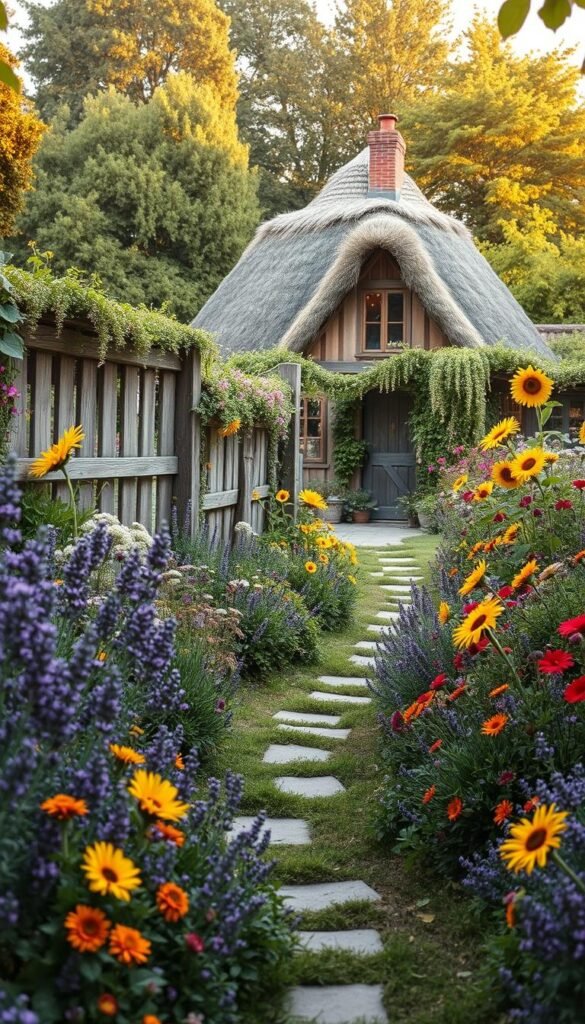
Imagine stepping into an outdoor sanctuary where flowers spill over weathered stone paths and herbs mingle with heirloom roses. This is the magic of a relaxed, plant-filled retreat—a space that feels both wild and welcoming, where nature takes center stage.
These lush landscapes transform ordinary yards into living canvases. Picture fragrant lavender brushing against sunlit daisies while cherry tomatoes climb wooden trellises nearby. Every season brings new textures and colors, creating a sensory experience that changes with the light and breeze.
What makes these spaces truly special? They balance beauty with practicality. You’ll find winding gravel walkways inviting exploration and cozy benches tucked beneath flowering trees. For those seeking inspiration, our guide to designing your dream outdoor sanctuary offers fresh ideas blending tradition with modern needs.
The secret lies in thoughtful chaos. By mixing edible plants with ornamentals and using reclaimed materials, you create depth and character. Discover how to craft a cottagecore-inspired haven that feels both timeless and uniquely yours—where every corner tells a story through its textures, scents, and seasonal surprises.
Embracing the Cottage Garden Aesthetic
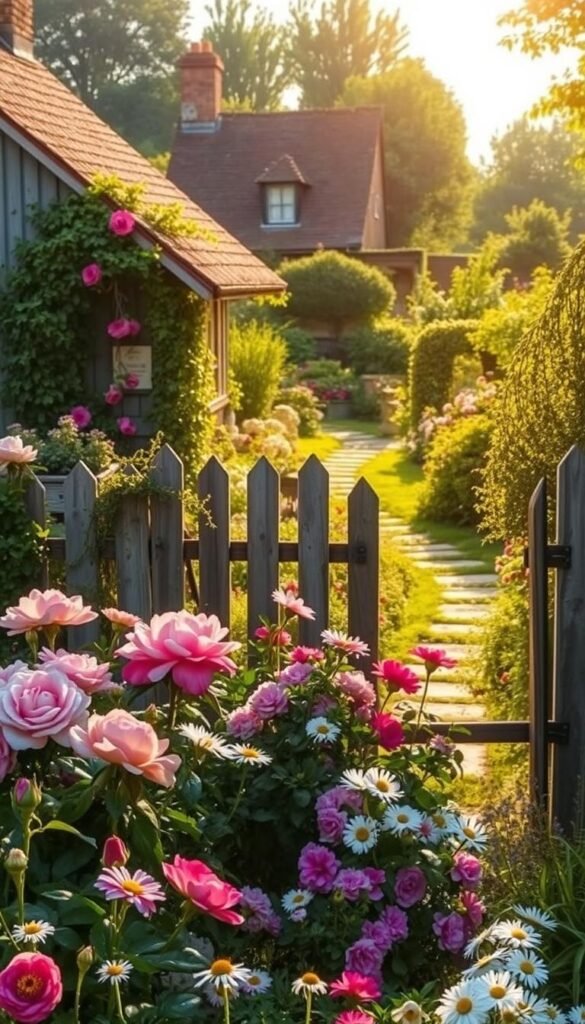
Envision a landscape where history meets horticulture in a dance of colors. These spaces thrive on imperfect symmetry—think tangled vines framing crooked gates or herbs spilling onto uneven stepping stones. It’s not about rigid rules but celebrating nature’s quirks while crafting spaces that whisper stories of seasons past.
What Makes This Style Timeless
The magic lies in balancing wildness with intention. You’ll find edible plants like strawberries mingling with peonies, creating layered beauty that feeds both body and soul. Worn brick paths guide your steps, while antique tools repurposed as decor add nostalgic flair.
| Feature | Traditional Approach | Modern Twist |
|---|---|---|
| Plant Mix | Heirloom varieties only | Drought-tolerant hybrids added |
| Materials | Reclaimed wood | Recycled composites |
| Color Palette | Pastel-dominated | Bold accents included |
The Romance Behind the Look
Secret nooks with wrought-iron benches invite quiet moments. Climbing roses frame weathered arches, their scent drifting through summer evenings. This living canvas evolves yearly, yet always feels rooted in tradition—a testament to gardens that age like fine wine.
Exploring the History and Influence
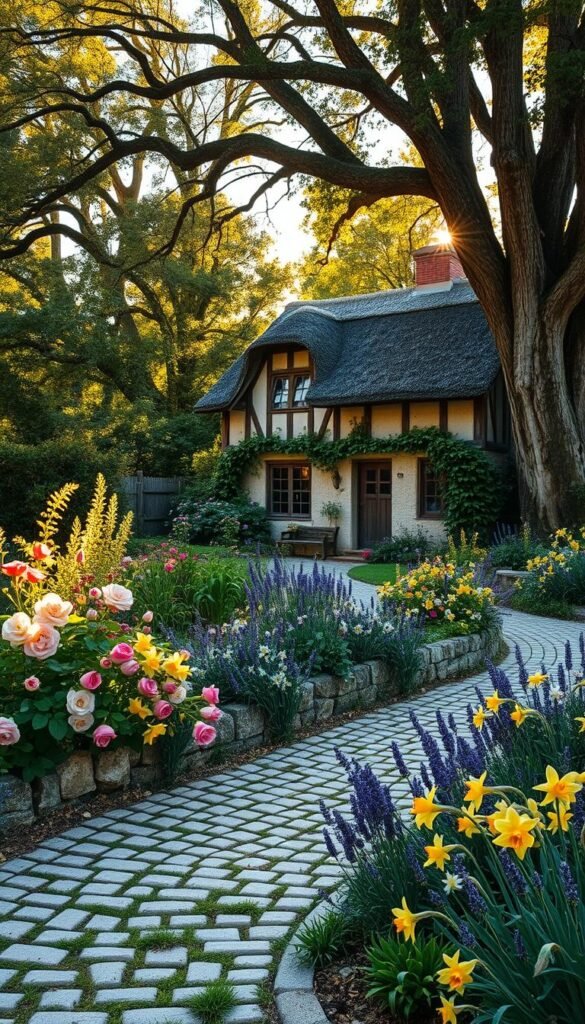
Centuries ago, working-class families in England grew vegetables beside fragrant herbs—not for beauty, but survival. These humble plots laid the foundation for today’s lush retreats, blending practicality with accidental artistry. Over time, these spaces became canvases for self-expression, where roses climbed fences and daisies edged walkways.
Evolution from Traditional to Modern
The original plots prioritized function: food first, flowers second. By the 19th century, romantic influences transformed them into floral showcases. Today’s versions keep that free-spirited vibe but add structure for easier care. Think neater borders and drought-resistant plants that mimic the wild look with less work.
Modern adaptations focus on smart simplicity. Smaller yards use vertical planting, while mixed materials like gravel and corten steel offer a fresh twist. You’ll still find nostalgic elements—like rambling climbers—but arranged to suit busy schedules.
| Aspect | Traditional | Modern |
|---|---|---|
| Plant Focus | Edibles + Medicinal Herbs | Ornamentals + Low-Water Varieties |
| Layout | Random Clusters | Defined Zones |
| Materials | Weathered Wood | Composite Decking |
| Maintenance | Daily Upkeep | Weekly Checks |
This blend of old and new lets you create spaces that feel timeless yet current. For tips on elevating your outdoor space, explore how today’s trends honor heritage while embracing convenience. The result? A living tapestry that respects history but thrives in modern life.
Vibrant Blooms That Transform Your Space
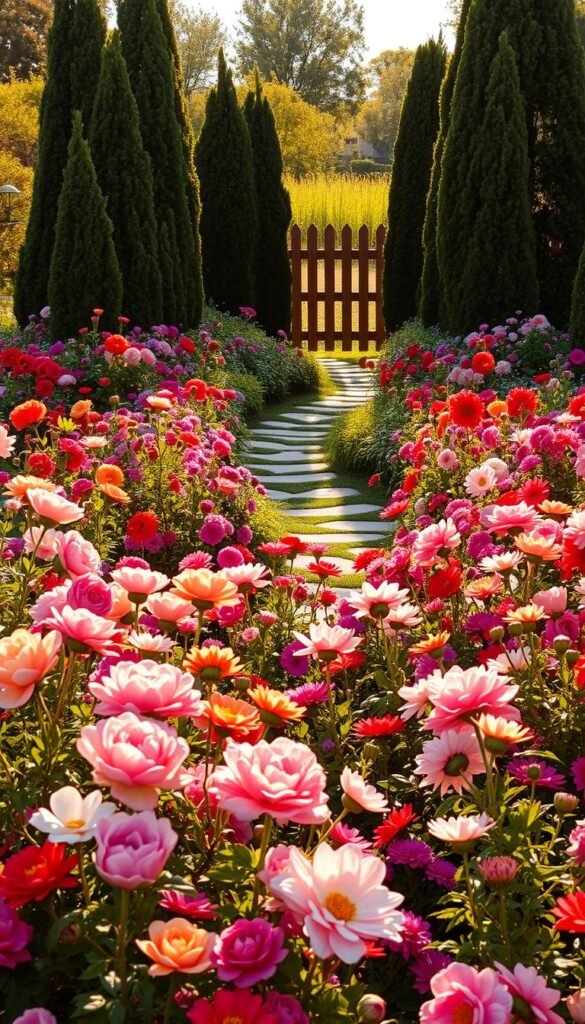
Picture your yard bursting with color from spring’s first buds to autumn’s final flourish. David Austin roses steal the show with their velvety petals and honey-like scent, blooming repeatedly to keep your space fragrant. Pair them with spiky delphiniums—their blue-purple towers create vertical drama against rounded peonies and hydrangeas.
Want year-round interest? Foxgloves add whimsy with their bell-shaped flowers, while dahlias deliver bold geometric shapes in fiery hues. These choices aren’t just pretty—they’re pollinator magnets. Bees flock to foxgloves, and butterflies adore zinnias planted alongside your roses.
Smart layering turns small areas into lush retreats. Place taller plants like hollyhocks at the back, mid-height blooms in the center, and creeping thyme along edges. This approach maximizes visual impact without crowding. For more inspiration on arranging plants, explore these creative gardening ideas that work in any yard.
Don’t forget cut flowers! Snip hydrangea stems for kitchen vases or gather roses for bedside bouquets. By choosing varieties that shine indoors and out, you’ll extend your garden’s magic beyond its borders. Every season becomes a reason to celebrate nature’s palette.
Cottage Garden Design: Embracing Rustic Charm and Vibrant Blooms
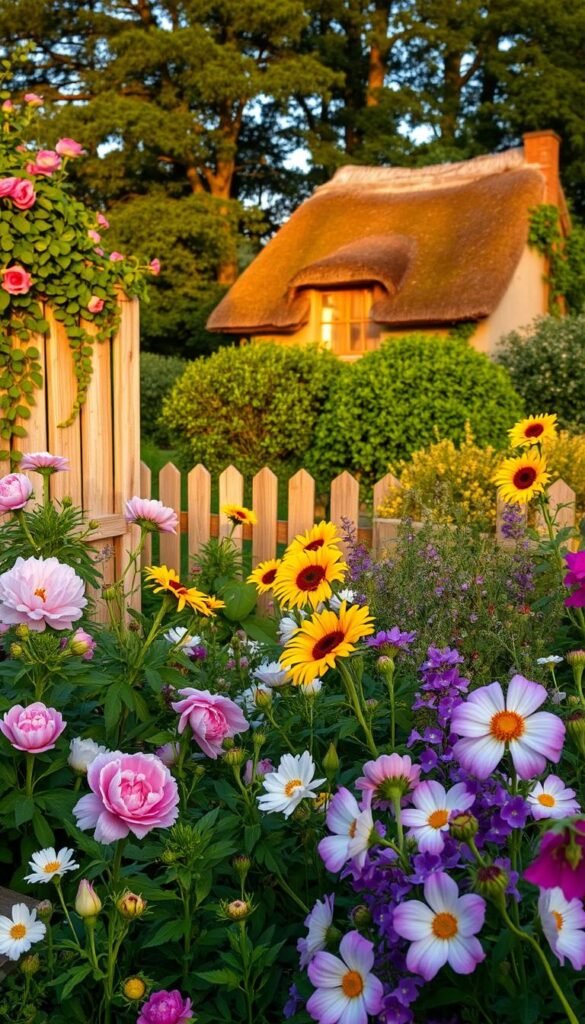
Transform your outdoor space into a living tapestry where practicality meets poetry. The magic unfolds when you layer plants like edible kale beneath climbing roses, blending beauty with purpose. This approach creates depth while making every inch work double duty.
Start by grouping species with similar needs but contrasting heights. Tall foxgloves behind low-growing thyme, for example, create visual interest while sharing sunlight and soil preferences. Add vertical layers using arbors or trellises—perfect for beans or sweet peas that soften structures as they climb.
| Planting Strategy | Traditional | Modern |
|---|---|---|
| Edible Integration | Herbs at borders | Vegetables as focal points |
| Spacing | 6-12 inch gaps | Interplanting for density |
| Color Schemes | Pastel clusters | Bold accent groupings |
For small areas, try colorful container arrangements to brighten tight corners. Mix trailing nasturtiums with upright salvias in weathered pots for instant charm. This method lets you experiment with pairings before committing to ground planting.
Seasonal rotation keeps the scene dynamic. Swap spring bulbs for summer cosmos, then autumn chrysanthemums. Leave seed heads through winter—they’ll feed birds and add texture. The result? A space that feels effortlessly wild yet secretly intentional.
Design Elements and Hardscaping Essentials
Curving stone walkways and wooden arches draped in blooms aren’t just decorative—they’re the bones of your outdoor oasis. These elements guide foot traffic while creating rhythm in your planting beds. When done right, they make spaces feel intentional yet effortless.
Stone Paths and Rustic Arbors
Stone paths transform muddy tracks into charming journeys. Use irregular flagstones for a natural look, spacing them like stepping stones. Let creeping thyme or moss fill gaps—this softens edges and invites exploration. For stability, dig 2 inches deeper than your stones and add gravel before nesting each piece.
Wooden arbors become living sculptures when clothed in clematis or climbing roses. Choose untreated cedar or reclaimed timber for weather resistance. Position them as entry markers or focal points—their shadows dance across flowering borders, adding depth to your layout.
| Element | Function | Pro Tip |
|---|---|---|
| Stone Paths | Guide movement | Use native stones for local charm |
| Wood Arbors | Vertical support | Angle posts outward for stability |
Balance is key. Too much stone feels cold; too little wood lacks definition. Pair gravel paths with DIY garden art projects to personalize arches. Let plants blur hard edges—snow peas climbing a trellis or nasturtiums spilling over rock borders create that coveted “organized wildness.”
Creative Planting and Curated Color Palettes
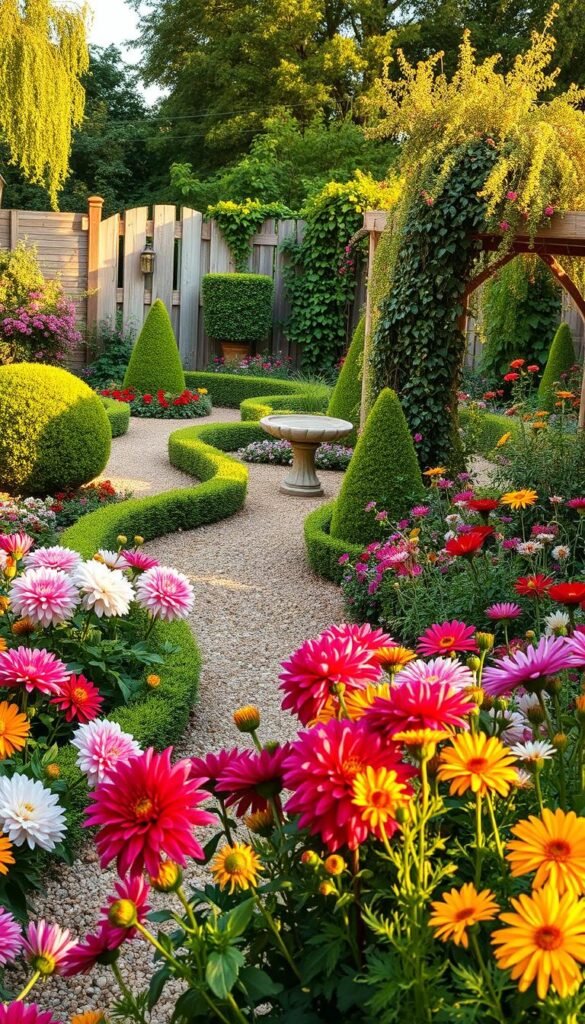
Think of your landscape as a living tapestry where every hue and leaf shape plays a role. The secret lies in balancing seasonal stars with reliable performers, creating layers that shift gracefully through the year. Start by observing how sunlight moves across your space—this determines which colors will pop and where softer tones might shine.
Seasonal Blooms and Perennial Favourites
Plan for nonstop drama by mixing early risers like tulips with late-show stoppers like asters. Perennials like coneflowers and peonies form your backbone, while annuals fill gaps with quick color. Try this combo: spring-blooming alliums behind summer phlox, with autumn sedum taking center stage as temperatures drop.
Mixing Textures and Hues
Pair feathery cosmos with velvety lamb’s ear for tactile contrast. Spiky salvia adds vertical energy next to mounding hydrangeas, while airy baby’s breath softens bold dahlias. Remember: texture works overtime in shade gardens, where foliage often outshines flowers.
| Light Condition | Best Colors | Texture Pairing |
|---|---|---|
| Full Sun | Warm reds/yellows | Silvery artemisia + fuzzy sage |
| Partial Shade | Cool blues/whites | Glossy hostas + crinkled ferns |
For harmony, choose three main colors and repeat them in different areas. Soft pink roses might echo nearby snapdragons, while their green foliage ties into herb plantings. This approach creates rhythm without monotony, letting each plant shine while contributing to the whole.
Incorporating Modern and Traditional Techniques
Today’s outdoor spaces thrive when heritage techniques meet clever shortcuts. Imagine geometric beds shaped like your home’s roofline, softened by billowing lavender and cascading sweet peas. This fusion creates visual harmony while cutting weekly maintenance in half.
Guided Freedom in Layouts
Start with clean curves or angular beds that echo your architecture. Use low hedges or stone borders to define spaces, then let plants spill over edges naturally. This approach maintains wild charm while preventing overcrowding. Try these pairings:
- Boxwood outlines with self-seeding cosmos
- Raised vegetable plots beside rambling roses
- Gravel walkways bordered by creeping thyme
Strategic Plant Choices
Focus on 5-7 high-impact varieties instead of dozens. Repeat them throughout your space for cohesion. Choose disease-resistant roses and native perennials that need less upkeep. A simplified palette means:
| Traditional Pick | Modern Alternative | Maintenance Win |
|---|---|---|
| Tea roses | Knock Out® roses | No deadheading needed |
| Annual petunias | Catmint | Drought-tolerant |
By blending structured garden bones with self-sufficient plants, you create spaces that feel abundant yet manageable. Less time weeding means more moments sipping lemonade amidst your blooming sanctuary.
Planning Your Layout and Winding Pathways
Ever wondered how to make your outdoor area feel both organized and wild? Start by sketching curves that echo your home’s shape. A crescent-shaped path or oval lawn creates natural flow while anchoring your space. These gentle lines soften edges and invite curiosity.
Designing Inviting Walkways
Choose materials that whisper “follow me.” Crushed gravel crunches underfoot, while irregular flagstones create stepping-stone charm. Vary widths—wider sections near seating areas, narrower where paths bend. This subtle shift guides movement without rigid signs.
Frame walkways with plants that brush your ankles as you stroll. Lavender releases scent when touched, while catmint spills onto paths, blurring hard lines. Add height with arches draped in clematis—their blooms form living ceilings that change with seasons.
| Material | Best For | Visual Impact |
|---|---|---|
| Flagstone | Dry climates | Rustic texture |
| Gravel | Drainage areas | Soft, natural look |
| Mulch | Budget-friendly | Earthy contrast |
Create pauses where paths widen. A bench under a crabapple tree or a birdbath surrounded by salvias gives eyes places to rest. These moments turn a simple walk into an experience, making small spaces feel expansive.
Feature Focal Points with Overflowing Flower Beds
Your outdoor space comes alive when beds spill with color and texture. The secret lies in crafting overflowing arrangements that feel wild yet purposeful. Let foxgloves sway beside roses while lady’s mantle softens edges—this mix creates depth while hiding bare spots naturally.
For year-round appeal, layer plants by height and bloom time. Tall hollyhocks anchor the back, mid-sized salvias fill the middle, and creeping thyme spills onto paths. This approach ensures constant visual interest while giving each plant room to thrive. Remember: strategic spacing prevents overcrowding but keeps that lush look you love.
Softening brick walls or fences? Try mixed borders with feathery grasses and bold dahlias. Their textures break up straight lines, making structures feel part of the landscape. Include self-seeding varieties like cosmos for effortless abundance—they’ll fill gaps without extra work.
Discover how to choose hardy perennials and annuals that thrive in your climate. Pair early bloomers with late-show stoppers, and leave seed heads standing through winter for birds. With smart planning, your beds become living art that evolves beautifully each season.