Imagine stepping into your backyard to pluck sun-warmed strawberries nestled between flowering lavender, or snipping fresh basil beside vibrant marigolds. Modern garden design no longer forces you to choose between visual charm and practical harvests. Today’s edible landscape movement transforms yards into living pantries where ruby-red chard complements rose bushes, and blueberry shrubs double as privacy screens.
Traditional setups kept vegetable patches hidden, but forward-thinking homeowners now blend food-producing greenery with ornamental favorites. This approach lets you gather ingredients for tonight’s salad while enjoying beauty that shifts with the seasons – from spring blossoms to autumn’s fiery foliage. Your space becomes a dynamic canvas where every plant serves multiple purposes.
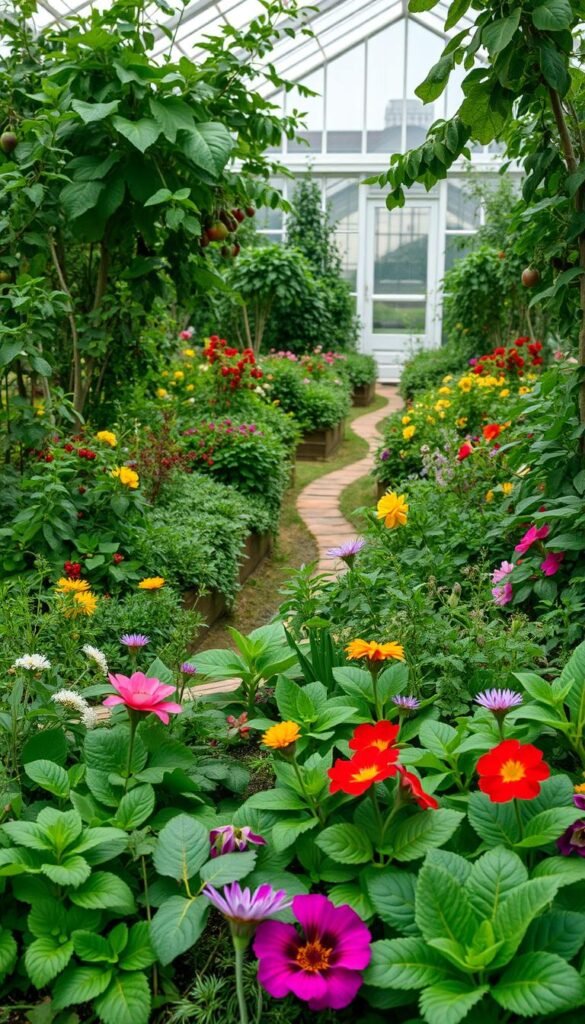
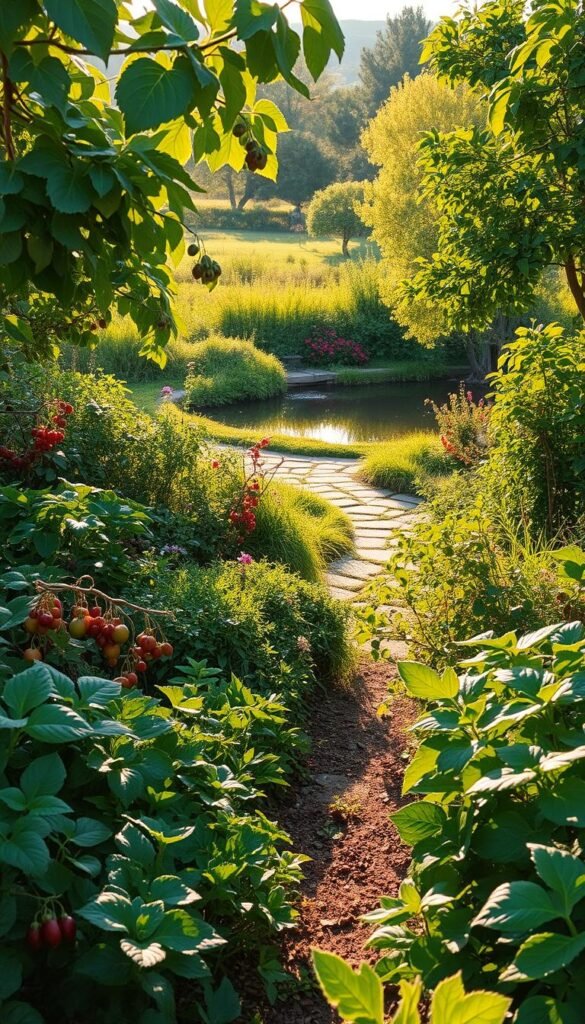
Picture this: A curved path of reclaimed bricks winds past dwarf fruit trees underplanted with thyme. A trellis dripping with grapes creates shaded seating, while nasturtiums spill colorfully from repurposed containers. This isn’t just gardening – it’s crafting environments that delight senses while putting dinner within reach.
By choosing native species and drought-resistant varieties, you’ll create low-maintenance displays that support local ecosystems. The result? A landscape that feels luxurious yet practical, where every element works harder to nourish both your household and the planet.
Understanding the Benefits of an Edible Landscape
Picture ruby chard leaves catching sunlight like stained glass while thyme carpets the ground beneath dwarf citrus trees. This fusion of beauty and practicality defines modern edible landscaping, where every plant pulls double duty as both decoration and dinner ingredient.
Your Personal Produce Aisle
Why choose between flowers and food when you can have both? Edible arrangements turn your property into a living masterpiece that changes with the seasons. Cherry tomatoes cascade over arbors like living jewelry, while purple kale adds dramatic foliage to flower beds.
Earth-Friendly Growing Solutions
Modern landscaping techniques make growing edibles surprisingly sustainable. Drip irrigation systems cut water use by up to 50% compared to traditional watering methods. Companion planting creates natural pest control – imagine marigolds shielding tomatoes from harmful insects.
You’ll love how these practices:
- Enrich soil using compost instead of chemicals
- Reduce plastic waste from store-bought produce
- Support pollinators with flowering herbs
“The average American meal travels 1,500 miles to reach your plate,” notes sustainability expert Dr. Ellen Moss. “Growing just 20% of your food locally slashes carbon emissions dramatically.”
Whether you’re refreshing a patio container garden or redesigning an estate, edible plants offer tasty solutions that look as good as they taste. Your outdoor space becomes a conversation starter that nourishes both body and soul.
Planning Your Space: Layout, Flow, and Seasonal Interest
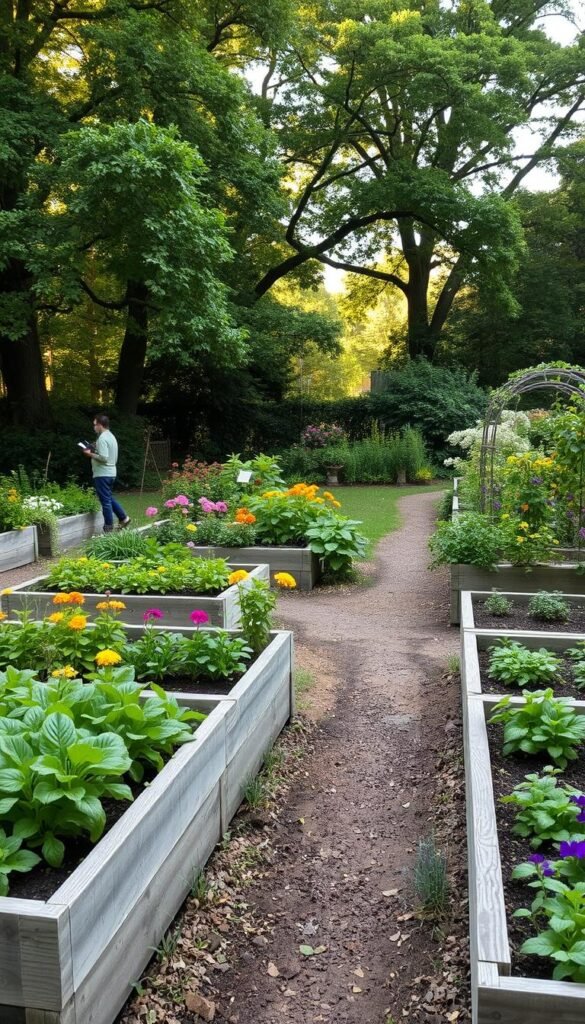
Think of your landscape as a living puzzle where every piece serves a purpose. Smart design turns functional elements into visual assets, blending practicality with eye-catching arrangements that shift through the seasons.
Crafting Order Through Structure
Raised beds give your space clean lines while improving drainage and soil quality. Frame them with weather-resistant materials like cedar or corten steel for lasting beauty. Curved pathways of gravel or flagstone invite exploration while keeping feet clean during harvests.
Strategic spacing between plants prevents overcrowding and creates natural airflow. Place taller crops like pole beans at the north end to avoid shading smaller neighbors. This thoughtful way of organizing maximizes yield without sacrificing style.
Dancing With the Calendar
Start spring with quick-growing greens that make way for summer’s tomato vines. As autumn arrives, swap spent zucchini for ornamental kale in rich purples and pinks. These transitions keep your garden productive and photogenic for ten months each year.
Incorporate evergreen herbs like rosemary as backbone plants that anchor the design through winter. Pair edible flowers with your vegetables – calendula petals brighten salads while attracting pollinators. For seamless seasonal care, rotate crops using the square foot method to maintain soil health.
Your final layout will feel like a well-choreographed performance. Each bed plays its part, pathways guide the eye, and every season brings new delights to both your table and your view.
Designing a Garden with Edible Plants: Combining Beauty and Function

What if every flowering shrub in your yard could also stock your kitchen shelves? This transformative approach merges practical edible plants with decorative ornamentals, creating spaces that nourish both eyes and appetites.
Nature’s Perfect Pairings
Swap generic shrubs for ruby-veined kale that rivals roses in visual drama. Pair frilly lettuces with spiky ornamental grasses for striking textural contrast. Basil’s glossy leaves make perfect foliage fillers between flowering perennials, while thyme forms fragrant groundcover beneath dwarf fruit trees.
For vertical interest, train scarlet runner beans up wrought-iron arbors. Containers let you mix strawberries with trailing lobelia – a sweet treat for you and hummingbirds. “The best landscapes engage all senses,” notes a Princeton Scapes designer specializing in edible landscaping services.
Sky-High Harvests
Turn blank walls into living art with trellised tomatoes and morning glories. Hang tiered planters filled with mint and pansies near seating areas. Even fire escapes become productive when dotted with compact pepper plants nestled among petunias.
This layered approach maximizes every inch while maintaining elegance. Your garden becomes a constantly changing display where snap peas climb obelisks and chard’s rainbow stems outshine traditional flowers. The result? A design that’s as delicious as it is beautiful.
Choosing the Right Plants for Taste and Visual Appeal

What if your garden could dazzle the eyes while stocking your kitchen? The secret lies in pairing flavorful vegetables with showstopping herbs and fruit trees that deliver year-round beauty. Let’s explore how to curate a living palette where every bite comes with a side of breathtaking views.
Flavor Meets Fashion
Start with vegetables that work overtime. Rainbow chard’s neon stems pop against dark mulch, while lacinato kale adds sculptural texture. Compact patio tomatoes thrive in containers, yielding sweet snacks without hogging space. For herbs, try Riverina Thomas Lavender – its oversized purple spikes perfume the air and plate alike.
| Plant Type | Star Performer | Key Features | Season |
|---|---|---|---|
| Vegetable | Bright Lights Chard | Rainbow stems, heat-tolerant | Spring-Fall |
| Herb | Riverina Thomas Lavender | Large flowers, intense fragrance | Summer |
| Fruit Tree | Bountiful™ Belle Blueberry | Red fall foliage, sweet berries | June-July |
| Edible Flower | Pink Pearl Agastache | Attracts hummingbirds, licorice flavor | Summer-Fall |
Living Decor That Feeds You
Black Jack Fig trees prove fruit trees can be head-turners – their twisted winter silhouettes rival abstract sculptures. Train climbing cucumbers up wrought-iron trellises for vertical drama, or let purple pole beans twine through ornamental grasses. For groundcover, creeping thyme offers fragrant footsteps and pizza toppings.
Don’t forget pollinator magnets like Sunseekers™ White Coneflower. These edible blooms attract bees while brightening borders. As you design, consider creating a permaculture food forest layered with productive plants. Your space becomes an ecosystem where beauty and bounty grow hand in hand.
Caring for Your Edible Landscape: Maintenance and Health Tips
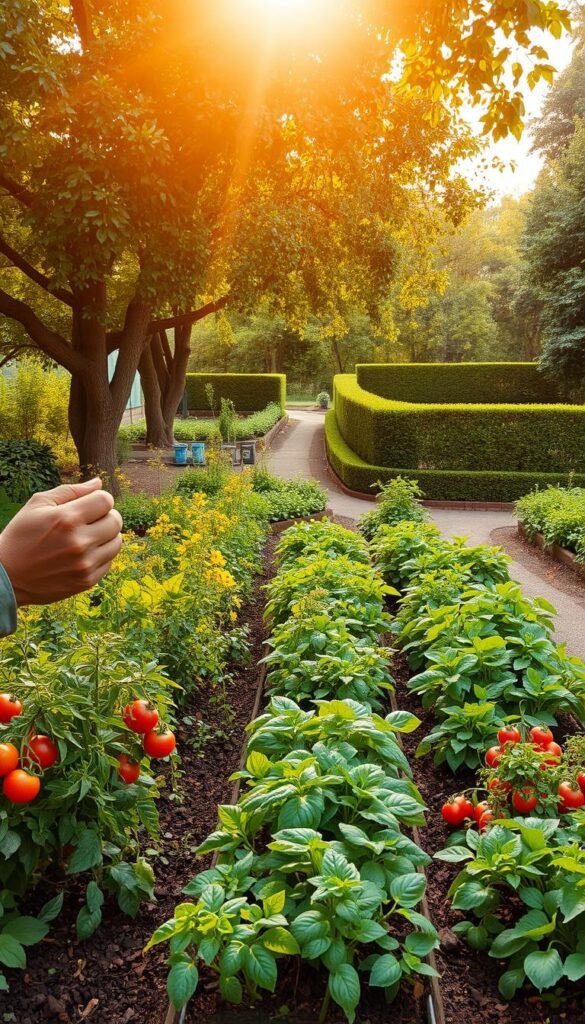
Your edible landscape thrives when treated like a living pantry that needs regular tune-ups. Smart care keeps plants productive while preserving their decorative appeal through every season.
Effective Watering, Soil Enrichment, and Pest Management
Most food-bearing plants demand six to eight hours of daily sunlight and consistent moisture. Install drip irrigation systems for smart watering strategies that deliver 1 inch weekly – enough to keep leaves perky without wasting resources.
| Task | Best Method | Key Benefit |
|---|---|---|
| Watering | Morning drip irrigation | Prevents evaporation |
| Soil Care | Monthly fish fertilizer | Boosts nutrient levels |
| Pest Control | Sevin dust applications | Targets 500+ insects |
| Mulching | Straw/compost blend | Retains moisture |
Enrich soil every three weeks with Alaska Fish Fertilizer 5-1-1. This natural formula feeds both edible and ornamental varieties without harsh chemicals. For persistent pests, rotate between Sevin’s liquid and granular formulas to disrupt insect life cycles.
Group plants with similar needs in your beds to simplify care. Try companion planting pairings like basil with tomatoes – they’ll share water needs while repelling unwanted bugs naturally.
Refresh soil health annually by mixing in compost and worm castings. This builds long-term fertility, ensuring your landscape stays lush year after year. With these tips, your edible oasis remains as vibrant as it is productive.
Embracing the Harvest: Enjoying Your Edible Oasis
Your journey from soil to table becomes a daily adventure in an edible landscape. Snip herbs like basil and thyme as you stroll through your garden, their aromas mingling with blooming lavender. Pluck ripe tomatoes from vibrant vines that double as living decor, or harvest rainbow chard leaves that rival traditional flowers in color.
Even compact spaces flourish with creativity. Try small-space container gardening solutions for patios or balconies. Mix edibles like peppery arugula with trailing petunias – beauty and flavor share the same pot.
Seasonal shifts bring new delights. Spring’s tender kale makes way for summer’s juicy peppers, while autumn’s fruit trees dazzle with fiery foliage. Winter herbs like rosemary add structure to dormant beds, proving your landscape works year-round.
Every harvest celebrates your garden’s dual purpose. Share sun-warmed strawberries with neighbors or craft meals starring homegrown vegetables. This living masterpiece nourishes both body and soul, blending beauty with delicious practicality.