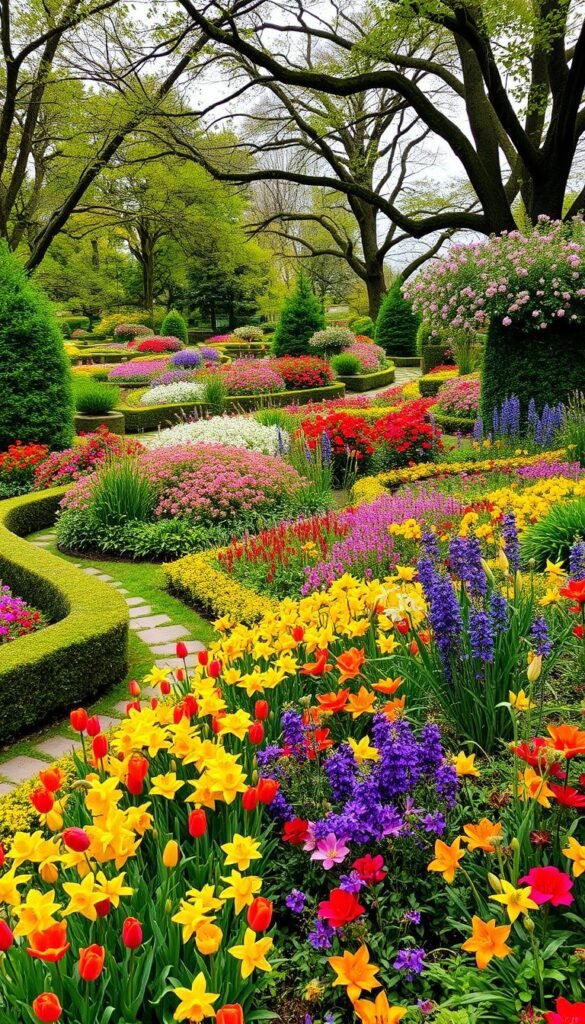
Imagine stepping outside every month of the year to find your surroundings alive with shifting hues and textures. A thoughtfully planned garden becomes more than just plants – it’s a dynamic canvas that celebrates nature’s rhythm.
This approach blends flowering shrubs, evergreen structures, and decorative hardscapes to maintain visual appeal. You’ll discover how strategic combinations create surprising bursts of warmth in winter and refreshing contrasts during summer heat.
Beyond aesthetics, these spaces become vital habitats for birds and pollinators. By choosing native species with staggered bloom times, you support local ecosystems while enjoying continuous color transitions.
We’ll guide you through selecting materials and plants that thrive in your region’s climate. Learn how stone pathways or ornamental grasses can add winter texture when flowers fade, ensuring your landscape remains engaging through every season.
Planning Your Year-Round Garden Landscape
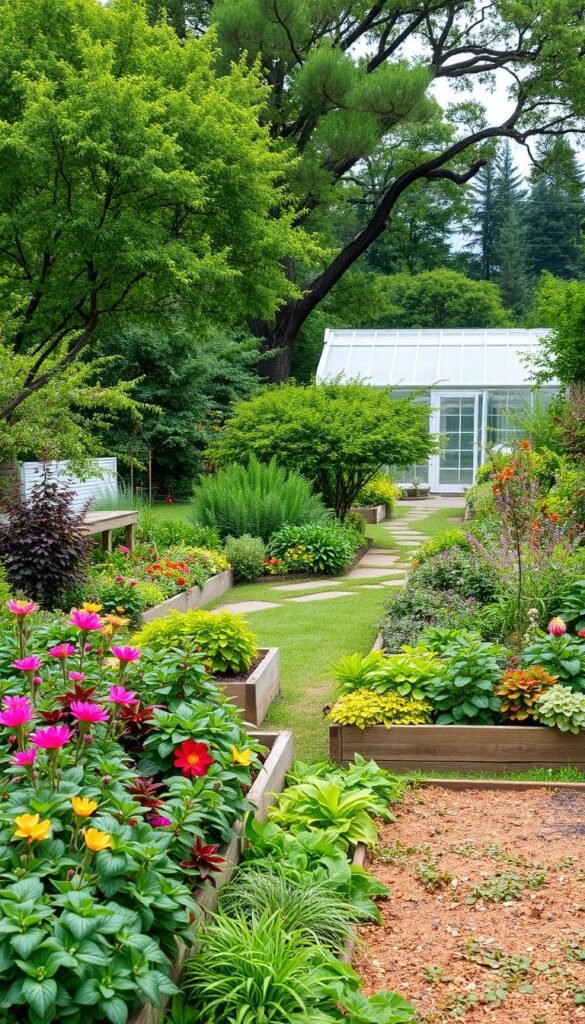
Creating a vibrant outdoor space begins with smart preparation. Start by understanding your property’s unique features and how they interact with local weather patterns. This foundation helps you build a resilient landscape that evolves beautifully through the seasons.
Assessing Your Garden’s Basics and USDA Zone
Your first task? Identify your USDA hardiness zone. This determines which plants survive winter in your area. Walk your property to note sunny spots, shady corners, and wind patterns – these microclimates affect plant health.
Evaluating Sunlight, Microclimates, and Soil
Track how sunlight moves across your space during different times of day. Test your soil’s pH and drainage – simple kits from garden centers work well. Remember, existing paths or patios shape your design choices. For creative ways to enhance your space, explore our guide on elevating your gardening aesthetic.
Budget wisely by prioritizing native plants that thrive in your conditions. This approach reduces maintenance while supporting local wildlife. Keep notes on seasonal changes – that sunny spring corner might become a summer oven!
Incorporating Seasonal Color Changes into Your Garden Landscape
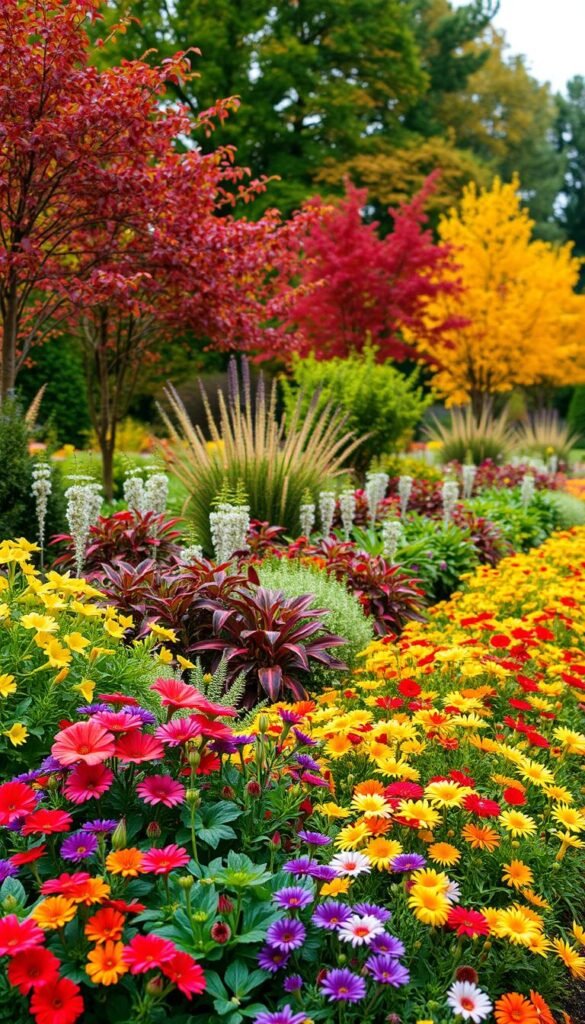
A truly captivating outdoor space evolves like a living painting. Strategic plant choices and thoughtful design work together to deliver visual drama that shifts with nature’s calendar.
Selecting Plants for Each Season
Start with early risers like snowdrops and crocuses that pierce winter’s last frost. These pioneers make way for summer stars like petunias and zinnias, which thrive in heat with minimal fuss. As temperatures cool, maple trees and dogwoods steal the show with fiery red leaves.
Don’t forget winter warriors. Evergreens like blue spruce add cool-toned texture, while holly bushes provide pops of scarlet berries. This layered approach ensures something always catches the eye.
Coordinating Color Palettes and Textures
Transition smoothly from spring’s lavender irises to summer’s golden marigolds, then into autumn’s burnt orange chrysanthemums. Pair delicate blooms with bold foliage – try feathery astilbes next to broad hosta leaves.
Texture plays a key role during dormancy. Ornamental grasses sway beside seed heads from coneflowers, creating movement when flowers fade. Pro tip: Use burgundy heuchera leaves to bridge summer blooms and fall’s crimson maples.
Designing with Plant Variety and Structural Elements
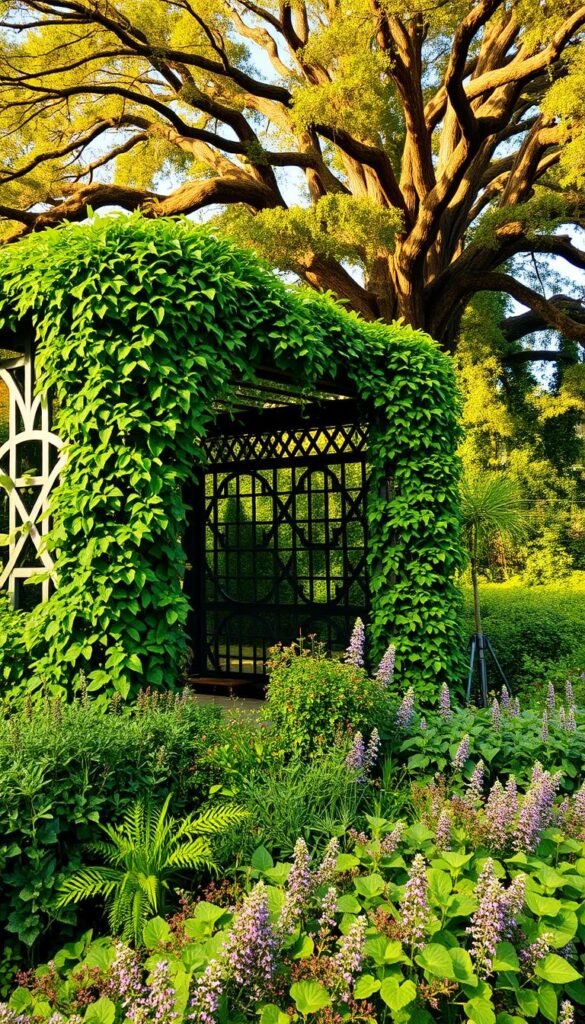
Building a dynamic outdoor space starts with smart layering of plants and permanent features. Explore our guide on year-round garden design to discover how structural evergreens create a living framework for seasonal transformations.
Balancing Evergreens with Deciduous Foliage
Evergreens form your garden’s skeleton. Aim for a 1:2 ratio – one evergreen for every two deciduous plants. This mix keeps your space lively in winter without overwhelming seasonal color changes.
Try vertical accents like ‘Sky Pencil’ holly or soft-textured ‘Hudsonia’ balsam fir. These workhorses maintain shape when other plants go dormant. Pair them with shrubs that offer multi-season appeal, like oakleaf hydrangea’s summer blooms and fall foliage.
Layering Trees, Shrubs, and Perennials
Create depth with three-tier planting:
| Plant Type | Key Features | Seasonal Impact |
|---|---|---|
| Evergreen Trees | Blue spruce, magnolia | Year-round structure |
| Deciduous Shrubs | Red twig dogwood, viburnum | Winter stems, fall color |
| Perennials | Heuchera, sedum | Ground-level texture |
Place taller evergreens at the back of beds. Add mid-height shrubs like golden arborvitae for warmth. Finish with perennials that shift colors – try purple coral bells transitioning to crimson in fall.
Enhancing Visual Interest with Hardscaping and Decor
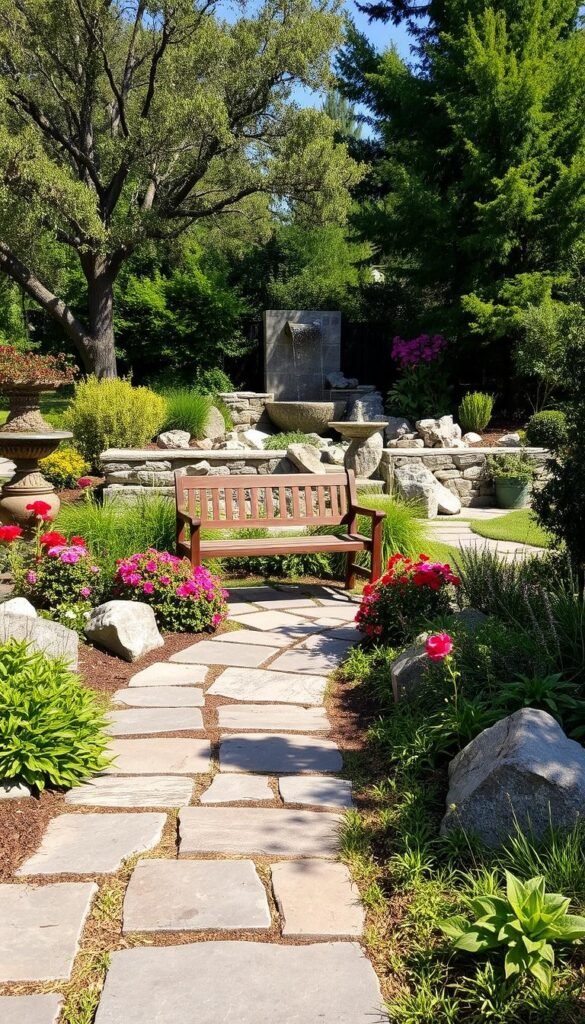
Transform your outdoor areas into four-season destinations using permanent features that shine when plants take a break. Hardscaping forms the backbone of your design, offering structure that keeps your space engaging even in dormancy.
Choosing Paths, Patios, and Focal Points
Start with functional elements that double as art. Flagstone walkways reveal earthy tones when rain-darkened, while brick patios mirror autumn’s crimson leaves. For practical patio solutions, consider materials that shift appearance with weather – slate turns glossy in snow, adding winter texture.
Create visual anchors with:
- Arbors draped in seasonal vines
- Sculptural boulders as natural art
- Retaining walls with built-in seating
Integrating Non-Living Features for Year-Round Appeal
Lighting transforms paths into glowing ribbons after dark. Uplight evergreen shrubs to cast dramatic shadows on snow. Water features serve dual purposes – fountains cool summer air while frozen birdbaths become icy sculptures.
Smart decor placement boosts flexibility:
- Weather-resistant benches near flower beds
- Decorative containers for quick seasonal swaps
- Hanging lanterns that highlight bloom cycles
These elements work together to maintain your landscape’s character through every weather shift. A well-placed stone bench or copper rain chain becomes as essential as your favorite blooming shrub.
Seasonal Planting Guides: Spring, Summer, Fall, and Winter
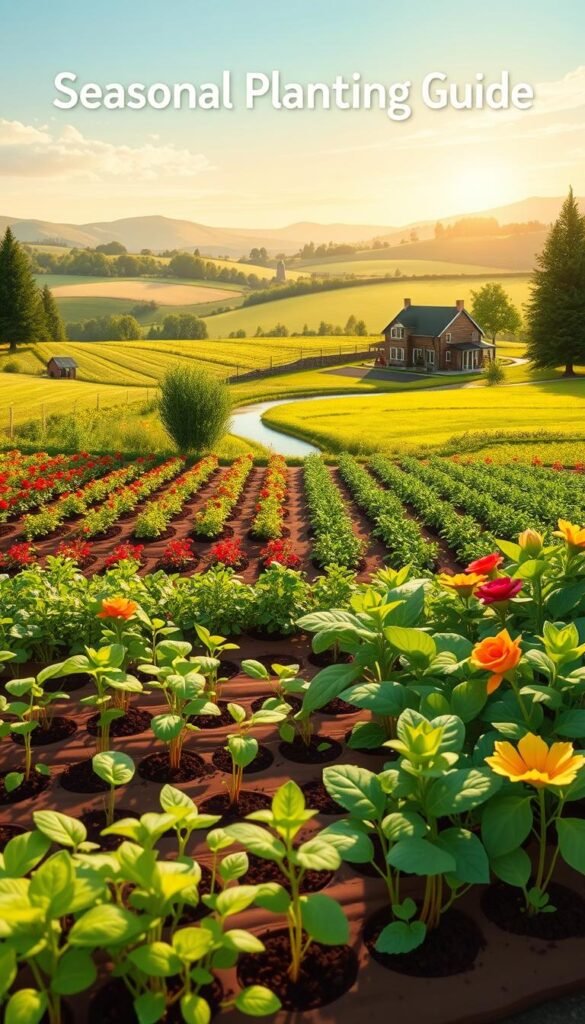
Crafting a year-round display requires knowing nature’s schedule. Let’s explore plants that deliver vibrant blooms and captivating textures through every phase of the calendar.
Spring and Summer Blooms for Vibrant Color
Early risers like snowdrops and crocuses pierce through lingering frost, signaling warmer days. Pair these with pansies and primroses for a cheerful spring palette. As temperatures climb, heat-loving container-friendly annuals like zinnias take center stage.
| Season | Plants | Key Features |
|---|---|---|
| Spring | Bleeding heart, Lenten rose | Cold-tolerant blooms |
| Summer | Coneflower, black-eyed Susan | Drought-resistant flowers |
Fall Foliage and Winter Accents for Texture
Transition smoothly into autumn with asters and goldenrod – butterfly magnets offering rich purple and gold hues. When frost arrives, red-twig dogwood stems and paperbark maple trunks create striking silhouettes against snow.
Winter interest plants excel in subtle beauty:
- Scarlet willow: Ruby-red branches
- Winterberry holly: Fire-engine berries
- River birch: Peeling cinnamon bark
Maximizing Curb Appeal with Seasonal Decor and Personal Style
Your outdoor areas become year-round showstoppers when decor evolves with nature’s rhythm. Thoughtful accents transform functional spaces into extensions of your personality, blending practicality with artistic flair.
Incorporating Outdoor Furniture and Lighting
Refresh seating areas with weather-resistant cushions in autumn’s amber tones or spring’s pastel hues. A bold patterned throw pillow instantly updates a bench, while removable chair covers let you experiment with trends. For whimsical charm, try vintage milk cans as side tables or hang repurposed lanterns from tree branches.
Strategic lighting elevates your garden design after sunset. Solar-powered path markers guide visitors while highlighting flower beds. Drape string lights over pergolas to create cozy winter nooks – their warm glow makes bare branches sparkle like constellations.
Moveable planters offer quick transformations. Fill concrete urns with ornamental kale for frosty mornings, then swap to geraniums when temperatures rise. This flexible approach keeps your space visually appealing without permanent changes.