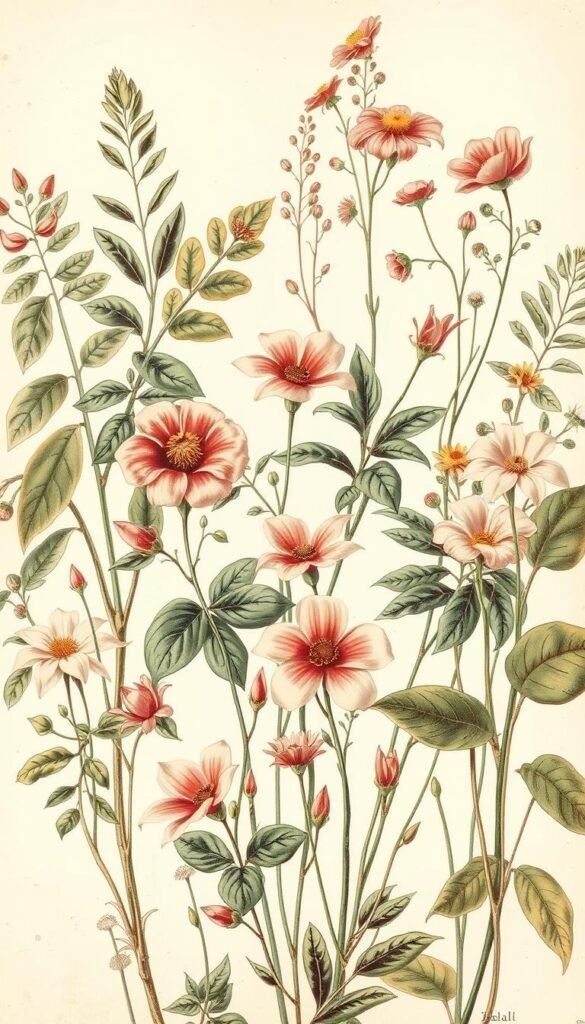
For centuries, detailed plant studies have shaped how we understand and arrange living spaces. These meticulous works blend scientific accuracy with creative expression, offering practical insights for modern landscape planning. At the Helen Crocker Russell Library of Horticulture, Kristin Jakob’s 2025 exhibition demonstrates this enduring connection, featuring watercolor masterpieces of California natives created using traditional methods.
You’ll find these vintage artworks aren’t just relics. They reveal growth patterns and seasonal shifts that inform smart garden choices. Contemporary creators like Jakob prove observation remains key—sketching live specimens ensures every leaf vein and petal curve feels authentic.
What makes these pieces so valuable for your projects? They teach balance between wild beauty and intentional designs. By studying how illustrators layer colors or frame compositions, you gain fresh perspectives for visualizing outdoor spaces. Even lichens and mushrooms get starring roles, reminding us that every plant has design potential.
Jakob’s approach—starting with pencil on acid-free paper before delicate watercolor washes—mirrors the patience needed in garden creation. Her upcoming showcase highlights how historical techniques remain relevant, blending art with horticultural wisdom you can apply today.
Exploring the Rich History of Botanical Illustration
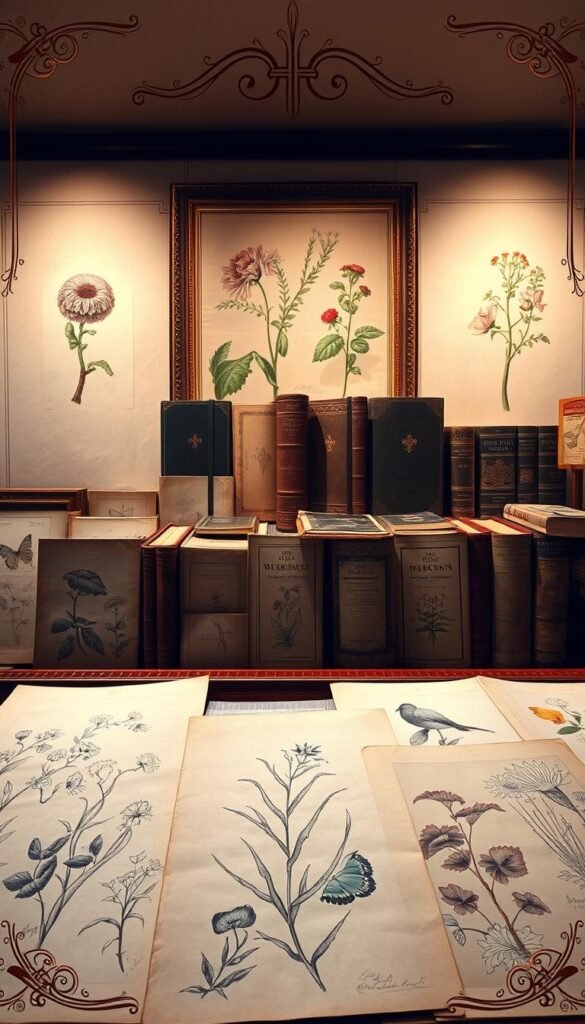
Botanical art began as a marriage of science and storytelling. Early creators documented plants for medical guides and explorers’ journals, blending precise observation with delicate craftsmanship. Their work laid the foundation for today’s nature-inspired designs.
The Evolution from Antique Books to Modern Exhibits
Medieval herbals first showcased plants as both remedies and marvels. By the 1800s, Victorian artists perfected techniques like stippling—using tiny dots to create texture. These vintage prints filled textbooks with lifelike details, teaching botany through beauty.
Kristin Jakob’s journey mirrors this shift. Starting as a self-taught enthusiast, she refined her skills at London’s Royal College of Art. Her modern exhibits honor tradition while spotlighting California’s native species.
Influential Artists and Timeless Techniques
Master illustrators teach us patience. Jakob begins with pencil sketches on archival paper, later tracing them with ultra-fine Rapidograph pens. After erasing guidelines, she builds depth through meticulous stippling—a method unchanged for centuries.
Watercolor washes add vibrancy to these studies. Unlike digital tools, this vintage approach demands working quickly before pigments dry. The result? Art that feels alive, just like the gardens it inspires.
Drawing Inspiration from Historic Botanical Illustrations for Garden Design
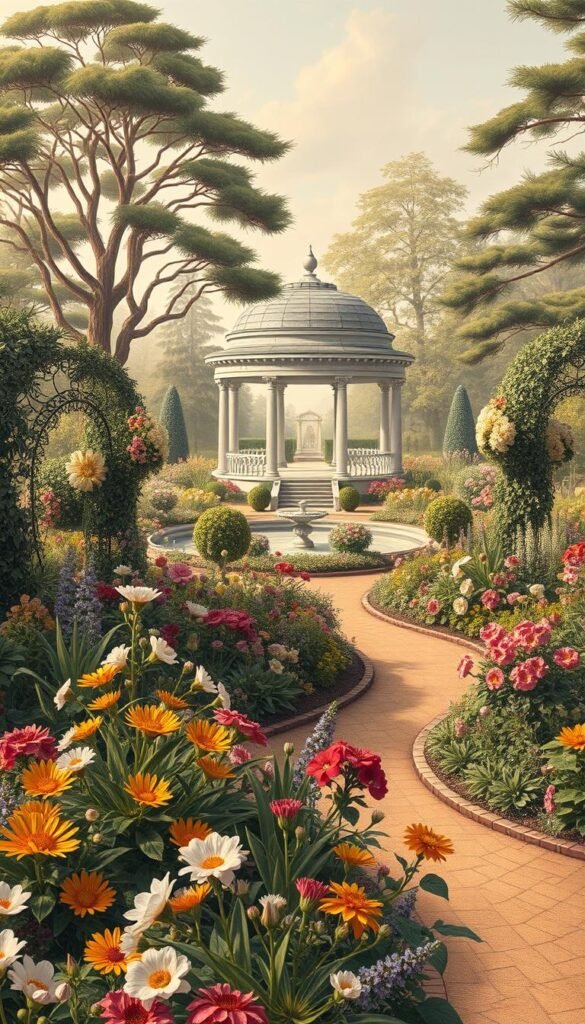
The intricate details in vintage plant studies offer more than aesthetic pleasure—they serve as blueprints for modern landscapes. By analyzing how artists capture natural relationships between species, you gain actionable strategies for arranging your outdoor space. This approach bridges art and science, transforming static images into living, breathing designs.
How Botanical Art Shapes Today’s Green Spaces
Observe any detailed botanical painting, and you’ll notice deliberate choices. Artists balance bold flower shapes with delicate foliage, teaching you to mix textures in your beds. Their use of negative space mirrors how pathways guide movement through gardens. As one landscape architect notes:
“Every brushstroke in these works reflects nature’s rhythm—a lesson in creating harmony between cultivated and wild elements.”
Translating Art Methods into Garden Magic
Watercolor techniques directly inform plant selection. The transparency of washes teaches you to layer perennials like lupines (foreground) behind oaks (background), creating depth. Ink’s precision helps map microclimates—place sun-loving plants where illustrations show sharp shadows.
| Art Technique | Garden Application | Benefit |
|---|---|---|
| Stippling | Groundcover patterns | Adds texture |
| Color gradients | Seasonal bloom transitions | Creates flow |
| Line weight variation | Pathway design | Guides exploration |
Want more ideas? Explore how botanical art continues shaping innovative landscapes. Start sketching your beds like an illustrator—notice how spacing echoes petal arrangements, and color pairings mimic pigment blends. Your garden will tell its own story, one rooted in centuries of creative observation.
Innovative Tips for Integrating Botanical Art into Your Garden
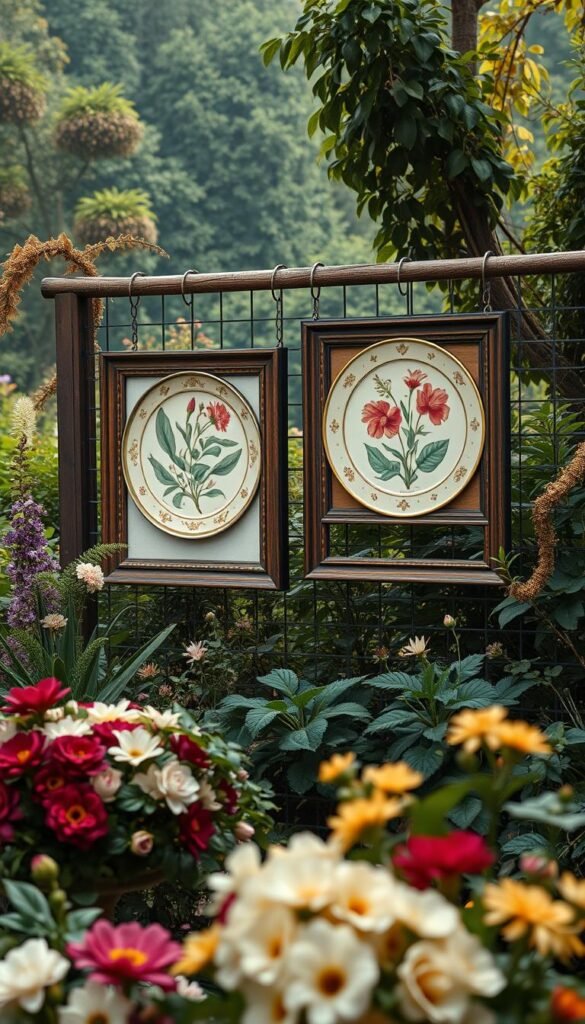
Transform your garden into a living gallery with these clever applications of classic plant designs. Whether you’re crafting decor or documenting growth, vintage prints offer endless possibilities to blend history with horticulture.
DIY Projects and Creative Garden Decor Ideas
Weatherproof prints make stunning outdoor installations. Laminate favorite images to create durable plant markers or educational signs that tell your garden’s story. Turn an old shutter into a rotating art display using clothespins and seasonal illustrations.
Your potting bench becomes a creative hub with framed vintage artworks. Use reclaimed barn wood frames for rustic charm. These designs pair perfectly with terracotta pots and trailing ivy.
Utilizing Vintage Prints for a Personal Touch
Track your green thumb adventures in style. Bind printable journals with botanical covers featuring your favorite species. Use divider paper with seed packet illustrations to organize planting dates and harvest notes.
Host garden parties with themed place settings. Scan antique prints to make menu cards or napkin rings. For lasting impact, mod podge floral images onto stone pavers along pathways.
Rotate framed vintage artworks with the seasons—spring blossoms in April, autumn foliage by October. This keeps your project fresh while honoring nature’s ever-changing journals of growth.
Final Reflections on Transforming Your Outdoor Space
Your garden becomes a canvas where art meets earth. By applying principles from vintage botanical studies, you craft spaces that honor nature’s patterns while expressing personal style. Kristin Jakob’s career—showcased from London to California—proves this fusion thrives today. Her award-winning designs grace books, posters, and even product packaging, merging science with visual storytelling.
Think of your plants as collaborators. Observing leaf textures or bloom cycles like an artist deepens your connection to the land. Jakob’s method—documenting species through detailed watercolor works—mirrors how gardens evolve through seasons. Her 2018 Mill Valley Festival showcase demonstrated this living artistry.
Your outdoor area can educate and inspire. Frame vintage prints among flower beds, or map beds using color gradients from old botanical illustrations. These touches create dialogue between past and present, much like Jakob’s exhibitions support horticultural libraries.
Ready to start? Jakob’s collection remains available, with sales benefiting plant education. Whether arranging herbs or planning pathways, let centuries of artistic wisdom guide your hands. Your soil holds stories waiting to bloom.