What if your yard could feel both free-spirited and thoughtfully arranged? For over 150 years, designers have explored this balance – starting with William Robinson’s revolutionary 1870 book that challenged rigid Victorian gardens. Today, places like New York’s High Line prove you can have meadows swaying between railroad tracks while maintaining clean sightlines.
This approach isn’t just pretty – it’s practical. By working with nature’s rhythms instead of fighting them, you’ll spend less time battling weeds and more enjoying butterflies. Modern projects like Chicago’s Lurie Garden show how native plants thrive when given intentional frameworks, creating habitats while slashing water and chemical needs.
Dutch designer Mien Ruys called it “wild planting in strong designs” – a philosophy that reshapes spaces from cottage gardens to sleek patios. Whether you’re finding your personal style or refreshing an existing layout, these principles help create spaces that nourish both people and pollinators.
You’ll discover how to blend spontaneous beauty with smart structure. We’ll break down the key techniques professionals use, from strategic plant grouping to subtle hardscaping. Ready to transform your space into something that feels effortlessly alive – yet completely yours?
Exploring the Naturalistic Ethos in Garden Design
Imagine your outdoor space evolving like a living tapestry, where every season tells a new story. This philosophy took root in 1870 when William Robinson published The Wild Garden, challenging clipped hedges and formal beds. His ideas sparked a revolution, proving gardens could thrive with minimal interference.
Historical Perspectives on Wild Gardens
Robinson’s vision laid groundwork for today’s ecological designs. Four decades ago, Dutch designer Piet Oudolf expanded this concept through the New Perennial movement. “Plants should be valued for their entire lifecycle,” he noted,
“from first shoots to winter skeletons.”
Modern Urban Inspirations and Iconic Projects
New York’s High Line transformed abandoned rails into a floating meadow. This urban oasis demonstrates how naturalistic design supports biodiversity while captivating city dwellers. It uses native species that require 30% less water than traditional landscapes.
| Era | Approach | Impact |
|---|---|---|
| Victorian | Structured symmetry | High maintenance |
| Robinson (1870) | Natural plantings | Reduced labor |
| Oudolf (1980s) | Seasonal cycles | Ecological art |
| High Line (2009) | Urban rewilding | Community engagement |
Want to elevate your space? Start by observing how light moves across your yard. Group plants with complementary textures, and let seed heads stand through winter. You’ll create habitats while saving time on upkeep.
Balancing Wild Growth with Structured Layouts in Garden Design

Have you ever noticed how some spaces feel effortlessly harmonious? Great landscape design achieves this through careful distribution of visual weight. Think of your outdoor area as a scale – tall grasses might counterbalance a stone bench, while bold-leaved hostas could offset airy ferns.
Defining the Key Elements of Contrast
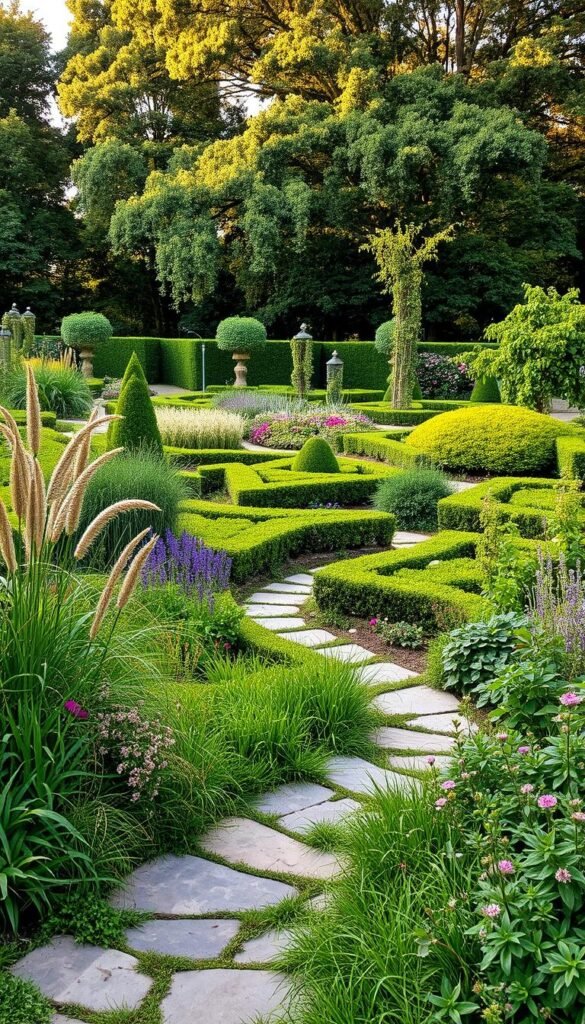
Balance comes in two flavors. Symmetrical layouts mirror elements on either side, like classic parterres. Asymmetrical arrangements use different features with equal impact – maybe a sprawling hydrangea balancing a cluster of slender birch trees. Both approaches guide the eye naturally through space.
| Type | Features | Best Use | Visual Effect |
|---|---|---|---|
| Symmetrical | Matching elements | Entryways | Formal elegance |
| Asymmetrical | Varied components | Natural areas | Relaxed energy |
Visual Impact and the Role of Structure
Hardscapes act as anchors. A curved path through meadow-like plantings keeps the design grounded. Try pairing wildflower drifts with clean-edged raised beds. Landscape architect Thomas Rainer suggests:
“Frame spontaneity with intentional structure to heighten both elements.”
Test your balance by squinting at your garden. If one area feels heavy, add airy plants or open space. Remember – successful landscape design feels both exciting and restful, like nature itself.
Harnessing Plant Diversity for a Lively Landscape

Great gardens aren’t built on flowers alone. The New Perennial movement teaches us to value skeletal outlines as much as fleeting blooms. By focusing on lasting structure over temporary color, you’ll create spaces that captivate in every season.
Selecting Varied Species for Year-Round Interest
Piet Oudolf reshaped how we think about plants by grouping them as architectural elements. Try this approach:
- Spires: Verbena bonariensis (air traffic control for pollinators)
- Globes: Allium ‘Purple Sensation’ (winter seed heads sparkle in frost)
- Screens: Panicum grasses (sway like nature’s privacy curtains)
Choose perennials closer to their wild ancestors. These plants balance leaf-to-flower ratios better than overbred hybrids, staying upright without stakes.
Color, Texture, and Form for Dynamic Appeal
Build your palette like an artist mixing mediums. Combine feathery Calamagrostis grass with rubbery Bergenia leaves. As Oudolf advises:
“Let winter reveal a plant’s true character through its skeleton.”
Create rhythm using repeating textures rather than matching colors. Try this progression:
| Season | Texture Focus | Example Plants |
|---|---|---|
| Spring | Emerging spikes | Eryngium, Digitalis |
| Summer | Billowing masses | Nepeta, Gaura |
| Fall | Seed explosions | Echinacea, Sedum |
This approach builds interest that evolves daily. You’ll discover new favorites when selecting plants for their form first – color becomes the delightful bonus.
Layering Techniques to Create Depth and Movement
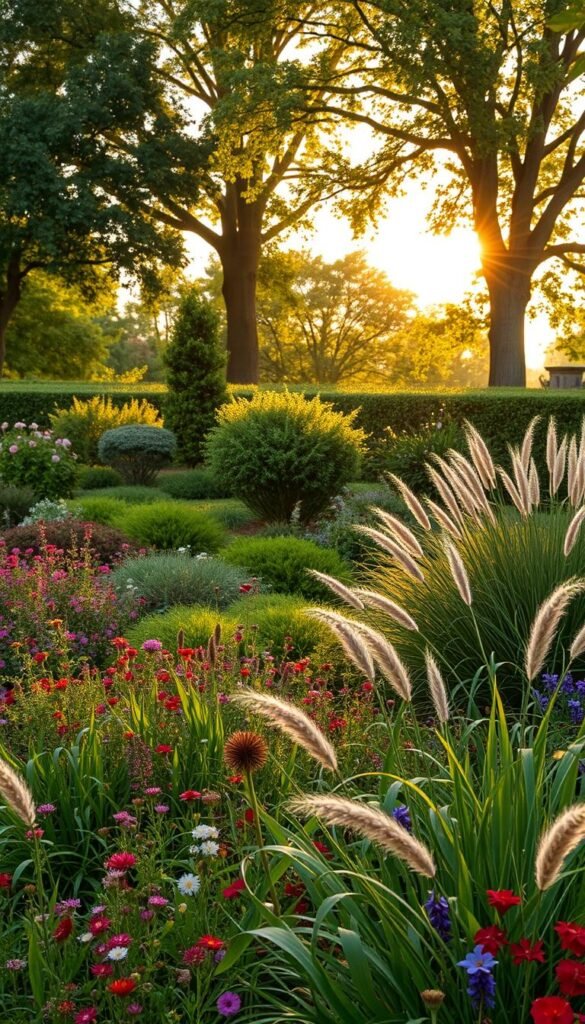
Ever wonder how forests stay lush without human interference? Nature’s secret lies in vertical layers that work together. Your garden can mimic this system to create mesmerizing movement while supporting local ecosystems.
Ecological Benefits of Multi-Layer Planting
Stacked plants form mini-habitats. Tall shrubs shelter birds, while ground covers hide beetles. This setup traps moisture 40% longer than single-layer beds. Less watering, more life.
| Natural Layer | Garden Equivalent | Key Benefit |
|---|---|---|
| Tree Canopy | Structural Plants | Shade & Framework |
| Shrub Layer | Companion Plants | Visual Flow |
| Ground Cover | Living Mulch | Weed Control |
Practical Layering Strategies in Your Garden
Start with “anchor” plants like dwarf fruit trees. Add mid-height grasses for swaying movement. Finish with creeping thyme between stepping stones. Landscape designer Claudia West notes:
“Layers should touch but never crowd – like friendly neighbors sharing a fence.”
Space plants to fill gaps as they mature. This living carpet eliminates weeding while creating design depth. Your garden becomes a self-sustaining show that changes with every breeze.
Incorporating Hardscapes, Water Features, and Outdoor Lighting
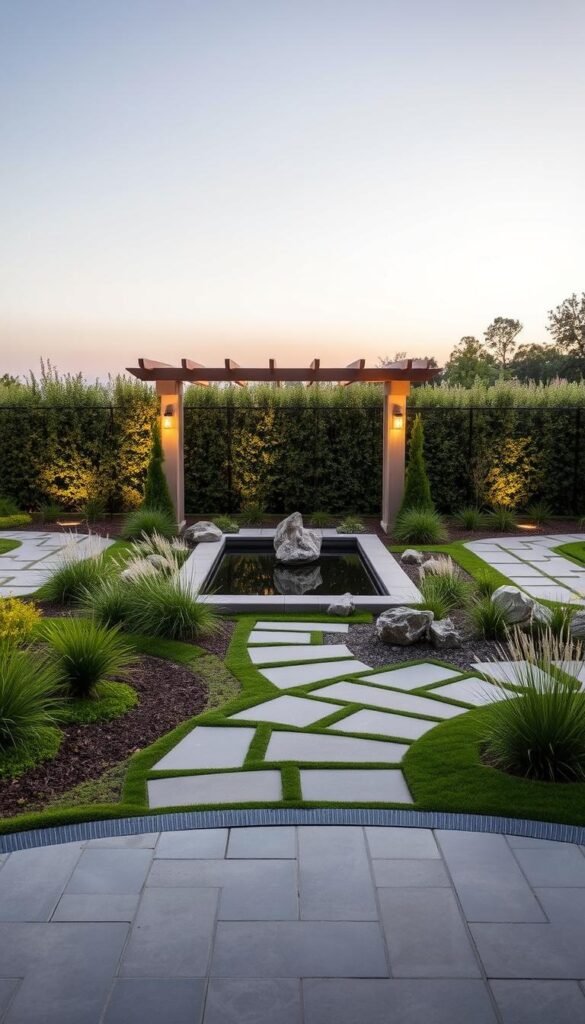
What transforms a collection of plants into a living sanctuary? The answer lies in three powerful elements that shape both space and experience. Strategic hardscaping forms your garden’s skeleton, water brings rhythm, and lighting paints with shadows after sunset.
Architectural Elements Meet Natural Flow
Paths do more than connect points A to B – they choreograph discovery. Curved gravel walkways slow the eye, inviting closer inspection of bordering blooms. Rectangular stone patios create stable platforms for seating areas, contrasting with billowing ornamental grasses.
Water features elevate your landscape from pretty to profound. A bubbling rock fountain adds soothing white noise, while a reflecting pool doubles visual interest with sky mirrors. These elements support local ecosystems, offering drinking spots for birds and habitats for aquatic insects.
Twilight reveals lighting’s magic. Uplight a specimen tree to cast dramatic shadows. Path lights should glow, not glare – think firefly brightness. Designer Janice Parker advises:
“Light what you want to touch, not just see.”
Balance is key. Let hardscapes occupy 30-40% of your garden area maximum. Choose materials echoing local geology – fieldstone in New England, terracotta in the Southwest. This approach grounds your design in its environment while framing nature’s artistry.
Designing with Structure: Creating Focal Points and Form
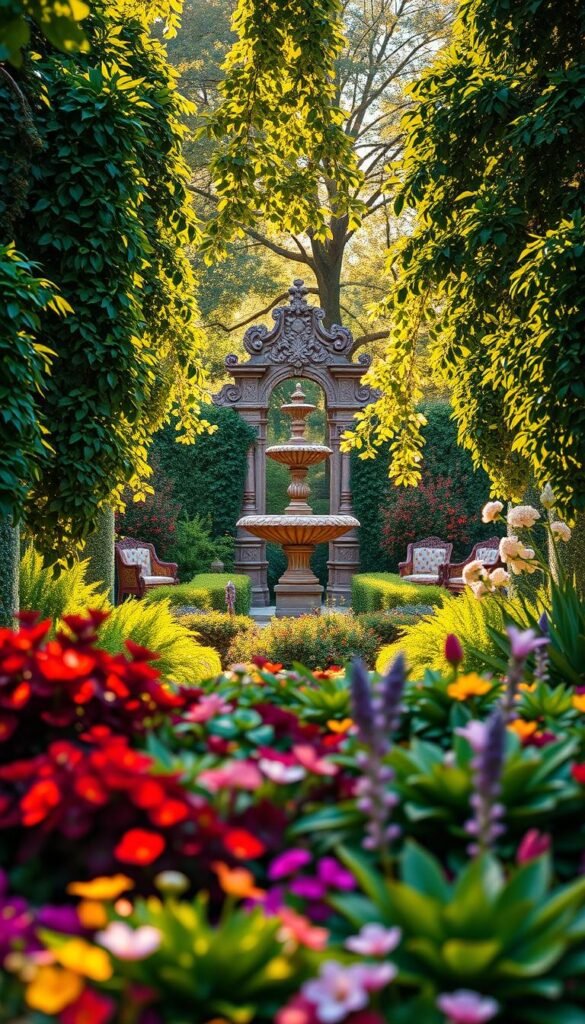
Your garden’s magic lies in its ability to command attention where it matters most. Like a skilled painter directing your gaze, strategic focal points give purpose to every glance. A single Japanese maple or rusted steel sculpture can organize entire areas, while repeated shapes create rhythm across seasons.
Using Architectural Elements to Define Space
Vertical structures do double duty. A DIY trellis draped with clematis becomes both art piece and habitat. Landscape architect Claudia West suggests:
“Let hardscapes whisper rather than shout – their job is to frame the plants’ performance.”
See how different elements carry visual weight:
| High Impact | Medium Impact | Light Touch |
|---|---|---|
| Stone bench | Ornamental grass | Airy verbena |
| Water feature | Rounded shrubs | Ground cover |
Balance bold forms like square planters with billowing perennials. Repeat triangular shapes through evergreen trees and pathway patterns. This creates cohesion without monotony – your eye dances between familiar angles and wild textures.
Test your layout by photographing the space. If one area feels empty, add a cluster of vertical alliums. Too heavy? Soften with frothy gaura. Your garden becomes a conversation between intention and spontaneity.
Sustainable Practices and Maintenance for Naturalistic Gardens
Creating an eco-conscious space means working smarter, not harder. By embracing nature’s rhythms, you’ll spend less time on upkeep while boosting your garden’s health. Start small – that empty corner could become a compost station or rain collection point.
Eco-Friendly Gardening Techniques
Swap chemicals for natural solutions. A native plant bed needs 60% less water than traditional lawns. Layer fallen leaves as free mulch – it suppresses weeds and shelters butterflies. Did you know composted kitchen scraps can improve soil moisture by 20%?
Seasonal Adjustments for Sustained Growth
Winter isn’t downtime – it’s habitat-building season. Leave dried flower stalks standing; their seeds feed birds while adding texture to frosty mornings. Come spring, divide overgrown perennials to control size naturally. This process revitalizes plants without store-bought fertilizers.
Adopting permaculture principles turns waste into resources. Redirect roof runoff to thirsty flower beds using simple rain chains. You’ll create a self-sustaining system where every element supports another – just like in wild ecosystems.