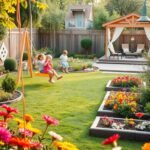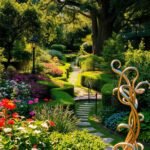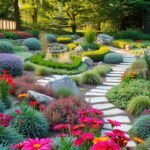
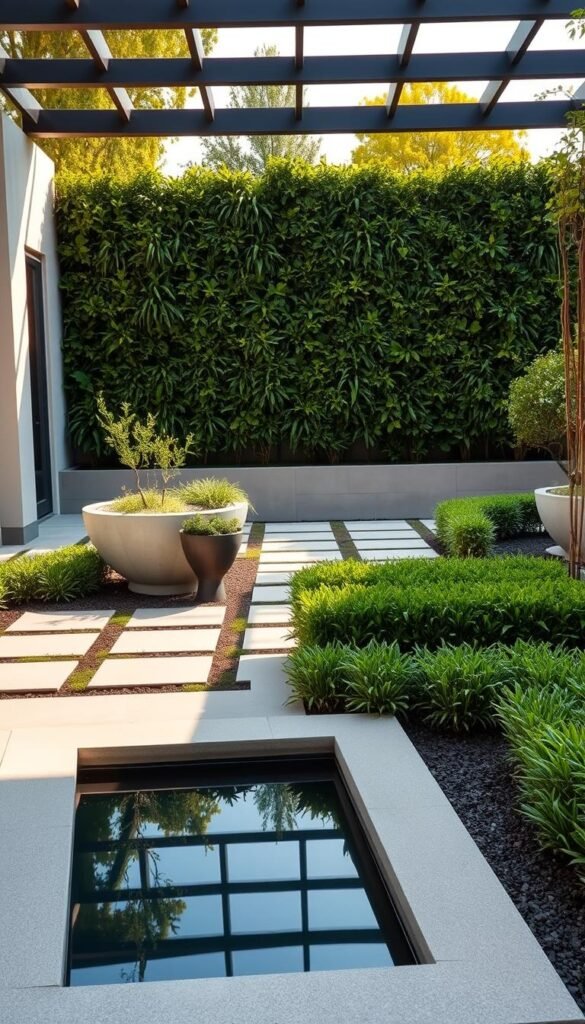
Today’s outdoor areas are more than just pretty flower beds. They reflect smart planning and fresh ideas that balance beauty with purpose. Think clean shapes, eco-friendly materials, and spaces built for relaxation and entertainment.
What changed? People now want yards that match fast-paced lifestyles while respecting nature. Research shows well-planned green areas can boost property value by 5-15% and even reduce stress. This shift means swapping rigid hedges for flexible layouts that grow with your needs.
New trends focus on simplicity. Instead of crowded flower arrangements, many choose bold architectural plants or sleek water features. Vertical gardens save space while improving airflow—a win for plant health and pest control.
Ready to reimagine your yard? Start by looking at how you use your space. Do you host summer BBQs or crave a quiet reading nook? Modern design principles let you create zones for every activity without sacrificing style.
Embracing the Evolution of Garden Design
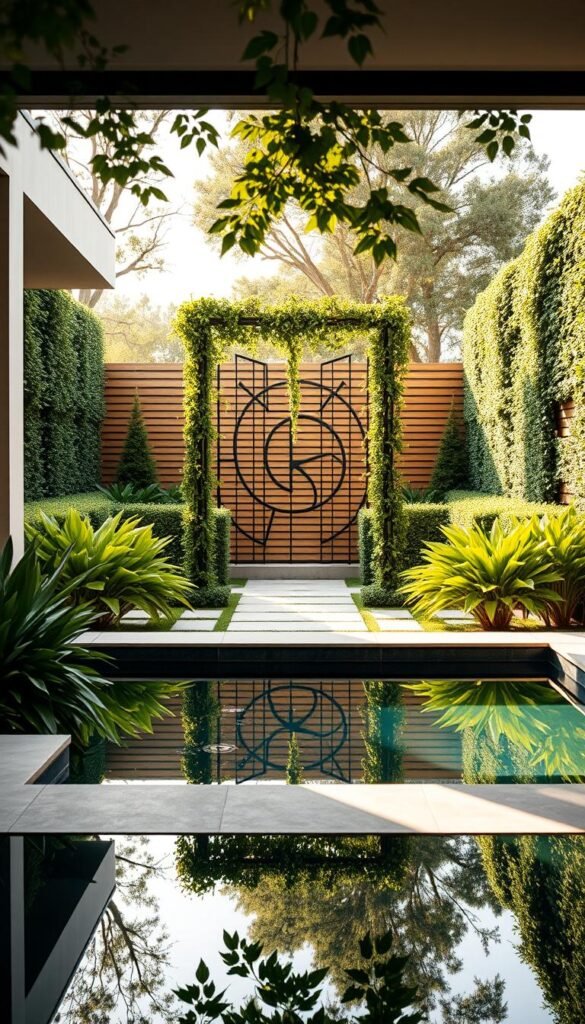
The way we shape our outdoor spaces tells a story of innovation and environmental care. Gone are the days when rigid symmetry ruled every yard. Now, you’ll find dynamic layouts that adapt to your lifestyle while supporting local ecosystems.
Understanding the Shift in Aesthetics
Ornate patterns and fussy flower beds once defined beauty. Today, clean lines and open spaces take center stage. Think sculptural succulents instead of roses needing weekly pruning. This change mirrors how modern homes blend indoor comfort with outdoor flow.
Landscape design now prioritizes low-maintenance plants that thrive naturally. You’ll see fewer manicured hedges and more native grasses swaying in the breeze. It’s about creating visual interest without endless upkeep.
The Role of Innovation and Sustainability
Smart tech now keeps gardens lush with minimal effort. Soil sensors alert you when plants need water, and rain barrels cut utility bills. Materials matter too—composite decking lasts decades, while permeable paving reduces runoff.
Designers focus on eco-friendly elements like drought-tolerant species and pollinator-friendly blooms. These choices protect local wildlife while saving time and resources. Your yard becomes a living system, not just a pretty backdrop.
Understanding Traditional vs. Contemporary Garden Designs
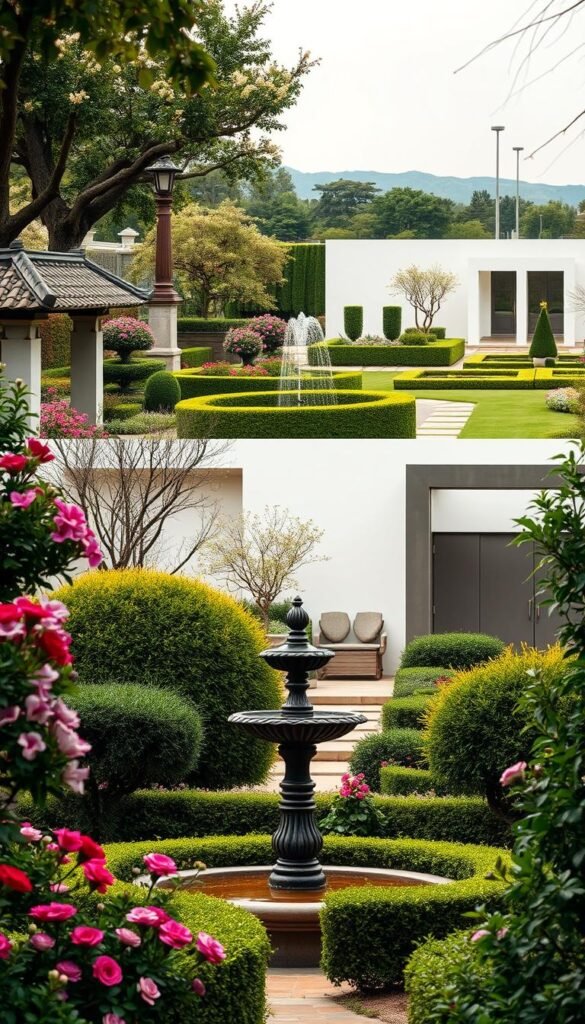
Your outdoor space reveals more than just personal taste—it shows how living trends shape nature’s canvas. Older approaches favored predictable beauty, while newer methods celebrate bold experimentation. Let’s explore what sets these two philosophies apart.
Defining Traditional Garden Elements
Classic layouts often mirror historical European influences. Symmetry rules here—think matching rose bushes flanking a stone fountain or boxwood hedges trimmed into perfect spheres. These spaces feel timeless, with curved gravel paths winding past climbing ivy and wooden arbors.
You’ll notice recurring plants like peonies, hydrangeas, and lavender. Color schemes follow seasonal cycles, with spring tulips making way for summer dahlias. Ornamental structures—think wrought-iron benches or Victorian-style gazebos—add romantic charm.
Characteristics of Contemporary Landscapes
Modern design breaks free from rigid patterns. Geometric concrete planters might hold sculptural succulents, while sleek water walls replace old-fashioned birdbaths. The focus shifts to creating visual flow between your home’s architecture and the yard.
Negative space plays a starring role. Gravel beds or polished decking areas frame bold features like abstract metal art or specimen trees. Materials mix industrial (steel, glass) with natural (weathered stone, reclaimed wood) for textural contrast.
Instead of crowded flower beds, you might see staggered ornamental grasses or a single striking Japanese maple. These choices reduce upkeep while maximizing year-round interest—a smart balance for today’s busy lifestyles.
Transitioning from Traditional to Contemporary Garden Design Styles
Revamping your yard isn’t just about swapping plants—it’s about reshaping how you live outdoors. Start by asking: Does your current layout match how you actually use the space? A successful makeover balances eye-catching elements with practical zones for dining, play, or quiet reflection.
Key Considerations in the Transition Process
Map your yard’s sunlight patterns and soil quality first. Mature trees or shrubs might stay if they enhance your new vision. “Preserving established greenery saves money and maintains shade structures,” notes a landscape architect from Colorado.
Next, define activity zones. A fire pit area needs different materials than a veggie plot. Use low walls or decorative gravel to separate spaces without blocking sightlines. This approach keeps your design cohesive while serving multiple purposes.
Steps to Modernize Your Outdoor Space
Phase changes over seasons. Begin by removing overgrown hedges or cracked walkways. Replace them with geometric pavers or permeable gravel that complements your home’s exterior.
Introduce layered lighting early—solar path markers create ambiance instantly. Save plant upgrades for spring or fall planting windows. Mix ornamental grasses with evergreen shrubs for year-round texture with minimal upkeep.
Finally, sync your landscape design with architectural features. A mid-century modern house pairs well with angular water features, while farmhouse styles might blend reclaimed wood benches with crisp concrete planters.
Drawing Inspiration from Modern Garden Trends
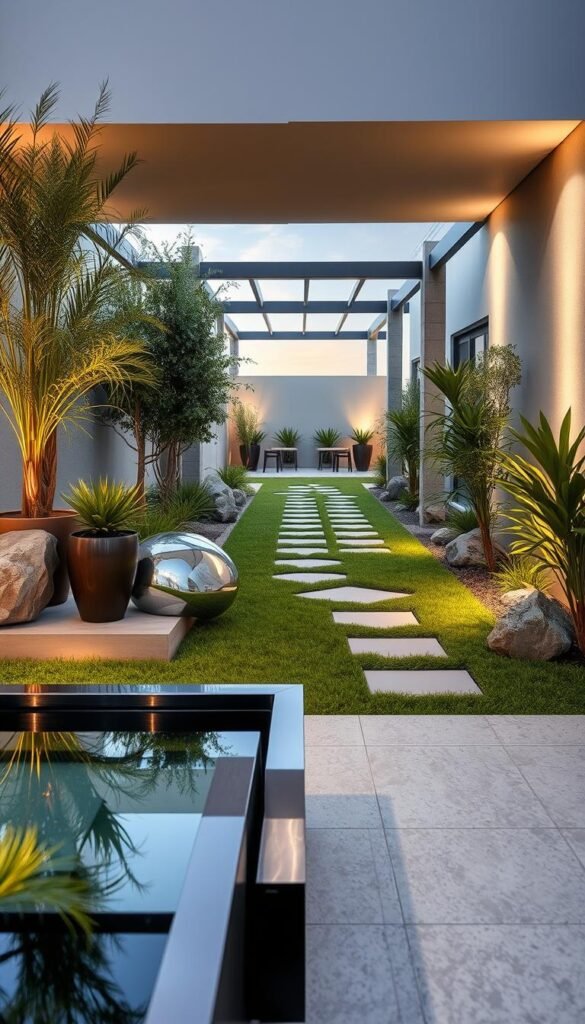
Your outdoor space can become a canvas for creative expression through current trends that blend artistry with practicality. Let’s explore ideas that turn ordinary yards into curated environments where every element serves a purpose.
Modern Minimal and Fusion Concepts
Minimalist styles thrive on restraint. Imagine three plant varieties repeating in geometric patterns—a spiky yucca flanked by silvery lamb’s ear, all framed by smooth river rocks. This approach uses contrast in textures rather than colors to captivate the eye.
Fusion gardens mix old and new. Try pairing vintage rose bushes with angular concrete planters or adding a stainless steel water feature beside your patio container garden. The key? Let one bold element anchor the space while others support it quietly.
Layered and Sculptural Planting Ideas
Create depth with tiered planting arrangements. Low-growing sedums flow into mid-height lavender, topped by feathery miscanthus grass. This layering technique guides the gaze upward while maximizing greenery in compact areas.
Sculptural plants act as living art. Consider these showstoppers:
| Plant Type | Visual Impact | Maintenance Level |
|---|---|---|
| Cloud-pruned olive trees | Architectural silhouette | Low |
| American Aloe | Dramatic rosette shape | Moderate |
| Ornamental grasses | Movement in breeze | Minimal |
Stick to a cohesive palette—charcoal planters with burgundy heuchera leaves, or white gravel paths contrasting against blue fescue grass. These choices create harmony even in experimental layouts.
Incorporating Innovative Materials and Hardscape Elements
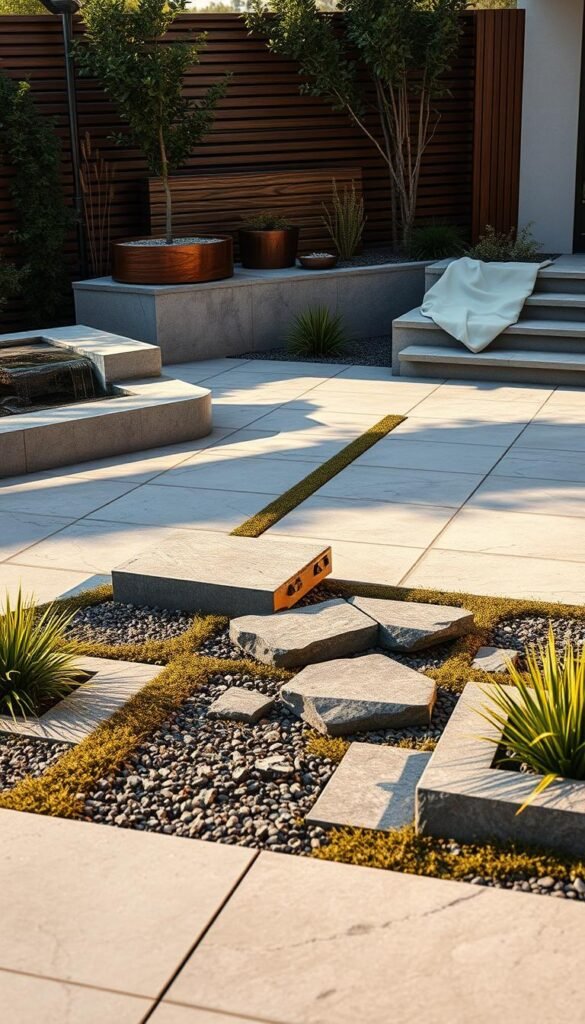
The foundation of a standout outdoor space lies in the materials underfoot and around you. Modern landscapes blend rugged durability with sleek aesthetics, using elements like textured concrete and geometric stone to frame living areas. These choices aren’t just about looks—they create functional zones that weather seasons and foot traffic gracefully.
Exploring Concrete, Stone, and Sustainable Options
Concrete sheds its industrial reputation in contemporary hardscape designs. Stamped or polished versions mimic natural stone while offering budget-friendly flexibility. Use it for curved seating walls that double as planters, or pour it into angular patios that mirror your home’s lines.
Natural stone gets a modern twist with oversized slabs. Bluestone pavers laid in staggered patterns guide movement, while stacked limestone becomes minimalist retaining structures. Pair these with elevating your space through contrasting textures—smooth pebble borders beside rough-cut boulders.
Eco-conscious options now dominate material selections:
- Permeable pavers reduce runoff
- Recycled composite decking resists rot
- Locally quarried stone cuts transport emissions
Integrate water features using corten steel troughs or concrete basins. These elements add motion and sound without the upkeep of traditional ponds. Every choice balances visual impact with environmental responsibility, proving style and sustainability grow well together.
Designing with Plants: From Ornamentals to Sculptural Features
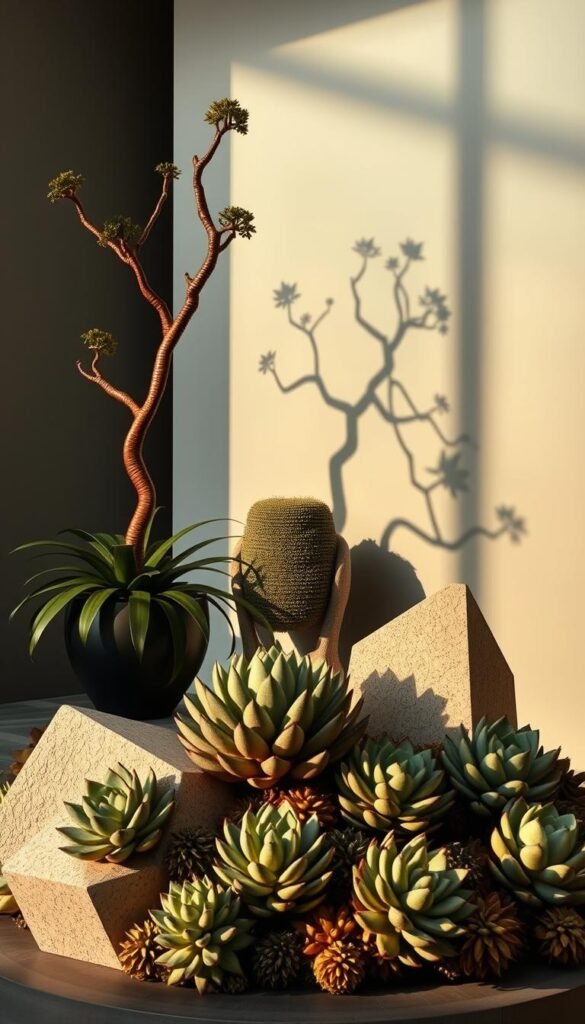
Your plant choices define the character of your outdoor space, transforming greenery into living architecture. Modern approaches treat foliage as three-dimensional art, prioritizing form and texture over fleeting blooms. Let’s explore how to curate a dynamic landscape that thrives in all seasons.
Selecting a Contemporary Plant Palette
Think beyond petals. Choose specimens with strong shapes—yucca’s sword-like leaves or Japanese maple’s twisting branches. These plants become permanent fixtures, unlike flowers that vanish by summer’s end. Foliage colors matter: pair burgundy heuchera with silver lamb’s ear for subtle drama.
Designers often recommend the “rule of three”: repeat key shrubs or trees to create rhythm. For example, cluster three cloud-pruned boxwoods near your patio, then echo their rounded forms with spherical alliums. This technique builds cohesion without monotony.
Utilizing Ornamental Grasses and Focal Points
Ornamental grasses are multitaskers. Feather reed grass sways like nature’s metronome, while blue fescue adds icy texture. Plant them where breezes dance through—near seating areas or along walkways. Their rustling sound masks street noise naturally.
Anchor your layout with one showstopper. A twisted corkscrew willow makes an unforgettable focal point when framed by gravel or minimalist paving. Position it where sightlines converge—visible from your kitchen window and fire pit area. Surround it with low-growing sedum to amplify its stature.
Combine textures boldly:
- Spiky agave beside soft muhly grass
- Glossy holly contrasting with fuzzy sage
- Vertical bamboo screens behind mounding spirea
These pairings create visual tension that keeps eyes moving, proving that plants can be both functional and sculptural.
Blending Indoor-Outdoor Spaces for Seamless Flow
Your home’s exterior should feel like a natural extension of your living room. Modern landscape design erases boundaries using matching textures and color schemes. Imagine stepping from a slate-tiled kitchen onto a patio with identical stonework—your eye glides effortlessly between spaces.
Creating Outdoor Rooms and Living Areas
Define zones just like you would indoors. A weatherproof sectional near pool areas becomes a lounge, while a pergola-covered dining set mimics your eat-in kitchen. Position these areas where sightlines connect to your home’s main rooms for visual harmony.
Flooring choices bridge gaps between spaces. Consider these options:
| Material | Indoor Match | Weather Resistance |
|---|---|---|
| Natural Stone | Tile Floors | High |
| Composite Decking | Hardwood | Extreme |
| Porcelain Tiles | Polished Concrete | Moderate |
Climate control makes spaces usable year-round. Built-in heaters warm winter evenings, while retractable awnings block summer glare. Strategic plantings like tall grasses act as windbreaks without blocking views.
Lighting ties everything together. Low-voltage path lights guide feet, while pendant fixtures over dining areas echo your kitchen’s style. “Layer illumination at three heights—ground, eye level, and overhead,” suggests a California designer.
Your landscape becomes part of your daily life when indoor comforts meet outdoor freedom. Every choice should whisper: Come outside—you’re still home.
Personalizing Your Contemporary Garden: Style and Practical Tips
Your outdoor space should feel like your sanctuary—a place where modern aesthetics meet personal expression. Balancing bold choices with smart functionality creates a yard that’s both stylish and uniquely yours. Let’s explore how to infuse character while keeping that sleek, intentional look.
Customizing Layouts, Lines, and Color Palettes
Start by sketching your property’s natural features. Do slopes create visual drama? Does that old oak tree cast perfect afternoon shade? Work with these elements rather than against them. For example, tiered planting beds can turn a steep hill into a cascading focal point.
Clean lines anchor modern landscape design. Try straight-edged gravel paths or rectangular concrete planters filled with spiky succulents. Even curved elements—like a circular fire pit—gain structure when framed by geometric pavers.
Your color palette sets the mood. Cool grays and greens create calm, while burnt orange accents add warmth. Test samples at different times of day—morning light softens hues, while noon sun intensifies them. Match tones to your home’s exterior for seamless flow.
Keep scale in mind. A tiny courtyard shines with one oversized sculpture, while large yards need repeating patterns. Remember: simplicity doesn’t mean boring. A single red Japanese maple against white gravel makes a bolder statement than a crowded flower bed ever could.