
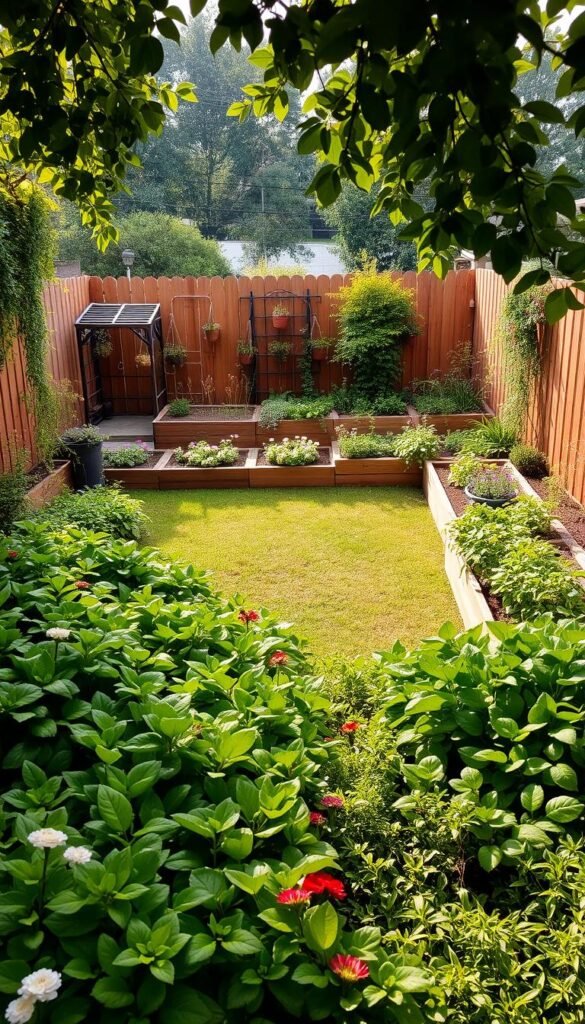
Professional designer Susan Morrison knows tiny yards better than anyone. With two decades transforming cramped lots, she’s found that space-challenged areas demand smarter solutions than their larger counterparts. “Clients often start with long wishlists,” she explains, “but the secret lies in asking the right questions first.”
That’s where her three W’s method shines. This approach helps homeowners visualize how they’ll actually use their outdoor areas before choosing plants or layouts. You’ll discover how this strategy prevents overcrowding while creating functional zones for relaxation and growth.
Vertical layering proves essential for making the most of limited square footage. Through clever stacking and strategic placement, even a 30-foot backyard can host diverse vegetation. Studies show these methods boost plant yields by 20% compared to traditional beds.
Looking for creative gardening ideas? This guide reveals how multi-level arrangements transform sterile patches into lush retreats. You’ll learn to avoid common pitfalls while designing spaces that reduce stress and increase property value.
The journey begins with understanding your unique needs. From balcony nooks to narrow side yards, every inch holds potential. Let’s explore how professional techniques can help you craft an outdoor oasis that feels spacious yet intimate.
Understanding Your Small Garden’s Unique Challenges
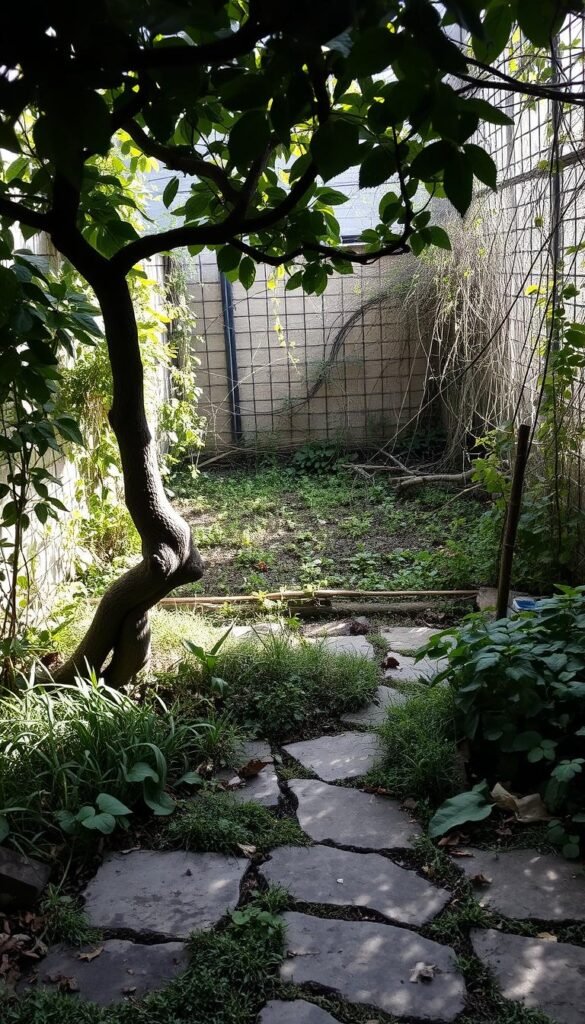
Transforming compact outdoor areas begins with honest evaluation. A standard 30-foot-deep suburban space often feels “one-and-done” visually, but smart planning changes that perception. Start by mapping your exact boundaries – measure every foot of your yard, noting where fences meet flower beds or where utility lines hide.
Identifying Space Constraints and Opportunities
That leaning shed or neighbor’s maple tree? They’re not obstacles – they’re free design elements. One homeowner turned a drainage pipe into a cascading water feature using ferns and smooth stones. Walk your property at different times to spot sunlight patterns and windy corners that dictate plant choices.
Stand where you’ll view the area most – maybe your kitchen window or patio chair. What catches your eye first? Prioritize these sightlines for showstopper plants or art pieces. Less visible zones become perfect spots for practical needs like compost bins or tool storage.
Defining Your Garden Vision
Dream big, but start small. List your must-haves (herb garden? seating?) and nice-to-haves (koi pond? fire pit?). A family in Chicago fit both by building a bench with built-in planter boxes. Remember: vertical surfaces count too. Trellises against walls add depth without eating into precious square footage.
Microclimates matter more than you think. That sunny south corner could host tomatoes, while the damp north side becomes a moss garden. By dividing your area into zones, you create multiple experiences in one cohesive space – like separate rooms in your home.
Embracing Multi-Tiered Planting for Enhanced Layout
Think of your outdoor area as a living skyscraper. By stacking plants vertically, you unlock 10x more growing room than traditional row methods. This approach lets tomatoes climb while lettuce thrives below – nature’s own efficiency blueprint.
Benefits of Vertical Gardening
Vining crops like cucumbers become space-saving superstars when trained upward. A simple tiered garden bed keeps roots contained while directing growth skyward. Studies show vertical systems reduce mildew issues by 40% through better airflow between leaves.
Consider these advantages:
| Feature | Vertical Setup | Traditional Rows |
|---|---|---|
| Plants per sq ft | 8-12 | 1-3 |
| Disease Risk | Low | Moderate |
| Harvest Access | Eye-level | Ground-based |
Using Layered Planting to Optimize Space
Tall sunflowers make perfect backdrops for mid-height zinnias, with creeping thyme carpeting the soil. This trio uses the same footprint while creating visual depth. Rotate crops seasonally – swap cool-weather kale for heat-loving peppers without redesigning your layout.
Remember: every layer serves multiple purposes. Flowering vines attract pollinators while shading tender greens. Your vertical structures become living walls that evolve throughout the growing season, offering fresh surprises with each visit.
Maximizing Small Garden Design Potential with Multi-Tiered Planting

Imagine your garden as a layered cake, where each tier holds delicious botanical surprises. Start by establishing three distinct levels: ground-hugging crops, waist-high shrubs, and climbing vines. This approach lets you grow 3x more in the same footprint while creating natural shade patterns.
Smart bed arrangements make all the difference. Pair deep-rooted vegetables like carrots with shallow herbs in staggered planters. Research shows this method improves soil health by 15% compared to single-layer setups. Use this table to match plants with their ideal tiers:
| Plant Type | Ideal Tier | Soil Depth |
|---|---|---|
| Leafy greens | Ground | 6-8″ |
| Berry bushes | Mid-height | 12-18″ |
| Climbing beans | Vertical | 4-6″ |
Rotate crops seasonally across levels. Spring lettuce can give way to summer peppers, followed by fall kale. This rotation keeps your square foot gardening layout productive year-round while preventing nutrient depletion.
Notice how taller structures create sheltered zones below? These microclimates let you grow shade-loving ferns beside sun-worshipping roses. Your vertical elements become weather moderators, protecting tender plants from harsh winds and afternoon glare.
Creating a Functional Layout and Striking Focal Points

Transform your compact outdoor area into an engaging journey by mastering spatial storytelling. Clever zoning and intentional accents trick the eye into perceiving expansiveness where square footage feels limited. This approach turns cramped corners into purposeful destinations that invite exploration.
Designing Distinct Garden Rooms
Divide your plot into specialized zones using natural dividers like low hedges or decorative screens. A reading nook might feature weather-resistant chairs beside aromatic lavender, while a dining patio could nestle under string lights near your kitchen door. These “rooms” maintain visual flow through repeating colors or materials.
| Zone Type | Key Features | Recommended Plants |
|---|---|---|
| Relaxation | Comfort seating, soft lighting | Lavender, ornamental grasses |
| Dining | Weatherproof table, overhead canopy | Climbing jasmine, compact herbs |
| Showcase | Vertical planters, dramatic specimens | Japanese maple, coral bells |
Incorporating Focal Points for Visual Impact
Anchor your layout with strategic eye-catchers. Place tall elements like obelisks or small trees at the farthest visible point to create depth. Mid-sized accents – think ceramic urns or statement planters – work beautifully where paths bend, encouraging leisurely strolls.
Water features serve triple duty: visual magnets, sound buffers, and wildlife hubs. A tabletop fountain between seating areas becomes both divider and unifier. For hidden surprises, tuck miniature sculptures where they’ll surprise viewers during golden hour light.
Utilizing Raised Beds, Trellises, and Vertical Structures
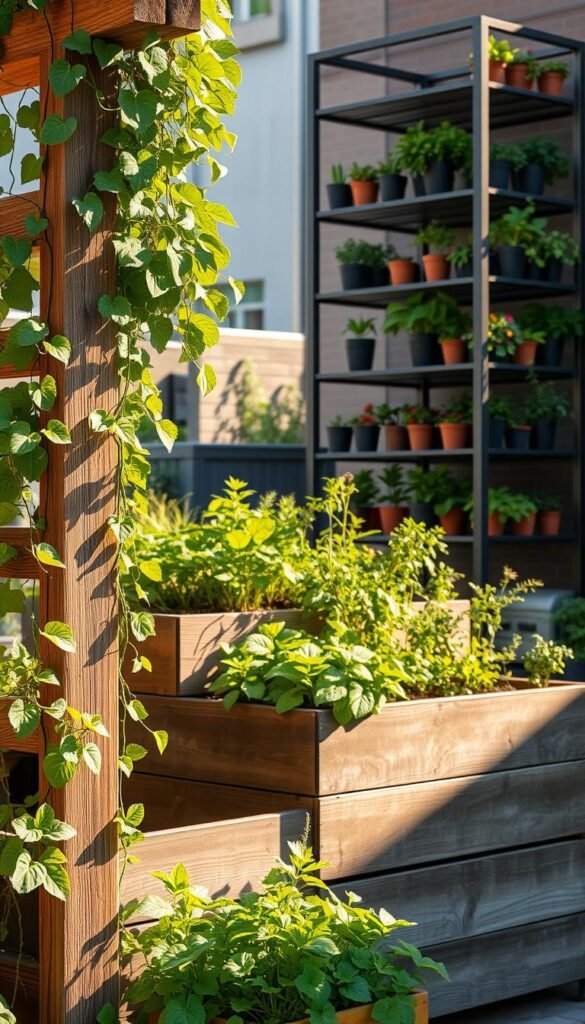
Elevating your planting strategy unlocks new dimensions in compact spaces. Raised beds act as elevated workstations, lifting plants above poor soil while adding depth to your layout. Studies show these structures increase yields by 10x compared to traditional ground planting by optimizing root space and drainage.
Position beds strategically – 2-3 feet widths let you reach plants without stepping on soil. Pair them with vertical supports to create living walls of greenery. One gardener transformed a 4-foot fence into a cascading strawberry display using pocket planters and metal grids.
Expanding Your Garden Upward
Trellises turn vining crops into space-saving superstars. Train tomatoes up A-frame structures or let cucumbers climb lattice panels. These systems keep fruits off the ground, reducing rot by 60% according to agricultural research. Choose materials that complement your style – rustic cedar for cottage vibes or powder-coated steel for modern flair.
| Structure Type | Best Plants | Space Saved |
|---|---|---|
| Wall Planters | Herbs, succulents | 3-4 sq ft |
| Freestanding Trellis | Beans, peas | 5-8 sq ft |
| Tiered Beds | Leafy greens | 10+ sq ft |
Existing walls become prime real estate when hung with lightweight containers. Mount shallow boxes under windows for kitchen herbs or install vertical felt pockets for trailing flowers. Remember: proper air circulation between plants prevents mildew and encourages bushier growth.
Combine multiple heights for maximum impact. A raised bed bursting with peppers can support a trellis of morning glories, while wall-mounted ferns fill the upper airspace. This layered approach creates microclimates that help plants thrive while transforming blank surfaces into living art.
Practical Multi-Tiered Planting Strategies for Small Spaces
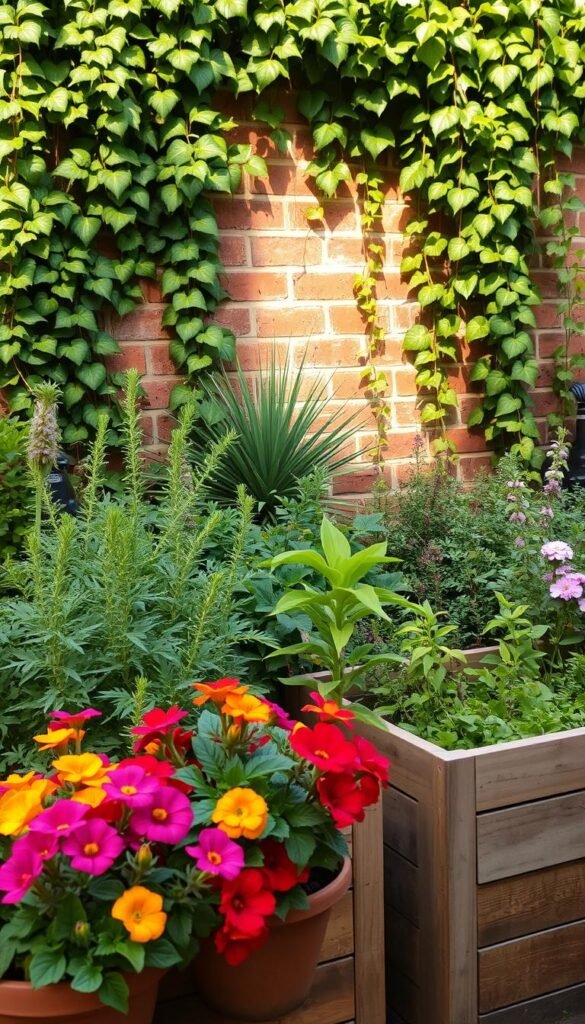
Even the smallest plot can yield continuous harvests with strategic planning. By aligning plant lifecycles across vertical layers, you create a self-renewing system that works harder than traditional setups. Seasonal layering becomes your secret weapon – early bloomers set the stage for summer stars, while fall performers wait in the wings.
Seasonal Layering and Succession Planting
Start with spring bulbs and flowering shrubs at the rear of your beds. As their vibrant displays fade, mid-height perennials like coneflowers take over the spotlight. Keep seedlings ready to fill gaps – when you pull spent radishes, baby kale can claim that same soil within hours.
Try this three-phase approach:
| Season | Top Layer | Mid Layer | Ground Layer |
|---|---|---|---|
| Spring | Flowering trees | Tulips | Spinach |
| Summer | Pole beans | Zinnias | Bush cucumbers |
| Fall | Ornamental grasses | Kale | Carrots |
Fast-growing crops are key for tight quarters. Leafy greens mature in 30 days, letting you grow 3-4 batches per season. Pair them with vertical growers like snap peas that use airspace instead of precious ground area.
Extend your growing calendar with simple tricks. Floating row covers protect fall carrots from frost, while cold frames let winter herbs thrive. Your layers become interchangeable stages, each plant exiting right as its successor needs room to shine.
Timing, Plant Selection, and Companion Planting Tips
Smart plant choices turn limited spaces into year-round showcases. Focus on species that deliver multiple seasons of interest while working harmoniously together. This approach keeps your setup vibrant and productive with minimal effort.
Choosing Plants for Extended Bloom Periods
Skip short-lived annuals that fade quickly. Perennials like catmint offer months of color, blooming from spring through fall. Structural options such as ‘Tequila Sunrise’ kangaroo paw add height and texture while flowering repeatedly.
Mix evergreen shrubs with seasonal stars for constant visual appeal. Their foliage provides backbone when flowers fade, ensuring your space never looks bare. Time plantings so something always peaks – daffodils in spring, lavender in summer, sedum in fall.
Interplanting for Optimal Growth
Pair vegetables with different root depths to maximize soil use. Bush beans (shallow) thrive beside deep-rooted beets, sharing space efficiently. Leaves should barely touch at maturity, creating natural mulch that retains water and blocks weeds.
Try fast-growing radishes between slower tomatoes – they’ll mature before the tomatoes need room. For flowers, nestle quick-blooming pansies under rose bushes. Discover more best companion plant pairings that boost growth naturally.
Rotate partners seasonally. Cool-weather spinach pairs well with chives, while summer eggplant loves marigold neighbors. This strategy keeps soil nutrients balanced and pests confused year-round.