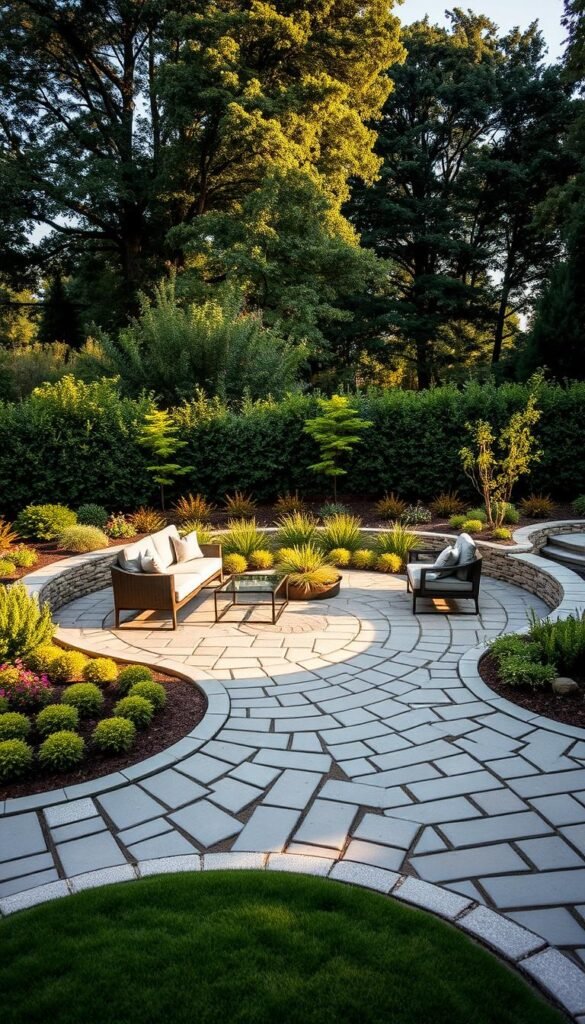
Imagine stepping into a yard that feels like an extension of your home—where every stone, path, and patio tells a story. Crafting such spaces requires more than greenery. Hardscaping gives your outdoor area structure and purpose, turning basic lawns into functional retreats.
Think of it as the backbone of your garden. While plants add color and life, elements like walkways or retaining walls define how you interact with nature. They create zones for dining, relaxing, or hosting friends—all while preventing soil erosion or uneven terrain.
Balancing these features matters. Too much concrete can feel cold, but pairing it with blooming flowers or soft grass bridges practicality with charm. You’ll learn how materials like brick or gravel blend durability with style, ensuring your space stays usable year-round.
Ready to boost curb appeal and property value? Discover how strategic placement of paths or water features solves common challenges like drainage. This guide reveals the secrets to designing cohesive environments where every detail works together—for beauty that lasts.
Understanding Hardscaping Essentials
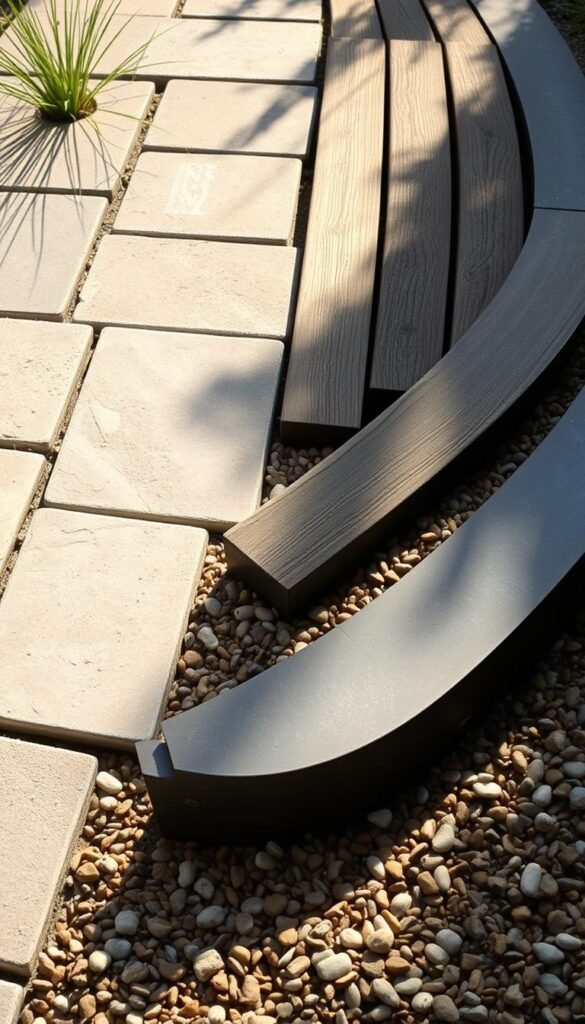
Ever wonder why some yards feel organized while others seem chaotic? The secret lies in balancing natural beauty with intentional design. This is where hardscaping steps in—the silent hero that shapes your outdoor experience.
What Is Hardscaping and How It Differs from Landscaping
Hardscaping involves permanent structures like stone paths or wooden decks. Unlike living landscaping components—plants, grass, and trees—these features stay consistent through seasons. Think of your yard as a painting: landscaping provides the colors, while hardscaping creates the canvas.
Concrete patios establish gathering spots. Retaining walls prevent soil slippage. These elements work together to define spaces. They’re the reason you don’t trample flower beds when walking to your outdoor dining area.
How Hardscaping Adds Functionality and Visual Appeal
Raised garden beds aren’t just pretty—they protect roots from flooding. Fire pits extend your yard’s usability into cooler months. These features solve problems while enhancing aesthetics.
Even in winter, a well-placed bench or geometric gravel pattern keeps your yard interesting. By separating zones and creating pathways, hardscaping makes every inch of your space purposeful. It’s the framework that lets your living landscape shine.
The Role of Hardscaping in Garden Design: Patios, Paths, and More
Transforming your yard into a functional retreat starts with smart hardscape choices. These elements anchor your space, blending practicality with visual intrigue. Let’s explore how to craft areas that invite both relaxation and exploration.
Designing Inviting Patios and Practical Walkways
Your patio acts as an outdoor living room. Materials like stamped concrete or natural stone can mirror your home’s architecture. This creates seamless transitions—imagine sliding glass doors opening to a matching stone terrace.
Walkways guide movement while sparking curiosity. Curved paths lined with lavender suggest discovery, while straight flagstone routes offer efficient access. A gravel trail through your garden adds rustic charm without overshadowing blooms.
Incorporating Retaining Walls and Structural Elements
Retaining walls solve slope issues while adding style. Stacked stone tiers create planting beds for herbs or flowers. They also introduce vertical interest in flat yards—picture cascading succulents along a weathered limestone wall.
These walls multitask as seating or display ledges. Imagine built-in benches flanking a fire pit, or a low wall showcasing potted annuals. They define zones without blocking views, keeping your hardscape feeling open and connected.
By balancing flow and function, your outdoor area becomes a natural extension of home life. Durable materials ensure beauty lasts through seasons, while thoughtful layouts make every inch purposeful.
Material Selection and Design Principles
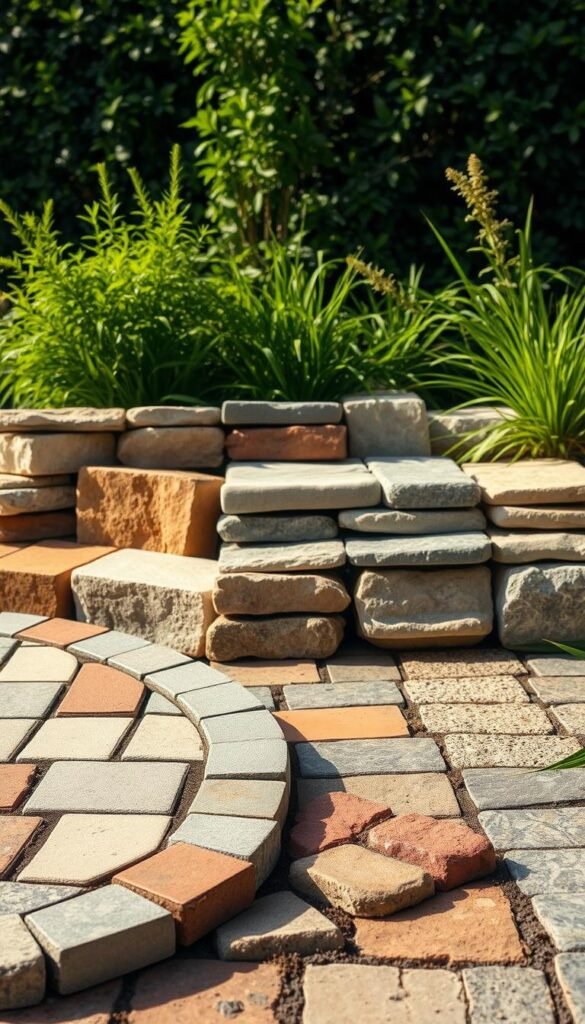
Have you ever noticed how the right materials can transform a space from ordinary to extraordinary? Your choices in stone, brick, or timber set the tone for your entire outdoor area. They determine whether your hardscape feels rustic, modern, or somewhere in between.
Choosing the Right Stone, Brick, and Timber Options
Match your home’s exterior by selecting materials that echo its color and texture. A red brick patio complements traditional homes, while slate tiles suit contemporary styles. Local stones blend seamlessly with natural surroundings, reducing visual clutter.
| Material | Best Use | Climate Suitability | Maintenance |
|---|---|---|---|
| Brick | Patios, walkways | All regions | Low |
| Natural Stone | Retaining walls, paths | Freeze-resistant areas | Moderate |
| Timber | Decks, pergolas | Dry climates | High |
Balancing Symmetry with Asymmetrical Design Elements
Designer David Stevens compares layout balance to a weight scale. Three small boulders can offset one large sculpture. A cluster of potted plants might balance a water feature through strategic placement. This contrast creates dynamic spaces that feel intentional yet relaxed.
Mix elements like reclaimed granite with smooth concrete for texture variety. Pair warm terracotta pots with cool gray pavers to unite indoor and outdoor color schemes. For a timeless garden look, combine weathered wood with geometric stone patterns.
Integrating Hardscaping with Softscaping for a Cohesive Look
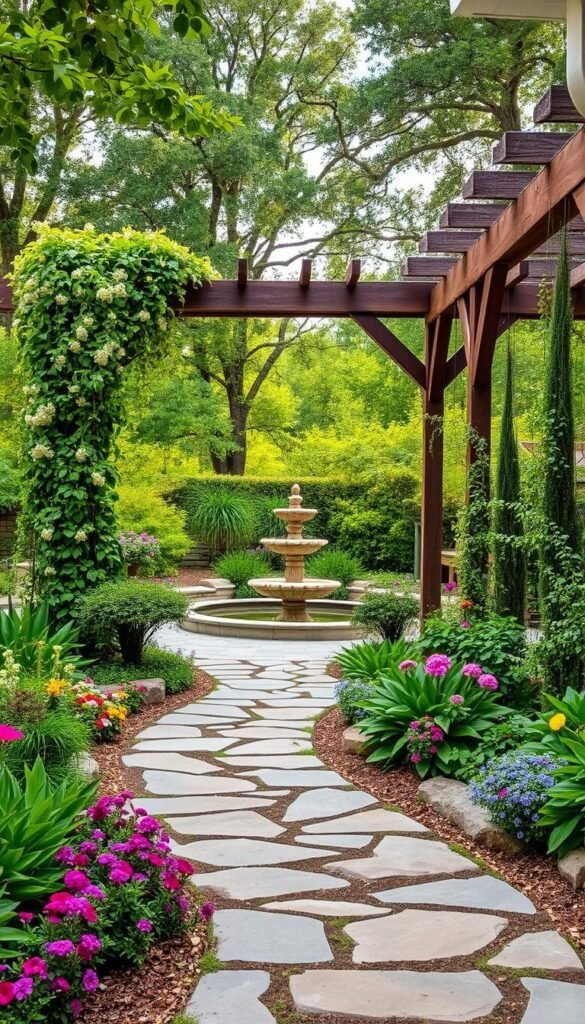
What if your yard could feel both structured and wild at the same time? The magic happens when stone meets soil and wood dances with petals. It’s not about strict ratios—it’s about creating harmony between built elements and living greenery.
Blending Structural Elements with Plants and Flowers
Start by framing patios with low-growing herbs like thyme. Their soft texture contrasts beautifully with crisp stone edges. For urban spaces, try small-space gardening solutions like vertical planters against brick walls. They add life without sacrificing floor space.
Use flowering vines to soften retaining walls. Clematis or climbing roses transform rigid surfaces into living art. In larger yards, position ornamental grasses near walkways. Their swaying movement balances straight paths.
| Plant Type | Hardscape Pairing | Function |
|---|---|---|
| Ground Covers | Pavers, Steps | Hide edges, prevent erosion |
| Shrubs | Retaining Walls | Add depth, block wind |
| Specimen Trees | Patios, Seating Areas | Provide shade, vertical interest |
Rotate seasonal blooms near permanent structures. Spring tulips along a gravel path shift focus when summer hydrangeas take over. Evergreen shrubs keep areas lively in winter. This approach ensures your landscape stays engaging year-round.
Remember: plants should enhance, not hide, your hardscape. Leave gaps between pavers for creeping sedum. Let tree canopies frame—not engulf—your stone bench. When every element has breathing room, your garden tells a balanced story.
Creating Visual Interest Through Focal Points and Accents
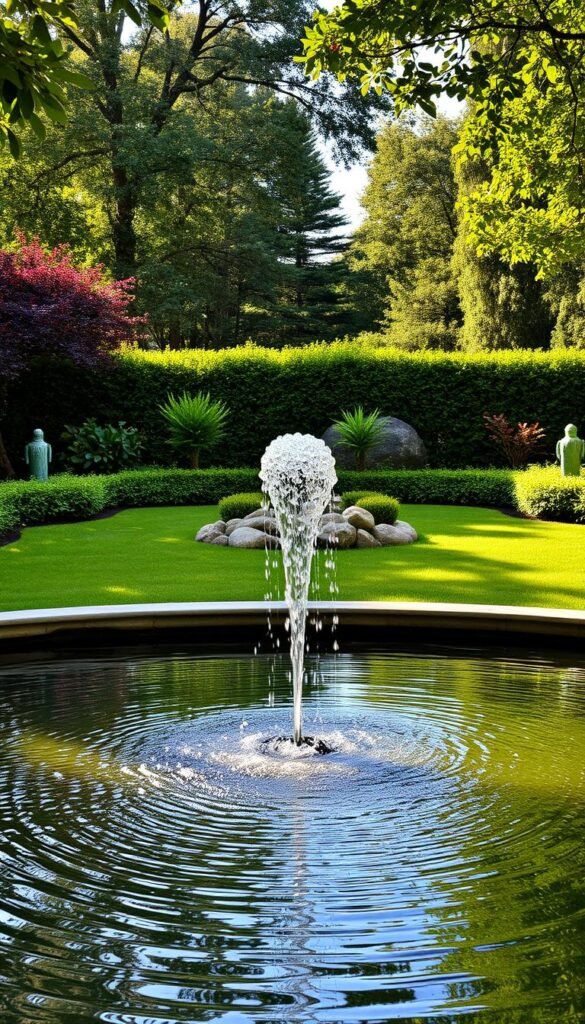
What transforms a yard from ordinary to unforgettable? A well-placed focal point. These intentional features guide the eye and shape how you experience your outdoor space. Let’s explore how to craft moments that spark curiosity and frame your hardscape story.
Using Water Features and Sculptures as Design Anchors
Water elements instantly command attention. A bubbling fountain made from repurposed farm discs offers soothing sounds without pond upkeep. For instance, clear glass floats nestled among stones catch sunlight, adding playful glimmers. These features work year-round—even when plants sleep.
| Focal Point Type | Materials | Visual Impact | Maintenance Level |
|---|---|---|---|
| Water Features | Recycled metal, stone | High (movement + sound) | Low |
| Sculptures | Bronze, weathered steel | Dramatic (texture contrast) | Moderate |
| Repurposed Objects | Vintage tools, industrial parts | Unique (conversation starters) | Low |
Position structures slightly off-center to encourage exploration. A gazebo placed left of your patio’s midline invites guests to wander past flower beds. Pair tall sculptures with low-growing sedum to balance vertical interest.
Hardscaping also thrives on unexpected touches. Try framing a stone path with railroad ties or mounting antique weathervanes on pergolas. These accents become visual exclamation points without overwhelming your design. Remember: three small pieces often create more intrigue than one massive statement.
Practical Tips for Planning and Maintenance
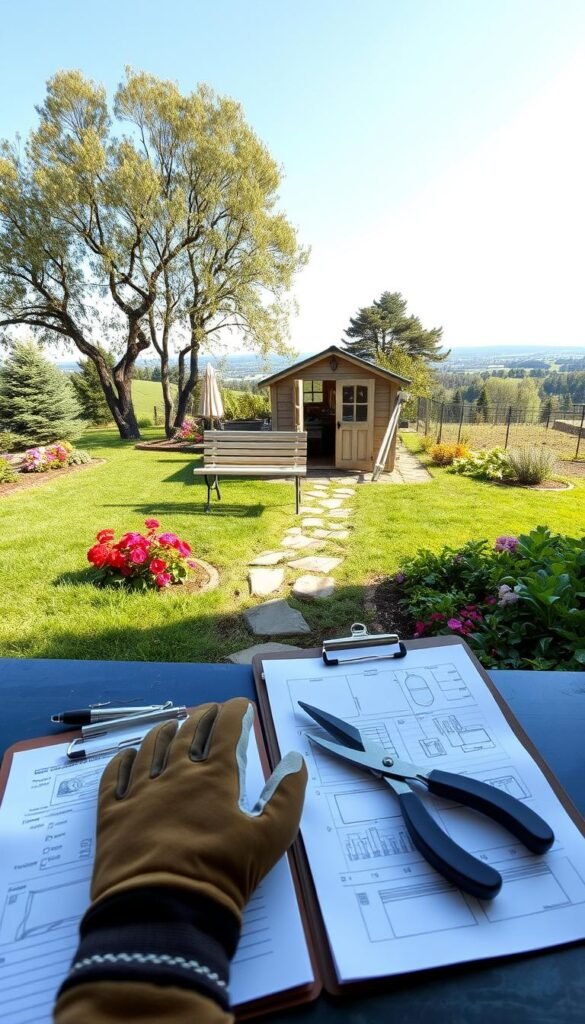
Your outdoor space becomes an investment when designed with intention. Smart choices today lead to lasting beauty and value tomorrow. Let’s explore how to craft areas that work for you, not against you.
Design Strategies to Boost Curb Appeal and Property Value
First impressions matter. A curved walkway using local stone welcomes guests while increasing property desirability. Permeable pavers in driveway designs reduce puddles and protect soil structure—buyers notice these details.
| Feature | Benefit | Best Use |
|---|---|---|
| Permeable Pavers | Reduce runoff, prevent erosion | Driveways, pool decks |
| Shade Trees | Cut cooling costs by 20-30% | West-facing patios |
| Retaining Walls | Create usable slopes, add seating | Hilly yards |
Maintaining a Durable and Low-Maintenance Outdoor Space
Choose materials that age gracefully. Composite decking resists splinters, while stamped concrete mimics pricier stone without yearly sealing. Schedule power washing every 18 months to keep surfaces vibrant.
Install hardscapes during dry seasons when soil is stable. Phase projects over time to spread costs—start with a patio, add paths later. This approach keeps your yard functional during renovations.
Remember: proper drainage extends your hardscape’s life. Slope surfaces 1/4″ per foot away from your home. This simple trick prevents water damage and icy patches in winter.
Bringing Your Outdoor Vision to Life
Ready to turn your yard into a personal sanctuary? Start by planning how each element—patios, walkways, or water features—serves your lifestyle. Explore the art of outdoor design to balance functionality with creativity, ensuring every choice reflects your needs.
Choose materials that age gracefully. Weathered stone paths or cedar pergolas gain character over time, blending with your landscape. Retaining walls double as seating, while strategic plants soften edges. This mix creates contrast without clutter.
Don’t forget lighting and accents. Solar-powered fixtures highlight textures at dusk, and hand-painted pots add pops of color. For inspiration, discover unique ways to decorate using repurposed items or layered greenery.
Your outdoor space should evolve with you. Phase projects, tweak layouts, and let nature fill gaps. With thoughtful hardscaping, you’ll craft areas that feel intentional yet inviting—a true extension of home.