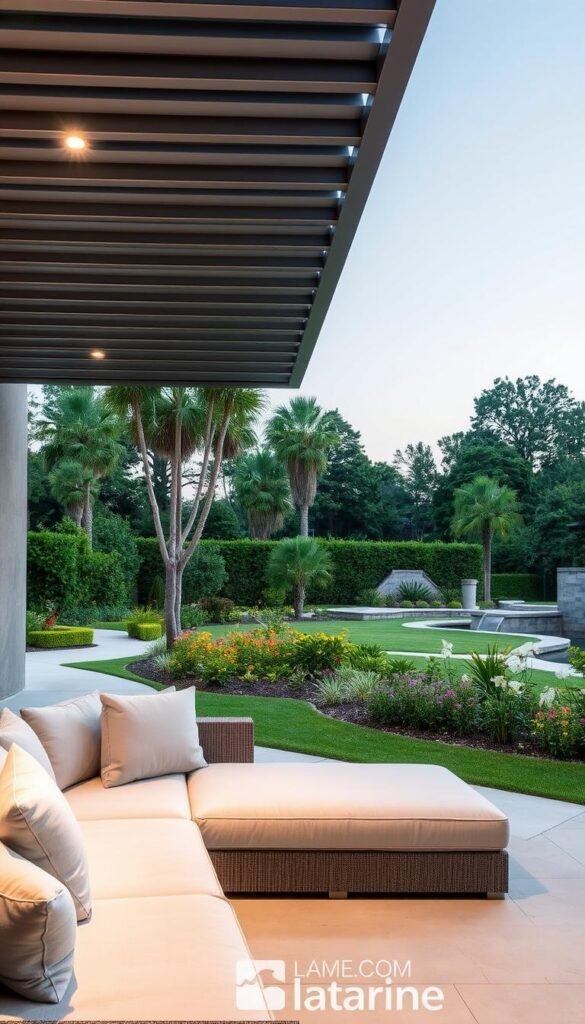
Today’s outdoor spaces are evolving into extensions of your home, blending natural beauty with sleek, functional elements. Gone are the days of rigid, high-maintenance landscapes—contemporary approaches prioritize harmony between nature and architecture while embracing eco-conscious solutions.
Imagine a retreat where clean lines meet lush greenery, creating zones for relaxation and entertainment. This style focuses on simplicity, using durable materials like recycled composites or locally sourced stone. Many homeowners now integrate smart irrigation systems or solar lighting, proving sustainability doesn’t sacrifice style.
Seamless indoor-outdoor flow remains central to these concepts. Large sliding doors or matching floor materials help spaces feel connected. For inspiration on balancing practicality with visual appeal, explore contemporary outdoor aesthetics that prioritize native plants and low-water designs.
Looking ahead, sustainable modern outdoor spaces will emphasize drought-resistant species and natural textures. Whether you’re crafting a cozy firepit area or a minimalist dining zone, the goal is clear: create a personalized sanctuary that reflects today’s innovative spirit.
Embracing Clean Lines & Minimalism in Your Garden
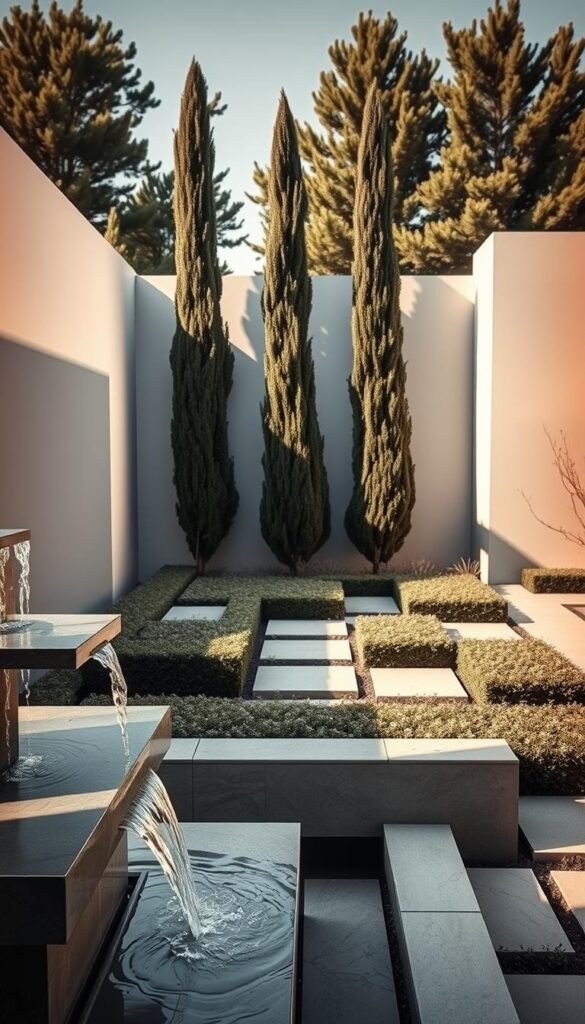
Modern landscapes thrive on simplicity, where every element serves a purpose. By paring back to essentials, you highlight the natural beauty of materials like weathered stone or smooth concrete. This approach creates breathing room for your eyes while letting key features shine.
Using Geometric Patterns for a Modern Look
Sharp angles and repeating shapes bring order to your space. Try rectangular pavers arranged in offset grids or circular shrubs flanking a linear pathway. These patterns guide movement while adding visual rhythm. “Geometric designs act as the backbone of contemporary spaces,” notes landscape architect Mia Torres.
Balance asymmetry with intention. A single sculptural tree beside a cubed planter creates dynamic tension. Use low walls or raised beds to carve distinct zones without clutter.
Curating a Simple, Harmonious Color Palette
Stick to 2-3 dominant hues for calm cohesion. Warm grays, creamy whites, and charcoal blacks form versatile foundations. Add depth with varying textures—rough-cut slate against polished metal edging.
Introduce subtle contrast through foliage. Silver-toned succulents or burgundy heuchera leaves make muted backdrops pop. Remember: restraint amplifies impact. Your color focus should enhance, not overwhelm, the overall design.
Innovative Materials and Smart Outdoor Technology
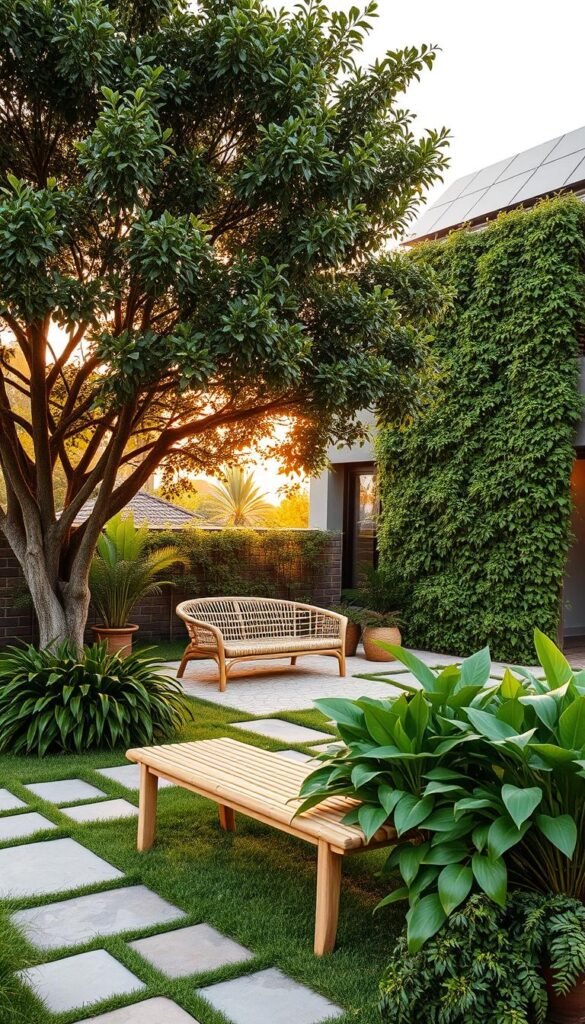
Your space deserves functionality that looks as good as it performs. New materials and tech let you craft durable, earth-friendly areas without sacrificing style. Think weather-resistant surfaces paired with intuitive systems that handle upkeep behind the scenes.
Eco-Friendly Materials and Wood Elements
Swap traditional options for sustainable elements like composite decking made from recycled plastics. These alternatives mimic real wood grain while resisting rot and fading. “They’re a win-win—low maintenance and kinder to forests,” explains green designer Carla Ruiz.
Concrete blends with bamboo fibers or crushed glass add texture while reducing waste. Use them for pathways or sleek benches. Pair with reclaimed timber accents to warm up the look naturally.
Smart Irrigation and Automated Lighting Features
Tech takes guesswork out of care. Soil sensors sync with app-controlled sprinklers, watering only when needed. Save 30% on bills while keeping plants thriving during droughts.
Embed lighting features into steps or walls for safe navigation. Program color-changing LEDs to match moods—soft white for dinners, vibrant hues for parties. Solar-powered options charge by day, glowing automatically at dusk.
Designing Functional Outdoor Rooms for Living & Entertaining
Transform your backyard into activity-focused zones that mirror your indoor comforts. These outdoor spaces act as natural extensions of your home, blending practicality with style. “The key is to treat each area like its own room,” says HGTV’s Mike Pyle, who used brick pavers to define cooking and lounging sections.
Outdoor Kitchens & Dining Areas
Build a culinary hub with weatherproof cabinetry and built-in grills. Stainless steel appliances handle rain, while stone countertops resist heat stains. Include shaded seating nearby so guests can chat while you prep.
For dining areas, choose compact tables that fit 6-8 people comfortably. String Edison bulbs overhead to create warm atmosphere after sunset. Add planters with herbs like rosemary—they’re fragrant and handy for seasoning dishes.
Creating Cozy Fire Pit Zones
Circle stone benches around a gas-powered fire feature for year-round use. Keep seating 3-4 feet from flames for safety. Use concrete pavers under the pit to prevent heat damage.
Layer cushions in earthy tones on deep-seated chairs. Place side tables within reach for drinks—nobody wants to stand up for marshmallow sticks! A gravel border defines the space without blocking views.
Fusing Indoor and Outdoor Spaces Seamlessly
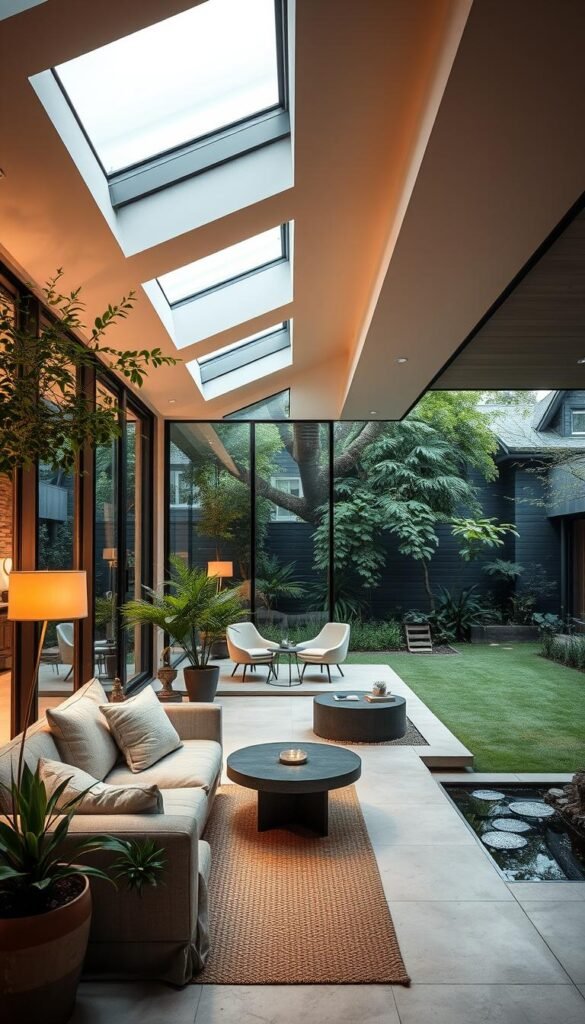
Blurring the lines between your home’s interior and exterior creates a living experience that feels both expansive and intimate. By prioritizing fluid transitions, you’ll unlock new ways to enjoy your outdoor space year-round. Let’s explore how to weave these areas together effortlessly.
Expanding Living Spaces with Sliding Glass Doors
Floor-to-ceiling glass panels dissolve visual barriers, flooding your home with natural light. “They act as invisible hinges, connecting rooms to nature without interrupting views,” says architect Lena Moreno. Choose slim frames for a nearly frameless look that emphasizes openness.
Match interior flooring materials to patio tiles or decking outside. This trick stretches your living zones visually. For example, extend hardwood planks onto a covered porch or align porcelain slabs with garden pathways.
Retractable screens or motorized shades add weather protection. Pair them with ceiling heaters to extend usability into cooler months. Your spaces stay adaptable—open for summer breezes, enclosed for cozy winter nights.
Strategically placed greenery frames views from inside. Position sculptural trees or raised planters where they’ll catch the eye from key rooms. This landscape design approach turns your yard into dynamic art that shifts with seasons.
Trending Garden Design Ideas for Modern Outdoor Living
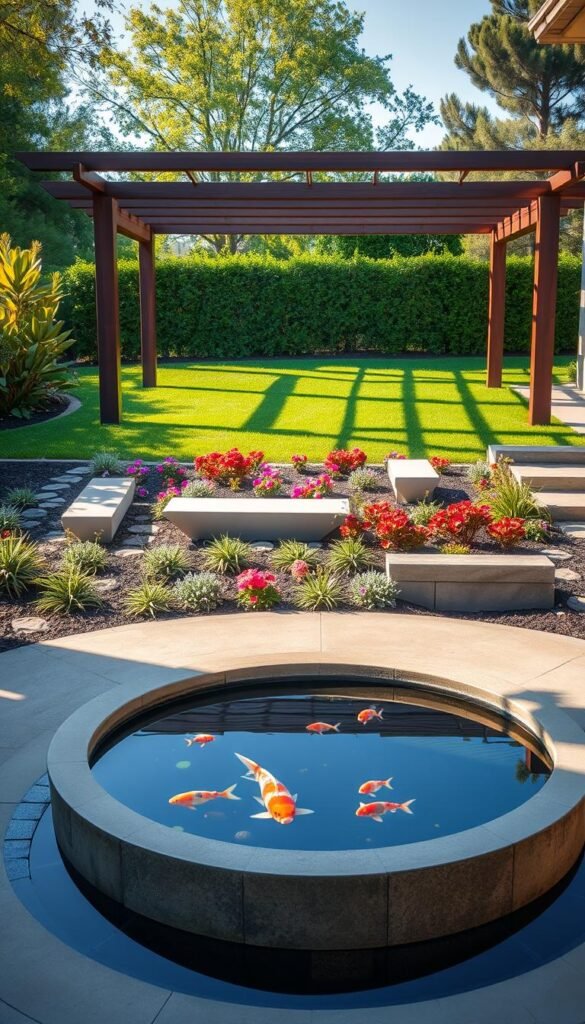
Contemporary landscapes are redefining outdoor living through bold, earth-conscious designs. Architects and homeowners alike now prioritize sculptural forms and climate-smart solutions that work with nature—not against it. This shift balances striking visuals with practical functionality.
Highlighting Top Trends in Contemporary Landscaping
Xeriscaping leads the charge in drought-prone regions, swapping thirsty lawns for gravel beds and native grasses. These landscaping choices cut water use by up to 60% while creating textural contrast. Pair them with crushed glass pathways that sparkle in sunlight for unexpected drama.
Architectural plants like yucca and agave make living sculptures. Their sharp silhouettes complement geometric landscape design elements. “They anchor spaces visually while needing minimal care,” says Denver-based designer Rosa Nguyen.
Tech integration elevates convenience. Weather-responsive irrigation systems adjust watering based on soil moisture. Built-in LED strips outline seating areas, enhancing safety without glare. These ideas prove smart tech can be subtle yet impactful.
Material innovation shines through recycled composites and corten steel planters. Their industrial style ages gracefully, developing rust patinas that blend with natural surroundings. For smaller yards, vertical gardens maximize greenery without sacrificing floor space.
Real-world projects showcase these principles beautifully. A Phoenix home uses decomposed granite and palo verde trees to create shade naturally. In Seattle, a rooftop terrace features permeable pavers and self-watering planters. Both examples demonstrate how garden design adapts to local needs while staying visually compelling.
Incorporating Water Features and Natural Elements
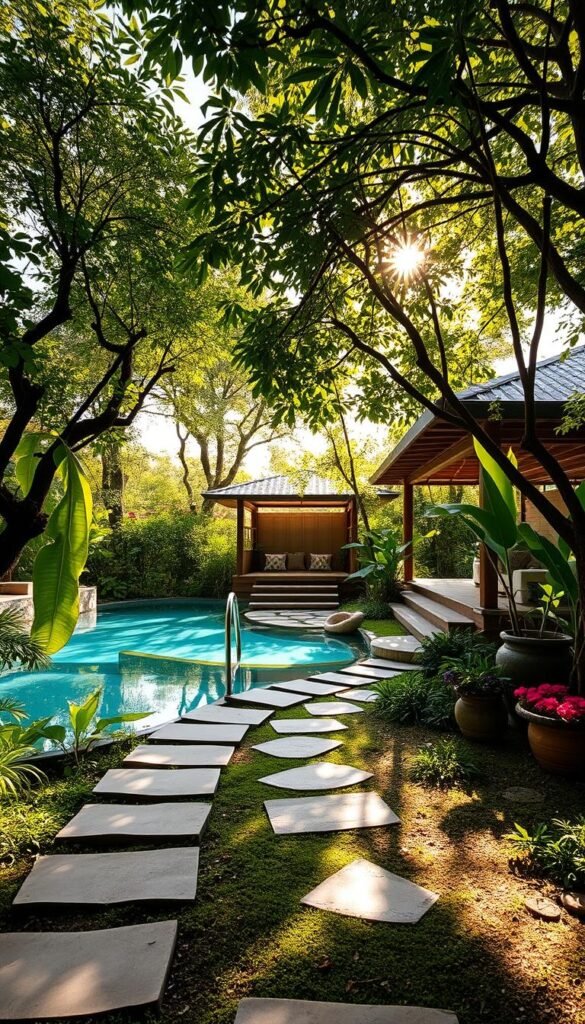
Water brings life to your outdoor space, blending beauty with purpose. Strategic placement of water features elevates your garden’s appeal while fostering a connection to nature. Imagine dipping your toes into a natural pool surrounded by ferns or hosting friends under a breezy pavilion—these elements turn ordinary yards into sensory retreats.
Designing Natural Pools & Inviting Pavilions
Melissa Anderson’s New York project shows how natural pools mimic wild swimming holes. She used local stone for edging and native plants like blue flag iris to filter water naturally. Adirondack chairs in weathered wood add rustic charm without disrupting the woodland ambiance.
Pavilions extend usability. Amber Lewis designed one with a cedar-shake roof and built-in benches seating 10 guests. “It’s about creating destinations within your landscape,” she says. Add retractable screens for bug-free evenings or string lights for soft illumination.
Using Flowing Water to Create a Relaxing Ambiance
Gentle streams or cascading fountains mask traffic noise with soothing sounds. Position tiered stone waterfalls near seating areas—their rhythmic patter encourages relaxation. Submersible LED lights highlight water movement at night, turning features into glowing art.
For smaller spaces, wall-mounted spillways or bubbling urns work beautifully. Pair them with moisture-loving plants like horsetail reeds. The combination of sound, light, and nature crafts a serene escape right outside your door.
Enhancing Appeal with Stone, Metal, and Linear Accents
Crafting a polished outdoor space starts with the details that frame your landscape. Crisp metal borders and textured stone partitions add structure while letting natural elements shine. These accents create visual rhythm without overwhelming your yard’s organic flow.
Benefits of Crisp Metal Edging in Your Landscape
Scott Zimmer’s projects show how metal strips between lawns and pathways deliver instant polish. They prevent grass from invading beds, cutting weekly trimming by 40%. Powder-coated aluminum resists rust, keeping edges sharp for years.
Installation tips:
- Bury edging 2 inches deep for stability
- Use rubber mallets to avoid denting
- Angle strips slightly outward for water runoff
Creating Intriguing Stone Partitions for Visual Interest
Partial stone walls serve triple duty: privacy screens, wind blocks, and vertical planters. Stack limestone slabs to prop up pergolas or frame fire pits. Leave gaps between stones for creeping thyme to soften edges.
| Stone Type | Best Use | Maintenance |
|---|---|---|
| Limestone | Retaining walls | Annual sealing |
| Slate | Decorative screens | None |
| Fieldstone | Natural-looking borders | Weed control |
For interest, mix stone sizes in staggered patterns. A 3-foot wall with built-in benches creates intimate seating nooks. Pair with linear gravel paths to guide eyes through the space effortlessly.
Illuminating Your Garden with Creative Outdoor Lighting
Your evening landscape deserves to shine as brightly as your daytime view. Thoughtful lighting transforms ordinary spaces into enchanting retreats, extending your outdoor space’s usability into moonlit hours. Let’s explore how layered illumination crafts both safety and drama.
LED and Ambient Lighting Ideas for Nighttime Appeal
Embedded LEDs work like invisible artists. Tuck them under benches to wash walls with soft glows or line stair treads for safe navigation. “They’re the Swiss Army knife of modern illumination—versatile and energy-smart,” says lighting designer Ezra Klein.
Combine uplights with downlights for depth. Angle spotlights upward to graze textured bark or Japanese maples. Use warmer tones (2700-3000K) near seating to maintain cozy ambiance.
| Light Type | Best Use | Energy Efficiency |
|---|---|---|
| Path Lights | Walkways & steps | 85% less power than halogens |
| String Lights | Over dining areas | Solar options available |
| Well Lights | Highlighting trees | 10-year LED lifespan |
For festive flair, drape Edison bulbs between posts or weave fairy lights through trellises. Pair these with water features to double the reflective magic. Smart systems let you dim or change colors via phone—ideal for switching from dinner atmosphere to party mode.
Photometric testing ensures light stays where you want it. Shield fixtures to prevent glare into neighbors’ windows while maintaining your yard’s appeal. Solar stakes along garden edges offer hassle-free charm, charging by day and glowing dusk till dawn.
Selecting the Right Plants for a Modern Landscape
Your plant choices shape the personality of your contemporary space. Think of greenery as living sculptures that define your landscape’s character. Strategic selections create year-round structure while supporting local ecosystems.
Sculptural Shrubs: Nature’s Architecture
Agave and yucca plants offer sharp silhouettes that mirror geometric hardscaping. Their drought-resistant nature makes them ideal for low-water landscaping. “These species act as natural focal points,” explains Terremoto’s lead designer, who used redbud trees to frame pathways in a California project.
Consider these standout options:
| Plant | Height | Key Feature |
|---|---|---|
| Blue Glow Agave | 2-3 ft | Blue-green rosettes |
| Japanese Boxwood | 4-6 ft | Dense, prune-friendly |
| Desert Spoon | 5 ft | Silver-gray foliage |
Smart Native Plant Pairings
Replace thirsty lawn areas with native grasses like purple three-awn. These species thrive in local soils, needing 70% less water than traditional turf. Pair them with flowering sages for pops of color that attract pollinators.
Top drought-tolerant picks:
- California lilac (Ceonothus) – Fragrant spring blooms
- Autumn sage (Salvia greggii) – Deer-resistant
- Deer grass (Muhlenbergia) – Airy seed heads
Group plants by water needs using gravel borders. This zoning trick simplifies irrigation while maintaining your landscape’s clean lines. Blue fescue grass clusters work beautifully beside slate walkways, offering texture without clutter.
Balancing Style, Function, and Sustainability
Creating a space that feels both inviting and responsible starts with smart choices. By blending aesthetics with eco-conscious practices, you craft areas that serve your needs while respecting nature. Let’s explore how to achieve this balance effortlessly.
Eco-Friendly Design Tips for a Greener Outdoor Space
Start by selecting materials that give back to the earth. Recycled composites or reclaimed wood add texture while reducing waste. Pair these with native plants that thrive in your climate—they’ll need less water and care over time.
Incorporate vertical gardens or movable planters to maximize greenery in tight areas. Research shows these solutions boost airflow and yields. Solar-powered lights along pathways cut energy use while adding evening charm.
Smart irrigation systems tailor watering to soil conditions, saving up to 30% on bills. Choose drought-resistant grasses or gravel beds to minimize maintenance. Your landscape becomes a sanctuary that works smarter, not harder.
Finally, prioritize durability. Weather-resistant furniture and locally sourced stone ensure longevity. With these steps, your space becomes a testament to thoughtful living—where beauty and responsibility coexist seamlessly.