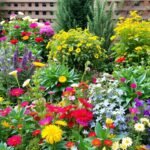
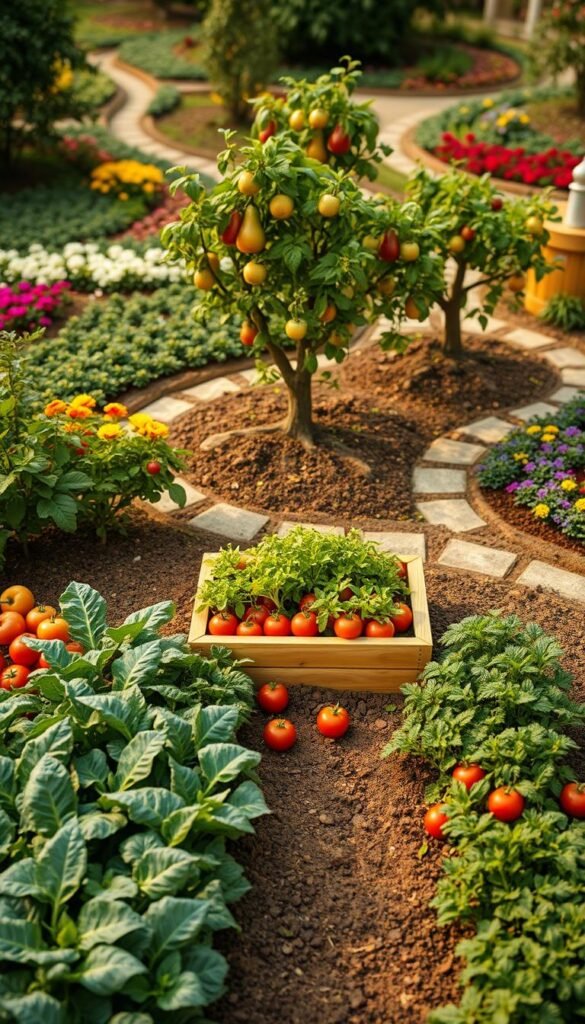
Imagine stepping into an outdoor space where beauty meets practicality. Picture vibrant plants that not only catch the eye but also fill your kitchen with fresh flavors. This is the magic of blending food-producing varieties with ornamental ones—a trend reshaping how Americans view their yards.
Take inspiration from award-winning designer Christian Douglas, who turned a Northern California estate into a functional paradise. His creation features everything from sun-kissed terraces to buzzing beehives, proving that productive spaces can dazzle the senses.
Sustainable gardening expert Emma Croft calls these spaces ‘living pantries’ that nourish both body and soul. They’re not just about growing veggies—they create habitats for pollinators, offer shady retreats, and become natural gathering spots for family moments.
Like the principles behind permaculture food forests, this approach works in harmony with nature. You’ll discover how even compact areas can yield surprising harvests while looking magazine-worthy. Think berry bushes doubling as privacy screens or herb spirals serving as focal points.
Ready to reimagine your patch of earth? Let’s explore how to craft spaces that feed your household and spark joy through every season.
The Foundations of a Bountiful Edible Garden

Every great garden is built on two pillars: soil health and smart layout. Start by getting your hands dirty—literally. Testing your soil’s pH and nutrient levels reveals what crops will flourish there. For example, blueberries love acidic dirt, while asparagus prefers alkaline conditions. A simple DIY test kit gives instant insights.
Evaluating Your Garden Space and Soil
Track sunlight patterns across your beds for 3 days. Most veggies need six hours of direct sun, but herbs like thyme thrive in drier spots. Notice slopes or walls creating unique zones? A south-facing stone wall can become a heat trap for peppers, while damp corners suit mint.
Understanding Microclimates and Growing Seasons
Christian Douglas pairs ferns with alpine strawberries in shady nooks, proving even dim areas produce food. Your local frost dates dictate planting windows—cool-weather crops like kale can grow before tomatoes take over. Map seasonal sun shifts to rotate plants efficiently, ensuring year-round harvests.
Drainage matters too. Dig a 12-inch hole and fill it with water. If it drains in under 4 hours, you’ve got ideal conditions for carrots. Slow drainage? Build raised beds for better root health. Work with your land’s natural flow, not against it.
Choosing Edible Plants and Ornamental Companions
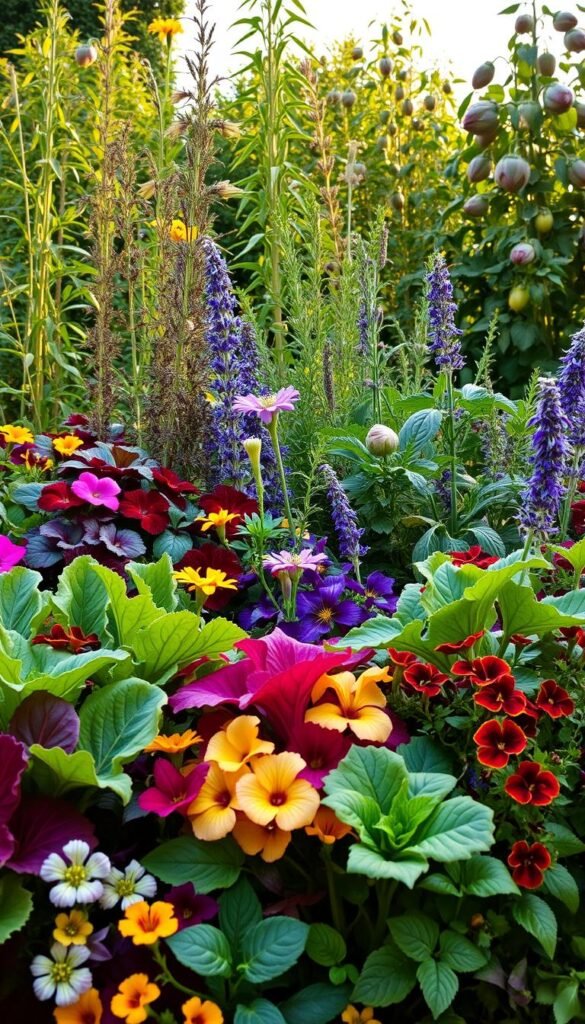
Transform your yard into a living masterpiece where every plant pulls double duty. The secret? Pairing delicious fruit trees with fragrant herbs and showstopping flowers that work as hard as they look.
Fruit Trees, Herbs, and Edible Flowers
Christian Douglas proves food-bearing plants can rival traditional ornamentals. Swap magnolias for avocado trees – both offer lush canopies, but one gives creamy fruits. Crabapples dazzle with spring blossoms before producing tart jewels for preserves. Pomegranates? Their fiery orange blooms become vitamin-packed snacks.
Groundcovers get tasty upgrades too. Strawberries spill ruby fruits between stepping stones, while thyme releases citrusy scents underfoot. For vertical drama, artichokes tower with silvery leaves worthy of sculpture gardens. Even herbs like rosemary moonlight as fragrant hedges that deter pests naturally.
Native Species for a Sustainable Landscape
Local ecosystems thrive when you choose regional edibles. Serviceberries mirror dogwoods’ white spring flowers but yield blueberry-like fruits. Pawpaws create tropical-looking groves while feeding foxes and songbirds. These native plants need less water and fight off pests without chemicals.
Edible flowers bridge beauty and function. Bright nasturtiums pepper salads with peppery zing, while violas turn desserts into edible rainbows. As landscape designers note, these choices let you harvest supper while admiring your view.
Planning Seasonal Succession and Smart Irrigation
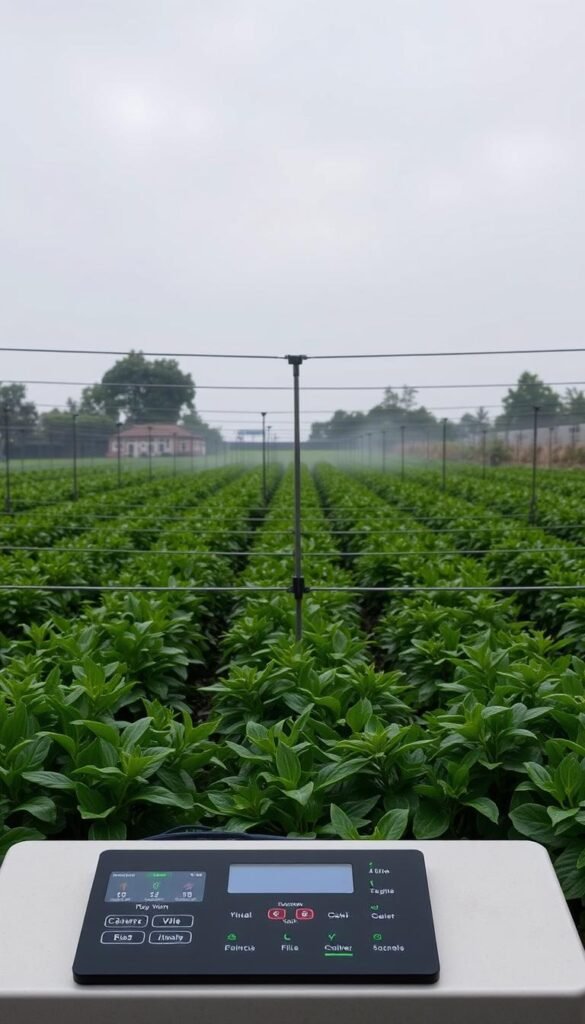
What if your garden could produce fresh salads in spring and pumpkins by fall? Smart timing turns your space into a non-stop harvest machine. Succession planting keeps beds productive while saving water and effort through strategic crop rotations.
Designing for Continuous Crop Cycles
Start with quick-growing crops like arugula—harvest in 3 weeks, then plant bush beans. When summer heats up, swap beans for heat-loving okra. Cooler days? Replace spent tomato vines with frost-tolerant kale. Stagger plantings every 14 days for unbroken yields.
Pair early spring radishes with late-starting carrots in the same row. As radishes finish, carrot greens fill the gap. This “tag team” approach works wonders in small spaces, letting you grow 3x more food annually.
Efficient Watering Strategies for Healthier Growth
Modern irrigation does the heavy lifting. Soil moisture sensors prevent overwatering drought-tolerant herbs while keeping thirsty zucchini happy. Schedule morning watering to reduce evaporation—plants drink deeply before midday heat.
Group plants by hydration needs. Create separate zones for Mediterranean herbs (weekly soak) and leafy greens (daily sips). Drip lines target roots directly, cutting water use by 40% compared to sprinklers. Consistent moisture prevents split carrots and boosts tomato yields.
Adapt your system as seasons change. Ramp up watering during fruit development phases, then ease off as crops mature. This rhythm matches natural growth patterns, creating healthier plants that resist pests naturally.
Integrating Edible Landscapes into Your Garden Design
Turn empty walls and narrow corners into lush, productive displays that defy traditional growing limits. Vertical solutions unlock new dimensions in your landscape, letting you cultivate more food without sacrificing style.
Reach New Heights with Vertical Systems
Trellises aren’t just for roses anymore. Train passionfruit vines across arched arbors to create edible tunnels bursting with tropical flavors. Living walls planted with strawberries or leafy greens turn bland surfaces into snack-producing masterpieces.
Try these space-saving champions:
- Pole beans climbing bamboo teepees
- Cucumbers cascading from hanging planters
- Grapevines shading patio seating areas
Smart Structures That Work Harder
Your pergola can do more than host string lights. Grow kiwi vines along its beams for dappled shade and sweet fruits. Fence lines become raspberry highways when paired with horizontal wire supports.
Espaliered apple trees transform blank walls into living art. Their sculptural branches yield crisp snacks while saving precious ground space. For quick wins, mount strawberry towers near seating areas where their ruby fruits tempt passersby.
Layer plants by height to maximize sunlight. Tall sunflowers shelter shade-loving lettuces below, while mid-height peppers bask in filtered light. This approach triples your harvest potential in tight quarters. Pair vertical systems with companion planting strategies for natural pest control and improved yields.
Vertical elements also define zones subtly. A bean-covered trellis separates your dining area from the compost bin. Wind-sensitive herbs like basil thrive behind pea-covered mesh screens. Every structure becomes both practical and beautiful in your edible landscape.
Incorporating Aesthetic Elements with Functional Benefits
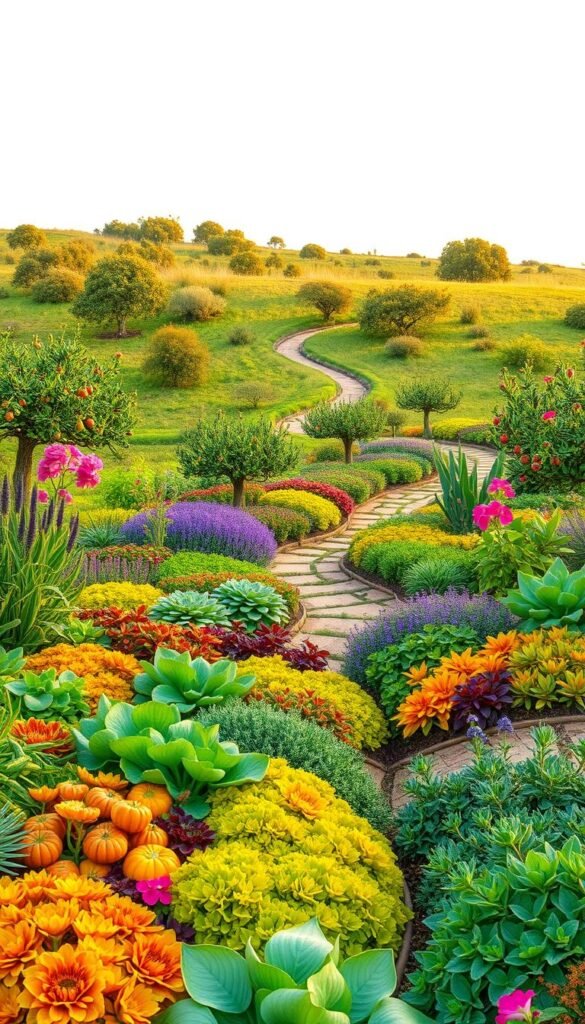
Craft a visual feast where every plant serves dual purposes. Edible gardens can rival floral displays when you pair vibrant colors with tasty rewards. Think ruby-hued strawberries tumbling over stone walls or golden calendula petals brightening salad bowls.
Designing with Color Schemes and Textures
Paint your landscape using nature’s edible palette. Bright nasturtiums explode in sunset shades, while pansies add violet and yellow accents to beds and plates. Contrast deep purple basil leaves against silver sage foliage for dramatic effect.
Texture transforms ordinary spaces into tactile wonders. Combine feathery carrot tops with spiky rosemary bushes. Red-veined sorrel’s ruffled leaves make perfect partners for smooth lavender stems. These pairings create depth while offering fresh ingredients.
Creating Sensory Pathways with Aromatic Herbs
Line walkways with fragrant herbs that release scent with every step. Brushing against lavender releases calming aromas, while thyme cushions emit earthy notes underfoot. These living borders deter pests naturally, blending beauty with practicality.
For year-round appeal, mix evergreen rosemary with seasonal bloomers. Lavender spikes in summer give way to bronze fennel’s fall foliage. This approach keeps your landscape dynamic while engaging sight, smell, and touch.
Want to elevate your garden’s visual appeal? Layer plants by height and hue near seating areas. Crimson chard makes striking backdrops, while lemon balm’s lime-green leaves brighten shady corners. Every choice enhances your outdoor experience while putting dinner within reach.
Utilizing Microclimates and Defining Outdoor Spaces
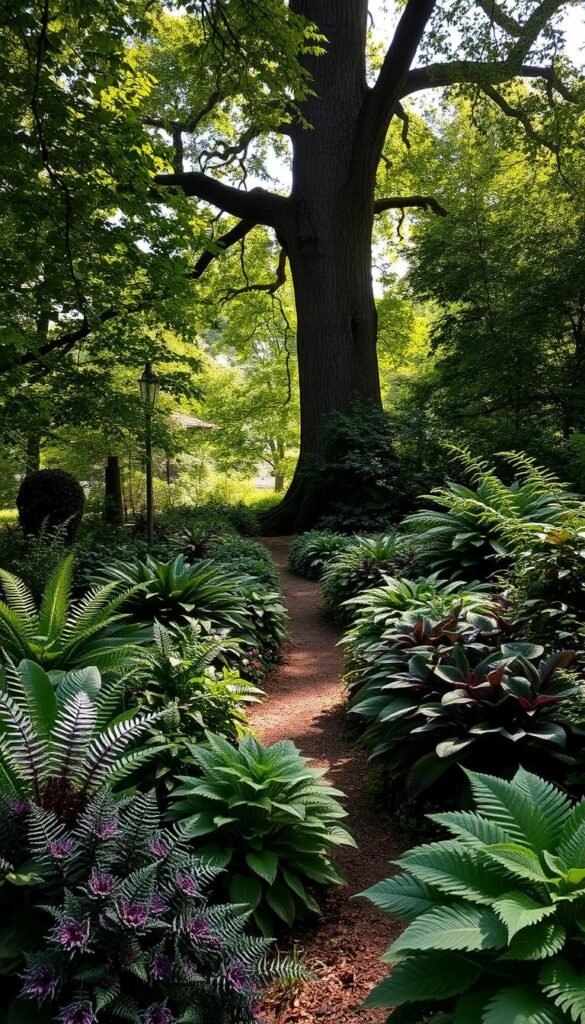
Your backyard holds hidden potential beyond basic lawns and flower beds. By working with natural light patterns and existing features, you can craft distinct zones that blend beauty with delicious rewards. Let’s explore how to transform underused corners into productive retreats.
Crafting Magical Nooks and Shade Gardens
Christian Douglas proves shady spots aren’t limitations—they’re opportunities. His woodland-inspired shade garden combines a trickling stream with huckleberries and alpine strawberries. These plants thrive in filtered light while creating a secret garden vibe.
Turn dim areas into edible hideaways with:
- Rhubarb’s giant leaves adding drama
- Ginger’s tropical foliage unfurling slowly
- Currant bushes offering jewel-toned snacks
Defining Zones Around Pools and Fire Pit Lounges
High-traffic areas become functional showpieces when paired with food plants. Douglas transformed a fire pit zone into a multi-sensory experience using fragrant roses and a Pakistan mulberry tree. The canopy provides dappled shade while dropping sweet fruits into waiting hands.
Near pools, potted kumquats add citrusy charm without overcrowding walkways. Espaliered quince trees create living walls that frame water features beautifully. As edible landscaping strategies show, these choices keep snacks within reach during summer gatherings.
Work with your property’s natural contours to maximize every microclimate. Sunny slopes near seating areas? Plant Mediterranean herbs that release scent when brushed against. Damp low spots? Perfect for mint patches that refresh drinks all season.
Innovative Design Strategies and Expert Tips
Great gardens marry practicality with artistry. Award-winning designer Christian Douglas shares a golden rule: “Ask if an edible alternative exists for every ornamental choice.” This mindset unlocks landscapes where form meets flavor without compromise.
Insights from Award-Winning Designers
Top designers blend textures for visual interest. Pair wispy lemon grass with bold cardoon plants—their silvery leaves make great focal points. Fruiting cherry trees replace flowering varieties, offering spring blossoms and summer snacks.
Balancing Edible Functionality with Ornamental Beauty
Choose plants like elderberry bushes that dazzle with white blooms before producing antioxidant-rich berries. Artichokes add sculptural drama while yielding tender hearts. Even veggie patches become eye-catching when you alternate red lettuce with golden marigolds.
These gardening tips prove edible design isn’t about sacrifice. It’s smart substitution. Replace generic shrubs with blueberry hedges that blush crimson in fall. Swap rose arbors for grapevines that drape juicy clusters overhead. Your space becomes a living pantry that’s as inviting as it is productive.