Your backyard holds more potential than just being a pretty view. When designed with intentional energy flow, it becomes a powerful extension of your home’s atmosphere. This approach blends time-tested Eastern philosophy with practical Western landscaping ideas.
Imagine your garden as a living partner in your daily life. The right layout helps chi – that vital life force – move freely through paths, plants, and seating areas. You’ll find spaces feel more inviting when water features, wind chimes, and plant groupings work together.
Many homeowners discover their outdoor areas naturally become relaxation hubs after applying these concepts. Curved walkways replace harsh lines, while strategic color choices uplift moods. Even small yards gain depth through layered textures and mindful placement.
This isn’t just about aesthetics. Your garden’s energy patterns can influence prosperity, relationships, and personal growth. You’ll learn to see every stone and shrub as part of a larger system working toward balance.
Ready to transform your yard into a sanctuary? Let’s explore how thoughtful design choices create harmony between nature and your aspirations.
Understanding Feng Shui in Your Garden
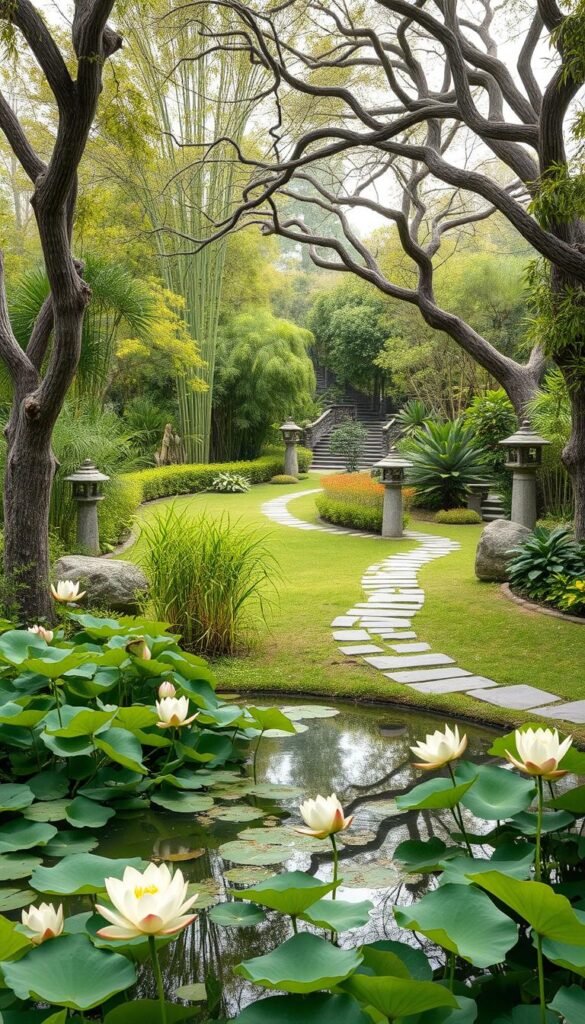
Transform your garden into a living energy map that supports well-being and connection. At its core, this ancient practice focuses on cultivating harmony between natural forces and human-made elements.
Exploring the Concept of Chi and Energy Flow
Chi acts like invisible nourishment for your outdoor space. When this vital force circulates freely, it creates vibrant growth and positive experiences. Blocked pathways or cramped layouts cause stagnation, while wide-open areas without focal points let energy race away.
Simple solutions keep chi balanced. Curved walkways slow rushing energy, while rounded planters prevent sharp corners from disrupting flow. Add wind-activated ornaments to gently stir still air pockets.
The Role of Yin and Yang in Your Outdoor Space
Every thriving garden mixes calm and lively zones. Use this table to balance contrasting energies:
| Yin (Passive) | Yang (Active) | Balance Tips |
|---|---|---|
| Shaded benches | Bubbling fountains | Pair stone sculptures with flowing water |
| Soft ground covers | Vertical trellises | Mix low-growing plants with tall grasses |
| Moonlight gardens | Sunny herb plots | Create transition areas with dappled shade |
Notice how textured bark beside smooth stones creates visual interest without chaos. Your space should feel neither overwhelming nor dull – aim for that sweet spot where visitors naturally linger.
Applying Feng Shui Principles for Harmonious Garden Designs
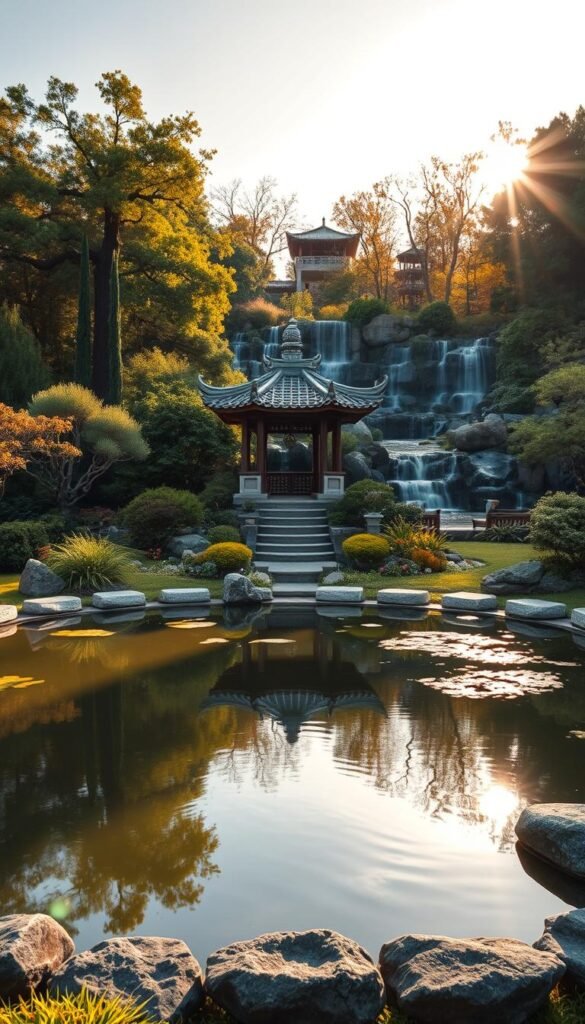
What if your garden could mirror your life’s journey? The ancient Bagua map reveals this connection through nine symbolic zones. Each area links physical spaces to personal aspirations, helping you cultivate growth where it matters most.
Defining Key Concepts for Garden Layouts
This octagonal guide divides your outdoor space into Life Sectors like Wealth, Relationships, and Career. Imagine overlaying it like a transparent grid – your patio might align with Fame, while that corner bed touches Knowledge. Missing sections? Use mirrors or lighting to symbolically “complete” the shape.
Integrating the Bagua into Your Planning
Strategic placement becomes powerful when matched to intentions. Water elements thrive in northern zones to boost career flow, while fiery red blooms energize southern Fame areas. Check this quick-reference table:
| Life Sector | Element | Enhancement |
|---|---|---|
| Wealth | Wood | Purple flowers |
| Relationships | Earth | Paired sculptures |
| Health | Earth | Rounded planters |
Notice how enhancing specific zones creates ripple effects. A bubbling fountain in the east sector might spark creative ideas, while a stone path through the Helpful People area strengthens community ties. Your garden becomes a living vision board through thoughtful design choices.
Abundance grows where energy flows freely. By aligning physical features with symbolic meanings, you create spaces that nurture both plants and personal goals. Start small – even one focused enhancement can shift your garden’s energy dynamics.
Designing Garden Spaces that Promote Positive Energy
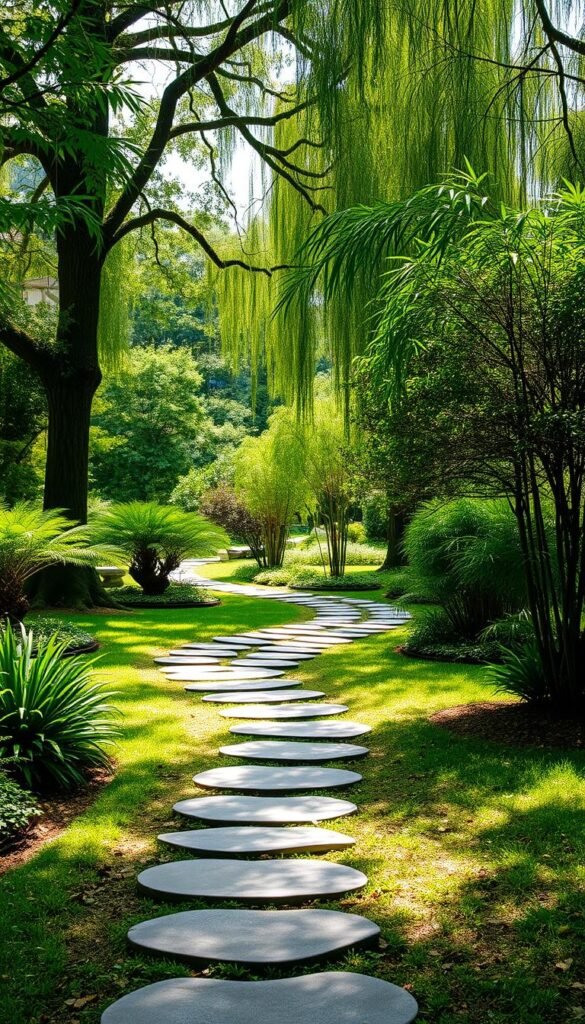
Curved lines in your landscape do more than please the eye—they choreograph energy movement. Gentle arcs replace aggressive angles, transforming rigid zones into welcoming retreats. This approach softens transitions between areas while encouraging positive energy flow throughout your outdoor sanctuary.
Creating Curved Paths and Natural Borders
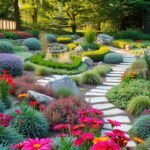
Swap straight walkways for meandering stone trails that invite exploration. Rounded edges on flower beds and ponds prevent chi from rushing past seating areas. Living fences made of bamboo or hedges offer privacy without blocking energy circulation.
Notice how winding streams slow water’s journey, creating calming soundscapes. Apply this principle using serpentine borders that frame spaces without harsh divisions. Your garden becomes a series of connected experiences rather than isolated plots.
Optimizing the Flow of Chi with Thoughtful Placement
Position tall plants behind benches to create protective backing, while leaving open views ahead. Avoid placing large rocks or statues where they might interrupt natural movement patterns. Energy thrives when elements guide rather than force its path.
Cluster flowering shrubs near entryways to welcome vitality. Leave breathing room between features—overcrowding creates chaotic vibrations. Your layout should feel intentional yet effortless, like nature itself designed the space.
Utilizing Water Features and Focal Points
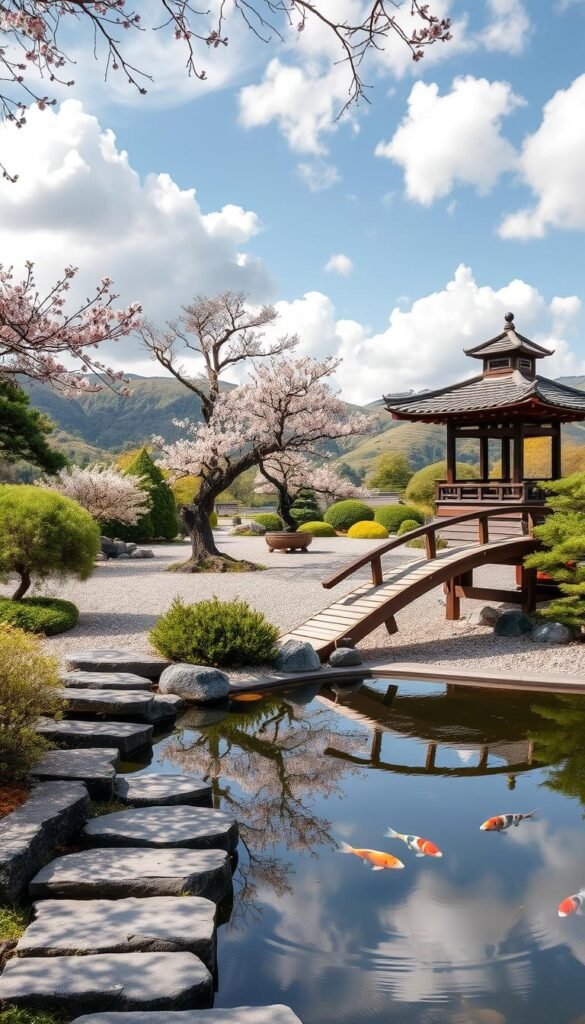
A small fountain near seating areas amplifies relaxation through soothing sounds. Place ponds in eastern zones to boost renewal or northern areas for career support. Moving water symbolizes prosperity while keeping energy fresh.
Anchor key areas with statement pieces—a sculptural tree centerpiece or mosaic stepping stones. These landmarks give chi purposeful destinations, preventing energy from scattering. Your focal points become both artistic expressions and functional guides for vitality.
Practical Tips for Feng Shui Garden Furniture & Accessories
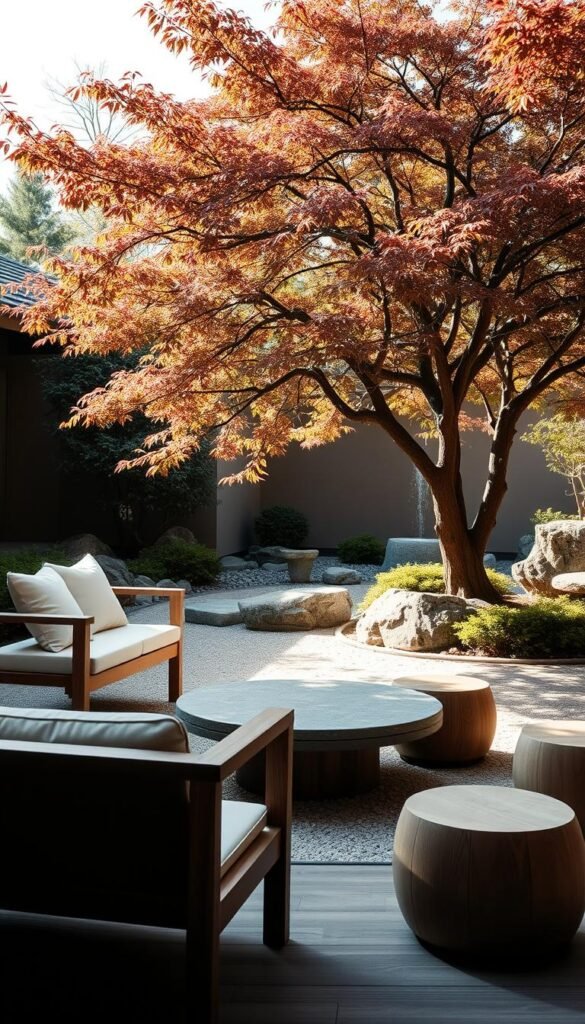
Your outdoor seating areas become energy conductors when designed with intention. The right choices in materials and layouts turn ordinary spots into hubs for connection and growth. Let’s explore how to select and position pieces that amplify your garden’s positive vibrations.
Choosing Outdoor Furniture Made from Natural Materials
Teak and bamboo aren’t just durable—they create earthy connections in your space. These materials age beautifully while maintaining structural integrity, mirroring nature’s cycles. Avoid plastic substitutes that disrupt energy flow with artificial textures.
Consider these earth-friendly options:
- Recycled metal chairs with organic-shaped cushions
- Stone-topped side tables for grounding effects
- Woven rattan loveseats that invite lingering conversations
Arranging Seating Areas to Encourage Social Harmony
Position chairs in circular formations to promote equal participation. A round table at the center prevents energy from getting stuck in corners. Face seating toward garden entry points to welcome visitors while maintaining security.
Add a fire pit or small fountain as a gathering focal point. These elements spark interaction while keeping chi moving. Leave ample walking space between pieces—crowded areas create social tension and blocked energy.
Remember: Comfortable seating heights and soft textiles encourage relaxation. Mix lounge chairs with upright benches to accommodate different activities. Your garden becomes a stage for meaningful moments when every detail supports togetherness.
Creating Balance with the Five Feng Shui Elements
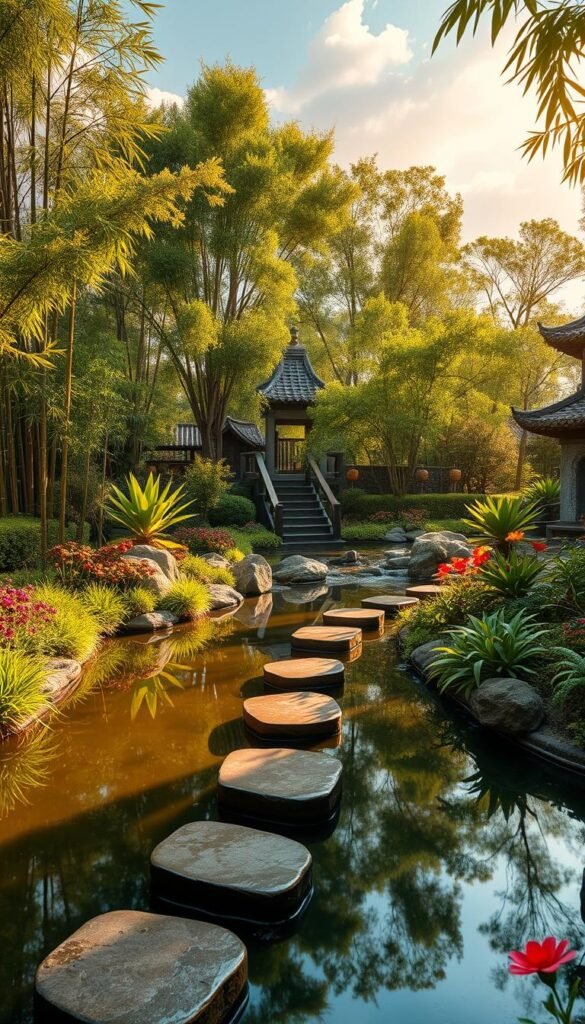
Nature speaks through five elemental languages in your outdoor space. When water, wood, fire, earth, and metal work together, they form a silent symphony of energy exchange. This delicate dance follows two patterns – the nourishing cycle that builds vitality and the controlling cycle that prevents dominance.
Integrating Water, Wood, Fire, Earth, and Metal
Each element needs thoughtful representation. A stone bench (earth) near a copper wind sculpture (metal) creates grounding stability. Add movement with a birdbath (water) and warmth through terracotta pots (fire).
| Element | Representation | Avoid Overuse |
|---|---|---|
| Water | Reflective surfaces | Near fire features |
| Wood | Bamboo screens | Sharp angles |
| Fire | Red flowering plants | Dry plant clusters |
Selecting Plants and Decor that Enhance Energy Flow
Choose foliage shapes that mirror elemental qualities. Round jade leaves (earth) complement spiky ornamental grasses (fire). Balance textures through smooth river stones and rough-hewn wood planters.
Consider these pairings:
- Dogwood trees (wood) with peonies (fire)
- Metal gazing balls near water features
- Earthenware pots holding bamboo stalks
Remember: Soft-edged plants guide energy gently. Avoid cactus varieties that create defensive vibrations. Your plant choices become living expressions of elemental harmony.
Embracing Tranquility and Inviting Abundance
Cultivating peace outdoors starts with aligning nature’s rhythms to your personal sanctuary. Your garden isn’t just an extension of your home—it’s a living partner in shaping your environment through feng shui principles. Focus on the southeast corner, known for attracting wealth, by planting vibrant blooms and thriving greenery to invite abundance.
Decluttering unlocks your space’s full potential. Clear pathways and remove dying plants to let energy flow freely, boosting mood and inviting luck. Like a tidy home, an organized garden creates room for positivity to flourish.
Add sensory touches—wind chimes or rustling grasses—to deepen peace. These elements transform your garden into a sanctuary where harmony thrives naturally. For more inspiration on creating balanced spaces, explore this guide to harmonious outdoor designs.
When every detail works together, your garden becomes a source of renewal. Prosperity grows where energy moves effortlessly, turning your outdoor area into a true reflection of wealth and balance.