
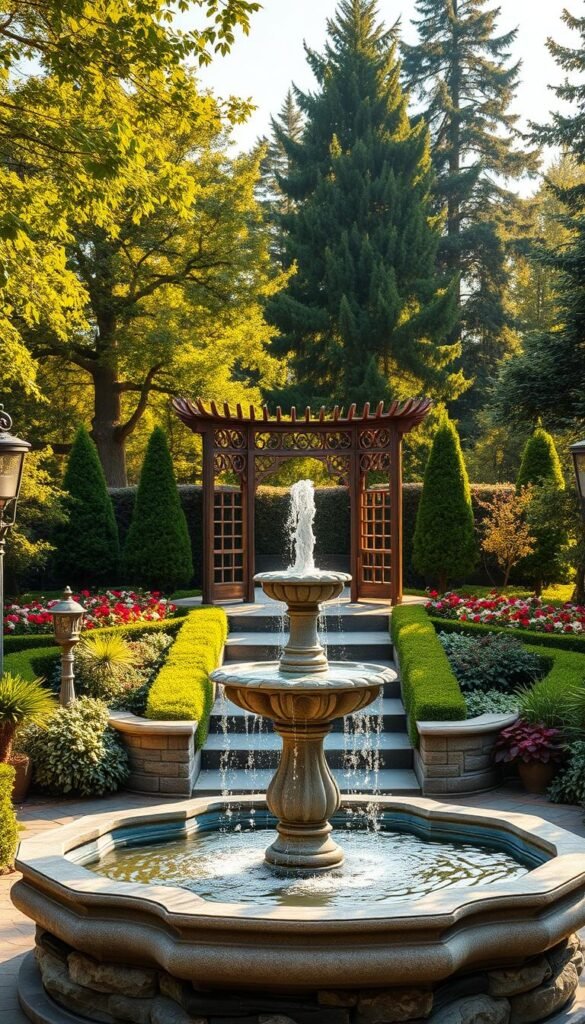
Ever walked through a stunning outdoor space that felt intentionally inviting? That’s the magic of strategic focal points. These elements act like visual magnets, guiding attention and creating harmony in your landscape. Whether it’s a bubbling fountain, a sculptural tree, or a bold bench, focal points give your garden structure and personality.
Why does this matter? Without a clear centerpiece, outdoor areas can feel cluttered or disjointed. A well-chosen focal element establishes hierarchy, telling viewers where to look first. It’s not just about beauty—it’s about creating flow. Your eye naturally follows these anchors, making small spaces feel larger and chaotic areas more organized.
Balance is key. Pair bold statements with softer textures to avoid overwhelming the senses. A crimson Japanese maple might shine against evergreen shrubs, while a stone pathway could lead to a subtle seating nook. This interplay creates depth and keeps visitors exploring.
Ready to transform your space? You’ll learn how to choose focal pieces that reflect your style while enhancing natural surroundings. Discover placement tricks, size considerations, and ways to use color effectively. Let’s turn your yard into a cohesive story that captivates from every angle.
Setting the Stage: Understanding Garden Focal Points
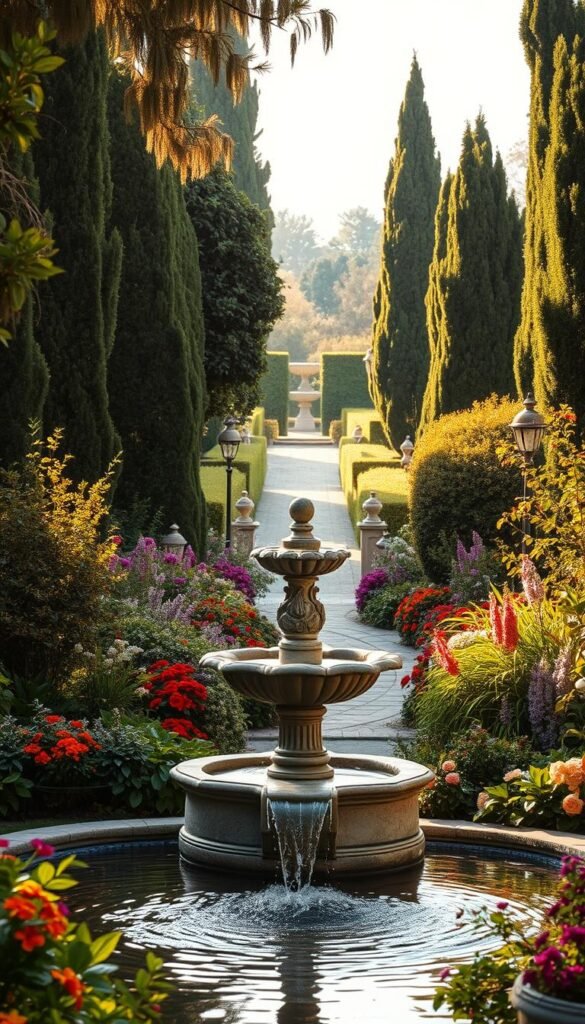
Imagine stepping into a backyard where every glance tells a story. Strategic focal points act like punctuation marks in your landscape’s narrative, directing attention and creating rhythm. These intentional accents transform ordinary spaces into curated experiences that invite exploration.
Why Focal Points Matter in Your Landscape
Without clear anchors, outdoor areas become visual noise. A well-placed specimen tree or artistic container gives eyes a place to land, turning chaos into calm. This approach doesn’t just beautify – it creates pathways for discovery, encouraging visitors to slow down and notice hidden details.
Creating Visual Hierarchy and Balance
Think of your garden as a gallery. Primary focal points (like a bubbling fountain) command immediate attention, while secondary elements (textured grasses or seasonal blooms) support the main act. This layered approach:
- Makes compact yards feel spacious through clever sightlines
- Guides movement naturally between zones
- Maintains interest year-round with evergreen structures
Balance bold statements with subtle companions. A crimson bench pops against neutral gravel, while a sculptural arbor gains impact when framed by airy vines. This interplay creates depth without overwhelming – the secret to spaces that feel both exciting and restful.
The Art of Focal Points: Drawing the Eye in Your Garden Layout
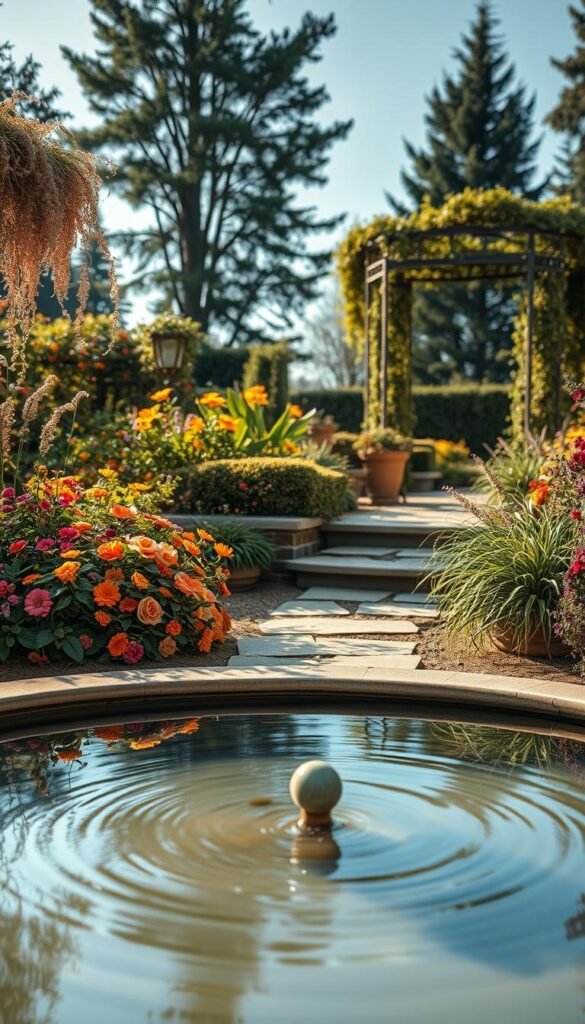
Ever notice how some gardens feel like they’re whispering secrets to visitors? Your space can achieve this magnetic quality through intentional focal point design. Start by identifying elements that echo your home’s architecture—a sleek metal sculpture for modern spaces or a weathered stone urn for cottage-style yards.
Choosing the Right Element for Emphasis
Size matters more than you think. A towering birch tree becomes a natural exclamation mark in expansive lawns, while compact patios shine with vertical planters or fire bowls. Consider sightlines from windows and seating areas—your star feature should captivate from multiple angles.
Techniques to Enhance Impact with Color, Texture, and Lighting
Transform ordinary elements into showstoppers with these pro strategies:
- Pair crimson poppies with silver-leaved Artemisia for color contrast that pulls eyes across beds
- Place smooth river rocks beneath feathery ornamental grasses to amplify texture differences
- Install adjustable LED spotlights to bathe evening focal points in warm, directional beams
Pathways become visual arrows when lined with contrasting materials. Try midnight-hued mulch bordering pale gravel walkways—they’ll guide guests straight to your masterpiece. Remember: placement determines power. Position key elements where shifting sunlight or moonlight naturally highlights their best features.
Incorporating Natural Elements and Architectural Features
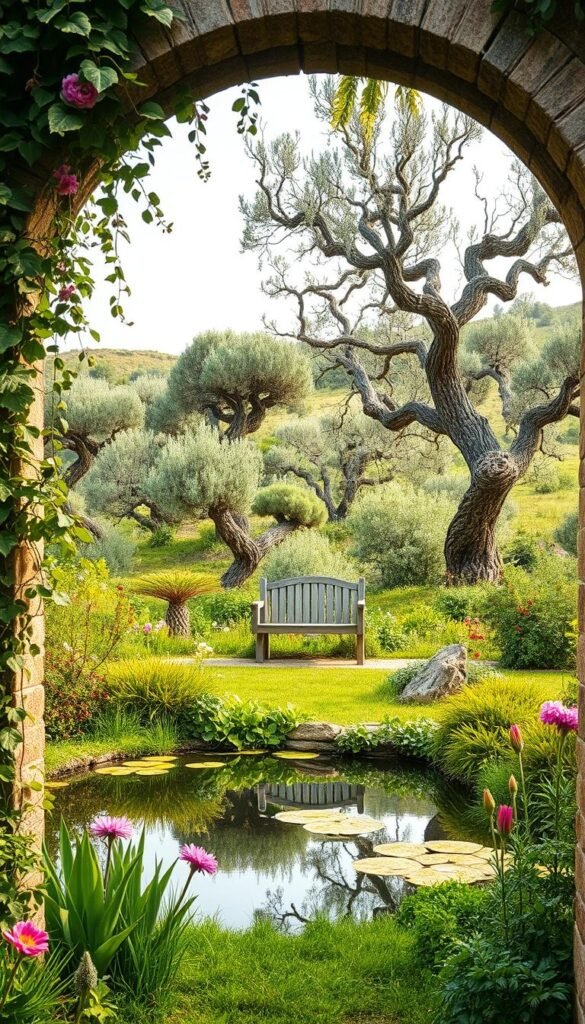
Your backyard becomes a curated experience when blending nature’s artistry with human craftsmanship. Strategic combinations of living elements and built structures create layered interest that evolves with the seasons.
Embracing Trees, Plants, and Unique Flora
Mature Japanese maples steal the show with fiery fall colors, while sculptural succulents add year-round texture. When selecting specimen trees, consider their winter silhouette – branching patterns become striking focal points after leaves drop. Pair columnar evergreens with container gardening displays for vertical contrast.
Utilizing Water Features and Garden Sculptures
A stone basin’s gentle trickle draws visitors closer, while abstract metal pieces spark curiosity. Position water elements where breeze amplifies sound – near seating areas or pathways. For sculptures, leave breathing room: surround bold pieces with low-growing groundcovers to let their forms dominate.
Strategic Use of Gazebos, Pergolas, and Decorative Containers
Vine-covered pergolas frame views like living picture frames. Place these structures where they’ll cast intriguing shadows or highlight sunset angles. Oversized planters work double duty – try pairing concrete troughs with airy ornamental grasses for design principles that balance weight and movement.
Bringing Your Vision to Life in Your Outdoor Space
Transform your outdoor area into a journey where every turn reveals intentional beauty. Take inspiration from designer Caroline Dawes, who anchors her Adelaide garden with a stunning Acer negundo tree. This natural focal point offers shade while drawing eyes upward with its branching patterns. Surrounding Murraya hedges frame the space, proving structure doesn’t mean sacrificing softness.
Clever placement turns functional elements into art. Steel clematis structures and playful ornaments like her ‘whirlygig’ guide visitors through beds without feeling forced. For formal spaces, she uses avenues of trees leading to endpoint features—a trick that adds depth even in smaller yards.
Balance bold choices with subtlety. Pair vibrant annuals with evergreen shrubs near seating areas. Let pathways curve toward water features or sculptural containers. Need help visualizing? Partnering with a residential landscape design expert can refine your ideas into cohesive plans.
Remember: great spaces evolve. Start with one strong anchor—a specimen tree or stone bench—then layer in supporting plants and textures over time. Your garden’s story unfolds through these intentional details, creating moments that linger in memory long after visitors leave.