
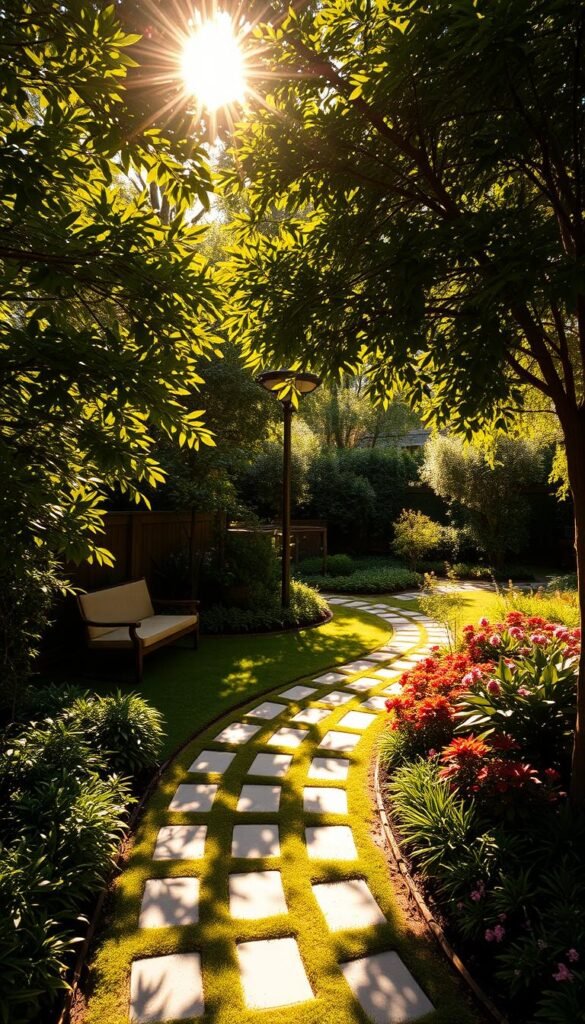
Creating a thriving outdoor space starts with more than just choosing pretty plants. Thoughtful arrangement ensures your greenery gets the right balance of light and protection while making the most of your yard’s unique conditions. Whether you’re working with sprawling beds or small-space gardening hacks, early preparation sets your plants up for success.
A smart approach prevents headaches later. By mapping sun patterns and wind exposure upfront, you’ll avoid costly replanting or struggling with plants that don’t thrive. Break your project into clear steps—like tracking light shifts over a week or grouping species by their needs—to build momentum without overwhelm.
Your layout acts as a seasonal guide, showing where to place sun-loving veggies versus shade-tolerant blooms. This strategy saves time and money by reducing guesswork, letting you shop purposefully and use every inch effectively. Plus, it adapts as your vision grows, blending today’s priorities with tomorrow’s dreams.
Understanding Your Garden Space and Sunlight Patterns
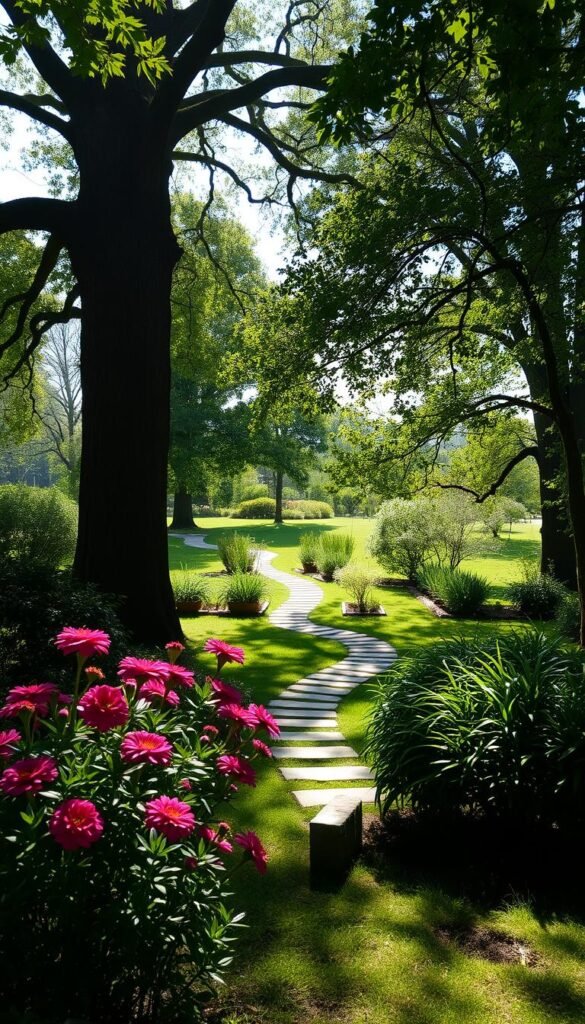
Your garden’s success begins with knowing its unique rhythm of light and shadow. Start by sketching your yard’s boundaries and noting permanent features like trees or sheds. These elements shape your sun exposure and create microclimates that affect plant health.
Assessing Sun Exposure and Shady Areas
Grab a notebook and record light patterns every two hours for three days. Circle areas receiving 6+ hours of direct sun—these full sun zones work best for tomatoes and peppers. Partial shade spots (3-6 hours) suit leafy greens, while deep shade areas need hostas or ferns.
Measuring and Mapping Your Garden Dimensions
Use a tape measure to document length and width twice—errors here lead to overcrowded plants. If you’re working with a small backyard, graph paper helps visualize vertical growing options. Note where morning sun hits first—these warm-up spots extend growing seasons for cool-weather crops.
Don’t forget airflow! Check where wind tunnels form between structures—these areas dry soil faster. Mark low spots where water pools after rain, perfect for moisture-loving plants. With this map, you’ll place each plant exactly where it thrives.
Soil Conditions, Planting Zones, and Companion Planting Techniques
Great gardens are built on strong foundations of earth and strategy. Your plants’ performance depends as much on underground conditions as sunlight exposure. Matching species to your soil’s personality prevents struggles and boosts yields.
Evaluating Soil Quality and Amendments
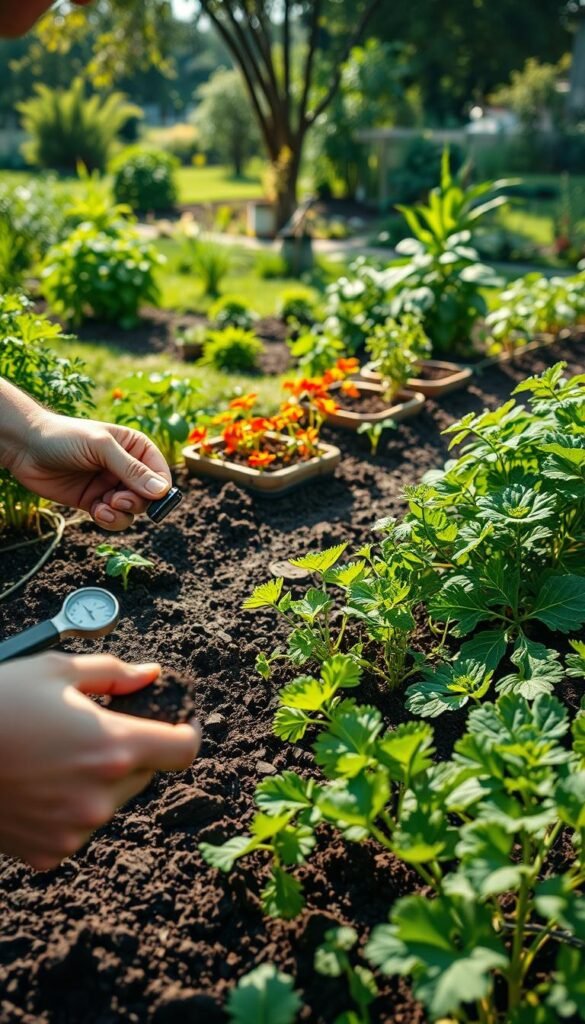
First, identify your earth type. Squeeze a handful—sandy dirt crumbles quickly, clay forms sticky clumps, while loam holds shape briefly. Each type supports different species. For example, carrots thrive in loose sand, but kale prefers denser soil where it grows best.
Testing reveals hidden needs. DIY kits measure pH and nutrients like nitrogen. Results guide amendments—compost enriches poor earth, while peat moss improves drainage. Regular additions of organic matter feed microbes that keep your underground ecosystem thriving.
Identifying Companion Planting Opportunities
Smart pairings create natural pest control and growth boosts. Basil repels flies near tomatoes, while marigolds deter nematodes around squash roots. Tall corn supports bean vines, and leafy greens shade carrot seedlings from harsh sun.
Avoid combinations that compete. Onions stunt peas, and potatoes struggle near cucumbers. For tight spaces like a square foot garden, pair radishes with slow-growing spinach—you’ll harvest roots before leaves need room.
Step-by-Step: Planning a Garden Design Layout Optimized for Sunlight and Shade
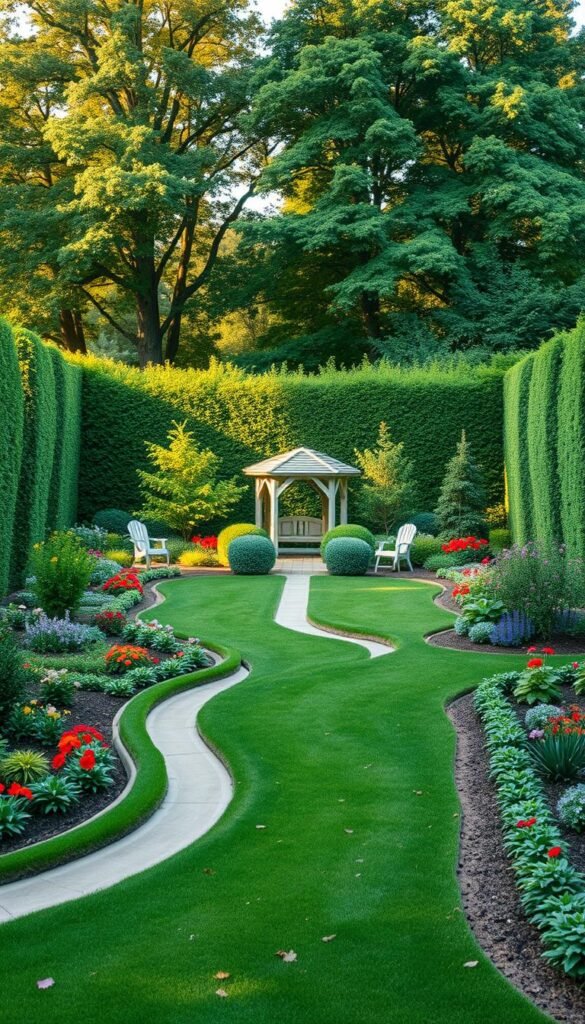
Your outdoor oasis begins with a clear roadmap. Like building a house, your green space needs precise measurements and smart zoning to thrive. Start by grabbing grid paper or a digital tool—accuracy here prevents overcrowding later.
Charting Your Garden Blueprint
First, outline your space’s boundaries. Mark every permanent feature: pathways, fences, and structures like pergolas. These elements form your foundation—they’ll influence sunlight paths and traffic flow for years.
Next, layer in trees and shrubs. Consider their mature size—a sapling today could cast deep shade in five years. Group plants with similar soil and moisture needs to simplify care. For example, place acid-loving blueberries away from alkaline zones.
| Structural Elements | Plant Placement | Design Considerations |
|---|---|---|
| Pathways, raised beds | Tomatoes (full sun) | Morning light access |
| Pergolas, sheds | Hostas (shade) | Wind protection |
| Irrigation lines | Lavender (dry soil) | Harvest access routes |
“A well-drawn plan turns guesswork into growth.”
Finally, map flower beds and veggies using your sunlight notes. Tall plants like sunflowers belong north of shorter crops. Need ideas? This square foot gardening layout maximizes small spaces beautifully.
Your blueprint becomes a shopping list and seasonal guide. Update it as plants succeed or conditions change—it’s a living document for your living landscape.
Choosing the Right Plants for Sun, Shade, and Seasonal Growth
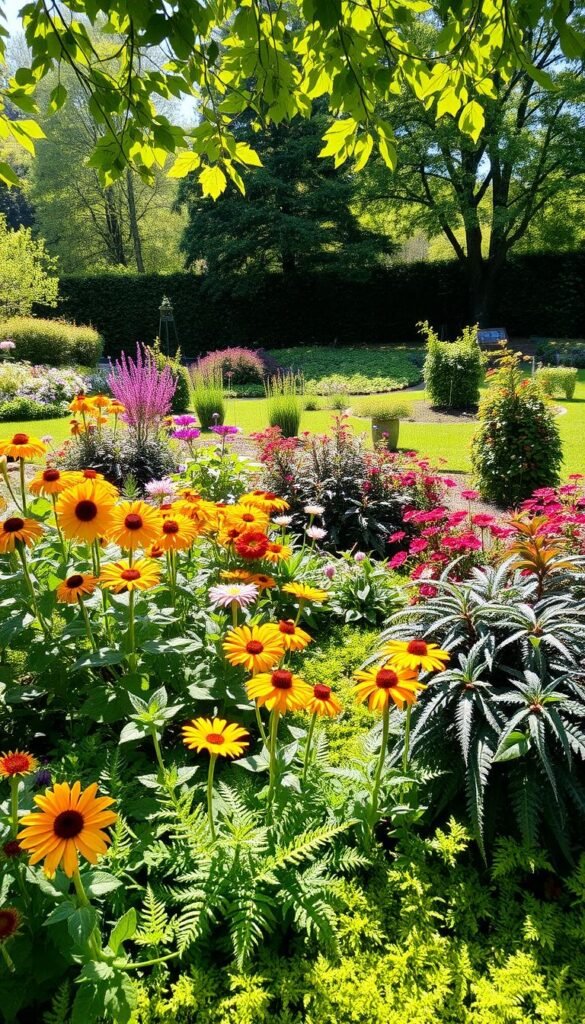
Smart plant selection transforms sunlight into harvests and shadows into opportunities. Match species to your mapped light zones for healthier growth and fewer headaches. Let’s explore how to pair greenery with your space’s unique conditions.
Strategies for Full Sun versus Partial Shade Planting
Sun-worshipping veggies demand prime real estate. Tomatoes crave 6-8 hours of direct light—plant them where morning rays hit first. Peppers and eggplants thrive in similar conditions, producing sweeter fruits under intense summer beams.
Shady corners needn’t go unused. Spinach and lettuce flourish with just 3-4 hours of filtered light. Try Swiss chard under fruit trees—their dappled shade prevents bolting in heat waves. Hostas add texture to dark corners while repelling slugs naturally.
Integrating Companion Planting Concepts
Some plants play nice together. Basil shields tomatoes from hornworms while boosting their flavor. Marigolds protect squash roots from nematodes—a colorful defense squad. For quick container gardening success, pair radishes with carrots—they’ll mature at different times.
Avoid combos that compete or attract pests. Keep potatoes away from tomatoes to prevent blight spread. Onions stunt pea growth, while fennel inhibits most veggies. Smart pairings create living mulch systems—try sprawling cucumbers beneath corn stalks.
| Full Sun Stars | Shade Champions | Power Pairs |
|---|---|---|
| Tomatoes (8hr) | Spinach (3hr) | Basil + Tomatoes |
| Peppers (7hr) | Kale (4hr) | Marigolds + Squash |
| Eggplant (6hr) | Mint (Filtered) | Nasturtium + Cucumbers |
Creative Garden Layout Ideas to Maximize Space and Productivity
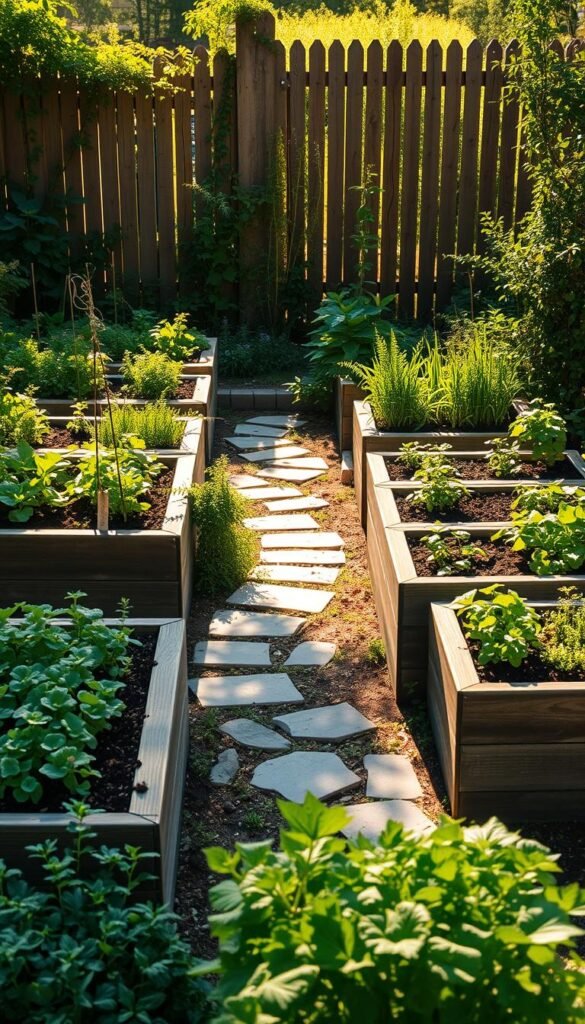
Transform your growing area into a powerhouse of productivity with clever spatial strategies. Whether working with sprawling yards or compact corners, smart arrangements let you grow more while keeping maintenance manageable. Let’s dive into methods that turn limitations into opportunities.
Exploring Vertical Gardening and Raised Beds
Raised beds solve multiple challenges at once. Their 10-12 inch depth prevents soil compaction, while 4×8 foot dimensions offer easy access from all sides. Build them with cedar planks or repurposed materials like cinder blocks—just avoid treated wood near edibles.
Go vertical to multiply your planting real estate. Train peas on trellises or let cherry tomatoes climb cages. Hanging baskets work wonders for strawberries and herbs, freeing ground space for root veggies. This approach shines in urban settings where every square foot counts.
Layering Techniques for Visual Appeal
Mix heights and textures to create living tapestries. Place tall sunflowers behind mid-height peppers, with creeping thyme spilling over bed edges. This “food forest” effect looks stunning while maximizing light usage.
| Layout Method | Best For | Productivity Boost |
|---|---|---|
| Square Foot | Small spaces | 16 plants per 4×4 area |
| Block Planting | Companion groups | Natural pest control |
| Vertical Stacking | Vining crops | 2x yield per sq ft |
Try intercropping—sow quick-growing radishes between slower broccoli plants. You’ll harvest roots before leafy neighbors need the room. These space-saving ideas keep your plot productive from spring frost to fall harvest.
Wrapping Up Your Garden Planning Journey
Cultivating success starts with turning plans into action. Your organized approach transforms overwhelming tasks into achievable steps. Break projects into phases—soil prep first, then planting—to build confidence as each element falls into place.
Create a master supply list before shopping. You’ll save time and money by avoiding multiple trips for forgotten items. Group essentials like compost, trellises, and seeds by priority to streamline purchases.
Expect surprises—weather shifts or pest visits—but your blueprint helps adapt quickly. Jot notes in a gardening journal weekly. Track what thrives and where adjustments may need attention next cycle.
Celebrate first-year wins, whether bumper tomato crops or shade-loving hostas that flourished. Each growing season deepens your understanding of sunlight patterns and plant partnerships.
Remember: Great gardens evolve. Your initial plan serves as a foundation, not a final exam. With each season’s lessons, you’ll refine placements, experiment with new varieties, and grow alongside your green oasis.