
Imagine stepping into a landscape where every corner tells a story. When foliage fades in colder months, artistic touches like stone carvings or metalwork become the stars of your garden. Wendy Diaz, a Master Gardener volunteer, proves this with her woodland-inspired space featuring a stone bird bath and hand-carved seating that draws attention year-round.
These creative additions do more than fill empty spots. They create moments of discovery – guiding visitors along paths or offering quiet spots to relax. A concrete statue near a feeder or rustic chairs under trees turns ordinary areas into conversation starters.
Seasonal changes don’t have to leave your outdoor space feeling bare. As year-round garden décor shows, thoughtful placement ensures visual harmony even when flowers sleep. From classic statues to modern abstract pieces, each element adds layers of texture and personality.
You’ll soon see how blending creativity with nature’s rhythms transforms yards into living galleries. Let’s explore how to choose pieces that reflect your style while enhancing your landscape’s natural beauty.
Understanding the Role of Sculptural Elements
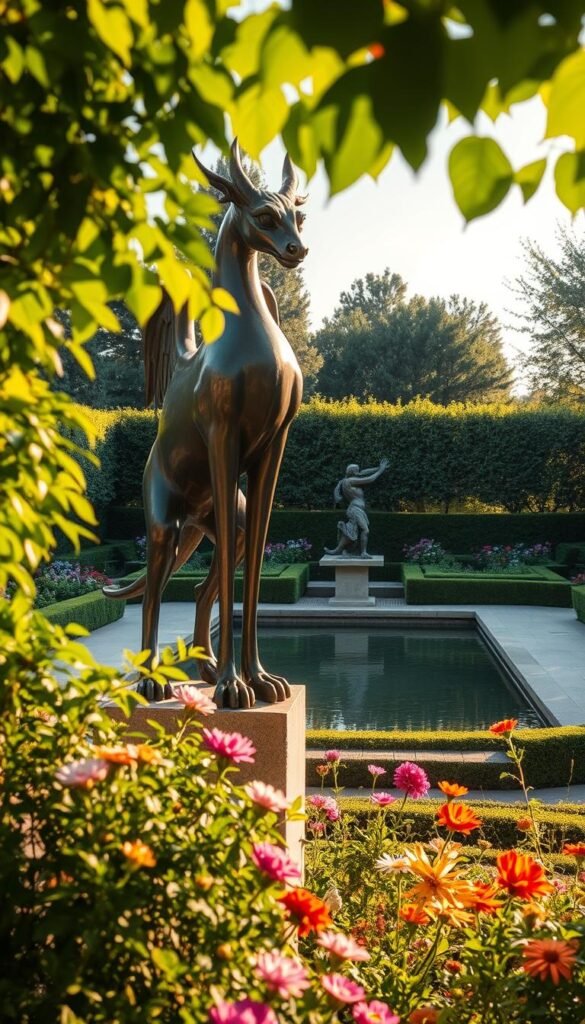
Your outdoor space becomes a living canvas when art and nature collaborate. Sculptures act as visual anchors, guiding eyes through winding paths or framing quiet corners. These pieces don’t just occupy space—they shape experiences by adding rhythm to your landscape.
Defining Focal Points in Your Garden
A well-placed sculpture instantly becomes the star of your garden. Think of it like punctuation in a sentence—it tells visitors where to pause or explore further. Tall metal spirals or carved stone benches work beautifully to break up greenery while creating depth.
Focal points also serve practical roles. They mark transitions between areas, like moving from a wildflower patch to a tidy seating nook. This approach turns ordinary yards into dynamic outdoor rooms that feel intentional.
Enhancing Visual Appeal Throughout the Year
When frost silences blooms, sculptures keep your space lively. A rusted iron gate or polished ceramic orb adds texture against snowy backdrops. These elements prevent winter landscapes from feeling flat or lifeless.
Choose materials that age gracefully, like weathered bronze or smooth concrete. Position pieces where sunlight dances across surfaces during shorter days. This ensures your garden remains a place of discovery, no matter the season.
Selecting the Perfect Sculptures for Your Space
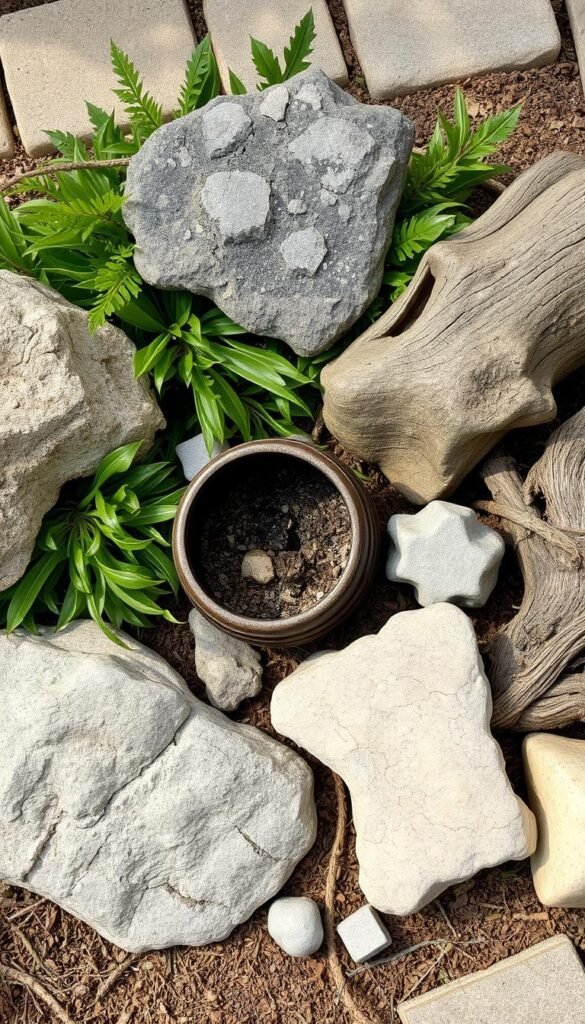
Choosing sculptures for your outdoor area requires balancing practicality and creativity. Think of each piece as a conversation starter that works with your landscape’s natural flow, not against it.
Considering Materials, Size, and Style
Your sculpture’s materials determine its durability and vibe. Corten steel develops a warm rust patina over time, perfect for modern spaces. Stone pieces blend into cottage gardens, while glass adds sparkle to minimalist designs.
Size matters more than you think. A towering metal spire might overwhelm a cozy patio but could anchor a sprawling lawn. For small yards, try compact art pieces that draw eyes upward instead of outward.
Matching Art to Your Garden’s Theme
Asian-inspired spaces shine with carved stone lanterns, while rustic gardens pair well with weathered iron. Modern layouts demand clean lines—think polished steel spheres or geometric glass forms.
Your style choices should echo existing elements. A DIY mosaic birdbath adds whimsy to cottage beds, while sleek concrete forms complement contemporary architecture. Always leave room for pieces that make you smile when you spot them.
Planning Your Garden Layout with Artistic Intent
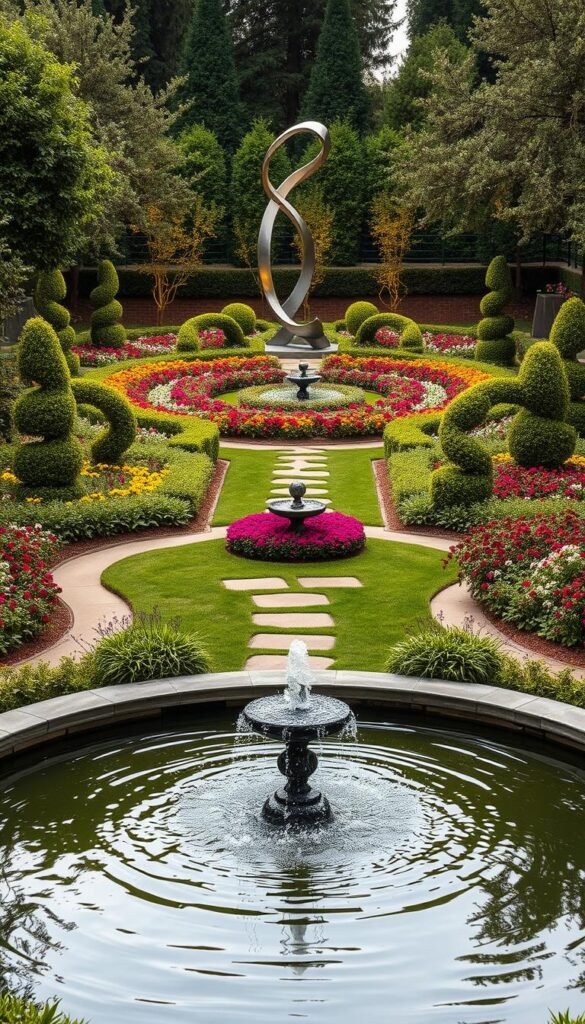
Transform your yard into a series of purposeful spaces that invite exploration. Think of your garden as a house without walls, where each “room” serves a unique function. A dining patio, meditation corner, or pollinator zone becomes distinct through smart design choices and sculptural anchors.
Creating Distinct Outdoor Rooms
Start by mapping zones based on how you’ll use each space. A vegetable plot needs different energy than a reading nook. Define boundaries using low hedges, gravel paths, or vertical sculptures. In dining areas, try a metal arch draped with vines. For quiet corners, place a stone basin where water reflects sunlight.
| Room Type | Function | Suggested Sculpture |
|---|---|---|
| Dining Area | Social gatherings | Overhead metal framework |
| Contemplation Zone | Relaxation | Reflective stone basin |
| Wildlife Hub | Nature observation | Branch-inspired bronze piece |
Strategic Placement for Maximum Impact
Corners naturally pull attention – use them wisely. Position a tall ceramic vase where two paths meet, or nestle a wrought-iron chair amid ferns. These placement tricks create visual breadcrumbs that guide visitors deeper into your landscape.
Empty spots along walkways? Try a trio of concrete spheres that echo nearby plant shapes. For creative gardening ideas, mix functional art with greenery. A sculpted bench marking path turns becomes both a seat and a signpost.
Remember: every focal point should hint at what’s next. A mosaic birdbath near your rose garden whispers “stay awhile,” while an abstract metal form points toward hidden wildflowers. Your design tells a story – make each chapter worth discovering.
Incorporating Sculptural Elements into Your Garden Design for Visual Impact
Turn your outdoor area into a gallery that evolves with the seasons using smart placement and lighting strategies. The key lies in choosing pieces that feel rooted in their surroundings while adding unexpected charm.
Tips and Techniques for Seamless Integration
Start by spacing art pieces like punctuation marks – let each one breathe. Three sculptures in a large yard create rhythm; one bold statement piece shines in compact spaces. Match heights to nearby plants: low stone carvings beside ground cover, tall metalwork behind shrubs.
Water elements like cascading fountains or reflective basins add motion near static sculptures. This contrast keeps eyes moving without overwhelming viewers. Always leave clear paths around installations for easy maintenance and natural plant growth.
Illumination and Highlighting Art Pieces
Solar-powered spotlights cast soft glows on sculptures after dusk. Angle them to create dramatic shadows that change with the moon. Use timers or motion sensors to limit light pollution – wildlife thrives in darkness, and so does stargazing.
In winter, uplight frost-covered statues for ethereal effects. Summer calls for subtlety: string lights draped over arbors nearby let art pieces whisper rather than shout. Remember – your lighting should frame the garden, not flood it.
Embracing Modern Trends in Outdoor Art
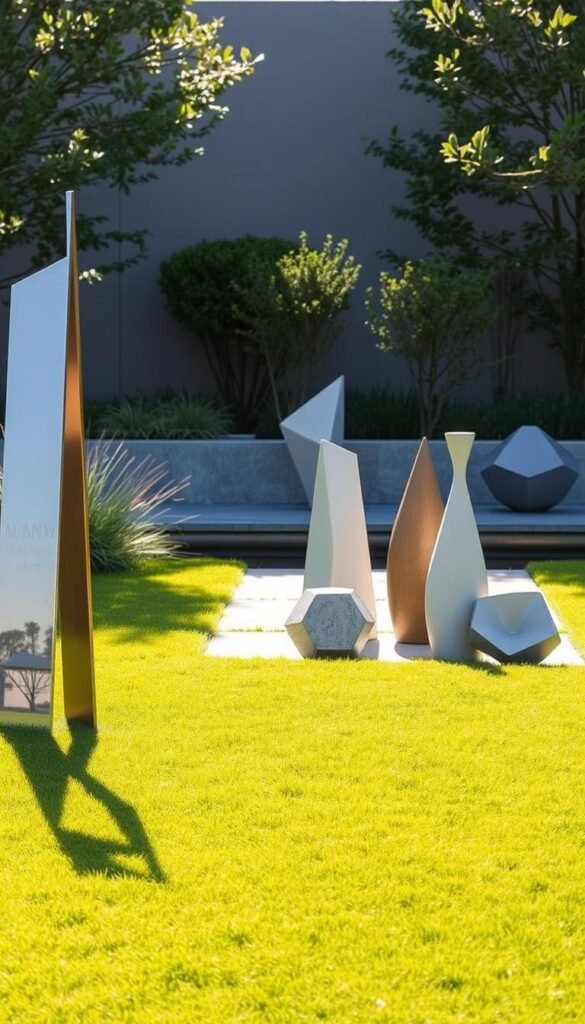
Modern gardens are becoming interactive art installations where design meets discovery. Landscape artists now use cutting-edge materials to craft pieces that challenge traditional views of outdoor spaces.
Integrating Contemporary Materials and Designs
Corten steel steals the spotlight with its warm rust tones that evolve over time. This metal pairs beautifully with natural textures, creating striking contrasts against greenery. Architects also experiment with tempered glass sculptures that catch sunlight like prisms, casting rainbow patterns across your garden.
Abstract geometric shapes dominate current trends. A triangular steel structure might throw sharp afternoon shadows that morph into soft silhouettes at dusk. These dynamic interactions with light make your space feel alive, even when plants rest.
Sustainability drives material choices too. Recycled metal alloys and locally sourced stone reduce environmental impact while ensuring durability. One artist notes: “Modern art shouldn’t just decorate nature – it should converse with it.”
Interactive elements invite deeper engagement. Think wind-activated mobiles or mirrored surfaces that reflect cloud movements. These pieces turn visitors into participants, encouraging them to linger and interpret their surroundings anew.
Maintenance and Durability of Garden Sculptures
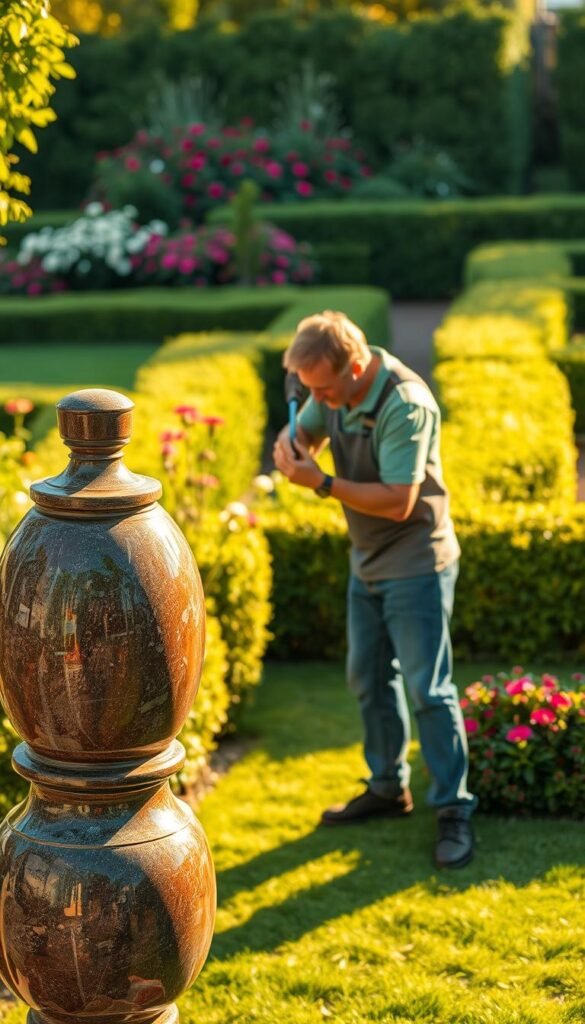
Keeping your artistic pieces vibrant requires smart care. Materials like Corten steel or bronze age beautifully but need regular attention to maintain their timeless beauty. Start by learning your sculpture’s unique needs – what works for stone won’t suit glass.
Routine Care and Upkeep Strategies
Create seasonal checklists for your garden art. Spring calls for gentle washing with soft brushes, while autumn demands debris removal from crevices. For metal sculptures, apply protective wax coatings twice yearly to prevent corrosion.
| Material | Care Routine | Protection Tips |
|---|---|---|
| Corten Steel | Monthly rust inspection | Clear leaf buildup |
| Natural Stone | Annual sealing | Prevent moss growth |
| Bronze | Biannual polishing | Use anti-tarnish cloths |
Protective Measures Against Weather Challenges
Position pieces where plants provide natural shelter from harsh sun. In snowy regions, wrap delicate items in breathable fabric. One gardener shares: “My ceramic owl survived three winters thanks to strategic placement under a pine tree.”
Consult artists for tips on preserving patinas or finishes. Always leave clearance around installations – you’ll thank yourself when cleaning time comes. With proper care, your garden art becomes a lasting dialogue between creativity and nature.
Reflections on Elevating Your Outdoor Space with Garden Art
Your garden becomes a living storybook when art and nature intertwine. Each sculpture or decorative piece adds chapters of texture, color, and personality to your landscape. These creative touches turn ordinary yards into spaces that spark joy across all seasons.
Balance is key. Let your plants and art work as partners, not rivals. A weathered stone bench peeking through lavender or a mosaic birdbath nestled among ferns blends beauty with purpose. For those drawn to cottagecore charm, repurposed items like vintage teacups or wooden crates add whimsy without overpowering nature’s rhythm.
Don’t fear experimentation. Mix materials like smooth ceramics with rough-hewn logs. Place smaller pieces along pathways to create moments of discovery. Larger installations make bold statements in open areas, anchoring your design while inviting closer inspection.
Your outdoor space reflects your unique vision. Whether through polished steel forms or handcrafted clay pots, every choice weaves creativity into the environment. As seasons shift, your garden art becomes a testament to thoughtful design – proof that beauty thrives where imagination meets the earth.