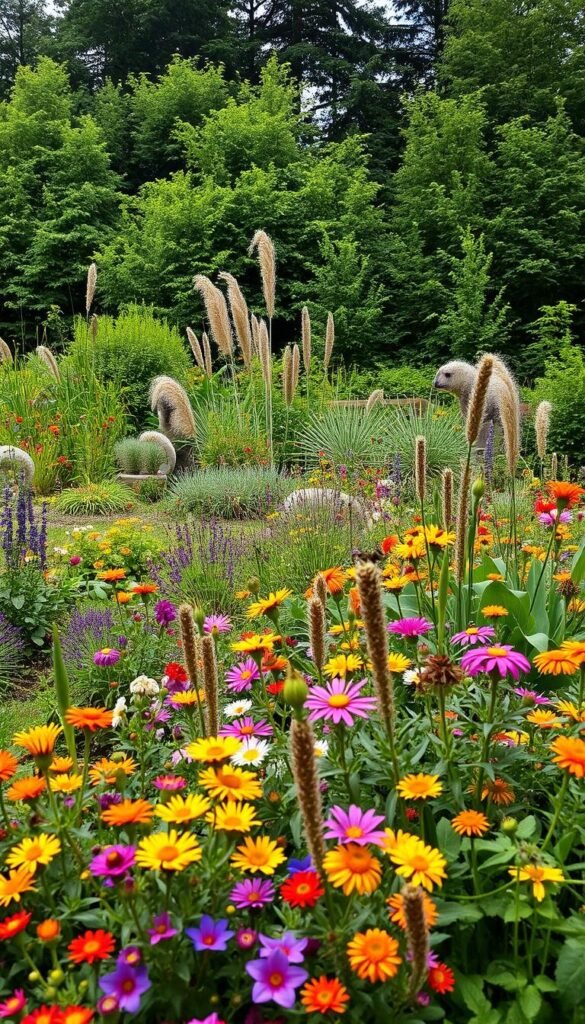
Did you know common backyard birds like sparrows and finches have declined by nearly 50% since 1970? The National Audubon Society warns habitat loss from development leaves wildlife struggling to survive. Your yard could become their lifeline.
Traditional lawns often lack food sources and shelter for creatures. By rethinking your approach, you create more than beauty – you build habitats. Four key elements transform spaces: native plants, water access, nesting areas, and pesticide-free care.
Choosing region-specific plants boosts biodiversity while cutting maintenance. These natural survivors need 60% less water than imported species. They also support three times more pollinators – crucial as bee populations drop.
Smart landscape strategies help reverse environmental damage. Rainwater systems can reduce waste by 40%, while compost improves soil health naturally. Your choices directly impact local conservation efforts, from monarch butterflies to songbirds.
This approach benefits your family too. Expect fewer chemicals, lower bills, and vibrant life outside your window. You’ll join a growing movement balancing beauty with ecological responsibility – one garden at a time.
Understanding Your Local Ecosystem
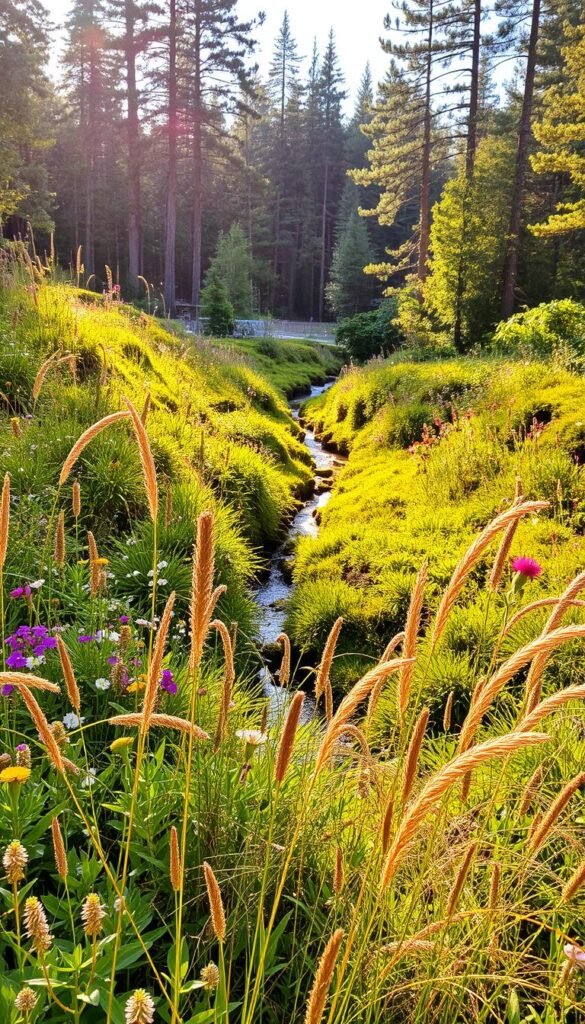
Every property holds clues to its natural past. Start by uncovering your “ecological address” – the unique combination of plants and animals that thrived there before development. As Steven Saffier from the Audubon Society suggests:
“What grew here before your home existed? Replicating those patterns creates real habitat.”
Identify natural partners
Visit local nature centers or native plant societies to learn your area’s original flora. Many offer free soil tests and species lists. For example, oak trees support over 500 insect species – vital food for birds. Remove invasive plants choking out these natural relationships.
Map hidden patterns
Your yard has microclimates affecting plant success. Track sunlight hours, wind patterns, and drainage areas. Sandy soil in sunny spots? Try drought-tolerant grasses. Clay-heavy shade areas? Ferns might thrive. Seasonal observations reveal where butterflies nectar or frogs breed.
Extension services provide pH test kits and regional planting calendars. Document findings in a simple sketch noting existing trees, slopes, and wildlife activity zones. This becomes your blueprint for working with nature rather than against it.
Assessing Your Site for a Sustainable Garden
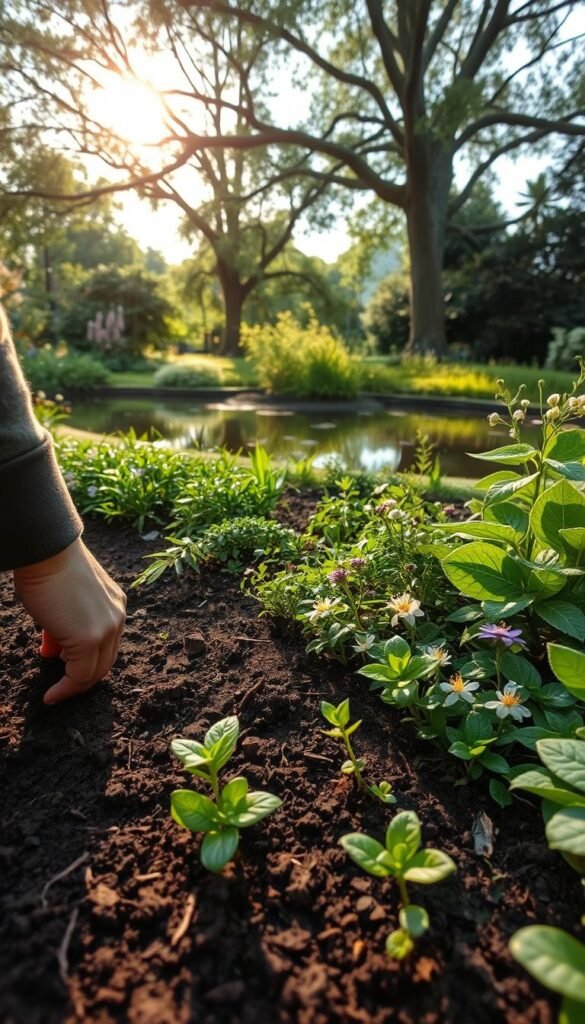
Your yard holds untapped potential to become a thriving habitat. Start by walking your property with fresh eyes – observe how sunlight dances across different areas and where puddles linger after rain. This hands-on analysis forms the foundation of eco-conscious landscape design.
Evaluate What’s Already Growing
Create a plant inventory using apps like iNaturalist or local native plant guides. Mark keepers like milkweed that feed monarch butterflies. Remove invaders like English ivy that smother native plants. Your soil tells stories too – test its pH and texture in multiple areas.
Water Wisdom Mapping
Track how water moves through your site during storms. Note natural drainage paths and erosion spots. These observations help position rain barrels or bioswales. Consider this simple water audit table:
| Soil Type | Drainage Speed | Best Native Plants |
|---|---|---|
| Sandy | Fast | Blazing Star, Beach Sunflower |
| Clay | Slow | Swamp Milkweed, Blue Flag Iris |
| Loamy | Moderate | Black-Eyed Susan, Purple Coneflower |
Document slopes and low spots where water collects. These micro-zones become opportunities – a soggy corner could host a frog-friendly pond. Pair your findings with regional climate data to maximize natural resources.
Remember, every cracked patio or shady nook tells part of your landscape’s story. By listening to these clues, you’ll create spaces where nature does most of the work.
Incorporating Native Plants for Biodiversity
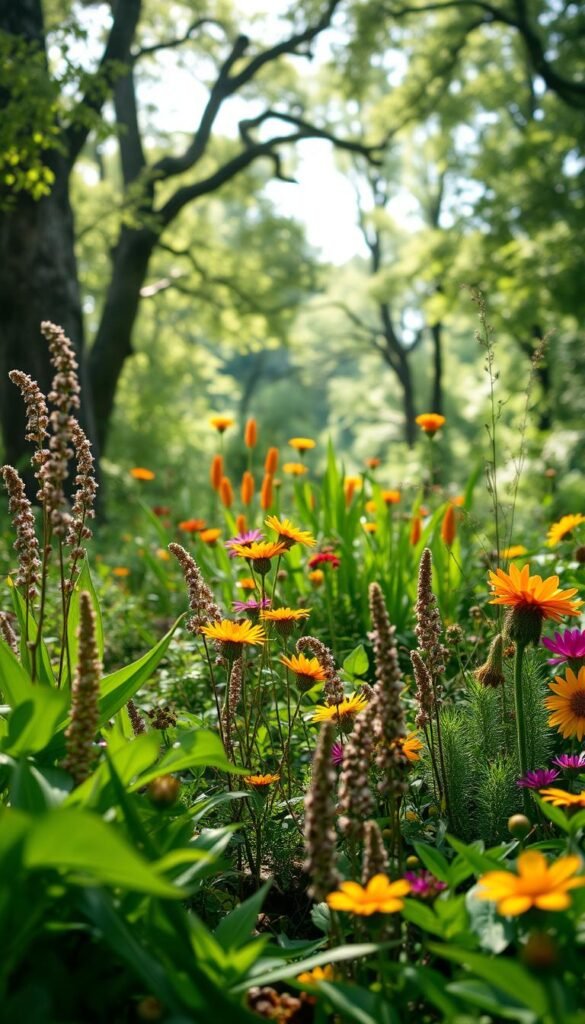
Imagine your backyard buzzing with life as regional flora becomes a sanctuary for local creatures. Native species form the backbone of healthy ecosystems, offering tailored solutions for your landscape’s unique needs.
Selecting Plants That Thrive Locally
Start by matching plants to your soil type and sun exposure. Coastal areas might host beach sunflowers, while mountain regions suit columbines. This table shows popular options:
| Plant | Wildlife Supported | Bloom Time |
|---|---|---|
| Purple Coneflower | Butterflies, Goldfinches | Summer-Fall |
| Oak Trees | 500+ Insect Species | Spring |
| Milkweed | Monarch Caterpillars | Summer |
| Manzanita | Hummingbirds | Winter |
Visit native nurseries for region-specific varieties. Their experts often share growing tips you won’t find online.
Benefits for Wildlife and Pollinators
Local plants provide food exactly when animals need it. Early bloomers feed emerging bees, while seed heads sustain birds through winter. Clusters of flowering shrubs create safe corridors for small mammals.
Consider creating a pollinator haven with staggered bloom times. A mix of groundcovers, grasses, and trees offers nesting spots and shelter year-round. You’ll soon spot new bird species and beneficial insects patrolling your space naturally.
Creating Water Features and Natural Habitats
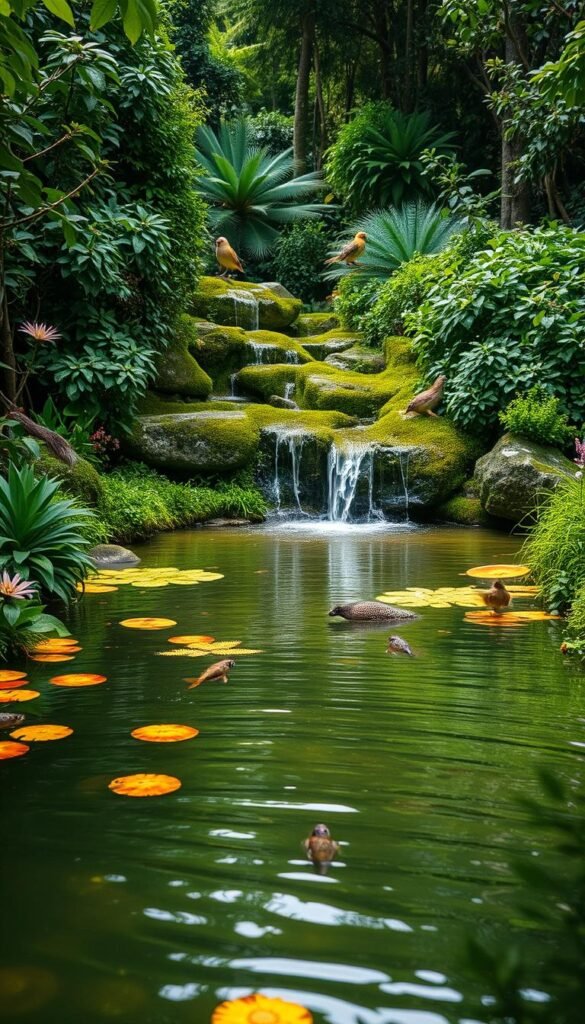
Water transforms your yard into a wildlife oasis. Three elements attract diverse animals while enhancing your space’s natural charm: birdbaths for drinking, ponds for amphibians, and mineral-rich puddles for butterflies.
Design Essentials for Thriving Wildlife
Start with shallow dishes for bird species needing safe perches. Add stones to help small creatures climb out. Steven Saffier advises:
“Rocks in butterfly baths prevent drowning while offering minerals.”
Consider these water sources for different needs:
| Feature | Purpose | Depth | Maintenance |
|---|---|---|---|
| Birdbath | Drinking/Bathing | 1-2 inches | Daily refresh |
| Pond | Frog Habitat | 18+ inches | Monthly cleaning |
| Puddling Area | Butterfly Minerals | 0.5 inches | Weekly scrub |
Position features near trees or shrubs for quick escape routes. Rain gardens work double duty – they filter runoff while creating moist zones for dragonflies. In winter, use heated birdbaths to prevent ice buildup.
Pair water features with native plants like buttonbush. Their flowers provide food, while their roots filter water naturally. Avoid standing water by adding fountain pumps or mosquito dunks. You’ll soon host thirsty towhees and jewel-winged damselflies!
Planning a Garden Design That Supports Local Ecosystems
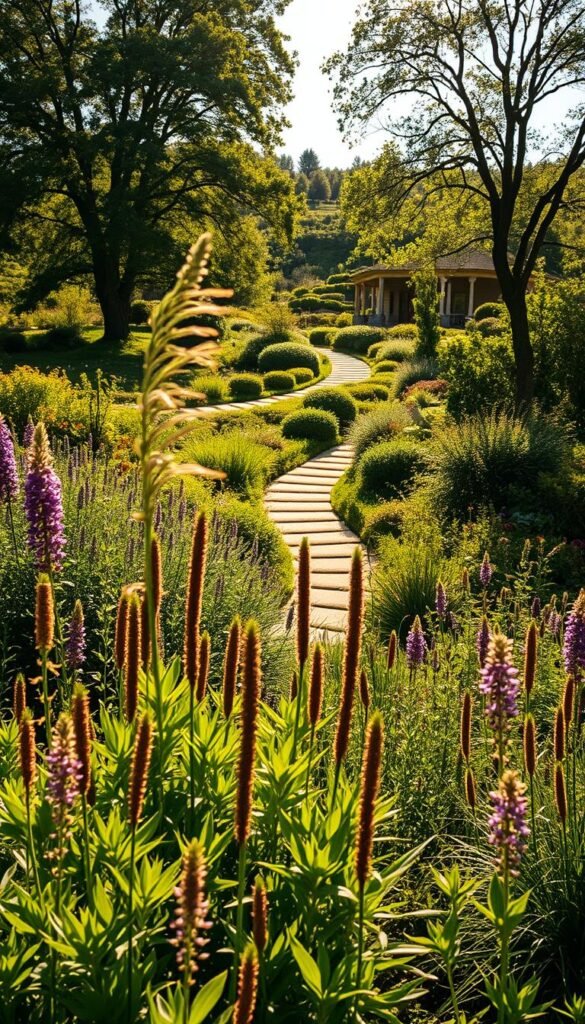
Your outdoor space becomes a living canvas when designed with intention. Start by sketching priority zones – where do you need shade? Where does water collect? These observations shape your layout. Three core principles guide success: working with existing conditions, using local materials, and creating multi-purpose areas.
Building Your Green Blueprint
Begin with these steps for your site:
- Mark existing trees and drainage patterns
- Define human-use areas (seating, paths)
- Design wildlife corridors connecting habitats
Phase installations to match your budget. Year one could establish a rain garden, year two add native hedgerows. This table shows sample timelines:
| Phase | Features | Cost Estimate |
|---|---|---|
| 1 | Soil prep & key plants | $300-$500 |
| 2 | Water features | $150-$800 |
| 3 | Hardscaping | $20/sq.ft |
Smart Resource Integration
Source materials within 50 miles when possible. Local stone makes durable paths, while municipal compost programs often offer free mulch. Partner with neighbors through community green spaces to share tools and plants.
Group plants by water needs to simplify maintenance. Drought-tolerant species thrive in sunny spots, while moisture-lovers belong near downspouts. This approach cuts watering by 40% while supporting pollinators. Your landscape becomes a tapestry of textures and colors that changes with the seasons.
Designing for Beneficial Insects and Pollinators
Your green space can become a bustling hub for nature’s hardest workers. Strategic choices create safe havens where beneficial insects and pollinators thrive while boosting your garden’s health naturally.
Attracting butterflies, bees, and birds
Group flowering plants in clusters of three or more for visual impact. Early bloomers like crocuses fuel spring bees, while late stars like goldenrod prep monarchs for migration. Follow seasonal planting guides to maintain nectar flows from April frosts to autumn chills.
Add shallow dishes with stones for drinking spots. Leave some bare ground for solitary bees and brush piles for ladybug hideouts. Native plants provide perfect nesting sites when left standing through winter – their seed heads feed bird species like chickadees.
Smart pairings multiply benefits. Try marigolds with veggies to repel pests naturally. Fragrant herbs like basil attract hoverflies that devour aphids. Each choice strengthens your wildlife habitat while solving garden challenges.
Watch your yard transform into a living web of connections. Birds snatch caterpillars from milkweed, bees dance between coneflowers, and lacewings patrol your tomatoes. This vibrant ecosystem rewards you with beauty, balance, and the quiet pride of stewardship.