

What if your backyard could tell stories of centuries past while meeting modern needs? Many homeowners are discovering how combining historical inspiration with fresh ideas transforms ordinary yards into personal sanctuaries. This approach respects cultural roots through thoughtful details while embracing today’s focus on practicality.
Imagine a space where Japanese Zen principles meet sleek concrete planters. Picture French symmetry softened by drought-resistant native plants. Our guide shows how these pairings create visually striking environments that serve multiple purposes – from relaxation zones to eco-conscious habitats.
You’ll find inspiration in mixing vintage and modern elements that honor craftsmanship without sacrificing convenience. Wrought iron arches framing climbing roses demonstrate how classic materials gain new life alongside contemporary layouts. These choices often improve water efficiency and reduce upkeep through smart plant selection.
The magic happens when contrasting textures and forms work together. A weathered stone path might lead to geometric seating, while native grasses soften angular hardscapes. For more ideas on balancing function with beauty, explore our gardening aesthetic tips that prioritize sustainability alongside style.
This design philosophy isn’t about choosing sides – it’s about crafting spaces that feel both familiar and exciting. By merging time-tested patterns with innovative materials, you create landscapes that adapt to changing needs while maintaining their soul.
Exploring the Historical Roots and Modern Inspirations
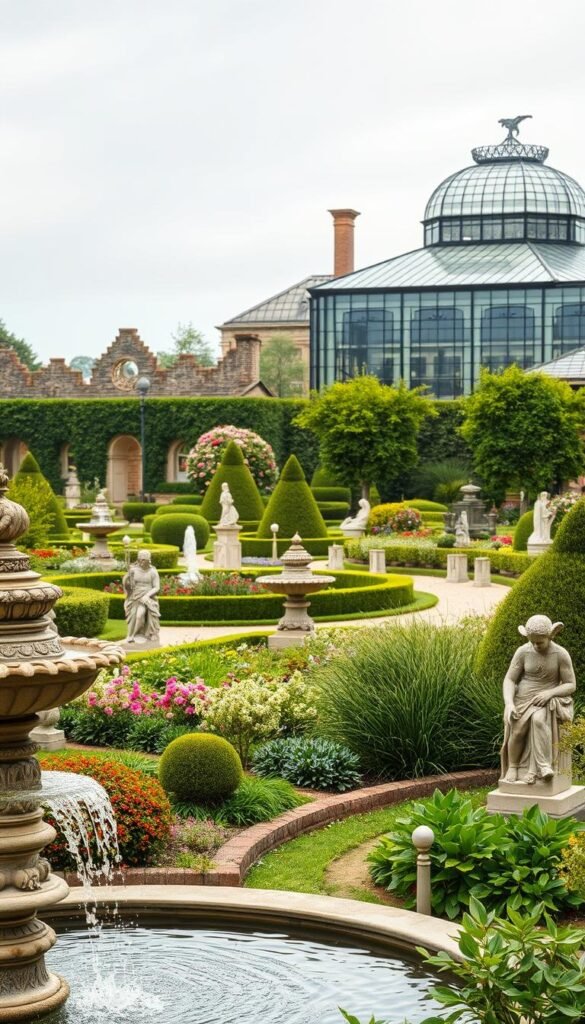
Gardens hold centuries of stories in their soil, offering living lessons about how different cultures shaped nature. Today’s best landscape architecture honors these narratives while solving modern challenges like urban density and climate resilience.
Cultural Wisdom in Living Canvases
Japanese Zen gardens teach mindfulness through raked gravel patterns, while French parterres showcase mathematical precision. These time-tested features aren’t just pretty – they’re philosophical statements about humanity’s relationship with earth. Moroccan courtyard gardens, with their shaded fountains, demonstrate ancient solutions for desert living.
Modern Shapes Meet Timeless Truths
Concrete planters and corten steel screens now partner with heritage roses and olive trees. London’s Sky Garden proves skyscrapers can host cloud-level meadows, while Florida’s Morikami Museum pairs minimalist buildings with traditional tea gardens. This fusion creates multi-functional spaces where geometry and wildness coexist.
Green Solutions for Concrete Jungles
Urban oases like Berlin’s Prinzessinnengärten show how abandoned lots become community food forests. “Green infrastructure isn’t decoration – it’s essential city plumbing,” notes landscape architect Kate Orff. These spaces cool neighborhoods, filter rainwater, and give bees highways of native blooms.
From Brooklyn rooftop farms to Melbourne’s vertical gardens, today’s best projects prove historical patterns adapt beautifully to modern needs. They create breathing rooms where stone lanterns share space with solar lighting, and heritage apple trees grow beside recycled plastic benches.
Mastering Blending Traditional and Contemporary Garden Design Styles Seamlessly
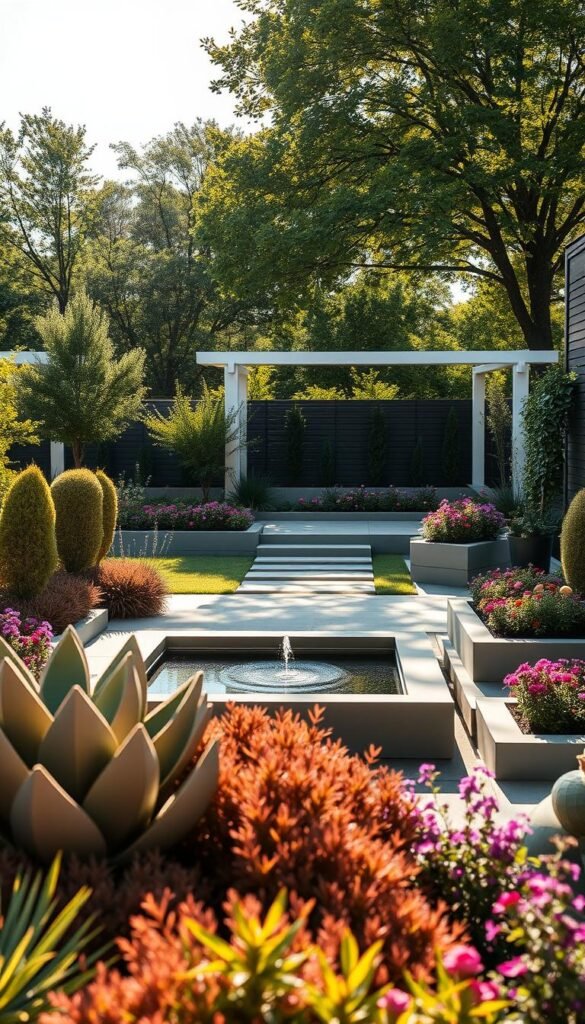
Creating harmony between different eras in your yard starts with smart spatial planning. The secret lies in treating your landscape like a conversation between old and new – where each element responds to its neighbor while serving clear purposes.
Expert Tips for Integrating Elements
Begin by establishing visual anchors. A rectangular stone patio (classic) paired with angular metal planters (modern) creates instant dialogue. Use clean lines in pathways or retaining walls to unite mismatched features. “Think of geometric patterns as your universal translator,” suggests Denver landscaper Mia Torres. “They help diverse designs speak the same language.”
When selecting plants, prioritize multi-taskers. Ornamental grasses soften concrete edges while needing little water. Hydrangeas in sleek pots offer vintage charm with modern convenience. For unexpected flair, try creative gardening ideas like vertical herb walls framed by brick arches.
Balancing Functionality with Aesthetic Appeal
Your home‘s outdoor areas should work as hard as they charm. Built-in stone benches double as retaining walls, while gravel zones reduce lawn maintenance. Contrast rough-hewn wood pergolas with smooth composite decking – textures that please both eye and touch.
Remember scale when mixing eras. A massive antique urn might overwhelm a minimalist space, but three small vintage pots along a concrete stairway? Perfect. Use repetition sparingly: matching modern light fixtures along a historic-style fence creates rhythm without monotony.
Lastly, leave room for evolution. Container gardens let you test plant choices before permanent planting. As seasons change, so can your balance of time-honored and trending elements – keeping your landscape fresh yet grounded.
Creating Outdoor Spaces that Celebrate Dual Design Elements
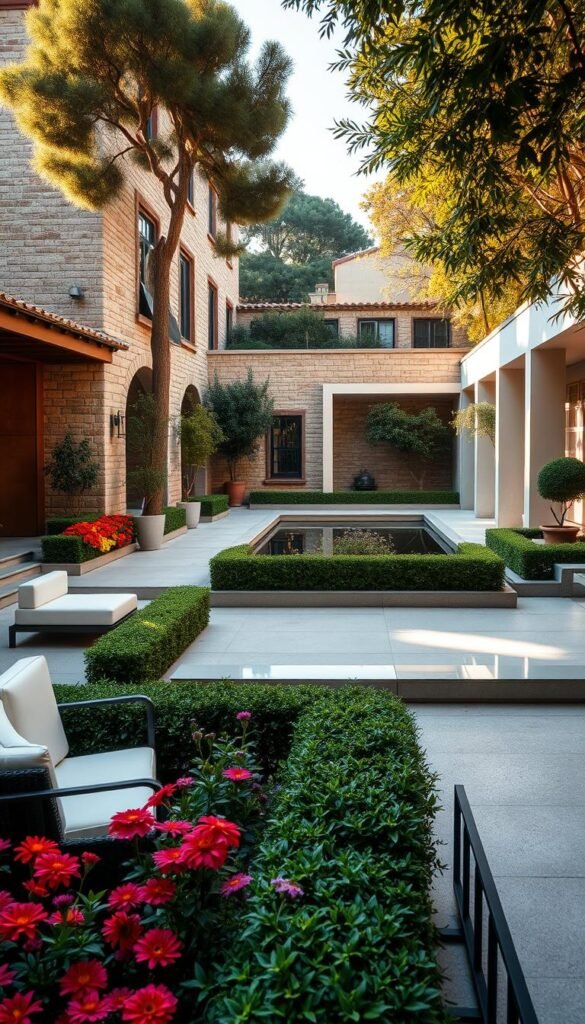
Your backyard can become a stage where history and innovation perform together. Smart zoning lets you host sunset dinners on reclaimed stone patios while fragrant peonies nod to classic English gardens nearby. This approach turns ordinary yards into multi-layered experiences that honor craftsmanship and modern living.
Designing Zones for Outdoor Living and Entertaining
Start by mapping activity areas. A fire pit zone with weather-resistant concrete seating pairs perfectly with adjacent herbaceous borders bursting with lavender and geum. Use permeable pavers for walkways – they handle rain like modern champions while echoing cobblestone charm.
Outdoor kitchens shine when framed by living walls of thyme or rosemary. At the BBC Gardeners’ World Spring Fair, designers mixed porcelain-paved dining areas with cloud-pruned evergreens. “Your materials should tell two stories,” says landscape designer Elena Cruz. “Recycled composite decking feels current but nods to sustainable traditions.”
| Feature | Traditional Element | Contemporary Counterpart |
|---|---|---|
| Pathways | Crushed gravel | Pervious concrete |
| Seating | Wrought iron benches | Powder-coated aluminum |
| Water Features | Tiered fountains | Recirculating wall streams |
| Lighting | Lantern-style posts | Solar-powered LEDs |
Lighting bridges eras beautifully. Uplight heritage roses with warm spotlights, then outline sleek pergolas with cool-toned strips. For rustic charm, try repurposed items as planters beside geometric water features.
Remember balance. A modern fire bowl becomes cozier surrounded by loose-grass plantings. Let each zone serve clear purposes while sharing materials or colors for unity. Your landscape becomes a curated collection of moments – each thoughtfully designed, collectively unforgettable.
Bringing It All Together for an Inviting Outdoor Oasis
Your yard becomes a living masterpiece when every choice serves purpose and beauty. Start by selecting plants that bridge eras – native wildflowers nodding beside sculpted evergreens. These choices create movement while supporting bees and butterflies.
Add character with handmade backyard living spaces using natural materials. Stack stones into bug hotels near modern seating areas. Mossy logs become art when paired with geometric planters, proving sustainability needs no compromise.
Smart lighting ties your vision together. Solar path lights guide evening strolls past heritage roses, while LED strips highlight sleek water features. This mix ensures energy efficiency without sacrificing ambiance.
Maintain balance through seasonal tweaks. Prune formal hedges using time-tested methods, then refresh mulch with recycled bark. Your home‘s outdoor areas evolve gracefully, blending yesterday’s wisdom with tomorrow’s innovation.
Ultimately, your space reflects what matters – a retreat that feels both timeless and uniquely yours. Every detail, from pollinator-friendly borders to smart irrigation, weaves together comfort, ecology, and self-expression.