
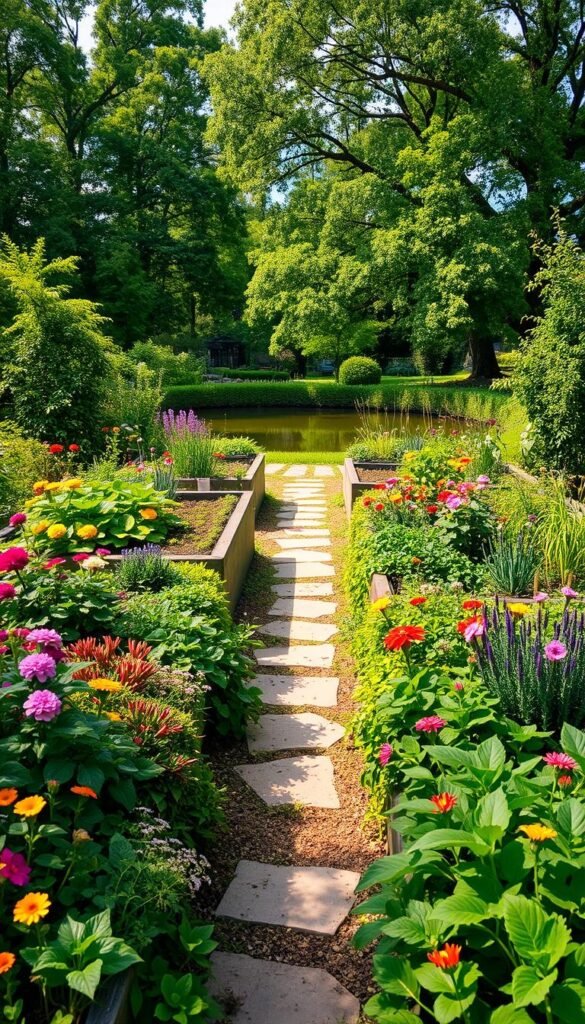
Imagine transforming your yard into a vibrant ecosystem that nurtures life above and below the soil. This approach goes beyond aesthetics, focusing on practices that heal the land while providing beauty and function. At its core lies regenerative principles, where every choice supports soil vitality and natural balance.
Your journey starts beneath your feet. Healthy soil acts as a living foundation, storing carbon and feeding plants through complex microbial networks. By prioritizing organic matter and avoiding chemicals, you create conditions where beneficial organisms flourish. This isn’t just gardening—it’s active participation in environmental restoration.
Diversity becomes your greatest ally. Mixing native plants, flowers, and food crops builds resilience against pests and weather extremes. Birds, pollinators, and soil microbes form interconnected relationships, mirroring patterns found in wild ecosystems. Your space becomes a refuge where life collaborates rather than competes.
You’ll discover how thoughtful layouts reduce water use and maintenance while increasing biodiversity. From rainwater harvesting to companion planting, each element serves multiple purposes. These strategies don’t just benefit your immediate surroundings—they contribute to broader climate solutions through carbon capture and habitat creation.
Ready to craft an outdoor area that gives back to the earth? Let’s explore how intentional design choices can turn your plot into a thriving sanctuary for people and wildlife alike.
Understanding Eco-Friendly Garden Concepts
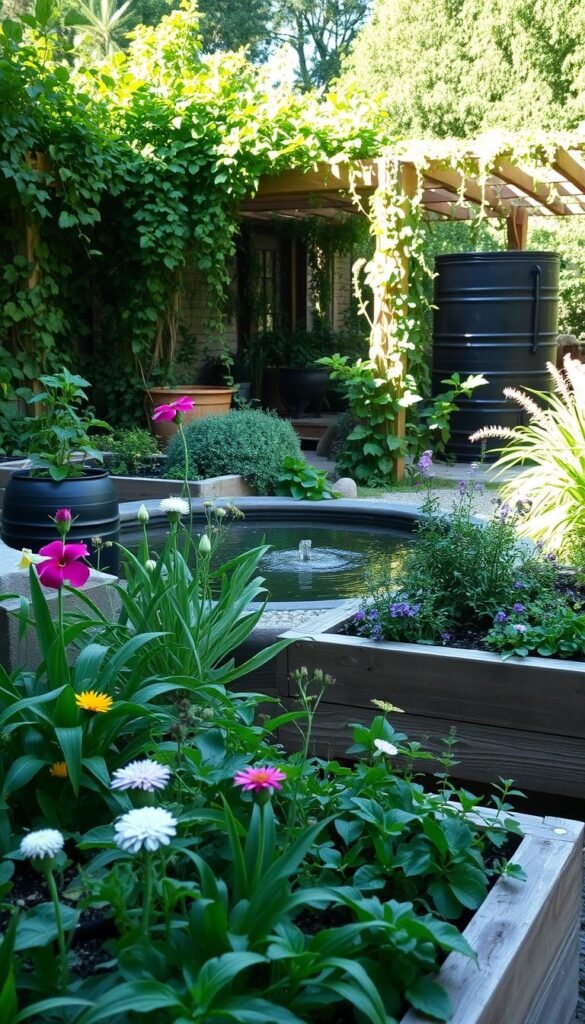
Every yard can evolve into a dynamic partner in environmental health. By blending smart design with nature’s rhythms, you create spaces that work with the planet rather than against it. Let’s explore how these principles benefit both your household and the wider world.
Why Your Landscape Choices Matter
Thoughtful planning turns ordinary plots into climate allies. As landscape architect Julie Moir Messervy notes:
“Great design doesn’t fight nature—it amplifies her strengths while softening human impact.”
This philosophy shines when youcreate an eco-friendly gardenthat supports local ecosystems.
Triple Benefits of Green Spaces
Eco-conscious designs deliver value on multiple fronts. Consider these measurable impacts:
| Benefit Type | Immediate Impact | Long-Term Value |
|---|---|---|
| Environmental | 12-15% carbon reduction | Enhanced soil health |
| Economic | 30% lower water bills | 5-10% property value increase |
| Social | Healthier outdoor activities | Stronger community bonds |
These strategies align with permaculture gardening design principles, where every element serves multiple purposes. You’ll notice more birds visiting, fewer pests troubling your plants, and richer soil requiring less fertilizer over time.
Mapping Your Garden Site for a Sustainable Future
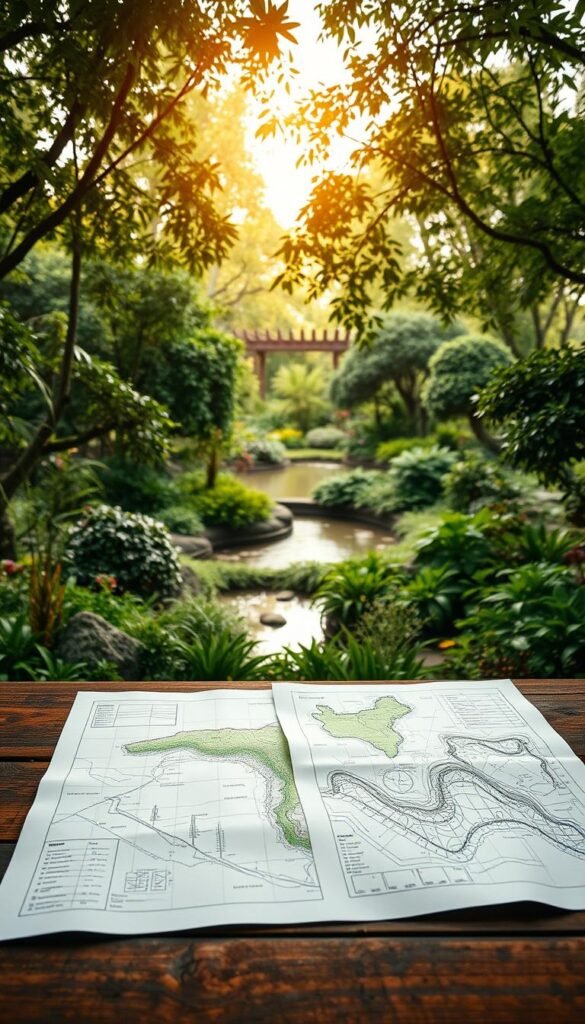
Your garden holds hidden patterns waiting to be discovered. Like a detective, you’ll uncover how sunlight dances across your space and where water collects after storms. This groundwork ensures your plans align with nature’s blueprint.
Site Analysis and Current Conditions
Start by walking your land at different times. Notice where morning frost lingers or afternoon shade dominates. These microclimates influence plant survival. Test your soil texture—sandy, clay, or loam—and check pH levels using a $10 kit from garden stores.
Create a simple table to track findings:
| Step | Focus Area | Tools/Methods |
|---|---|---|
| 1 | Sun Exposure | Hourly observations |
| 2 | Soil Quality | DIY test kits |
| 3 | Drainage Patterns | Water flow after rain |
Creating a Detailed Garden Map
Sketch existing trees, slopes, and structures on graph paper. Use colored pencils to mark problem zones like erosion areas. Circle spots where rainwater pools—these could become natural irrigation hubs.
Join local community urban gardens to exchange mapping tips. Your final map becomes a living document, adapting as you implement design changes that respect your site’s unique conditions.
Embracing Native Plants and Enhancing Biodiversity
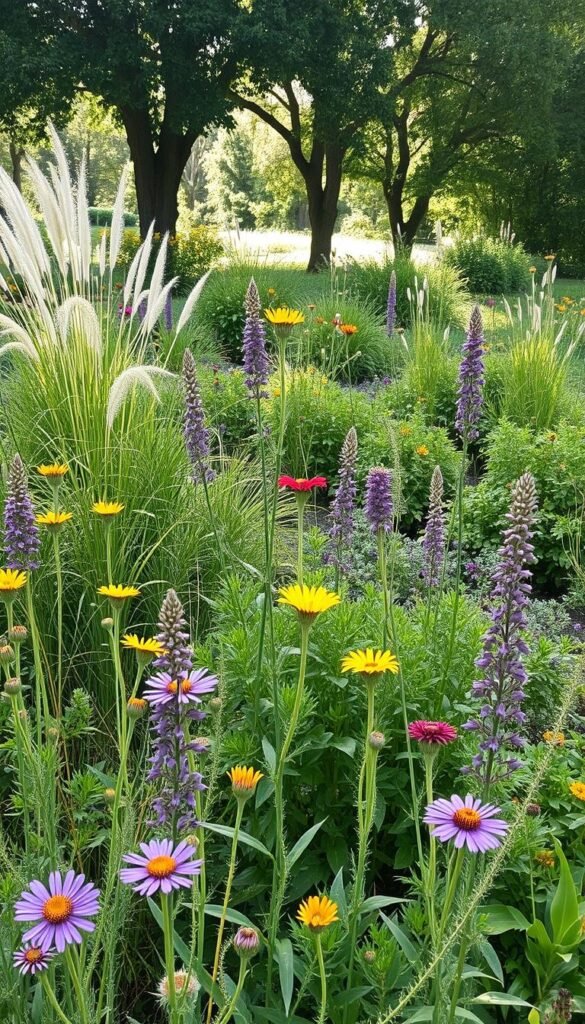
Local ecosystems depend on the choices you make in your own yard. By selecting species that evolved in your region, you create a living network that supports wildlife and requires fewer resources. These natural allies already know how to thrive in your soil and climate.
Working with Nature’s Champions
Native species like milkweed or purple coneflower act as powerhouses for local biodiversity. They’ve spent centuries adapting to your area’s rainfall patterns and temperature swings. You’ll water less, skip synthetic fertilizers, and enjoy more pollinators visiting your space.
Try interplanting strategies—grow fragrant herbs beside vegetables or mix flowering perennials with shrubs. This approach mimics natural plant communities, creating habitats for beneficial insects. As landscape designer Thomas Rainer observes:
“Diversity above ground builds resilience below ground.”
Your selections also contribute to larger environmental goals. A single oak tree supports over 500 insect species, while native wildflowers feed struggling bee populations. For inspiration on blending beauty with ecological function, explore our guide on elevating your space with a gardening.
Building Eco-Friendly Garden Designs for Sustainable Outdoor Living
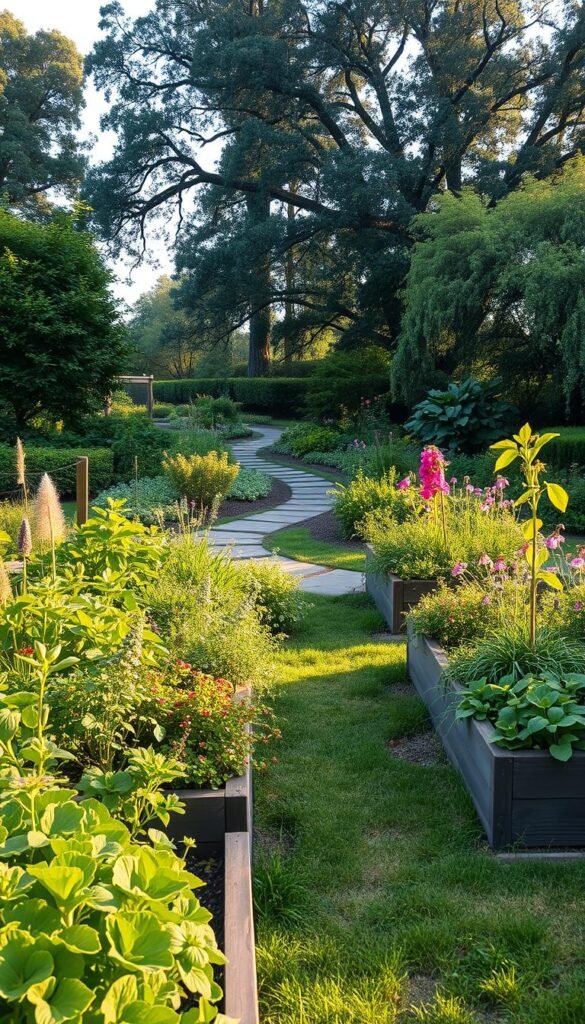
Your outdoor area becomes a living laboratory where every material and method strengthens environmental balance. This approach transforms spaces into self-sustaining systems that repair ecosystems while serving practical needs.
Designing with Regenerative Principles
Closed-loop systems turn fallen leaves into mulch and rainwater into irrigation. Permeable pathways allow water to nourish plant roots instead of flooding streets. Every element works double duty—trellises grow food while shading seating areas, and compost bins become habitat hubs for beneficial insects.
| Material Type | Carbon Impact | Best Uses |
|---|---|---|
| Locally sourced stone | 40% lower emissions | Pathways, retaining walls |
| Reclaimed wood | Zero new harvesting | Raised beds, benches |
| Recycled concrete | Diverts landfill waste | Edging, structural bases |
Incorporating Sustainable Materials and Structures
Choose materials within 50 miles to slash transportation emissions. Hand-digging beds preserves soil structure better than machinery—and costs nothing but sweat equity. For inspiration on low-impact installations, explore creative approaches using salvaged items.
Living walls filter air while hiding unsightly fences. Rain chains guide water from roofs to thirsty plants below. When building raised beds, budget-friendly techniques let you reuse old bricks or fallen branches.
These strategies lock carbon in soil and plants while creating spaces that feel both intentional and wild. Your choices ripple outward, proving beauty and responsibility grow best when rooted together.
Nurturing Healthy Soil Through Regenerative Practices
The secret to a thriving garden lies beneath the surface. Regenerative practices transform dirt into dynamic ecosystems teeming with life. These methods work with nature’s rhythms to build resilience above and below ground.
Working the Land Without Disturbance
No-till methods protect delicate fungal networks and earthworm highways in your soil. Instead of turning over beds each season, use broadforks to aerate without destroying structure. This approach:
- Reduces erosion by 60-90% compared to traditional tilling
- Preserves moisture through intact organic layers
- Keeps carbon stored where plants need it most
Pair no-till with composting systems that turn kitchen scraps into black gold. A simple three-bin setup lets you cycle through materials while maintaining nutrient balance.
Nature’s Blanket for Year-Round Care
Organic mulches act like a protective skin for your soil. Try this comparison:
| Material | Decomposition Rate | Best For |
|---|---|---|
| Straw | 1 season | Vegetable beds |
| Wood chips | 2-3 years | Pathways |
| Leaf mold | 6 months | Flower gardens |
Cover crops like clover or winter rye prevent bare soil during cold months. Their roots hold earth in place while feeding microbes. Come spring, these plants become green fertilizer when chopped and dropped.
As you implement these strategies, you’ll notice fewer weeds, healthier plants, and richer earth that crumbles like chocolate cake. Your soil becomes a living bank account where every deposit yields growing returns.
Smart Water Management Techniques for Drought Resilience
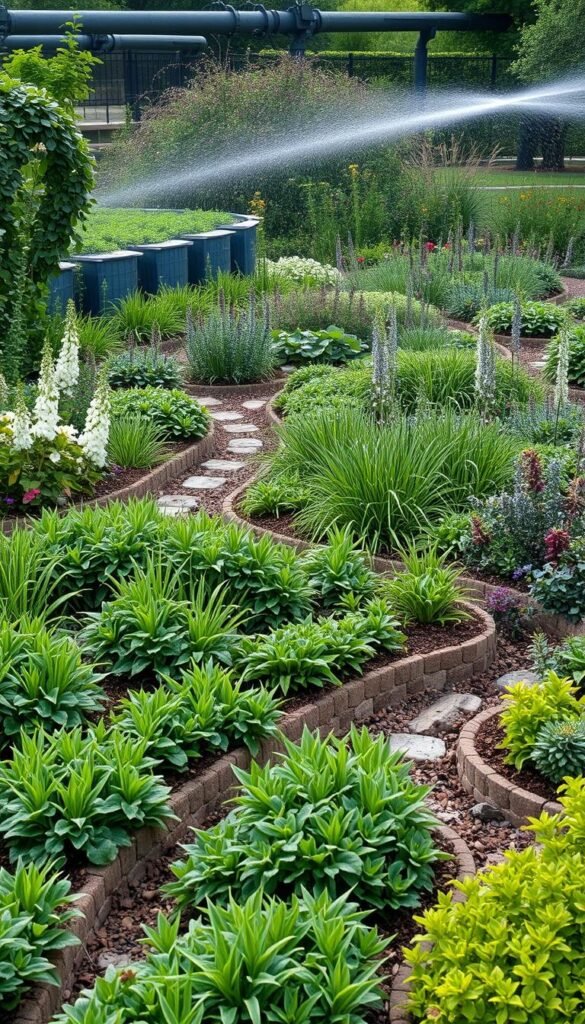
Smart water use turns dry spells into growth opportunities. By working with natural cycles, you create landscapes that thrive even when skies stay dry. Start by observing how moisture moves through your space during storms and dry periods.
Implementing Rainwater Harvesting Systems
Capture free hydration from the sky using rain barrels or cisterns. A single 55-gallon barrel can collect 300+ gallons annually from a typical roof. Position containers under downspouts and screen openings to block debris.
Use collected rainwater for thirsty plants like tomatoes or hydrangeas. Pair this with container gardening ideas for space-efficient solutions. Dark Star Zucchini and other drought-tolerant varieties need 30% less water than standard crops.
Efficient Use of Drip Irrigation
Drip systems deliver hydration straight to roots through emitters or soaker hoses. They slash water waste by 50% compared to sprinklers. Schedule watering at dawn to minimize evaporation.
Combine drip lines with organic mulch like straw or wood chips. This dynamic duo:
- Maintains soil moisture 2-3x longer
- Prevents weed competition
- Feeds earthworms as materials break down
For hardscapes, choose permeable pavers that let rain seep into soil instead of rushing into drains. Your garden becomes a sponge that stores moisture for drier days.
Integrating Wildlife Support and Natural Pest Control
Your backyard can become a bustling hub for nature’s helpers while keeping pests in check. By designing spaces that welcome wildlife, you create a self-regulating system where birds and insects handle pest control naturally. This approach fosters balance while reducing reliance on chemicals.
Creating Habitats for Beneficial Insects and Birds
Start by planting nectar-rich blooms like coneflowers and bee balm that flower from spring through fall. These plants sustain pollinators while attracting predatory insects that devour aphids and mites. Include shallow water dishes with stones for drinking spots—critical for thirsty wildlife during hot months.
Strategically cluster native shrubs to provide shelter for songbirds. As entomologist Doug Tallamy advises:
“Diverse plantings create layered habitats where beneficial species can complete their life cycles.”
Avoid broad-spectrum pesticides—instead, introduce ladybugs or lacewings to manage outbreaks.
| Plant Type | Beneficial Attraction | Pest Targeted |
|---|---|---|
| Dill/Fennel | Parasitic wasps | Tobacco hornworms |
| Sunflowers | Ladybugs | Aphids |
| Goldenrod | Soldier beetles | Colorado potato beetles |
Install bee hotels using bamboo stalks or drilled wood blocks. Leave some leaf litter under trees—overwintering butterflies and fireflies need these hideaways. Your garden becomes a thriving ecosystem where every creature plays a role in maintaining health and biodiversity.
Sustaining Long-Term Garden Health and Adaptation Strategies
A thriving green space grows smarter with each season through careful observation. By staying attuned to your plot’s rhythms, you create lasting vitality that withstands challenges while improving yearly yields.
Monitoring Performance and Making Adjustments
Keep a garden journal to record bloom times, pest activity, and soil moisture levels. Note which techniques succeed—like companion planting—and which need tweaking. Regular soil tests reveal nutrient changes, helping you address health issues before plants show stress.
Studies show 3-year crop rotations boost organic matter by 18%. Rotate tomato beds with nitrogen-fixing peas or deep-rooted carrots annually. This simple step prevents disease buildup while keeping earth fertile.
Smart Rotation and Seasonal Soil Care
Plant winter rye or clover during off-seasons. These cover crops reduce erosion by 40% while adding nutrients as they decompose. Adjust planting schedules as local climate patterns shift—earlier springs might mean adjusting your calendar by weeks.
Your approach evolves as you learn what works. Maybe swap out struggling perennials for drought-tolerant natives or expand pollinator zones. Each change strengthens your space’s ability to thrive through coming seasons.