
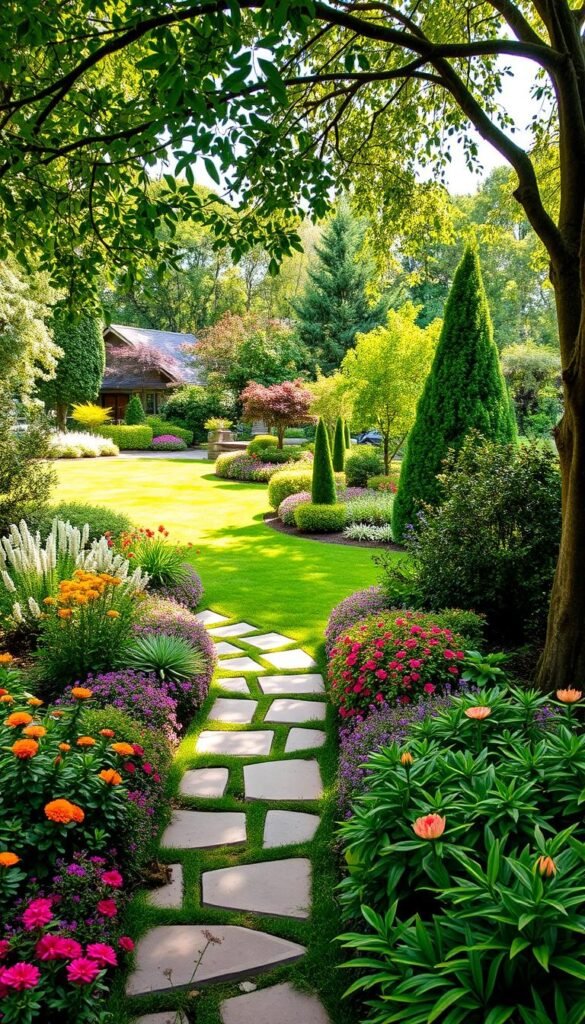
Ever wonder why some yards feel effortlessly put together? The secret lies in strategic plant arrangement that guides the eye naturally. This approach transforms scattered greenery into a unified landscape that feels intentional at every turn.
Professional landscapers like Pam Frost from Vancouver focus first on creating rhythm through repeated colors and textures. “Start with plants sharing leaf shapes or bloom times,” she suggests. “Once you establish that flow, introduce one bold contrast per bed to keep things exciting.”
Smart planning does more than beautify your space – it simplifies maintenance. By grouping plants with similar needs, you’ll spend less time watering and pruning. Pair this strategy with square-foot gardening techniques to maximize every inch while promoting healthy growth.
You’ll soon discover how balancing repetition with surprise elements creates visual interest without chaos. Whether working with sprawling lawns or compact patios, these principles help craft outdoor areas that feel both polished and inviting.
Introduction to Cohesive Garden Design
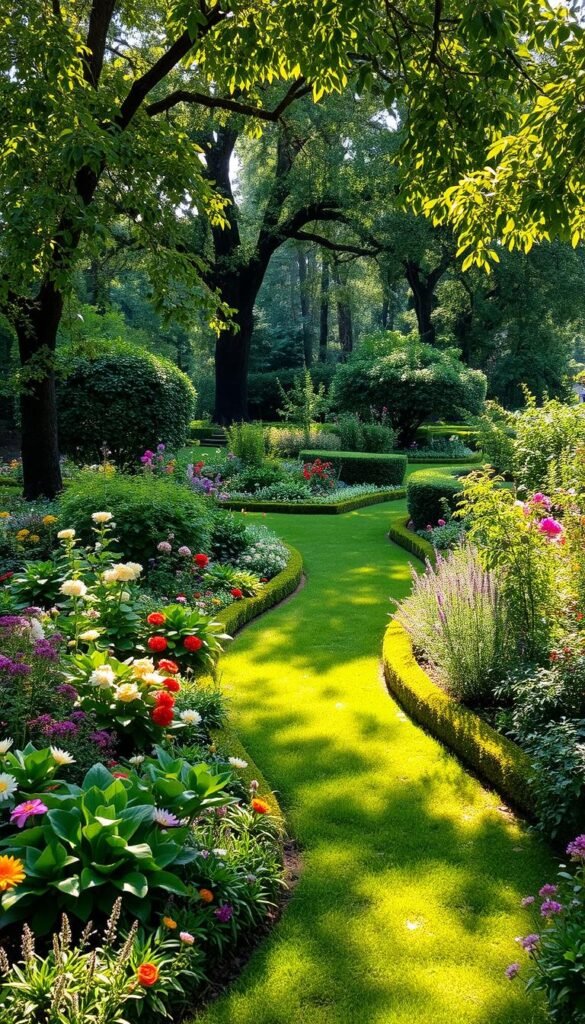
Have you ever noticed how magazine gardens look perfectly unified? Their secret isn’t exotic plants or unlimited budgets—it’s intentional design that connects every element. Like a well-written song, these spaces use repeating rhythms to create harmony.
Professional landscaper Pam Frost explains: “Great gardening isn’t about collecting pretty specimens. It’s finding shared traits—leaf shapes, bloom colors, or growth patterns—that tie beds together.” This approach transforms disjointed areas into a single visual story.
You’ll spot two types of yards: ones that feel like plant flea markets, and others where every shrub belongs. The difference? Intentional repetition. Matching textures or colors across your garden creates flow without monotony. Think of it as using the same accent color throughout your home decor.
Contrary to popular belief, cohesive doesn’t mean boring. Strategic similarities actually make standout features pop—like framing a vibrant rose bush with matching green foliage. Your eye naturally follows these connections, making the whole space feel larger and more polished.
Ready to move beyond random planting? The next sections will show how to balance repetition with surprises, turning your outdoor area into a magazine-worthy retreat.
Laying the Groundwork: Design Principles and Planning
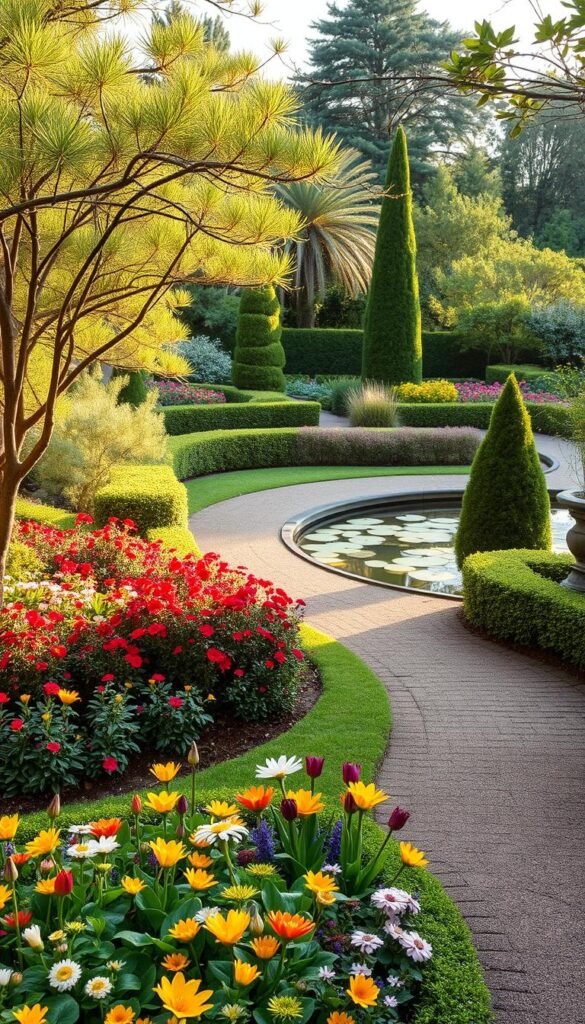
What if your garden could feel both exciting and perfectly balanced? The answer lies in mastering the push-pull between harmony and contrast. While many guides preach bold differences, pros know similarity creates the glue that holds designs together.
Understanding Contrast and Harmony
Start by choosing three unifying elements—maybe silver-leafed plants or spiky textures. Build 70% of your layout around these. Then add pops of contrast like red blooms or rounded shrubs. This “safety net” of repetition lets bold accents shine without overwhelming.
Landscape designer Jeni Webber puts it best: “Your eye needs familiar patterns to appreciate surprises.” Her clients’ gardens use matching evergreens as backdrops for seasonal showstoppers.
Setting Your Garden’s Objectives
Before buying plants, ask:
- Will this space host barbecues or butterflies?
- How many hours weekly can I maintain it?
- Does my clay soil need amendments?
Urban gardener Marcus Choi transformed his balcony by focusing on low-water succulents after analyzing sunlight patterns. His gardening aesthetic now mixes sculptural agaves with trailing sedums—proof that clear goals create stunning results.
Remember: Great designs grow from understanding your land’s personality first. When your principles match your reality, every plant choice becomes intentional.
Visualizing Your Garden Layout: Layers and Dimensions
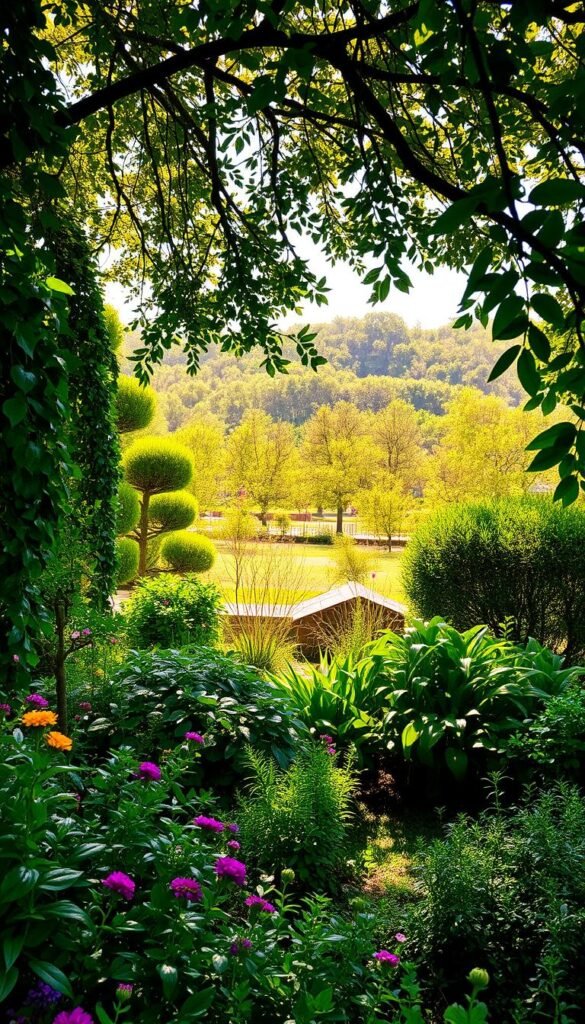
Have you ever mapped out the sun’s journey across your garden? This simple exercise reveals your yard’s hidden potential. By tracking light patterns, you’ll unlock smarter planting decisions that make your space feel intentional.
Mapping Sunlight and Shade
Grab graph paper and sketch your garden boundaries. Mark shaded zones at 9 AM, noon, and 3 PM for three consecutive days. Color-code areas as full sun (6+ hours), partial shade (3-6 hours), or full shade (under 3 hours). This map becomes your cheat sheet for matching plants to their ideal spots.
Nursery manager Tina Lopez notes: “Hostas in full sun look fried by July, while lavender in shade grows leggy.” Your observations prevent these mismatches. South-facing walls often bake in afternoon heat—perfect for drought-tolerant species.
Creating a Sense of Depth
Think vertically when arranging your garden. Place tall grasses or small trees at the back of beds, medium shrubs in the middle, and creeping thyme up front. This layered approach mimics nature’s patterns, making compact areas feel expansive.
For added dimension, use repetition with variation. Try matching foliage colors across different heights. A row of purple salvia might echo taller allium blooms behind them. These visual connections guide the eye smoothly through your space, creating rhythm without rigidity.
Embracing the Big Brother/Little Brother Technique
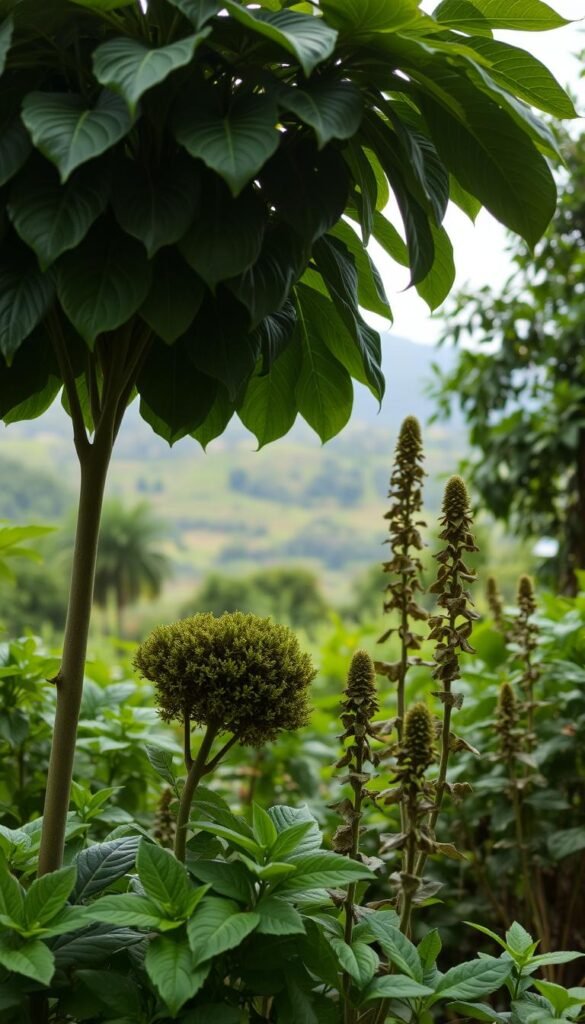
What if your favorite plants could teach their smaller cousins how to tie your garden together? Pam Frost’s clever pairing strategy creates family-like connections between greenery. Instead of identical twins, think of siblings who share distinct features but have unique personalities.
How Sibling Pairings Enhance Visual Flow
Start by choosing a “big brother” plant with bold features like wide leaves or tall stems. Then find a “little brother” that shares at least one trait—maybe spiky texture or purple blooms—but stays noticeably smaller. This size difference prevents them from blending together when viewed from afar.
Landscape designer Frost explains: “Matching heights create visual competition. Contrasting sizes let plants complement rather than clash.” Try pairing feathery miscanthus grass with compact blue fescue. Both offer grassy textures but different proportions that guide the eye smoothly.
Real-Life Examples from Experienced Gardeners
See how pros use this trick:
- Miss Willmott’s ghost (tall silvery perennial) + ‘El Nino’ hosta (low mounded leaves)
- Weeping blue atlas cedar (dramatic tree) + creeping blue star juniper (groundcover)
These duos prove shared colors or shapes create rhythm without repetition. Your garden gains cohesion while keeping variety high—no two areas look exactly alike. Best part? You’ll spend less time guessing which plants work together.
Coordinating Planting Plans for a Cohesive Garden Design
Imagine your outdoor area as a puzzle where every piece enhances the whole picture. Successful coordination starts with three phases: planning, selection, and installation. This method ensures each choice supports your overall goals while preventing overcrowding or color conflicts.
Begin by sketching a seasonal calendar. Note bloom times and foliage changes for existing plants. Landscape architect Ray Garcia advises: “Layer interest by pairing early spring bulbs with late-blooming perennials. This creates seamless transitions between seasons.”
| Phase | Action | Key Consideration |
|---|---|---|
| Planning | Create plant lists | 60% sibling pairs, 40% accents |
| Selection | Check mature sizes | Allow 18″ between shrubs |
| Installation | Start with anchors | Trees first, fillers last |
Group plants with complementary needs. Try combining drought-tolerant lavender with purple salvia—they share water requirements but offer varied textures. This approach reduces maintenance while creating visual harmony.
When arranging beds, leave room for growth. A common mistake? Planting young specimens at their current size rather than projected spread. Mark expected widths with garden stakes before digging.
Finally, install plants in waves. Establish structural elements like trees and shrubs first. Add flowering perennials and groundcovers last. This sequencing protects delicate roots during installation and maintains your design’s integrity.
Curved Bed Lines for a Flowing Garden Structure
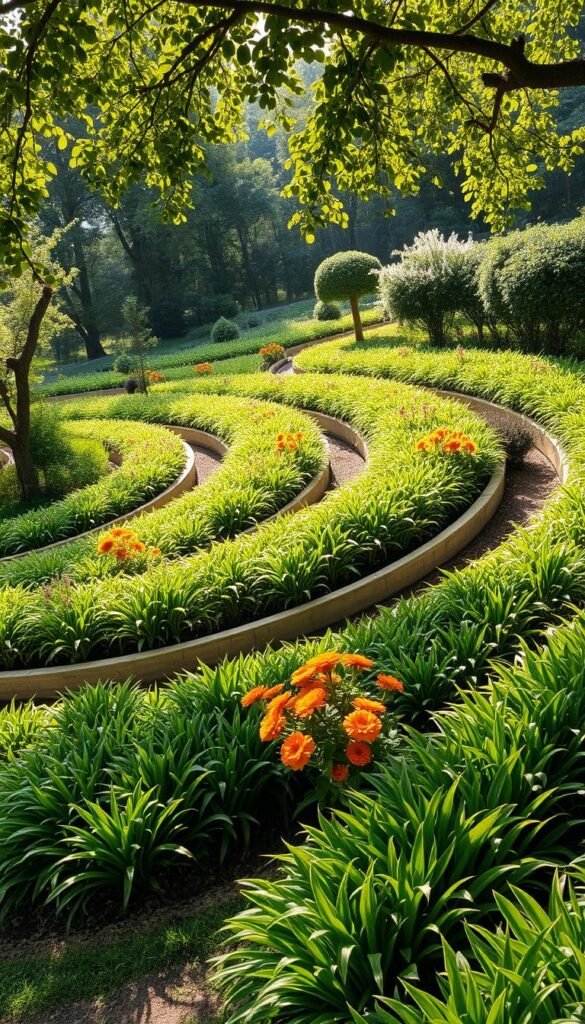
What if your garden’s shape could trick the eye into seeing more space? Landscape designer Pam Frost faced this challenge when her narrow yard resembled a bowling lane. Her solution? Curved bed lines that sway like dancers, creating depth where straight edges fell flat.
Techniques for Shaping Garden Beds
Frost’s secret weapon? A $15 garden hose. Lay it on the ground to experiment with curves until you find shapes that soften harsh angles. “Sinuous borders make small areas feel expansive,” she notes. For best results:
- Create gradual arcs rather than tight zigzags
- Ensure curves mirror each other across pathways
- Leave 24-36″ between bed edges and fences
This approach transformed Frost’s space into two undulating beds that hold 40% more plants than rigid rectangles. The curves naturally guide visitors through the garden while hiding utility areas.
Importance of Spacing and Accessibility
Curved designs solve two common issues: overcrowding and maintenance headaches. Gentle arcs let you cluster sibling plants while maintaining air circulation. Place taller specimens at the curve’s outer edge, shorter ones inward—this creates layered views without sacrificing growth space.
Keep pathways 30-36″ wide between beds for comfortable weeding and wheelbarrow access. Frost advises: “Make curves shallow enough to reach the center from either side.” Proper shaping turns functional needs into design features, with winding paths that invite exploration.
Maximizing Garden Space with Raised Beds and Trellises
Have you considered growing a vertical garden? Trellises turn empty airspace into productive real estate. These structures let vining plants climb upward, freeing ground areas in your raised beds for more crops.
Using Trellises to Support Vining Plants
Vertical growing solves two problems: limited garden space and tangled vines. Pole beans and cucumbers naturally reach for sunlight when guided upward. This method improves air circulation, reducing mildew risks common in crowded beds.
Try these popular climbers:
- Tomatoes (use sturdy cages)
- Sugar snap peas (mesh trellises work best)
- Gourds (install arched supports)
| Trellis Type | Best For | Space Saved | Year-Round Appeal |
|---|---|---|---|
| Obelisks | Tomatoes | 3 sq ft | Iron designs add winter interest |
| Wire Grids | Cucumbers | 2.5 sq ft | Discreet when bare |
| Arbors | Gourds | 5 sq ft | Create shaded pathways |
Pair trellises with square-foot gardening layouts for maximum efficiency. You’ll harvest more while keeping walkways clear. Bonus: Snow-covered structures add winter beauty to dormant garden space.
Install supports before planting to avoid root damage. Position them north-side in raised beds to prevent shading shorter crops. Your green beans will thank you with bumper yields!
Selecting the Right Plants for Your Space
Ever brought home a plant that outgrew its spot within months? Landscape designers live by one rule: “Right plant, right place.” This mantra saves you from constant pruning and replanting while keeping your garden looking intentional year-round.
Considering Plant Size and Growth Habits
Start by playing detective with your space. Measure sun exposure, test soil pH, and note wind patterns. Nurseries often sell plants that thrive in their greenhouse conditions—not yours. Ask staff: “What’s the mature height?” and “Does this spread by roots or seeds?”
Woodland species like hostas need shade, while prairie plants like coneflowers crave sun. Match these preferences to your yard’s microclimates:
- Check plant tags for USDA hardiness zones
- Research root systems (avoid invasive varieties)
- Note bloom times to maintain color flow
| Plant Type | Ideal Conditions | Spacing Needs |
|---|---|---|
| Large shrubs | Well-drained soil | 4-6 feet apart |
| Perennial flowers | Morning sun | 12-18 inches |
| Ornamental grasses | Full afternoon sun | 2-3 feet between clumps |
Smart sizing prevents jungle-like overcrowding. That cute 1-gallon hydrangea? It’ll balloon to 6 feet wide. Always dig holes twice as wide as root balls—this gives roots room to breathe in your native soil.
Pro tip: Lay garden hoses to mark proposed plant locations. Walk around them for a week before digging. You’ll spot spacing issues and adjust placements to match your design vision.
Implementing Contrast and Repetition in Plant Arrangement
What makes a garden feel intentional yet full of surprises? Pam Frost’s golden ratio—30% sibling pairings to 70% standalone plants—creates visual rhythm without monotony. This balance lets your eyes dance between familiar shapes and exciting contrasts.
Scatter matching duos like hidden treasures throughout your beds. Place a spiky yucca beside its shorter agave cousin near the patio, then repeat the combo by the walkway. This subtle repetition creates flow without obvious patterns. Frost notes: “Grouped siblings feel staged. Spread them out, and your design principles become invisible magic.”
Watch for two common pitfalls:
- Match overload: More than 1/3 paired plants make your space look like a copy-paste job
- Chaos salad: Under 20% repetition leaves no visual anchors
Strategic contrast saves the day. Add one bold element per bed—a red Japanese maple among green hostas, or a round hydrangea near vertical grasses. These surprises keep the garden dynamic while the 70% base maintains harmony.
| Element | Role in Design | Examples |
|---|---|---|
| Repetition | Creates rhythm | Matching leaf shapes in different sizes |
| Contrast | Adds excitement | Red blooms against silver foliage |
| Spacing | Prevents overcrowding | 18-24″ between sibling pairs |
This way of arranging ensures your garden looks cohesive from any angle. You’ll notice how colors and textures guide the eye naturally, making the space feel both curated and effortlessly alive.
Creating Focal Points with Sibling Pairings
How do you turn ordinary greenery into a showstopping display? Signature plants act like celebrity anchors in your garden, drawing attention while connecting different areas. The trick lies in choosing specimens that share traits but vary in size.
Identifying Signature Plants
Start by selecting one standout performer with unique color or texture. Pam Frost’s golden trio demonstrates this perfectly: a 30-foot golden locust tree towers over 6-foot golden privet shrubs, while golden oregano spills at their feet. These siblings share chartreuse foliage but differ dramatically in scale.
Space them at least 15 feet apart to create natural eye movement. Your gaze will leap from the tree’s canopy to the shrub’s mid-level bursts, then down to the oregano’s glowing carpet. This layered approach builds depth without clutter.
Look for plants offering at least one shared characteristic—leaf shape, bloom color, or stem structure. For example, pair spiky blue agaves with smaller yucca varieties. Their matching silhouettes create rhythm, while size differences add intrigue.
Remember: Focal points work best when balanced. Place your star trio where paths intersect or near seating areas. You’ll craft a garden that feels intentionally designed yet effortlessly alive.