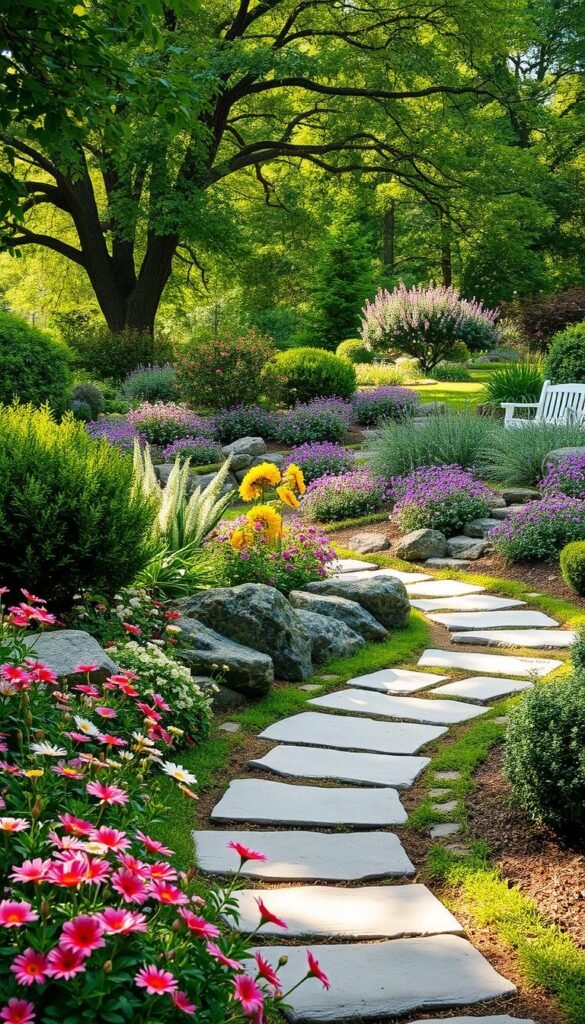
Your yard becomes truly special when permanent features work with nature rather than against it. Stone walkways winding through flower beds or wooden pergolas draped with climbing vines show how functional elements can enhance natural beauty. This approach transforms ordinary areas into inviting retreats that feel both purposeful and peaceful.
Non-living components like patios and retaining walls provide shape to your landscape, while plants add texture and seasonal color. When planned thoughtfully, these contrasting pieces create visual interest without competing for attention. A well-placed bench surrounded by lavender or a fire pit edged with ornamental grasses demonstrates how structure and growth complement each other.
Properly combining these aspects does more than boost curb appeal—it creates adaptable spaces for daily enjoyment. You might design a dining area framed by evergreen shrubs or use decorative gravel to highlight your favorite gardening aesthetic. These choices ensure your outdoor areas remain useful through changing seasons while maintaining their charm.
This guide will show you how to pair materials like concrete and timber with blooming perennials or cascading groundcover. You’ll learn to balance proportions, select complementary colors, and arrange features that feel intentional yet organic. The result? A cohesive environment where every element serves both practical and decorative roles.
Understanding the Basics of Hardscape and Softscape Elements
The secret to a stunning landscape lies in balancing built features with organic growth. Unlike temporary décor, these foundational choices shape your garden’s character for years. Let’s break down what makes each category unique.
Defining Hardscape versus Softscape
Hardscape elements form your garden’s skeleton—think stone pathways, wooden arbors, or concrete seating walls. These non-living materials create structure, control erosion, and define spaces. A brick patio becomes your outdoor living room, while gravel paths guide visitors through your greenery.
Softscape components breathe life into these frameworks. Flowering shrubs soften angular edges, while creeping thyme spills between pavers. As one landscape designer notes: “Plants are the paint that colors your garden’s canvas.” They evolve with seasons, offering shifting textures and hues.
Key Components and Their Roles in Your Garden
Hardscape materials like natural stone or composite decking establish permanent zones. Retaining walls manage slopes, while pergolas create shaded retreats. These elements work best when paired with thoughtful planting—ivy climbing a trellis or ornamental grasses framing a fire pit.
Softscape choices—from towering oak trees to delicate groundcovers—add movement and fragrance. They improve air quality and attract pollinators too. For a cohesive look, consider how blending styles can unify your space. Japanese maples might offset sleek metal planters, creating visual harmony between nature and craftsmanship.
Remember: Your landscape thrives when these elements collaborate. A water feature gains charm from surrounding ferns, while raised beds gain stability from stone borders. It’s this partnership that turns ordinary yards into personalized sanctuaries.
Planning and Layout: Crafting Your Outdoor Space
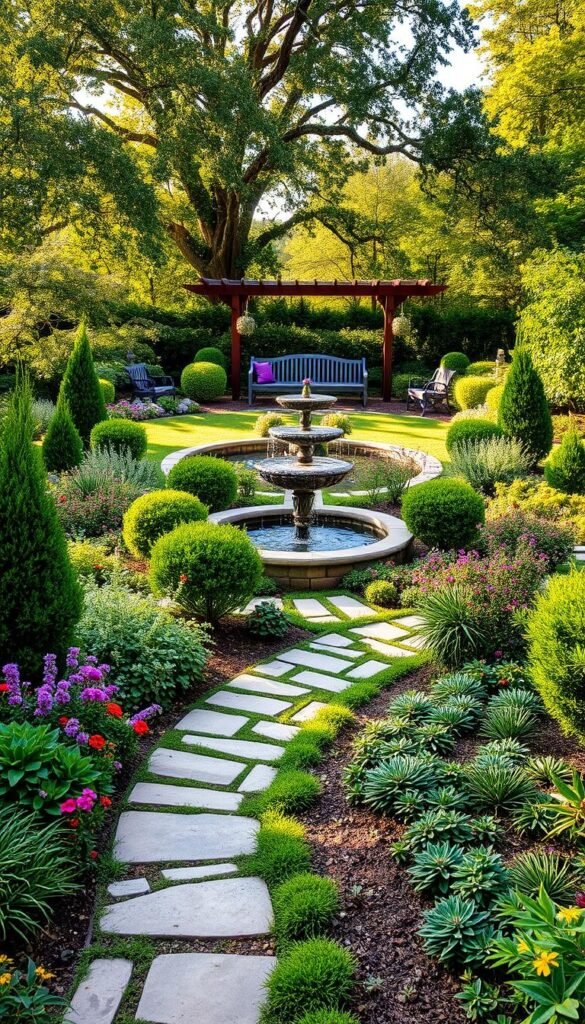
A well-designed garden starts with a clear vision and strategic preparation. Before picking plants or patio stones, consider how you’ll use your outdoor space. Is it for weekend barbecues, morning coffee nooks, or safe play zones? Answering these questions shapes your entire layout.
Assessing Your Site and Space
Begin by sketching your yard’s footprint. Note where sunlight hits at different times and spot soggy patches after rain. These details determine plant choices and seating areas. A south-facing patio might need shade plants, while a sloped section could require terraced beds.
Existing trees or structures influence your plan too. Mature oaks provide natural canopies, while retaining walls create built-in seating opportunities. One homeowner transformed a rocky corner into a succulent garden using local stone—turning a challenge into a focal point.
Setting Your Design Goals and Boundaries
Define zones using subtle dividers like low hedges or decorative gravel. Keep dining spaces close to the kitchen, while fire pits work best on level ground. Leave wide pathways between areas for easy movement—about 3 feet works for most gardens.
Match materials to your home’s style. Farmhouse designs pair with rustic timber, while modern homes shine with clean-lined concrete. As landscape architect Mia Brown advises: “Your outdoor rooms should feel like natural extensions of your interior.”
Selecting Materials for Durability and Aesthetic Appeal
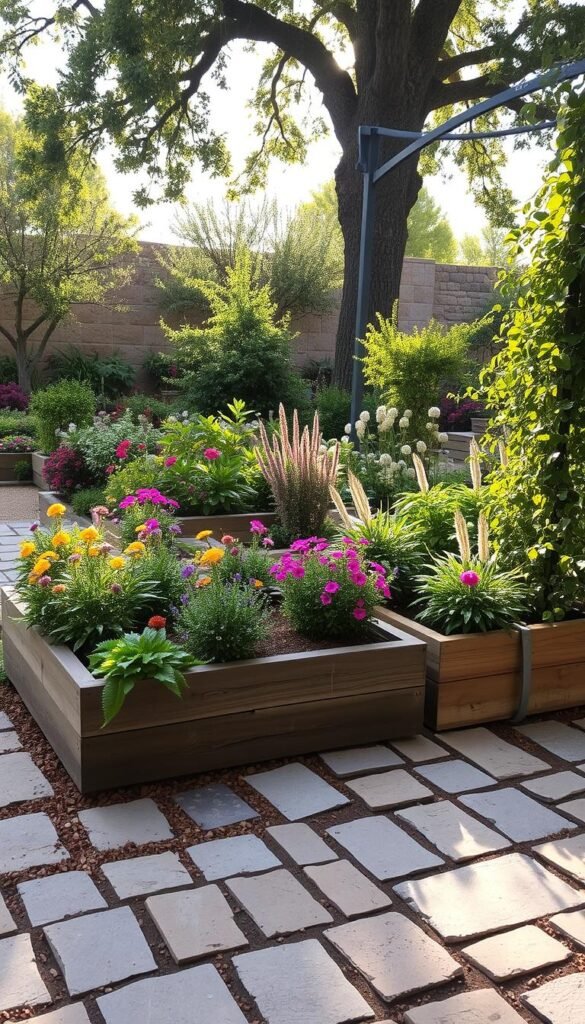
Great outdoor spaces begin with smart material choices that stand up to weather while looking fantastic. Whether you’re building a patio or planting borders, every selection impacts your garden’s longevity and style.
Choosing the Right Hardscape Materials
Natural stone like slate or granite offers timeless charm for pathways and walls. These materials handle heavy foot traffic and frost cycles beautifully. Concrete pavers provide modern flair at lower costs, while reclaimed brick adds rustic character. Always consider local climate—wood decks need sealing in rainy areas, while light-colored stone keeps surfaces cooler in hot zones.
Selecting Complementary Softscape Plants
Pair bold hardscape elements with plants that enhance their features. Low-growing thyme softens stone edges, while ornamental grasses sway beside angular concrete. For shaded patios, try compact hydrangeas or ferns. Sunny spots? Drought-tolerant lavender or sedum thrive with minimal care. As one gardener notes: “Your cottagecore aesthetic blossoms when flowers peek through weathered stone.”
Scale matters too. Tall trees overwhelm small courtyards, while petite shrubs disappear against sprawling walls. Match silvery Artemisia with cool gray stone, or golden creeping Jenny with warm brick tones. These pairings create harmony between built structures and living greenery.
Merging Hardscape and Softscape Elements for a Balanced Garden Design
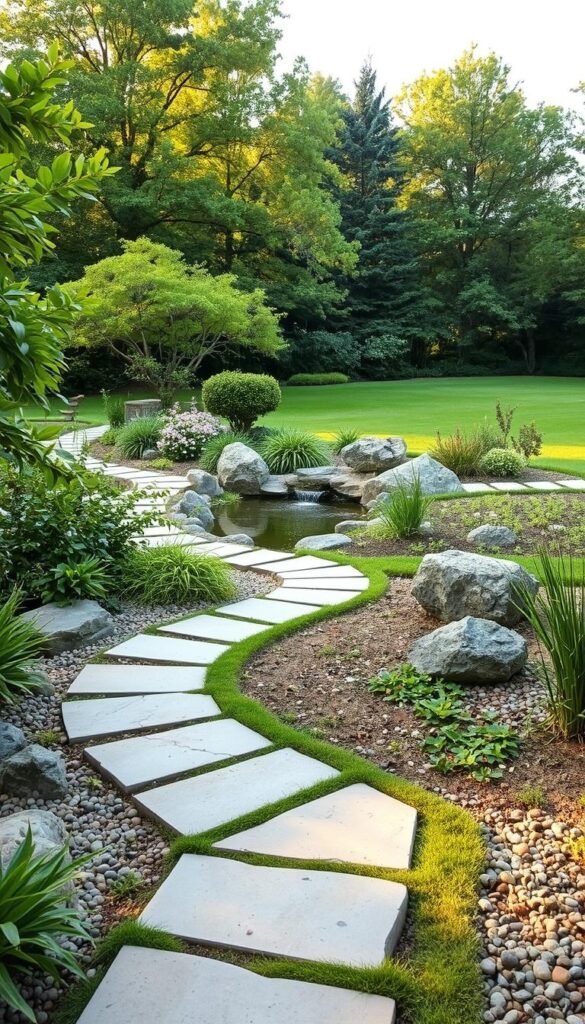
Creating an inviting outdoor space requires more than just adding plants and patio stones—it’s about designing interactions between structure and growth. Think of your garden as a living sculpture where stone, wood, and greenery collaborate. Blending hardscape and softscape elements effectively means prioritizing harmony over strict ratios.
Effective Integration Techniques
Let plants soften rigid lines. Allow creeping thyme to tumble over retaining walls or thread ornamental grasses between stepping stones. Use vertical spaces wisely: train jasmine vines up trellises flanking a seating area. These touches create natural transitions while maintaining clean boundaries.
Repeat materials and colors to unify your design. Match slate pavers with gray-green succulents or echo timber deck tones in nearby birch bark. This repetition guides the eye smoothly between built and living elements.
Balancing Functionality with Visual Appeal
Choose features that serve dual purposes. A stone bench can edge a flower bed while offering seating. Install pergolas where climbing roses provide shade and fragrance. Even practical elements like drainage channels become design opportunities when lined with smooth river rocks.
Plan for seasonal shifts. Evergreen shrubs maintain structure in winter, while summer-blooming perennials mask utilitarian walls. As landscape designer Clara Ruiz advises: “Your garden should dance between permanence and change—like a well-choreographed performance.”
Incorporating Lighting, Pathways, and Additional Features
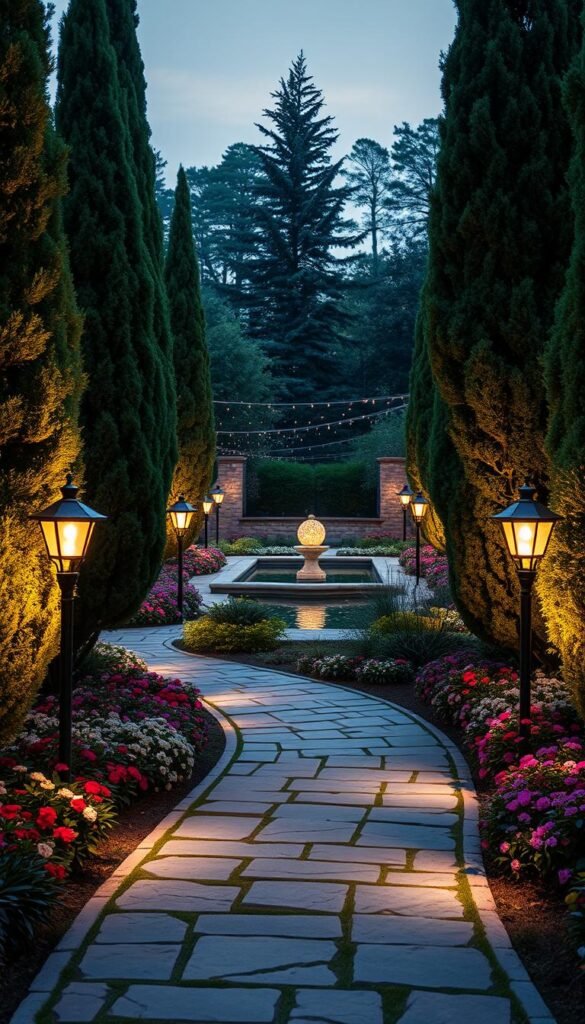
Transform your garden into a day-to-night oasis by weaving light and structure into your landscape. Thoughtful placement of lighting and pathways elevates both safety and style, while structural features add depth to your outdoor experience. These elements work together to create spaces that feel inviting long after sunset.
Designing with Lighting and Structural Elements
Strategic lighting turns functional areas into enchanting retreats. Spotlights accentuate specimen trees or textured walls, while subtle path lights guide footsteps without overpowering starry skies. For cozy gatherings, drape string lights above seating zones—their warm glow pairs perfectly with water features for reflective sparkle.
Your pathways should marry form and function. Flagstone steps meandering through flower beds invite exploration, while gravel paths minimize maintenance in high-traffic zones. Match materials to nearby patio surfaces—bluestone walkways complement slate terraces, creating visual continuity.
Vertical structures like pergolas extend living spaces upward. Train climbing roses over arched arbors to frame dining areas, or install lattice screens that filter sunlight through morning glory vines. These elements define zones while supporting plant growth—a seamless blend of practicality and beauty.
When planning your patio, consider scale and purpose. Intimate courtyards shine with irregular stone patterns, while large entertaining decks benefit from uniform pavers. As landscape architect Elena Torres notes: “Your outdoor floorplan should flow as naturally as your indoor rooms.”
Designing to Reflect Your Personal Style and Environmental Needs
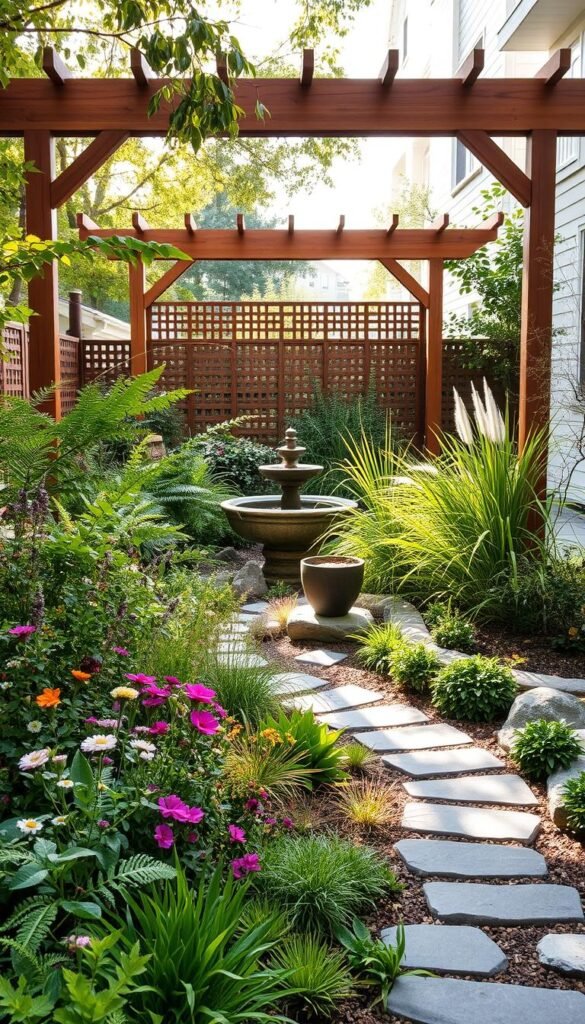
Your outdoor space should mirror what makes you unique while respecting nature’s boundaries. Whether you love crisp geometric lines or wildflower meadows, your choices can celebrate individuality and ecological responsibility. The key lies in understanding your land’s natural rhythms and dressing them in your signature flair.
Working With Earth’s Blueprint
Start by testing your soil—its pH and composition dictate which plants thrive. Sandy soils drain quickly, perfect for lavender or sedum. Clay holds moisture, ideal for astilbe or dogwood shrubs. Amend with compost if needed, but lean into native species that naturally suit your terrain.
Local climate shapes your style too. In arid zones, crushed granite paths with agaves create a desert-chic look. Rainy regions? Try permeable pavers surrounded by fern-filled landscaping. As one gardener puts it: “Your garden becomes low-maintenance when you listen to the land first.”
Mix textures to elevate visual interest. Pair feathery grasses with chunky stone walls or smooth river rocks with spiky yucca. This approach adds depth while keeping care simple. For inspiration on blending form and function, explore this outdoor aesthetics guide.
Sustainable touches like rain gardens manage stormwater while attracting butterflies. Choose native blooms that need less watering—black-eyed Susans in the Midwest or California poppies out west. These choices reduce maintenance and let your personality shine through every petal and paver.
Bringing Your Garden Vision to Life
Your garden’s transformation begins with a spark of imagination. Start by sketching ideas that blend sturdy materials like stone or wood with vibrant blooms. Picture winding pathways edged with lavender or a cozy seating nook framed by ornamental grasses. These details turn sketches into living spaces that reflect your personality.
Balance is key when merging structural and organic elements. Pair sleek concrete planters with trailing ivy, or let flowering shrubs soften angular retaining walls. Even small urban spaces thrive when vertical planters meet weather-resistant surfaces. This approach creates texture without overwhelming your layout.
Stay flexible as your design evolves. Adjust plant placements to fill gaps or swap out pavers for better flow. Remember: great landscapes grow alongside their caretakers. With thoughtful planning, your outdoor haven will offer beauty and function for years—one bloom and brick at a time.