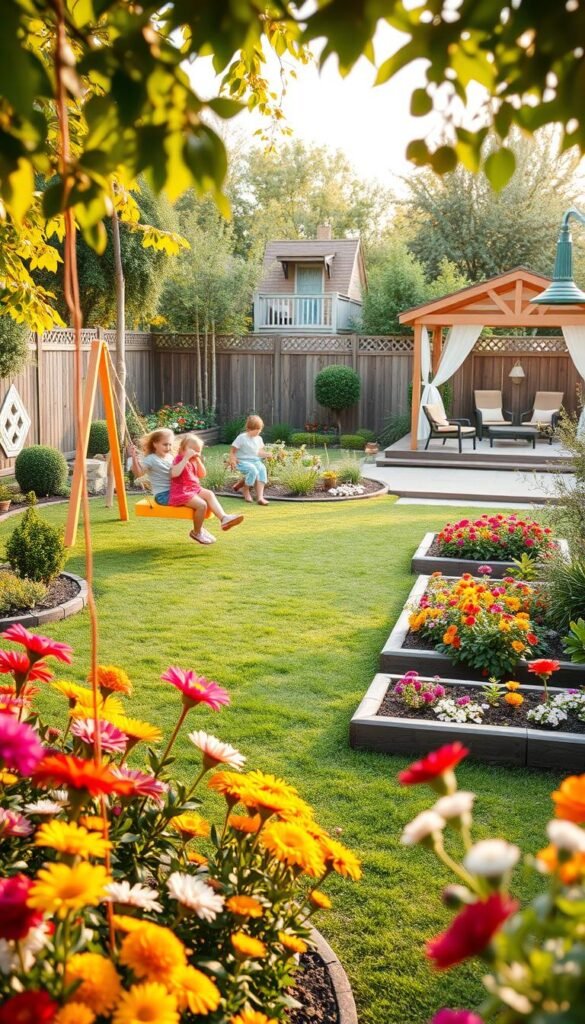
Creating an outdoor space that works for both kids and adults might feel like a puzzle. You want room for play, but you also crave a stylish retreat. According to Matt Jackson, a garden consultant who’s shaped landscapes at Sissinghurst and Doddington Place, “children thrive in environments that spark curiosity—not just ones filled with plastic toys.” The secret? Blending imagination with smart design.
This guide shows how to craft a garden that elevates your space while keeping it functional. You’ll learn from experts how to weave play zones into elegant layouts using natural textures and flexible features. Think winding paths for hide-and-seek, raised beds for sensory exploration, or durable plants that survive soccer balls.
Forget choosing between a kid-friendly yard and a beautiful sanctuary. With thoughtful planning, your outdoor area can grow alongside your family—offering value today and adaptability for tomorrow. Let’s turn that dream into dirt-and-shovels reality.
Understanding Your Family’s Garden Needs
Your garden should reflect your family’s unique lifestyle. Start by sketching how you use your space daily. Do weekend soccer matches happen where the sun hits hardest? Does your morning coffee spot need shade?
Identifying Play Zones and Relaxed Areas
Matt Jackson’s “concentric rings” method works wonders. Keep toddlers’ sandboxes or chalk walls near the house for easy supervision. Older kids might claim middle zones for treehouses or obstacle courses. Adults often prefer quiet nooks farther out – but remember, children naturally gravitate toward shared spaces.
Incorporating Nature’s Beauty and Functionality
Swap plastic slides for stone steppers that double as hopscotch grids. Try these multi-use ideas:
| Zone Location | Features | Benefits |
|---|---|---|
| Near house | Herb spirals, shallow ponds | Safe sensory play |
| Middle garden | Willow tunnels, log balance beams | Physical challenges |
| Perimeter areas | Lavender hedges, bench swings | Adult relaxation |
Textured pathways made of bark or smooth stones engage curious minds while adding visual interest. Water features become science labs for tadpole observations. This approach lets your garden grow with your family’s changing needs.
Designing Back Gardens for Active Families: Balancing Play Areas and Beauty
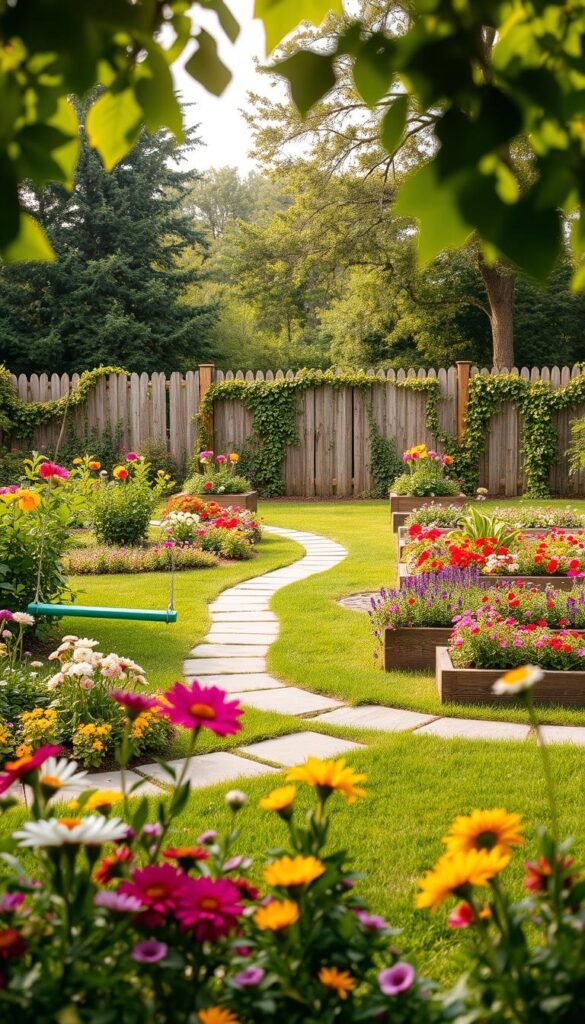
A truly functional family garden grows alongside its users. As Matt Jackson advises, “Release perfectionism—kids thrive where they can dig holes and rearrange stones.” Posy Gentles reminds us that most play structures serve children under five for just 4-5 years before needing updates.
Space Allocation Strategies for Every Age
Think in phases. Toddlers need visible sand pits and shallow water features near seating areas. School-age explorers benefit from obstacle courses using logs or low walls. Teens appreciate semi-private nooks with Wi-Fi-friendly benches.
Safety Considerations for a Child-Friendly Environment
Choose plants like lamb’s ear or sunflowers over toxic varieties. Use rounded river rocks instead of sharp gravel. For water elements, try recirculating fountains under 2 inches deep—they satisfy curiosity without drowning risks.
Adapting the Design as Your Family Grows
Invest in modular raised beds that convert from mud kitchens to herb gardens. Plant fast-growing willow screens that become teen hideouts. Gardening expert Gentles suggests, “Treat your layout like a favorite sweater—it should stretch to fit new phases.”
Swap fixed climbing frames for movable cargo nets. Use chalkboard walls that transition from toddler scribbles to tween art displays. This approach keeps your child-friendly garden relevant through every growth spurt.
Planning Child-Friendly and Multi-Functional Areas
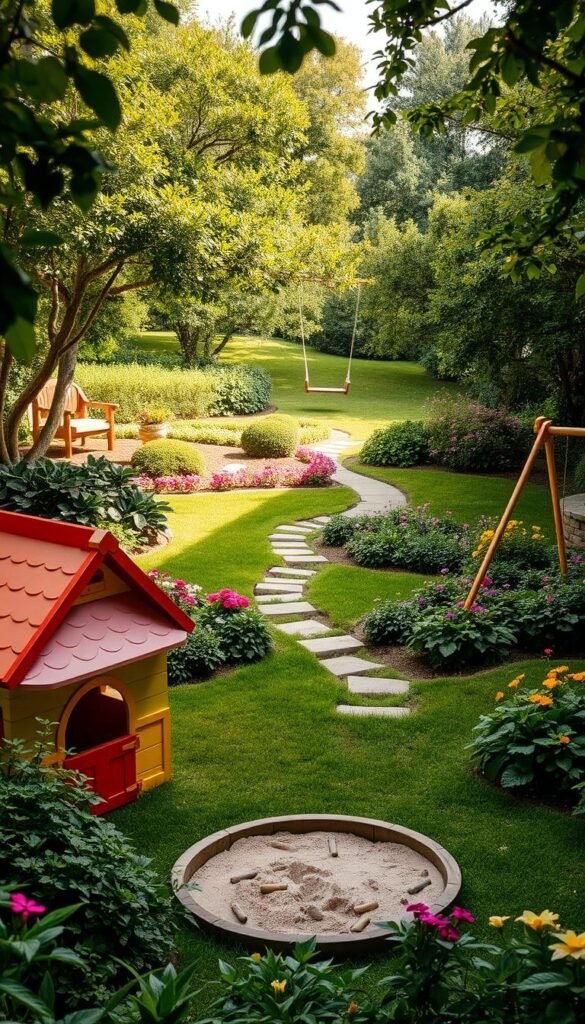
Smart outdoor layouts start with zones that serve multiple purposes. The Royal Horticultural Society notes most plants pose minimal risks, but strategic choices ensure safety. Let’s explore how to build adaptable spaces where kids explore freely and adults unwind effortlessly.
Creating Safe Zones Near the House
Design a “launch pad” within 10 feet of your back door. Use smooth flagstones for drawing hopscotch grids and install raised herb beds at toddler height.
Choose plants like snapdragons or ornamental grasses—they’re soft, non-toxic, and spark curiosity. Avoid foxgloves or yew bushes near play spaces. Low boxwood hedges make natural boundaries that won’t block your view from the kitchen window.
Defining Play and Relaxation Spaces
Convert your patio into a dual-purpose zone with foldable furniture. By day, it’s a racetrack for toy cars. By evening, it hosts wine nights. Use rubber mulch under swing sets—it cushions falls while looking neater than wood chips.
Integrate hidden storage through family-friendly backyard layout benches with lift-up seats. They stash sidewalk chalk and bubbles yet blend into garden decor. For older children, create willow teepees that double as reading nooks.
Remember: A great child-friendly garden adapts as needs change. What starts as a sandpit becomes a succulent display when kids outgrow digging. Your outdoor space grows with your family—no major renovations required.
Integrating Garden Rooms and Outdoor Living Spaces
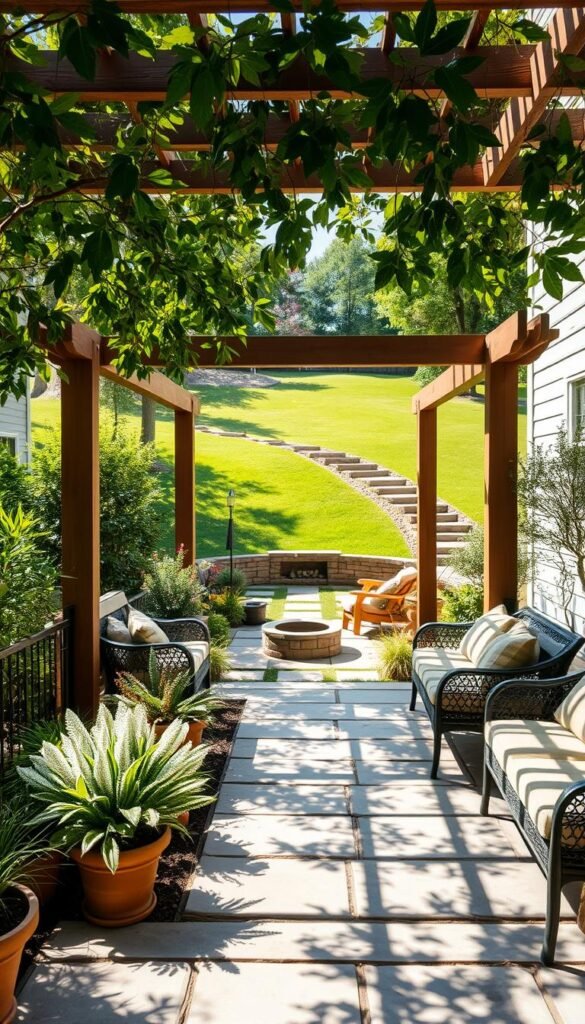
Transform your yard into a series of purposeful extensions of your home. Alli Guleria reimagined her Washington D.C. property by replacing grass with functional garden rooms—each serving unique needs. Her success started with a cozy seating space near the house, complete with weatherproof cushions and a retractable canopy that hosts game nights and afternoon naps alike.
Designing Intimate Outdoor Rooms for Family Gatherings
Define areas using natural dividers instead of walls. A rose-covered pergola marks the transition from dining zone to fire pit lounge. Low hedges or decorative screens create privacy without blocking sightlines—perfect for keeping tabs on kids while entertaining.
Consider these elements when planning multi-use outdoor spaces:
| Feature | Material | Dual Purpose |
|---|---|---|
| Flooring | Stamped concrete | Art canvas for chalk drawings |
| Lighting | Solar string lights | Nighttime ambiance + pathway markers |
| Partitions | Climbing ivy panels | Privacy screen + wildlife habitat |
Choose furniture that blends indoor comfort with outdoor durability. All-weather wicker sectionals with quick-dry cushions invite lingering conversations. For creative gardening ideas, try hanging herb planters that double as centerpieces.
Pathways matter too. Curved gravel walks lined with lavender connect spaces while encouraging exploration. Add arched trellises between zones to create natural “doorways” that kids love to race through. This approach lets your garden feel expansive yet intimate—ideal for both Saturday barbecues and Tuesday storytimes.
Creative Ideas for Play Equipment and DIY Inspirations
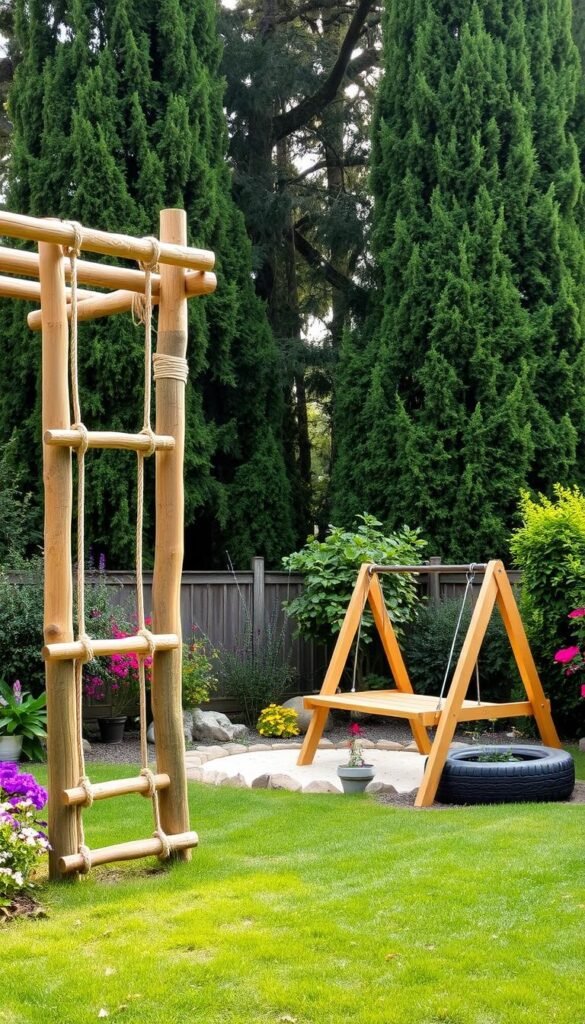
Transform everyday items into magical play spaces without breaking your budget. Matt Jackson reveals that “children engage longer with improvised structures than pricey plastic towers.” His £24 apple crate fort proves imagination beats expensive gear.
Exploring Cost-Effective, Second-Hand Options
Skip the £1,000 climbing frames. Hunt charity shops for:
- Old kitchen units becoming mud pie stations (£11)
- Wooden ladders transformed into teepee frames
- Discarded pallets repurposed as obstacle courses
Sand wooden surfaces with your kids, then stain them to match your garden‘s color scheme. This approach saves money while keeping your outdoor space stylish.
Encouraging Family DIY Projects in the Garden
Build a “loose parts” zone together. Fill it with:
- Logs for balancing
- Flat stones for painting
- Sand for endless digging
Rotate materials monthly to maintain interest. Children love rearranging these elements—today’s pirate ship becomes tomorrow’s spaceship. Portable setups adapt as they grow, avoiding wasted equipment.
Focus on fun over permanence. A chalkboard fence costs less than swingsets and evolves with your family’s creativity. As Jackson says, “The best play happens where kids shape their world.”
Hardscape, Pathways, and Water Features for a Dynamic Garden
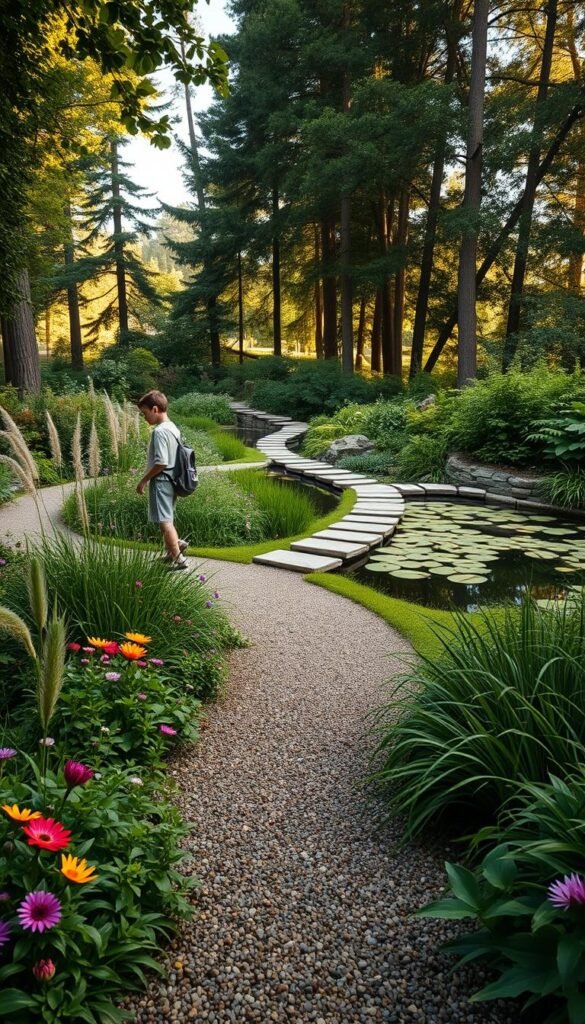
The foundation of a lively family garden lies beneath your feet—and in the sounds around you. Alli Guleria’s clever use of four water features, including a kitchen-side trickling fountain, proves even small installations mask noise while adding magic. Her curved patio edges and meandering pathways show how flowing lines create natural rhythm.
Selecting Durable Materials for Safety and Style
Choose surfaces that handle skateboards and cartwheels. Brick and stone withstand bike tires, while grass or bark cushion falls. Avoid gravel—it’s tricky for wheels and tender knees. Here’s a quick guide:
| Material | Best For | Maintenance Tip |
|---|---|---|
| Flagstone | Pathways, hopscotch zones | Seal joints with polymeric sand |
| Bark mulch | Play zones under equipment | Refresh annually |
| Stamped concrete | Patios, art canvases | Power wash biannually |
Designing Curved Pathways and Inviting Transitions
Curves slow down sprinters and spark curiosity. Line winding pathways with lavender or fuzzy lamb’s ear for touchable edges. Guleria repeats curved shapes in raised beds and stepping stones to unify the landscape.
Add shallow water channels (under 2” deep) along walkways. Kids can race leaves while adults enjoy the babble. For small-space gardening inspiration, use narrow rills that double as herb planters.
Remember: Every bend should invite discovery. A hidden bench here, a mosaic stone there—these surprises turn functional pathways into adventures.
Incorporating Mature Trees and Varied Plantings for Privacy and Beauty
Your backyard can become a living playground that evolves with your family. Mature trees offer more than shade—they’re nature’s jungle gyms. As Posy Gentles notes, “A sturdy oak supports tire swings today and hammocks tomorrow without costly upgrades.”
Choosing Child-Safe Plants and Shrubs
Start with non-toxic shrubs like viburnum or ninebark. Their dense branches create secret forts for children while blocking neighbors’ views. Mix in sensory plants: fuzzy lamb’s ear for touch, snapdragons for color, and fragrant rosemary for exploration.
Layer trees shrubs to build depth. Tall maples frame the space, mid-sized hydrangeas add blooms, and low heuchera provides texture. This approach nurtures curiosity while ensuring privacy—no fences needed.
For play-friendly planting, avoid thorny varieties near paths. Use soft groundcovers like clover under climbers. Matt Jackson’s daughter Rosie loved “wild” gardens where trees became bases for tag. With smart choices, your gardening efforts grow both beauty and adventure.