

Imagine stepping outside your door to a lush, elevated oasis that feels worlds away from the city below. Rooftop gardens are redefining urban living, offering a smart solution for homeowners craving nature without sacrificing square footage. Landscape experts confirm these spaces can feel larger than they appear through strategic layouts and vertical greenery—turning cramped areas into serene escapes.
Why are city dwellers embracing this trend? Beyond aesthetics, elevated green spaces provide cleaner air, fewer pests, and panoramic views you won’t find in traditional yards. The National Association of Landscape Professionals notes that clever screening techniques and multi-level planting create privacy even in dense neighborhoods.
This guide walks you through modern approaches to transform your underused rooftop. You’ll learn how to balance structural safety with eye-catching elements like modular planters and weather-resistant furnishings. We’ll also explore how innovative materials ensure your garden thrives through seasons while complementing your home’s architecture.
Whether you’re craving a cozy reading nook or an entertainment-ready terrace, smart design turns limitations into opportunities. Ready to unlock your rooftop’s potential? Let’s dive into the principles that make these spaces both functional and unforgettable.
Introduction to Rooftop Garden Trends
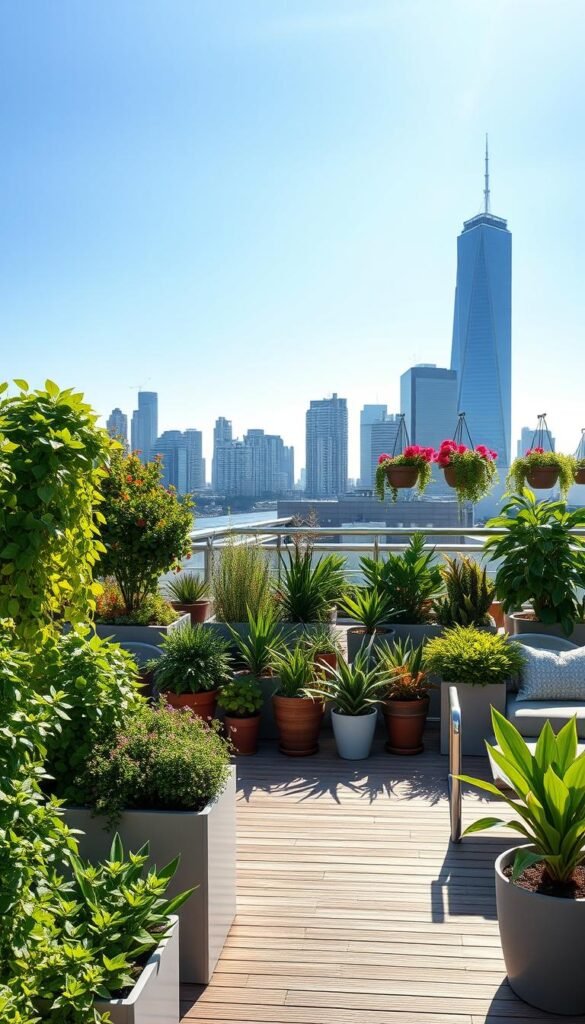
City skylines are getting greener as elevated spaces become extensions of home life. Top designers now treat these areas as outdoor living rooms, blending weather-resistant sofas with artistic plant arrangements. This shift reflects how urbanites crave nature without leaving their buildings.
Understanding Urban Outdoor Living
Your rooftop can become a personal retreat that mirrors indoor comfort. Designers suggest starting with lounge-worthy seating and layered lighting. Add pops of color with ceramic planters or textured outdoor rugs to define zones for dining or relaxation.
Shade sails or retractable awnings protect from midday sun while maintaining open-air vibes. Many city residents use vertical herb gardens as both decor and fresh seasoning sources. These touches make compact spaces feel intentional—not just leftover square footage.
Inspiration from Leading Designers
Manhattan’s sky-high terraces showcase modular furniture that withstands wind and rain. Parisian rooftops often feature romantic climbing vines paired with bistro lights. London designers mix reclaimed wood planters with sleek metal accents for industrial charm.
One New York landscaper notes: “Successful designs balance durability with personality—your space should tell your story.” This approach transforms bland roofs into conversation-starting environments that work for sunset cocktails or morning yoga sessions.
How to Create a Stunning Rooftop Garden Design with Modern Concepts
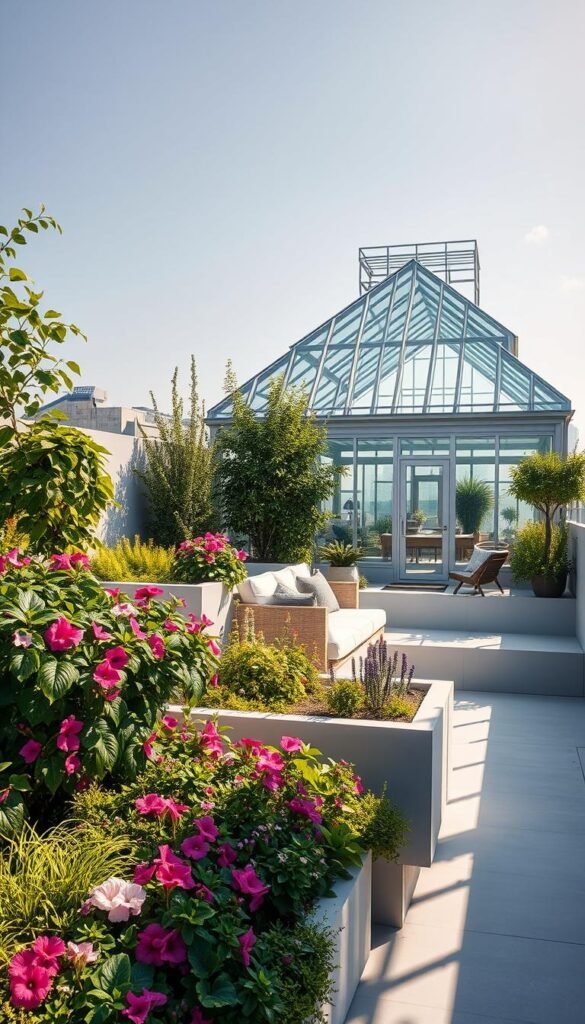
Modern rooftop spaces blend aesthetics with practicality for lasting appeal. By combining smart layouts with innovative elements, you can turn exposed surfaces into inviting extensions of your home. Let’s explore techniques that reshape rigid structures into fluid living areas.
Embracing Contemporary Techniques
Curved planters and benches soften sharp architectural lines, making your elevated area feel more organic. Diagonal decking patterns visually expand cramped layouts, while tiered planting systems add depth. One landscape architect notes: “Fluid shapes trick the eye into perceiving more movement and space than physically exists.”
Integrating Stylish Materials and Details
Durable surfaces like powder-coated aluminum planters resist corrosion while maintaining sleek profiles. Composite decking mimics wood’s warmth without demanding constant upkeep. Consider these material pairings for visual impact:
| Material | Benefits | Style Pairings |
|---|---|---|
| Corten Steel | Develops rustic patina | Pairs with lush ferns |
| Textured Concrete | Heat-resistant surface | Contrasts with smooth ceramics |
| Recycled Polymer | Ultra-lightweight | Works with geometric planters |
Layered lighting transforms your area after sunset—try recessed deck LEDs alongside pendant fixtures. For more ideas to elevate your space with gardening aesthetics, consider how finishes interact with plants. A matte black railing makes green foliage pop, while terrazzo tabletops complement succulent arrangements.
Designing Your Outdoor Living Space on the Roof
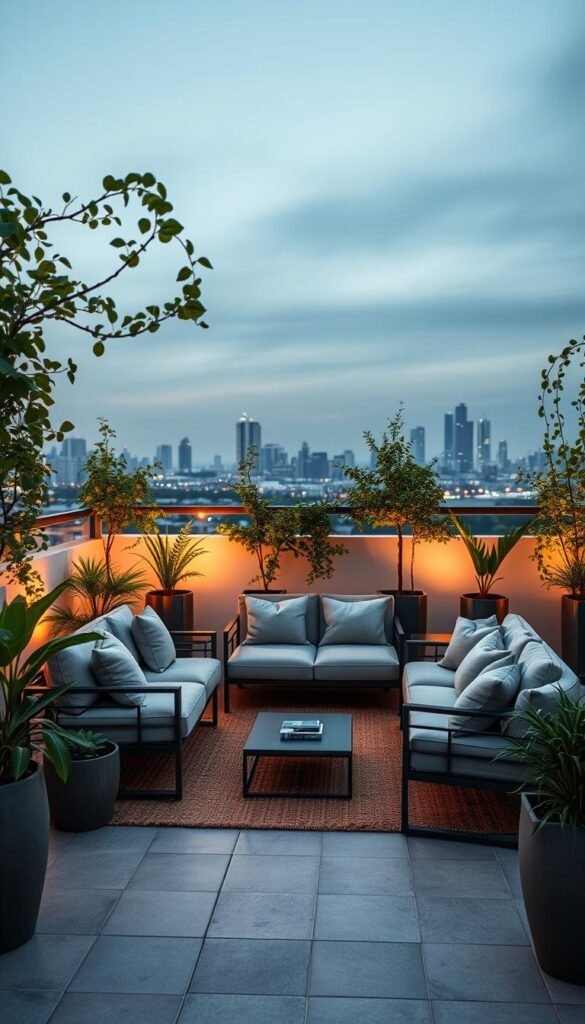
Transform your elevated area into a functional retreat by applying interior design principles outdoors. Expert landscapers suggest dividing your rooftop into activity zones, much like rooms in a house. A dining corner with a weatherproof table pairs perfectly with a lounge nook featuring deep-seated chairs.
Furnishing for Comfort and Style
Choose pieces that withstand sun and rain without sacrificing coziness. Modular sectionals with quick-dry cushions allow flexible arrangements, while powder-coated aluminum tables resist rust. “Your seating should invite lingering,” notes Los Angeles designer Mara Hoffman. “Think plush ottomans that double as side tables during gatherings.”
Layer textures through outdoor rugs and woven throw pillows designed for all-season use. Position conversation areas to frame skyline views or create intimacy with backless benches facing inward. For smaller spaces, foldable bistro sets maximize versatility without clutter.
Consider these elements when planning your layout:
- Sun exposure: Place dining spots where shade sails or pergolas provide midday coverage
- Traffic flow: Leave 36-inch pathways between furniture groupings
- Storage: Opt for benches with hidden compartments for seat cushions
Scale matters—oversized pieces overwhelm compact roofs, while petite furnishings get lost in larger areas. Balance bold statement items like fire tables with minimalist plant stands to maintain visual harmony.
Utilizing Container Gardening and Raised Beds
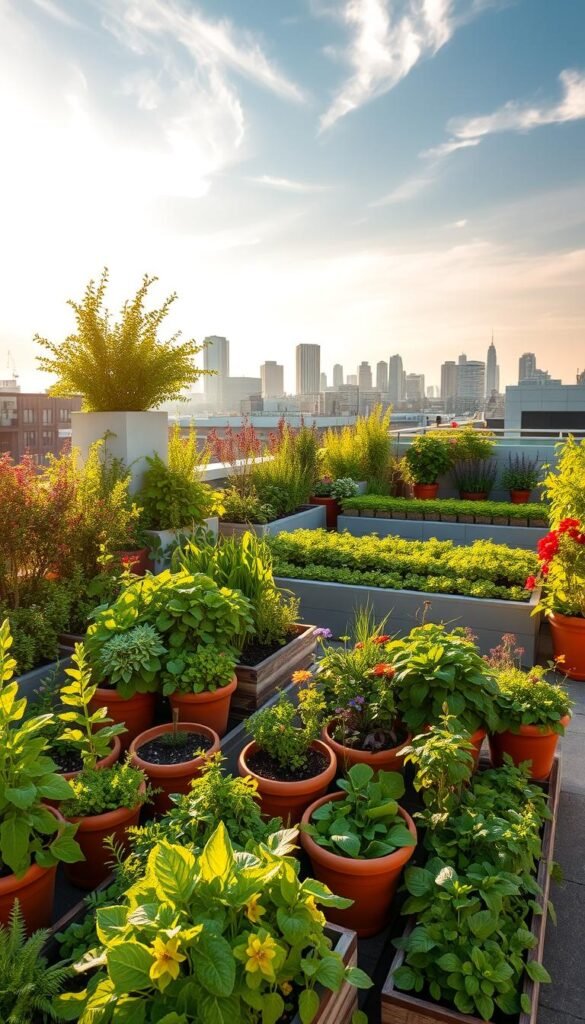
Elevated green spaces thrive when every inch counts. Containers let you craft lush displays without permanent soil beds, while raised beds add structure for deeper-rooted plants. Urban gardeners praise this combo for balancing flexibility with growing potential.
Smart Container Selection Strategies
Pick planters that match your space’s needs and style. Medium-to-large containers hold moisture better than small pots, reducing watering demands. A Brooklyn horticulturist advises: “Use 18-inch diameter pots as your baseline—they’re roomy enough for tomatoes yet manageable to move.”
Consider these materials for urban settings:
- Fiberglass: Lightweight and frost-resistant
- Glazed ceramic: Stylish but needs winter protection
- Self-watering planters: Ideal for busy schedules
Raised beds bring ground-level gardening benefits upward. Their deeper soil supports veggies like carrots and peppers. Line them with landscape fabric to prevent debris buildup in drainage systems.
Always check weight limits with your building manager. Composite wood beds weigh 40% less than traditional cedar while offering similar durability. Cluster containers near seating areas to create natural partitions, or stagger heights for cascading floral displays.
Incorporating Vertical Elements and Green Screens
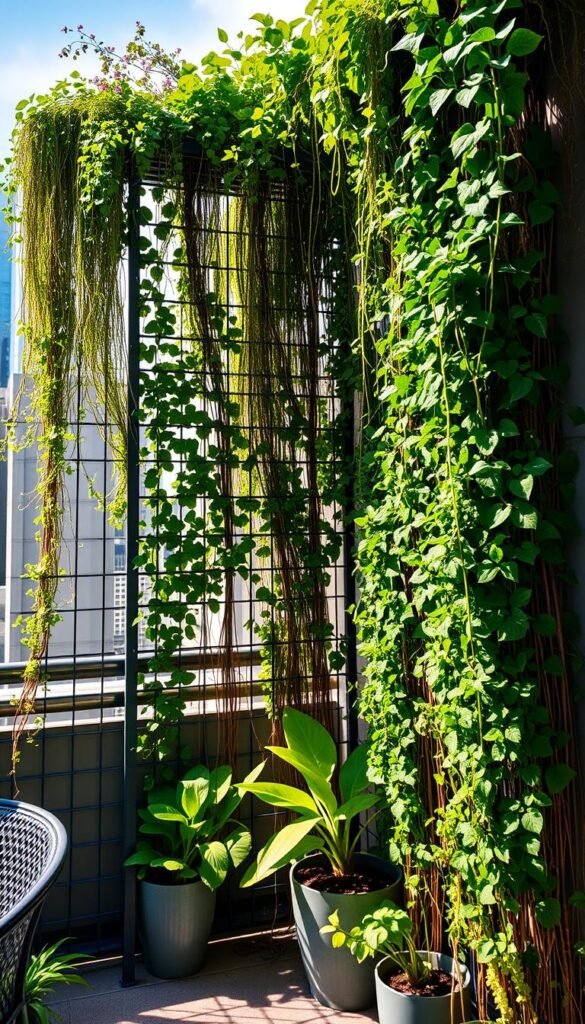
Your rooftop’s vertical spaces hold untapped potential for beauty and privacy. Green screens and climbing systems let you craft intimate areas while showcasing nature’s artistry. These solutions prove especially valuable in cities where neighboring buildings loom close.
Adding Privacy with Lush Greenery
Climbing plants transform bare walls into living curtains. A wooden lattice draped with confederate jasmine creates sweet-scented seclusion within weeks. Porous barriers like cedar battens filter wind better than solid walls, reducing turbulence while letting breezes through.
Landscape architect Elena Cruz advises: “Layer fast-growing vines with evergreen shrubs for year-round coverage.” Consider these space-smart options:
- Star jasmine: Fragrant white blooms from spring to fall
- Climbing hydrangea: Thrives in shaded corners
- Edible passionfruit: Offers tropical flair and snacks
Enhancing Walls with Vertical Planters
Living walls turn blank surfaces into cascading displays. The Anchor Distillery’s setup mixes strawberries with aromatic herbs—a feast for eyes and plates. Modular planters let you swap seasonal colors without replanting entire systems.
Choose lightweight aluminum frames over heavy ceramic for wind safety. Wall-mounted troughs work well for trailing plants like sedum or ivy. Pair vertical elements with ground-level containers to create depth and visual flow.
For low-maintenance options, install pre-planted panels featuring drought-tolerant succulents. These living artworks need minimal care while providing striking texture against urban backdrops.
Optimizing Plant Selection and Irrigation Systems
Thriving green spaces above city streets demand plants that laugh in the face of scorching sun and gusty winds. Smart choices in greenery and watering systems turn harsh conditions into growth opportunities. Let’s explore how to pair resilient species with tech that keeps them hydrated.
Tips for Drought-Resistant and Sun-Loving Plants
Mexican feather grass sways beautifully while ignoring dry spells, and lavender offers fragrant purple spikes that bees adore. These champions thrive where others wilt. Coastal varieties like dwarf fan palms handle wind like seasoned sailors, while hebe shrubs form tidy mounds with year-round interest.
For non-stop color, try liatris blazing stars—their spiky purple blooms withstand summer heat. Mediterranean herbs like rosemary and thyme double as kitchen staples. As urban gardener Linnea Price advises: “Mix textures for visual drama—silvery artemisia leaves make fiery red sedums pop.”
Smart Drip Irrigation Solutions
Drip systems deliver water straight to roots, cutting waste by up to 60% compared to sprinklers. Timers paired with moisture sensors adjust flow based on real-time needs. This table shows top options for elevated gardens:
| System Type | Water Efficiency | Best For |
|---|---|---|
| Soaker Hoses | Good | Raised beds & large planters |
| Drip Tape | Excellent | Linear layouts & vegetable plots |
| Micro-Sprinklers | Moderate | Flowering shrubs & container clusters |
Use moisture-retaining soil mixes with perlite or coconut coir to stretch time between waterings. Pair sandy blends with succulents, and richer compost-based soils with flowering perennials. Your plants get exactly what they need—no more, no less.
Lighting Ideas to Elevate Evening Ambiance
Twilight transforms your elevated escape into a glowing sanctuary where fireflies compete with city lights. Strategic illumination turns functional spaces into enchanting extensions of your home after dark. A Chicago designer’s birch tree uplighting proves how simple touches create drama—white bark reflects soft glows while spotlights under cedar pergolas cast intricate shadow patterns.
Creative Outdoor Lighting Techniques
Layer three lighting types for depth: ambient, task, and accent. String lights draped overhead establish warm ambiance, while recessed deck markers guide footsteps safely. Directional spotlights make sculptural plants or water features pop after sunset. “Lighting should feel intentional, not accidental,” notes landscape pro Alicia Cho. “Highlight what you love, hide what you don’t.”
Energy-efficient LEDs offer versatility—choose warm tones (2700K) for dining zones and cool whites (4000K) along pathways. Solar-powered lanterns charge by day, casting golden pools of light near seating clusters. For summer gatherings, programmable color-changing bulbs adapt to moods, shifting from vibrant hues to soft pastels.
Position fixtures to avoid glare while maximizing impact. Wall-mounted sconces flanking vertical gardens create symmetry, while waterproof pendant lights over bars ensure cocktail prep stays safe. Cluster flickering candle lanterns on side tables for movable ambiance that dances with evening breezes.
Integrating Functional Features: Rooftop Kitchens and Fire Pits
Your elevated space becomes a social hub when equipped with purpose-driven elements. These additions transform ordinary rooftops into destinations where memories simmer alongside sunset views.
Maximizing Your Outdoor Cooking Space
Compact outdoor kitchens let you grill burgers while chatting with guests. Opt for stainless steel appliances that handle weather extremes. Built-in storage keeps tools hidden yet accessible—no more running downstairs for spatulas.
Position your cooking zone near seating areas to maintain conversation flow. A Boston designer suggests: “Use matching countertop materials to visually connect food prep and dining spaces.” Add task lighting under cabinets for safe nighttime meal prep.
Adding Warmth and Character with a Fire Pit
Nothing extends summer evenings like a crackling fire pit. Gas-powered models offer instant ambiance without smoke hassles. Surround seating with weatherproof cushions in fire-resistant fabrics for cozy gatherings.
Choose a low-profile design that doesn’t block skyline vistas. Many urban rooftops use rectangular fire tables that double as footrests. Always check local regulations—some cities require spark screens or height restrictions for open flames.