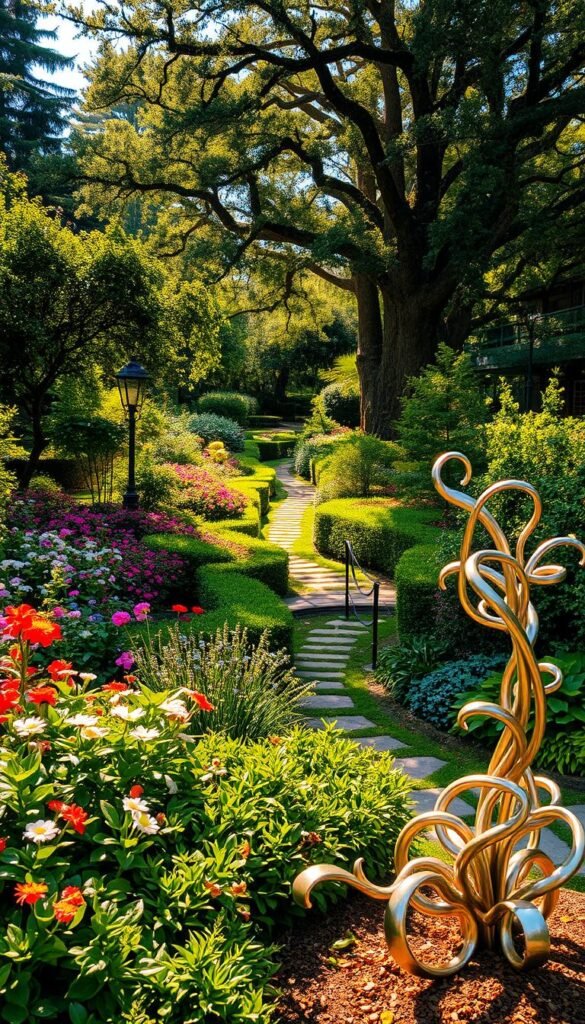
Your garden is more than a collection of plants—it’s a canvas for self-expression. While lush greenery forms the foundation, thoughtful artistic elements transform ordinary yards into memorable retreats. As landscape expert Wendy Diaz notes, these features shine brightest in winter, adding structure when foliage fades.
Sculptures, wind chimes, or mosaic pathways create nodes of interest that guide visitors through your space. They define cozy “outdoor rooms” while reflecting your style. A weathered bronze statue might anchor a shady corner, while colorful glass orbs could dance among spring blooms.
Whether you have a compact patio or sprawling grounds, art bridges nature and creativity. Durable materials like stone or powder-coated metal withstand seasonal changes, keeping your design vibrant year-round. The key? Choose pieces that feel authentic to you while complementing existing trees and flowers.
This approach isn’t just about decoration—it’s crafting harmony between earth and imagination. When done right, your outdoor area becomes an extension of your home’s character, inviting exploration at every turn.
Understanding the Role of Art in Garden Design
Historically, gardens have served as platforms where creativity and horticulture intersect. As the Oxford Companion to Garden observes, these spaces “embrace both art and science,” with each design reflecting its creator’s vision. This blend turns ordinary yards into living galleries that evolve with the seasons.
How Art Transforms Outdoor Spaces
Strategic placements of sculptures or mosaics act as visual anchors, guiding movement through your landscape. A rusted iron archway draped in climbing roses, for instance, becomes both a pathway and a story. These elements add rhythm to plant beds, making even small patios feel intentional.
Consider the annual Sculpture in the Garden exhibit at North Carolina Botanical Garden. Visitors linger longer when pieces spark curiosity—like abstract metal forms contrasting with native grasses. Such installations invite interpretation while complementing natural textures.
The Balance Between Nature and Sculpture
Great garden art harmonizes with its environment rather than overpowering it. Smooth ceramic tiles might echo river stones, while weathered bronze picks up hues from autumn leaves. This dialogue between human-made and organic creates depth without competition.
| Material | Best Paired With | Visual Effect |
|---|---|---|
| Reclaimed Wood | Fern Groves | Rustic Warmth |
| Corten Steel | Ornamental Grasses | Modern Contrast |
| Stained Glass | Shade Plants | Light Play |
As landscape designer Mara Chen notes: “Your choices should feel like discoveries, not declarations.” A single stone bench under a maple tree can become a meditation spot, proving that subtlety often outshines grandeur.
Choosing the Perfect Sculpture and Artistic Details
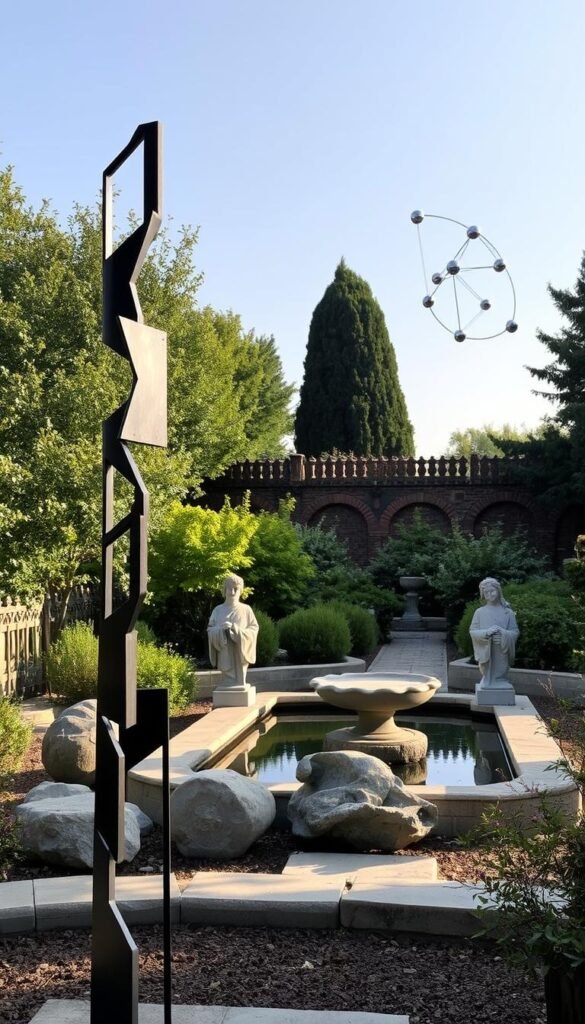
Your outdoor space becomes a reflection of you through thoughtful selections that spark joy. Start by exploring what resonates personally—whether bold geometric shapes or weathered stone figures. As sculptor Elena Torres advises: “Let your instincts guide you. If a piece makes you pause, it’s speaking your language.”
Identifying Pieces That Speak to Your Style
Material choices shape both aesthetics and longevity. For rainy climates, stainless steel resists rust better than iron. In sunny areas, powder-coated metals prevent fading. Consider these pairings:
| Garden Vibe | Material Match | Maintenance Level |
|---|---|---|
| Modern Minimalist | Polished Concrete | Low |
| Woodland Retreat | Reclaimed Cedar | Moderate |
| Desert Oasis | Sandstone | High |
Scale matters most when placing statement pieces. A six-foot metal heron might dominate a cottage garden but energize open lawns. For smaller areas, cluster three ceramic spheres near seating spots.
Don’t overlook flea market finds—often hidden gems needing slight weatherproofing. Local artists can also craft custom works using your preferred colors and textures. Remember: one striking sculpture creates deeper impact than ten forgettable trinkets.
Integrating Art Installations into Your Garden Design for a Unique Touch
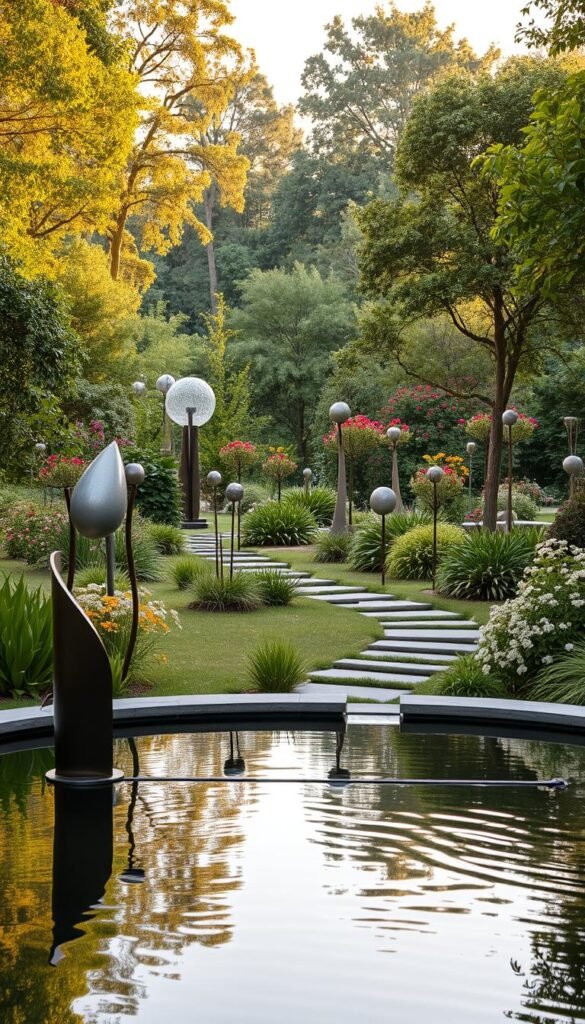
Outdoor spaces come alive when personal expression meets thoughtful planning. Blue Lizard Services emphasizes creating areas that enhance garden experiences through intentional placement. Think of a wrought-iron chair beneath a willow tree or ceramic tiles guiding visitors to your roses.
Start by observing your landscape’s natural rhythm. Place sculptures where paths bend or flower beds transition. These spots naturally draw the eye, creating focal points without disrupting growth patterns. A bronze heron near a pond edge, for example, complements water movement while standing firm in winter.
Seasonal adaptability matters. Choose pieces that shine when plants retreat—maybe a geometric steel tower that catches frost or a glass orb reflecting autumn hues. Consider this placement guide:
| Location | Art Type | Seasonal Benefit |
|---|---|---|
| Path Intersection | Mosaic Stepping Stone | Year-round color |
| Sloped Area | Cascading Wind Chimes | Movement in breezes |
| Seating Nook | Carved Stone Bench | Functional beauty |
Multi-functional pieces add depth. A trellis with stained glass insets supports vines while casting rainbow shadows. Local artist collaborations often yield weather-resistant works tailored to your space. Remember: successful incorporating art feels discovered, not forced—like that perfect flea-market sundial finding its home among your herbs.
Allow room for plants to mature around installations. Position taller sculptures where shrubs won’t obscure them, and let groundcovers frame smaller pieces. This balance ensures your garden design evolves gracefully, blending nature’s spontaneity with human creativity.
Practical Tips for Positioning and Illuminating Your Garden Art
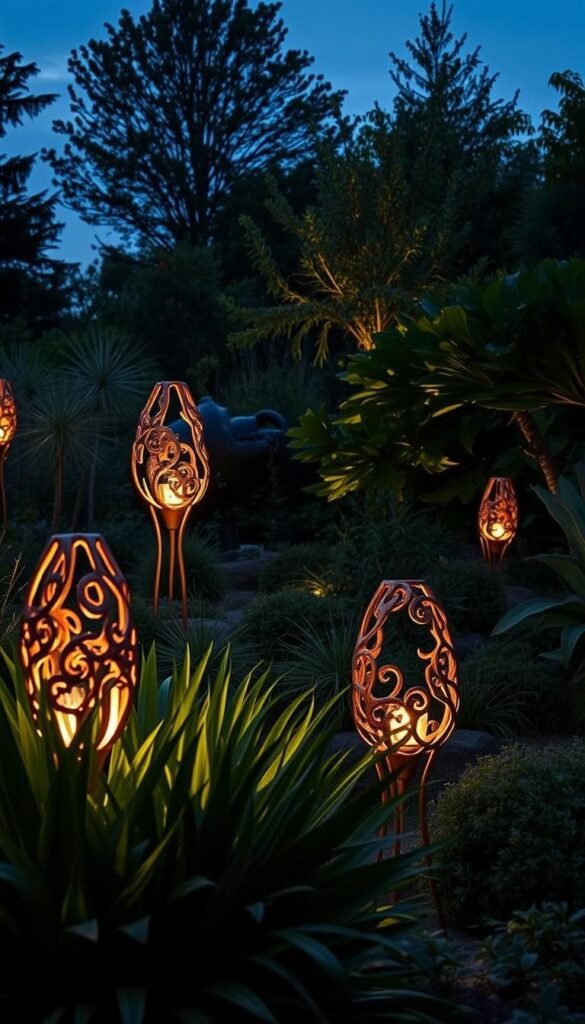
Great garden design directs attention like a compass guiding explorers. The right placement turns ordinary objects into eye-catching focal points, while lighting adds depth after sunset. Let’s explore how to highlight your favorite pieces without disrupting nature’s flow.
Finding Natural Focal Points in Your Landscape
Your property already has spots where eyes naturally linger. Look where paths meet or where flower beds curve—these areas beg for artistic accents. A stone owl perched where three trails converge becomes a conversation starter. Even small spaces benefit from this approach.
Try the rule of thirds: position key items one-third from edges rather than dead center. This creates dynamic tension, making viewers explore your entire space. Corners and elevation changes work particularly well, as our brains notice boundaries instinctively.
Using Lighting to Enhance Visual Appeal
Strategic illumination transforms daytime features into nighttime magic. Solar-powered LEDs offer drama without harming wildlife. Uplight a ceramic vase to cast dancing shadows, or softly backlight a metal sculpture to emphasize its silhouette.
| Light Type | Best For | Effect |
|---|---|---|
| Spotlights | Sculpture Details | Highlights textures |
| Path Lights | Guiding Movement | Creates safe navigation |
| String Lights | Ambient Glow | Adds whimsical charm |
Time your lighting to match garden use—maybe dusk-to-dawn sensors for evening gatherings. Avoid overlighting; subtlety preserves mystery. Remember: moonlight-inspired brightness (under 1 lux) protects nocturnal ecosystems while letting your art shine.
Maintaining Durability and Style in Your Outdoor Art
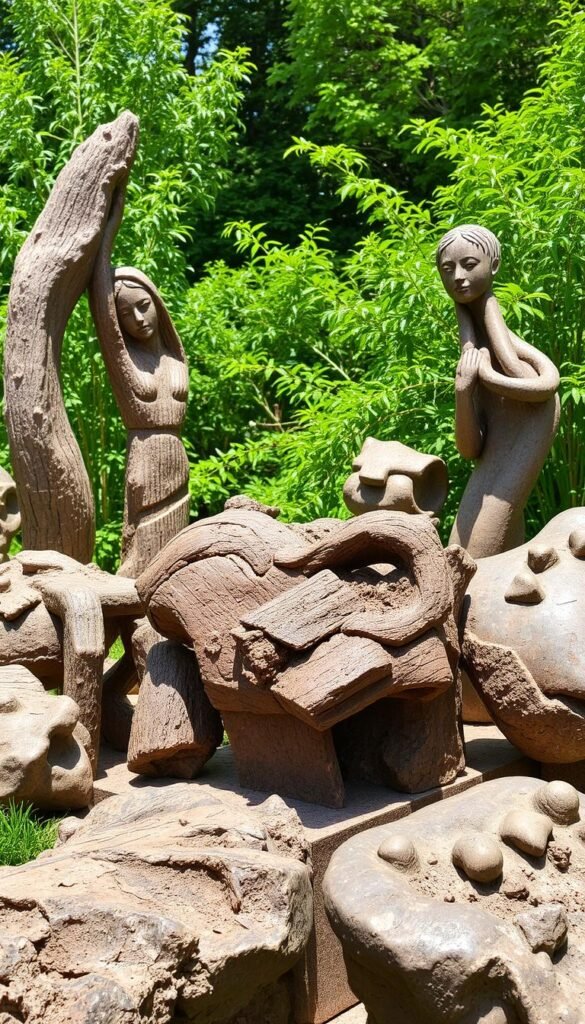
Outdoor sculptures thrive when beauty meets brawn. Choosing pieces that withstand your local weather while aging gracefully ensures year-round interest without constant upkeep. Let’s explore how to protect your investments while keeping their visual charm.
Selecting Weather-Resistant Materials
Your region’s climate dictates smart material choices. In humid areas like Louisiana, stainless metal resists rust better than iron. Corten steel develops a protective rust layer, blending earthy tones with modern durability. Consider this comparison:
| Material | Best For | Lifespan |
|---|---|---|
| Cast Aluminum | Coastal Zones | 15+ years |
| Sandstone | Dry Climates | 20+ years |
| Teak Wood | Sheltered Areas | 10-15 years |
Tips on Long-Term Care and Maintenance
Set reminders to clean stone pieces before winter—moss buildup causes cracks during freezes. Apply car wax to metal sculptures twice yearly for UV protection. Check mounting hardware every spring to prevent wind damage.
Balancing Practicality with Aesthetic Value
Sometimes durability trumps delicate beauty. A powder-coated bench lasts longer than untreated wicker but still offers seating charm. As New Orleans landscaper Jules Boudreaux advises: “Choose pieces that work harder than your climate.”
Track maintenance time when selecting art. Bronze needs occasional polishing, while concrete requires minimal care. Your perfect piece blends resilience with personal style—no compromises needed.
Enhancing Your Garden’s Focal Points with Creative Artistic Elements
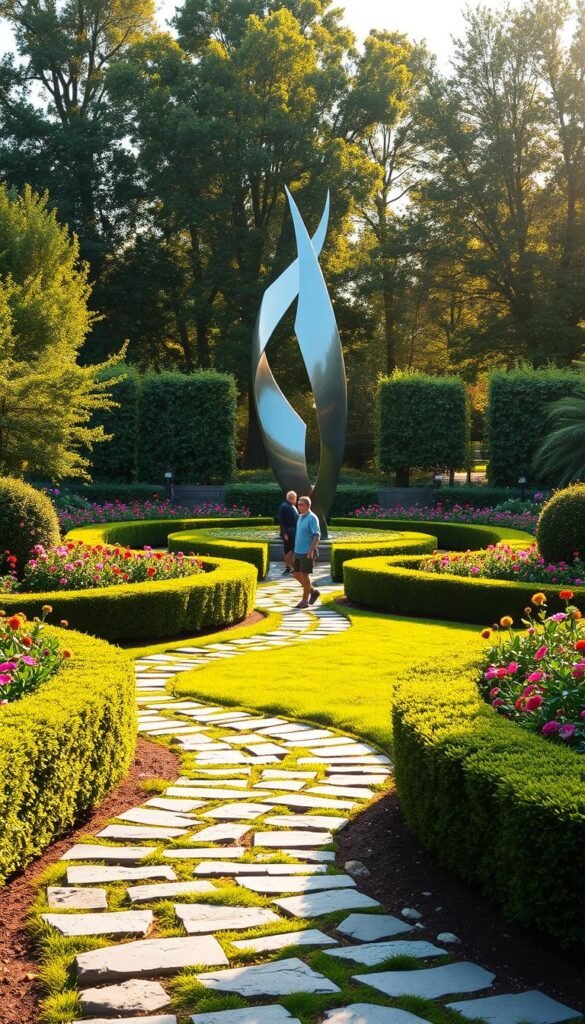
Your outdoor space reaches its full potential when artistic elements serve as the glue binding design components together. Think of these features as jewelry for your landscape—they elevate existing beauty while adding personality. A well-placed sculpture or water feature can turn disjointed areas into cohesive visual stories.
Incorporating Art as a Finishing Touch
Multi-purpose pieces deliver the best results. A trellis crawling with clematis becomes both support and living sculpture. Garden art ideas often include benches that double as planter boxes—offering seating while showcasing seasonal flowers. These dual roles make installations feel purposeful rather than ornamental.
Color plays a starring role in creating focal points. Paint a ceramic birdbath the same hue as your hydrangeas for harmony, or choose cobalt glass globes that pop against green foliage. As plants shift through seasons, your artistic accents maintain visual continuity.
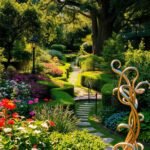
Vertical elements add depth to flat spaces. Tall metal spirals draw eyes upward, making small yards feel grander. Pair them with trailing ivy or morning glories for texture contrast. Water features work similarly—a stone fountain surrounded by ferns merges movement with tranquility.
Strategic placement matters most. Save showstoppers for areas visitors naturally pause: where paths meet, beside seating nooks, or framed by archways. For inspiration, DIY garden art projects offer budget-friendly ways to test placements before investing in pricier pieces.
Remember: great gardens balance structure with spontaneity. Let your sculptures weather naturally beside blooming peonies, or let moss creep across a decorative screen. These evolving relationships between art and nature keep your space feeling alive.
Bringing It All Together for a Stunning Outdoor Space
Transforming your backyard into a personal sanctuary starts with blending nature’s beauty with artistic flair. Choose pieces that mirror your personality—maybe a whimsical birdbath or sleek geometric forms. These elements should enhance your landscape, not compete with it. Let trailing ivy soften stone sculptures, or position wind chimes where breezes dance through maple leaves.
Scale matters when adding art. A towering metal sunflower energizes open lawns, while petite ceramic mushrooms charm shaded nooks. For cottagecore charm, mix vintage finds like weathered watering cans among wildflowers. This approach creates year-round interest, especially when blooms fade.
Lighting extends your garden’s magic into evening hours. Soft uplights make bronze figures glow, while solar path markers guide footsteps. Remember: your space should feel discovered, not staged. A mosaic bench nestled under roses becomes both seating and storytelling.
Ultimately, your outdoor area reflects how you experience nature. Whether through bold modern sculptures or hand-painted stepping stones, let every choice spark joy. When plants and art collaborate, they craft spaces that nourish both eyes and soul.