
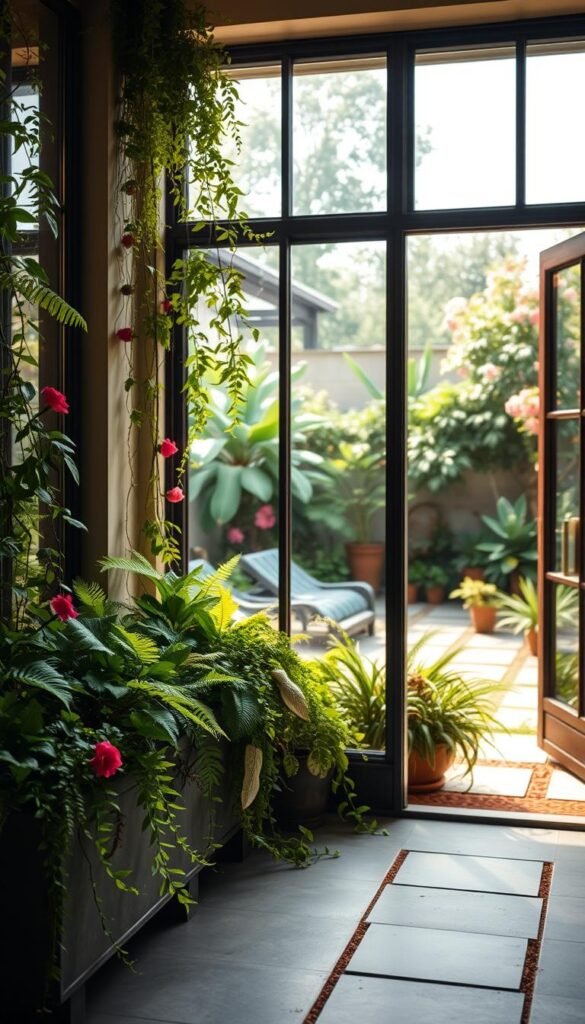
Imagine stepping into a home where crisp mornings blend with cozy evenings, and fresh air feels as natural as your living room couch. Modern living thrives on connection, and today’s most innovative homes erase the lines between built environments and nature. This approach isn’t just about looks—it’s a functional revolution that transforms how you experience every square foot of your property.
You’ll discover how smart material choices create harmony between areas once kept separate. Weather-resistant tiles that stretch from kitchen to patio, retractable glass walls, and multi-use furniture redefine what’s possible. These elements work together to expand your living area without costly expansions, as detailed in our guide to seamless hybrid living spaces.
This design philosophy goes beyond aesthetics. It’s about crafting fluid transitions that make outdoor areas feel like natural extensions of your interior. Whether you’re hosting friends or enjoying quiet moments, every space becomes more versatile—and more uniquely yours.
You’ll learn how strategic layouts adapt to modern lifestyles, offering solutions for every budget. From simple upgrades to full renovations, the result remains the same: a home that breathes with possibility, blending comfort with the raw beauty of the outdoors.
Understanding the Hybrid Garden Design Concept
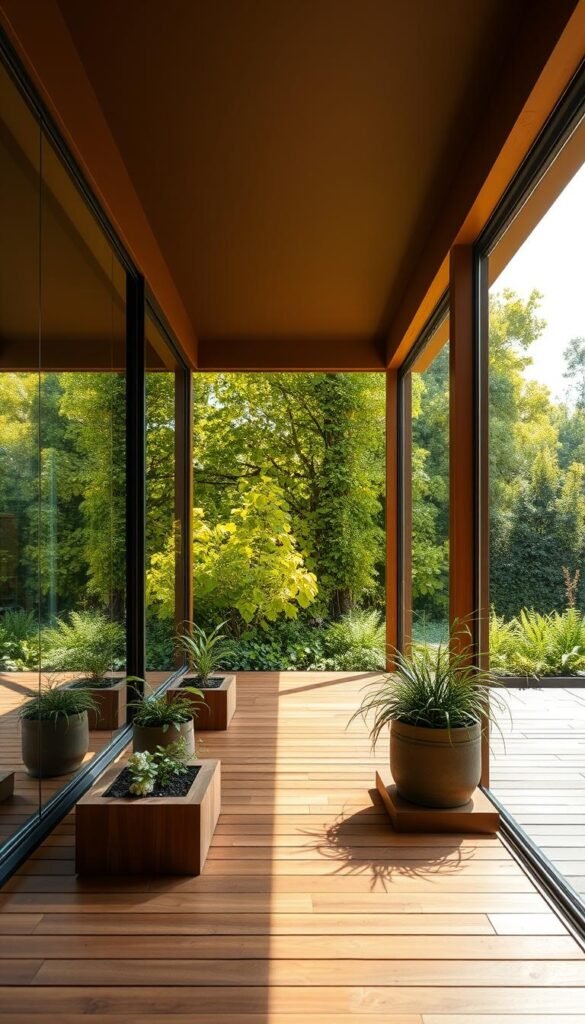
Picture a living area that effortlessly transitions from cozy interiors to vibrant outdoor settings. This design philosophy reimagines how rooms connect with nature through intentional planning and material harmony.
Breaking Down Spatial Barriers
True connection between environments starts with eliminating visual interruptions. Floor-to-ceiling glass panels replace solid walls, while matching flooring materials create rhythm across thresholds. Consistent textures trick the eye into perceiving patios as expanded dining areas rather than separate zones.
Why Blended Spaces Work Better
Hybrid layouts boost functionality through clever dual-purpose features. A weatherproof sectional by the fireplace becomes an alfresco lounge during summer gatherings. Built-in planters double as room dividers, merging greenery with practical storage.
| Design Element | Traditional Approach | Hybrid Solution |
|---|---|---|
| Room Transitions | Separate doorways | Sliding nano doors |
| Surface Materials | Indoor carpet + outdoor concrete | Porcelain tiles (both zones) |
| Layout Philosophy | Compartmentalized spaces | Fluid activity zones |
This approach transforms how you experience daily life. Morning coffee flows naturally from kitchen counters to garden benches, while evening conversations stretch across unified environments. Your home becomes a canvas where nature and comfort coexist without boundaries.
Essential Materials for Merging Indoor and Outdoor Areas
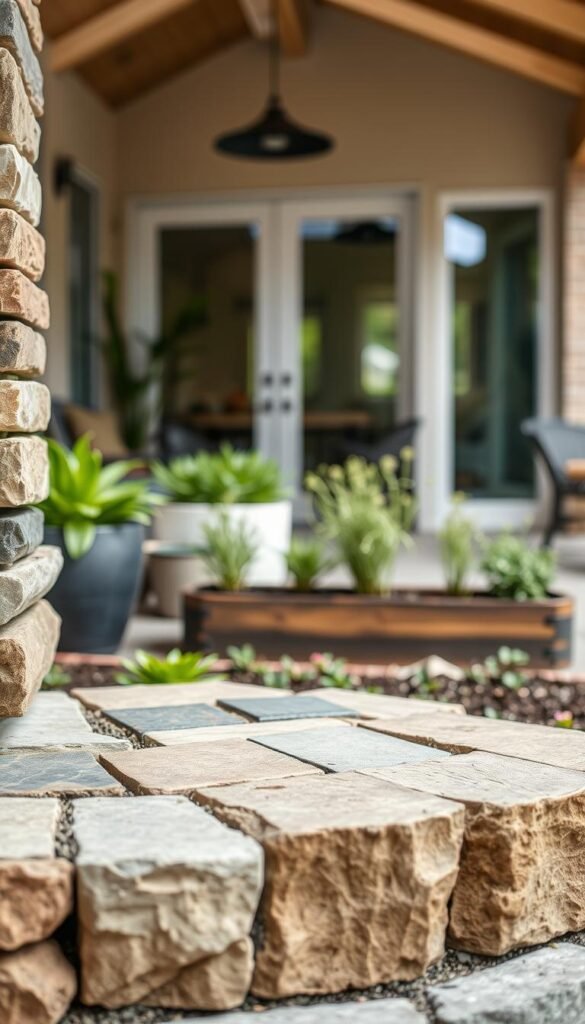
Your material selections become the foundation for spaces that flow effortlessly between rooms and nature. The right choices eliminate visual barriers while standing up to sun, rain, and daily use.
Selecting Weather-Resistant Flooring and Surfaces
Natural stone bridges interior-exterior zones with timeless elegance. Slate’s textured surface works equally well in cozy kitchens and poolside patios, while travertine adds Mediterranean warmth to sunrooms and outdoor lounges.
Treated hardwoods like teak bring organic texture to both environments. These woods withstand humidity changes when used for floors that stretch from living rooms to decking areas. Modern composites take this further, mimicking wood’s look without seasonal warping or staining.
Porcelain tiles now offer convincing stone and timber patterns. Use them across entire zones – your fireplace surround could match the patio’s surface perfectly. This creates rhythm while simplifying cleaning routines.
Fabrics matter as much as hard surfaces. Sunbrella’s weather-proof cushions let you repeat color schemes outdoors. Pair them with powder-coated steel furniture that shines equally in dining rooms and garden nooks.
Concrete proves surprisingly versatile when sealed properly. Polished indoor floors can transition to textured outdoor slabs, maintaining industrial chic across environments. For more ideas on harmonizing textures, explore how to elevate your garden aesthetic through intentional material pairings.
Every choice balances beauty with practicality. Durable finishes let your spaces evolve together, creating environments that feel cohesive through every season.
Strategies for Merging Indoor and Outdoor Spaces for a Seamless Hybrid Garden Design
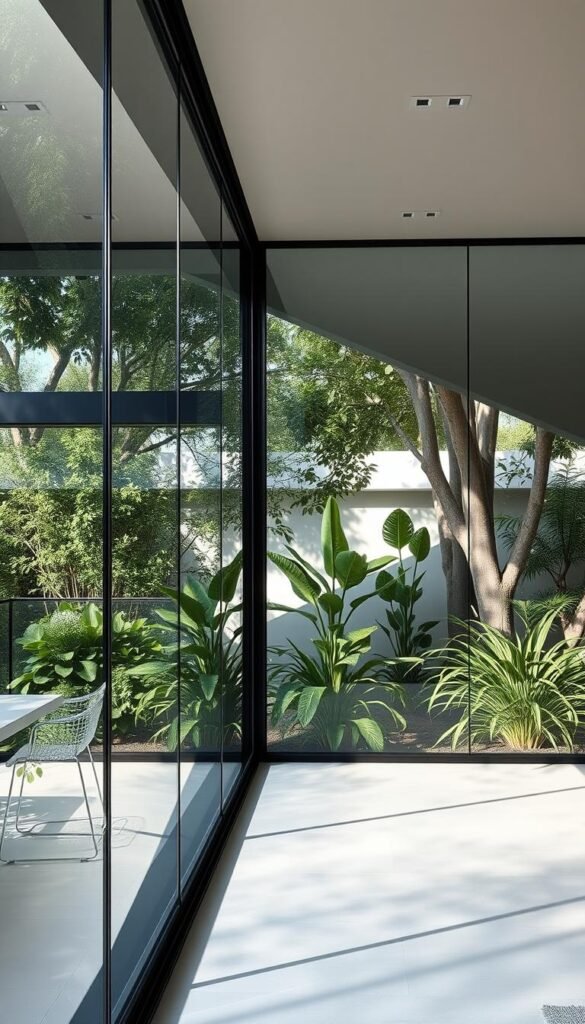
Transform your home’s layout with smart solutions that erase divisions between built environments and the outdoors. The right combination of structural elements and material choices creates harmony where walls once stood.
Architectural Elements That Unite Environments
Floor-to-ceiling glass systems redefine spatial connections. Bi-fold panels stack neatly when open, turning entire walls into vanishing thresholds. These systems invite sunlight while framing garden views as living art.
Consider frameless sliding doors for zero visual interruption. Their slim profiles maintain sightlines from your living room to patio. Pair them with matching floor tiles to enhance the seamless flow between zones.
Materials Built for Beauty and Resilience
Choose surfaces that perform equally well in sunrooms and pool decks. Porcelain tiles with wood-look finishes create warmth indoors while resisting weather damage outside. Powder-coated steel furniture bridges style needs across interior exterior areas.
| Feature | Traditional Option | Boundary-Blurring Upgrade |
|---|---|---|
| Door Systems | Single-pane windows | Multi-panel folding walls |
| Flooring | Separate indoor/outdoor tiles | Unified porcelain slabs |
| Sightlines | Partial window views | Panoramic glass walls |
Smart design choices make transitions feel natural. Align your fireplace with garden pathways, or position dining sets to face blooming flower beds. Every detail works together to craft spaces that breathe as one.
Optimizing Natural Light and Climate Control
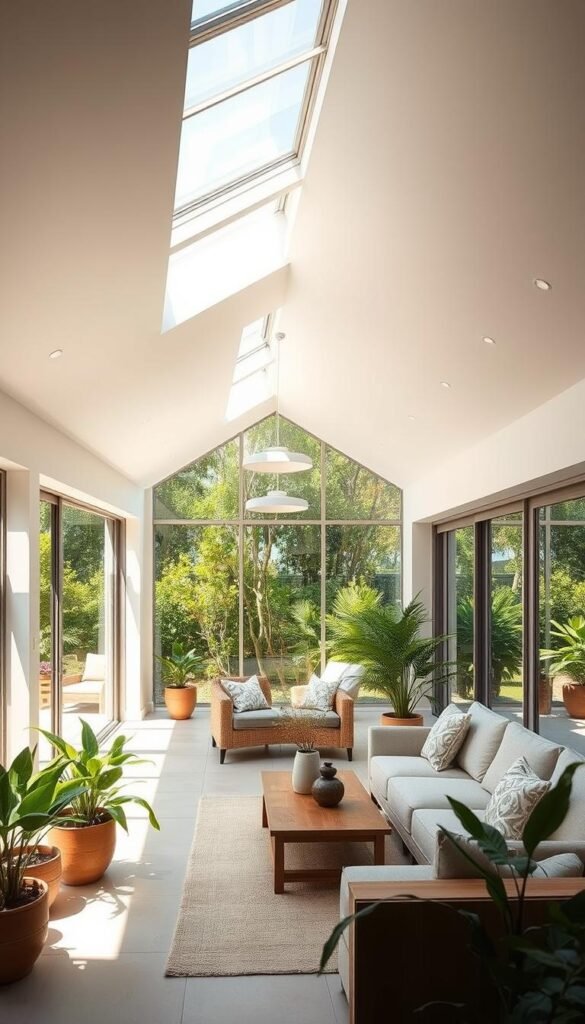
Sunlight and fresh air become your greatest allies when crafting spaces that unite comfort with nature. Smart design choices let you harness these elements while maintaining year-round usability.
Maximizing Daylight with Architectural Features
Position windows to capture morning light in breakfast nooks and afternoon sun in lounging areas. Floor-to-ceiling glass panels do double duty – they frame your garden views while bathing interiors in natural light.
Consider clerestory windows above eye level. These horizontal bands flood rooms with indirect sunlight without compromising privacy. Pair them with light-colored walls to amplify brightness throughout your space.
| Feature | Traditional Approach | Light-Optimized Solution |
|---|---|---|
| Window Placement | Standard height | Floor-to-ceiling glass |
| Ventilation | Single-direction airflow | Cross-breeze alignment |
| Shading | Fixed awnings | Retractable solar screens |
Zoned climate control systems let you heat or cool specific areas. Infrared patio heaters extend outdoor seasons, while ceiling fans circulate air in covered lounges. These layered approaches adapt to weather changes effortlessly.
Strategic landscaping enhances comfort naturally. Deciduous trees provide summer shade yet allow winter sunlight. Position pergolas to block midday glare while preserving golden-hour views. Your space stays connected to the environment through every season.
Smart Lighting and Technology Integration
Light becomes your secret weapon for blending environments after sunset. Modern systems adapt to your routines while enhancing the connection between your home and nature.
Automated Solutions That Think With You
Dimmable LEDs adjust brightness based on time of day. Morning light mimics sunrise hues, while evening settings soften to warm glows. These smart lighting systems sync with sliding doors, dimming automatically when panels retract for starlit dinners.
Choose color temperatures that mirror natural light cycles. Cool whites boost daytime productivity in home offices. Amber tones create cozy vibes in lounging zones. Pair them with motion sensors for energy-efficient path lighting between indoor outdoor areas.
Integrate controls into climate systems for unified management. Voice commands adjust patio heaters as temperatures drop. App-based schedules ensure seedling grow lights align with sunrise in compact urban gardens.
Your spaces stay functional through every season. Weatherproof fixtures withstand rainstorms yet look sleek in sunrooms. With the right lighting solutions, your home flows effortlessly from dawn coffee spots to moonlit retreats.