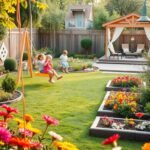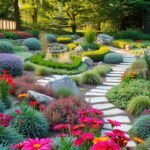

Transforming your property into a multi-functional retreat requires thoughtful preparation. Whether you’re working with a compact yard or sprawling land, strategic organization helps you balance beauty and practicality. Discover how professional landscapers approach large areas to enhance both plant growth and leisure opportunities.
Start by evaluating your current setup. Identify sunny patches, drainage patterns, and existing features worth keeping. This honest assessment prevents costly mistakes and ensures your vision aligns with reality. For smaller plots, consider the square foot gardening method to optimize every inch.
Throughout this guide, you’ll learn zoning techniques that separate play areas from vegetable beds. Master seasonal adjustments to keep your space thriving through winter frosts and summer heatwaves. Proper preparation now means less maintenance later—saving you weekends for relaxation instead of endless weeding.
By blending creativity with practical steps, you’ll craft an environment that grows alongside your family’s needs. Let’s explore how intentional choices create outdoor rooms for dining, gardening, and making memories under open skies.
Understanding Your Garden Space
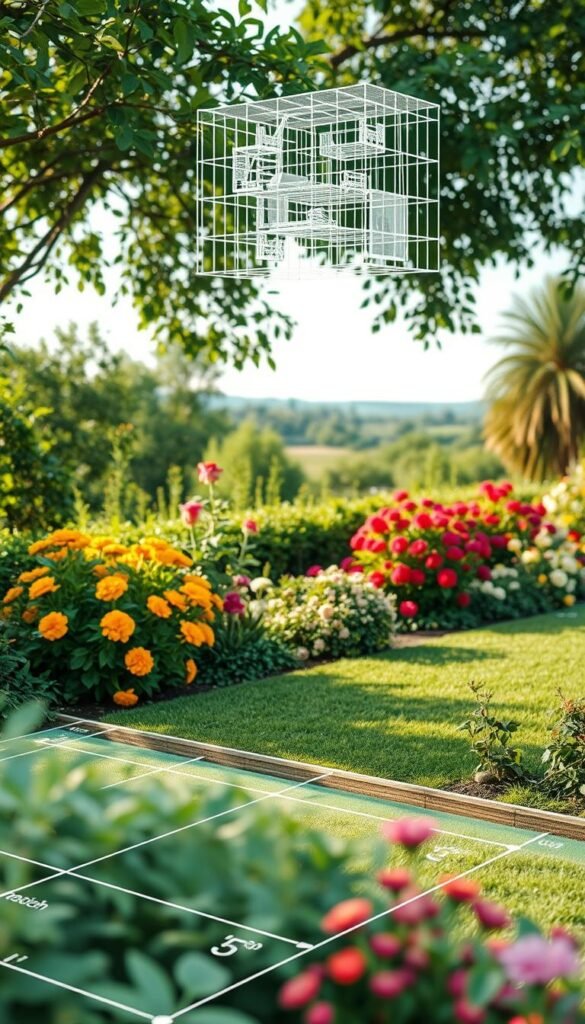
Unlocking your landscape’s full potential begins with knowing its unique characteristics. Spend a week tracking sunlight patterns – use a notebook to record where shadows fall at 9 AM, noon, and 3 PM. This simple exercise reveals prime spots for sun-loving veggies or shade-tolerant perennials.
Assessing Your Yard’s Dimensions and Layout
Grab a tape measure and sketch your property’s boundaries. Note permanent features like patios or mature trees – these become anchors for your design. For small backyards, vertical measurements matter too – fence heights determine climbing plant options.
| Time of Day | Sun Exposure | Ideal Plants |
|---|---|---|
| Morning | Full sun | Tomatoes, peppers |
| Afternoon | Partial shade | Lettuce, hostas |
| Evening | Full shade | Ferns, astilbes |
Observing Sunlight, Shade, and Surrounding Elements
Watch water movement during storms – puddles show drainage issues. South-facing walls create microclimates perfect for early spring planting. Notice wind patterns by tying ribbons to posts – breezy spots need sturdy plants.
Soil tests in multiple areas prevent surprises. One corner might need compost while another requires drainage fixes. Your home’s sightlines matter too – position colorful blooms where you’ll see them from kitchen windows.
Developing Your Garden Design Brief
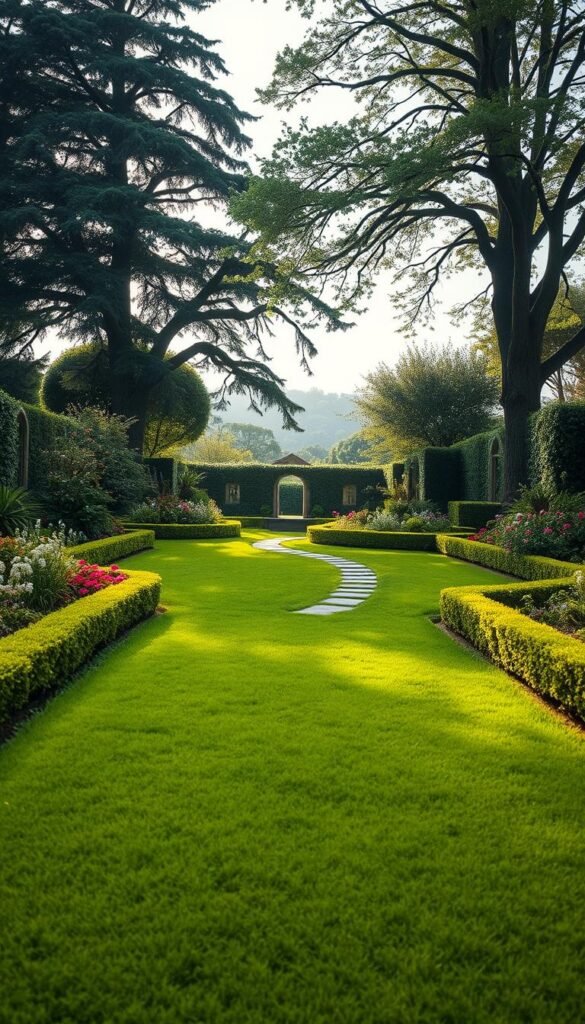
Map out your outdoor intentions before breaking ground. Imagine sipping lemonade under a pergola or harvesting tomatoes steps from your kitchen. These visions become reality when you clarify how you’ll use your green space daily.
Setting Your Garden Goals and Priorities
Jot down activities that spark joy. Hosting barbecues? Growing cut flowers? Kids’ soccer practice? Be honest about time commitments too. Busy schedules pair best with self-watering containers, not high-maintenance rose beds.
| Zone Type | Key Features | Plant Suggestions |
|---|---|---|
| Entertaining | Weather-resistant seating, ambient lighting | Ornamental grasses, lavender |
| Play | Durable turf, shaded seating | Clover lawn, sunflowers |
| Growing | Raised beds, irrigation access | Herbs, bush beans |
Identifying Functional Areas for Relaxation and Planting
Screen messy compost bins with lattice panels. Tuck storage sheds behind berry bushes. Position reading nooks where morning light filters through birch trees. Your backyard becomes multiple rooms when you define areas with purpose.
Consider sightlines from favorite windows. Vibrant hydrangeas near patios please the eye year-round. Leave open sight corridors where kids play visible from the kitchen. Smart zoning lets every square foot serve your lifestyle.
Exploring Wide Garden Layout Inspirations
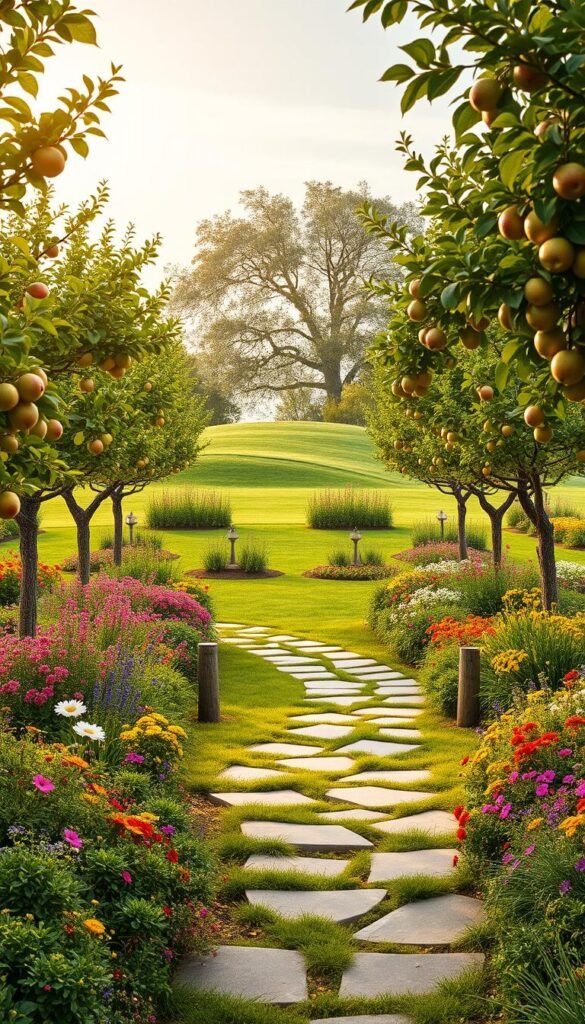
Great outdoor spaces often begin with bold inspiration. Let’s explore how expert approaches can spark fresh design ideas for your landscape. You’ll discover clever ways to balance open areas with eye-catching features that serve multiple purposes.
Drawing Creative Ideas from Expert Designs
Professional landscapers use clever tricks to make broad spaces feel inviting. One key technique? Breaking sightlines with strategic focal points. This creates curiosity and makes visitors want to explore further.
| Focal Element | Practical Function | Design Benefit |
|---|---|---|
| Fruit Trees | Provides fresh snacks | Defines zones naturally |
| Water Features | Attracts pollinators | Adds soothing sounds |
| Sculptural Plants | Requires low care | Creates winter interest |
Utilizing Focal Elements Like Fruit Trees
Mature trees become living centerpieces. Landscape designer Posy calls them “nature’s gift” for structuring layouts. In Karen and Andrea’s space, two apple trees anchor the entire garden design, offering spring blooms and fall harvests.
No existing trees? Try grouping shrubs in circular patterns. Or install a striking bench surrounded by lavender. These alternatives create similar visual stopping points. Pair them with creative gardening ideas to personalize your space.
Remember: focal points work best when visible from multiple angles. Position them where paths curve or views open up. This simple trick makes wide areas feel thoughtfully composed rather than empty.
Plan a Wide Garden Design Layout That Maximizes Outdoor Space
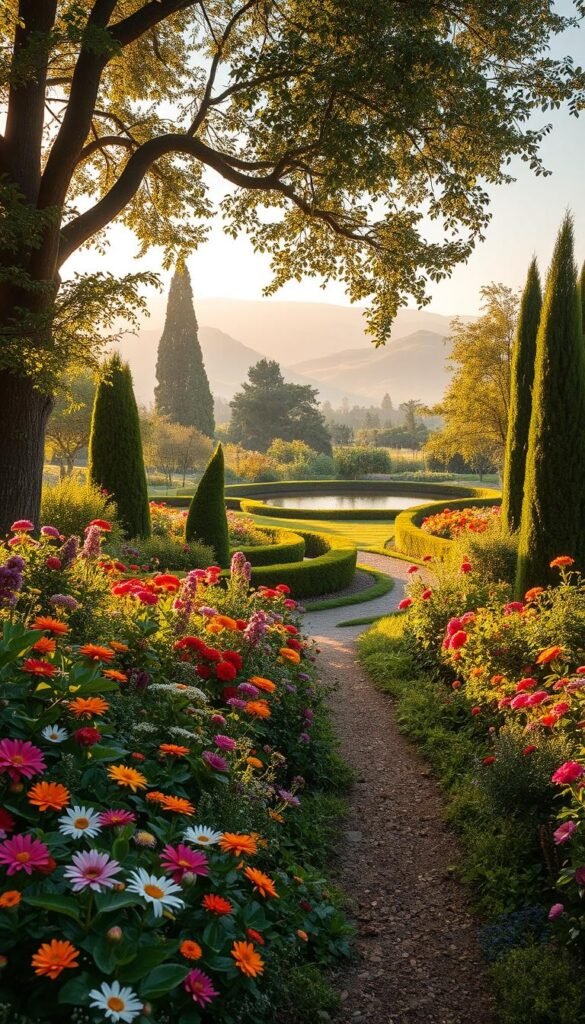
Your eyes can play powerful tricks in shaping how you experience outdoor areas. By interrupting direct sightlines, you craft an illusion of extended space that keeps visitors engaged. Landscape architect Julia Townsend notes:
“Depth isn’t measured in feet—it’s created through layered discoveries.”
Selecting Key Features to Enhance Depth
Place bold elements midway through your layout. A flowering dogwood or sculptural arbor becomes a visual checkpoint. Your gaze pauses there before continuing to the property’s edge, making distances feel greater.
| Depth Element | Visual Impact | Practical Benefit |
|---|---|---|
| Columnar Trees | Vertical layers | Summer shade |
| Tiered Planters | Height variation | Herb accessibility |
| Moon Gates | Framed views | Privacy screening |
Incorporating Practical Design Tips
Combine textures for sensory richness. Pair spiky yucca with soft lamb’s ear near seating areas. For effective garden layouts, scale features to your land’s proportions—a 6-foot fountain overwhelms small yards but enhances acreage.
Multi-functional elements work hardest. Berry-producing shrubs feed birds while blocking views. Discover gardening aesthetic enhancements that marry beauty with purpose, like trellises doubling as art displays.
Leveraging Trellises and Elevated Garden Elements
Think upward to unlock hidden growing potential in your landscape. Vertical structures and raised platforms turn unused airspace into productive zones, letting you cultivate more without expanding your footprint. These solutions keep your layout tidy while adding year-round visual appeal.
Using Trellises to Expand Growing Space
Vining crops like pole beans and cucumbers naturally climb toward sunlight. Training them on supports prevents ground sprawl, freeing soil for companion planting. A single trellis can host 6-8 tomato plants in the space one would normally occupy.
Opt for durable materials like cedar or galvanized steel that withstand weather. Place structures where they’ll cast afternoon shade on lettuce or spinach—this dual-purpose approach protects delicate greens while maximizing yield.
Integrating Raised Beds and Elevated Planters
Raised beds solve drainage issues and extend growing seasons by warming soil faster. Their contained nature lets you customize soil mixes for specific crops, from acidic blueberries to alkaline-loving brassicas.
| Structure Type | Ideal Plants | Maintenance Tip |
|---|---|---|
| Wooden Raised Beds | Carrots, radishes | Line with hardware cloth |
| Stackable Planters | Strawberries, herbs | Rotate tiers seasonally |
| Metal Elevated Beds | Peppers, flowers | Add wheeled bases |
Combine raised beds with trellises for 3D growing systems. A planter box growing snap peas beneath a climbing rose creates edible beauty at eye level. Leave 18-24″ between elevated elements to ensure sunlight reaches all plants.
Using Color and Materials to Enhance Depth and Dimension
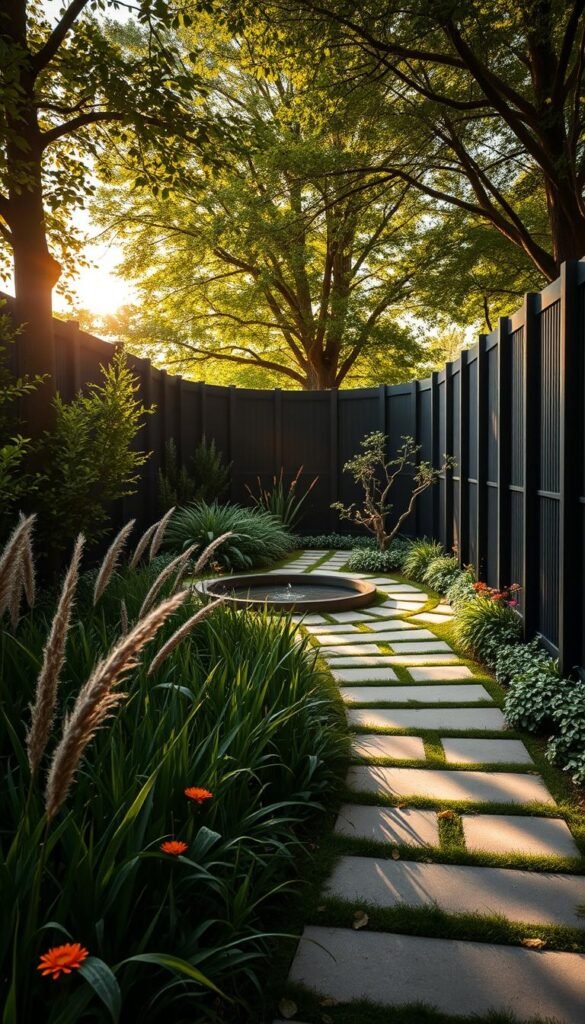
Visual tricks transform ordinary yards into captivating spaces. Strategic color choices and material pairings create illusions that stretch boundaries while maintaining harmony with your home. Let’s explore how to manipulate perception through simple yet powerful techniques.
Painting Fences and Garden Structures for Visual Recursion
Dark hues work magic on boundaries. When Posy painted her shed and fence anthracite—matching her house trim—the structures seemed to vanish. This creates “visual recursion,” where elements blend rather than compete for attention.
| Color Strategy | Visual Effect | Best Use Cases |
|---|---|---|
| Dark neutrals | Recedes surfaces | Boundary walls, utility buildings |
| Earthy greens | Natural camouflage | Tool sheds, compost areas |
| Warm grays | Softens edges | Retaining walls, pergolas |
Match existing architectural colors for seamless transitions. Your garden becomes an extension of your living space when fence tones echo window frames or roof materials.
Choosing Harmonious Pavers and Hardscaping Elements
Materials whisper stories about your space. Limit paver varieties to three types maximum—too many patterns create chaos. Blend textures subtly: try smooth flagstones beside pebble mosaics.
Landscape designer Karen notes:
“Consistent material rhythms guide the eye while allowing plants to shine.”
| Material Pairing | Design Benefit | Maintenance Level |
|---|---|---|
| Concrete + wood | Modern contrast | Low |
| Brick + gravel | Rustic charm | Medium |
| Slate + corten steel | Industrial edge | High |
Repeat colors from your house in hardscaping accents. A burgundy brick path might pick up tones from your front door. This creates cohesion without matching exactly.
Zoning Your Garden with Paths and Border Plants
Smart zoning turns sprawling landscapes into inviting destinations. By dividing your garden into purposeful areas, you create hidden moments that surprise and delight. Let’s explore how pathways and plantings craft natural boundaries while maintaining flow.
Creating Distinct Areas with Pathways and Borders
Posy’s three-zone approach demonstrates this beautifully. She replaced a single patio with corner seating clusters connected by winding gravel paths. Each border uses mixed-height plants to signal transitions—low thyme edging near dining spots, taller grasses between relaxation nooks.
| Path Material | Zone Division | Maintenance Level |
|---|---|---|
| Decomposed granite | Subtle separation | Low |
| Stepping stones | Playful guidance | Medium |
| Brick herringbone | Formal definition | High |
Curved walkways slow movement, letting visitors appreciate your space. Border shrubs like boxwood or rosemary offer fragrant dividers that don’t block sightlines. This keeps the backyard feeling open while creating intimate corners.
Designing Seating Corners and Planting Zones
Position lounge chairs where afternoon light filters through maple trees. Place a bistro set where morning sun warms coffee drinkers. As Posy notes:
“Multiple seating options let your garden work harder—different moods for different moments.”
Vary plant palettes between areas. Use vibrant annuals near gathering spots, calming evergreens beside reading benches. Transition zones with repeating elements—echo purple salvia in distant beds to tie spaces together.
Maximizing Function with Raised Beds and Container Gardens
Unlock vertical potential to make every inch of your landscape work harder. Strategic elevation solutions blend accessibility with visual appeal, letting you grow more without sacrificing style. Whether you’re managing physical limitations or tight spaces, these approaches adapt to your needs.
Optimizing Raised Bed Placement for Accessibility
Position beds where you naturally pause—near seating areas or along frequent pathways. For comfortable reach, keep widths under 4 feet. Build height-adjustable beds using stacked timbers, adding layers as your mobility needs change.
Include 36-inch paths between structures for wheelbarrow access. Follow this raised bed tutorial to create 24-inch-high planters with built-in benches. Avoid low spots where water pools—elevated soil dries faster, extending your growing season.
Employing Container Gardening for Flexibility
Moveable pots let you chase sunlight patterns across seasons. Cluster lightweight fabric planters on patios for herbs, then shift them to shaded areas during heatwaves. Use tall urns for dwarf fruit trees—their roots stay compact while branches bear full-sized harvests.
Combine containers with permanent beds for layered interest. Nestle ceramic pots between evergreen shrubs, or hang strawberry jars from pergola beams. This mix-and-match approach keeps your layout fresh while maximizing yield.