
Your home’s exterior speaks volumes before anyone steps inside. A polished outdoor space doesn’t just catch the eye—it builds curb appeal and elevates your property’s value. Whether you’re welcoming guests or aiming to sell, strategic landscaping choices create lasting impressions that blend beauty with purpose.
Modern homeowners are reimagining their outdoor areas as extensions of personal style. From drought-tolerant plants to geometric pathways, today’s trends balance aesthetics with practicality. Even compact spaces shine when design elements like layered planters or vertical gardens maximize every square foot.
Looking for inspiration? Explore front yard landscaping ideas that blend symmetry and sustainability. Thoughtful layouts mirror your home’s architecture while adding unique character—think cottage-style blooms beside sleek stone accents.
By prioritizing low-maintenance options and native species, you’ll craft a space that thrives year-round. The result? A welcoming entrance that feels both timeless and distinctly yours.
Getting Started with Your Front Yard Makeover
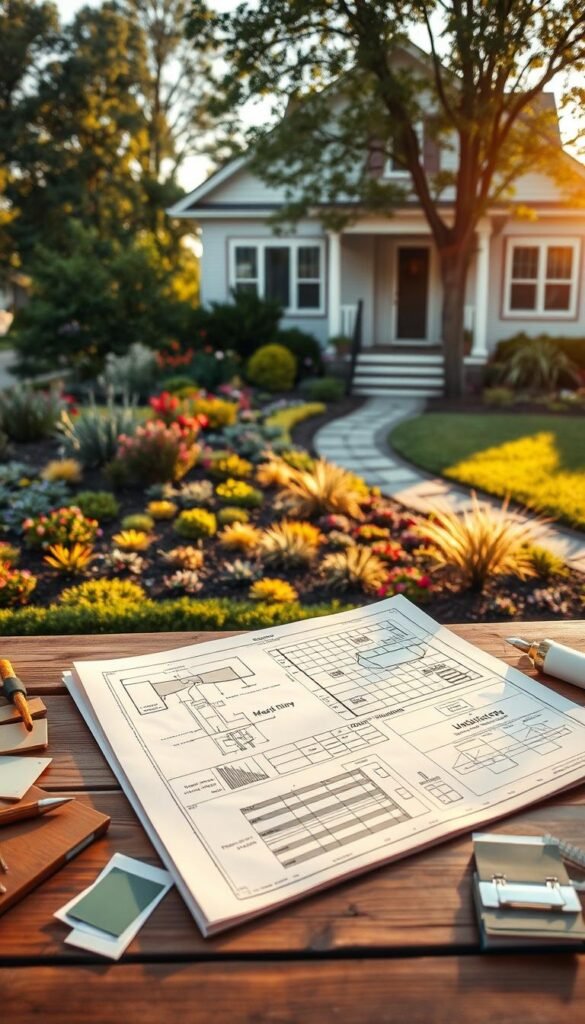
Mapping out your space is the foundation of a stunning makeover. Begin by measuring your front yard’s dimensions and noting existing landscape features like trees or walkways. This helps spot challenges early, such as uneven terrain or drainage issues.
Understanding Your Space and Its Potential
Observe how sunlight moves across your yard and where water pools after rain. Steep slopes might need terraced planters, while flat areas could become seating nooks. Your home’s architectural style—like farmhouse or contemporary—guides material choices for cohesion.
Inspiration from Current Trends
Popular styles balance fresh ideas with timeless appeal. For example, modern minimalist designs use clean lines, while cottage gardens burst with color. Blend trends with practicality by choosing plants that thrive in your climate. Upcycle old items like wheelbarrows into planters for rustic charm that costs little.
| Design Style | Key Elements | Maintenance |
|---|---|---|
| Desert Oasis | Succulents, decorative rocks | Low |
| Formal Elegance | Symmetrical hedges, fountains | High |
| Wildflower Meadow | Native grasses, pollinator plants | Moderate |
Create a vision board using Pinterest or magazine clippings. Focus on layouts that enhance your yard’s natural flow while reflecting your personality.
Assess Your Outdoor Space for Maximum Curb Appeal
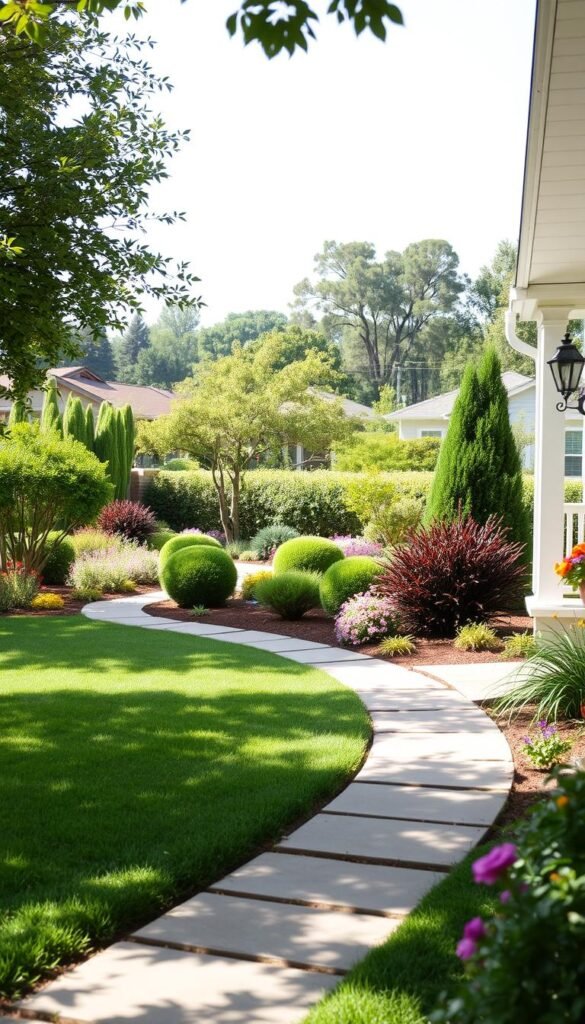
Before planting a single flower, take stock of your landscape’s current state. Walk through your outdoor space with fresh eyes—note mature trees, established shrubs, and permanent fixtures like stone pathways. These elements shape your design’s foundation and influence what stays, gets upgraded, or needs removal.
Identifying Existing Landscape Features
Document every detail: overgrown hedges might frame a charming seating area, while cracked walkways could become design opportunities. Ask yourself: “Does this feature add character or block potential?” Keep healthy trees that provide shade but remove invasive plants stealing nutrients from your soil.
Evaluating Sunlight, Shade, and Soil Conditions
Track how sunlight moves across your area throughout the day. Full-sun zones suit lavender and rosemary, while shady spots thrive with hostas or ferns. Test soil pH using a $10 kit from garden centers—acidic soil loves azaleas, while alkaline earth supports lilacs.
Spot problem areas like waterlogged corners or compacted soil. These often need drainage solutions or aeration before planting. Remember: thriving plants start with the right environment. Pair this knowledge with smart plant choices, and watch your curb appeal blossom effortlessly.
Set Your Vision: Goals, Budget, and Timeline
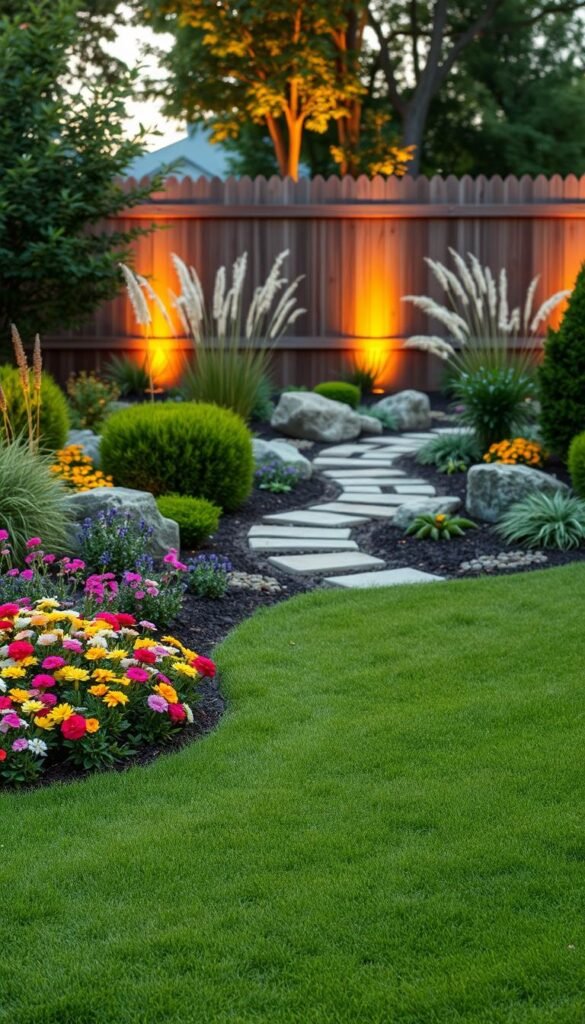
Crafting an inviting outdoor space begins with a clear roadmap. Start by defining what success looks like: Do you want a welcoming entryway with crisp hedges and pavers? Or a low-maintenance retreat filled with native grasses? Your goals shape every decision, from plant choices to material investments.
Defining Your Design Style
Your home’s architecture should whisper to your landscaping choices. A midcentury modern facade pairs well with geometric planters, while a cottage-style property might embrace overflowing flower beds. “Good design feels intentional, not accidental,” says landscape architect Mara Klein. Match stone textures to your house’s exterior or repeat roof-line angles in pathway patterns.
Organizing Your Project Phases
Break your makeover into bite-sized steps. Begin with hardscaping—like installing walkways or retaining walls—since these form your layout’s backbone. Phase two could focus on planting drought-tolerant shrubs or trees, followed by final accents like lighting or decorative boulders.
Allocate 60% of your budget to structural elements that boost property value. Use free tools like Google Sheets to track expenses and timelines. Remember: spreading work over seasons lets you adjust plans as needed while keeping costs manageable.
Creative Planting and Garden Bed Ideas
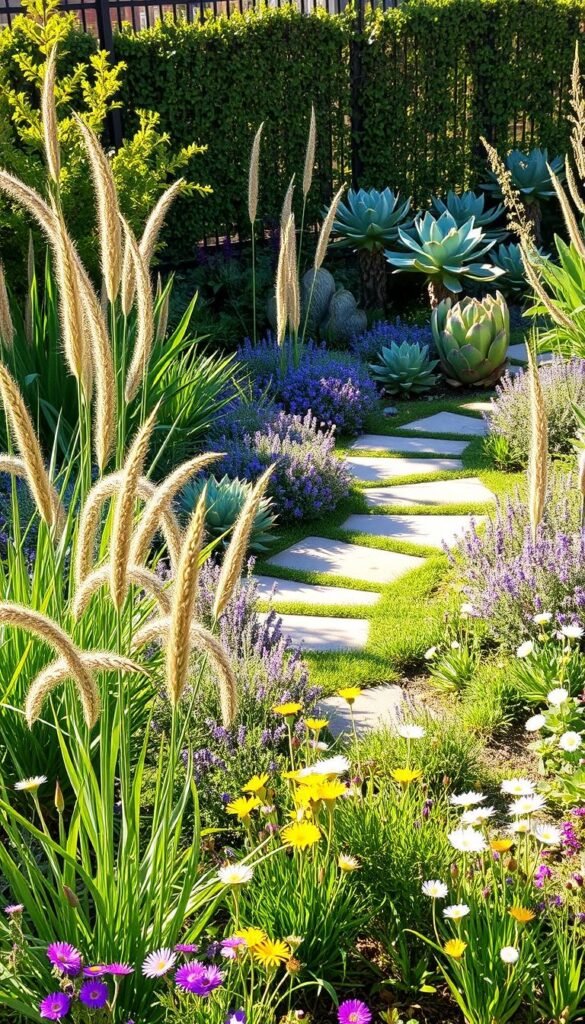
The secret to a breathtaking outdoor space lies in how you layer and pair your greenery. Trees anchor your design with height and shade, while shrubs add structure. Flowers bring bursts of color that elevate your gardening aesthetic, especially when paired with thoughtful arrangements.
Selecting the Right Plants for Your Climate
Start by matching plants to your region’s weather patterns. Drought-tolerant options like lavender thrive in dry zones, while hydrangeas prefer humid areas. Native species adapt naturally to local soil and rainfall, reducing upkeep. For example:
- Maple trees add fiery fall colors in cooler climates
- Yucca plants handle intense sun in desert regions
- Black-eyed Susans bloom reliably in Midwest gardens
Group plants with similar water needs to simplify care. This approach keeps beds healthy without wasting resources.
Incorporating Color and Texture
Mix feathery grasses with bold-leaved hostas for visual contrast. Stagger bloom times by planting early spring bulbs like tulips alongside late-summer coneflowers. Add depth by placing tall sunflowers at the back of beds and creeping thyme along edges.
Native wildflowers like milkweed or purple coneflower attract butterflies while needing minimal care. For year-round interest, pair evergreen shrubs with perennials that change with the seasons. “Layering isn’t just about looks—it creates habitats,” notes landscape designer Amy Walsh.
Want more inspiration? Discover how to blend colors and textures seamlessly in your outdoor space. With strategic planting, your garden becomes a living masterpiece that shifts beautifully through every month.
Transform Your Front Yard with Innovative Front Garden Design Ideas
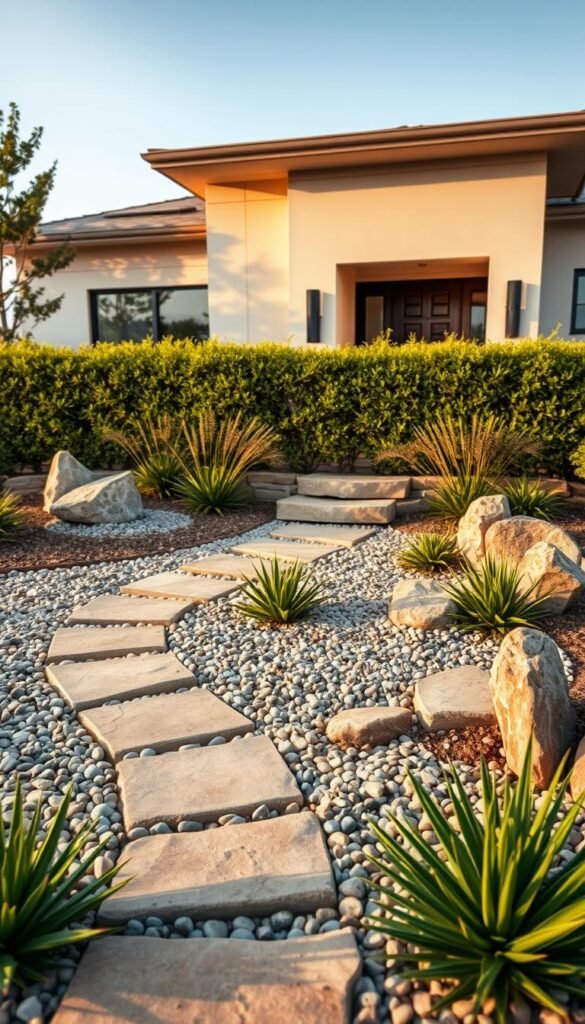
Revitalizing your outdoor entrance starts with fresh perspectives on color and texture. Neutral palettes with layered stonework create instant sophistication—think soft gray flagstone paired with crisp white gravel borders. These combinations add depth while letting vibrant plants take center stage.
Light-toned materials like limestone or quartzite reflect sunlight, making compact spaces feel airy. “Neutrals act as a canvas,” says designer Clara Ruiz. “They let bold foliage or seasonal blooms shine without visual competition.” Try mixing smooth pavers with rough-hewn boulders for tactile contrast.
Elevate sloped areas with terraced stone beds that double as seating. Flat yards gain dimension through staggered planters filled with:
- Silver-blue agave for structural drama
- Creeping thyme to soften edges
- Ornamental grasses that sway in breezes
| Stone Type | Best Use | Maintenance |
|---|---|---|
| Bluestone | Pathways | Low |
| Pea Gravel | Ground Cover | Moderate |
| Sandstone | Retaining Walls | High |
Maximize vertical space with wall-mounted planters or tiered fountains. Dwarf evergreens add year-round structure, while trailing vines soften angular features. This approach works wonders for narrow side yards or urban spaces craving greenery.
Balance modern lines with organic shapes—a circular stone fire pit beside rectangular raised beds creates harmony. Your space becomes a neighborhood standout that ages gracefully, proving smart design never goes out of style.
Innovative Hardscaping and Paver Options
Hardscaping elements act as the backbone of functional yet stylish yards. Pavers and stone features create gathering spaces that blend seamlessly with nature while defining traffic flow. Whether you’re carving out a fire pit zone or crafting meandering pathways, these durable materials add structure to your landscape.
Designing Fire Pit Areas and Conversation Pits
Fire pits transform underused corners into cozy hubs. Opt for natural stone or concrete pavers arranged in circular patterns to encourage face-to-face chats. “A well-placed fire feature becomes the heart of outdoor gatherings,” notes landscape designer Ryan Mitchell. Surround seating areas with gravel for drainage and contrast—try crushed granite in earthy tones.
Exploring Stepping Stone and Paver Pathways
Pathways guide visitors while adding artistic flair. Mix irregular flagstones with moss-filled gaps for rustic charm, or choose geometric pavers for modern appeal. Stepping stones surrounded by pea gravel create playful textures that handle heavy foot traffic. Consider these combinations:
- Bluestone slabs with thyme ground cover
- Recycled brick patterns edged with Mexican beach pebbles
- Concrete pavers alternating with drought-tolerant sedum
Define zones using contrasting materials—a herringbone paver patio beside loose gravel play areas. For added personality, incorporate DIY garden art projects between stones or near seating walls. This approach balances practicality with visual storytelling.
| Material | Best For | Cost |
|---|---|---|
| Concrete Pavers | Modern patios | $$ |
| Flagstone | Natural pathways | $$$ |
| Decomposed Granite | Casual walkways | $ |
Eco-Friendly and Sustainable Front Yard Concepts
Imagine a front yard that thrives with minimal water while supporting local ecosystems. Sustainable landscaping isn’t just eco-conscious—it creates vibrant spaces that adapt to your climate naturally. By embracing water-wise strategies, you’ll craft an outdoor area that’s both resilient and visually striking.
Smart Water Management Through Xeriscaping
Xeriscaping replaces thirsty lawns with drought-tolerant plants like agave or lavender. This method uses strategic grouping—placing plants with similar water needs together—to cut waste. Rain barrels or drip irrigation systems deliver moisture directly to roots, reducing evaporation.
Native species like purple coneflower or switchgrass need little care once established. They attract pollinators like bees and butterflies, turning your yard into a buzzing habitat. For regions with water restrictions, consider decorative gravel or mulch beds that add texture without grass.
| Plant Type | Water Needs | Best Regions |
|---|---|---|
| Black-Eyed Susan | Low | Midwest |
| Agave | Very Low | Southwest |
| Switchgrass | Moderate | Great Plains |
Pair these choices with permaculture gardening principles to build self-sustaining ecosystems. Replace traditional turf with clover or buffalo grass for green coverage that survives dry spells. You’ll save time on mowing and reduce water bills significantly.
Even small changes make a difference. A rock garden with succulents or a rain chain directing runoff to flower beds adds charm while conserving resources. Your space becomes a testament to beauty that doesn’t cost the earth.
Integrating Outdoor Living and Seating Areas
Turn underused areas into vibrant extensions of your home by blending practicality with style. A well-planned outdoor living space becomes a natural gathering spot, merging comfort with your landscape’s visual flow.
Creating Cozy Patios with Pavers
Start by choosing durable materials like natural stone or textured concrete for your base. These pavers handle heavy foot traffic while adding character—think irregular flagstones for rustic charm or geometric patterns for modern flair. Arrange seating around a central fire pit or coffee table to encourage conversation.
Consider these popular options:
- Bluestone slabs: Timeless appeal with low maintenance
- Permeable concrete: Eco-friendly drainage solution
- Reclaimed brick: Warm tones that age beautifully
Selecting Weather-Resistant Outdoor Furniture
Opt for materials that laugh at rain and sun. Powder-coated aluminum withstands coastal salt air, while teak develops a silvery patina over time. All-weather wicker offers plush comfort without fading—pair with quick-dry cushions in bold patterns.
| Material | Durability | Care Tips |
|---|---|---|
| Teak | High | Annual oiling |
| Resin Wicker | Medium | Hose down monthly |
| Stainless Steel | Very High | Wipe with vinegar solution |
Enhance your outdoor space with string lights above seating clusters and potted ferns for lush greenery. These touches create an inviting area that feels like an extra room—perfect for morning coffee or evening cocktails.
Enhancing Curb Appeal with Focal Points and Accents
The final touch for a memorable outdoor space lies in the details that catch the eye. Strategic accents guide attention to your home’s best features while adding personality. Start by framing entryways with movement and texture—ornamental grasses like fountain grass or blue oat grass sway gently, offering year-round interest.
Entryway Enhancements and Decorative Grasses
Pair evergreen shrubs with feathery grasses for contrast that lasts through seasons. A curved stone path edged with liriope invites exploration, while clustered planters of dwarf mondo grass soften hard edges. For a touch of cottagecore charm, add a vintage bench surrounded by tufted hairgrass.
Effective Landscape Lighting Strategies
Well-placed lights highlight your landscape after dark. Use low-voltage path lights to outline walkways and uplighting to showcase architectural trees. Solar-powered spotlights add drama to water features or sculptural plants. Soft glow string lights above seating areas create warmth without overpowering natural beauty.
Balance modern focal points with organic shapes—a geometric fire pit beside wildflower beds strikes this harmony. With thoughtful accents, your curb appeal becomes a dynamic showcase that evolves day and night.