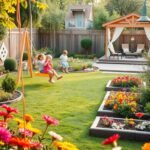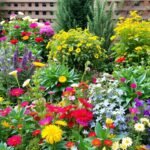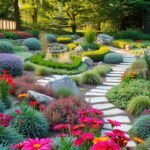
Your backyard is evolving into more than just grass and flower beds. Today’s garden design merges beauty with purpose, offering solutions for climate challenges while supporting local wildlife. From drought-tolerant layouts to fire-resistant plantings, homeowners are reimagining yards as extensions of their values.
Native species take center stage in these spaces, requiring less water and care than traditional options. They also create habitats for pollinators, turning your property into a thriving ecosystem. You’ll find these plants enhance your experience by attracting butterflies and birds while reducing maintenance time.
Smart technology now helps manage irrigation and soil health, making landscaping decisions easier. Rain sensors and moisture monitors work silently to conserve resources, letting you enjoy your outdoor haven guilt-free. These innovations prove sustainability doesn’t mean sacrificing visual impact.
By blending functional elements with artistic flair, modern approaches transform yards into personal retreats. Imagine sipping morning coffee surrounded by fragrant, resilient blooms that withstand weather extremes. This shift in design philosophy proves outdoor spaces can be both stunning and environmentally responsible.
Modern Garden Design Trends Overview
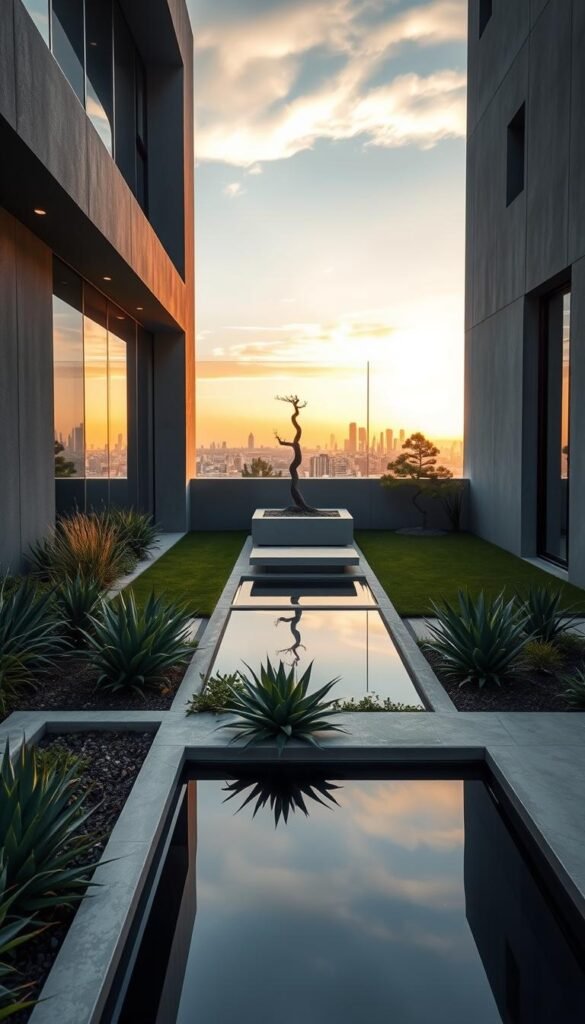
Outdoor areas are becoming canvases for self-expression and ecological harmony. Today’s landscape design balances crisp geometry with wild textures, creating spaces that feel intentional yet alive. This approach lets your yard adapt to seasonal changes while maintaining visual interest year-round.
Understanding Current Aesthetic Shifts
Gone are days of endless pruning and color-coordinated blooms. Many now find beauty in seed heads and dried grasses, inspired by public gardens like Chicago’s Lurie Garden. These spaces showcase how fading plants add winter structure and wildlife value.
Evolution of Landscaping Styles
The appeal of rigid symmetry has softened into flowing layouts that mirror natural patterns. You’ll notice modern design often pairs concrete planters with billowy grasses, blending human-made and organic elements. This evolution reflects our growing desire to coexist with nature rather than control it.
| Aspect | Traditional Approach | Modern Shift |
|---|---|---|
| Maintenance | Weekly trimming | Seasonal adjustments |
| Aesthetics | Perfect lawns | Textural contrasts |
| Materials | Ornate decor | Raw, sustainable elements |
Color schemes now lean toward muted greens and earthy tones, letting architectural forms take center stage. For fresh perspectives, explore 2025 trends or discover how to enhance your gardening aesthetic with intentional plant pairings. These approaches prove that thoughtful design can be both low-effort and deeply rewarding.
Sustainable Landscaping Practices Shaping the Future
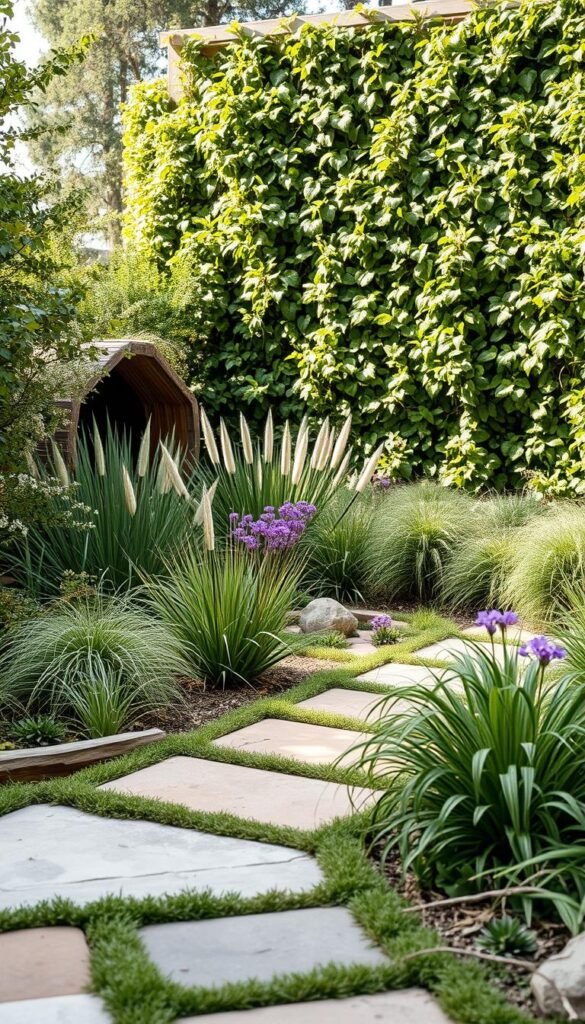
Eco-conscious methods are revolutionizing how we shape our surroundings. By prioritizing sustainability, your yard becomes part of a larger solution to climate challenges while conserving precious resources. The shift toward responsible landscaping isn’t just about aesthetics—it’s about creating spaces that give back to the environment.
Eco-Friendly Materials and Methods
Start with materials that tell a greener story. Recycled composite decking resists rot without toxic treatments, while reclaimed wood adds character to raised beds. Locally sourced stone cuts transportation emissions and blends seamlessly with regional plants. These choices prove durability and environmental care go hand in hand.
Permeable paving is a game-changer for managing water flow. Unlike solid concrete, options like gravel grids or honeycomb pavers let rain soak into the soil. This reduces flooding risks and replenishes groundwater supplies naturally. Pair these surfaces with rain gardens to filter runoff before it reaches storm drains.
“True sustainability in landscape design means working with nature’s patterns, not against them.”
| Material Type | Traditional Choice | Sustainable Alternative |
|---|---|---|
| Walkways | Solid concrete | Permeable pavers |
| Soil Health | Chemical fertilizers | Compost tea |
| Irrigation | Sprinkler systems | Drip lines + rain sensors |
Adopting permaculture gardening design principles helps create self-sustaining ecosystems. Rain barrels collect free irrigation water, while organic mulch suppresses weeds and retains moisture. These strategies slash maintenance time and costs, proving environmental benefits align with practical ones.
Native Plants and Water-Wise Gardening Innovations
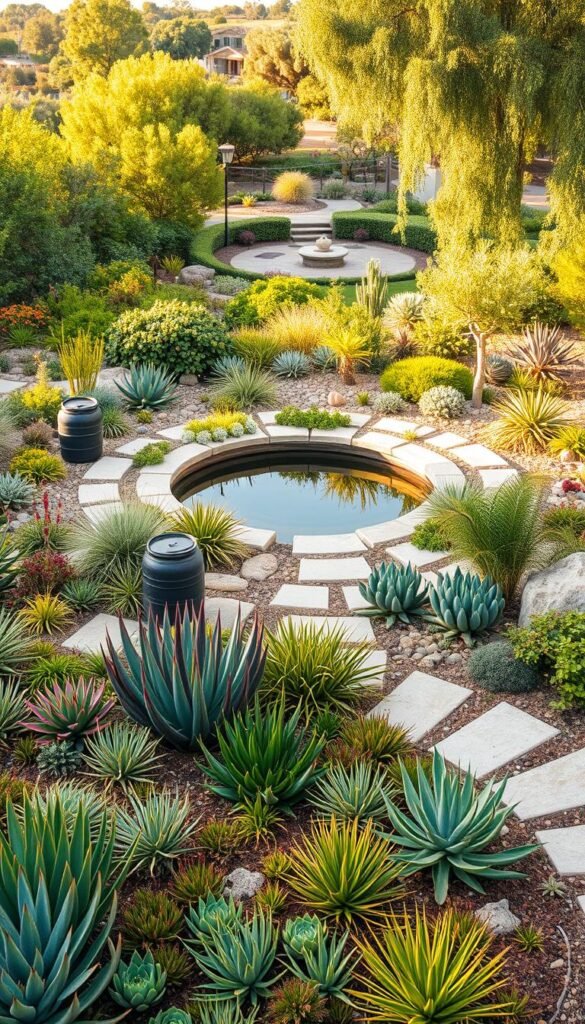
Imagine a landscape that flourishes naturally, even in challenging climates. Breeders now offer native plants tailored for residential spaces, blending ecological benefits with striking visual appeal. These cultivars – called ‘nativars’ – maintain wildlife support while offering compact forms or extended bloom times perfect for modern yards.
Benefits of Using Native Species
Local plants evolved to thrive in your region’s soil and weather conditions. They need 75% less watering than exotic varieties once established, according to University of Delaware research. Their deep roots prevent erosion while providing nectar for hummingbirds and caterpillars – turning your space into a biodiversity hub.
Techniques for Water Conservation
Smart irrigation systems now sync with weather apps to skip unnecessary watering. Pair them with:
- Drip lines targeting root zones
- Mulch layers reducing evaporation
- Rainwater collection barrels
| Method | Water Savings | Installation Cost |
|---|---|---|
| Traditional Sprinklers | 0-10% | $500-$1,500 |
| Smart Drip Systems | 30-50% | $800-$2,200 |
“Nativars let you support ecosystems without sacrificing curb appeal – it’s gardening that gives back.”
By choosing species suited to your microclimate, you create resilient gardens that bloom through droughts. This approach cuts maintenance while boosting your yard’s natural charm.
Low-Water and Fire-Resistant Gardening Strategies
Transforming yards into resilient ecosystems starts with smart plant choices. Fire-resistant landscapes now prioritize species that slow flame spread while conserving resources. These strategies protect homes and create vibrant outdoor spaces needing minimal upkeep.
Drought-Tolerant Plant Selections
Modern gardening offers lush alternatives to prickly cacti. Consider kangaroo paw with fuzzy blooms or silver-leafed catmint – both thrive in dry conditions. Their succulent leaves store moisture, reducing watering needs by up to 60% compared to traditional lawns.
Fire-resistant plants like grevillea and blue hibiscus bring double benefits. Their low oil content and high salt levels make them poor fuel sources during wildfires. Strategic placement around structures creates natural firebreaks without sacrificing curb appeal.
| Plant Type | Key Features | Water Needs |
|---|---|---|
| Kangaroo Paw | Fuzzy flowers, salt-tolerant | Every 14 days |
| Yarrow | Fire-resistant, attracts pollinators | Monthly |
| Blue Hibiscus | Evergreen, low flammability | Every 10 days |
Create defensible space by grouping high-moisture species near buildings. For urban settings, try container gardening solutions using fire-adaptive dwarf shrubs. This approach combines safety with style, even in limited areas.
“Proper plant selection reduces fire risks better than concrete barriers – it’s living protection.”
These landscape options prove you don’t need to choose between beauty and safety. With thoughtful planning, your yard becomes both water-wise and wildfire-ready.
Expanding Outdoor Living Spaces for Homeowners
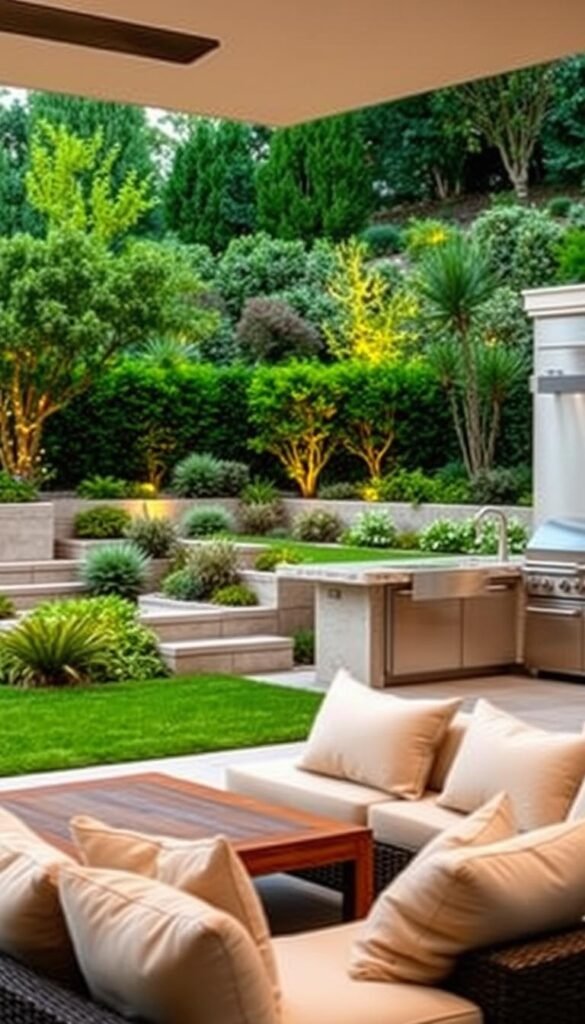
Your property’s unused corners hold untapped potential for connection and relaxation. Forward-thinking homeowners now convert driveways into dining nooks and rooftops into lounge areas. These transformations blend native foliage with human-centered spaces, creating extensions of your indoor lifestyle.
Designing Outdoor Kitchens and Dining Areas
Modern alfresco cooking zones rival indoor setups. Built-in grills with ventilation hoods allow smoke-free entertaining, while weatherproof cabinetry stores essentials. Position counters near interior kitchens to simplify meal prep flow.
Key infrastructure considerations include:
- GFCI outlets for blenders and lighting
- Sloped countertops for rainwater runoff
- Insulated plumbing for four-season use
| Element | Traditional | Innovative |
|---|---|---|
| Flooring | Concrete slabs | Heated pavers |
| Lighting | String lights | Recessed LEDs |
| Storage | Plastic bins | Climate-controlled drawers |
Creating Intimate Retreats within Your Garden
Carve out private nooks using strategic plant placements. Tall grasses screen neighboring views while curved seating arrangements foster conversation. Add warmth with fire pits surrounded by permeable gravel that doubles as drainage.
Retractable pergola roofs adapt to weather changes – open for stargazing, closed for rain protection. Cushions with Sunbrella fabric resist fading, maintaining comfort through summer heat and winter chills.
“The best outdoor spaces feel like discovered secrets – personal sanctuaries that welcome both solitude and togetherness.”
Trendy Minimalism in Landscape Design
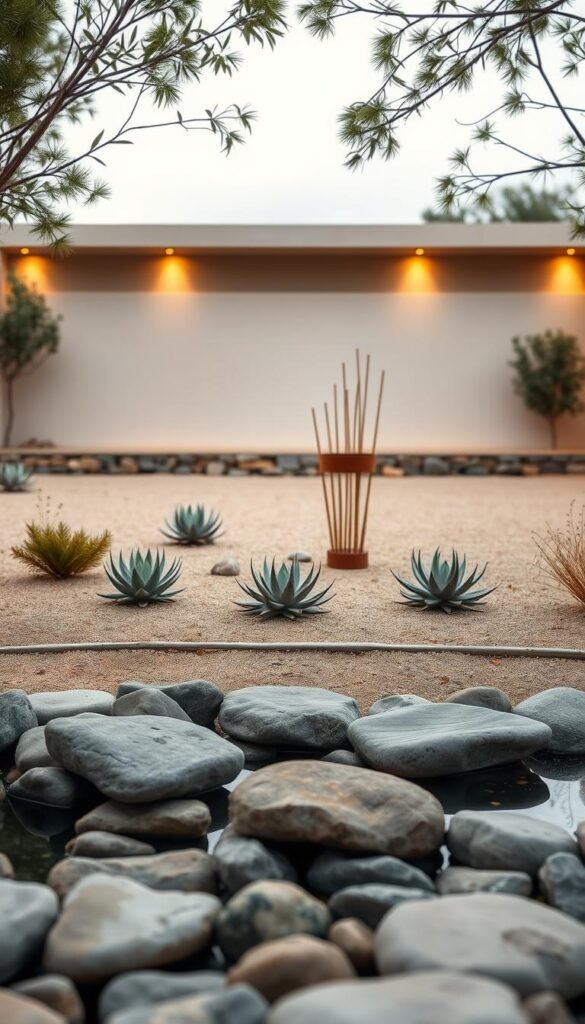
Less becomes more in today’s outdoor spaces, where empty areas speak louder than crowded beds. This approach uses deliberate design choices to craft serene environments that calm the mind while demanding less upkeep. By focusing on essential elements, you create visual harmony that feels both intentional and effortless.
Clean Lines and Geometric Forms
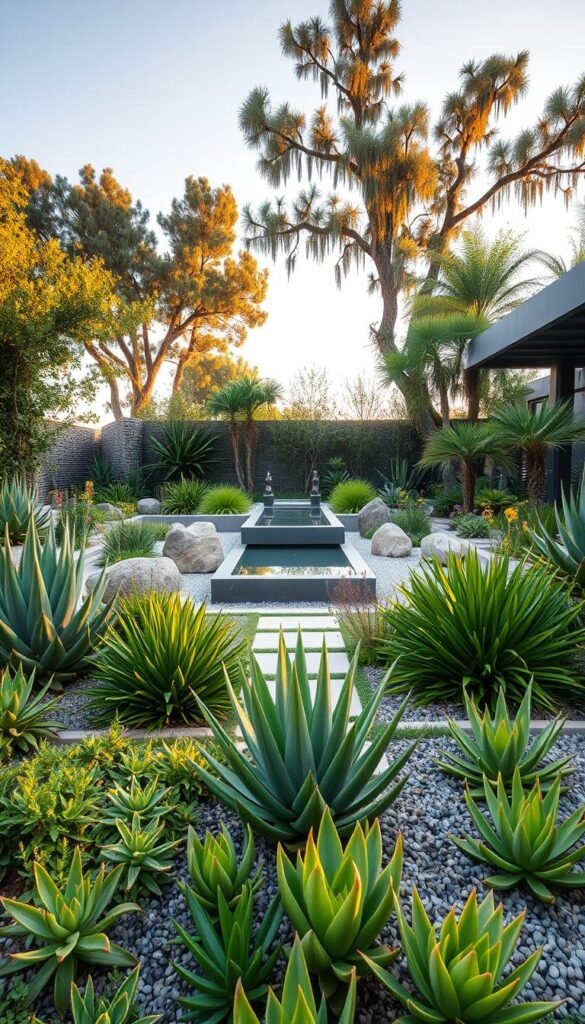
Straight-edged walkways and circular stone features anchor minimalist landscape design. Think concrete ribbons cutting through gravel expanses or boxwood hedges trimmed into perfect cubes. These shapes establish order while letting textures like rough-hewn boulders add subtle interest.
Color plays supporting role here. Silvery succulents and charcoal-hued pavers create monochromatic looks that highlight form over flowers. Pair them with:
- Vertical garden walls of single plant varieties
- Reflective water features in angular basins
- Repeating patterns of drought-tolerant grasses
| Traditional Element | Minimalist Alternative |
|---|---|
| Mixed flower borders | Mass plantings of one species |
| Curved pathways | 90-degree intersecting walkways |
| Ornate fountains | Still reflection pools |
“A minimalist garden isn’t empty – it’s carefully edited to showcase what truly matters.”
This style proves simplicity enhances functionality. Wide stone steps double as seating, while gravel zones suppress weeds naturally. For those torn between wild and orderly spaces, our guide to structured gardening approaches helps balance creative freedom with clean-lined design principles.
Explore the Latest Trends in Modern Garden Design Landscaping Ideas
Tomorrow’s gardens are rewriting the rules of outdoor living. You’ll notice nature taking the lead, with nativars – enhanced native plants – offering extended blooms without compromising ecological benefits. These hybrids bring butterflies to your doorstep while surviving local weather extremes.
Smart maintenance tools now simplify yard care. Soil sensors sync with weather apps to adjust watering schedules automatically. This tech lets you enjoy lush greenery without constant monitoring – perfect for busy homeowners seeking low-maintenance solutions.
Current trends prioritize mental wellness through sensory plantings. Fragrant herbs like lavender and rosemary border meditation nooks, while rustling ornamental grasses mask urban noise. These spaces become personal retreats where stress dissolves among textured foliage.
| Challenge | 2025 Solution |
|---|---|
| Water restrictions | Self-irrigating planters |
| Fire risks | Succulent firebreaks |
| Limited space | Vertical edible walls |
Nostalgic elements blend seamlessly with modern design. Discover how cottagecore aesthetic principles inspire whimsical seating areas surrounded by heirloom flowers. Meanwhile, 2025 garden design trends showcase movable planters that let you rearrange your yard like living furniture.
“The future of landscaping lies in spaces that heal both ecosystems and human spirits.”
These innovations prove gardens can combat climate stressors while nurturing personal connections to the earth. Your yard becomes a dynamic ecosystem – resilient, beautiful, and deeply meaningful.
Incorporating Technology and Smart Irrigation
Your garden just got smarter. Advanced systems now handle watering tasks while you sip lemonade on the patio. These solutions sync with local weather patterns, adjusting schedules to match real-time conditions.
Integrating Weather-Based Systems
Soil moisture sensors act like plant translators. They tell controllers when roots need hydration, preventing overwatering. Rain delays kick in automatically during storms, saving thousands of gallons annually.
| Feature | Traditional System | Smart System |
|---|---|---|
| Water Usage | Fixed schedule | Dynamic adjustments |
| Savings Potential | 0-15% | 20-50% |
| Maintenance | Manual checks | App alerts |
Maintaining Low-Maintenance Gardens with Smart Tools
Robotic mowers trim grass to exact heights, while app-controlled lighting sets evening moods. Key elements include:
- Wi-Fi-enabled fertilizer spreaders
- Root zone temperature monitors
- Leak detection valves
These solutions spot issues before plants show stress. You’ll receive notifications when irrigation lines need flushing or soil pH drops.
“Smart technology isn’t replacing gardeners – it’s becoming their most reliable partner.”
By embracing these systems, you create landscapes that thrive with minimal input. The water savings alone often repay the investment within three growing seasons.
Multifunctional Spaces and Unique Garden Experiences
Your yard is becoming a chameleon – adapting to work, play, and recharge modes with effortless style. Spaces now serve as morning yoga studios, afternoon meeting rooms, and evening firepit lounges. This shift creates deeper connections between daily life and nature’s rhythms.
Blending Indoor and Outdoor Living
Sliding glass doors dissolve boundaries between your living room and garden. Weather-resistant sectionals with sunbrella fabric invite all-day lounging, while retractable screens keep bugs at bay. You’ll find charging stations hidden in stone pillars and task lighting integrated into pergola beams.
Wellness areas prioritize mental refreshment. Imagine a cedar platform for sunrise meditation, surrounded by rustling bamboo. Pebble-lined water features mask neighborhood noise, creating pockets of calm. These experiences turn routine moments into mini-retreats.
Garden offices now boast green roofs and living walls that purify air. Positioning desks near bird feeders adds lively distractions during video calls. Your space becomes both productive and restorative – proof that work and nature thrive together.