

Your backyard holds untapped potential to become a living work of art. While traditional layouts focus purely on function, today’s most captivating spaces blend practicality with eye-catching visual rhythm. This approach turns ordinary yards into destinations that spark joy and connection.
Let’s explore how strategic shape selection can elevate your landscape. Circular patterns naturally guide movement while softening harsh lines, creating welcoming areas for relaxation. These forms work particularly well in American gardens, where open layouts benefit from defined gathering spots.
You’ll discover how top designers balance structure with organic flow. The right geometric choices help solve common issues like awkward corners or uneven terrain. Curved pathways can make small yards feel spacious, while angular planters add modern contrast to lush greenery.
This guide reveals professional techniques used by studios like Arterra to craft meaningful environments. Learn to assess your space’s unique features – sunlight patterns, existing vegetation, and natural slopes – then enhance them through intentional form selection. You’ll gain confidence choosing layouts that reflect your personality while complementing your home’s architecture.
By understanding these principles, you’ll create outdoor areas that feel both purposeful and magical. Whether you’re shaping a cozy firepit zone or designing winding garden trails, every curve and angle tells your story.
Understanding Garden Geometry and Circular Design

Great outdoor areas start with smart shape strategies. Geometry acts like invisible glue that binds plants, paths, and structures into unified spaces. This silent language of lines and curves helps your yard feel intentional rather than accidental.
Exploring the Role of Geometry in Garden Design
Think of geometric forms as your garden’s backbone. Straight edges define clean borders, while curves soften hardscapes. Many homeowners mix both:
- Rectangular stone patios anchor seating areas
- Oval flower beds frame entryways
- Triangular shrub groupings create visual momentum
These design choices guide eyes and feet through your landscape. Properly scaled shapes make small yards appear larger and awkward corners feel purposeful.
The Benefits of a Circular Layout
Round patterns work magic in American backyards. A central firepit surrounded by curved benches naturally becomes a gathering spot. Circular lawns allow easy movement around garden features.
Key advantages include:
- No sharp corners interrupting foot traffic
- Continuous sightlines that enhance safety
- Flexible zones for dining, playing, or relaxing
When paired with your home’s architecture, circular elements create harmony between indoor and outdoor spaces. They’re particularly effective for connecting decks to gardens or blending modern homes with natural surroundings.
Assessing Your Garden’s Shape and Space
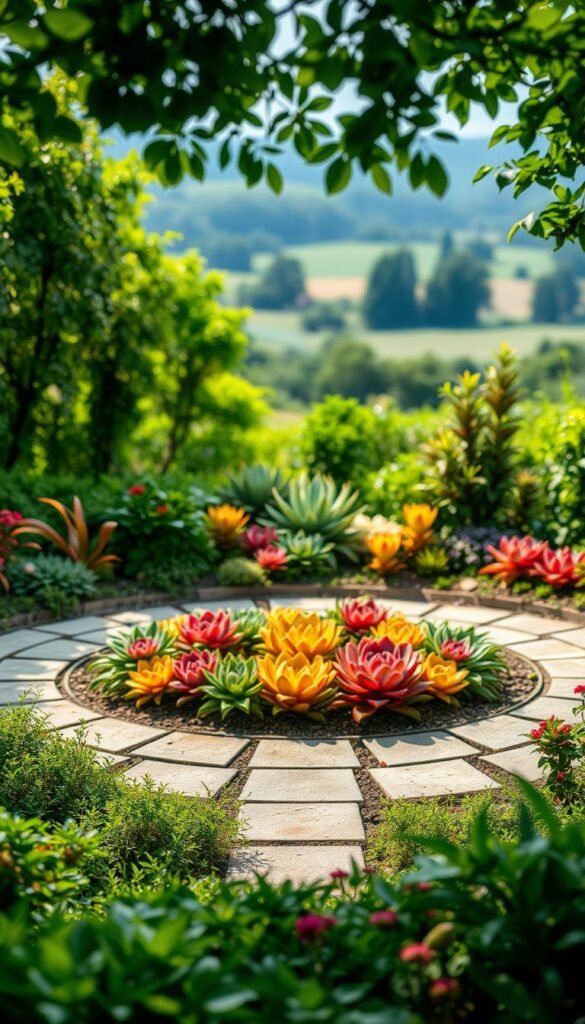
Every garden whispers its needs through curves, angles, and proportions. Successful designs start by listening to your site’s natural language – the way sunlight dances across slopes or how wind patterns shape plant growth. This understanding helps you craft spaces that feel both intentional and effortless.
Evaluating Dimensions and Layout Challenges
Begin your space audit by sketching your yard’s footprint. Note measurements, slopes, and existing features like trees or sheds. For narrow areas, overlapping circular paths create width illusions. Square plots gain depth through crescent-shaped planting beds that guide the eye.
| Garden Shape | Common Issue | Circular Solution |
|---|---|---|
| Long & Narrow | Tunnel effect | Offset concentric circles |
| Wide & Short | Flat appearance | Radial pathways |
| Irregular | Awkward angles | Free-form curves |
Adapting Shapes to Your Specific Garden Site
Turn challenges into features using smart geometry. A steep slope becomes a terraced seating area with curved stone walls. Odd corners transform into hidden nooks when framed with circular planters. Even repurposed garden features gain new life when integrated into circular layouts.
Consider sun patterns when placing circular elements. Morning light might highlight a round herb garden near your kitchen window, while evening shade could define a curved firepit zone. These choices make your landscape work harder while looking effortlessly beautiful.
Experiment with Unique Shapes in Circle Garden Design Concepts
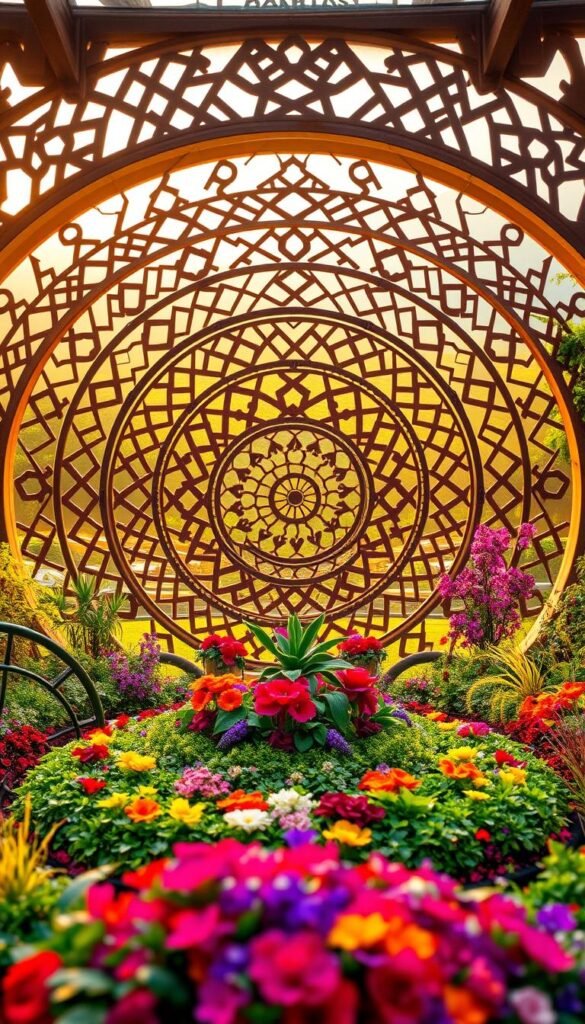
Circular patterns in your landscape do more than please the eye—they choreograph movement. Imagine stone pavers spiraling toward a water feature or curved benches hugging a fire pit. These dynamic arrangements transform static yards into interactive environments where every path invites exploration.
Start by playing with scale. A large circular lawn becomes your garden’s anchor, while smaller pebble mosaics add playful details. Overlapping rings create natural transition zones—perfect for blending herb gardens with lounging areas. “The magic happens where forms intersect,” notes landscape architect Mara Sloan. “These meeting points become spontaneous gathering spots.”
Consider these fresh applications:
- Moon gates framing sunset views
- Circular raised beds showcasing seasonal plants
- Curved pergolas defining dining spaces
Materials matter as much as shape. Try corten steel edging for modern contrast or repurposed bricks for rustic charm. For creative gardening ideas, mix circular gravel patios with rectangular decking. This balance creates visual tension that keeps spaces feeling lively yet organized.
Remember: circles work best when they serve multiple purposes. A stone meditation labyrinth doubles as drainage solution during storms. Circular planters near entryways offer both structure and scent. By layering functional and decorative elements, your garden becomes a living composition that evolves with the seasons.
Incorporating Curves, Circles, and Other Geometric Forms
Great landscapes balance curves and angles like a perfectly tuned orchestra. The secret lies in knowing when to let lines flow freely and where to establish crisp boundaries. This strategic dance between soft and structured elements transforms ordinary yards into cohesive compositions.
Curvilinear Versus Rectilinear Elements in Design
Flowing lines work best when creating natural movement through your space. A curved pathway leading to a hidden bench invites discovery, while straight-edged planters define clean boundaries. Consider these applications:
| Curved Features | Straight Features | Best Uses |
|---|---|---|
| Winding paths | Raised beds | Small urban lots |
| Circular lawns | Rectangular decks | Sloping terrain |
| Spiral gardens | Linear drainage | Stormwater management |
Utilizing Spirals, Ovals, and Overlapping Circles
Spiral patterns solve multiple design challenges simultaneously. A stone spiral surrounding your maple tree creates seating while preventing soil erosion. Overlapping circles help blend different zones smoothly.
Try these professional techniques:
- Anchor designs with one large central circle
- Use radiating lines from spiral centers to connect areas
- Offset oval planters to soften building corners
| Form | Visual Effect | Practical Benefit |
|---|---|---|
| Spirals | Draws eye inward | Manages foot traffic |
| Overlapping circles | Creates depth | Hides utility areas |
| Ovals | Softens edges | Maximizes planting space |
Remember: strong curves need breathing room. Pair sweeping arcs with straight walkways to prevent visual overload. This balance lets each form shine while serving your landscape’s needs.
Leveraging the Design Process and Ordering Principles
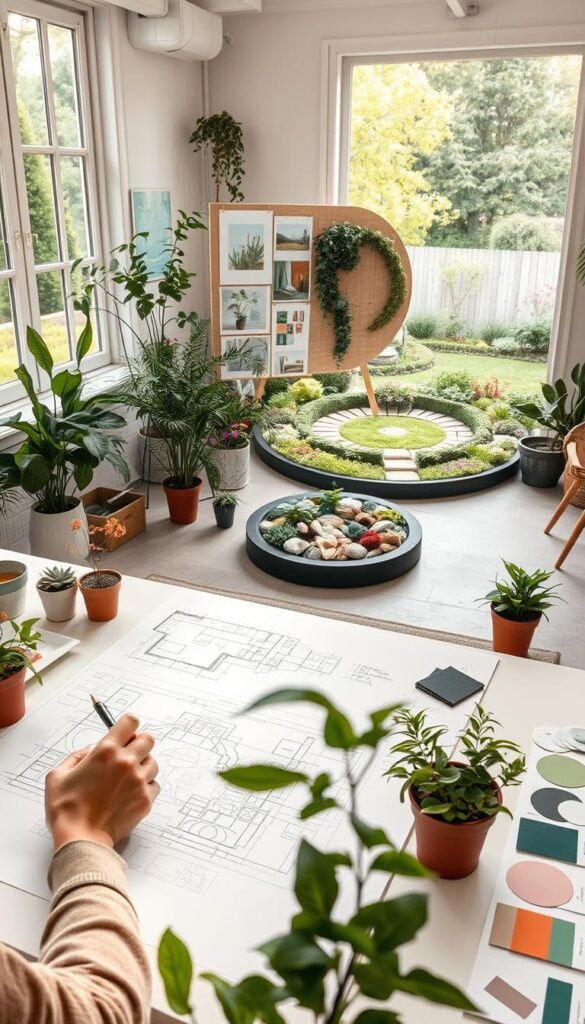
Transform your landscape into a cohesive masterpiece through intentional planning. Smart organization turns random elements into purposeful compositions that feel both inviting and functional. Let’s explore how professional strategies bring order to your outdoor spaces.
Establishing Focal Points with Design Lines
Strong visual anchors guide eyes through your space. A circular stone fountain or curved bench arrangement naturally becomes your garden’s star feature. Use straight lines in pathways to frame these focal points, creating clear sightlines.
| Line Type | Visual Effect | Practical Use |
|---|---|---|
| Radial lines | Draws attention inward | Highlighting fire pits |
| Parallel curves | Creates rhythm | Guiding walkways |
| Intersecting angles | Adds drama | Defining planting zones |
Balancing Symmetry and Asymmetry
Mirrored layouts work wonders with colonial-style homes, while free-flowing arrangements suit modern architecture. Try symmetrical planters flanking your front door, then balance them with winding gravel paths.
Key considerations:
- Central axis lines create formal elegance
- Offset circles add playful energy
- Mixed geometries suit transitional spaces
Using Grids, Site Lines, and Scale Effectively
Professional designers often start with proportional grids. This technique ensures your circular elements relate harmoniously to house dimensions. A 10′ diameter patio circle might pair perfectly with 24″ stepping stones.
| Scale Principle | Application | Visual Benefit |
|---|---|---|
| Human scale | Seating diameters | Comfortable use |
| Architectural scale | Path widths | Cohesive flow |
| Landscape scale | Lawn shapes | Proportional balance |
Remember: grids are guides, not rules. Adjust proportions to highlight existing trees or slopes. This flexibility lets your design process honor the land’s natural character while achieving polished results.
DIY Tips and How-To Steps for Unique Circular Gardens
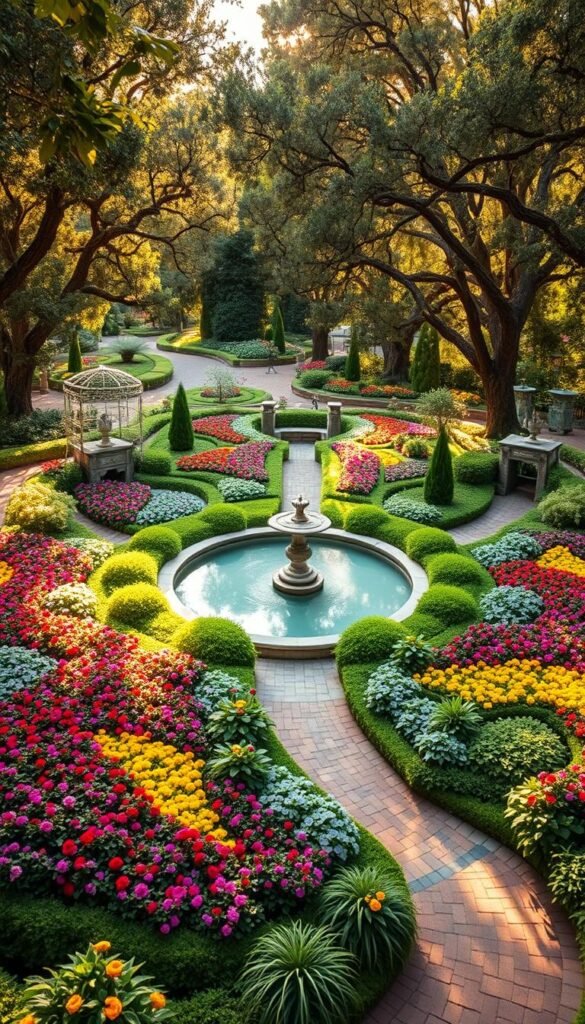
Transforming your yard begins with simple marks on paper. Grab tracing sheets and charcoal pencils – these tools help visualize curves before breaking ground. Landscape designer Mara Sloan advises: “Start with loose gestures rather than perfect shapes. Let your hand explore possibilities without judgment.”
Step-by-Step Design Implementation
Begin by marking organizing lines with garden hose or spray paint. These guideposts determine where circles will interact with existing features. For curved pathways, use inverted paint cans as makeshift compasses – simply rotate them around a central stake.
| Tool | Use Case | Budget Hack |
|---|---|---|
| String & Stake | Perfect circles | Use old broom handles |
| Flexible Edging | Curved beds | Repurpose PVC pipes |
| Chalk Line | Radial paths | Borrow from toolbox |
Prioritize projects by season. Build hardscapes in dry months, then plant when temperatures moderate. For sloped areas, create terraced rings using stacked stones – they prevent erosion while adding visual interest.
Place statement plants where curves intersect. These natural focal points draw eyes through the space. Dwarf Japanese maples work beautifully in tight corners, while ornamental grasses soften stone edges.
Remember: temporary mockups prevent costly mistakes. Arrange potted shrubs along proposed lines before permanent planting. This trial method helps refine layouts without commitment.
Final Thoughts on Transforming Your Garden with Unique Shapes
Your outdoor space becomes a living canvas when guided by thoughtful geometry. Through strategic use of circular forms and angular accents, you craft environments that balance artistry with purpose. This approach turns functional areas into destinations that invite lingering and connection.
The techniques you’ve learned create harmony between structure and nature. By responding to your site’s slopes, sunlight, and existing features, your design gains authentic character. Over time, these intentional choices mature into landscapes that feel both planned and spontaneous.
Remember great spaces evolve through observation and refinement. As plants fill their geometric frameworks, adjust proportions to maintain visual balance. What begins as a concept sketch grows into a dynamic environment that reflects your evolving relationship with the land.
Investing in this creative process yields rewards beyond curb appeal. Well-considered layouts increase property value while creating daily opportunities for joy. Whether shaping intimate nooks or grand entertaining zones, your garden now tells a cohesive story – one curve and angle at a time.