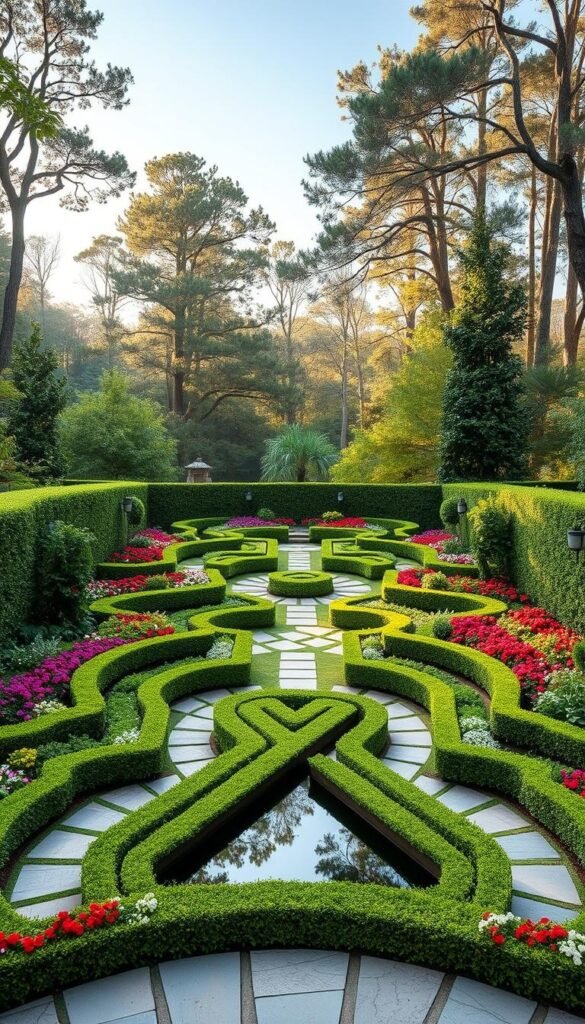
Traditional rectangular yards dominate neighborhoods, but angular spaces offer fresh opportunities. Imagine turning that awkward corner lot or sloped terrain into a showstopping outdoor sanctuary. Unconventional shapes let you craft unique pathways, seating areas, and planting zones that defy expectations.
Angular layouts create natural focal points through clever zoning. You can balance crisp edges with curved flower beds or meandering gravel paths. This approach adds depth to smaller spaces while making large properties feel intentionally designed. Every angle becomes purposeful rather than problematic.
Modern landscaping thrives on mixing materials and textures. Pair sleek concrete planters with wild native grasses, or let stone pavers guide visitors through shifting perspectives. These combinations turn geometric challenges into artistic statements that evolve with the seasons.
Discover how to optimize sightlines and traffic flow in non-traditional plots. We’ll share practical tips for selecting plants that soften sharp angles and hardscape solutions that enhance functionality. Your outdoor area will become a conversation starter that reflects your personal style while working harmoniously with nature.
Getting Started: Assessing Your Garden’s Potential
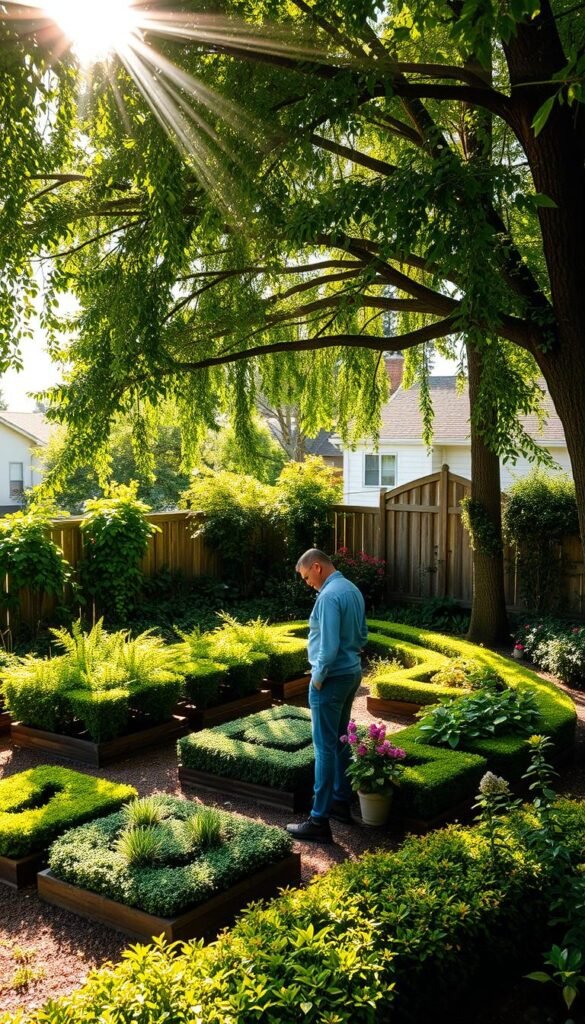
Every great garden starts with understanding its unique canvas. Before diving into design choices, spend time studying your plot’s natural rhythms and hidden opportunities. This groundwork ensures your vision works with the land, not against it.
Evaluating Your Space and Setting Goals
Grab a measuring tape and sketchbook first. Note where sunlight lingers longest and which areas stay shaded. These patterns determine where to place sun-loving hydrangeas versus ferns that thrive in cool corners. Watch how rainwater moves during storms – this reveals where to add drainage or moisture-loving plants.
Ask yourself key questions: Do you want a quiet reading nook? Space for weekend barbecues? A vibrant display of seasonal blooms? Clear priorities help shape smart design decisions from the start.
Drawing Up a Layout Plan
Turn observations into action with a simple diagram. Mark existing trees, slopes, or structures that influence your layout. Use graph paper or free apps to experiment with different arrangements. Try circling zones for dining, growing, and relaxing – leaving room for pathways that connect them naturally.
Remember: Your plan isn’t set in stone. It’s a flexible guide that evolves as you discover what works best in your space over time.
Understanding the Unique Charm of Triangular Garden Spaces
While curves dominate modern landscaping trends, angular gardens hold an unexpected allure. Their sharp lines challenge conventional ideas of outdoor beauty, offering a fresh take on spatial storytelling. Let’s explore why these geometric spaces captivate the imagination.
Defining the Appeal of Angular Designs
Triangular layouts create instant drama through purposeful asymmetry. Unlike predictable rectangles, their converging lines guide your gaze toward strategic focal points – maybe a sculptural tree or cascading water feature. This built-in directionality makes every stroll through your space feel intentional.
Consider these advantages:
- Depth illusions: Narrow ends make small yards appear larger
- Style flexibility: Pair crisp edges with billowing grasses for modern-rustic contrast
- Dynamic lighting: Sunlight paints shifting patterns across angled surfaces
The gardening world increasingly recognizes how angular designs transform challenging plots. As shadows stretch and shrink daily, your space becomes a living picture that evolves with nature’s rhythms. For more inspiration, explore these creative gardening ideas that complement geometric layouts.
Don’t fear the angles – embrace them as tools to highlight your favorite elements. A well-placed bench at a vertex becomes a destination, while staggered plantings along edges soften the look without losing that modern edge.
Embracing Bold Colors and Striking Plant Arrangements
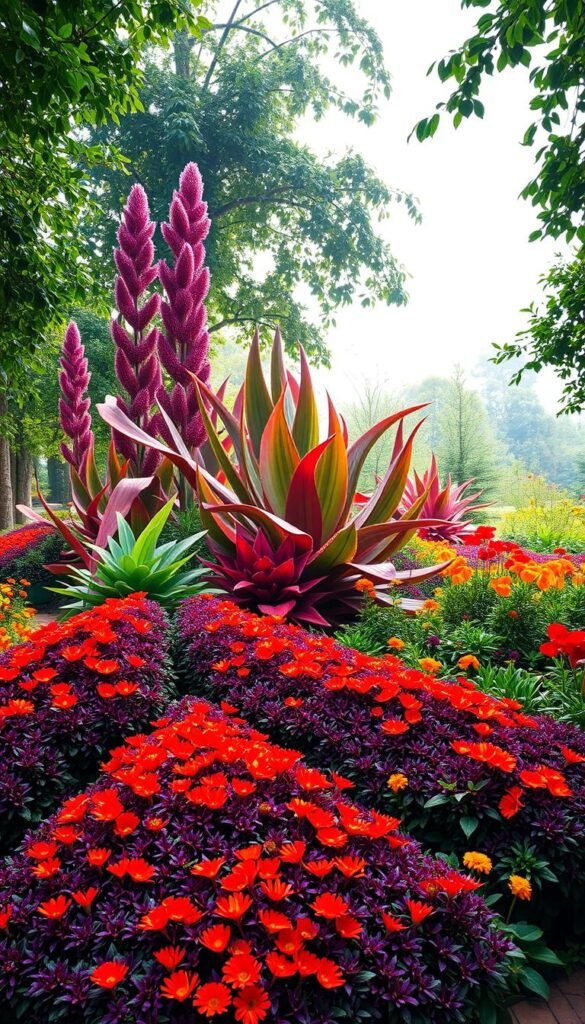
Your garden’s color palette acts like a painter’s brush – it can redefine spaces and shift perceptions. In angular landscapes, strategic hues become tools to either amplify geometric drama or create soothing illusions of flow.
Choosing Plants That Enhance Your Design
Select species that play dual roles. Japanese maples offer fiery fall reds while maintaining sculptural branch patterns year-round. Ornamental grasses like purple fountain grass add movement with their wispy textures, softening sharp corners without hiding your layout’s unique angles.
Integrating Color, Light, and Textures
Warm tones pull distant features closer – try coral bells near your garden’s farthest point. Cool blues in compact areas? They’ll make tight spaces breathe. Pair spiky yucca plants with velvety lamb’s ear for tactile contrast that catches both sunlight and attention.
“Color doesn’t just decorate space – it architects it.”
| Color Type | Effect | Best Use | Plant Examples |
|---|---|---|---|
| Warm Reds/Oranges | Shorten visual distance | Expanding narrow zones | Celosia, Marigolds |
| Cool Blues/Purples | Create depth | Widening tight corners | Hydrangea, Lavender |
| Neutral Greens | Unify spaces | Connecting color blocks | Boxwood, Ferns |
For those looking to elevate your space, remember: the magic happens when you balance vibrant bursts with restful greens. A single crimson chair at your garden’s sharpest angle becomes both focal point and functional art.
Break the Mold with Bold Triangular Garden Design Layouts
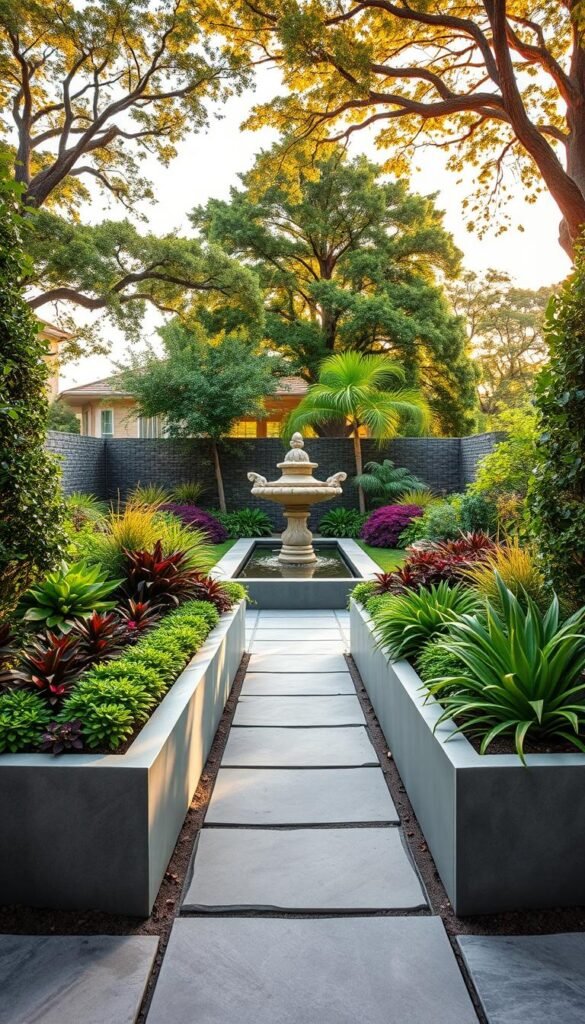
Ditch predictable flower beds and straight paths – your outdoor area deserves a personality that matches your creativity. Geometric layouts turn limitations into launchpads for innovation, transforming overlooked corners into artistic statements that grow bolder each season.
Discovering the Benefits of a Bold Design
Unconventional layouts spark curiosity while solving practical challenges. Sharp angles create natural stages for sculptural plants like agave or twisted hazel. You’ll find yourself crafting surprising sightlines that reveal hidden seating nooks or miniature ecosystems as visitors explore.
These spaces tell visual stories through intentional contrasts. Picture corrugated metal planters hugging curved lavender hedges, or zigzagging stone paths framing wildflower meadows. Your choices invite neighbors to rethink their own yards while giving local wildlife unexpected habitats.
Step-by-Step Strategies for Implementation
Start small by reshaping one garden zone each season. Year one could focus on establishing focal points with drought-tolerant succulents. Year two might introduce winding gravel trails that connect your angular features naturally.
Keep a progress journal to track what works:
- Photograph light patterns at different times of day
- Note which plants thrive in angled microclimates
- Sketch new ideas inspired by seasonal changes
This phased approach lets you experiment without overwhelm. Before long, your space becomes a living blueprint for turning geometric challenges into signature style elements.
Integrating Water Features and Garden Accents

Nothing elevates an angular outdoor space like the gentle murmur of flowing water. These dynamic elements breathe life into sharp corners while creating soothing soundscapes that mask neighborhood noise.
DIY Hummingbird Fountain Ideas
Transform forgotten corners into wildlife hubs with a custom water feature. A tiered fountain made from stacked stones becomes both drinking station and art piece. Use local materials from a small business supplier to keep costs low while supporting your community.
Position your creation where two paths meet – the end of a narrow zone works perfectly. This placement lets water sounds carry through your entire yard. Birds will flock to splash zones, adding playful movement to structured spaces.
Try these space-smart approaches:
- Repurpose vintage teapots as bubbling spouts
- Install a bamboo chime fountain that doubles as wind decor
- Embed solar-powered pumps between angular pavers
Water’s reflective qualities amplify sunlight patterns across geometric beds. As day turns to night, subtle lighting transforms your fountain into a glowing centerpiece. You’ll create a peaceful world within your property lines that feels both intentional and inviting.
Creating Visual Flow Within Angular Spaces
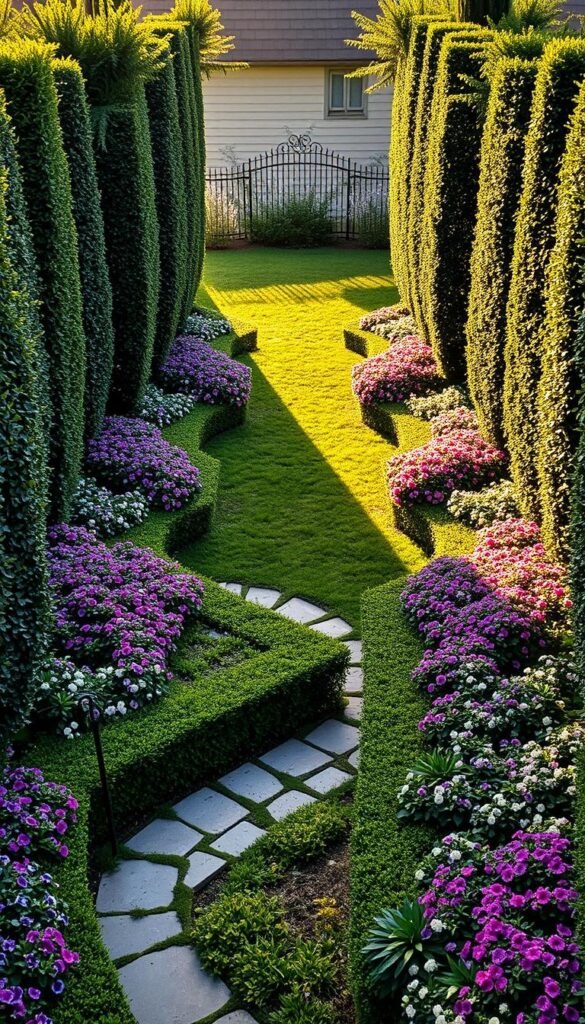
Angular gardens thrive when movement feels effortless. Guide visitors through your space using curved gravel paths that contrast with sharp edges. These winding routes create natural pauses at strategic viewpoints – perfect for showcasing a sculptural planter or blooming hydrangea cluster.
Use layered plantings to build depth. Tall ornamental grasses at the back of narrow zones draw the eye forward, while low-growing thyme spills over angled borders. This clever stacking makes every glance reveal new details without overwhelming the senses.
“A well-designed garden should whisper ‘come explore’ with every turn.”
| Technique | Purpose | Example |
|---|---|---|
| Curved Pathways | Slow movement & create discovery | Flagstone trail with creeping phlox edges |
| Mirror Placement | Expand tight spaces | Round antique mirror reflecting flower bed |
| Height Variation | Establish visual hierarchy | Dwarf spruce behind feathery astilbe |
Connect your garden to the wider world beyond its borders. Position a bright ceramic vase so it aligns with a distant tree canopy, blending your creation with nature’s grander canvas. This ability to harmonize sharp angles with organic shapes transforms challenging spaces into cohesive retreats.
Remember: flow isn’t about forcing a particular look. It’s crafting a way to experience your space that feels both intentional and inviting. A single curved bench placed where three paths meet becomes both destination and conversation starter.
Blending Curves to Soften Sharp Garden Edges
Sharp angles meet organic curves in modern garden design. The secret lies in balancing geometry with nature’s fluidity. Start by reimagining your planting beds as living sculptures that guide the eye while softening structural lines.
Strategic Layering for Natural Transitions
Mix tall ornamental grasses with low-growing thyme along bed borders. This creates depth while hiding stark edges. Try pairing spiky yucca plants with cascading sedum – their contrasting textures make angular spaces feel intentional yet inviting.
Raised mounds work wonders in triangular areas. Build small soil peaks near corners to disrupt flat planes. Plant trailing varieties like creeping Jenny to spill over these elevations, creating natural-looking waterfalls of foliage.
| Technique | Effect | Plant Partners |
|---|---|---|
| Curved Edging | Softens corners | Dwarf fountain grass |
| Mounded Beds | Adds dimension | Creeping phlox |
| Layered Heights | Creates flow | Russian sage + hostas |
Flexible metal edging lets you shape gentle arcs around geometric beds. For a rustic touch, use irregular flagstones that gradually curve away from sharp angles. These solutions maintain your layout’s architecture while adding warmth.
Remember: Small changes make big differences. A single weeping blue atlas cedar at a vertex transforms rigid lines into graceful movement. Your space becomes a conversation between structure and spontaneity.
Enhancing Your Garden with Inviting Furniture
Outdoor seating transforms geometric spaces into social hubs. One gardener shared their success with a compact set: “We found lightweight chairs and a table that fit our 10×11 deck perfectly. Moving them to follow the sun takes seconds.” This flexibility lets you host friends or enjoy solo coffee breaks in shifting sweet spots.
Position chairs to create natural sightlines. Angle two seats toward your garden’s best feature – maybe a flowering tree or water feature. Add a small table between them for drinks or board games. This setup encourages people to engage with your design while chatting.
Look for weather-resistant materials that handle seasonal changes. Aluminum frames with woven resin wicker stay stylish through summer storms and winter chills. Foldable designs let you tuck pieces away when hosting larger groups or creating temporary activity zones.
“The set felt sturdy yet easy to move – exactly what our angular patio needed.”
Mix textures to balance sharp angles. A chunky knit throw over sleek metal chairs softens the look. Add colorful cushions that echo your flower beds’ hues. Your space becomes both functional art and a welcoming spot for friends to gather.
Lighting and Shadow Play: Enhancing Ambiance
As twilight paints the sky, your angular garden awakens with new dimensions. Strategic lighting turns sharp edges into dramatic silhouettes, while soft glows invite evening exploration. This magic happens when you harness shadows as design partners rather than obstacles.
Uplights placed beneath textured plants cast dancing patterns on fences. Downlights from elevated positions create safe pathways without overpowering the night. Try warm-toned string lights above seating areas – they foster intimate conversations as day surrenders to moonlight.
Cooler LED strips work wonders for highlighting architectural features. Position them along retaining walls or beneath angular benches to emphasize your layout’s geometry. These subtle touches guide movement while creating depth that daytime can’t replicate.
| Light Type | Best Use | Effect |
|---|---|---|
| Warm (2700K) | Seating zones | Cozy, welcoming vibe |
| Cool (4000K) | Water features | Crisp reflections |
| Color-changing | Focal points | Seasonal adaptability |
Solar-powered stake lights offer eco-friendly path illumination. Cluster them where walkways narrow – their gentle glow prevents stumbles while maintaining mystery. For that moment of drama, aim a spotlight at your favorite sculptural plant when hosting evening gatherings.
“Shadows aren’t voids – they’re velvet curtains framing your garden’s nightly performance.”
Rotate fixtures seasonally to match nature’s shifts. Summer calls for soft ambient lights, while winter benefits from brighter task lighting. Your space becomes a living canvas that evolves from sunrise to starlight, always revealing fresh perspectives.
Designing for Compact Spaces Without Compromise
Small gardens challenge you to think vertically and strategically. Transform narrow corners into lush zones with hanging herb planters or wall-mounted trellises supporting climbing roses. These solutions add greenery without stealing precious ground space – perfect for urban balconies or petite patios.
Choose furniture that moonlights as storage. A bench with hidden compartments holds gardening tools while providing seating for afternoon tea. Foldable tables from a local small business let you host friends then vanish when not needed. Every piece earns its keep through clever functionality.
- Mirror magic: Place reflective surfaces opposite flower beds to double visual depth
- Color tricks: Pale patio stones make tight areas feel airy and expansive
- Mobile planters: Casters allow easy rearrangement for seasonal sun patterns
Container gardens offer flexibility in changing layouts. Swap spring tulips for summer succulents without disturbing permanent structures. Use tiered stands to create vertical interest while keeping walkways clear. Your home oasis adapts as quickly as your weekend plans.
“The right storage solution should whisper ‘I belong here’ while working overtime.”
Built-in shelves between fence posts store cushions and garden gloves discreetly. Magnetic tool strips keep clippers handy yet hidden under ledges. These smart systems maintain your sanctuary’s polished look while embracing practical living needs. Your petite plot becomes a microcosm of the natural world – complete, intentional, and bursting with possibility.
Exploring DIY Projects and Personal Touches
Your outdoor space becomes truly yours when infused with handmade charm. Start by reimagining everyday objects – that chipped teapot could become a whimsical bird feeder, while old window shutters transform into vertical herb planters. These personal touches work harmoniously with angular layouts, adding character without competing with your garden’s geometry.
Crafting Unique Garden Decor
Turn forgotten items into functional art. A bicycle wheel becomes a circular trellis for climbing roses, creating striking contrast against triangular beds. For nighttime magic, fill glass jars with solar lights and arrange them along pathways – their soft glow guides visitors while highlighting your design’s sharp angles.
Upcycling Ideas for a Creative Edge
Breathe new life into household castoffs. Metal colanders make excellent hanging planters for strawberries, and ladder rungs can support potted succulents on narrow walls. Discover how vintage treasures become garden stars when paired with modern greenery.
Mix materials for visual interest – try pairing concrete pieces with weathered wood accents. These projects let you express creativity while reducing waste, proving sustainable choices can shape beautiful outdoor worlds. Your garden becomes a living scrapbook of memories and imagination.