Your tiny patio or balcony holds more potential than you might think. With clever planning, even postage-stamp outdoor areas become relaxing retreats that showcase personality. Smart layouts and multi-functional features help you craft spaces that feel spacious yet intimate.
Small-scale gardening lets you experiment without overwhelming maintenance. Vertical planters save floor space while adding lush greenery. Container arrangements create movable focal points that adapt to your needs. You’ll find creative freedom in working with limited square footage.
Effective designs balance aesthetics with practicality. Dwarf plant varieties thrive in confined conditions while delivering vibrant colors. Built-in seating doubles as hidden storage for tools or cushions. Strategic lighting extends usability into evening hours, transforming your area into a cozy haven.
Every choice matters when maximizing impact in compact settings. Thoughtful plant selection ensures year-round interest without overcrowding. Mirror accents visually expand boundaries, while textured pathways guide the eye through the space. Your outdoor oasis becomes proof that great things come in small packages.
Creating Your Mini Garden Oasis
Transforming limited square footage into a thriving green sanctuary starts with smart evaluation. Whether you’re working with a balcony, patio, or windowsill, understanding your environment unlocks hidden opportunities for growth and style.
Understanding Your Space and Its Potential
Begin by tracking sunlight patterns across your area. Most edible plants and blooming varieties need 6+ hours of direct sun daily. Use a free app or simple notes to map where shadows fall during peak daylight hours.
Test soil drainage by pouring water on the ground—if puddles linger after 15 minutes, raised beds or containers might work better. Wind exposure matters too: delicate herbs thrive in sheltered corners, while sturdy shrubs handle breezy spots.
Setting the Vision for Compact Beauty
Ask yourself: “Do I want fresh herbs at my fingertips, a burst of seasonal flowers, or both?” Mix functional and decorative elements like cherry tomatoes paired with marigolds in shared planters. This dual-purpose approach maximizes every inch.
- Sketch layouts using vertical zones—wall planters above, pots below
- Choose dwarf citrus trees or compact veggies like ‘Patio Pride’ peppers
- Plan winter interest with evergreen grasses or berry-producing shrubs
“A well-planned small garden often feels more intentional and inviting than sprawling spaces.”
Establishing a Striking Focal Point
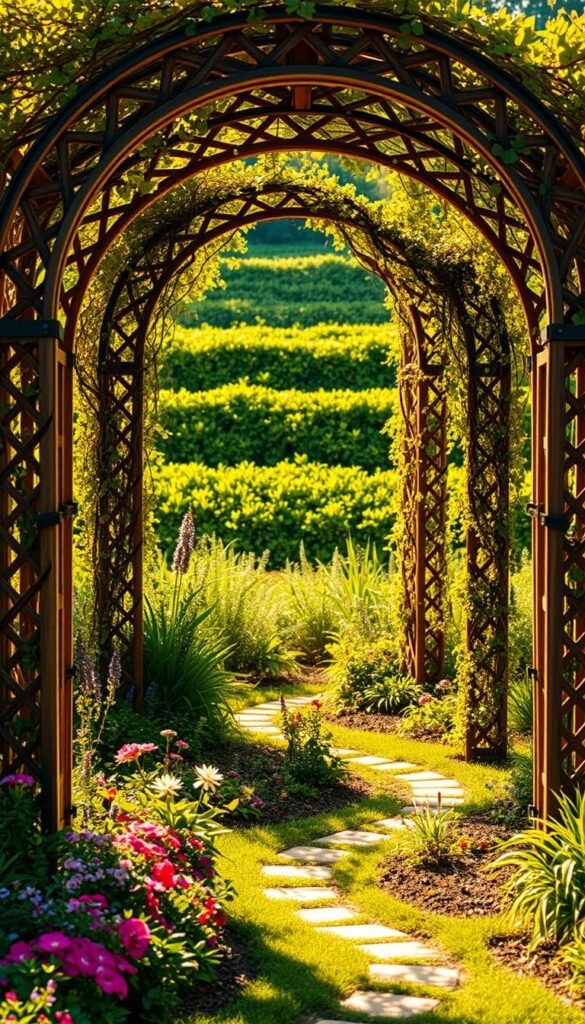
Great gardens captivate the eye, even in the coziest corners. A well-chosen centerpiece transforms your area from pleasant to unforgettable, directing attention while adding depth. Let’s explore two elements that deliver visual interest without overwhelming your layout.
Craft an Impressive Arched Trellis
An arched trellis instantly becomes your garden’s star player. Train climbing roses or clematis on one side, then plant pole beans or snap peas opposite for a lush, edible display. This dual-purpose structure saves ground space while creating natural shade for heat-sensitive plants below.
Incorporate Eye-Catching Wind Chimes
Birdhouse-style wind chimes add movement and melody to your setup. Hang them near seating areas where breezes frequently pass—you’ll enjoy both their gentle music and visiting hummingbirds. For year-round appeal, pair metallic tones with wooden accents that complement your trellis materials.
When planning these features, consider sightlines from indoor windows and favorite relaxation spots. Rotate seasonal bloomers like morning glories (summer) and ivy (fall) on your trellis to maintain fresh visual interest. Discover more small garden ideas that balance form and function effortlessly.
Maximizing Vertical Garden Elements
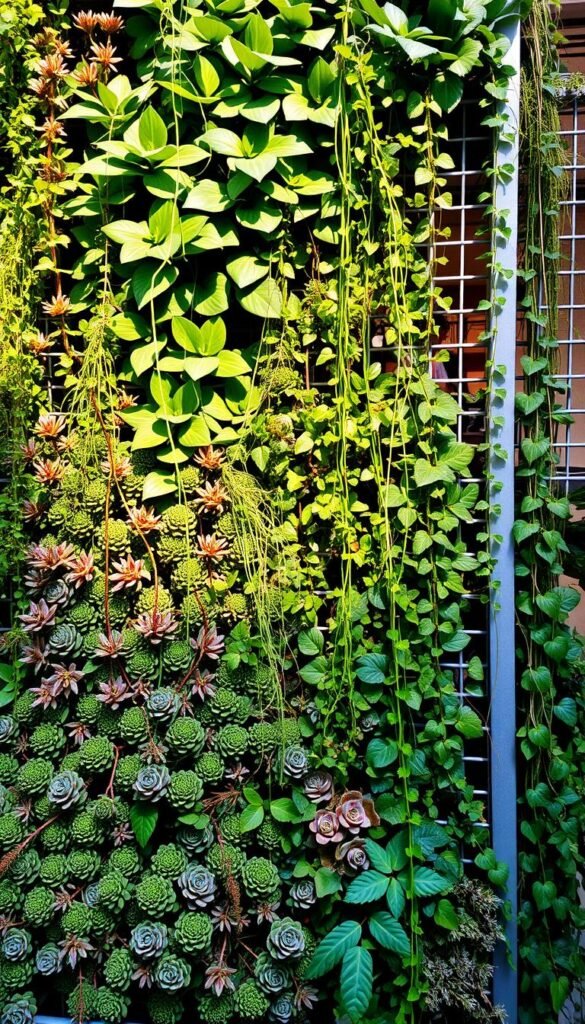
Vertical surfaces become your secret weapon in small-space gardening. By directing growth upward, you create living art that enhances privacy and productivity simultaneously. This approach works equally well on balconies, patios, and narrow side yards.
Build a Lattice Green Wall
Transform blank walls into thriving ecosystems with climbing plants. Fast-growing vines like pothos or Russian ivy establish coverage quickly, while flowering varieties add seasonal drama. Lattice panels provide structure for tendrils to grip, creating natural shade for shade-loving ground plants.
Utilize Hanging Baskets and Lanterns
Layer your vertical space with suspended planters at varying heights. Mix trailing petunias with upright herbs like thyme for textural contrast. Pro tip: Pair baskets with weather-resistant lanterns that cast warm glows after sunset.
Consider these strategies for maximum impact:
- Mount planters on shepherd’s hooks to keep pathways clear
- Use macramé hangers for bohemian flair
- Rotate sun-loving and shade-tolerant plants seasonally
For vibrant accents, combine your vertical displays with colorful container flowers at ground level. This layered approach creates depth while making every inch work double duty.
Incorporating Raised Beds and Smart Planters
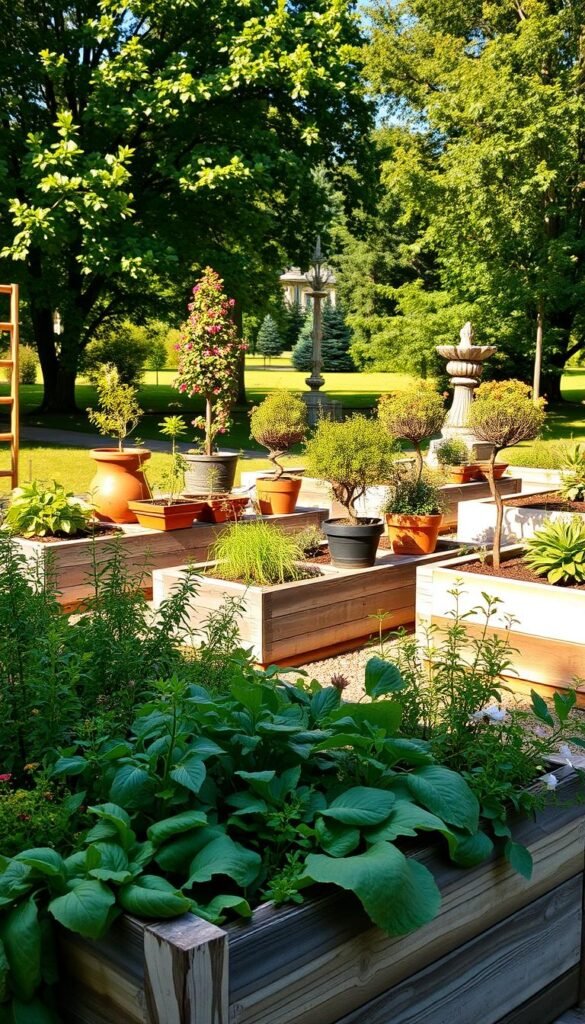
Raised beds open new possibilities for growers of all skill levels. These elevated systems let you bypass poor soil conditions while keeping your plants at comfortable working heights. Whether you’re renting or own your home, they adapt to patios, decks, or grassy areas with minimal setup.
You control the soil mix in raised beds, which means better drainage and fewer weeds. Fill them with a blend of compost, coconut coir, and perlite for optimal root growth. This approach works wonders for veggies like tomatoes and carrots that demand loose, nutrient-rich earth.
Try these strategies to make the most of limited space:
- Group herbs in one corner and flowers in another for visual balance
- Install drip irrigation lines under mulch to conserve water
- Use vertical stakes inside beds for climbing beans or cucumbers
| Feature | Raised Beds | In-Ground Planting |
|---|---|---|
| Soil Control | Full customization | Limited to existing dirt |
| Maintenance | Less weeding | More frequent upkeep |
| Space Efficiency | High-density planting | Wider spacing needed |
Modular planters take flexibility further. Stackable units let you expand your gardening area as skills grow. Pair them with trellises or cold frames for multi-season use. For more ideas on elevating your space, explore designs that blend practicality with personal style.
Innovative Terra-Cotta Pot and Container Ideas
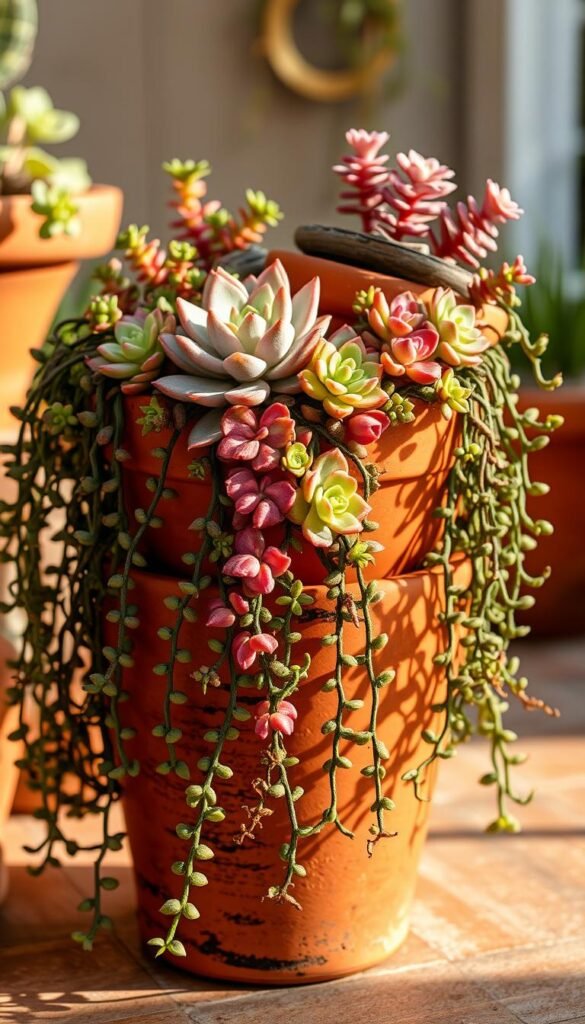
Terra-cotta containers offer timeless versatility for small-space growers. Their natural porosity creates ideal conditions for roots while adding warm, earthy charm to any arrangement. Let’s explore how these classic pots can transform your vertical real estate into living art.
Create a Rainbow of Blooms
Turn your pots into a chromatic masterpiece using nature’s palette. Start with red tulips at the top tier, then layer orange tiger lilies and yellow daffodils below. Complete the spectrum with blue delphiniums and purple pansies at eye level. This vertical color stacking makes narrow areas feel expansive.
Mix edible and ornamental varieties for dual-purpose displays. Green basil fills gaps between blue blooms, while purple kale adds texture beneath flowering vines. “Color coordination elevates small gardens from pretty to breathtaking,” notes urban gardener Mia Rodriguez.
Try these strategies for success:
- Use three-tier stands to maximize vertical space
- Rotate pots seasonally for continuous color
- Group containers by water needs for easier care
Terra-cotta’s breathability prevents root rot in tight quarters. Arrange your rainbow near seating areas where the fragrance of stock flowers or lavender enhances relaxation. With smart placement, you’ll create depth that tricks the eye into seeing more square footage.
Designing with Plant Supports and DIY Structures
Smart structural choices transform functional necessities into design statements. Metal stakes and creative frameworks do more than prop up stems—they become sculptural elements that elevate your garden’s visual rhythm while boosting plant health.
Use Metal Stakes for Enhanced Growth
Sturdy metal stakes give tomatoes and peppers the backbone they need to reach sunlight efficiently. Install them when seedlings are young to guide upward growth naturally. You’ll prevent fruit rot and leaf diseases by keeping foliage off damp soil.
Consider these strategies for success:
- Select powder-coated stakes in bronze or green to blend with foliage
- Space supports 12-18″ apart for vining crops like beans
- Anchor heavy-duty stakes 10″ deep to support mature plants
Decorative obelisks add vertical interest during winter months when plants die back. “A well-built support system becomes part of your garden’s personality,” says urban farmer Carlos Mendoza. Pair geometric shapes with trailing nasturtiums for dynamic contrast against walls or fences.
DIY options let you tailor designs to your space. Repurpose copper pipes into minimalist trellises or bend rebar into arched forms. This approach keeps costs low while ensuring perfect sizing for your unique layout.
Embracing Water Features in Tiny Spaces
Adding liquid elements transforms cramped areas into calming retreats. Even a modest water feature introduces movement and reflection that elevate your outdoor experience. Let’s explore how to integrate these elements without sacrificing precious square footage.
Set Up a Mini Pond for Tranquility
Begin with a durable pond liner cut to your desired shape—oval containers work well for tight corners. Surround it with flat river stones to hide edges and create natural-looking borders. Water lilies thrive in shallow setups, their broad leaves providing shade for potential fish residents.
Essential components for healthy aquatic life:
- Submersible pump (50-100 GPH for small ponds)
- Sponge filter to maintain water clarity
- Dechlorinator for tap water treatment
Position your pond where you’ll enjoy its sparkle—near seating areas or visible from windows. Floating plants like duckweed add texture while reducing algae growth. “The sound of trickling water masks traffic noise better than any white noise machine,” notes landscape designer Elena Torres.
Enhance your feature with a handmade fountain using repurposed ceramics. This personal touch creates visual interest while aerating the water. Maintenance becomes simple with monthly filter rinses and seasonal plant trimming.
Surrounding vegetation matters. Plant moisture-loving ferns and creeping jenny along the edges. These green accents soften hardscapes while attracting thirsty pollinators. Your miniature oasis becomes a cooling sanctuary during summer heatwaves.
Organizing Your Garden with Practical Details
Effective garden management starts with smart labeling systems. Clear identification helps track your plants’ progress while maintaining visual harmony. This simple step prevents confusion when growing similar-looking seedlings or multiple vegetable varieties.
Smart Labeling for Better Results
Durable markers save time and reduce mistakes. Note planting dates and expected harvest windows on weather-resistant tags. Copper strips or painted stones add personality while surviving rainy seasons.
Consider these essentials for your labeling system:
- Use waterproof pens on smooth surfaces
- Include companion planting reminders
- Update markers after crop rotations
| Marker Type | Best For | Lifespan |
|---|---|---|
| Wooden Stakes | Seasonal vegetables | 1-2 years |
| Metal Tags | Perennial plants | 5+ years |
| Engraved Stones | Decorative areas | Permanent |
Seasoned growers recommend color-coding systems. Try red tags for tomatoes and green for herbs. This visual cue helps spot specific plants quickly during maintenance.
Your organizational efforts pay off during harvest season. Clear records let you replicate successful strategies next year. As urban gardener Lila Chen notes: “Labels transformed my patio from chaotic to chef-ready—I always know where my salad fixings are growing.”
Creative DIY Projects to Enhance Your Garden
Personal touches turn functional spaces into inviting retreats. These hands-on ideas let you add character while solving practical challenges. Best part? You likely have many materials already.
Craft a Cheerful Sun Catcher
Transform wooden flowers into radiant accents with acrylic paints and reflective beads. Hang your creation where sunlight dances through it—near seating areas or entry points. The moving light patterns create dynamic interest even when plants aren’t blooming.
Build a Pallet Garden for a Living Display
Upcycle wooden pallets into vertical planters using stainless cable ties and galvanized nails. Space clay pots strategically for herbs like basil, ensuring room for growth. Paint the structure to match your outdoor style, creating cohesive living art.
Both projects take under two hours but deliver lasting impact. You’ll enjoy fresh herbs at eye level while showcasing personal flair. Ready to start? Grab those spare materials and make your garden uniquely yours today.